“Tomorrow, we’re taking your house,” my daughter-in-law Dorothy announced at dinner. My son Dylan just sat there smiling. They had already packed their things and planned to move in without ever asking me. I didn’t argue. I simply smiled back and said, “That’s fine. Just be here at 8 a.m. when I hand the keys to the new owner.” The room went silent. Dorothy stared at me. Dylan’s smile disappeared. “New owner?” he asked. I picked up my coffee and took a slow sip. “I sold the house last week.” For the first time, I saw real panic on my son’s face. And when the buyer arrived the next morning, Dylan finally understood why I had kept one very important detail to myself.
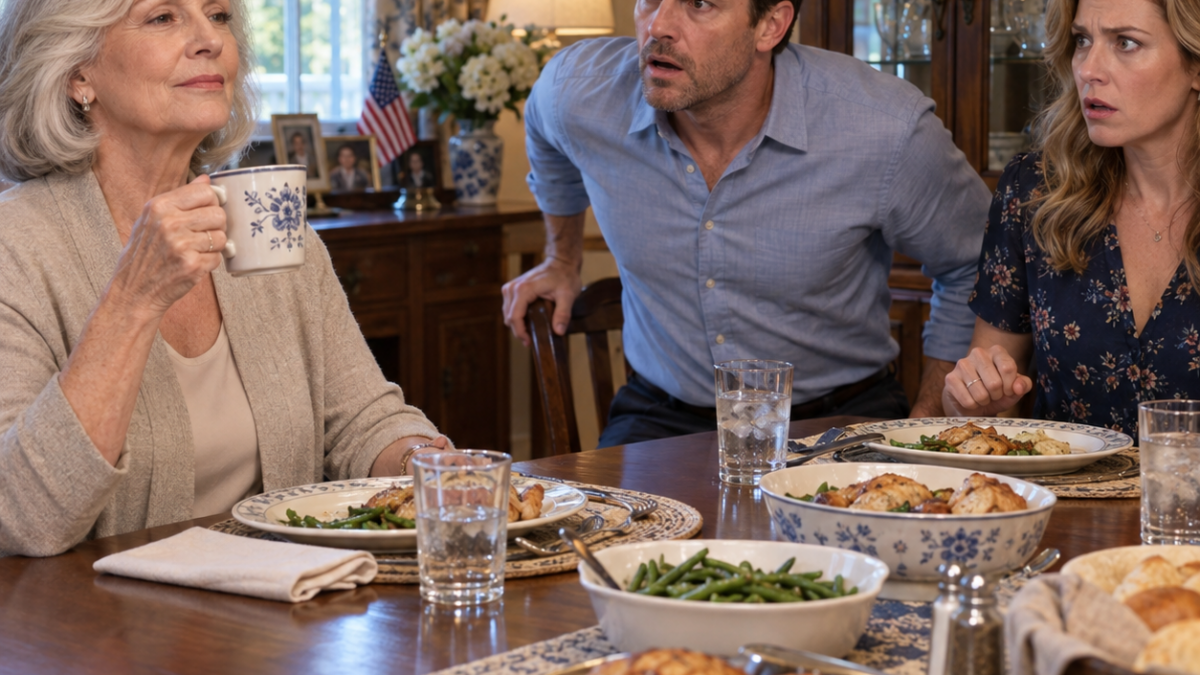
“Tomorrow, we’re taking your house.”
My daughter in law, Dorothy, said it across my own dinner table with such confidence that for one strange second, I thought I had misunderstood her.
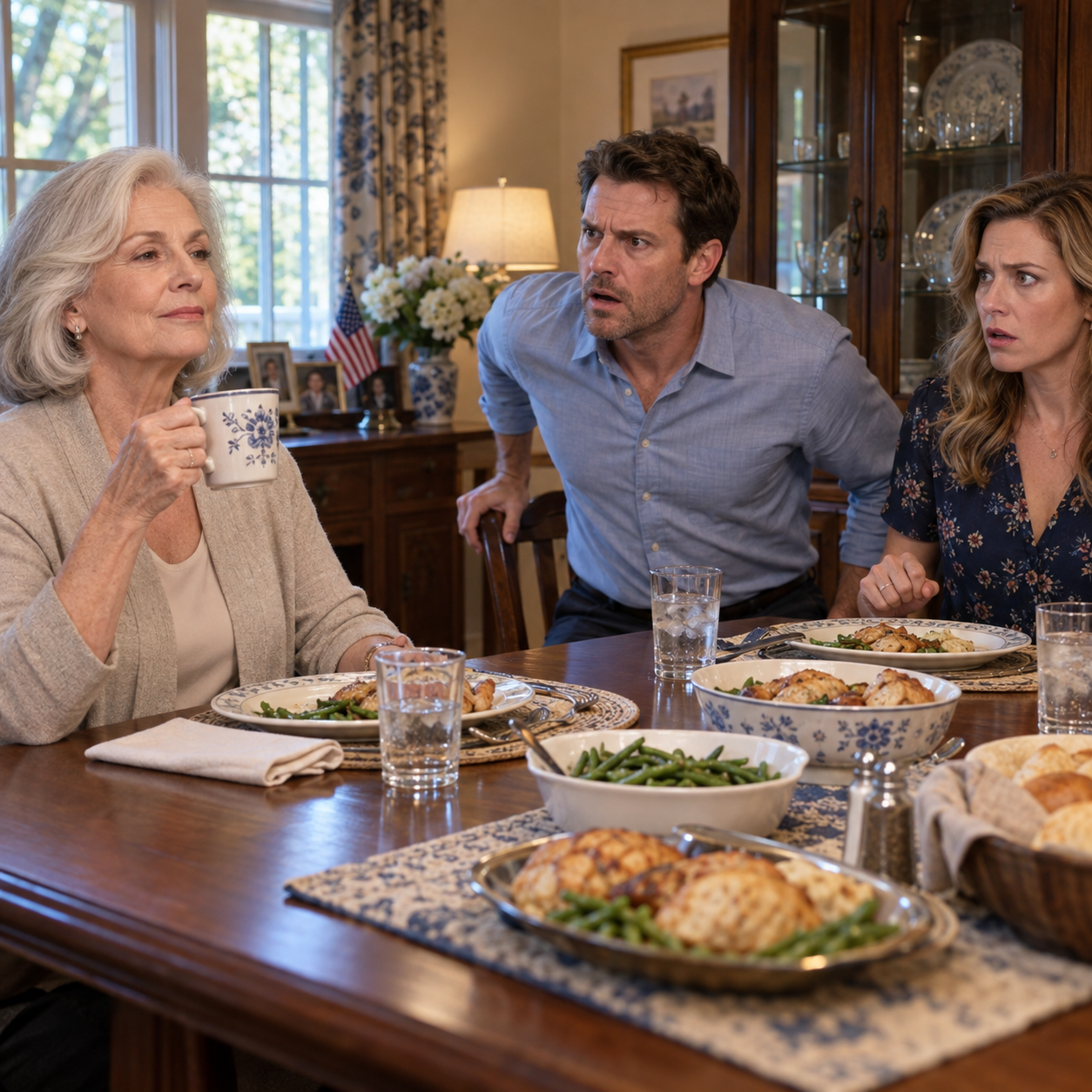
She was smiling.
Not nervously.
Not apologetically.
She smiled the way someone does when announcing a decision that has already been made.
Then she looked at my son.
“We’ve already talked about it,” she continued. “You live here alone, Mom. There’s no reason for one person to keep a house this large. Dylan and I are moving in tomorrow.”
Dylan nodded.
My only son sat across from me and nodded as calmly as if his name had been printed on the deed for years.
I looked at them both.
I did not argue.
I did not raise my voice.
I did not ask how two adults had reached the conclusion that they could simply take possession of a home I had owned for more than four decades.
I placed my napkin beside my plate.
“All right,” I said.
Dorothy’s smile widened.
Then I added, “In that case, tomorrow morning at eight, I’ll be handing the keys to the new owner.”
Her smile disappeared.
Dylan sat up.
“What are you talking about, Mom?”
“I sold the house.”
Nobody moved.
The clock on the wall suddenly seemed unbearably loud.
Tick.
Tick.
Tick.
Dorothy laughed, but there was no humor in it.
“Mom, don’t joke like that. We already rented the moving truck.”
“I’m not joking.”
I lifted my water glass and took a small sip.
“The contract was signed last week. The buyers are coming tomorrow for the final key handover.”
That was when real fear appeared on my son’s face.
My name is Andrea Hayes.
I was sixty seven years old when that conversation took place, and if you had met me a few months earlier, you probably would have thought my life was too ordinary to become anybody’s story.
I lived alone in a red brick house that I had called home for forty two years. Every morning, I woke at 6:15, made coffee with two spoonfuls of milk and a little cinnamon, and sat near the front window while sunlight slowly moved across the old oak tree in my yard.
It was a quiet life.
Sometimes too quiet.
But I had learned to live with silence.
What I had never completely learned to live with was the habit of reaching into the cupboard for two coffee cups.
Even eight years after my husband died, my hand occasionally did it automatically.
Two cups.
Then I would stop.
And remember.
Thomas Hayes and I were married for nearly forty years.
He was not a dramatic man.
He was steady.
He did not bring me flowers every week or write romantic notes across the refrigerator.
Instead, he remembered that I liked cinnamon in my coffee.
He remembered that I hated receiving phone calls before eight in the morning.
He knew when I had a headache before I told him.
And if I became unusually quiet during dinner, he would wait until the dishes were washed before asking, “What’s sitting on your mind, Andrea?”
That was Thomas.
Eight years before the events I am about to tell you, he died suddenly from a heart attack.
That morning, he had been sitting on our porch drinking coffee.
By that evening, I was a widow.
People often say losing a spouse leaves an empty space in your life.
That description never felt accurate to me.
An empty space sounds simple.
Clean.
Contained.
Losing Thomas was more like discovering that half the ordinary things around me had secretly belonged to both of us.
The chair near the window.
The newspaper folded on the kitchen table.
The tools in the garage.
The wind chimes on the porch.
The blue coffee mug with a chipped handle.
Even silence sounded different after he died.
A few months before his heart attack, Thomas said something I did not understand at the time.
We were sitting in the living room one evening.
He took my hand and looked around the house.
“If I’m not here one day,” he said, “remember that this is your home.”
I laughed.
“Where exactly are you planning to go?”
He did not laugh.
“I’m serious.”
“Thomas.”
“You spent your whole life taking care of everybody else.”
He squeezed my hand.
“If the day ever comes when people start telling you what you should do because you’re getting older, you remember something.”
“What?”
“You are still Andrea.”
I smiled at him.
“Andrea who?”
“My stubborn wife.”
I nudged his shoulder.
He smiled.
Then his expression became serious again.
“Don’t let anybody make you feel like you have to leave your own life just because they think they know what’s best for you.”
I wish I had understood how important those words would become.
Our house had always been more than property to me.
It was where Dylan grew up.
There were pencil marks on a basement wall showing his height year by year.
One of the stair rails had a scratch from the time he tried to ride his bicycle through the hallway when he was nine.
A corner near the kitchen still carried a faint crayon mark Thomas had refused to paint over.
“That’s history,” he always said whenever I complained about it.
The kitchen table had been our family command center.
Homework.
Bills.
Birthday cakes.
Arguments.
Apologies.
Christmas cookies.
College applications.
It had all happened there.
So when Dylan told me five years earlier that he wanted to marry Dorothy, I was happy.
I never expected my daughter in law to become another daughter.
That seemed unfair.
She already had a mother.
All I hoped was that she would love my son, respect our family, and understand that family was supposed to mean mutual care.
In the beginning, I believed she did.
Dorothy was polished and thoughtful.
She visited every Tuesday.
Sometimes she brought banana bread.
Sometimes lemon muffins.
After Thomas died, she once sat beside me for almost three hours while I told stories about him.
Before she left, she hugged me.
“Don’t think you’re alone anymore, Mom,” she whispered. “You have us.”
I cried after she drove away.
That evening, I called Dylan.
“You married a good woman.”
He laughed.
“I know.”
For several years, I believed that.
Then the questions started.
At first, they were harmless enough.
“Have you ever thought about moving somewhere smaller?”
“What will you do with all this space when you get older?”
“Do you really like maintaining such a big yard?”
I assumed she was concerned.
Then the questions became more specific.
She asked about my years at the bank.
I had worked there for almost forty years.
I started young and retired only after Thomas and I had built enough financial security that I could live comfortably.
We were never wealthy.
We were careful.
We saved.
We had insurance.
We invested conservatively.
We avoided debt when we could.
By the time Thomas died, the mortgage had already been paid.
One afternoon, Dorothy noticed financial documents on my kitchen table.
“Do you still have savings from your bank years?”
The question surprised me.
“Yes.”
She nodded.
“So retirement isn’t really a problem for you.”
“I manage.”
A week later, she asked another question.
“Are you leaving the house to Dylan?”
I put down my tea.
“Why are you asking me that?”
She smiled quickly.
“I was only curious. He grew up here.”
Then she asked about property values.
Then about whether my name was the only one on the deed.
Then about when we had finished paying the mortgage.
I began noticing a pattern.
“This house is too big for one person.”
Dorothy said it while helping wash dishes.
She said it while sitting in the living room.
She said it while standing in my hallway and looking toward the bedrooms.
The first few times, I smiled.
By the tenth time, I stopped.
It no longer sounded like concern.
It sounded like repetition designed to change my thinking.
Then came the request for a key.
Dorothy and Dylan had come over after dinner.
Dorothy stood beside the sink.
“Mom, why don’t you give us a spare key?”
I looked at her.
“For what?”
“In case something happens.”
Dylan immediately supported the idea.
“It makes sense.”
“I have neighbors.”
“That’s different.”
“How?”
Dorothy spoke gently.
“You’re getting older. If you fall or don’t answer your phone, we need to be able to get inside.”
I stared at the keys on the table.
They were attached to a small wooden keychain Thomas had bought during one of our vacations.
For decades, those keys had represented something simple.
Home.
Now, suddenly, they felt like permission.
“What if I’m not here?” I asked.
Dorothy laughed.
“We could still come in and check things.”
Check what?
The cabinets?
The papers?
The bedrooms?
I thought about other recent questions.
When do you pick up your prescriptions?
What days are you usually out?
Who visits you?
How do the security cameras work?
When do you lock the back door?
Separately, those questions could be called concern.
Together, they started to feel like an inventory.
I picked up the keys.
Then I put them in my pocket.
“I’m not giving anyone a key.”
Dylan stared at me.
“Mom.”
“No.”
“Why are you making this difficult?”
“I’m not.”
“We’re your family.”
“I know.”
“Then what’s the problem?”
I looked directly at him.
“Caring about me doesn’t require unlimited access to my house.”
Dylan sighed.
“You’re acting like we’re trying to steal something.”
“I never said that.”
“You’re treating us like strangers.”
“No.”
I lowered my voice.
“I am treating myself like an adult.”
That conversation changed something.
Not in them.
In me.
After they left, I stood near the front door and thought about the last several months.
Suggestions about moving.
Questions about money.
Questions about the mortgage.
Questions about inheritance.
Apartment brochures.
Then the request for a key.
One event looked harmless.
Five events looked concerning.
Ten events formed a pattern.
I locked my keys in a drawer that night.
For the first time, I understood that what I needed to protect was not simply the front door.
It was authority over my own life.
A few weeks later, Dylan and Dorothy invited themselves to dinner.
Dorothy brought lamb, one of my favorite dishes.
Halfway through the meal, Dylan put down his fork.
“We sold the apartment.”
I looked up.
“You did?”
“Yes.”
“Congratulations.”
Dorothy smiled.
“Actually, that’s what we wanted to talk about.”
I waited.
“We’re thinking we might not buy another place.”
I said nothing.
Dylan reached across the table.
“What if we move in here temporarily?”
The word temporarily did a lot of work in that sentence.
“How temporarily?”
“We don’t know.”
Dorothy leaned forward.
“It would be good for everyone. We could help maintain the house. You wouldn’t be alone.”
“We could take care of repairs,” Dylan added.
“And meals.”
“And appointments.”
“And expenses.”
The offer came beautifully packaged.
Help.
Company.
Safety.
Family.
Yet all I heard underneath those words was assumption.
They had sold their home before asking whether they could live in mine.
That meant one of two things.
Either they had another plan.
Or they had already decided what my answer would be.
“I’ll think about it.”
Dorothy smiled.
“Of course.”
That night, I walked through the house.
I went into the basement and found Dylan’s old height marks.
Age seven.
Age eight.
Age ten.
Age twelve.
I remembered him running into my arms after nightmares.
I remembered packing school lunches.
I remembered waiting in the rain outside soccer practice.
I remembered college tuition.
His first apartment.
His wedding.
At what point had my little boy begun thinking of my future as something he was entitled to arrange?
After that night, their language changed.
They stopped saying “your house.”
They began saying things like, “Three bedrooms are too much space.”
Or, “The property market is really strong right now.”
Then I heard the word that finally made everything clear.
Equity.
Dorothy said it one afternoon while looking through property listings on her tablet.
“You’ve built so much equity here.”
I stared at her.
Forty two years of marriage, parenting, repairs, grief, birthdays, Christmas mornings, and ordinary Tuesday nights had become equity.
A number.
Something convertible.
Two weeks later, Dorothy arrived carrying a folder.
She spread papers across my kitchen table.
Comparable home sales.
Mortgage projections.
Estimated values.
Listings for smaller apartments.
“If you sell,” she explained, “you could probably get around four hundred thousand.”
Her estimate was badly outdated, but that was not the point.
“You could buy something smaller and still have money left.”
“For what?”
She smiled.
“That extra money could help us buy something long term.”
There it was.
Finally.
The plan.
I looked at Dylan.
He nodded.
“It makes sense.”
“To whom?”
“Everyone.”
“Does it make sense to me?”
Dylan sighed.
“Mom, you’re being stubborn.”
That word hurt.
Stubborn.
I had worked nearly forty years.
Paid the mortgage.
Managed a household.
Raised a child.
Cared for a husband.
Survived widowhood.
Maintained the home through storms, repairs, plumbing problems, roof replacements, taxes, and insurance.
And now refusing to liquidate the biggest asset I owned for my son’s convenience made me stubborn.
“I don’t want to move,” I said.
Dylan leaned back.
“You’re not being practical.”
“It is my house.”
“We know.”
But the way he said it meant something else.
We know for now.
A few days later, Dorothy sent me a message.
We decided we’re moving in temporarily. We’ll be there Saturday.
I stared at the screen.
There was no question mark.
No “Is that okay?”
No “Can we discuss it?”
They had decided.
I called Dylan.
“You cannot simply move into my house.”
“We’re family.”
“That does not answer what I said.”
“Mom, what are we supposed to do? We already sold our apartment.”
“You sold it before I agreed.”
“You were supposed to help us.”
I went quiet.
Then Dylan said something I never expected to hear.
“If you don’t support us now, don’t expect us to be there for you later.”
I felt something inside me go cold.
It was not anger.
It was clarity.
A few weeks later, Dorothy brought another folder.
This one contained nursing home brochures.
At first, I honestly thought I had misunderstood.
The facility was nearly an hour away.
The photographs showed bright bedrooms, a communal dining area, nurses, activity rooms, and a garden.
Dorothy pointed to the pictures.
“It’s actually very nice.”
“Why are you showing me this?”
“You live alone.”
“So?”
“The house is too much.”
“I manage it.”
“But for how long?”
I looked at Dylan.
He avoided my eyes.
Dorothy continued.
“If you sold the house, the money could cover a place like this for years.”
I felt as if I had become invisible in my own kitchen.
They had chosen the type of place where I should live.
Calculated what my home might sell for.
Considered how much money would remain.
Decided they could move into my house.
And now they were showing me where they thought I belonged instead.
Nobody had asked the most basic question.
What do you want?
“Do you think I need a nursing home?” I asked Dylan.
He finally looked at me.
“Not now.”
“Then why are we discussing one?”
“I just want you safe.”
“Safe from what?”
“Mom.”
“What exactly are you protecting me from?”
He had no answer.
That night, I could not sleep.
I moved from room to room.
Thomas’s chair.
Our wedding photograph.
The kitchen table.
Dylan’s height marks.
The guest room.
The front porch.
For the first time, those rooms felt less like memories and more like evidence.
Evidence that I had spent decades earning the right to choose my own life.
I had gone to work when it was still dark.
I had returned home exhausted.
I had saved instead of spending.
Thomas and I had paid the mortgage.
We had protected the house so that one day I would have security.
Security was not supposed to become something other people could use to control me.
The next morning, I called my sister Ruth.
She answered quickly.
“Andrea?”
“I need to talk.”
She listened.
I told her everything.
The key.
The questions.
The folders.
The apartment sale.
The planned move.
The nursing home.
Dylan’s threat.
When I finished, Ruth was quiet.
Then she said, “They’re asking for access.”
The word hit me.
Access.
To the house.
To my money.
To my decisions.
To my future.
“I don’t want to lose my son.”
Ruth’s voice softened.
“Maybe you’re losing yourself.”
I cried after we hung up.
Not because Ruth had been cruel.
Because she was right.
For several days, Dylan stopped calling.
His silence felt deliberate.
I recognized the pattern because I had seen it when he was young.
When Dylan was a teenager and angry with me, he would stop talking until I felt guilty enough to apologize.
Apparently, he still expected that strategy to work.
This time, I did not chase him.
Instead, I called Daniel Mercer.
Daniel had handled some legal work for Thomas and me years earlier.
He was in his sixties now.
Gray hair.
Quiet voice.
Careful listener.
I told him everything.
He asked a few questions.
Then he removed his glasses.
“Andrea, you do not need to prove you are a good mother.”
I looked at him.
“I’m not trying to.”
“You are.”
He leaned forward.
“You are afraid that protecting yourself means failing Dylan.”
I said nothing.
“The first thing we are going to establish is ownership.”
He reviewed everything.
The house belonged entirely to me.
No mortgage.
No co owner.
No legal claim held by Dylan.
No agreement promising him residency.
Nothing.
Daniel pushed the papers back toward me.
“You decide what happens.”
Those words felt almost revolutionary.
You decide.
Then we reviewed my finances.
Savings.
Insurance.
Retirement accounts.
Beneficiary information.
Important documents.
Daniel helped me reorganize everything.
Nothing dramatic.
Nothing punitive.
Just clarity.
“Trust and access are not the same thing,” he said.
I wrote that sentence down.
A week later, Daniel asked me a question.
“If the house disappeared from their plans tomorrow, what would happen?”
I looked through his office window.
The answer came immediately.
“They would have to solve their own problem.”
“And what would happen to you?”
That answer took longer.
“I don’t know.”
“Maybe that is the question you should answer.”
For the first time, I considered selling.
Not because Dorothy wanted me to.
Not because Dylan thought I should.
Not because I was too old.
Because maybe I wanted something new.
Three days later, I contacted Nicole Whitmore, a real estate agent known for handling private sales.
“I do not want a sign outside.”
“No sign.”
“I don’t want neighborhood gossip.”
“Understood.”
“And I especially don’t want my son to know before everything is final.”
Nicole paused only briefly.
“Then we keep it private.”
She visited on a rainy morning.
She moved slowly through every room.
Checked windows.
Studied floors.
Asked about the roof.
Walked through the garden.
Then she stood beneath the oak tree.
When she finished, she placed a folder on my table.
“Based on the location and recent sales, I would price it around seven hundred eighty two thousand.”
I stared at her.
“$782,000?”
“Yes.”
Dorothy had been working with numbers almost half that amount.
To Nicole, the number represented market value.
To me, it represented forty two years.
But sitting there, I finally understood something.
The memories were not included in the sale price.
Nobody could buy Thomas.
Nobody could purchase Dylan’s childhood.
Nobody could take the Christmas mornings.
The birthday cakes.
The laughter.
The grief.
The house could change owners without erasing my life.
Nicole found buyers quickly.
A young married couple.
They were expecting their first baby.
The first time they visited, the woman stood beneath the oak tree for several minutes.
Her husband walked onto the porch.
“We love this.”
“You do?”
“We don’t want to modernize everything.”
I smiled.
“Good.”
“We want a place that feels lived in.”
It already did.
They offered the full $782,000 in cash.
Closing within thirty days.
I signed.
No dramatic music.
No tears.
Just ink on paper.
The house was sold.
When I returned home that evening, I sat in Thomas’s chair.
I imagined him looking at me.
For years, I had thought honoring his memory meant preserving everything exactly as it was.
Now I understood him differently.
“This is your home,” he had told me.
He had not meant the bricks.
He meant the choice.
A home that becomes a prison is no longer protection.
Meanwhile, Dylan and Dorothy continued planning.
Dorothy texted me.
Have you thought more about everything?
I replied.
Yes. Very carefully.
A few days later, Dylan called.
“We really need to move in soon.”
“You’ll have to learn to rely on yourselves.”
“What does that mean?”
“You’ll understand.”
Then I called Ruth.
“I think I know where I want to go.”
“Where?”
“Maine.”
There was silence.
Then she laughed.
“You?”
“Yes.”
“For years you said you would never leave that house.”
“I know.”
Ruth had once shown me photographs of a coastal community she liked.
At the time, I had dismissed it.
Too far.
Too different.
Too much change.
Now I looked again.
Ocean.
Walking paths.
Small cafes.
A quiet neighborhood.
A two bedroom apartment with large windows and a balcony facing the water.
Price around $450,000.
I made an appointment.
Two days later, I stood on that balcony.
The ocean seemed endless.
Cold air moved through my hair.
For several minutes, I forgot about Dylan.
Forgot Dorothy.
Forgot the old house.
I listened to waves.
And suddenly I realized I did not feel like someone who was losing her home.
I felt like someone finding a future.
I bought the apartment.
Then I began packing.
I kept photographs.
Thomas’s watch.
Letters.
A small wooden box containing a few pieces of Dylan’s childhood.
His first baseball card.
A school photograph.
A tiny plastic dinosaur.
Everything else was negotiable.
Furniture could be sold.
Clothes could be donated.
Dishes could be replaced.
I no longer needed forty two years of objects to prove I had lived.
Dorothy continued planning the old house.
“The spare bedroom would make a great office.”
“Perhaps.”
“The basement is perfect for storage.”
“Maybe.”
“We should repaint the living room.”
I almost smiled.
She was decorating somebody else’s property.
I did not tell her.
That might sound cruel.
But after months of having my decisions made for me, I wanted one conversation where the truth arrived after my choice was already protected.
So I invited them to dinner.
Saturday.
Seven o’clock.
I cooked lamb.
Roasted potatoes.
Green beans with butter.
Dylan’s childhood favorite meal.
I used the white tablecloth Thomas loved.
At seven exactly, the doorbell rang.
Dorothy entered first.
Dylan followed.
“Mom, you look good.”
“Thank you.”
For twenty minutes, we talked about weather.
Traffic.
Work.
Ordinary things.
Then Dorothy put down her fork.
“So what did you want to tell us?”
I took a sip of water.
“I decided to sell the house.”
Dylan leaned back.
Relief crossed his face.
“I knew you’d come around.”
Dorothy smiled.
“Mom, finally.”
“I’m not finished.”
They stopped.
“I sold it.”
Dylan blinked.
“What?”
“Last week.”
Dorothy stared at me.
“You already sold it?”
“Yes.”
“You can’t be serious.”
“I am.”
“Why didn’t you tell us?”
“Why would I?”
Dylan’s face changed.
“Because we’re your family.”
“That does not give you ownership.”
“We had plans.”
“Yes.”
I nodded.
“You did.”
Dorothy clenched her jaw.
“You knew we were moving here.”
“I knew you had decided to.”
“And you sold it anyway?”
“Yes.”
“How much?”
The question came so quickly that it almost made me laugh.
“$782,000.”
Dylan’s expression changed immediately.
“That much?”
“Yes.”
He looked at Dorothy.
Then back at me.
“Could you help us with some of it?”
“No.”
He stared.
“Mom.”
“No.”
“What about fifty thousand?”
“No.”
“We need money.”
“I understand.”
“Then why won’t you help us?”
“Because my money is not an emergency fund for plans you created without me.”
His face flushed.
“You’re making this much bigger than it is.”
“No.”
I folded my hands.
“I’m making my own decision.”
Dorothy laughed bitterly.
“So you’re choosing money over family.”
“No.”
I looked at her.
“I’m choosing my life.”
Then I told them about Maine.
Dylan nearly stood up.
“Maine?”
“Yes.”
“You’re moving hundreds of miles away?”
“Yes.”
“By yourself?”
“Yes.”
Dorothy immediately brought up the nursing facility again.
“The place we found is much safer.”
“For whom?”
“What?”
“Safer for whom?”
“For you.”
“No.”
I shook my head.
“More convenient for you.”
“That’s unfair.”
“Is it?”
Dylan slammed one palm onto the table.
“What happens when you get older?”
“I am already older.”
“You know what I mean.”
“What happens if you need help?”
“I will ask for it.”
“From who?”
“Whoever I trust at that time.”
He stared at me.
“So you don’t need us.”
“That is not what I said.”
“It sounds like it.”
“I need a son.”
My voice remained calm.
“I do not need a manager.”
Nobody spoke.
I looked at Dylan.
“When you found that nursing home, did you ever ask if I wanted to live there?”
He looked away.
“When you sold your apartment, did you ask whether I agreed to let you live here?”
Silence.
“When Dorothy calculated how much money I would have left after selling my home, did either of you ask what I wanted to do with that money?”
Nothing.
“You planned my housing.”
My voice trembled now, but I continued.
“You planned my finances. You planned which rooms you would use. You planned where I would live. You even planned what I should do with the equity from a house you never paid for.”
Dorothy folded her arms.
“We were trying to help.”
“If you were helping me, my wishes would have been part of the plan.”
That stopped her.
Dylan looked exhausted.
“You think we’re awful people.”
“No.”
I shook my head.
“I think you became comfortable believing my love meant automatic access.”
“To what?”
“To everything.”
My house.
My money.
My time.
My future.
I did not need to list them.
He understood.
“I’m sixty seven,” I said. “Not seventeen.”
Dorothy looked toward the hallway.
“This is unbelievable.”
“What is?”
“You would rather move away than help your son.”
“I helped Dylan his entire life.”
I turned toward him.
“And now I am helping him again.”
His eyebrows drew together.
“How?”
“By letting him solve his own problems.”
That hurt him.
I could see it.
But truth often hurts most when it arrives after being delayed.
They left shortly after.
At the front door, Dylan turned.
“Are you really leaving without us?”
I looked at my son.
“I am leaving because I finally understand I can.”
The door closed.
I stood there.
Sadness came first.
Then peace.
I did not hate Dylan.
I did not hate Dorothy.
I wished none of it had happened.
I wished Dylan had walked into my home one day and asked, “Mom, what do you want the next ten years of your life to look like?”
I wished Dorothy had said, “How can we help you keep your independence?”
I wished we had remained the family I thought we were.
But wishing does not change reality.
Sometimes peace begins when you stop arguing with what people have already shown you.
The next morning, I woke before sunrise.
I made one cup of coffee.
Then I sat on the porch.
The oak tree moved slowly in the wind.
I remembered Thomas.
Dylan running barefoot across the lawn.
Summer cookouts.
Snowstorms.
School mornings.
Birthdays.
Nothing was erased.
That realization freed me.
Three weeks later, the buyers arrived for the keys.
The woman was visibly pregnant.
She stood beneath the oak tree.
“We love this place.”
“I’m glad.”
Her husband pointed toward the wind chimes.
“Can we keep those?”
I looked at them.
Thomas had bought them almost twenty years earlier.
“Yes.”
“Thank you.”
He looked up into the branches.
“And we’ll take care of the tree.”
That almost made me cry.
“Please do.”
Then I gave them the keys.
Forty two years in my hand.
Then gone.
I turned toward the house one final time.
The red brick.
The windows.
The porch.
The front door.
For a moment, every version of my life seemed to exist there at once.
Young Andrea.
Newly married Andrea.
Pregnant Andrea.
Working mother Andrea.
Middle aged Andrea.
Widowed Andrea.
Then sixty seven year old Andrea, standing at the curb with one suitcase.
I turned away.
On the way to the airport, I realized something.
I had not lost the house.
I had released it.
Those are not the same thing.
One is something taken from you.
The other is something you choose to let go.
At the airport, people rushed in every direction.
Announcements echoed.
Children cried.
Suitcase wheels rattled.
I sat near the gate with one suitcase and one handbag.
Inside my wallet was the key to my new apartment.
Maine.
A word that still sounded strange.
I wondered whether I would regret leaving.
Maybe.
I wondered whether I would miss the porch.
Absolutely.
I wondered whether Dylan and I would ever repair what had happened.
I did not know.
But uncertainty no longer frightened me.
For months, I had been surrounded by people who believed they knew what my future should be.
Now I had no perfect plan.
And strangely, that felt wonderful.
When I landed in Maine, Ruth was waiting outside.
She hugged me.
“You actually did it.”
“I did.”
“I’m proud of you.”
“Don’t say that until you see how many boxes I brought.”
She laughed.
On the drive toward the coast, she pointed out restaurants, grocery stores, little shops, and the walking path near the ocean.
When we reached the apartment, I unlocked the door myself.
Sunlight filled the empty living room.
Boxes sat against one wall.
The furniture was minimal.
Nothing matched yet.
I loved it.
I stepped onto the balcony.
The ocean stretched beneath a bright blue sky.
I closed my eyes.
Wind touched my face.
Nobody asked how much the apartment was worth.
Nobody asked whether I planned to leave it to anyone.
Nobody chose which room they would use.
Nobody suggested where I should move next.
Only waves.
That first evening, I made coffee.
One cup.
I carried it outside.
For years, one cup had represented Thomas’s absence.
That night, it represented something else.
Enough.
One person.
One cup.
One peaceful evening.
Nothing missing.
The weeks became surprisingly ordinary.
I unpacked.
Bought groceries.
Found a bakery.
Learned the names of two employees there.
Started walking near the beach each morning.
I joined a book club.
At the first meeting, nobody knew anything about my history.
Nobody knew whose wife I had been.
Nobody knew how much my old house sold for.
Nobody knew Dylan.
Nobody cared.
I was just Andrea.
I had forgotten how good that felt.
Then one afternoon, my phone rang.
Dylan.
I watched his name for several seconds.
Then answered.
“Hello?”
“Mom.”
His voice was different.
No anger.
No certainty.
“How are you?”
“I’m good.”
“Are you settled?”
“Yes.”
“Do you like it?”
I looked toward the ocean.
“I love it.”
A pause.
“Good.”
We talked for only a few minutes.
Weather.
Work.
The apartment.
Then Dylan became quiet.
“I’ve been thinking.”
I waited.
“I handled everything badly.”
I said nothing.
“I kept thinking that because you’re my mother, you would help us.”
“I know.”
“I thought that was what family was.”
“That was the problem.”
He breathed out.
Then he said two words.
“I’m sorry.”
No speech.
No excuses.
No explanation.
I closed my eyes.
“Thank you.”
“Do you forgive me?”
“Yes.”
The answer came easily.
Then I added, “Forgiveness doesn’t mean we go back to how things were.”
“I know.”
I hoped he did.
Over the next months, he called occasionally.
Ten minutes.
Twenty minutes.
We talked.
He did not ask for money.
I did not offer.
He did not ask about my savings.
I did not solve his problems.
Sometimes he mentioned that finances were difficult.
I listened.
That was all.
At first, doing nothing felt cruel.
Then I realized listening without rescuing him was not doing nothing.
It was allowing him to become responsible for his own life.
Dorothy never apologized.
For a while, that bothered me.
Eventually, it stopped mattering.
I no longer needed her agreement to validate my boundary.
That was another freedom.
I began to understand how much of my life had been shaped by fear of disappointing people.
I thought being a good wife meant sacrificing.
Then being a good mother meant sacrificing.
Then being a good grandmother, perhaps, would mean sacrificing.
There was always another reason to postpone yourself.
But time does not pause while you wait for permission to live.
One morning, I walked to the beach before sunrise.
The sky moved from black to gray to soft blue.
I sat on a bench.
I thought about the Andrea who had once sat at a kitchen table while Dorothy spread financial projections in front of her.
That woman had been frightened.
Afraid of losing her son.
Afraid of being called selfish.
Afraid of starting over.
I wanted to reach backward through time and tell her something.
You are allowed.
Allowed to say no.
Allowed to keep your keys.
Allowed to protect your savings.
Allowed to sell.
Allowed not to sell.
Allowed to move.
Allowed to stay.
Allowed to change your mind.
Allowed to forgive without surrendering.
Allowed to love without giving someone control.
At sixty seven, I learned there is no age limit on beginning again.
Months passed.
The ocean became part of my routine.
Coffee.
Balcony.
Walking path.
Books.
Neighbors.
Occasional visits with Ruth.
Calls from Dylan.
My life stopped feeling like an escape and started feeling like a life.
One afternoon, Dylan called.
“Do you remember the old desk in the basement?”
“Of course.”
“And the picture of me standing beside it?”
“Yes.”
“I found a copy.”
I smiled.
“I thought you threw everything away.”
“I didn’t throw away the memories.”
Silence.
Then he said, “I miss the house.”
I looked at the ocean.
“So do I.”
“I wish we had handled everything differently.”
“So do I.”
Neither of us needed to say more.
The house was gone.
But the lesson stayed.
I used to believe love meant yes.
Yes, I’ll help.
Yes, you can stay.
Yes, I’ll loan you money.
Yes, take the key.
Yes, use the room.
Yes, I’ll change my plans.
Yes, I’ll sacrifice.
Yes, because I’m your mother.
I no longer believe that.
Love without boundaries can become resentment.
Generosity without responsibility can become dependency.
Family without respect can become control.
I did not sell my house to punish Dylan.
I sold it because I realized my home had become a bargaining chip in someone else’s future.
That was no longer acceptable.
Some people might say I should have given Dylan part of the money.
Others might say I should have confronted him sooner.
Some might believe I overreacted.
Perhaps.
But those people were not sitting at my table.
They did not hear my daughter in law announce she was moving into my house as though my permission were a formality.
They did not watch my son nod.
They did not see the nursing home brochures.
They did not listen to people discuss my life in the third person while I was standing in the room.
Every decision looks simple from outside.
Living with one is different.
I needed a decision I could wake up with peacefully.
I found one.
My life in Maine was not perfect.
There were lonely mornings.
There were rainy weeks when I missed the old porch so much that my chest hurt.
Sometimes I missed Thomas so deeply I reached for the second coffee cup again.
Sometimes I remembered Dylan at five years old and wondered how we ever reached the point where we became strangers around a dining table.
But grief is not proof that a decision was wrong.
You can miss something and still know leaving was necessary.
You can love someone and still refuse them.
You can forgive and still change the locks.
You can remember a home fondly and still sell it.
One year after I moved, Dylan visited Maine.
He called first.
That mattered.
“Would it be okay if I came for the weekend?”
I smiled.
“Yes.”
When he arrived, he looked older.
Not physically much older.
Just less certain.
He carried his own suitcase.
No Dorothy.
I did not ask about her.
He stepped into the apartment.
“This is nice.”
“Thank you.”
Then he walked toward the balcony.
“Wow.”
I joined him.
For a while, we stood silently.
“This is why you chose it?”
“Yes.”
“I get it.”
That evening, I cooked dinner.
Nothing elaborate.
Roasted chicken.
Potatoes.
Salad.
Dylan helped clear the plates.
Then he sat at the kitchen table.
“Mom.”
“Yes?”
“I need to tell you something.”
I waited.
“When we sold our apartment, Dorothy and I had debt.”
I was not surprised.
“How much?”
“Enough.”
“Why didn’t you tell me?”
“Because we thought selling would solve it.”
“And moving into my house?”
“Would eliminate rent.”
“And the equity?”
He looked ashamed.
“We thought if you sold, maybe you would help us.”
I nodded.
“So the entire plan really was financial.”
“Partly.”
“Mostly?”
He closed his eyes.
“Yes.”
That hurt.
Even after everything, hearing him admit it hurt.
Then he looked at me.
“But I convinced myself it was also good for you.”
“That was probably easier.”
“Yes.”
“I’m glad you can admit it now.”
“I’m embarrassed.”
“You should be.”
He almost laughed.
“I guess I deserved that.”
“You don’t need me to protect you from the truth anymore.”
He nodded.
“Dorothy and I are separated.”
I looked at him.
“I’m sorry.”
“Are you?”
“I’m sorry you’re hurting.”
He thought about that.
“Fair enough.”
We spent the weekend talking.
Not fixing.
Talking.
That difference mattered.
At one point, he asked about the sale money.
Not because he wanted it.
He was curious.
“What did you do with the rest after buying this place?”
“I invested some.”
He waited.
“That’s all you’re telling me?”
“Yes.”
He smiled.
“Good.”
“What?”
“You would have told me everything before.”
“I know.”
“And I would have acted like it was partly mine.”
“Probably.”
He looked toward the ocean.
“I’m glad you stopped.”
That might have been the moment I knew our relationship had truly changed.
Not repaired.
Changed.
There is a difference.
Repair suggests returning something to its previous form.
I did not want our old relationship back.
That relationship had been built around assumptions.
I wanted something new.
Mutual respect.
Separate lives.
Real affection.
No hidden invoices.
No silent debts.
No belief that love meant access.
Before he left, Dylan stood near the apartment door.
“Can I ask you one thing?”
“Yes.”
“If Dad were alive, do you think he would have sold the house?”
I thought about Thomas.
His stubbornness.
His quiet wisdom.
His habit of staring out a window before making important decisions.
“Yes.”
Dylan looked surprised.
“You think so?”
“If he thought keeping it was destroying my peace.”
Dylan nodded.
Then he hugged me.
“I miss him.”
“So do I.”
“I’m sorry I forgot what he taught me.”
“You didn’t forget.”
I touched his shoulder.
“You just learned it later.”
After Dylan left, I made coffee.
One cup.
I stepped onto the balcony.
The waves moved slowly toward shore.
I thought about Thomas’s words.
This is your home.
For years, I believed he meant the brick house.
Now I knew better.
Home was the right to belong to myself.
That was what he wanted me to protect.
Years later, I still think about the dinner when Dorothy announced, “Tomorrow, we’re taking your house.”
The old Andrea might have panicked.
She might have cried.
She might have begged Dylan to reconsider.
She might have agreed to let them move in just to keep peace.
Then perhaps months later, she would have been pushed toward a smaller apartment.
Perhaps eventually toward the nursing home brochure they had already selected.
Maybe resentment would have replaced love.
Maybe Dylan and I would have become even more distant.
Instead, I had already made a decision.
That was why I could place my napkin beside my plate and say calmly, “Tomorrow morning I’m handing the keys to the new owner.”
Dorothy believed I had surprised her.
In reality, I had finally stopped surprising myself.
For the first time in years, my choices matched what I actually wanted.
I do not tell this story because I think every parent should sell their home.
I do not tell it because adult children are selfish or daughters in law are untrustworthy.
Families are complicated.
People make mistakes.
Fear can make otherwise decent people behave badly.
Financial pressure can turn concern into calculation.
But there is one thing I know now.
Nobody should have to surrender authority over their own life simply to prove they love their family.
Not at sixty seven.
Not at seventy seven.
Not at eighty seven.
If you are capable of choosing, you are allowed to choose.
Your home.
Your money.
Your keys.
Your time.
Your future.
They are not family property simply because someone loves you.
Dylan remains my son.
I love him.
Nothing changed that.
But love is healthier now because obligation is no longer pretending to be affection.
He calls because he wants to talk.
I answer because I want to hear him.
When he has problems, I listen.
Sometimes I give advice.
Sometimes I say, “You’ll figure it out.”
He usually does.
I no longer rush to rescue him.
And perhaps, in a strange way, that has finally allowed him to become the man I always hoped he would be.
As for me, I turned sixty eight in Maine.
Ruth brought a cake.
My book club friends came over.
Dylan called in the morning.
He sent flowers.
Not expensive ones.
Wildflowers.
The card said only:
Happy birthday, Mom. I hope this year belongs completely to you.
I kept that card.
Not because it was perfect.
Because it told me he finally understood.
The future does belong to me.
For most of my adult life, I thought that sentence sounded selfish.
Now I know it sounds human.
Sometimes I still dream about the old house.
In the dream, Thomas is on the porch.
Dylan is a little boy again.
The oak tree is younger.
The windows are open.
Someone is laughing inside.
Then I wake and hear the ocean.
For a second, I feel the familiar ache.
Then it passes.
Memories do not require us to remain trapped in the places where they were created.
They travel.
Thomas came with me.
Dylan’s childhood came with me.
Forty two years came with me.
Not in boxes.
Inside me.
That was the final thing the house taught me.
Property is temporary.
Memory is portable.
Dignity is personal.
And peace sometimes begins with a word that frightened me for most of my life.
No.
No, you cannot have the key.
No, you cannot move in without asking.
No, you cannot decide where I should live.
No, my savings are not your plan.
No, love does not mean permission.
And sometimes after enough no’s, you finally make room for a yes.
Yes, I can start again.
Yes, I can live somewhere new.
Yes, I can choose peace.
Yes, I can forgive without returning to the past.
Yes, I can be Andrea again.
One morning, long after the conflict had faded, I sat on my balcony before sunrise.
The sky over the ocean slowly changed from dark blue to gold.
My coffee warmed my hands.
My phone rested untouched on the table.
No urgent messages.
No property calculations.
No demands.
No one deciding my life for me.
I thought about the red brick house on Oakridge Street.
I thought about the $782,000 sale, the new owners beneath the oak tree, the day I gave away the keys, and the one suitcase I carried through the airport.
Then I looked at the ocean.
For years, I believed peace was something other people gave you when they stopped causing problems.
I was wrong.
Peace is sometimes something you give yourself when you stop handing other people the power to decide your future.
I lifted my coffee.
One cup.
No sadness attached to it anymore.
Just coffee.
Just morning.
Just me.
And at sixty seven years old, after spending most of my life believing love required endless sacrifice, I finally learned the simplest truth of all.
I had not abandoned my family.
I had not abandoned my memories.
I had not abandoned the life Thomas and I built.
I had simply refused to abandon myself.
And once I understood that, the future stopped looking like something I was supposed to hand over to someone else.
It became mine again.
News
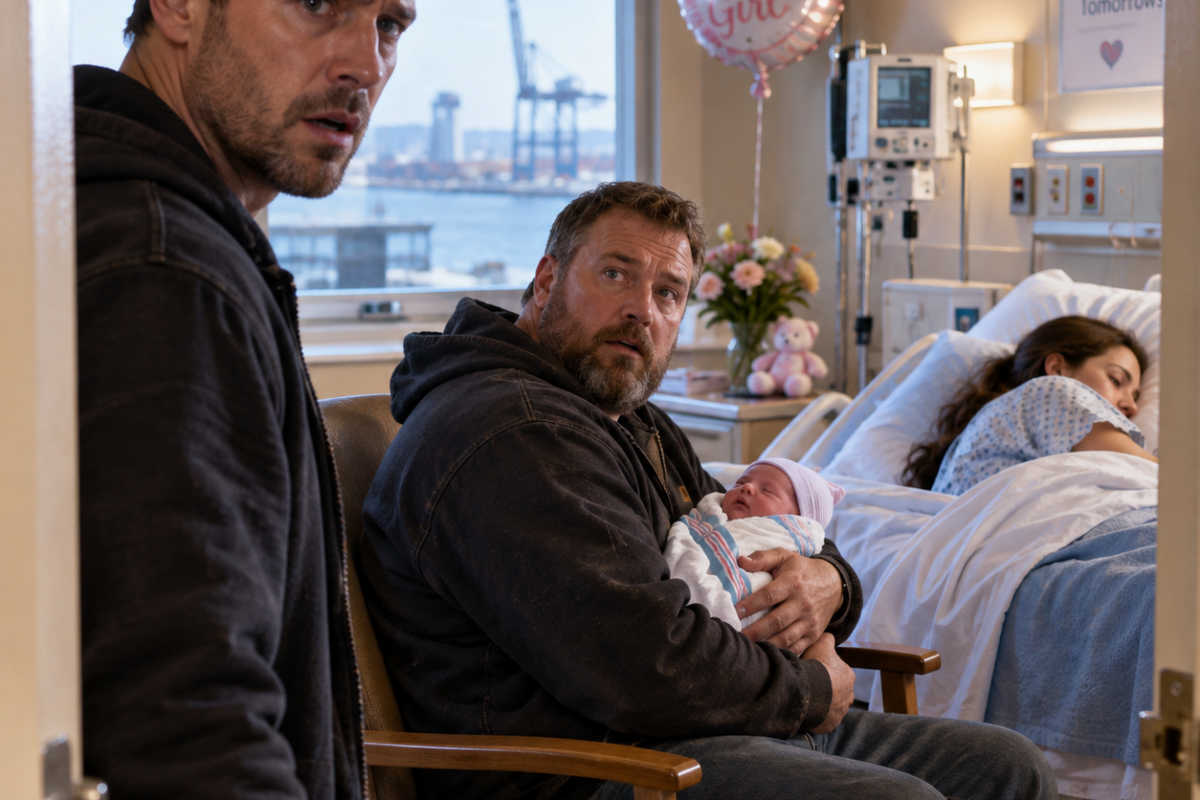
At 3 a.m., the hospital called to congratulate me on becoming a father. “Your wife just gave birth, sir. You need to come meet your baby.” I turned toward my wife, who was sound asleep beside me. “There must be a mistake,” I whispered. “My wife is right here.” The woman on the phone went quiet for a moment. Then her voice changed. “Sir, please come to the maternity ward immediately. If you refuse, we’ll have to contact the police.” I sat up, staring at my sleeping wife. Why would the hospital threaten to call the police over a baby that couldn’t possibly be ours? But when I arrived and saw who was holding that newborn, I stopped in the doorway. It was the last person I ever expected to see.
The Hospital Called at 3 A.M. to Say My Wife Had Just Given Birth. She Was Asleep Beside Me. At 3:07 on a cold Friday…
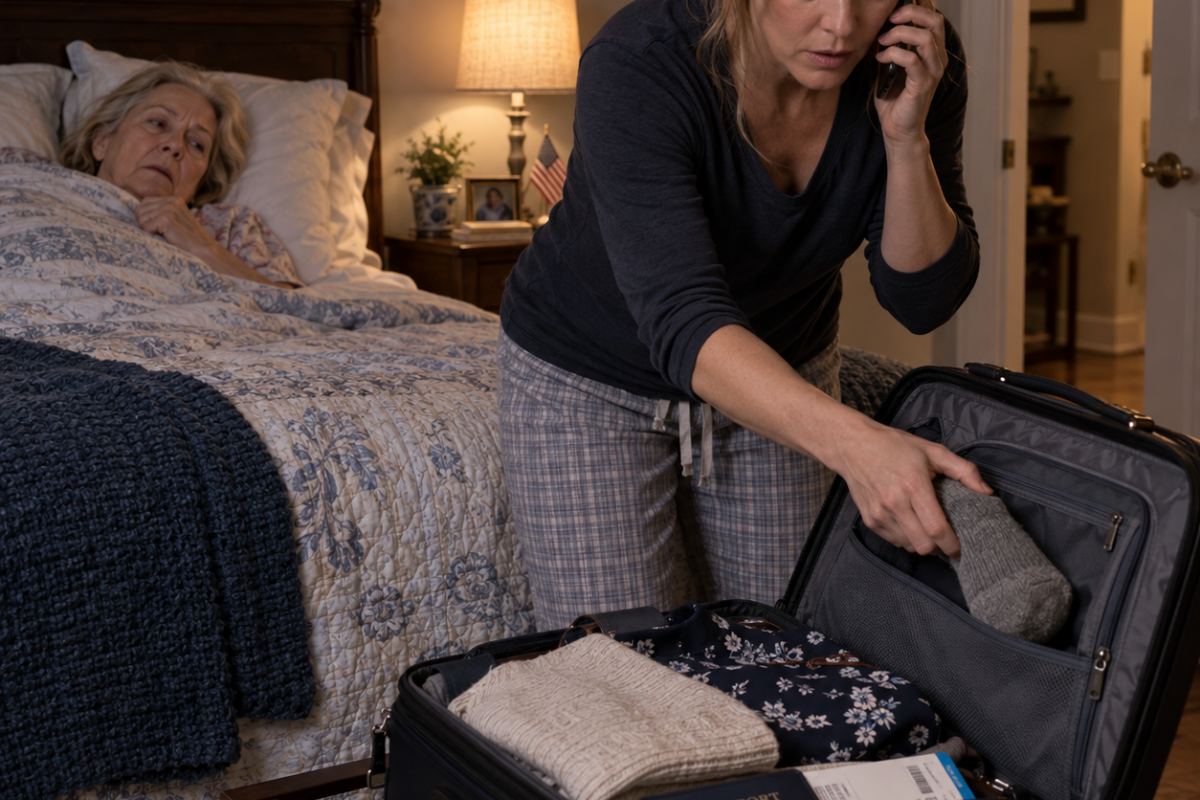
I told my daughter-in-law I had an early flight and went to bed. Just after midnight, my bedroom door slowly opened. Through barely open eyes, I watched her unzip my carry-on, slip something into the hidden inner pocket, and carefully close it again. Then she made a phone call. “It’s in her carry-on. Tip off airport security at six.” My heart started pounding, but I kept pretending to sleep. She had no idea I’d heard every word. And when morning came, I knew there was one thing I absolutely couldn’t do: take that suitcase to the airport.
At Midnight, My Daughter-in-Law Hid a Stolen Museum Pistol in My Carry-On. She Thought Airport Security Would Find It Before I Ever Knew. At 11:58…
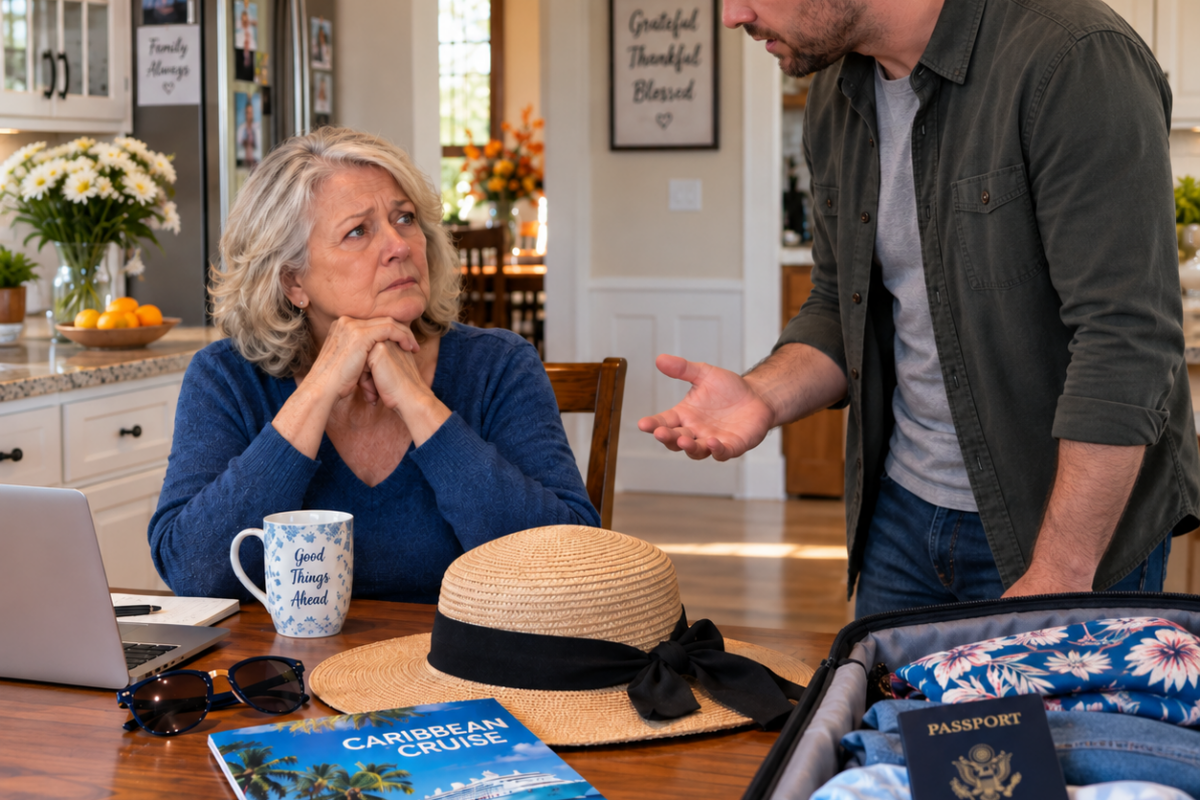
“Thanksgiving is just for my wife’s family,” my son told me. “You’ll have to make other plans.” So I did. I booked a cruise, packed my favorite wide-brimmed hat, and turned off my phone the moment the ship left port. By Thanksgiving afternoon, I was sitting on deck with lobster on my plate, watching the ocean instead of wondering why my own son didn’t want me at his table. I didn’t turn my phone back on until that night. There were 37 missed calls. My son. His wife. Her parents. Even neighbors I barely knew. Then I opened the last voicemail. After hearing the first six words, I put down my fork. Suddenly, I understood why their Thanksgiving dinner had ended early—and why everyone was looking for me.
My Son Told Me Thanksgiving Was Just for His Wife’s Family. So I Took a Cruise, and Eleven Days Later Their Lie Collapsed in Front…

“Henry gets everything—all $80 billion,” Dad announced. “As for you, you’re out of the family. Leave.” I stared at my parents for a moment. “You already sold the company?” Mom smiled. “Every last piece of it.” I slowly closed the folder in front of me. “Without my patents?” Her smile faltered. Dad frowned. “What are you talking about?” I stood up and reached for my coat. “You might want to read page forty-seven of the sale agreement.” For the first time that night, nobody told me to leave.
My Family Said They Were Giving My Brother the Entire $80 Billion Company and Exiling Me. Then the Buyer Asked One Question About My Patents….
My Husband Left Our Children Millions. He Left Me Only His Locked Phone—Then Someone Called It During the Will Reading.
My Husband Left Our Children $8.4 Million and Me an Old Black Phone. Then It Rang. My husband had been dead for twelve days when…

A CEO Dumped Coffee on a Black Temp in Front of the Entire Office—Then She Made One Phone Call
The CEO Poured Coffee Over My Head and Fired Me. He Had No Idea the “Temp” He Humiliated Was Quietly Buying His Company. “You’re the…
End of content
No more pages to load
You Might Also Enjoy

My Husband Left Our Children Millions. He Left Me Only His Locked Phone—Then Someone Called It During the Will Reading.