A Billionaire Left $10,000 in Her Wallet to Test a Janitor—What He Did Instead Exposed Everyone in the Room
A Billionaire Left a $10,000 Wallet for a Night Janitor to Steal. What He Did Instead Exposed a $2.2 Million Fraud.
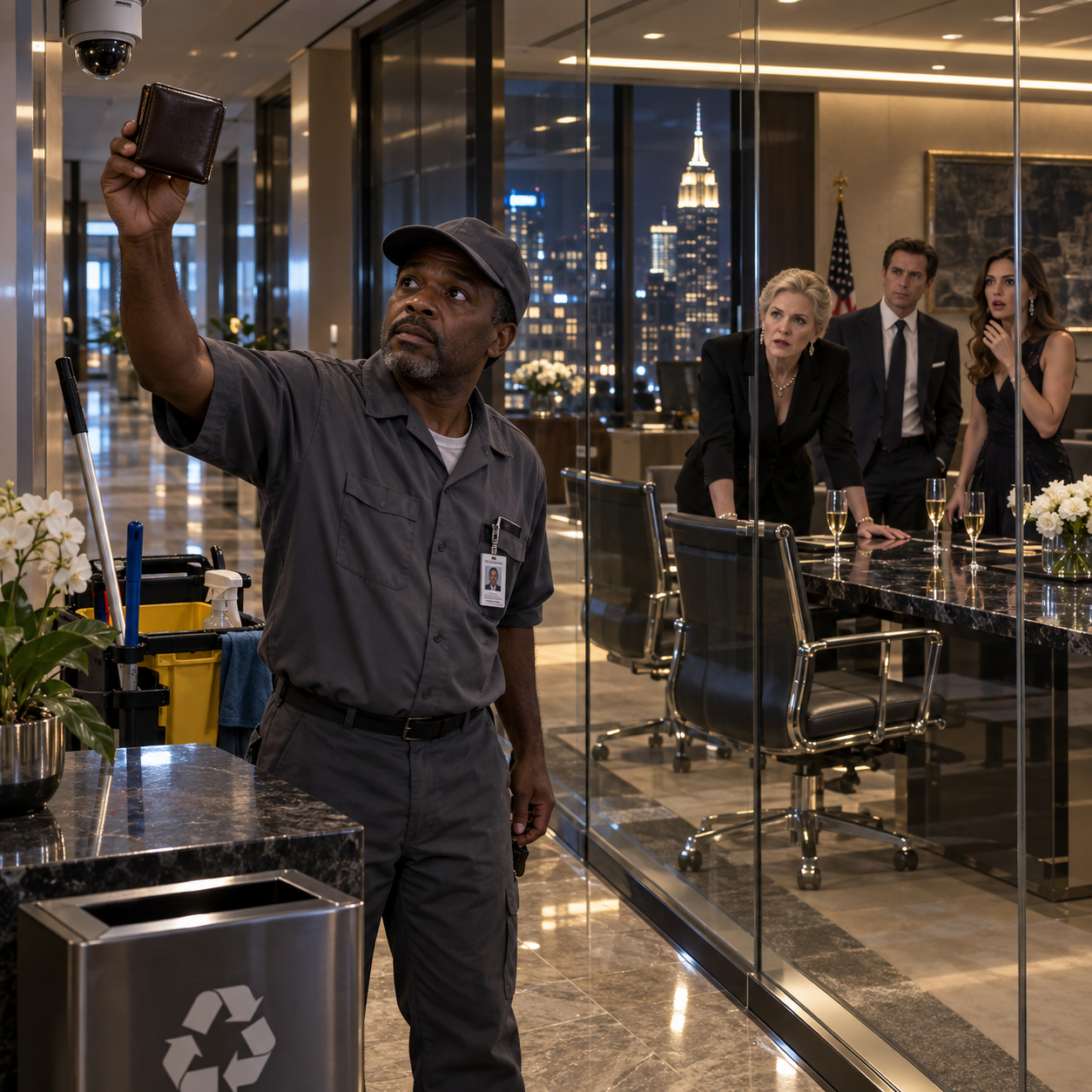
At 11:47 on a Thursday night, Sloane Whitmore placed an eight-thousand-dollar black calfskin wallet on a low marble table beside a recycling bin on the forty-eighth floor of Whitmore Plaza.
Inside were four credit cards, her driver’s license, several folded receipts, and a little over ten thousand dollars in cash.
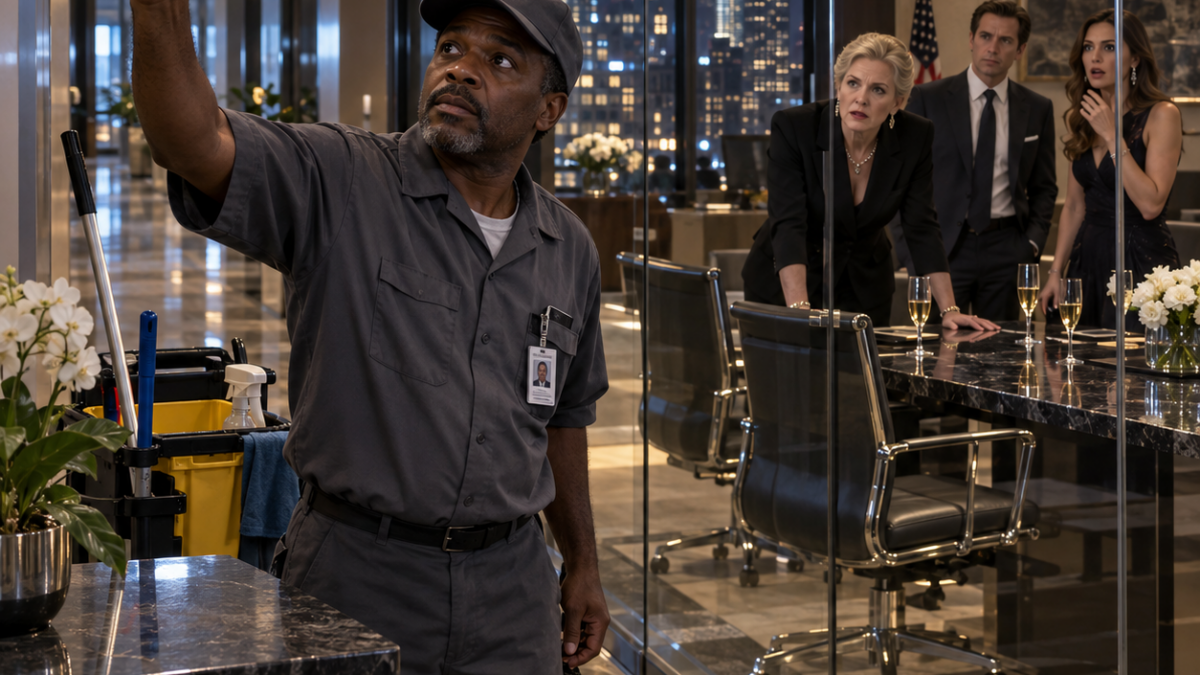
Then she stepped backward into the shadows of the glass-walled conference room with three people who had spent the previous half hour insisting that every human being could be bought if the price was high enough.
Preston Harrington III poured himself another drink.
Vivian Kensington slipped off her heels and tucked one foot beneath her on the leather bench.
Beckett Sterling stood near the windows with his hands in his pockets, looking down at Manhattan as though the city had been built to confirm his opinions.
On a wall-mounted screen, a live security feed showed the empty executive corridor outside.
The wallet sat beneath recessed lighting.
Its gold clasp reflected just enough light to make it impossible to miss.
Preston lifted his whiskey.
“Three minutes.”
Vivian laughed.
“One.”
Sloane glanced at the screen.
“What?”
“One minute,” Vivian said. “Maybe less.”
She nodded toward the corridor.
“You said the night crew is hourly, right?”
Sloane knew the answer.
Roughly.
She had owned the building for nine years and inherited the operating company controlling it six years before that, but until that evening she had never asked what the overnight cleaning staff earned.
“Something like twenty-four an hour,” she said.
Vivian widened her eyes theatrically.
“Then ten thousand dollars is half a year of wages sitting in a hallway.”
Preston smiled.
“He’ll look around first.”
Sloane swirled the ice in her glass.
“They always do.”
Beckett turned from the window.
“They?”
She looked at him.
“People who know they’re doing something wrong.”
He said nothing.
Sloane had known Beckett for nine years.
He advised Whitmore Capital on several family-office investments and sat on two committees connected to the Whitmore Foundation. He was thoughtful, discreet, and unfailingly calm.
He also understood her well enough to recognize when an argument had stopped being theoretical.
That night it had begun with a scandal.
Three weeks earlier, a senior vice president at a competing firm had been arrested after investigators discovered he had routed nearly two million dollars through a Delaware shell company.
Preston called him stupid.
Vivian called him greedy.
Sloane called him predictable.
That became the argument.
Was integrity real?
Or was it simply what people displayed while temptation remained small?
Her father had answered that question for her when she was sixteen.
Everyone has a number.
The only difference is where it sits.
Alexander Whitmore had built his fortune in commercial real estate and private credit. He could be charming in public and terrifying in private. He trusted contracts more than friendships and audited loyalty the way other men audited balance sheets.
Sloane grew up believing suspicion was intelligence.
Then adulthood kept rewarding the belief.
A college boyfriend sold details of their relationship to a gossip site.
A longtime assistant charged personal vacations to Sloane’s corporate card.
A cousin quietly tried to dilute her voting interest in a family holding company.
An investment partner concealed losses for nearly two years.
Every betrayal became another line of evidence supporting her father’s theory.
By thirty-eight, Sloane no longer believed honesty was a fixed quality.
She believed it was a temporary condition.
People were honest while the cost of dishonesty remained too high.
Lower the cost.
Raise the reward.
Eventually, everyone moved.
That was what she told the room.
Preston had laughed.
“Then prove it.”
Vivian loved the idea immediately.
Beckett called it juvenile.
That should have ended it.
Instead, Sloane opened her wallet.
The ten thousand dollars had been withdrawn that morning for a private antique purchase that fell through.
She laid the bills on the conference table.
Preston raised his eyebrows.
“You carry that around?”
“Not usually.”
“Perfect.”
Sloane put the cash back.
“What exactly are we proving?”
“That your philosophy has a price tag.”
“It already does.”
“No.”
Preston gestured toward the corridor where a member of the cleaning crew was collecting abandoned champagne flutes.
“That man.”
Sloane looked through the glass.
Gray uniform.
Tall.
Thin.
Dark hair beginning to silver at the sides.
He moved with the careful efficiency of someone who had cleaned executive floors for years and knew the fastest way to disappear around people who considered him part of the furniture.
Vivian laughed softly.
“He probably doesn’t make in a month what we spent tipping catering tonight.”
Something about the sentence should have stopped Sloane.
Instead, it sharpened the wager.
“What are the terms?”
The ugliness of what happened began there.
Not with the money.
With how quickly four educated, successful adults decided a stranger’s morality belonged to them for entertainment.
Nobody asked whether he would take the wallet.
That question somehow disappeared before being spoken.
They discussed only how long it would take.
Preston: three minutes.
Vivian: one.
Sloane: he would check both ends of the hall first.
Beckett refused to bet.
“I’ll watch.”
At the time, Sloane thought that made him the most restrained person in the room.
Later, she would remember the wording.
I’ll watch.
She carried the wallet into the corridor herself.
Set it on the low table beside the recycling bin.
Turned the clasp toward the light.
Then returned behind the glass.
Someone dimmed the conference-room lights so the camera feed showed more clearly.
Preston poured another drink.
Vivian tucked both feet beneath her.
They waited.
Ninety seconds passed.
Then the janitor came around the corner pushing his cart.
His name was Caleb Rowan.
Sloane did not know that yet.
To her, on the screen, he was gray uniform, mop cart, hourly wage.
Caleb noticed the wallet immediately.
He stopped.
Preston smiled.
“There.”
Caleb looked left.
Then right.
Sloane felt the familiar satisfaction of being proven correct.
“Told you.”
The timestamp later showed that Caleb stood there eleven seconds.
Eleven seconds during which four strangers invented his biography.
Maybe he had debt.
Maybe rent was late.
Maybe someone at home needed money.
Maybe he would take the cash and discard the wallet.
Maybe he had done this before.
Preston said, “He’s calculating.”
Caleb bent down.
Picked up the wallet.
Preston laughed.
Vivian whispered, “Fifty-two seconds.”
Then Caleb did something none of them expected.
He turned toward the ceiling camera.
Held the wallet at chest level where the lens could clearly see it.
Then opened it.
Sloane leaned closer to the screen.
For a moment she still believed she understood what she was seeing.
“He’s checking the amount.”
He wasn’t.
Caleb thumbed past the cash without disturbing it.
Found the driver’s license.
Read the name.
Sloane Alexandra Whitmore.
The building he had cleaned four nights a week for two and a half years carried that surname in brushed steel above the lobby doors.
Caleb closed the wallet halfway.
Looked toward the elevator bank.
The private elevator indicator already showed lobby.
He could not follow.
His janitorial badge did not grant access to the executive elevator.
He looked down the corridor again.
Then began pushing his cart toward the freight elevators.
Wallet visible in his left hand.
Not pocketed.
Not hidden beneath a rag.
Visible.
Preston lifted his glass.
“Wait.”
Vivian looked at him.
“What?”
“He won’t take it under the camera.”
Sloane turned.
“You said one minute.”
“I said he’d take it.”
“He picked it up.”
“There’s a blind spot near the service lift.”
The terms of the bet were already changing.
Sloane should have noticed.
Instead, she kept watching.
Caleb reached the second-floor security landing where Ethan Graves was finishing a routine stairwell check.
Ethan was thirty-four and had worked nights in Whitmore Plaza for three years.
He saw the wallet before he saw Caleb’s face.
His expression tightened.
He extended one hand.
“I’ll take that.”
Caleb did not hand it over.
He pointed toward the camera above the landing.
“That live?”
Ethan looked up.
“Yes.”
“Good.”
Caleb held the wallet higher.
“Log the transfer on camera. Time, amount, everything before it goes in a drawer.”
Ethan frowned.
“You counted it?”
“No.”
“You opened it.”
“To get the name.”
“Then how do you know the amount?”
“I don’t.”
Caleb looked directly toward the lens.
“But whatever’s in there needs to be written down while we’re both standing here.”
Upstairs, the room went quiet.
Sloane felt irritation before understanding why.
Caleb was not being careful with her property.
He was being careful with himself.
Somewhere in his life, he had learned that returning something honestly might not be enough.
He needed evidence of his honesty.
The realization unsettled her.
A minute earlier he had been a variable in a wager.
Now he had a history.
She did not know it yet, but that history began four months earlier on the thirty-first floor.
A partner from a law firm leasing half the level had reported a Cartier watch missing from her office.
Caleb had cleaned the floor that night.
She named him immediately.
Not because anyone had seen him take the watch.
Because he had access.
Building security questioned him.
His supervisor, Marissa Cole, defended him.
The tenant insisted.
For six days Caleb worked while whispers followed him through service corridors.
Security reviewed footage.
HR documented interviews.
Management warned the cleaning contractor that a client relationship might be at risk.
Then the watch appeared.
Not in Caleb’s locker.
Not in the trash.
Not in a pawnshop.
In the tenant’s own Mercedes, wedged between the center console and passenger seat.
She had dropped it while getting out of a cab.
She never apologized.
Never asked that the record be corrected in front of the people who had watched Caleb being questioned.
The matter simply disappeared.
Caleb learned something from those six days.
Being innocent and being believed were separate problems.
After that, he refused to handle found property without a camera and a second witness.
Sloane knew none of this as she watched him insist Ethan record the handoff.
The wallet returned to her fifteen minutes later.
But by then, she had made another choice she would regret more than the wager itself.
She rode the elevator back to the lobby.
Walked across the marble.
Patted her coat pockets.
Then said loudly enough for reception to hear:
“I think I lost my wallet.”
The performance was unnecessary.
She knew where it was.
The night desk radioed Ethan.
Two minutes later Caleb appeared through the service door with him.
He held the wallet with both hands.
“Security logged it.”
He looked at Sloane.
“The amount is on the report.”
She took it.
Then opened it.
And counted the money.
In front of him.
Bill by bill.
Slowly.
Ten thousand dollars.
Every band.
Every note.
Ethan looked at the floor.
Marissa, who had come downstairs after hearing Sloane Whitmore had lost something, went very still.
Caleb watched without expression.
That made it worse.
If he had become angry, Sloane could have defended herself.
If he had complained, she could have said she was merely verifying the contents.
If he had asked for a reward, she could have repositioned the situation as generosity.
He did none of those things.
When she finished, she closed the wallet.
“It’s all here.”
Caleb nodded.
“That’s good.”
Not you’re welcome.
Not I told you so.
He turned toward the service corridor.
Three steps later he stopped.
“There was an envelope inside.”
Sloane looked at him.
“What?”
“It came loose when I opened the wallet to find the license.”
He kept his voice neutral.
“Unsealed. I put it back in the same slot. You may want to make sure it matters.”
Then he pushed his cart through the service door.
Sloane stood in the lobby holding the wallet.
For the first time all evening, something genuinely frightened her.
She did not remember putting an envelope inside.
Back upstairs, Preston was already declaring the experiment inconclusive.
“The camera contaminated it.”
Vivian nodded.
“Obviously.”
“He knew he was being watched,” Preston continued.
Sloane ignored them.
She opened the wallet.
Behind the card slots was a cream envelope.
Saint Catherine Medical Foundation.
FINAL NOTICE.
Her stomach tightened.
Sloane served on the Whitmore Foundation board.
Her mother had created a restricted endowment at Saint Catherine years earlier to support pediatric cardiac procedures for families who fell between charity eligibility and full insurance coverage.
The program mattered to her.
Her mother, Eleanor, had survived a childhood heart defect because a surgeon at a public hospital treated her before the family could afford the bill.
When the Whitmores became wealthy, Eleanor insisted their foundation support pediatric cardiac care.
Sloane pulled out the papers.
The Saint Catherine sheet was only the wrapper.
Beneath it was a wire-transfer summary.
Then a consulting-payment schedule.
Sterling Advisory Partners.
She knew the name.
Beckett’s firm.
Four payments across fourteen months.
Total: $2.2 million.
Restricted pediatric endowment funds.
Sloane read the pages twice.
The conference room became silent.
Preston set down his drink.
Vivian stared.
Beckett stepped closer.
“What is that?”
Sloane looked at him.
His expression was exactly right.
Concerned.
Confused.
Not too much.
Not too little.
Sloane had spent a lifetime around people who understood performance.
Beckett was better than most.
“These came out of my wallet.”
He frowned.
“Out?”
“I didn’t put them there.”
Beckett’s eyes moved toward the door.
Then back.
“How long was the wallet out of your possession?”
The question sounded reasonable.
Eleven minutes.
He did not say Caleb’s name.
He did not have to.
Preston reached the conclusion first.
“That guy.”
Sloane looked at him.
“What?”
“He opened it.”
“To find my license.”
“According to him.”
Vivian frowned.
“A janitor finds ten thousand dollars and somehow corporate foundation records appear inside?”
Beckett sat slowly.
“Let’s not jump.”
That was what he said.
But then he placed the first brick.
“We know one person handled the wallet while you didn’t have it.”
Sloane stared at him.
“He returned ten thousand dollars.”
“Which would make anything else he did look impossible.”
Preston snapped his fingers.
“Exactly.”
The theory assembled itself in less than ninety seconds.
Caleb planted the papers.
Caleb had been paid by someone.
Caleb wanted Sloane to discover them.
Caleb deliberately called attention to the envelope to appear helpful.
Vivian asked how a janitor would understand foundation accounting.
Beckett answered:
“He wouldn’t need to. Someone could simply give him the packet.”
Sloane felt sick.
Not because the theory was persuasive.
Because she saw how easily powerful people created explanations around people who were absent.
Caleb was two floors below, unaware four executives had turned him from entertainment into suspect.
Sloane pulled the security footage.
The angle showed the wallet.
Caleb approaching.
His body blocked the critical seconds while the envelope fell.
From that camera alone, no one could prove whether the papers came from the wallet or his sleeve.
Beckett watched the video several times.
Then said the responsible thing was to inspect Caleb’s locker before evidence could be removed.
Marissa Cole said no.
Her refusal was immediate.
“No.”
Beckett looked at her.
“Excuse me?”
“You need HR or a documented security basis.”
“This involves potential theft from a charitable foundation.”
“That does not make his locker yours.”
“I’m not asking for personal property.”
“You’re asking to search personal property.”
Beckett’s voice remained polite.
“Would you prefer explaining that refusal to the foundation’s auditors tomorrow?”
There it was.
Power rarely needs to shout.
Marissa’s jaw tightened.
The search proceeded under building security authority after an executive escalation.
Locker fourteen contained:
A second uniform shirt.
Canvas jacket.
Work boots.
Lunch container.
A binder clip holding personal receipts.
A small spiral notebook.
A hospital envelope.
Nothing else.
No cash.
No foundation documents.
No burner phone.
Nothing remotely suspicious.
Preston stood in the doorway.
“He’s smart enough not to keep anything here.”
That was when Caleb appeared.
He had come upstairs for a replacement mop head.
He stopped behind Preston.
Saw strangers inside his locker.
He heard the sentence.
Smart enough not to keep anything here.
Caleb looked at Marissa.
Then Sloane.
Then Beckett.
“What do you think I’m hiding?”
No one answered immediately.
Sloane had been a chief executive, investor, board chair, and negotiator for most of her adult life.
She had answered hostile regulators.
Angry shareholders.
Journalists.
Labor counsel.
Banks.
That question defeated her.
Finally she said, “There were documents in my wallet that did not belong to me.”
Caleb waited.
“We need to understand how they got there.”
“Then look at the cameras.”
“We did.”
“And?”
“There’s an obstruction.”
He looked at her.
“You think I put them there.”
Sloane opened her mouth.
Nothing useful came.
Caleb took one step closer.
“You think I picked up ten thousand dollars, carried it past cameras, told security to write down the amount, returned it to you, and did all that so I could secretly put paper in your wallet.”
No one answered.
His voice remained level.
“Do you really believe that?”
Sloane knew the answer.
No.
But she also knew the documents had appeared.
And Beckett had spent ten minutes explaining why Caleb might be involved.
Her silence lasted only two seconds.
Two seconds too long.
Caleb nodded once.
Not angry.
Just finished.
He removed his work gloves.
Placed them on the locker shelf.
Set down his supply-room key.
“I’m taking the rest of the shift.”
Marissa stepped forward.
“Caleb.”
“I’ll make up the hours Thursday.”
“You don’t have to leave.”
“Yes.”
He looked at Sloane.
“I do.”
Then he walked away.
Sloane watched him cross the loading dock.
Part of her wanted him to turn around and shout.
Call her arrogant.
Threaten to sue.
Do something dramatic enough to let her dislike him.
He did not.
Ethan Graves found the missing footage.
Guilt made him thorough.
He had been the first person to look suspiciously at Caleb when the wallet appeared.
That expression bothered him.
So after Caleb left, Ethan sat at the security console and reviewed the camera inventory.
Forty-eighth floor.
Hallway camera.
Elevator camera.
Conference-room entrance.
Service corridor.
HVAC maintenance camera.
He stopped.
The HVAC camera.
It was not part of the standard security display.
Maintenance had installed it temporarily after repeated access to a mechanical panel.
Its angle faced the corridor almost head-on.
Ethan called Marissa.
At two in the morning, Sloane, Marissa, and Ethan stood shoulder to shoulder in an engineering closet watching grainy footage on a monitor smaller than a dinner plate.
Timestamp 11:31 p.m.
Empty hallway.
11:34.
Beckett Sterling came into frame.
Alone.
He stopped near the table where Sloane’s coat had been lying earlier.
His back was mostly toward the camera.
His right hand moved.
Nineteen seconds.
Then he picked up an abandoned champagne flute, carried it several steps, and put it down elsewhere.
Not proof.
Sloane’s heart started beating faster anyway.
Ethan rewound another camera.
Reception area.
10:10 p.m.
Party in progress.
Sloane shaking hands with members of the acquisition team.
A woman in a navy dress approached from behind.
Dana Reyes.
Senior accountant in Foundation Finance.
Sloane knew her vaguely.
Four years with the foundation.
Quiet.
Competent.
On the footage, Dana moved beside Sloane’s coat.
One hand holding a drink she never sipped.
The other slipping a cream envelope into the coat pocket.
Sloane stopped breathing.
“There.”
Ethan froze the image.
Ninety seconds later, Dana left the party.
But there was something else.
Twenty feet away.
Beckett Sterling stood near the bar.
Watching her.
He had seen the envelope go into the coat.
The next footage showed him entering the corridor later.
He had removed it.
But why was it in Sloane’s wallet?
Because the wallet had been beside the coat.
A temporary hiding place.
A clever one.
If Beckett carried the documents through building security or returned upstairs later with them, he created risk.
So he slipped the envelope into a wallet belonging to a woman he expected to take home without opening.
Retrieve it later.
No alarm.
No evidence left behind.
Then Sloane used the wallet as bait.
Her stupid game disrupted his plan.
Caleb picked it up.
The envelope fell.
He put it back.
And told her about it.
Sloane stood in the engineering closet staring at the paused image.
Her contempt had accidentally delivered evidence of a multimillion-dollar fraud into her own hands.
If Caleb had taken the cash and discarded the wallet, the documents might have disappeared.
If he had dropped the wallet in a bin, maintenance might have removed the envelope without knowing what it was.
If he had read the documents and tried to exploit them, Beckett could have claimed blackmail.
Instead Caleb had done the dullest possible thing.
He respected property that was not his.
That ordinary act preserved everything.
By four, Beckett’s building access was suspended.
His system credentials were frozen pending investigation.
He called twice.
Sloane did not answer.
Preston and Vivian changed their memories before breakfast.
Preston told someone at nine that he had always been uncomfortable with the wager.
Vivian told a mutual friend she had argued it was unfair from the beginning.
Neither lied exactly.
They edited.
People often revise themselves the moment yesterday’s certainty becomes expensive.
Sloane did not have that luxury.
At eleven the next morning, Marissa called her into the operations office.
“You owe Caleb the truth.”
“I know.”
“All of it.”
Sloane looked at her.
“All?”
“The bet.”
Her stomach tightened.
“No.”
Marissa stared.
“That is why his wallet—”
“My wallet.”
“That is why your wallet was in the hallway.”
Sloane looked through the office window.
“You understand what saying that means.”
“Yes.”
“Reputation.”
“Yes.”
“Employment exposure.”
“Yes.”
“Possible liability.”
“Yes.”
Marissa folded her arms.
“So was searching his locker.”
That landed.
The truth sounded uglier spoken aloud.
Sloane had put ten thousand dollars where an hourly employee would find it because she wanted to see whether he would steal.
She had watched him on camera.
Bet on his failure.
Then counted the money in front of him.
Then allowed a search of his locker when an accusation became convenient.
No charitable fraud finding erased that.
While she spoke, Caleb appeared outside the half-open door.
He had returned for the truck keys he left in the supply drawer.
He heard enough.
He stood there with the keys in his hand.
Sloane saw him.
Stopped speaking.
Caleb pushed open the door.
Marissa closed her eyes.
Sloane stood.
“Caleb.”
“I heard.”
“I was going to tell you.”
“When?”
She had no answer.
He came inside.
“Why?”
Sloane hated how simple the question was.
“The wallet.”
“I know.”
“It was a bet.”
“I heard that part.”
She looked at him.
“I thought—”
“You thought I’d take it.”
“Yes.”
He nodded.
Not surprised.
“You knew?”
“I knew something.”
“How?”
“When I picked it up, the conference-room glass reflected the monitor.”
He gestured vaguely toward the upper floors.
“Four people in a dark room looking at a screen at midnight.”
“Why didn’t you say anything?”
“It didn’t change who owned the wallet.”
Sloane felt that sentence settle inside her.
“It only changed what you thought of us.”
He looked at her.
“No.”
A pause.
“It confirmed what I already knew people sometimes do when they think uniforms tell them enough.”
Sloane swallowed.
“Why didn’t you take it?”
There.
The question she had wanted to ask since 11:47.
Ten thousand dollars.
A night custodian.
A city where hourly wages disappear into rent, groceries, transit, and medical bills.
Caleb looked toward Marissa.
Then at the floor.
He did not answer.
Sloane mistook the silence at first.
Then Marissa remembered the locker.
The binder clip.
Medical statements.
Tuition.
She looked at Caleb.
He shook his head slightly.
Too late.
Sloane saw the exchange.
“What?”
“Nothing,” Caleb said.
Marissa spoke anyway.
“He didn’t refuse because he didn’t need it.”
Caleb closed his eyes.
“Marissa.”
“You wanted your answer.”
She looked at Sloane.
“His wife died three years ago.”
Sloane went still.
“Hospital balance. Mercy General.”
Marissa continued.
“He’s been paying two hundred forty dollars a month.”
Caleb stared at the wall.
“There was also a university tuition statement.”
“Enough.”
His voice remained quiet.
But it ended the subject.
Sloane understood anyway.
Ten thousand dollars had not been meaningless.
It could have cleared most of the medical debt.
Paid tuition.
Maybe repaired a car.
Maybe covered rent for months.
Caleb had held a sum that could materially change his life.
And returned it.
Not because he was above wanting it.
Because wanting it was not enough.
“I’m sorry,” Sloane said.
Caleb picked up his truck keys.
“Okay.”
“That’s all?”
“What do you want me to say?”
“I don’t know.”
“That you’re forgiven?”
Sloane looked down.
“No.”
“Good.”
He slipped the keys into his pocket.
“Because you’re not apologizing for losing a wallet.”
“I know.”
“You’re apologizing because I passed.”
That hurt.
Because part of her was.
He continued.
“You don’t need to believe I’m a good man.”
“I do.”
“Doesn’t matter.”
He opened the door.
Then stopped.
“You should stop creating chances for people to disappoint you just so you can keep believing you were right about people.”
Sloane stared.
Caleb looked back.
“The test wasn’t really about me.”
Then he left.
The internal investigation took nineteen days.
Dana Reyes had discovered irregular consulting payments in February.
Restricted funds from the Whitmore Foundation’s pediatric cardiac endowment had been routed through consulting agreements with Sterling Advisory Partners and a small network of intermediaries.
The work product supporting the fees was nearly nonexistent.
Generic market research.
Publicly available reports.
Recycled presentations.
Payments totaling just over $2.2 million.
Dana reported the issue internally.
Her supervisor told her it had been reviewed.
She escalated.
The complaint moved through channels connected to people who ultimately answered to Foundation Chairman Royce Albright.
Albright had been Alexander Whitmore’s college roommate.
Friend of the family for forty years.
He had taught Sloane to sail when she was twelve.
He had spoken at her father’s funeral.
Sloane trusted him.
Naturally, that made him the perfect person not to question.
Dana spent five months trying to find a path around the hierarchy.
Finally, she put copies of key documents in an envelope and tried to get them directly to Sloane at the acquisition celebration.
Beckett saw the handoff.
Removed the envelope from Sloane’s coat.
Hid it in her wallet.
Then the ridiculous wager began.
The pieces fit.
But not cleanly enough for instant conclusions.
Outside counsel reconstructed transfers.
Reviewed invoices.
Interviewed accounting staff.
Preserved emails.
Compared service contracts.
Verified Dana’s original complaints.
Traced foundation money.
Royce Albright hired separate counsel.
Beckett denied intentional wrongdoing at first.
Then described the arrangements as “strategic advisory services.”
The board disagreed.
So did the auditors.
The most difficult meeting happened two weeks later.
Foundation boardroom.
Twenty-sixth floor.
Long walnut table.
Eleven directors.
Outside counsel.
Audit representatives.
Beckett at one end.
Sloane at the other.
He looked calm.
Of course.
Men like Beckett build careers by staying calm while everyone else decides what their calm means.
He described control failures.
Process ambiguity.
Operational oversight.
Poor escalation.
He mentioned Dana.
Indirectly.
Marissa.
Building security.
Support staff.
Sloane recognized what he was doing.
Distributing blame downward.
Making a structural crime look like a collection of administrative mistakes.
He spoke for sixteen minutes.
Sloane let him finish.
Then she placed two evidence drives on the table.
Walked the board through the footage.
Dana at 10:10.
Beckett watching.
Beckett in the corridor at 11:34.
Caleb finding the wallet at 11:49.
Security logging the handoff.
Then the consulting agreements.
The endowment restrictions.
Payment authorizations.
Reduced funding notices from Saint Catherine.
The pediatric cardiac program had delayed assistance to several families because expected foundation funding was lower than forecast.
That detail changed the room.
Money had not simply moved between rich people.
Restricted charitable money had been taken from a program for sick children.
Then Sloane reached the part outside counsel advised her not to include.
It was unnecessary to the fraud case.
Potentially embarrassing.
Potentially harmful.
She looked around the table.
“My wallet was not lost.”
Counsel stopped writing.
Preston, attending as an investor representative, looked up sharply.
Sloane continued.
“I put it in that hallway.”
Silence.
“There was ten thousand dollars in it.”
Beckett’s expression changed for the first time.
Sloane kept going.
“Three people and I had been discussing whether honesty has a price.”
Preston said softly, “Sloane.”
She ignored him.
“We saw Caleb Rowan cleaning the executive corridor.”
Every word sounded worse aloud than in memory.
“We decided to test him.”
One director stared at her.
“You did what?”
“I put my wallet on a table and we watched the security feed.”
“Why?”
“Because I believed he would take it.”
A woman near the end of the table asked, “Based on what?”
Sloane looked at her.
“Nothing.”
The word hurt.
“His uniform.”
No one moved.
“We argued about how long it would take. Not whether he would steal.”
Preston shifted.
“That isn’t exactly—”
“It is exactly what happened.”
Sloane turned toward him.
“You bet three minutes.”
He went silent.
She looked back at the board.
“The only reason we are looking at these documents is that the man I tried to catch stealing refused to steal from me.”
Outside counsel closed his pen.
Sloane continued.
“Then when the documents appeared, several of us found it easier to suspect him than to question people in this room’s social and professional circle.”
Beckett said, “That is not fair.”
She looked directly at him.
“No.”
“It isn’t.”
That was the point.
Beckett was suspended pending final review and terminated eleven days later.
Royce Albright resigned as foundation chair that week.
The matter went to the appropriate state charity regulators and prosecutors.
Funds were frozen where possible.
Insurance carriers became involved.
Lawyers multiplied.
The foundation commissioned an outside governance review.
Not glamorous.
Not instant.
Consequences rarely arrive with one dramatic door opening.
They arrive as calendars full of depositions.
Board packets.
Legal holds.
Calls no one wants to take.
The Foundation eventually recovered a substantial portion of the diverted funds through settlements and asset recovery.
Saint Catherine’s restricted endowment was restored and supplemented.
Dana Reyes kept her job.
More than that.
She was moved into the controller’s office and promoted.
That decision made Royce’s remaining allies furious.
Good.
Ethan Graves was not disciplined for finding the maintenance footage despite having stretched internal procedure.
Instead, the building revised its camera inventory process so “unknown” equipment could no longer exist outside the official system.
Marissa Cole received the staffing and incident authority she had requested for years.
And Sloane changed the foundation’s whistleblower channel so complaints involving senior leadership bypassed internal management entirely.
Reports would go simultaneously to an external firm and the audit committee chair.
No executive could quietly bury the report of someone they supervised.
Those were institutional changes.
Caleb’s situation was personal.
Sloane asked him to meet three weeks after the board meeting.
Not in her conference room.
Marissa’s office.
Neutral.
Caleb came in his own clothes.
Canvas jacket.
Collared shirt.
Dark work pants.
He sat with his hands on his knees.
Sloane had spent days deciding what to offer.
Money seemed obvious.
Her guilt attached numbers to everything.
She prepared $250,000.
Enough to clear medical debt.
Tuition.
Savings.
A new beginning.
She explained the payment as compensation for the humiliation and the violation of his privacy.
Caleb listened.
Then said, “No.”
Sloane almost smiled.
Not because she found it funny.
Because her first thought was:
Too low.
The thought arrived automatically.
Quarter million rejected.
Increase offer.
She caught herself.
Caleb saw it.
“You’re still doing arithmetic.”
She looked away.
“Yes.”
“I don’t want quiet money.”
“It isn’t hush money.”
“It closes the conversation.”
“That’s not my intention.”
“It’s what money does when somebody powerful feels bad.”
Sloane folded her hands.
“What do you want?”
He took his time.
“Don’t fire Ethan.”
“He isn’t being fired.”
“Good.”
“Anything else?”
“Marissa.”
“She’s safe.”
“Dana.”
“Promoted.”
He nodded.
“That’s it.”
Sloane stared at him.
“For you.”
“Nothing.”
“You have hospital debt.”
His face changed.
“That was none of your business.”
“You’re right.”
“I have tuition.”
“You’re right.”
“You searched my locker.”
Sloane swallowed.
“Yes.”
“You already took enough information.”
“I’m sorry.”
He looked toward the window.
She waited.
Finally he said, “If you want to change something for me, change the procedure.”
“What procedure?”
“Found property.”
Sloane almost laughed from surprise.
“That’s what you want?”
“Yes.”
“Why?”
“Because next time somebody finds a watch, or a wallet, or a phone, they shouldn’t spend six days wondering whether being honest will be enough.”
He explained his method.
Camera.
Two witnesses.
Log.
Item count.
Sealed bag.
Signature.
Chain of custody.
Simple.
Boring.
Effective.
Sloane wrote it down.
Caleb watched.
“You don’t have to write everything I say.”
“I’m learning.”
That almost made him smile.
Almost.
The rule went into effect across all four Whitmore properties.
Laminated cards near security desks.
Found property requires:
Two employees.
Camera coverage.
Time logged.
Contents documented where appropriate.
Sealed storage.
Two signatures.
No exceptions.
Marissa called it “The Rowan Rule.”
Caleb hated the name.
So the official documents did not use it.
Everyone called it that anyway.
A separate opportunity came later.
Facilities Integrity Supervisor.
A real position.
Not invented to rescue Sloane’s conscience.
Chain-of-custody procedures.
Incident documentation.
Independent reporting systems.
Training across four properties.
Salary: $94,000.
Benefits.
Daytime hours with some nights.
Sloane refused to hand him the job privately.
He interviewed.
Marissa.
Two facilities directors.
Outside HR representative.
Caleb asked a question during the interview.
“Am I here because I’m qualified, or because she feels guilty?”
Marissa said, “Both.”
Caleb looked at Sloane.
She had insisted on attending only the final portion.
“That disqualifies it,” he said.
Sloane answered carefully.
“If guilt created the role, yes.”
“Did it?”
“No.”
“How do I know?”
“You don’t.”
She paused.
“That’s why there are three people here whose jobs don’t depend on making me feel better.”
Caleb looked toward the panel.
One of the facilities directors said, “You have eleven years as maintenance manager at Ashford House.”
Sloane had learned about that only during the formal background review.
Ashford House.
Seventy-room hotel in New Haven.
Caleb had worked there more than a decade.
Maintenance manager.
Then an electrical fire broke out in a third-floor service closet one March morning.
Thirty-one guests evacuated.
Two treated for smoke inhalation.
No fatalities.
Fire records credited the maintenance manager with clearing two service corridors and checking rooms occupants had not vacated.
No newspaper story.
No award.
The hotel’s insurance costs rose.
The property was sold eight months later.
Staff layoffs followed.
At almost the same time, Caleb’s wife received a cancer diagnosis.
Her treatment lasted eighteen months.
She died.
Medical debt remained.
Caleb moved to New York to be closer to his daughter, Erin, who attended a state university in Pennsylvania.
A management job did not materialize immediately.
He took overnight cleaning work.
Then stayed because the schedule allowed him to send money toward tuition while searching for something better.
There was no secret fortune.
No hidden MBA.
No dramatic revelation that the janitor was actually a retired billionaire.
He was exactly what he appeared to be.
A fifty-two-year-old widower cleaning offices at night because life had rearranged itself.
And he had been honest before anyone rich bothered testing him.
The hiring panel selected him.
Nine days later he accepted.
The promotion changed his paycheck.
Not his personality.
He still started many shifts in the loading dock with coffee from a paper cup.
Still knew which maintenance technician’s daughter had asthma.
Still held the service door for cleaning staff.
Still wore the same canvas jacket to work when he was not required to wear a blazer.
Sloane noticed because she had expected transformation.
Money had been central to her interpretation of people for so long that she assumed more money always changed behavior.
Sometimes it simply changed what bills arrived with less fear.
The first month, Caleb paid off Mercy General.
He told nobody.
Marissa found out because he came into work the next morning looking exhausted after driving to Pennsylvania to help Erin settle her tuition balance.
“You could have taken a day.”
“I did.”
“Yesterday was Sunday.”
“That counts.”
“It does not.”
They argued.
Normal workplace argument.
Sloane heard about it and smiled.
Eight months passed.
Whitmore Plaza changed gradually.
Not because one janitor taught rich people a lesson and everything became fair.
That would have been childish.
Some executives still ignored cleaning staff.
Some tenants still left cups wherever they wanted.
People still complained about elevators as though elevator mechanics controlled time.
But systems changed.
Names appeared on contractor badges instead of generic labels.
Night crews attended quarterly safety meetings with decision-making authority, not just as observers.
Security incident reviews included facilities personnel.
The foundation board added two independent directors with nonprofit oversight experience.
Whistleblower reports were reviewed externally.
Saint Catherine’s pediatric program restored funding.
Dana visited once to show Sloane the quarterly report.
Forty-three additional procedures supported that year.
Sloane stared at the number.
“Forty-three.”
Dana nodded.
“That’s what the recovered allocation covered.”
Forty-three children.
For months, the theft had existed for Sloane as accounting.
Two-point-two million.
Consulting agreements.
Invoices.
Wire transfers.
Forty-three made it human.
“Thank you,” Sloane said.
Dana looked surprised.
“For what?”
“The envelope.”
Dana smiled without humor.
“I nearly didn’t do it.”
“Why did you?”
“I kept thinking about those funding notices.”
She looked toward the window.
“I knew somebody was going to explain the shortfall as market conditions.”
“And you didn’t believe it.”
“I’m an accountant.”
Sloane laughed.
That became one of the few times the story felt simple.
In November, Sloane came downstairs around nine at night after a board dinner.
A worn brown wallet sat on a bench near the north elevators.
Twenty feet away, a young woman from the cleaning crew pushed a cart toward it.
Sloane stopped.
The old reflex arrived before thought.
Step behind the corner.
Wait.
See what happens.
The architecture of suspicion was still intact.
That frightened her.
People like to believe one humiliating lesson permanently transforms personality.
It doesn’t.
Habit survives insight.
Character changes through repetition.
Sloane looked at the wallet.
Then at the approaching cleaner.
She walked over.
Picked it up herself.
Carried it to security.
“Found this near the north elevators.”
The officer pulled out the incident log.
“Time?”
“Nine oh-seven.”
“Contents?”
“Not checked.”
The officer called over a second employee.
Camera.
Two signatures.
Seal.
The Rowan procedure.
Caleb stood near the freight corridor with a clipboard.
He saw everything.
Sloane finished at the desk.
Turned.
Their eyes met across the lobby.
Neither said anything.
The young cleaner passed the now-empty bench without ever knowing she had almost become somebody else’s experiment.
That mattered.
Later that week, Sloane stayed late.
Caleb was finishing an incident review near reception.
She approached.
“Can I ask you something?”
“You usually do.”
“Did you ever think about taking it?”
He looked up.
“The wallet?”
“The cash.”
Caleb set down his clipboard.
“Yes.”
The answer startled a laugh out of her.
He raised an eyebrow.
“Sorry.”
“You expected no.”
“I did.”
“Why?”
“Because that’s the story everyone tells now.”
“What story?”
“That it never tempted you.”
Caleb shook his head.
“Of course it did.”
“How long?”
He thought.
“Two seconds.”
Sloane waited.
“What did you think about?”
“My wife’s bill.”
He looked toward the elevators.
“Erin’s tuition.”
“Anything else?”
“Car needed brakes.”
He smiled faintly.
“I had options.”
“And then?”
“I did arithmetic.”
The word made Sloane smile.
“Two seconds wasn’t worth spending twenty years explaining myself to myself.”
That was all.
No sermon.
No claim of moral purity.
He wanted the money.
Needed it.
Considered it.
Then decided not to take it.
Sloane went home thinking about her father.
Everyone has a number.
She had repeated the sentence for twenty years as though Alexander Whitmore had handed her a key to understanding human nature.
Maybe he had only described himself.
Maybe a man who spent his life assigning prices to loyalty eventually believed prices were all loyalty had.
Sloane had inherited more than his money.
She inherited his arithmetic.
The wallet finally taught her its limits.
Money can create temptation.
Money can reveal need.
Money can create pressure.
It can even buy silence for a while.
What it cannot do is manufacture the full truth of a person.
Caleb Rowan was not honest because ten thousand dollars meant nothing.
He was honest while ten thousand dollars meant something.
That was the distinction Sloane had never understood.
She had spent years designing tests that gave people opportunities to disappoint her.
Then she used the failures as proof she was wise to trust no one.
The method protected her from surprise.
It also guaranteed loneliness.
A person cannot fail a test they were never forced to take.
That idea stayed with her.
It changed how she managed Whitmore Capital.
Slowly.
She stopped using loyalty as a vague executive quality and started building structures where people did not have to rely on loyalty alone.
Dual approvals.
Independent reviews.
Protected escalation channels.
Written conflict rules.
She also changed something smaller.
She began learning names.
Not performatively.
Not a CEO walking around shaking hands for photographs.
Names.
Deb at reception.
Luis.
Ethan.
The overnight porter whose mother lived in Queens.
A woman on the cleaning crew named Maribel who took nursing classes during the day.
A maintenance electrician named Anthony whose twins were applying to college.
Sometimes Sloane caught herself feeling proud for knowing them.
Then she recognized the arrogance inside even that.
Knowing someone’s name is not generosity.
It is the minimum.
Caleb never praised her for changing.
That helped.
Once she asked whether he thought the company was better.
He answered:
“Some parts.”
“What parts aren’t?”
“Want the list?”
“Yes.”
He gave it to her.
Vendor payment delays.
Break-room equipment that took too long to repair on night shift.
Security escorts that treated contractors differently from employees.
A scheduling system that penalized janitorial staff for subway delays but did not apply equivalent standards to senior employees arriving late to meetings.
Sloane listened.
Fixed some.
Disagreed on others.
Respect did not turn Caleb into her moral oracle.
That would have been another kind of objectification.
He was an employee.
Experienced.
Sometimes right.
Sometimes stubborn.
Once wrong about an equipment contract by almost forty thousand dollars because he misunderstood the warranty terms.
Sloane enjoyed reminding him.
“You can stop smiling.”
“I’m not.”
“You are.”
“Integrity doesn’t include procurement genius, apparently.”
He laughed.
That was when their relationship became real.
Not billionaire and janitor.
Not guilty executive and virtuous employee.
Two adults capable of disagreeing without reducing each other to roles.
Erin Rowan graduated the following spring.
Caleb invited Marissa.
Then, after hesitating for three days, Sloane.
She almost declined.
“It’s family.”
“You’re not family.”
“Exactly.”
He looked at her.
“Erin asked.”
So she went.
State university stadium.
Folding chairs.
Parents holding balloons.
Too much sun.
Erin graduated in respiratory therapy.
Afterward, Caleb introduced them.
“My daughter, Erin.”
Erin shook Sloane’s hand.
“I know who you are.”
Sloane winced.
“That sounds ominous.”
“My dad doesn’t talk about work much.”
Caleb said, “Good policy.”
Erin smiled.
“He told me about the wallet.”
Sloane looked at Caleb.
“You said you didn’t talk about work.”
“That wasn’t work.”
Fair.
Erin hugged her father.
“Dad paid my last semester off.”
“That’s wonderful.”
Caleb gave Sloane a warning look.
Do not ask.
She understood.
No arithmetic.
They took a photo.
Sloane stood at the edge.
That felt right.
The Whitmore Foundation case ended quietly by comparison.
Settlements.
Regulatory agreements.
Governance changes.
Beckett eventually faced criminal charges related to misuse of charitable funds and falsified records.
Royce Albright resolved separate civil and regulatory matters.
Sloane did not follow every hearing.
At first, she thought that meant she was avoiding responsibility.
Then Dana told her:
“You don’t need to turn accountability into entertainment.”
That sentence landed harder than Dana intended.
Sloane had once turned Caleb’s vulnerability into entertainment.
She would not do the same with Beckett’s downfall.
She read legal updates.
Approved institutional decisions.
Moved on.
Preston Harrington remained in her social circle for a while.
Less frequently.
Their friendship had depended partly on shared cynicism.
Once Sloane stopped finding it sophisticated, they had less to discuss.
At dinner one night, Preston complained she had become moralistic.
“Have I?”
“Yes.”
“You used to be more fun.”
“I put ten thousand dollars in a hallway to see whether an employee would steal it.”
“Exactly.”
He smiled.
Sloane looked at him.
“You think that was fun.”
His smile faded.
Their friendship never fully recovered.
That was fine.
Vivian surprised her.
Months after the incident, Vivian asked to meet.
They sat at a small café.
No private dining room.
No champagne.
Vivian stirred coffee for too long.
“I’m sorry.”
“For what?”
“The bet.”
Sloane waited.
“And afterward.”
“Which part?”
“Changing the story.”
Sloane looked at her.
Vivian laughed nervously.
“You knew.”
“Yes.”
“I told people I had been against it.”
“Yes.”
“I wasn’t.”
“I know.”
Vivian stared at her cup.
“I didn’t want to be the kind of person who did that.”
Sloane understood.
“Neither did I.”
“That doesn’t help.”
“No.”
They sat in silence.
Then Sloane said, “At least now you know which part you want to change.”
Vivian looked up.
“Is that what you’re doing?”
“Trying.”
That friendship survived.
Different.
Better.
Marissa eventually retired.
On her last day, facilities staff threw a lunch in the loading dock because she refused the executive dining room.
Sloane attended.
Marissa gave her a gift.
A binder clip.
Sloane stared.
“What is this?”
“From locker fourteen.”
Sloane almost dropped it.
“You kept that?”
“I keep everything.”
Caleb laughed from across the room.
Marissa looked at Sloane.
“Remember the first thing you found when you went looking for proof somebody was a thief?”
Sloane remembered.
Hospital statements.
Tuition.
Ordinary financial pain.
Nothing criminal.
She closed her fingers around the binder clip.
“I remember.”
“Good.”
Marissa hugged Caleb.
Then Sloane.
Whispered:
“Don’t get weird about it.”
Then left.
Years passed.
Whitmore Plaza remained Whitmore Plaza.
Buildings outlive scandals.
Most tenants eventually forgot.
New employees heard fragments.
There was a wallet story.
A foundation investigation.
Some executive got fired.
Facilities had unusually strict found-property rules.
The story became institutional folklore.
Caleb disliked most versions.
In some, he was offered a million dollars.
In others, he secretly owned property.
One version claimed Sloane discovered he had been a Navy SEAL.
He was not.
Another said his daughter needed heart surgery.
She did not.
Stories resist ordinary goodness.
People keep searching for a twist that makes integrity easier to explain.
Hidden wealth.
Military past.
Secret education.
Rare tragedy.
Anything except:
A man needed money and did not take money that was not his.
Sloane came to understand why.
If Caleb had secretly been wealthy, his decision would not challenge anyone.
If ten thousand dollars were trivial, returning it would be pleasant.
But he was paying dead-wife medical bills.
Tuition.
Rent.
Car repairs.
The temptation was real.
That made the decision uncomfortable for people who preferred easy morality.
Caleb eventually became director of facilities integrity across Whitmore properties.
Not overnight.
Not as a reward for the wallet.
Years of work.
Certifications.
Management responsibility.
Training.
His salary grew.
He moved from night shift.
The first time he got a private office, it was small and windowless.
Sloane asked whether he wanted another.
“No.”
“Why not?”
“Door closes.”
“That’s your standard?”
“After thirty years in maintenance? Luxury.”
He kept the old mop cart label on a shelf.
ROWAN – NIGHTS.
Sloane noticed.
“Sentimental?”
“No.”
“Then why?”
“Reminds me people believed uniforms were biographies.”
She nodded.
That sentence stayed.
At forty-five, Sloane married.
Late, by her family’s standards.
Her husband, Nathan Greene, was a public-interest attorney who found her suspicion exhausting and told her so.
On their third date, she asked why he had not checked his phone for two hours.
“Because I’m having dinner.”
“With me.”
“Yes.”
“You don’t need to check work?”
“No.”
“What if something happens?”
“Someone else handles it.”
She thought about that for a week.
Their marriage did not cure her distrust.
Nothing cures personality.
Nathan simply refused to participate in tests.
If she asked a direct question, he answered.
If she constructed a scenario to see how he reacted, he called it what it was.
“You’re testing me.”
“No.”
“Yes.”
“I’m curious.”
“You’re frightened.”
Annoying man.
Useful.
The wallet story came up once before their wedding.
Nathan asked, “Why did you count the money in front of him?”
Sloane hated the question.
She had apologized for the bet.
The locker.
The accusation.
But the counting remained the smallest and most intimate cruelty.
“I wanted to confirm it was there.”
“No.”
She looked at him.
“No?”
“You knew security logged the amount.”
She said nothing.
Nathan continued.
“You counted because some part of you still thought maybe he had taken something.”
“Yes.”
The admission hurt.
“Have you apologized for that part?”
“I apologized generally.”
“That isn’t what I asked.”
So she did.
Years after.
Caleb was reviewing a facilities report in his office.
Sloane stood in the doorway.
“Do you have a minute?”
“Usually costs more than people think.”
She smiled.
“I never apologized for counting the money.”
Caleb looked up.
“Yes, you did.”
“No.”
“You apologized for the whole situation.”
“That was lazy.”
He set down the report.
“All right.”
“I counted it because I still suspected you.”
“I know.”
“And doing it in front of you was humiliating.”
“Yes.”
“I’m sorry.”
He nodded.
“Thank you.”
Sloane waited.
“That’s it?”
He smiled.
“You want a receipt?”
She laughed.
“No.”
“Then yes. That’s it.”
She left feeling lighter.
Specific apologies did what money could not.
They did not erase.
They named.
That mattered.
The Saint Catherine pediatric endowment eventually became one of the Whitmore Foundation’s best-monitored programs.
Dana chaired the oversight committee years later.
The annual report included patient numbers, grant amounts, administrative costs, and independent audit results.
No vague consulting category.
Sloane visited the hospital once a year.
Not for photographs.
She refused those.
One visit, a cardiologist showed her a pediatric recovery room funded partly through the endowment.
A six-year-old boy slept beside his mother.
Sloane did not ask their names.
Did not need the emotional detail.
The room was enough.
She thought about the cream envelope.
How close it came to disappearing.
How absurdly it survived.
Dana put it in a coat.
Beckett moved it to a wallet.
Sloane used that wallet to insult Caleb.
Caleb dropped the envelope.
Picked it up.
Did not read it.
Put it back.
The entire chain depended on small choices.
Not one grand heroic act.
Dana deciding official channels had failed.
Ethan checking one more camera.
Marissa saying no.
Caleb insisting on a log.
Sloane eventually telling the board the embarrassing truth.
Integrity was less glamorous than she had imagined.
Often administrative.
Procedural.
Boring.
Two signatures.
A timestamp.
A person saying:
No, document it.
Years later, she told a group of young foundation fellows:
“Character is what systems should protect, not what systems should assume.”
One fellow asked what she meant.
Sloane thought about Caleb.
“Do not build an organization that functions only if everyone in it is unusually good.”
The room laughed.
She did not.
“Build one where doing the right thing is visible, protected, and easier than hiding the wrong thing.”
That was the lesson the wallet became.
Not rich woman discovers poor man has dignity.
Sloane hated that version.
Caleb’s dignity had existed whether she discovered it or not.
The lesson was that she had confused power with insight.
She thought wealth gave her a better view of human nature.
Sometimes it merely gave her more opportunities to arrange the room.
At fifty, Sloane stepped down from daily management of Whitmore Capital.
She remained chair.
Focused on foundation governance.
Nathan called it semi-retirement.
She called it strategic redeployment.
Caleb called it “finally going home before midnight.”
On the evening of her final executive dinner, someone gave her a wallet.
Not expensive.
Brown leather.
Engraved inside:
NO TESTS.
She laughed until she cried.
Caleb denied involvement.
Marissa, already retired, sent a text containing only a laughing emoji.
Sloane kept the wallet.
No ten thousand dollars.
Usually twenty.
One credit card.
Driver’s license.
Grocery receipts.
Normal.
That pleased her.
Caleb retired at sixty-seven.
The lobby staff held his farewell breakfast at seven in the morning because he wanted to see both night and day crews.
Maribel, the young cleaner Sloane had once almost tested, was a facilities manager by then.
Ethan headed building security.
Dana came from the foundation.
Erin brought Caleb’s two grandchildren.
Sloane stood near the back.
Caleb gave a short speech.
He thanked people.
Complained the coffee remained bad after fifteen years.
Then held up the laminated found-property card.
“You people made this too complicated.”
Everyone laughed.
He looked toward Sloane.
“You could have just not lost things.”
More laughter.
She shook her head.
Afterward, he handed her the card.
“Your turn.”
“What am I supposed to do with this?”
“Try not to need it.”
He hugged her.
That surprised both of them.
Then Caleb Rowan left Whitmore Plaza through the revolving doors in daylight.
No mop cart.
No clipboard.
No dramatic music.
Just his daughter waiting at the curb.
Sloane watched until the car disappeared.
That night, she stayed in the lobby longer than necessary.
The building reflected Manhattan in enormous panes of glass.
People moved through.
Security.
Cleaning crew.
Bankers.
Lawyers.
Assistants.
Messengers.
Titles visible in clothing only if you already knew what you were looking for.
Once, Sloane believed a uniform was information.
It was not.
A suit was not character.
A janitor’s shirt was not poverty of judgment.
A job title was not intelligence.
A salary was not integrity.
Her father’s sentence returned.
Everyone has a number.
She no longer believed it.
Or rather, she understood it differently.
Everyone may experience temptation.
Everyone may calculate.
Everyone may imagine what money could fix.
That does not mean the calculation owns the decision.
Caleb had told her the truth years later.
Two seconds.
He thought about taking it.
Hospital debt.
Tuition.
Brakes.
Then he decided two seconds of relief were not worth twenty years of living with himself.
That answer mattered more than the clean myth Sloane once preferred.
Integrity was not the absence of wanting.
It was what happened after wanting arrived.
The opportunity does not create the person.
It introduces the person to a choice.
What happens next belongs to them.
Sloane had put ten thousand dollars on a hallway table because she thought she was studying Caleb Rowan.
In reality, she revealed Preston’s amusement.
Vivian’s willingness to revise herself.
Beckett’s corruption.
Her own prejudice.
Marissa’s courage.
Ethan’s conscience.
Dana’s persistence.
And Caleb’s ordinary, disciplined decency.
The experiment worked.
Just not on the person she had intended.
Years later, she could still picture him on the security feed.
Gray uniform.
Mop cart.
Wallet in his hand.
Turning toward the camera.
At the time, she thought he was proving something for the lens.
Now she knew better.
The camera had never created his honesty.
It had only recorded it.
And that was the part she had missed from the beginning.
Decency does not require an audience.
Sometimes the audience is simply lucky enough to witness it.
News

At 3 a.m., the hospital called to congratulate me on becoming a father. “Your wife just gave birth, sir. You need to come meet your baby.” I turned toward my wife, who was sound asleep beside me. “There must be a mistake,” I whispered. “My wife is right here.” The woman on the phone went quiet for a moment. Then her voice changed. “Sir, please come to the maternity ward immediately. If you refuse, we’ll have to contact the police.” I sat up, staring at my sleeping wife. Why would the hospital threaten to call the police over a baby that couldn’t possibly be ours? But when I arrived and saw who was holding that newborn, I stopped in the doorway. It was the last person I ever expected to see.
The Hospital Called at 3 A.M. to Say My Wife Had Just Given Birth. She Was Asleep Beside Me. At 3:07 on a cold Friday…

I told my daughter-in-law I had an early flight and went to bed. Just after midnight, my bedroom door slowly opened. Through barely open eyes, I watched her unzip my carry-on, slip something into the hidden inner pocket, and carefully close it again. Then she made a phone call. “It’s in her carry-on. Tip off airport security at six.” My heart started pounding, but I kept pretending to sleep. She had no idea I’d heard every word. And when morning came, I knew there was one thing I absolutely couldn’t do: take that suitcase to the airport.
At Midnight, My Daughter-in-Law Hid a Stolen Museum Pistol in My Carry-On. She Thought Airport Security Would Find It Before I Ever Knew. At 11:58…

“Thanksgiving is just for my wife’s family,” my son told me. “You’ll have to make other plans.” So I did. I booked a cruise, packed my favorite wide-brimmed hat, and turned off my phone the moment the ship left port. By Thanksgiving afternoon, I was sitting on deck with lobster on my plate, watching the ocean instead of wondering why my own son didn’t want me at his table. I didn’t turn my phone back on until that night. There were 37 missed calls. My son. His wife. Her parents. Even neighbors I barely knew. Then I opened the last voicemail. After hearing the first six words, I put down my fork. Suddenly, I understood why their Thanksgiving dinner had ended early—and why everyone was looking for me.
My Son Told Me Thanksgiving Was Just for His Wife’s Family. So I Took a Cruise, and Eleven Days Later Their Lie Collapsed in Front…

“Henry gets everything—all $80 billion,” Dad announced. “As for you, you’re out of the family. Leave.” I stared at my parents for a moment. “You already sold the company?” Mom smiled. “Every last piece of it.” I slowly closed the folder in front of me. “Without my patents?” Her smile faltered. Dad frowned. “What are you talking about?” I stood up and reached for my coat. “You might want to read page forty-seven of the sale agreement.” For the first time that night, nobody told me to leave.
My Family Said They Were Giving My Brother the Entire $80 Billion Company and Exiling Me. Then the Buyer Asked One Question About My Patents….
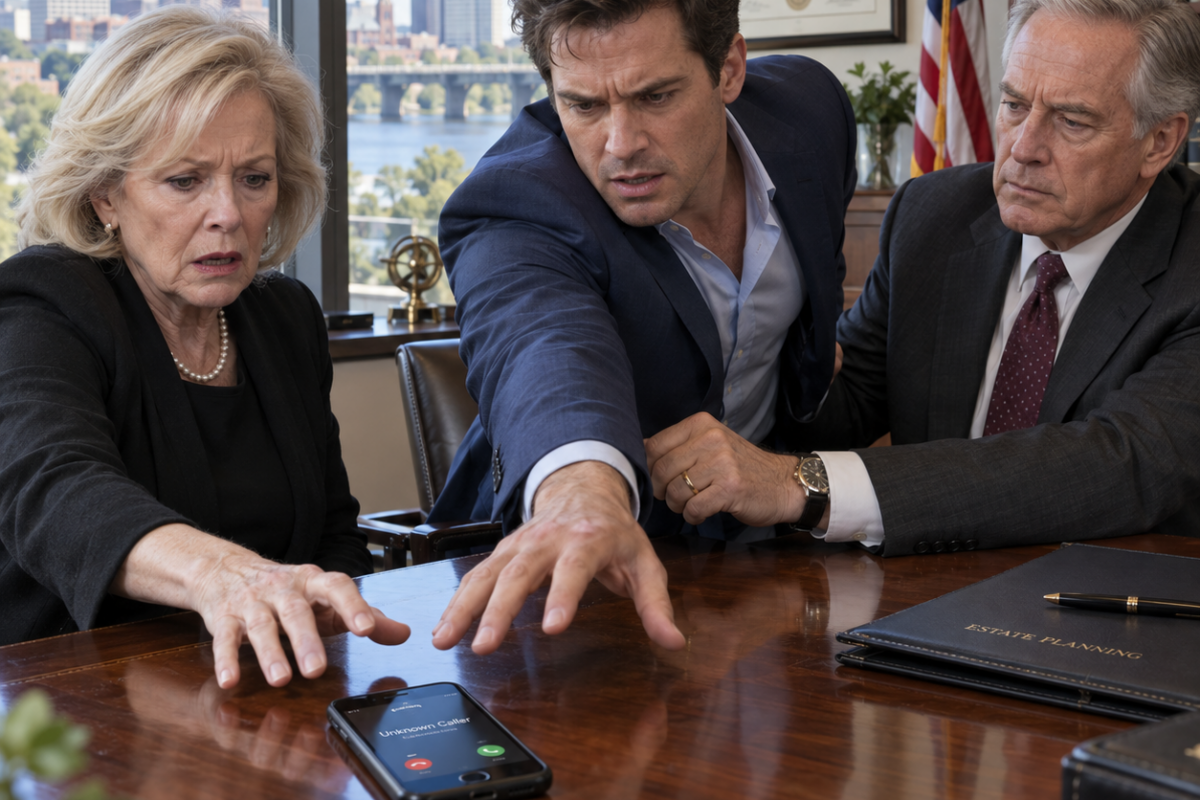
My Husband Left Our Children Millions. He Left Me Only His Locked Phone—Then Someone Called It During the Will Reading.
My Husband Left Our Children $8.4 Million and Me an Old Black Phone. Then It Rang. My husband had been dead for twelve days when…
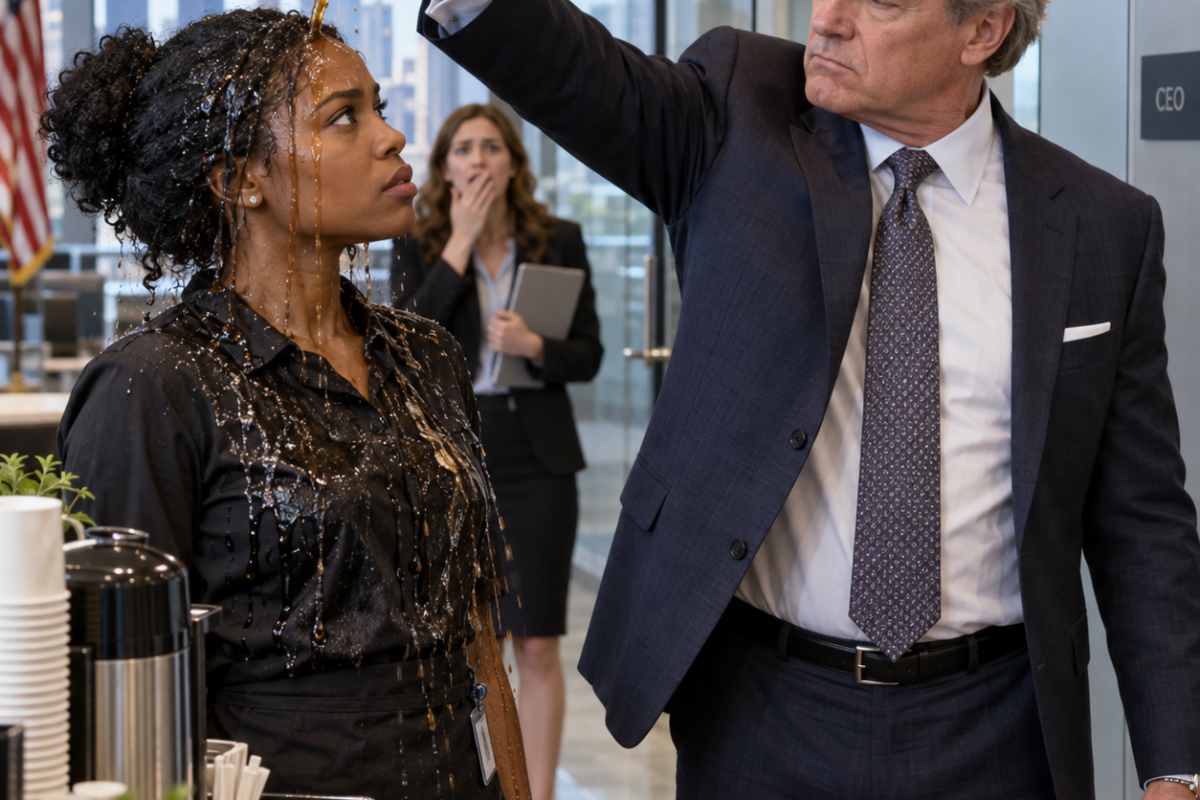
A CEO Dumped Coffee on a Black Temp in Front of the Entire Office—Then She Made One Phone Call
The CEO Poured Coffee Over My Head and Fired Me. He Had No Idea the “Temp” He Humiliated Was Quietly Buying His Company. “You’re the…
End of content
No more pages to load
You Might Also Enjoy




My Husband Left Our Children Millions. He Left Me Only His Locked Phone—Then Someone Called It During the Will Reading.