A CEO Dumped Coffee on a Black Temp in Front of the Entire Office—Then She Made One Phone Call
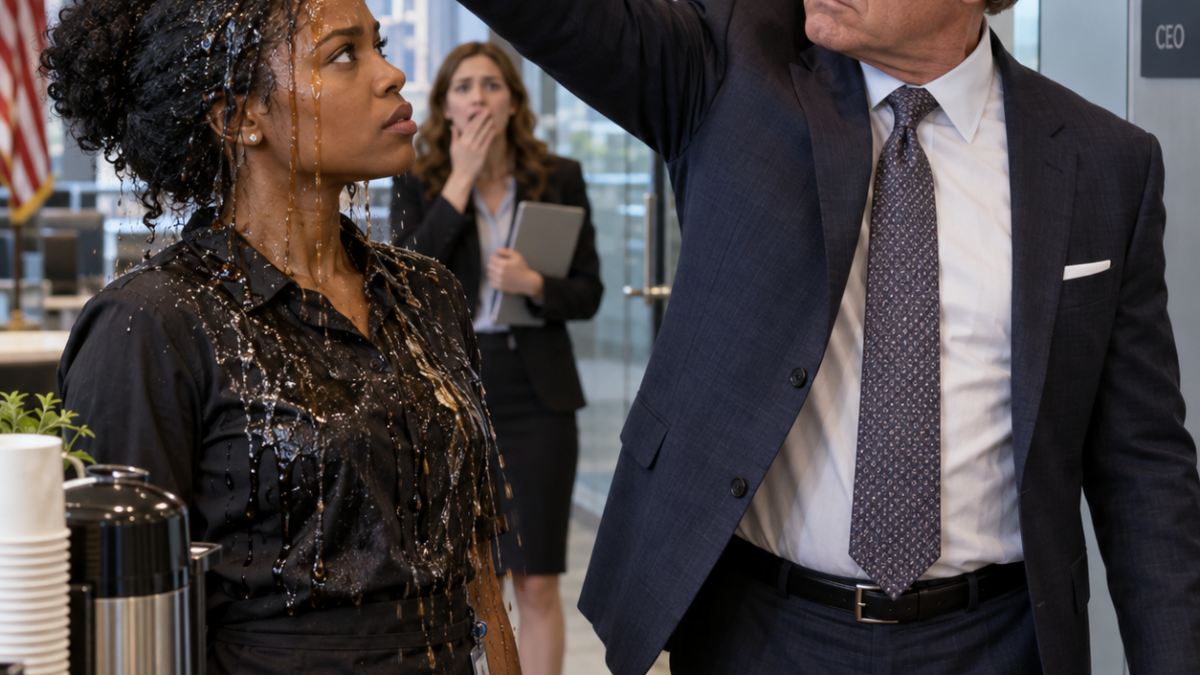
The CEO Poured Coffee Over My Head and Fired Me. He Had No Idea the “Temp” He Humiliated Was Quietly Buying His Company.

“You’re the temporary coffee cart. You do not speak in meetings.”
The woman from personnel said it without looking at me.
Her name was Denise Pruitt, and she wore a cream suit, pearl earrings, and the expression of someone who believed temporary employees became invisible the moment they clipped on a visitor badge.
“Understood.”
“Good. The chief executive takes his coffee at nine exactly. He likes Blend Number Seven. One teaspoon of cream, no sugar. Do not be late.”
“I won’t.”
She finally looked at me.
“And stay out of conversations. Executives do not need opinions from temporary staff.”
That was my introduction to Harlo Coffee Group.
At 8:57 on a Monday morning, I pushed a brass-trimmed coffee cart across the thirty-fourth floor of Harlo Tower in downtown Chicago wearing a black catering skirt, white blouse, low shoes, and a plastic badge identifying me as VICTORIA LANE, TEMPORARY HOSPITALITY SUPPORT.
My real name was Victoria Hail.
I was thirty-six years old.
And by the time Denise told me not to speak, my private investment company already controlled thirty-four percent of Harlo Coffee.
Nobody in the building knew that.
That was deliberate.
Three days earlier, I had cut six inches from my hair, darkened it from blond to brown, traded my tailored suits for discount-store clothes, and taken a short-term placement through a staffing agency that handled overflow hospitality support for Harlo’s headquarters.
The agency believed I was a recently relocated administrative worker willing to take temporary service assignments while looking for permanent employment.
The paperwork was legitimate.
The name was my mother’s maiden name.
The rest was theater.
I had not entered Harlo Tower to spy on Richard Cole, although he would eventually convince himself the entire exercise had been about humiliating him.
I had gone there looking for someone else.
A man whose name had been deliberately erased from the company thirty-five years earlier.
A man my mother had asked me to find before she died.
A man who, according to one faded photograph and an old coffee tin she kept on a kitchen shelf for most of my childhood, had created the blend that built Harlo Coffee.
I had no idea whether he was still alive.
I knew only that someone matching his age and history had appeared for years in payroll records under the least remarkable job title in the company.
Night facilities attendant.
And if I walked into Harlo Tower as Victoria Hail, founder of Lantern Capital and daughter of the late Alexander Hail, every executive in the building would know before lunch.
I needed to see the place before the place knew it was being watched.
So that Monday morning, I pushed coffee.
And at exactly nine, I met Richard Cole.
He entered the executive conference room without greeting anyone.
Fifty-two.
Tall.
Silver at the temples.
Navy suit cut perfectly enough that you noticed the tailoring without seeing the tailor.
Richard’s father, Charles Cole, had turned Harlo Coffee from one Chicago roastery into a national premium brand. Richard inherited the company’s public mythology along with its executive suite.
His father, according to every corporate history Harlo published, had founded the business “from a hand-built roaster and an uncompromising belief in quality.”
There was no second founder in those histories.
No Silas Vale.
No master roaster.
No mention of the man my mother had spent years refusing to talk about until regret finally made silence heavier than anger.
Richard sat at the head of the table.
I poured coffee.
He took one sip.
His face tightened.
“Who made this?”
Nobody answered.
Denise looked at me.
I stepped forward.
“I did.”
Richard lifted the cup.
“Do you know what this company sells?”
“Coffee, sir.”
A few people smiled nervously.
“Then why can you not make one cup?”
I looked at the tin on the cart.
“This is Blend Number Seven. I brewed it according to the instructions printed on the original roast specification.”
Richard stared.
“Do not tell me how to make my own coffee.”
“I wasn’t.”
“What did you say?”
“I said I followed the specification.”
A woman seated near the middle of the table laughed softly.
She was in her early sixties, elegant, silver-brown hair cut neatly at her jaw.
Sarah Whitcomb.
Chief financial officer.
Twenty-eight years at Harlo.
She looked at Richard.
“She reads the tin, Richard. How thorough.”
Richard ignored her.
He stood.
Walked around the table.
Picked up the coffee.
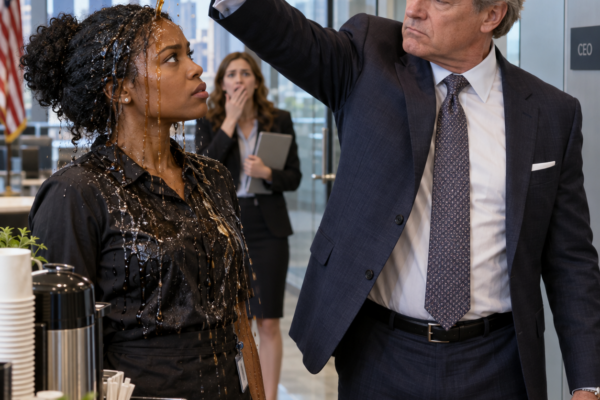
And poured it over my head.
Not violently.
That was almost worse.
He simply turned his wrist.
Warm coffee ran through my hair, down the side of my face, into the collar of my white blouse.
Forty people watched.
No one moved.
Richard placed the empty cup on the cart.
“Here is what I think of the specification.”
I wiped coffee from my cheek.
“Are you finished?”
The room became so quiet I could hear the ventilation system.
His eyes narrowed.
“Yes.”
He looked toward Denise.
“And so is she.”
Denise stood immediately.
“Leave your badge on the desk.”
I removed it.
Placed it beside the coffee pot.
Richard had already turned away.
That was how little I mattered to him.
One cup.
One annoyance.
One disposable worker.
At the back of the room, a man moved.
He was about thirty.
Dark hair.
Harlo operations badge.
I would later learn his name was Evan Cole.
Richard’s son.
He grabbed a clean bar towel from a service station and held it out.
“Take this.”
I accepted it.
“Thank you.”
“I’ll walk her down,” he told Denise.
Richard did not turn.
Evan led me toward the elevator.
Nobody else moved.
In the hallway, he pressed the call button.
“I’m sorry.”
“You didn’t pour it.”
“No.”
He looked toward the closed conference-room doors.
“But nobody stopped him.”
“Neither did you.”
His jaw tightened.
“You’re right.”
That answer surprised me.
The elevator arrived.
He handed me another towel.
“Keep your chin up.”
I stepped inside.
As the doors closed, Richard’s voice carried faintly from the conference room.
“Now can we get somebody competent in here?”
At the lobby desk, Denise canceled my building pass.
“The agency will contact you.”
“Understood.”
She handed me my coat.
Then smiled thinly.
“You’ll remember this morning.”
I looked at her.
“I’ve already forgotten it.”
Her smile disappeared.
I walked outside.
Only after I was half a block from Harlo Tower did I let myself stop.
My hair was damp.
Coffee had stained the blouse.
People on LaSalle Street passed without looking.
I took out my phone.
Called my driver.
“It’s me.”
“Ms. Hail?”
“Bring the car.”
He arrived six minutes later.
My chief of staff, Nora Bennett, was waiting inside.
She took one look at me.
“What happened to your hair?”
“Market research.”
“Victoria.”
“Good morning.”
She stared at the coffee stain.
“He did that?”
“In front of the executive team.”
“Richard Cole poured coffee on the chairwoman of Lantern Capital.”
“He doesn’t know I’m chairwoman of Lantern Capital.”
“That sentence is doing too much work.”
I leaned back.
“How much do we own?”
“As of the market close Friday, thirty-four point two percent.”
Harlo was privately controlled but had enough legacy shareholders, family trusts, employee blocks, and secondary private placements that patient accumulation was possible.
Lantern had spent nine months buying.
Quietly.
Legally.
Through disclosed investment entities.
No hostile tricks.
No hidden nominee structure.
We simply did not advertise the principal behind the fund.
Richard knew Lantern Capital.
Everyone in the industry did by then.
He did not know I owned it.
“Should we announce the stake?” Nora asked.
“Not yet.”
“He just fired you.”
“I didn’t go in there for him.”
“Then for whom?”
I reached into my bag.
Pulled out the old tin.
Cream-colored.
Dented around the base.
HARLO BLEND NO. 7.
The seven was painted by hand in faded red.
“For the man who made this.”
My mother kept that tin on our kitchen shelf for thirty years.
She never stored coffee in it.
When I was little, I thought it was decoration.
At sixteen, I asked why it looked different from every modern Harlo tin.
She said, “Because somebody made things by hand once.”
Then she changed the subject.
My mother’s name was Margaret Vale Hail.
She died eighteen months before my father.
Cancer.
Slow enough for regret.
Fast enough that we still ran out of time.
Two winters before she died, she gave me the tin.
“Find my father.”
I stared at her.
“You told me Grandpa Silas died.”
“I lied.”
“Why?”
Her eyes filled.
“Because anger is easier to inherit if you pretend the person is gone.”
That was the first time I heard the name Silas Vale spoken in my family without tension.
He had been Harlo’s original roaster.
Charles Cole had handled sales.
Silas handled beans.
They started in 1989 in a converted warehouse with a refurbished German drum roaster, borrowed money, and an agreement handwritten so badly a later lawyer had insisted they redo it.
Blend Number Seven was Silas’s.
My mother remembered him painting the red number on the first tins because labels were too expensive.
Then something happened.
The partnership broke.
Charles became the company.
Silas disappeared from its history.
My mother chose her husband and his world over her father.
My father, Alexander Hail, came later.
He was not a founder of Harlo.
He married Margaret after the original partnership had already begun unraveling, then built his own career in private investment.
Silas saw Alexander as another wealthy man helping pull his daughter into a life where he no longer belonged.
Margaret saw Silas’s pride as cruelty.
Neither apologized.
Years passed.
Then decades.
My mother drank Blend Number Seven every morning.
But she never called her father.
Before she died, she asked me to do what she had been too ashamed to do herself.
I began searching.
No public Silas Vale connected to Harlo.
No current shareholder under his name.
No executive record.
Then Lantern’s diligence team found a seventy-eight-year-old facilities worker at Harlo’s original Chicago roastery named Silas V.
Emergency contact blank.
Employment history incomplete.
He had been there almost fifteen years.
That was why I took the temp job.
Not to punish Richard.
To find out whether Silas V. was Silas Vale.
Nora looked at the old tin.
“You can’t go back.”
“Why?”
“He put you on the pavement.”
“Someone will invite me.”
“Who invites a temp back after the CEO fires her?”
My phone rang that afternoon.
Sarah Whitcomb.
I let it ring twice.
Answered.
“Victoria Lane?”
“Yes.”
“This is Sarah Whitcomb from Harlo.”
“Good afternoon.”
“I saw what happened.”
“I assumed everyone did.”
A pause.
“You handled yourself well.”
“Thank you.”
“I have a temporary vacancy in finance support. Document runs. Meeting setup. Coffee occasionally, although I promise nobody will pour it on you.”
I looked at Nora.
She mouthed, No.
“When?”
“Tomorrow at eight.”
“Thank you, ma’am.”
“You’ll come?”
“Yes.”
Sarah sounded pleased.
“Good. First days are the hardest. Second ones are usually more revealing.”
After the call, Nora stared at me.
“That was too easy.”
“Yes.”
“You think she knows?”
“I think she knows something.”
“What?”
“I don’t know.”
Nora sighed.
“You realize most chairwomen conduct due diligence from conference rooms.”
“Most chairwomen are sensible.”
“Yes.”
I looked again at the old Blend Seven tin.
“I’m going back.”
By Tuesday morning, Lantern controlled thirty-six percent.
By Thursday, forty-one.
Shares came loose quietly.
A retired regional executive.
Two family trusts.
An early employee estate.
A venture fund tired of waiting for liquidity.
We were not buying recklessly.
I had a price ceiling.
Harlo’s fundamentals were strong.
Brand recognition high.
Retail footprint healthy.
Debt manageable.
One problem threatened everything.
The original Chicago roastery.
Harlo planned to close it in March.
Two thousand jobs depended directly or indirectly on the operation once distribution, packaging, maintenance, logistics, and agricultural contracts were included.
Modern management called the site “operationally inefficient.”
My mother called it the place where Harlo had a soul.
I needed to understand whether sentiment was blinding me.
And I needed to find Silas.
Sarah placed me in a small finance support pool on the twenty-ninth floor.
The difference from executive level was immediate.
Older carpet.
Smaller windows.
People ate at their desks.
Nobody had espresso machines built into conference rooms.
My temporary duties were simple.
Move folders.
Deliver coffee.
Collect signatures.
Prepare meeting carts.
Scan nonconfidential documents.
Stay out of the way.
Richard saw me on Wednesday.
“You again?”
“Finance department.”
He looked at Sarah.
“You rehired her?”
“She works for me.”
“She’s incompetent.”
“She carries folders, Richard.”
“Keep her off the executive side.”
Sarah smiled.
“Try not to spill anything on her this time.”
He walked away.
I studied Sarah.
“You didn’t have to do that.”
“I know.”
“You’re very kind to me.”
She looked at me.
“You remind me of myself at your age.”
That sentence felt warm then.
Later, it would sound different.
At lunch, she invited me to sit with her.
We ate soup in an employee cafeteria overlooking the river.
She asked about my background.
I gave her the version prepared for the agency.
College.
Administrative work.
Recent family loss.
Searching for something permanent.
No outright lies where I could avoid them.
“You have family in Chicago?” she asked.
“Some history.”
“That’s not what I asked.”
“My mother grew up here.”
“Still alive?”
“No.”
Sarah’s expression softened.
“I’m sorry.”
“Thank you.”
She stirred her soup.
“My father died recently too.”
That was true.
“What did he leave you?”
I almost smiled.
“Responsibility.”
“Worse than money.”
“Much.”
Sarah laughed.
“You’re sharper than the temp agency file suggests.”
“Is that a problem?”
“No.”
She leaned closer.
“Sharp people just need to learn when to look dull.”
I remembered the sentence.
Then she looked through the cafeteria windows toward the west side.
“The roastery closes in March.”
“You agree with that?”
Her face changed.
“Two thousand jobs.”
“That isn’t an answer.”
“Those people built this company.”
“And management sees them as a line on a sheet?”
Sarah looked at me.
“My mother used to say numbers tell you where to look. They don’t tell you what deserves saving.”
“My mother would have liked her.”
“She taught you right.”
Sarah glanced at the coffee cup beside me.
“You drink Blend Seven?”
“Yes.”
“Old-fashioned.”
“Maybe.”
“I’ve been here since before this tower had a top.”
She smiled.
“There are worse things than old-fashioned.”
I began trusting her.
That was my first major mistake.
On Thursday afternoon, she found the old tin partly wrapped in cloth inside my bag.
“What’s under there?”
“An old friend.”
I showed her.
Sarah stared.
The reaction lasted half a second.
Then disappeared.
“Good Lord.”
“You know it?”
“They stopped producing tins like this in eighty-nine.”
“Does the blend still taste the same?”
“Nothing tastes the same after thirty-five years.”
She turned the tin slowly.
Her thumb paused over the painted seven.
“Where did you get this?”
“My mother.”
Sarah handed it back.
“You should take care of it.”
“Why?”
“Because companies throw away the things that embarrass their official stories.”
I thought she meant Richard.
Maybe she did.
That week, Lantern reached forty-four percent.
Nora called every evening.
“How much longer are you doing this?”
“Until the gala.”
“You are attending as staff?”
“Yes.”
“You own forty-four percent.”
“Not enough.”
“What number is enough?”
“Fifty-one.”
“That is not how governance always works.”
“I know.”
“Then why fifty-one?”
“Because sometimes simple numbers make complicated people pay attention.”
The Harlo Founders Gala took place Friday night.
Three hundred guests.
Investors.
Retail partners.
Distributors.
Senior employees.
Press.
Richard planned to announce a major strategic partnership with Lantern Capital.
The irony delighted Nora more than it should have.
Richard knew Lantern was accumulating shares.
He did not know its principal.
Lantern’s outside counsel, Nicholas Ward, attended as representative.
I carried a tray.
“Tonight,” Denise told the temporary staff, “you smile, carry, and say nothing.”
“Yes, ma’am.”
Richard gave a speech beneath a forty-foot screen showing black-and-white photographs of Harlo’s earliest roastery.
“To Harlo Coffee,” he said, “built by my father’s two hands alone.”
My grip tightened around the tray.
Alone.
That was the story.
One photograph showed Charles Cole beside a roaster.
The left side had been cropped.
I recognized the uncropped version from my mother’s belongings.
Another man should have been there.
Silas.
Nicholas joined Richard near the stage afterward.
Richard smiled broadly.
“Our new strategic partner.”
Nicholas shook his hand.
“Subject to final terms.”
“Of course.”
Richard looked around.
“Your principal is in the building, I understand.”
“Yes.”
“Where?”
Nicholas smiled.
“Closer than you think.”
Richard laughed.
“Charming.”
He offered the agreement.
“Let’s finish it.”
Nicholas did not take the pen.
“My principal has one additional condition.”
Richard’s smile cooled.
“The Chicago roastery remains open.”
“Out of the question.”
“Then there is no signature tonight.”
Richard’s jaw tightened.
“The facility loses money.”
“It can be modernized.”
“With whose capital?”
“My principal is prepared to discuss that.”
“I don’t negotiate with invisible investors.”
Nicholas nodded.
“Then perhaps your gala can continue without us.”
I was passing behind them when Richard stepped backward into my tray.
Two glasses tilted.
One fell.
Champagne hit his sleeve.
He turned.
“You.”
“You walked into me, sir.”
His face reddened.
“A clumsy fool.”
I held his gaze.
“Somebody take that tray away from her.”
Sarah appeared.
“Richard.”
“What?”
“Don’t provoke people because you’re embarrassed.”
He stared at her.
Then at me.
“I have plans for you,” Sarah said softly after he walked away.
“What plans?”
“Patience, dear.”
At 10:42 that night, Nora texted.
51.06%.
I read the number twice.
Lantern Capital now owned a majority economic interest in Harlo Coffee.
On paper, I had won.
Or so I thought.
I slipped into an unused service hallway and called her.
“Fifty-one?”
“As of an hour ago.”
“Then the company is mine on paper.”
“On paper.”
“Should we tell him?”
“Your call.”
I looked toward the ballroom.
Richard laughing with investors.
Sarah speaking quietly to two directors.
Evan Cole carrying a tray for an overwhelmed banquet server even though he was a senior operations manager.
“No.”
“Why?”
“Because I still don’t know who is draining the roastery fund.”
Nora went silent.
“What?”
“Someone sent me records.”
“How much?”
“Just under nine million dollars over three years.”
That was the second reason I had stayed undercover.
A week earlier, Lantern had received an anonymous package.
Internal Harlo transfers.
Roastery modernization reserve.
Money allocated for equipment replacement, safety upgrades, environmental controls, and workforce retraining.
Money disappearing through a chain of consulting approvals.
Not enough evidence to accuse anyone.
Enough to worry me.
“Richard?”
“His signatures appear.”
“Every transfer?”
“Most.”
“Second approval?”
“Redacted.”
I leaned against the service wall.
Someone rolled a mop cart around the corner.
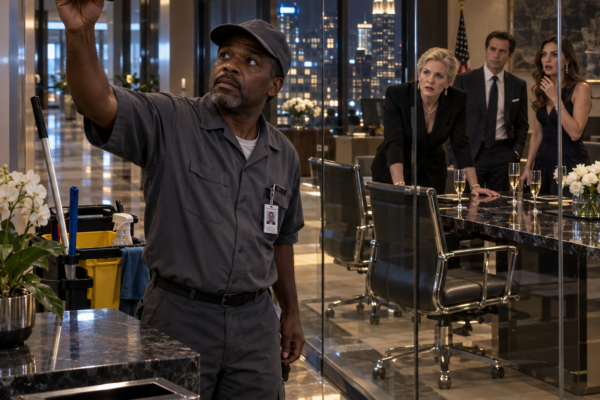
An old man in a gray uniform.
Thin.
White hair.
Weathered face.
He looked at me.
“You talking to the cart now?”
I lowered the phone.
“Not you.”
“Good.”
He pushed past.
“I only deliver mops.”
Something about his voice stopped me.
I watched him disappear through a door marked LOWER ROASTING OPERATIONS ACCESS.
The original roastery occupied the first six floors of an older industrial structure physically connected to Harlo Tower.
Most executives never went there.
Beans arrived through loading bays.
Roasting lines operated around the clock.
Packaging.
Quality control.
Warehouse.
Maintenance.
The tower literally stood above the machinery producing the product.
On Monday, Sarah asked me to deliver finance envelopes to roasting administration.
“Downstairs?”
“Unless you’ve discovered another roastery on forty-two.”
I took the cart.
The moment I reached the older building, the company changed.
Concrete floors.
Heat.
Coffee in the air so thick you could taste it.
Roasters humming behind safety glass.
Forklifts.
Employees in work shirts instead of suits.
People saying hello to one another.
My mother had grown up there.
Not literally.
But close.
She had told me stories.
Homework in the cupping room.
Saturday mornings labeling tins.
Falling asleep in her father’s office while machines ran below.
Richard had never told those stories.
Neither had corporate history.
At a hallway junction, I parked badly.
A man called from behind me.
“Watch where you put that thing.”
I turned.
The old janitor from the gala.
“Sorry.”
He looked at my badge.
“Temps read now?”
“Some of us.”
His eyes sharpened.
Then he pushed his cart toward a service closet.
I followed at a distance.
He opened it.
Inside, on a shelf beside cleaning supplies, sat an old Harlo tin.
Blend Number Seven.
Hand-painted red numeral.
I stopped breathing.
“Where did you get that?”
He turned.
“What?”
“The tin.”
He looked at it.
“Old junk.”
“They stopped making those in eighty-nine.”
“Did they?”
“Yes.”
He wiped his hands on a rag.
“That one still works.”
“As what?”
“Coffee tin.”
I came closer.
The seven was painted at a slight angle.
Exactly like mine.
“Who painted the number?”
He stared at me.
Then said quietly:
“I did.”
The world narrowed.
“You painted it.”
“A long time ago.”
He reached past me and put the tin higher on the shelf.
“Forget I said anything.”
My hands were shaking.
“You didn’t just work here, did you?”
“Old men talk too much.”
“What’s your name?”
His eyes met mine.
“Sam.”
The payroll file said Silas V.
Sam was not Silas.
Or he did not want to be.
Before I could ask more, Sarah appeared in the hallway.
That was impossible.
CFOs did not casually walk through lower-roastery service corridors.
“What are you doing down here?” I asked.
Her expression barely moved.
“I could ask you the same.”
“I’m delivering your envelopes.”
“Good.”
She looked at the old man.
“You should not be here.”
He smiled without warmth.
“Neither should a vice president.”
“I’m CFO.”
“Congratulations.”
Sarah’s face tightened.
Then she saw my confusion and smiled.
“Sam has opinions.”
“I have a mop.”
He pushed past us.
Sarah watched him leave.
I thought I saw recognition.
Not casual familiarity.
History.
“What was that?”
“Nothing.”
She took the envelopes from my cart.
Then looked at me.
“Forget old men who want to be mysterious.”
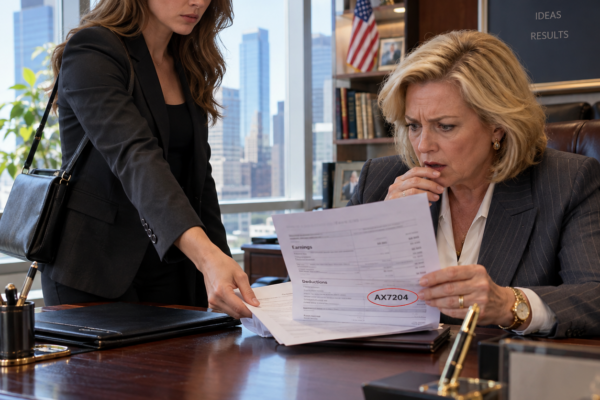
That afternoon, I found three unsigned transfer summaries in a wastepaper bin beside Sarah’s outer office.
Not confidential files I had dug through.
Discarded working copies.
Roastery Preservation Reserve.
North Line Equipment LLC.
Harbor Process Consulting.
Three transfers.
Each carried Richard Cole’s approval.
Each required a second finance code.
The name behind that code had been removed from the printout.
I stared at the numbers.
Sarah appeared.
“You look worried.”
“Just numbers.”
“Numbers are my department.”
“I noticed.”
“Bring them to me.”
I handed her one of the pages.
She read.
Her expression darkened.
“Where did you get this?”
“Trash.”
“Someone should be more careful.”
“Is something wrong?”
“Possibly.”
“With Richard?”
Sarah looked toward the elevators.
“He signs things without reading.”
“You know that?”
“I know everything on this floor, dear.”
She folded the page.
“If money is leaving the roastery reserve, Richard approved it.”
That was true.
But not complete.
I had learned to distrust incomplete truth.
The next morning, my temporary finance login stopped working.
Denise appeared.
“Your access has been suspended.”
“On whose order?”
“Finance flagged it.”
Sarah?
That surprised me.
“Why?”
“Temporary workers do not need system access downstairs.”
“I was told to enter delivery logs.”
“Not anymore.”
She pointed toward the service elevator.
“Take your cart downstairs.”
Back to the bottom floor.
I went.
The old man was there.
He looked at my cart.
“Welcome to the basement.”
“Apparently I’ve been promoted.”
“The best coffee in the building is down here anyway.”
“That it is.”
He disappeared into a tiny break room.
I followed.
He opened the old Blend Seven tin.
Actual beans inside.
Ground them by hand.
Bloomed the coffee in a battered pour-over cone.
“Too long,” he said.
“What?”
“You bloom it too long.”
“How do you know how I make coffee?”
“I tasted the batch you sent down after the gala.”
“That was you?”
“No.”
He smiled.
“I only deliver mops.”
“Your name isn’t Sam.”
His smile vanished.
“You ask too many questions.”
“My mother used to say that.”
“Smart woman?”
“Yes.”
“Still around?”
“No.”
His hands stopped.
“I’m sorry.”
“She used to make Blend Seven.”
“Lots of people did.”
“She said the man who created it painted every seven by hand.”
Silence.
I reached into my bag.
Put my mother’s tin on the table.
He stared.
The old man did not touch it.
His face became unreadable.
“Where did you get that?”
“My mother.”
“What was her name?”
I could have answered.
I didn’t.
Not yet.
Because suddenly I understood something.
If this was Silas Vale and I told him Margaret was my mother while I was also the majority shareholder acquiring Harlo, everything afterward would be contaminated.
He might think I wanted whatever legal rights he still had.
He might think my mother sent me for business.
I needed him to know one thing before the other.
That I had come looking for him.
Not his signature.
“Victoria,” Sarah called from the corridor.
The old man looked toward the door.
Then at me.
“You told them your real first name.”
“Yes.”
“Interesting.”
Sarah entered.
“I had your login restored.”
I stared.
“Thank you.”
“I look after my people.”
The old man looked at her.
Something in his expression bothered me.
Sarah smiled.
“Coffee?”
He poured none for her.
She turned to me.
“Tell me what was in those transfer pages.”
“You already read one.”
“I want to know what you saw.”
“Roastery reserve transfers.”
“Exactly.”
Her voice dropped.
“Then Richard has been draining the fund.”
“You’re sure?”
“It has always been him.”
That sentence was too certain.
She wanted me to believe it.
“Help me bring it to the board.”
I looked at her.
“Why me?”
“Because you have access to records nobody suspects you’re reading.”
“I’m a temp.”
“That’s why.”
The old man set down the kettle harder than necessary.
Sarah smiled at him.
“Problem?”
“Just old pipes.”
She left.
He looked at me.
“You trust her?”
“She’s been kind to me.”
“Neutral answer.”
“What does that mean?”
“She rehired you within an hour after Richard fired you.”
“You knew?”
“I see things.”
“Why would that matter?”
“Because maybe she knew exactly who you were.”
My throat tightened.
“That’s impossible.”
“Is it?”
“How would she know?”
He shrugged.
“Old men talk too much.”
Then he walked out.
That night, Nora confirmed something.
Sarah Whitcomb had requested beneficial ownership information on Lantern Capital through Harlo’s outside banking relationship two weeks earlier.
The bank did not disclose protected data.
But Sarah had searched.
“She suspected,” Nora said.
“How?”
“Your purchases.”
“Lots of funds buy Harlo.”
“Lantern is different.”
I stared at the city from my apartment.
“She knew at least enough to investigate.”
“And then rehired you.”
“Yes.”
“Victoria.”
“I know.”
The next morning, I watched Sarah place a stack of documents in front of Richard.
“What am I signing?” he asked.
“Routine as always.”
He signed.
Page after page.
Barely looking.
His arrogance was not innocence.
A chief executive who signs blindly is still responsible.
But it was becoming clear he might be the cover rather than the architect.
I found the old man again.
“You were right.”
“Rare event.”
“She knows who I am.”
“Probably.”
“Why help me?”
“She needs your shares.”
“How do you know about my shares?”
He looked at me.
“You move through this building like a person expecting doors to open later.”
“That is not evidence.”
“No.”
He drank his coffee.
“Your Lantern people are buying every share that comes loose.”
I stared.
“You know Lantern?”
“I read newspapers.”
“What does Sarah want?”
“Richard gone.”
“So do half the employees.”
“She wants more.”
“What?”
“The chair.”
He looked toward the ceiling.
“And whatever is left of nine million dollars.”
My pulse quickened.
“You think Sarah took it.”
“I know she brought the transfer envelopes.”
“You saw?”
“For months.”
“Why didn’t you report her?”
“To whom?”
The question sounded familiar.
“Board.”
He laughed.
“A janitor with envelopes.”
“Compliance.”
“Sarah oversees financial compliance.”
“Richard.”
“He signs what she hands him.”
I looked away.
“My father is a cruel man, but he is not a thief.”
The sentence came from Evan Cole later that afternoon.
I had confronted him near the roasting floor.
He had begun watching me.
Not suspiciously.
Curiously.
“You’re investigating my father.”
“I’m delivering coffee.”
“Bad answer.”
“Better than no answer.”
He leaned against a railing.
“You think he stole the roastery money.”
“I think his signature is on transfers.”
“My father is a cruel man.”
He looked toward the executive tower.
“But he is not a thief.”
“That’s a generous distinction.”
“It’s accurate.”
“Then what is he?”
“Lazy with anything he believes is beneath him.”
“Like contracts.”
“Yes.”
“Employees.”
His jaw tightened.
“Yes.”
“Temps.”
He looked at me.
“Yes.”
I appreciated the honesty.
“Who prepares his approvals?”
“Finance.”
“Sarah.”
“Mostly.”
“And you trust her?”
“She’s been at our family table every holiday since I was twelve.”
That did not answer the question.
Maybe he realized it.
“What are you actually doing here?”
“I can’t tell you.”
“Then stop asking me to trust you.”
Fair.
The old man showed me the original partnership agreement Thursday night.
Not because I asked for it.
Because he had decided something.
He carried it in a grocery bag.
Three pages.
Yellowed.
Two founder signatures.
Charles Cole.
Silas Vale.
My heart stopped at the second name.
He watched me.
“You know it.”
“Yes.”
“How?”
I reached into my bag.
Took out my mother’s tin.
Then a photograph.
My mother kept it inside the tin for years.
Two men in a roasting room.
One younger, wearing a white apron.
One in shirtsleeves holding a ledger.
On the back, in Margaret’s handwriting:
Dad and Charles. First full week. 1989.
I pointed.
“That’s my grandfather.”
Silas stared at me.
Then at the photograph.
His hand began to shake.
“And the man beside him,” I said, “was somebody he trusted with a handshake.”
Silas looked up.
“Who was your mother?”
I had waited long enough.
“Margaret.”
The room changed.
His face hardened first.
Then broke.
Not dramatically.
Just enough.
“Margaret Vale?”
“Margaret Hail.”
He sat down.
For a long time, he said nothing.
Finally:
“She was my daughter.”
“Yes.”
“Is she…”
“She died.”
His eyes closed.
“When?”
“Eighteen months ago.”
He turned away.
I gave him time.
“Did she forgive me?”
The question was so quiet I almost missed it.
“She asked me to find you.”
He looked at me.
“Two winters before she died.”
“Why didn’t she come?”
“She was sick.”
“That’s not why.”
“No.”
I sat opposite him.
“She was ashamed.”
He stared at the old tin.
“She never stopped drinking your coffee.”
A laugh escaped him through tears.
“She bloomed it too long.”
“So do I.”
“Your grandmother couldn’t stand the smoke.”
I smiled.
“That part I heard.”
He touched the painted seven.
“You knew from the first morning?”
“No.”
“When?”
“When you said you painted it.”
“And the shares?”
“The shares were only the door.”
His eyes narrowed.
“What does that mean?”
“I bought into Harlo because I wanted enough authority to stop the roastery closure and find out what happened here.”
“You came for me?”
“Yes.”
“Not this?”
He touched the old agreement.
“No.”
Silas leaned back.
“For once, your mother did something sensible.”
I laughed.
He did too.
Then we talked until after midnight.
Silas Vale had not vanished.
He had been erased.
Thirty-five years earlier, he and Charles Cole created Harlo together.
Silas roasted.
Charles sold.
Blend Seven changed everything.
Restaurants wanted it.
Hotels.
Specialty stores.
Orders grew faster than the small partnership.
Charles found investors.
Silas trusted him.
Too much.
A corporate restructuring followed.
Silas signed documents he did not fully understand after Charles promised his founder status would remain intact.
Instead, his economic interest was diluted severely and his name disappeared from marketing.
But one strange relic survived.
Clause Nine of the original founder agreement.
If control of the company ever transferred outside the Cole family beyond a majority threshold, the surviving cofounder had to consent before certain legacy voting shares could be exercised.
Most modern attorneys assumed the provision was obsolete.
No one could find Silas.
Richard believed he was dead.
Silas never used the clause.
“Why?”
“Against whom?”
He shrugged.
“The man who cheated me died.”
“Charles.”
“Yes.”
“What about Richard?”
“A son doesn’t inherit every sin.”
“He inherited the company.”
“So?”
“You could have returned.”
“As what?”
He held up his hands.
“A janitor with paper?”
“Why become a janitor?”
Silas looked toward the roasting floor.
“The roaster is here.”
“That’s it?”
“My whole life is in those beans.”
He hesitated.
“And I was waiting.”
“For what?”
His eyes dropped.
“Your mother.”
That hurt.
“I thought one day she might walk through that door angry enough to finally say what she meant.”
“She tried at the end.”
“I know now.”
He folded the agreement.
“Thirty-five years late.”
“Still counts.”
“Maybe.”
I told him about the nine million.
Sarah.
Richard’s signatures.
Silas was not surprised.
“The envelopes were hers.”
“You saw her?”
“Many times.”
“Why didn’t you tell anyone?”
“I called for a mop once after Richard poured coffee on you.”
He looked ashamed.
“I watched.”
“So did forty people.”
“I have hated myself every hour since.”
“You didn’t owe me intervention.”
“Yes.”
His eyes met mine.
“People always say that when they were not the one holding the mop.”
I understood.
“What do you want?”
“One condition.”
“What?”
“The roastery stays open.”
“That was already my condition.”
“Then we find out who hands Richard the papers.”
We did.
Not illegally.
Not by sneaking into systems.
Lantern’s lawyers had enough ownership standing by then to request formal records.
The board’s independent audit committee received a preservation notice.
Nora engaged outside forensic accountants.
Sarah, believing I remained a grateful temporary worker and useful future vote, continued talking.
She gave me access to enough harmless financial work to make me feel included.
Then began sharing selective evidence against Richard.
Every transfer carried his signature.
She showed me.
“What about the second approval?”
“Masked by finance workflow.”
“Whose?”
“Doesn’t matter.”
“It matters to me.”
Sarah smiled.
“Don’t become difficult now, dear.”
There it was.
The kindness had always contained ownership.
She did not protect people.
She collected them.
Friday, she called an emergency board meeting.
Her plan was elegant.
Present $9 million in suspicious transfers.
Show Richard’s signatures.
Argue gross negligence or fraud.
Remove him.
Use Lantern’s presumed majority vote.
Then position herself as interim chair and financial savior.
What she did not know was that I had already seen the second approval code.
Her office.
Not just finance generally.
Sarah’s personal executive authorization.
And she did not know Silas Vale was alive.
At nine forty Friday morning, Silas stood in the basement break room holding the original partnership agreement.
“Should I wear a tie?”
I smiled.
“Do you own one?”
“No.”
“Then don’t start lying now.”
He laughed.
“I haven’t been in that boardroom in thirty-five years.”
“So you’ve been there.”
“Once.”
“What happened?”
“Charles told me we were partners.”
He looked at the paper.
“Then proved we weren’t.”
I touched his arm.
“Today is different.”
“Maybe.”
“I need you upstairs at ten.”
“A janitor in the boardroom.”
“Yes.”
“Your mother would enjoy this.”
“She would criticize my coffee first.”
“She definitely would.”
At ten, Sarah called the meeting to order.
Eleven directors.
Outside counsel.
Richard.
Evan.
Sarah.
Nora representing Lantern.
I stood outside with a coffee cart.
Denise saw me.
“What are you doing here?”
“Delivery.”
“Temps do not enter board meetings.”
“For how much longer, I wonder.”
“What did you say?”
“Nothing.”
Sarah opened the meeting.
“This emergency session concerns nine million dollars in unauthorized transfers from the Harlo Roastery Preservation Fund.”
Richard leaned back.
“Unauthorized by whom?”
Sarah placed documents on the table.
“Every transfer carries your signature.”
Richard looked.
“I signed what you gave me.”
“Is this your signature?”
“Yes.”
“Then we agree.”
“No.”
He pointed.
“I never read these.”
A director frowned.
“That is hardly a defense.”
“It isn’t.”
For once, Richard sounded honest.
“It’s an admission.”
Sarah stood.
“The board has heard enough. I move that Richard Cole be removed as chief executive pending criminal and civil review.”
Richard stared.
“You’ve been planning this.”
“I’ve been protecting the company.”
Outside counsel said, “A removal vote requires control threshold.”
Sarah smiled.
“Lantern Capital votes with me.”
Richard looked toward Nora.
“Where is Lantern’s principal?”
Nora said, “In the building.”
“Then bring them.”
“Not yet.”
Sarah’s confidence sharpened.
“Lantern owns fifty-one percent.”
Outside counsel cleared his throat.
“Subject to any applicable legacy voting restrictions.”
Richard laughed.
“There it is.”
Sarah’s face changed.
“What?”
“Clause Nine.”
She stared.
Richard leaned back.
“You thought I didn’t know?”
He looked toward Nora.
“Any external majority transfer requires surviving cofounder consent before those shares vote.”
Sarah recovered.
“That partner vanished decades ago.”
“Exactly.”
Richard smiled.
“So Lantern owns paper with no controlling vote.”
Outside the doors, I looked at Silas.
He looked terrified.
Not of the board.
Of the past.
I whispered, “Ready?”
“No.”
“Good.”
I pushed the coffee cart into the room.
Richard looked up.
His face twisted.
“Who let the coffee cart in here?”
Sarah smiled.
“Leave her.”
Richard stood.
“She has nothing to do with this.”
I parked the cart.
Sarah said, “Actually, she has something to say.”
I looked at Richard.
“Before I do, I have one question.”
He laughed.
“Of course you do.”
“What happened at your desk Monday morning when Sarah brought you the transfer packet?”
“I signed it.”
“Every page?”
“Yes.”
“That is not what I asked.”
His smile vanished.
“What are you doing?”
I lifted the coffee pot.
“Blend Number Seven.”
The room stared.
“Try it once more.”
Richard’s face reddened.
“Is this a joke?”
“Taste it.”
“No.”
“Then I’ll sit down.”
“Temps stand.”
I put the pot back.
“I’m not a temp.”
Denise appeared at the door.
“Victoria.”
Nora stood.
One board member looked from her to me.
Outside counsel opened a folder.
“Young lady,” Richard said, “this is the majority shareholders’ meeting.”
“Yes.”
Nora spoke.
“And she is the majority shareholder.”
Silence.
“Lantern Capital,” Nora continued. “Fifty-one point zero-six percent beneficial ownership. Founder and sole managing principal, Victoria Hail.”
Richard stared at me.
“You.”
“Yes.”
He looked at my hair.
The cheap blouse.
The coffee cart.
Then remembered.
“You poured it on my head in front of forty people,” I said.
His face hardened.
“If I’d known who you were—”
“That is the point.”
Nobody moved.
“You should not have needed to know.”
Sarah stood slowly.
The shock on her face lasted exactly long enough to be convincing.
Then she smiled.
“Wonderful.”
She came toward me.
“Then vote with me, dear.”
That word.
Dear.
Different now.
“Remove him.”
“I will vote.”
Richard’s face fell.
I continued.
“After the board sees the second approval code.”
Sarah stopped.
“What?”
Nora distributed the audit extracts.
I looked at Sarah.
“Every suspicious transfer required two approvals.”
Richard’s signature.
Then finance executive authorization.
Sarah’s.
Her smile disappeared.
“You knew?”
“I knew someone was using him.”
Richard stared at me.
“You think I’m innocent?”
“No.”
I looked at him.
“You were too proud to read what you signed. Too arrogant to listen to employees. Too careless to ask why nine million dollars moved through your company.”
His jaw tightened.
“That is negligence.”
I turned toward Sarah.
“But it is not the same as engineering the transfers.”
Sarah’s voice became cold.
“This is absurd.”
Outside counsel began to speak.
She cut him off.
“None of this matters if Lantern cannot vote.”
Her confidence returned.
“Clause Nine.”
She looked toward me.
“Without the surviving cofounder’s consent, your majority stake has no controlling vote.”
Richard nodded.
“That partner disappeared decades ago.”
Sarah smiled.
“So she holds nothing.”
A voice came from the hallway.
“Is that so?”
Everyone turned.
Silas entered wearing his gray work shirt.
No tie.
Original agreement in his hand.
Richard stared.
“Why is the janitor in here?”
Silas walked toward the table.
“Because my name is on this paper.”
Richard laughed.
“It was never on the door.”
“No.”
Silas placed the agreement down.
“That was your father’s preference.”
Outside counsel stood.
“What is your name?”
“Silas Vale.”
Nobody spoke.
Richard’s face changed.
He knew the name.
Of course he did.
Corporate mythology requires knowing which parts were removed.
Silas unfolded the agreement.
“Two founders.”
He pointed.
“Charles Cole.”
Then another signature.
“Silas Vale.”
Mine.
Richard shook his head.
“My father built Harlo alone.”
Silas looked at him.
“Your father sold what I roasted.”
Richard stared.
“Then he took my name off the tin.”
“The corporate records support my father.”
“The corporate records begin after he rewrote them.”
Outside counsel took the document.
Nora handed him a certified archive copy Lantern had located through the original partnership attorney’s successor firm.
The agreement was real.
Clause Nine was real.
Strange.
Old.
Still enforceable enough to matter until a court said otherwise.
Silas looked at me.
“I consent.”
Richard stood.
“To what?”
“Her shares vote.”
Sarah’s face went pale.
“Why would you side with a stranger?”
Silas looked at me.
“I’m not a stranger to her.”
I reached into my bag.
Put the old Blend Seven tin on the boardroom table.
“My mother kept this on her shelf all her life.”
Silas’s eyes filled.
Richard looked between us.
I continued.
“She said the man who painted that seven was stubborn, proud, impossible to forgive, and the best roaster alive.”
Silas laughed once through tears.
I looked at the board.
“Silas Vale is my grandfather.”
Nobody moved.
Sarah sat down.
The balance of power in the room changed completely.
Not because I had become someone new.
Because everyone finally understood who had been standing in front of them.
I hated how familiar that felt.
The same dynamic as Richard discovering the temp owned Lantern.
A uniform changed.
A name changed.
Suddenly people listened.
That was precisely the culture we were trying to end.
So I did not let the revelation become theater for long.
I looked at outside counsel.
“Proceed.”
The auditors were waiting downstairs.
The findings were preliminary but strong.
The nine million dollars had not vanished into one account.
It moved through consulting agreements, equipment intermediaries, and short-term placements.
Some money had funded legitimate roastery expenses.
Enough did not.
Sarah’s authorization appeared repeatedly.
Several consulting entities had personal connections to people in her financial network.
One was controlled by her nephew.
Another by a former business partner.
Richard’s signatures enabled the scheme.
Sarah structured it.
When confronted, she did what competent people do when they have spent years believing competence makes them untouchable.
She remained calm.
“This is a misunderstanding.”
I looked at her.
“No.”
“These were temporary treasury movements.”
“Into companies connected to your relatives?”
“Arm’s-length vendors.”
“Then the auditors will have no trouble confirming services.”
Her eyes hardened.
“You will regret humiliating me.”
“I regretted trusting you first.”
That finally hurt her.
Sarah had not expected the girl she called dear to stop being grateful.
The board suspended her immediately.
No police stormed the room.
No handcuffs.
That would have been satisfying fiction.
Instead, outside counsel collected devices.
Access was frozen.
Document-preservation notices went out.
Sarah was escorted to collect personal belongings with HR present.
Real corporate consequences begin with passwords stopping.
Richard remained at the table.
He looked at me.
“And me?”
I took a breath.
“You resign today.”
His face hardened.
“I will not.”
“The board can remove you.”
“For what?”
“Gross negligence. Retaliatory management. Abusive conduct. Failure of oversight.”
He laughed bitterly.
“Because of coffee?”
“No.”
I looked around the room.
“Coffee was the easiest thing.”
The employee file was worse.
Temps humiliated.
People disciplined for questioning management.
Payroll complaints buried.
Supervisors taught to fear Richard’s moods.
The culture did not become abusive because he poured coffee on one woman.
That incident simply made the pattern visible.
“You can resign quietly,” I said.
“Or the board can remove you publicly.”
He stared.
Then looked at Evan.
“My son?”
“Your son keeps the roastery.”
Evan looked surprised.
Richard’s eyes narrowed.
“Why?”
“Because he is not you.”
“You don’t know him.”
“I know what he did when nobody else moved.”
Richard looked at Evan.
The younger man looked down.
“You walked me to the elevator,” I said.
“You gave me a towel.”
Evan shifted uncomfortably.
“That was nothing.”
“No.”
I shook my head.
“It wasn’t.”
Richard said, “You’re keeping him because he was nice to a temp?”
“I’m keeping him because operations records show he is competent, the roasting crews trust him, and he has been arguing against closure for two years.”
I looked at Richard.
“The fact that he showed basic decency before knowing my name is simply why I bothered reading his file.”
That silenced him.
Later, months after the board meeting, Richard asked why I had spared Evan.
I told him:
“Because your son was kind when nobody important was watching.”
Then I added the harder part.
“And I was cruel when everyone was.”
That was not false humility.
I had used people too.
Different method.
Same temptation.
I had entered the company wearing a disguise because I believed the only way to learn the truth was to manipulate the conditions around it.
Sometimes that worked.
Sometimes it made innocent people part of an experiment they never consented to.
Richard was forced out because of his own record.
Sarah because of hers.
Denise from personnel lost her position after an independent HR review found repeated retaliation and policy abuse.
When she tried to explain at the board hearing, she said:
“I was following orders.”
I remembered the lobby.
Your pass is canceled.
You will remember this morning.
I looked at her.
“You canceled mine and said you had already forgotten me.”
She went pale.
I did not fire her out of spite.
That would have made the story worse.
The review did.
The personnel office needed new leadership.
Silas returned to the roastery the next morning.
Not as chairman.
Not as owner.
As Silas.
That was what he wanted.
I found him beside the old drum roaster.
“You’re working?”
“I’ve worked here thirty-five years.”
“You also just restored voting control to the majority shareholder.”
He shrugged.
“Paperwork.”
“You could have asked for anything.”
“I did.”
“The roastery.”
“Yes.”
“You want your name back?”
He looked at me.
“On what?”
“The company history.”
He became quiet.
Thirty-five years.
Two words removed from a story.
Silas Vale.
That mattered.
We did not rewrite Harlo’s history as another piece of mythology.
We commissioned independent research.
Archives.
Contracts.
Employee interviews.
Old trade publications.
Photographs.
Company minutes.
The revised founding history credited Charles Cole with sales, finance, and expansion.
Silas Vale with roasting, product development, and Blend Number Seven.
Neither man alone.
That was the truth.
Silas stood in the lobby months later when a new historical display was installed.
HARLO COFFEE
FOUNDED 1989 BY CHARLES COLE AND SILAS VALE.
He read it.
Once.
Then again.
“Thirty-five years,” I said.
He shrugged.
“Spelling’s right.”
I laughed.
“I’m sorry it took my family so long.”
“You brought the envelopes.”
“What?”
He looked at me.
“That counts.”
We recovered the nine million.
Not instantly.
Over eighteen months.
Insurance.
Civil claims.
Frozen accounts.
Vendor settlements.
Clawbacks.
A negotiated recovery from Sarah after she eventually admitted enough of the scheme to make prolonged litigation unattractive.
Criminal authorities handled what belonged to them.
I stopped treating legal consequences as personal revenge.
Every recovered dollar returned to the roastery modernization fund.
Not to Lantern.
Not to executive bonuses.
The roastery stayed open.
That decision was not sentimental charity.
We needed to make it viable.
New equipment.
Energy upgrades.
Packaging automation.
Training.
Some jobs changed.
Some positions disappeared through attrition.
Others were created.
Two thousand livelihoods could not be protected by pretending a 1989 plant should operate unchanged forever.
Preservation without modernization would have been another kind of dishonesty.
Evan Cole became head of roastery operations after a formal interview process.
He resisted at first.
“My father will say you’re doing this to punish him.”
“Your father says many things.”
“He’ll say I betrayed him.”
“Did you?”
“No.”
“Then stop letting his vocabulary run your life.”
That sounded harsh.
He needed it.
Evan turned out to be good.
Not brilliant.
Good.
Steady.
Employees trusted him because he listened.
He also knew coffee.
That surprised Silas.
The first time Evan roasted Blend Seven under his supervision, Silas took one sip.
“Too dark.”
Evan stared.
“It matches the current profile.”
“Current profile is wrong.”
“It sells millions of pounds.”
“Millions of pounds can be wrong.”
They argued for forty minutes.
I sat nearby drinking both batches.
Eventually, I realized this was what family businesses should have had all along.
Not inheritance treated as expertise.
Generations arguing over work while evidence remained allowed in the room.
My relationship with Silas was harder.
Finding someone is not the same as knowing them.
He had been my grandfather all my life.
I had been his granddaughter only in theory.
He knew my mother as a child.
I knew her as a woman.
Our griefs did not line up neatly.
The first time I invited him to dinner, he refused.
“Why?”
“Because you live forty floors up.”
“Thirty-seven.”
“Worse.”
“You’re afraid of elevators?”
“No.”
“What then?”
“I don’t belong there.”
I hated the sentence.
“Don’t do that.”
“Do what?”
“Decide for me.”
His face changed.
Noah’s phrase from a different life did not exist here, but the principle did.
People who have been excluded sometimes begin excluding themselves before others get the chance.
Silas came.
My apartment overlooked Lake Michigan.
He stood near the windows.
“Your mother hated heights.”
“She lived on the thirty-second floor for six years.”
“She complained the whole time.”
“That sounds right.”
I made coffee.
Blend Seven.
He watched.
“You bloom it too long.”
“You have mentioned that.”
“You keep doing it.”
“Maybe I like it.”
“No one likes it.”
I handed him a cup.
He tasted.
Made a face.
I laughed.
For two hours, he told me about Margaret.
The parts I never knew.
She used to hide comic books behind green-coffee sacks.
She once changed labels on three roast batches because she was angry at her father.
She hated smoke but loved the smell of beans cooling.
At seventeen, she wanted to study architecture.
Silas wanted her in the family business.
She saw that as control.
He saw her refusal as rejection.
Then Charles used the conflict.
The company partnership collapsed.
Margaret sided against her father.
Silas said something cruel.
She left.
Neither repaired it.
“Did you forgive her?” I asked.
He stared into the cup.
“Wrong question.”
I smiled.
“You say that a lot.”
“Useful question.”
“What’s the right one?”
“Did I love her?”
He looked at me.
“Yes.”
“That’s not forgiveness.”
“No.”
He nodded toward the tin.
“She kept the coffee.”
“That meant something.”
“Maybe.”
“Silas.”
He looked up.
“Grandpa.”
His face changed.
I had never called him that.
He looked away quickly.
“Coffee’s getting cold.”
That was the only acknowledgment he could manage.
Good enough.
Lantern Capital remained majority owner of Harlo.
I did not become chief executive.
That surprised the press.
Investors expected the founder of the acquiring fund to install herself.
I did not want the job.
Ownership and management are different skills.
We hired an experienced CEO named Rebecca Shaw.
Twenty-seven years in food manufacturing and consumer brands.
No Harlo family history.
No allegiance to Cole mythology.
No reason to flatter me.
During her interview, she asked:
“Are you going to interfere with roast profiles?”
“Probably.”
“Then I don’t want the job.”
I smiled.
“You’re hired.”
The board laughed.
She didn’t.
Good sign.
Sarah’s betrayal stayed with me longer than Richard’s cruelty.
Richard had shown me who he was in five minutes.
Sarah was kind.
Or seemed kind.
She rehired me.
Invited me to lunch.
Spoke about two thousand workers.
Told me numbers were not enough.
Much of what she said was true.
That made the manipulation better.
Predatory people do not always lie.
Sometimes they tell truth strategically.
They give you the truth that creates the emotion they need.
Sarah did care about the roastery.
She also stole from it.
She did believe Richard was a terrible chief executive.
She also used his negligence.
She did help employees sometimes.
She also needed people to feel indebted to her.
Contradictions are uncomfortable.
But adults are full of them.
The final evidence against Sarah was simple.
Every large transfer carried two approvals.
Richard’s signature.
Sarah’s authorization code.
She relied on Richard’s arrogance to protect herself.
He signed without reading because he believed detail was beneath him.
She gave him details designed to hide theft.
He became the perfect shield.
At one point, Richard said to me:
“She used me.”
“Yes.”
“You knew.”
“Eventually.”
“And you let the board think I was guilty.”
“No.”
“I was accused.”
“You signed every page.”
“I trusted her.”
I looked at him.
“Trust does not erase responsibility.”
He hated that.
Probably because he knew it was true.
Richard retired quietly.
At least publicly.
His settlement required him to surrender certain company rights and cooperate with investigations.
He remained wealthy.
Consequences do not always produce poverty.
I never needed them to.
The important thing was that he no longer controlled people whose livelihoods depended on surviving his moods.
Years later, we met once.
At his request.
A diner outside Naperville.
No Harlo property.
No board.
He looked older.
Less polished.
“Evan is doing well.”
“Yes.”
“You like him.”
“I respect him.”
“He barely speaks to me.”
“That is between you.”
Richard looked at the table.
“Why did you keep him?”
I answered honestly.
“The first morning, after you poured coffee over me, everyone stayed still.”
He closed his eyes.
“Evan moved.”
“He gave me a towel.”
Richard looked toward the window.
“That’s it?”
“No.”
I told him about Evan’s record.
His arguments against closing the roastery.
His support among crews.
His operational competence.
Then I said:
“But kindness made me curious enough to look.”
Richard nodded slowly.
“And me?”
“What?”
“What did I show you?”
I thought about it.
“That power had made you lazy about seeing people.”
He flinched.
“You think you’re different?”
“No.”
That surprised him.
“I went undercover because I did not trust anybody to tell me the truth if they knew who I was.”
“Sounds like mistrust to me.”
“It was.”
“So we’re the same.”
“No.”
I shook my head.
“The difference is not that I’m better.”
“Then what?”
“I’m trying to notice when I’m wrong.”
He looked down.
That ended the conversation.
The strangest relationship to survive everything was with Sarah.
Not personally.
Legally.
During settlement negotiations, I had to sit across from her several times.
She remained composed.
No dramatic remorse.
At the last mediation, she looked at me.
“You would have been extraordinary under me.”
“I was never under you.”
“You were for several days.”
“You thought I was.”
She smiled faintly.
“That is enough in most organizations.”
Maybe.
She tapped one finger against the table.
“You trusted me because I was kind.”
“Yes.”
“That was naive.”
“No.”
She looked surprised.
I continued.
“Trusting kindness is not naive.”
“What is?”
“Refusing to verify authority because kindness makes verification feel rude.”
Her smile faded.
She had taught me that.
Unintentionally.
At the end of mediation, she said:
“I did save jobs.”
“Some.”
“I protected the roastery more than Richard did.”
“Yes.”
“And you still removed me.”
“You stole nine million dollars.”
The simplicity annoyed her.
Complicated people hate uncomplicated boundaries.
“But I did good.”
“Yes.”
“And bad.”
“Yes.”
She leaned back.
“So which am I?”
I looked at her.
“Both.”
That seemed to frighten her more than being called a villain.
Because villains can reject the story.
“Both” requires living with the ledger.
My father’s inheritance changed too.
Before his death, Lantern Capital was primarily his.
He created it as a family investment office.
I worked there for six years.
When he died, he left control to me.
For months, I kept asking whether I deserved it.
I told Silas that before I knew who he was.
He had handed me coffee in the roastery break room.
“My father died recently.”
“I’m sorry.”
“We weren’t finished.”
“Nobody ever is.”
“He left me something.”
“Money?”
“Responsibility.”
“Worse.”
“I don’t know if I deserve it.”
He had looked at me.
“Wrong question.”
“What is the right one?”
“Don’t ask whether you deserve what he left.”
He poured coffee.
“Ask whether you can make it better.”
At the time, I thought it was casual wisdom from an old janitor.
Later, after I knew he was my grandfather, the sentence became heavier.
Silas had once helped build something and watched ownership move around him until history treated him like he had never existed.
He could have spent the rest of his life asking whether Charles deserved Harlo.
Instead, he asked what could still be repaired.
Not everything.
His daughter was gone.
No company plaque could restore thirty-five years.
No recovered money could return holidays.
No voting clause could undo pride.
But two thousand people could keep working.
Nine million dollars could return to the roasting floor.
A young man could run the plant differently from his father.
A granddaughter could learn the original blend.
Those things were available.
Silas chose them.
One evening, after the modernization project began, he stood beside Roaster Three teaching me how to bloom Blend Seven properly.
“One more batch.”
“I’ve made four.”
“All wrong.”
“Harsh.”
“Accurate.”
I poured water.
He stopped me.
“Slow.”
“This is slow.”
“That is impatient slow.”
“What does that mean?”
“Your grandmother poured like she was angry at water.”
I laughed.
“So Mom got it from her.”
“Yes.”
“And I got it from Mom.”
“Tragic.”
The smell filled the cupping room.
Chocolate.
Orange peel.
Roasted almond.
Nothing fashionable.
No experimental fermentation.
No fruit-bomb acidity.
Just coffee that tasted like coffee people wanted another cup of.
“Better?”
Silas tasted.
His expression remained solemn.
“Well?”
“Third time lucky.”
“That was fifth.”
“Accounting error.”
I laughed so hard I nearly spilled the carafe.
He smiled.
That was when I realized I had finally found what my mother actually sent me looking for.
Not a signature.
Not control.
Not a founder.
A grandfather who knew how she held a kettle.
That was worth more than the shares.
Harlo’s revised employee policies came from the people we had ignored longest.
Temporary workers could report mistreatment directly through an independent hotline.
Service employees received the same anti-harassment protections executives saw in leadership manuals.
No executive could terminate a temp on the spot without documented cause except for safety or serious misconduct.
Coffee carts stopped being managed like personal servants.
That last policy made Evan laugh.
“You’re overcorrecting.”
“Probably.”
“You know temps still have jobs.”
“Yes.”
“They still have to follow instructions.”
“I know.”
“Some will make terrible coffee.”
“Then show them how to make better coffee.”
He smiled.
“Radical.”
Denise’s replacement in personnel, Maria Chen, redesigned onboarding.
The first page no longer said temps should stay silent in meetings.
It said:
Temporary employees are employees while they are here. Treat them accordingly.
Silas saw it.
“Too many words.”
“What would you write?”
“Don’t be a jerk.”
“HR will love that.”
“Cowards.”
We kept Maria’s version.
But someone taped Silas’s underneath for a week.
I never found out who.
I suspect Evan.
The roastery modernization took two years.
We replaced old ventilation systems.
Installed energy-efficient roasters.
Rebuilt packaging lines.
Added training programs so automation did not simply become another word for layoffs.
Some workers chose retirement packages.
Some moved into technical roles.
Others stayed in roasting.
The plant became profitable again in the second year.
Not hugely.
Enough.
When the first annual report showed black numbers beside Chicago Roastery Operations, Silas stared at the page.
“You’re smiling.”
“No.”
“You are.”
“Bad lighting.”
“You’re impossible.”
“Family trait.”
That word no longer hurt.
Family.
I had spent years thinking inheritance meant assets.
Shares.
Money.
Properties.
Then I inherited unfinished relationships.
My mother’s regret.
My father’s responsibility.
Silas’s erased name.
Even Richard’s broken culture in a company I now controlled.
Those inheritances were harder.
They also mattered more.
At the third anniversary of Lantern’s Harlo acquisition, we held a small event on the roasting floor.
No luxury gala.
Employees.
Food trucks outside.
Coffee.
Old photographs.
We unveiled a restored 1989 tin display.
Beside it, a plaque:
BLEND NUMBER SEVEN
ORIGINAL ROAST DEVELOPED BY SILAS VALE
1989
Silas stared.
“Thirty-five years for two words.”
“What words?”
“Silas Vale.”
I touched his arm.
“I’m sorry it took my family so long.”
He looked at the plaque.
Then at me.
“You brought the envelopes.”
“That still doesn’t make sense.”
“It does to me.”
He did not need me to understand everything.
That was another change.
At the event, Richard did not attend.
Evan did.
His teenage son stood beside him.
Three generations of Cole family.
One Vale.
One Hail.
History without pretending the history was clean.
Afterward, Evan found me near the loading dock.
“My father asked why you spared me.”
“What did you say?”
“That he should ask you.”
“Coward.”
“Managerial delegation.”
I smiled.
“He was cruel when everyone was watching.”
Evan looked confused.
“What?”
“Your father.”
I continued.
“You were kind when nobody important was.”
“That’s too generous.”
“No.”
I shook my head.
“It’s just accurate.”
“And you?”
I looked toward the roasting room.
“I was cruel when everyone was watching too.”
“The coffee?”
“No.”
“The undercover thing.”
He understood.
“Does Silas forgive you?”
“I don’t know.”
“Does he know you’re sorry?”
“Yes.”
“That may be all you get.”
He had become wiser.
Or maybe I had begun listening.
Silas never formally accepted a corporate title.
We offered founder emeritus.
He laughed.
“Sounds dead.”
Senior roasting adviser.
“Sounds useless.”
Board observer.
“Sounds boring.”
He settled for nothing.
He remained on payroll in facilities for six more months because he insisted on finishing the year with his crew.
Then retired.
The company paid him the retirement benefits owed under his employment history.
No secret fortune.
No giant restitution check disguised as apology.
We separately resolved historical founder rights through counsel and a settlement he approved only after bringing his own lawyer.
That mattered.
He would never sign on trust again.
Good.
The company also established the Vale Roasting Apprenticeship.
Silas objected to the name.
The employees voted for it.
He lost.
Young roasters learned sensory analysis, green-bean evaluation, equipment maintenance, and traditional roasting fundamentals before touching automated profiles.
Silas taught the first class.
He arrived ten minutes late.
I pointed at the clock.
“You spent thirty-five years working nights and this is the first time you’re late?”
“Retirement.”
He set down an old tin.
“Today we do Blend Seven.”
One apprentice raised his hand.
“What makes it special?”
Silas looked at me.
“Marketing.”
Everyone laughed.
Then he became serious.
“Consistency.”
He pointed toward the beans.
“You make something good once, that is luck.”
Another batch.
“Twice, maybe skill.”
A third.
“Ten thousand times when you’re tired, angry, underpaid, distracted, and nobody is clapping?”
He looked around.
“That is craft.”
I wrote that down.
He saw.
“Stop turning everything into corporate language.”
“I’m preserving wisdom.”
“You’re making a slide.”
I was.
I deleted it.
Some things deserve to stay spoken.
Lantern eventually reduced its Harlo stake below fifty-one percent.
That surprised investors.
The company no longer needed a majority owner hovering over every decision.
Governance had changed.
Independent directors.
Worker advisory representation.
Better controls.
Clear founder rights.
Modern capital structure replacing the strange surviving clauses from 1989.
Silas agreed to terminate Clause Nine in exchange for a proper restatement of founder rights and protections.
When he signed, he looked at the document carefully.
Every page.
I smiled.
“Need more time?”
“Always.”
“Good.”
He signed.
That was the end of the legal relic that had kept him connected to a company refusing to say his name.
The relationship remained.
That mattered more.
Years later, I returned to Harlo Tower early one morning.
No disguise.
No temp badge.
Board meeting at ten.
I arrived at eight.
The coffee cart was being prepared by a young temporary worker named Luis.
He looked nervous.
“Good morning, Ms. Hail.”
“Good morning.”
“I was told your coffee is Blend Seven.”
“Yes.”
“One teaspoon cream?”
“Black.”
His eyes widened.
“The sheet says cream.”
“The sheet is old.”
“Should I change it?”
“Yes.”
He took out a pen.
I watched him.
Then asked:
“First day?”
“Yes.”
“Anyone tell you not to speak in meetings?”
He smiled nervously.
“No.”
“Good.”
He poured.
I tasted.
Too bitter.
My father’s world would have made a moment of that.
Richard’s world definitely would have.
I put the cup down.
“How long did you bloom it?”
Luis looked terrified.
“Forty-five seconds.”
“Try thirty.”
“Yes, ma’am.”
“And don’t call me ma’am unless you’re trying to make me feel eighty.”
He smiled.
Ten minutes later, the second cup arrived.
Better.
Not perfect.
I drank it anyway.
On the way upstairs, I passed the personnel office.
Maria was onboarding a group of temporary workers.
I heard her say:
“If anyone here, regardless of title, treats you in a way you believe is inappropriate, you have three reporting options. Your staffing agency, our personnel team, or the independent hotline. You do not need a manager’s permission.”
I kept walking.
That was success.
Not the boardroom reveal.
Not fifty-one percent.
Not Richard’s face when he learned who I was.
Systems behaving differently when I was not in the room.
That was the only change worth trusting.
Silas died at eighty-four.
At home.
Chair near his kitchen window.
Coffee on the table.
Blend Seven, obviously.
I had seen him two days earlier.
He complained I was still brewing too hot.
Then asked whether Harlo’s latest quarter was profitable.
Retirement had apparently failed to cure him of caring.
At his funeral, Evan stood beside me.
So did Nora.
Maria.
Three roasting apprentices.
Half his old facilities crew.
A woman I did not recognize approached carrying a framed photograph.
Silas as a young man.
My mother beside him.
Maybe fifteen.
Both laughing.
“Who are you?” I asked.
“Worked packaging in ninety-one.”
She looked at the picture.
“He kept it in his locker.”
I began crying.
My mother had believed he erased her after they stopped speaking.
He had carried her photograph to work.
For decades.
People can love each other terribly.
That may be one of the saddest truths adulthood teaches.
Love does not guarantee wisdom.
It does not guarantee humility.
It does not guarantee that people will apologize before time closes the door.
After the funeral, I went to the roastery.
Evan found me sitting near the old drum roaster.
“You okay?”
“No.”
He nodded.
“Coffee?”
“Yes.”
He made Blend Seven.
Too hot.
I told him.
He said Silas had ruined both of us.
We drank anyway.
A week later, I found an envelope in Silas’s old locker.
My name.
Inside:
Victoria,
You finally learned to bloom coffee.
Mostly.
Do not let anybody make a statue.
Do not name another room after me.
Keep the roaster louder than the executives.
Tell Evan his father was not all bad.
Tell yourself the same about yours.
Your mother did forgive me.
She just ran out of courage before she ran out of love.
So did I.
Do better.
Grandpa
I read it three times.
Then ignored one instruction.
No statue.
No room.
But I added one small line beneath the Blend Seven display.
ROASTED FIRST BY HAND. KEPT ALIVE BY PEOPLE.
No names.
Silas would have tolerated that.
Probably.
The company is still Harlo Coffee.
Not Hail Coffee.
Not Lantern.
Not Vale.
That matters.
I never wanted to replace one family mythology with another.
Companies built by generations should not become monuments to whichever wealthy person currently owns the most stock.
They should work.
Pay people.
Make something worth buying.
Tell the truth about how they got there.
Blend Seven remains one of Harlo’s best sellers.
The packaging uses the hand-painted red numeral again.
Not because nostalgia always sells.
Though it does.
Because handwriting leaves evidence a logo cannot.
One imperfect line.
A person was there.
Every time I see the tin in a grocery store, I think of Silas.
And my mother.
And the first Monday in Harlo Tower when Richard Cole told me temporary workers did not speak in meetings.
He poured coffee over my head because he thought humiliation flowed safely downward.
Sarah Whitcomb handed me kindness because she believed gratitude could be converted into a vote.
Denise canceled my pass because hierarchy told her a temporary worker had no meaningful future in the building.
All three made the same mistake in different ways.
They looked at the role before the person.
I made a version of that mistake too.
I looked at a company full of people and thought I needed disguise, leverage, and hidden ownership to discover who they really were.
Some of that investigation uncovered facts.
But the most important truths had been visible without strategy.
Evan moved when everyone else froze.
Silas kept roasting coffee nobody credited him for.
Temporary workers lowered their eyes around executives because experience taught them to.
Sarah’s kindness always came with possession in the sentence.
My father’s letter asked whether I could make what he left better.
None of that required fifty-one percent.
It required paying attention.
That is what I try to remember now.
Not everyone with a title deserves trust.
Not everyone without one lacks power.
A person can be cruel and not be a thief.
Kind and still be corrupt.
Proud and still regret.
Poor and still refuse what is not theirs.
Powerful and still afraid.
Family and still a stranger.
A stranger and still family.
People do not fit cleanly into balance sheets.
That is why governance matters.
That is why contracts matter.
That is why second approvals matter.
That is why you read before you sign.
And it is why, every once in a while, you should walk downstairs and ask the person cleaning your floor what they know.
Not because they possess secret wisdom.
Because they possess a view you do not.
The last time I visited the original roastery before stepping down as Lantern’s chair, I made one cup of Blend Seven myself.
Thirty-second bloom.
Water just below boiling.
Silas would have criticized something.
He always did.
I carried the cup to the old break room.
His dented tin still sat behind glass nearby.
I took one sip.
Good.
Not perfect.
Good.
Evan appeared in the doorway.
“Meeting upstairs.”
“I know.”
“You’re late.”
“Chair’s privilege.”
“You spent years removing that privilege.”
“Excellent point.”
I stood.
He nodded toward the coffee.
“Third time lucky?”
“More like three hundredth.”
We walked toward the elevator.
On the way, a temporary employee pushed a supply cart past us.
She stopped.
“Sorry.”
Evan stepped aside.
“No problem.”
Then he held the door for her.
She went first.
No one knew I noticed.
That was exactly why it mattered.
On my first day inside Harlo Coffee, Richard Cole poured a cup over my head because he believed a temporary worker had no value he needed to respect.
By the time I left, I understood something more useful than revenge.
The people who deserve a seat at the table are not always the ones who already have one.
Sometimes they are pushing the cart.
Sometimes they are mopping the floor.
Sometimes they are carrying thirty-five-year-old documents nobody powerful bothered to read.
And sometimes they are standing silently in the room, waiting to see whether anyone will ask their name before deciding what they are worth.
News
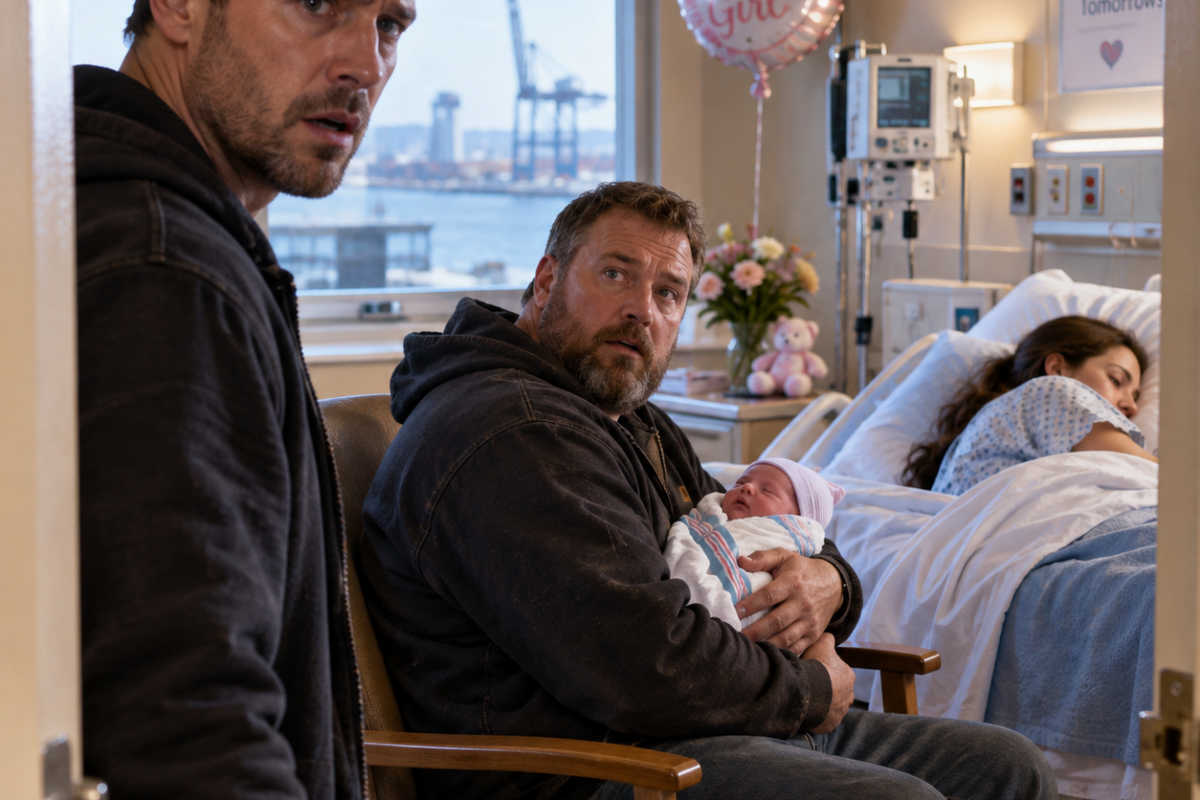
At 3 a.m., the hospital called to congratulate me on becoming a father. “Your wife just gave birth, sir. You need to come meet your baby.” I turned toward my wife, who was sound asleep beside me. “There must be a mistake,” I whispered. “My wife is right here.” The woman on the phone went quiet for a moment. Then her voice changed. “Sir, please come to the maternity ward immediately. If you refuse, we’ll have to contact the police.” I sat up, staring at my sleeping wife. Why would the hospital threaten to call the police over a baby that couldn’t possibly be ours? But when I arrived and saw who was holding that newborn, I stopped in the doorway. It was the last person I ever expected to see.
The Hospital Called at 3 A.M. to Say My Wife Had Just Given Birth. She Was Asleep Beside Me. At 3:07 on a cold Friday…
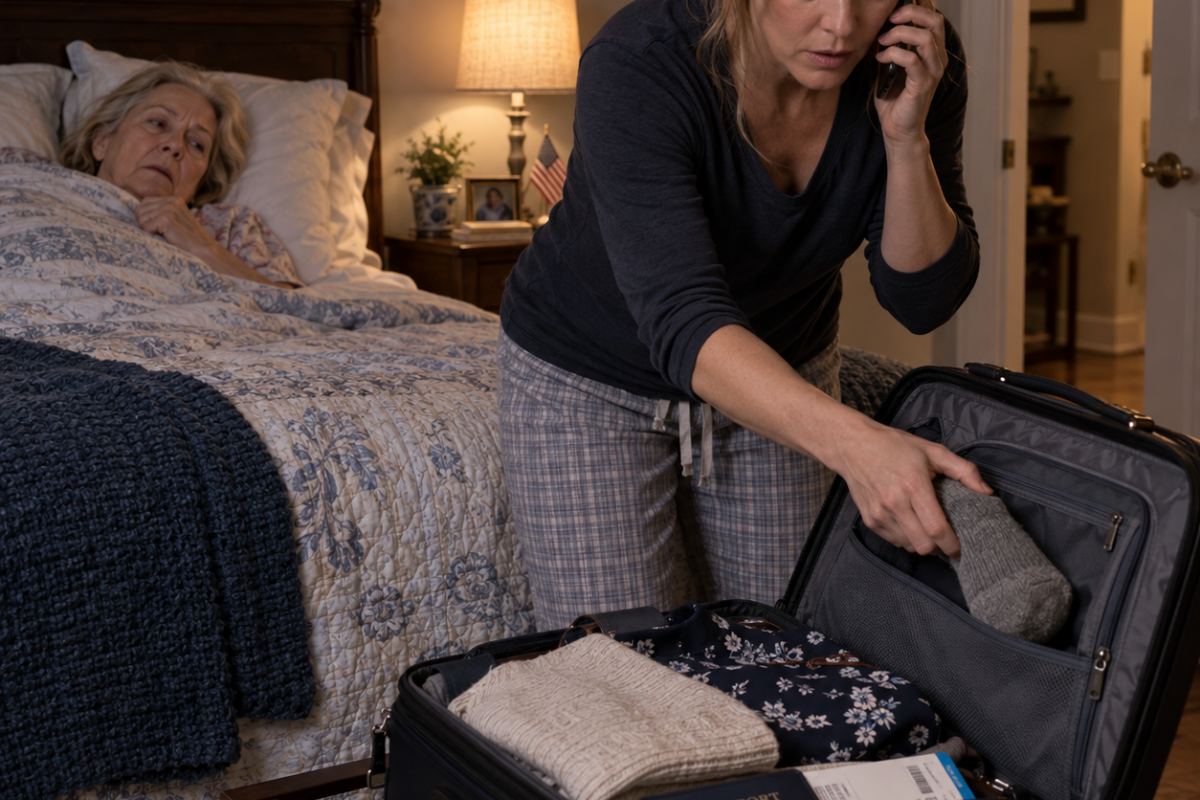
I told my daughter-in-law I had an early flight and went to bed. Just after midnight, my bedroom door slowly opened. Through barely open eyes, I watched her unzip my carry-on, slip something into the hidden inner pocket, and carefully close it again. Then she made a phone call. “It’s in her carry-on. Tip off airport security at six.” My heart started pounding, but I kept pretending to sleep. She had no idea I’d heard every word. And when morning came, I knew there was one thing I absolutely couldn’t do: take that suitcase to the airport.
At Midnight, My Daughter-in-Law Hid a Stolen Museum Pistol in My Carry-On. She Thought Airport Security Would Find It Before I Ever Knew. At 11:58…
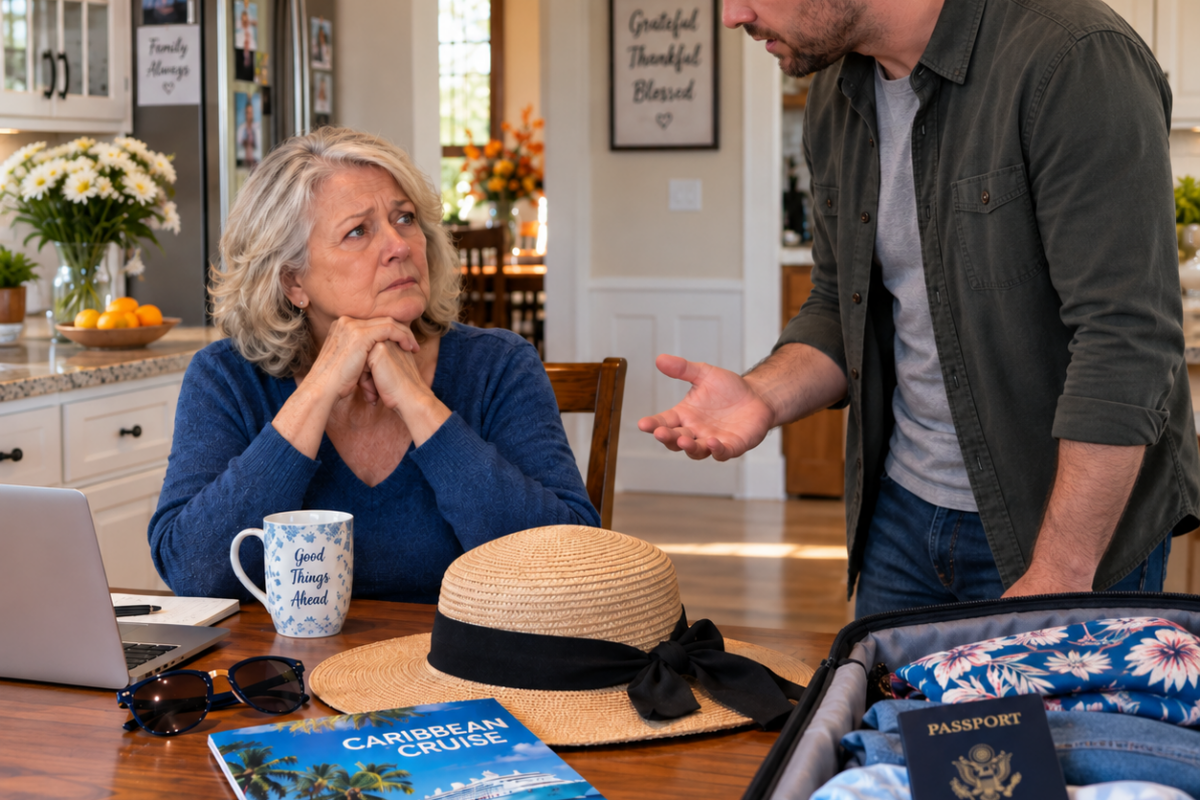
“Thanksgiving is just for my wife’s family,” my son told me. “You’ll have to make other plans.” So I did. I booked a cruise, packed my favorite wide-brimmed hat, and turned off my phone the moment the ship left port. By Thanksgiving afternoon, I was sitting on deck with lobster on my plate, watching the ocean instead of wondering why my own son didn’t want me at his table. I didn’t turn my phone back on until that night. There were 37 missed calls. My son. His wife. Her parents. Even neighbors I barely knew. Then I opened the last voicemail. After hearing the first six words, I put down my fork. Suddenly, I understood why their Thanksgiving dinner had ended early—and why everyone was looking for me.
My Son Told Me Thanksgiving Was Just for His Wife’s Family. So I Took a Cruise, and Eleven Days Later Their Lie Collapsed in Front…
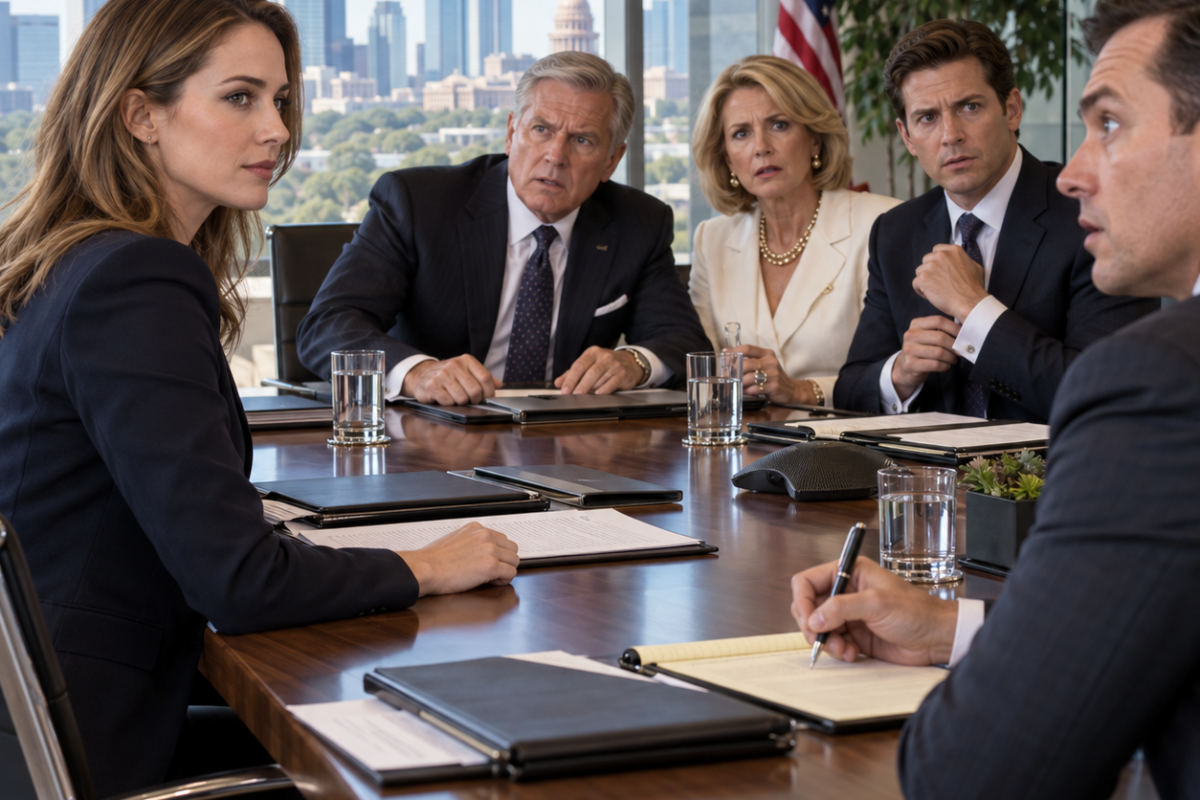
“Henry gets everything—all $80 billion,” Dad announced. “As for you, you’re out of the family. Leave.” I stared at my parents for a moment. “You already sold the company?” Mom smiled. “Every last piece of it.” I slowly closed the folder in front of me. “Without my patents?” Her smile faltered. Dad frowned. “What are you talking about?” I stood up and reached for my coat. “You might want to read page forty-seven of the sale agreement.” For the first time that night, nobody told me to leave.
My Family Said They Were Giving My Brother the Entire $80 Billion Company and Exiling Me. Then the Buyer Asked One Question About My Patents….
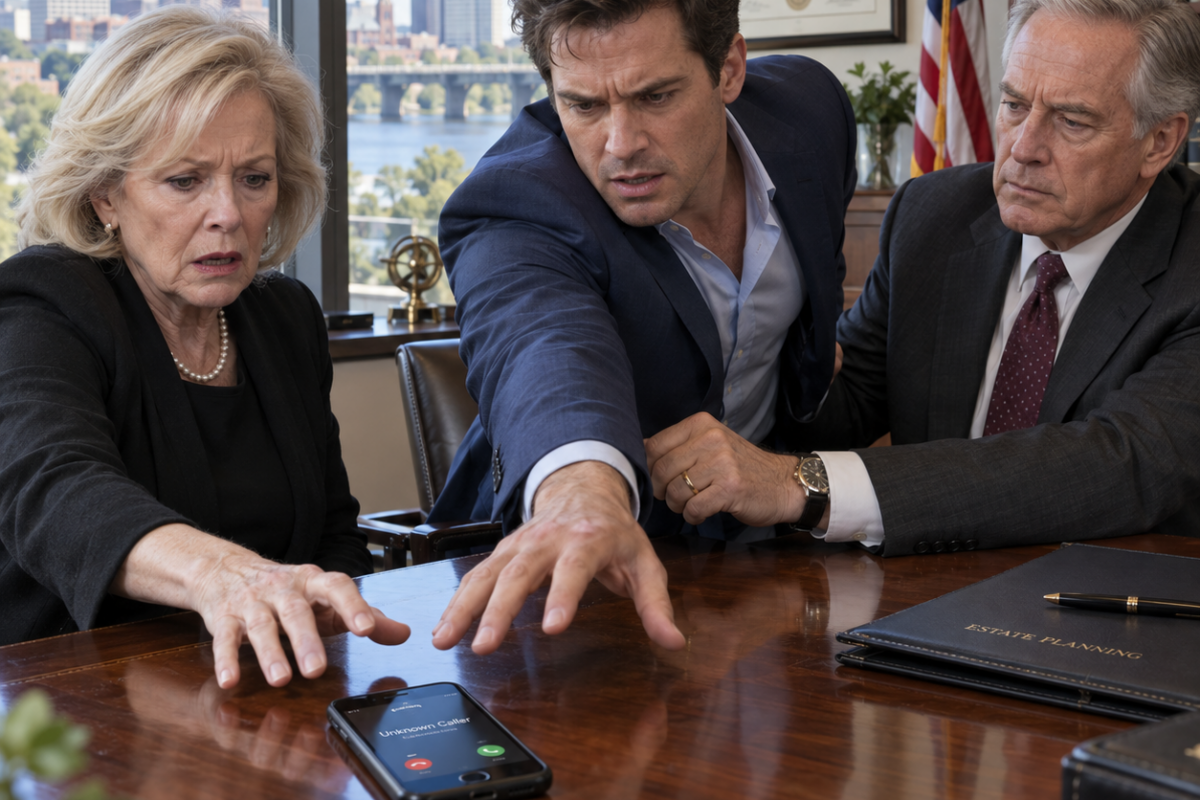
My Husband Left Our Children Millions. He Left Me Only His Locked Phone—Then Someone Called It During the Will Reading.
My Husband Left Our Children $8.4 Million and Me an Old Black Phone. Then It Rang. My husband had been dead for twelve days when…
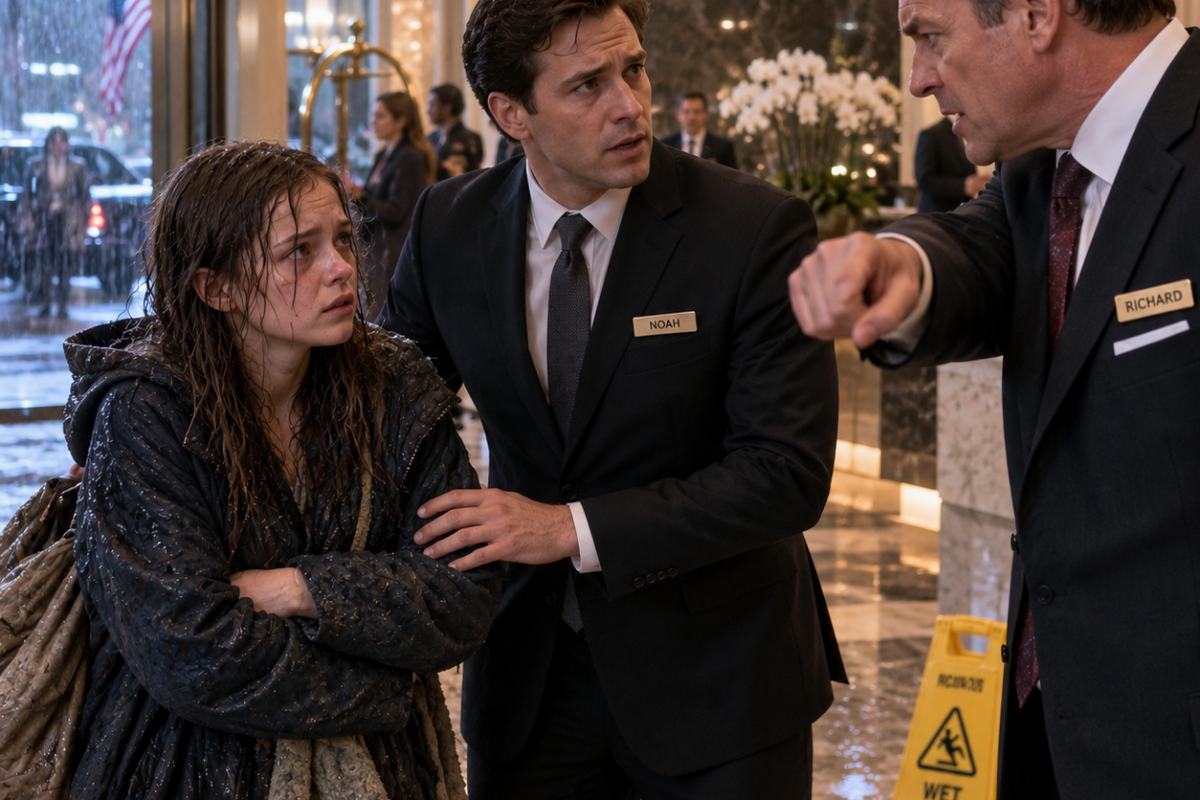
Hotel Staff Thought She Was Homeless—They Had No Idea Why a Billionaire Was Watching From the Lobby
I Walked Into My Family’s Five-Star Hotel Looking Homeless. The Manager Threw Me Into the Rain, and the Clerk Who Helped Me Lost Everything. “You…
End of content
No more pages to load
You Might Also Enjoy

My Husband Left Our Children Millions. He Left Me Only His Locked Phone—Then Someone Called It During the Will Reading.