“I’ll Clean, Cook—Do Anything. My Baby Just Needs Food,” She Told the CEO. He Looked at the Child, Then Said Something She Never Expected.
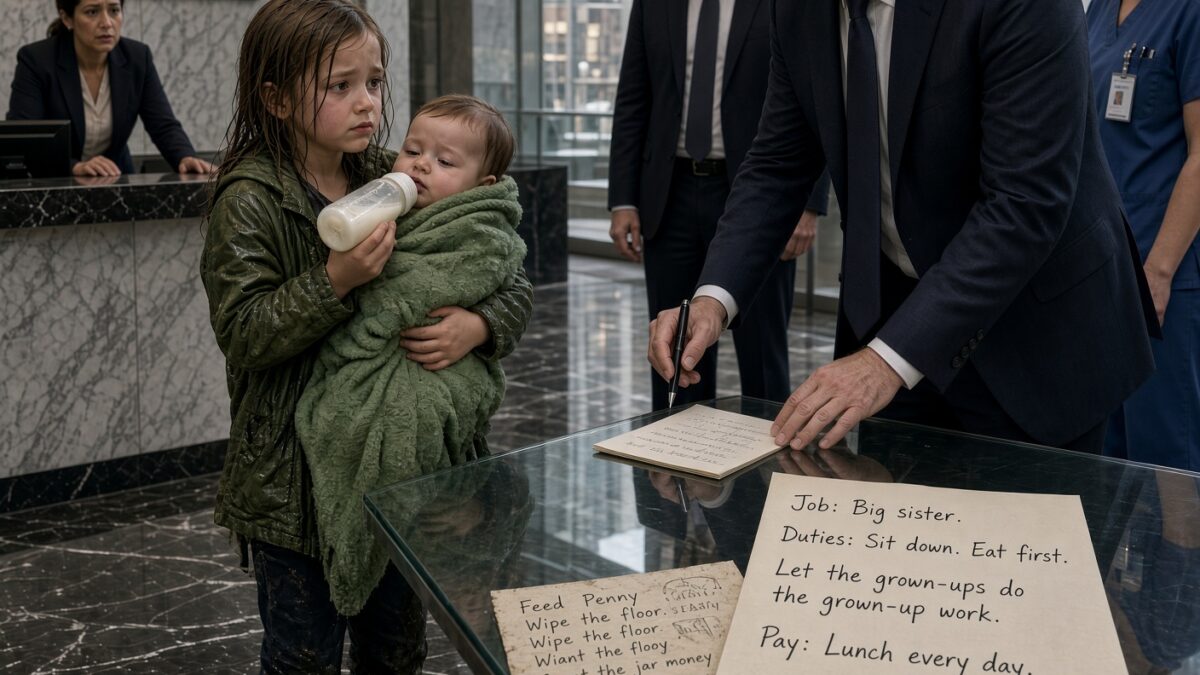
A Seven-Year-Old Walked Into My Chicago Office Carrying Her Baby Sister and Asked for a Job. What She Said Next Changed My Life.
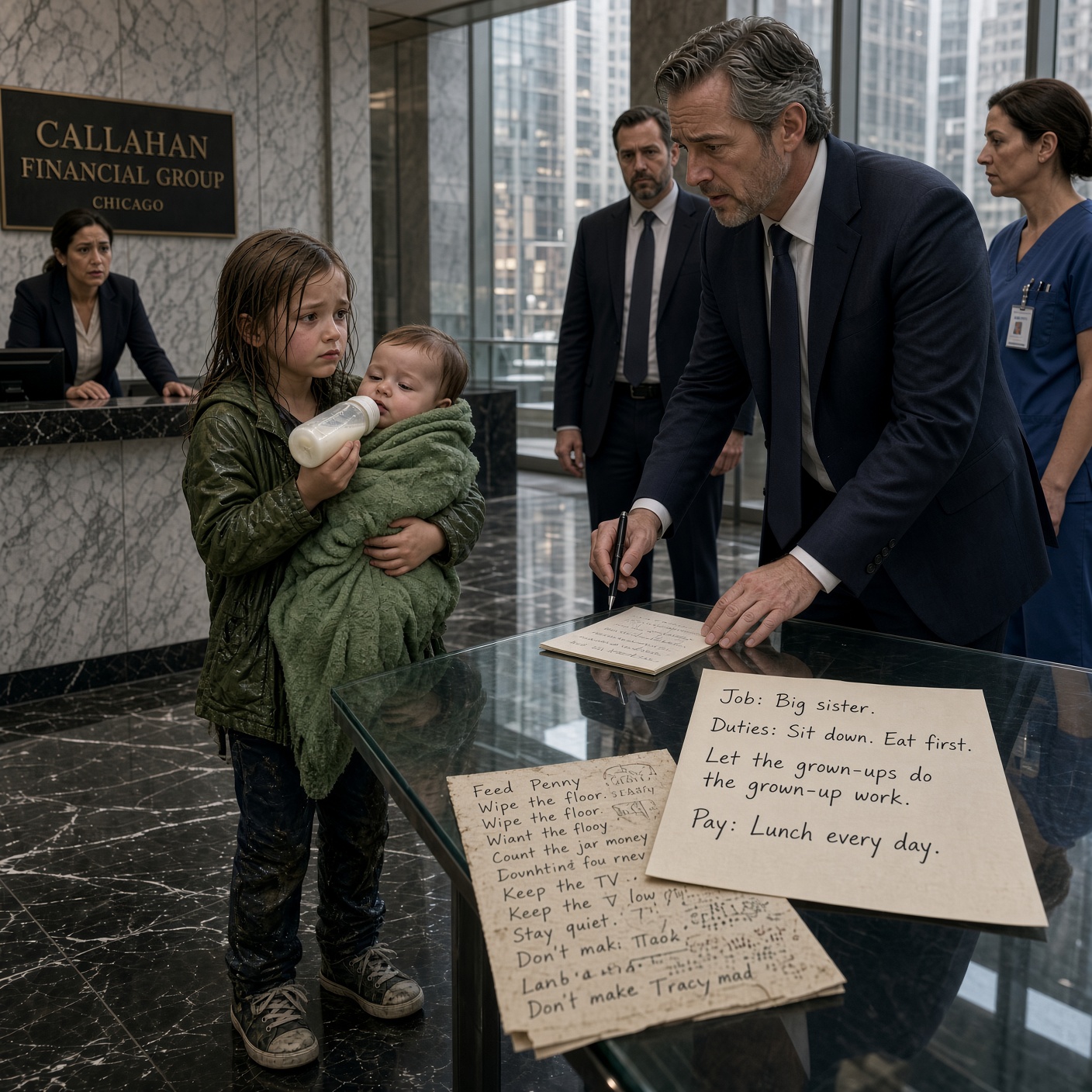
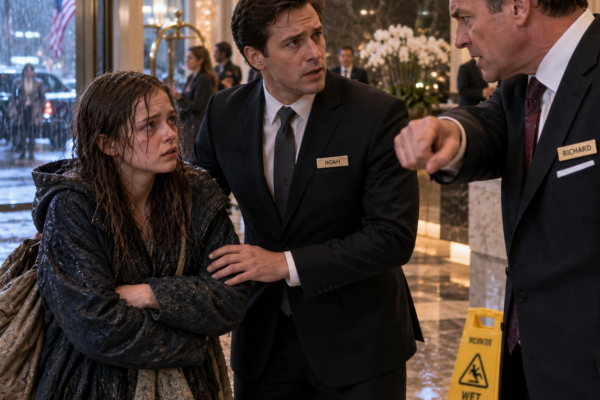
The little girl came through the revolving doors of Callahan Financial at 7:40 on a cold Tuesday morning in April.
Outside, rain came sideways off Lake Michigan hard enough to make spring feel like a lie. Umbrellas crowded the brass stand near the entrance. Wet overcoats brushed past one another. Rolling briefcases clicked over marble floors that the cleaning crew had already mopped twice.
At that hour in Chicago’s South Loop, everyone moved as though they were late, even when they were not.
Almost nobody noticed the child.
She was seven.
Her sneakers were soaked through and squeaked with every step.
On one hip, wrapped in a faded green fleece blanket with a frayed satin edge, she carried an eleven-month-old baby.
She did not look around for a parent.
She did not cry.
She simply joined the line at the reception desk and waited her turn.
Two men in suits stood ahead of her.
Then one.
Then nobody.
Deb Martin, our morning receptionist, leaned over the counter.
“Hi, sweetheart.”
The girl looked up.
Deb smiled carefully.
“Are you lost?”
The little girl shook her head.
“Where’s your mom?”
No answer.
Instead, she shifted the baby higher against her body and pointed across the lobby toward the café.
A small sign hung near the register.
HELP WANTED.
Deb followed her finger.
“That?”
The girl nodded.
“I read it.”
“What’s your name?”
“Maddie.”
“And the baby?”
“Penny.”
Deb came around the desk.
“Maddie, that sign is for grown-ups.”
Maddie seemed to have expected that answer.
She took a breath.
Then recited something she had clearly practiced before entering the building.
“I can clean, cook, anything.”
Her voice was quiet.
“My baby just needs food.”
The conversation around the lobby thinned.
A man near the elevator stopped fastening his cuff.
A woman holding a paper coffee cup turned around.
Luis from security set his breakfast on the desk and started walking over slowly.
Deb crouched.
“Honey, you don’t need to work. We’re going to help you.”
Maddie’s shoulders stiffened.
“I can sweep.”
“It’s okay.”
“I know dishes.”
“Maddie.”
“I can mop too.”
She looked at the café again.
Then repeated the exact same sentence, same words, same order.
“I can clean, cook, anything. My baby just needs food.”
That was when I walked in.
My name is Owen Callahan.
I was fifty-one years old, founder and chief executive of Callahan Financial, and on that Tuesday morning I was already thinking about twelve other problems before I cleared the revolving door.
A loan committee meeting at eight thirty.
A regulatory review at eleven.
A client threatening to move seventy million dollars in managed assets because somebody on my team sent him the wrong quarterly summary.
I had slept four hours.
I was eating half a bagel while walking.
I did almost everything while walking in those days.
Coffee.
Breakfast.
Phone calls.
Lunch.
My assistant, Priya Nair, once told me she had worked for me six years before seeing me eat an entire meal while sitting down.
I thought that was funny.
It was not.
I stepped into the lobby with my mind already upstairs.
Then I saw Maddie.
Not Penny first.
Maddie.
The way she stood.
Shoulders squared.
Chin up.
Coat dripping rainwater onto the marble.
Tiny body braced for rejection but determined not to beg when it came.
She had the posture of someone who believed asking twice was weakness.
The baby made a thin sound.
Maddie turned her attention away from everyone immediately.
She pulled a bottle from inside her coat.
Less than an ounce remained.
She tipped one drop onto the back of her hand, touched it to her lip, then gave the bottle to Penny.
Slowly.
Carefully.
Holding it at an angle so nothing was wasted.
I stopped walking.
I had seen people manage money under pressure my entire career.
Nothing I had ever witnessed was as precise as that child rationing formula.
I approached but stayed several feet away.
“When did she eat last?”
Maddie looked at me.
Her eyes were tired.
Not sleepy in the way children are after staying up too late.
Older tired.
“Penny ate last night.”
“When?”
“Before Tracy left.”
“Who’s Tracy?”
Maddie froze.
Her arms tightened around the baby.
She took one step backward.
Luis arrived beside me.
“Mr. Callahan, I can handle this.”
I raised one hand.
“No.”
He stopped.
I looked at Maddie again.
“Are you hungry too?”
She did not answer.
“Do you want breakfast?”
“I want the job.”
“What job?”
She pointed toward the café.
I looked at the HELP WANTED sign.
Then back at her.
“What can you do?”
“Clean.”
“What else?”
“Cook eggs.”
“You can cook eggs?”
“Yes.”
“What else?”
“Laundry.”
She hesitated.
“I know diapers.”
People were openly watching now.
I hated that.
Children should not become public events because adults have failed privately.
So I said the first thing that came into my head.
“You’re hired.”
The lobby went silent.
Deb stared at me.
Priya, who had just come in through the employee entrance, stopped dead.
Luis looked as though he was deciding whether I had finally become dangerous.
Maddie did not smile.
“What do I do?”
That was the question.
Not thank you.
Not really?
What do I do?
I looked toward the glass conference room beside reception.
“First job is inside.”
She followed my gaze.
“What?”
“Sit down.”
Her expression became suspicious.
“I can work.”
“I know.”
“Then what do I clean?”
“Nothing yet.”
She shifted Penny.
“I need money for food.”
“You’ll get food.”
“How much?”
“As much as you need.”
Her eyes narrowed.
Children who have been disappointed often hear generosity as a trick.
Priya stepped beside me.
“Owen.”
“Conference room.”
She lowered her voice.
“You cannot hire a seven-year-old.”
“I am aware.”
“You just told the entire lobby you did.”
“I’m changing the job description.”
She stared at me.
Then sighed.
“Of course you are.”
We moved into the conference room.
I left the door open.
That mattered instinctively.
I did not want Maddie to feel trapped.
Deb found a dry blanket in the security office and a can of infant formula from the café’s emergency supply cabinet.
Our building kept basic supplies for employees who sometimes arrived with children during school closures or childcare emergencies.
It had never occurred to me that formula in an office supply closet might become the most important asset in the building.
Maddie refused to sit.
The rest of us stood too.
Priya called Yolanda Pierce, the registered nurse who ran our employee wellness office.
I watched Maddie prepare Penny’s bottle.
Two level scoops.
Water.
Shake.
Temperature tested on the back of her hand.
Then she fed her sister and rocked slowly from side to side.
Nobody had to tell her anything.
Penny finished.
Maddie lifted her to her shoulder.
Pat.
Pat.
Pat.
A small burp.
Only then did I understand the full weight of what I was watching.
A first grader was moving like a mother.
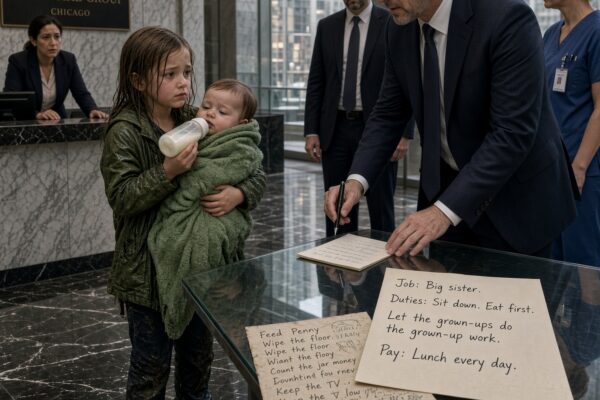
I pulled a company notepad toward me.
Callahan Financial was printed across the top.
I wrote:
JOB: BIG SISTER
DUTIES:
Sit down.
Eat first.
Let grown-ups do grown-up work.
PAY:
Lunch every day.
I tore off the sheet and slid it toward her.
She read it.
Then read it again more slowly.
“That’s not a real job.”
“It is here.”
Priya looked at me.
“Owen.”
“I know.”
Maddie studied the paper the way I had watched grown executives study acquisition contracts.
Then she folded it into a careful square.
She placed it inside her coat pocket.
Another paper fell out.
Old.
Soft at the creases.
Written in crayon.
Purple first.
Then orange where the purple had apparently run out.
Deb picked it up.
I read over her shoulder.
Feed Penny.
Wipe floor.
Count jar money.
Keep TV low.
Stay quiet.
Don’t make Tracy mad.
The two papers sat beside each other.
My neat office stationery.
A child’s crayon list.
For several seconds, the only sound was rain against the glass.
Priya began asking questions carefully.
Not interrogation.
Pieces.
Where do you live?
Maddie gave an apartment address west of downtown.
Who is Tracy?
Silence.
Is she family?
Maddie nodded.
Where is your mother?
Another silence.
Then:
“Mom died.”
Priya’s face softened.
“When?”
“I don’t know.”
Maddie looked embarrassed not to know.
“Before Penny got big.”
We learned more slowly.
The radiator in their apartment banged around six every morning, so Maddie knew when to wake up.
The corner store sold bananas individually.
Penny liked mashed banana but could not eat much at once.
Tracy kept quarters in a pickle jar above the refrigerator.
Maddie counted them at night.
The money bought formula.
She knew which generic brand Penny tolerated.
She knew how long a can lasted.
She knew diaper sizes.
She knew how to warm a bottle.
She knew how to keep Penny quiet before Tracy became angry.
“What school do you go to?” Priya asked.
Maddie answered.
“Were you there yesterday?”
“No.”
“Today?”
“No.”
“Why?”
“I can’t take Penny.”
The room changed again.
“Where is Tracy now?”
Maddie looked at the floor.
“She left Sunday.”
It was Tuesday.
“She does that sometimes.”
“When does she come back?”
“Usually Monday.”
“Did she call?”
“No.”
“When did formula run out?”
“Last night.”
“What did Penny eat this morning?”
“The rest.”
“What about you?”
Maddie shrugged.
That shrug stayed with me longer than most answers.
Children shrug when they do not expect their discomfort to alter anything.
Deb went to get food.
Toast.
Banana.
Scrambled eggs.
Maddie would not touch it.
“Eat,” I said.
“I’m not hungry.”
Her stomach growled loudly enough that everyone heard.
She looked ashamed.
I turned away, giving her privacy she did not actually have.
A minute later, she took one bite of toast.
Then another.
Priya asked whether there was anyone we could call.
Grandparent?
Teacher?
Neighbor?
Maddie’s entire body went rigid.
“You can’t tell.”
“Why?”
“Tracy said.”
“Said what?”
“If people know, the state comes.”
“What happens then?”
“It takes babies.”
Her eyes moved to Penny.
“Where?”
“I don’t know.”
“Does Tracy?”
“She says you never get them back.”
I watched Priya absorb that.
The fear was not abstract.
Maddie believed telling the truth meant losing her sister.
That explained everything.
Why she asked for a job instead of help.
Why she offered labor for formula.
Why she had walked through freezing rain carrying an infant rather than approach a teacher or police officer.
Help was dangerous.
Work was safer.
Priya looked at me.
We both knew the next step.
Yolanda arrived a few minutes later.
She was fifty-seven, with silver-gray curls and reading glasses she usually wore on top of her head.
She knelt to Maddie’s eye level.
“My name is Yolanda. I’m a nurse.”
Maddie stepped back.
“Am I sick?”
“I don’t know.”
“Penny isn’t.”
“I just want to make sure.”
“No.”
Yolanda did not reach for the baby.
“That’s okay.”
Maddie looked surprised.
Yolanda said, “How about we go upstairs where it’s warm? You stay right beside her the whole time.”
Maddie considered.
“Do I have to sign something?”
The question nearly broke me.
“No,” Yolanda said.
“You don’t.”
We went to my office because it was private, quiet, and had a couch.
I had spent eleven years designing that office.
Walnut shelves.
Leather sofa.
A desk large enough to impress people who were already impressed.
That morning, none of it mattered except the heating vent near the couch.
Yolanda explained everything before touching Penny.
“Can I listen to her chest?”
Maddie nodded.
“Can I check her fingers?”
Nod.
“Can I look in her ears?”
Nod.
Penny was chilled but stable.
Underweight.
Behind on routine care.
No immediate sign of a medical emergency, but enough concern that Yolanda’s professional responsibility was clear.
She asked when Penny last saw a pediatrician.
Maddie did not know.
Vaccinations?
No idea.
Well-baby visits?
Silence.
Yolanda drew Priya and me toward the window.
“I have to report this.”
I nodded.
“To DCFS?”
“Yes.”
“Do it.”
Priya said, “Owen, once we call, this becomes a state matter.”
“I understand.”
“No, I mean really understand.”
She kept her voice low.
“You are a witness. You are not their guardian. You do not control where they go.”
I looked toward the couch.
Maddie had one hand resting on Penny’s sock.
“Can we request they stay together?”
“We can request anything.”
“Put it in writing.”
“Owen.”
“I know requests aren’t orders.”
I looked at her.
“But put it in writing.”
Yolanda made the call.
Priya contacted Maddie’s school.
The school confirmed she had missed Monday and Tuesday.
They had been trying to reach the emergency contact.
Tracy Coleman.
Maddie watched the phones.
The note-taking.
The quiet adult voices.
She could not hear our reasoning.
Only keywords.
State.
Investigator.
Emergency contact.
Report.
Everything she had been warned about was happening in a room with expensive furniture and kind voices.
Penny fell asleep after eating.
Maddie tucked the green blanket beneath her chin.
Then she walked toward the center of my office.
She stood very straight.
“What?”
I came around the desk.
She looked up.
“Penny ate.”
“Yes.”
“What room do I clean now?”
Nobody answered.
“So we can stay,” she added.
My pen slipped out of my fingers and struck the desk.
A small sound.
It felt enormous.
“No rooms.”
Her face became wary.
“Nobody’s cleaning.”
“But you hired me.”
“Yes.”
“What do I do?”
I pointed toward her pocket.
“Your job is on the paper.”
“That’s not work.”
“It’s the only job I have.”
She looked unconvinced.
Then my desk phone rang.
Reception.
I answered.
“Mr. Callahan,” Luis said. “There’s a woman downstairs. Tracy Coleman. She says she’s here for two children.”
Maddie heard the name.
Every bit of color vanished from her face.
“Stay here.”
“No.”
She grabbed Penny.
Yolanda stepped closer.
“I’ll stay with you.”
“No.”
“Maddie.”
“Tracy’s mad.”
“I know.”
“No, she gets—”
She stopped.
I did not ask her to finish.
I looked at Yolanda.
“Stay.”
Then at Deb.
“You too.”
Priya and I went downstairs.
Tracy Coleman was twenty-nine.
Rain-soaked.
Hair stuck to her forehead.
Phone clutched in one hand.
She was waiting in the same conference room.
“Where are they?”
“They’re safe.”
“You can’t keep them.”
“We’re not.”
“I’m their guardian.”
Priya sat.
“Do you have guardianship papers?”
Tracy’s mouth opened.
Closed.
“Court order?”
Silence.
“Any documentation?”
“I promised their mother.”
That was how the rest came out.
Kayla Holt had been Tracy’s cousin.
They shared the apartment.
Fourteen months earlier, Kayla was injured in a car accident and died three days later.
At the hospital, according to Tracy, Kayla had squeezed her hand and begged her to keep the sisters together.
Tracy promised.
Then she tried to fulfill that promise without entering the legal system she distrusted.
She kept Kayla’s name on mail.
Signed school forms.
Avoided questions.
Worked two jobs.
Paid rent when she could.
At first, she stayed home most nights.
Then she began leaving occasionally.
One night.
Then two.
“I always came back.”
Priya asked, “You left a seven-year-old alone with an infant?”
Tracy stared at the table.
“Maddie knows Penny.”
“That is not an answer.”
“She’s good with her.”
I saw something in Tracy then that complicated my anger.
She was not a cartoon villain.
She was overwhelmed.
Grieving.
Terrified of foster care.
And she had turned a child’s competence into permission to abandon adult responsibility.
Sometimes people do terrible things without thinking of themselves as terrible.
That does not make the harm smaller.
“You told Maddie the state steals babies,” I said.
Tracy’s head lifted.
“It splits families.”
“Sometimes.”
“You don’t know.”
“No.”
I kept my voice even.
“But your fear became hers.”
She leaned toward me.
“And who are you?”
Good question.
“Someone who found them.”
“You’re rich.”
Irrelevant.
“You think you can take them.”
“No.”
“You already did.”
“No.”
I said it again.
“I gave them food.”
“You brought them upstairs.”
“To a nurse.”
“You have no idea what people like you look like from where we live.”
She was right about that too.
I did not.
Then she said something that made Priya sit straighter.
“If you try to walk out of this building with those girls, I’ll tell the police you kidnapped them.”
Three knocks came at the conference-room door.
A man in his forties stood outside with a DCFS badge.
Andre Simmons.
Beside him was a Chicago police officer.
The situation changed immediately.
Not because police make everything simple.
Because now there was a lawful process none of us controlled alone.
Andre asked plain questions.
Legal guardian?
None.
Medical care?
Unclear.
Why were the children left alone?
Tracy had explanations.
Work.
Exhaustion.
Fear.
Promises.
No answer changed the underlying fact.
A seven-year-old had been caring for an infant for days.
The officer took Tracy’s statement separately.
Andre came upstairs.
Maddie did not like him.
Not at first.
He represented the word she feared.
State.
He crouched several feet away.
“I’m Andre.”
She said nothing.
“Miss Yolanda says Penny is doing okay.”
No answer.
“Did you walk here?”
Nod.
“From Roosevelt?”
Nod.
“In the rain?”
Nod.
“That was a long walk.”
Silence.
He did not praise her.
That impressed me.
Adults praise children like Maddie too easily.
So brave.
So mature.
So responsible.
Sometimes praise for survival accidentally tells a child to keep surviving the same way.
Andre said instead, “You should never have had to do that.”
Maddie looked at him.
“Why?”
“Because grown-ups are supposed to get food.”
“I can.”
“I know.”
“I know the store.”
“I believe you.”
“Then why can’t I?”
He thought for a moment.
“Because being able to do something does not mean it should be your job.”
That sentence landed.
Later, Andre told us DCFS was taking protective custody while emergency placement was arranged.
The immediate problem was the sisters.
Seven-year-old.
Infant.
Most emergency foster placements were not prepared to accept both on hours’ notice.
“We prioritize keeping siblings together,” Andre said.
“But?”
He looked tired.
“Sometimes there isn’t a bed.”
“What happens?”
“Separate emergency placements.”
My stomach dropped.
Maddie’s greatest fear.
“Can I take them?”
Andre looked at me.
“No.”
“I have room.”
“That is not the standard.”
“I can pass a background check.”
“Eventually.”
“I can pay for anything they need.”
“Owen.”
Priya touched my arm.
Andre’s expression softened.
“Money doesn’t make you licensed.”
That sentence irritated me because it was true.
For thirty years, money had solved most logistical problems in my life.
Need a contractor?
Pay one.
Need more staff?
Hire.
Need a specialist?
Call.
Need something today?
Pay extra.
Here was a problem that could not ethically be expedited because a wealthy man wanted it expedited.
I hated that.
Good.
I needed to.
Andre made calls all afternoon.
My meetings were canceled.
I did not care.
Deb brought sandwiches.
Maddie refused most of hers.
Penny ate twice.
The rain continued.
At eight fifteen, Andre’s phone rang.
He stepped away.
Returned ten minutes later.
“One placement.”
“Together?”
“Yes.”
I exhaled.
“Where?”
“Bridgeport.”
The foster parent arrived shortly after nine.
Her name was Opal Sears.
Sixty-seven years old.
Plastic rain bonnet.
Brown coat.
Sensible shoes.
She carried a diaper bag that looked old enough to have raised three generations.
She stepped into the conference room.
Looked at Maddie.
Looked at Penny.
Then at me.
Her gaze rested there a second longer than necessary.
“You Mr. Callahan?”
“Yes.”
She looked around my lobby.
“Thought you’d be taller.”
Priya coughed to hide a laugh.
Opal took the girls together.
That night.
But before they left, she spoke privately with Andre.
Her foster license would close at the end of August.
She had been doing this three decades.
Her knees hurt.
Her daughter wanted her to slow down.
She would take Maddie and Penny as an emergency sibling placement only if the state worked immediately toward something stable afterward.
Andre looked toward me.
Then Priya.
Then back.
“There is one possibility.”
I knew where this was going before he said it.
Non-relative foster licensing.
Background checks.
Fingerprints.
Training.
Home study.
References.
Medical forms.
Inspections.
No guarantee.
Months.
I could donate money and leave.
Nobody would have blamed me.
In fact, that would have been normal.
Write a check to a child-welfare nonprofit.
Call Priya Wednesday morning.
Ask whether everything worked out.
Return to loan committees and quarterly forecasts.
Instead, I looked at Maddie.
Penny asleep on her shoulder.
Opal beside her.
Maddie’s eyes still searching every adult face for the moment someone changed the plan.
“Where do I sign?”
Priya looked at me.
“Owen.”
“What?”
“This isn’t a donation.”
“I know.”
“It will change your life.”
I looked at her.
“That’s starting to seem like the point.”
I signed the application.
The process took three months.
Not because I was Owen Callahan.
In spite of being Owen Callahan, in some ways.
Money raised different questions.
Was I doing this impulsively?
Was I accustomed to controlling environments?
Could I handle a traumatized child who would not care how many companies I owned?
Did I have support?
Did I actually intend to parent, or did I want to solve a crisis?
The licensing classes were held at a community center on the West Side.
The first evening, I arrived in a suit straight from work.
Everyone else looked at me.
A young couple in jeans.
Two women who were relatives of children already in care.
A retired teacher.
A grandmother.
A man who worked nights at O’Hare.
I sat in a folding chair and took notes.
Trauma.
Attachment.
Food insecurity.
Sleep disturbances.
Hoarding.
Regression.
Medical consent.
Birth-family contact.
Mandatory reporting.
Discipline.
I learned that a child who steals crackers after being fed may not be dishonest.
She may be afraid food disappears.
A child who cleans obsessively may not be helpful.
She may believe usefulness purchases safety.
A child who lies about a caregiver’s behavior may not be manipulative.
She may be protecting the only family structure she understands.
I thought about Maddie’s crayon list.
Keep TV low.
Stay quiet.
Don’t make Tracy mad.
My house had no crayon lists.
It also had no children.
The home study was worse than the classes.
A caseworker named Marlene came to my Lincoln Park greystone.
She opened cabinets.
Checked smoke detectors.
Asked about alcohol.
Guns.
Medication.
My schedule.
My parents.
My childhood.
My marriage.
Or lack of one.
“You’ve never been married?”
“No.”
“Long-term relationship?”
“Years ago.”
“Why ended?”
I stared at her.
“This is relevant?”
“Very.”
I disliked her.
That probably meant she was doing her job.
I told her.
Work.
Mostly.
My father, Jim Callahan, drove a city salt truck.
He was a good man.
Hardworking.
Strict.
In our house, work always came before comfort.
Nobody sat down until the job was finished.
Chores before dinner.
Homework before television.
Rest had to be earned.
I built Callahan Financial from a small commercial-lending advisory firm because I understood work.
Or thought I did.
I arrived before everyone.
Left after most.
Responded to emails at midnight.
My employees admired my stamina.
I admired it too.
Until Maddie walked into my lobby and tried to sell me the same belief in a child-sized package.
I can clean, cook, anything.
My baby just needs food.
Work for survival.
Work for belonging.
Work before eating.
I had recognized something in her because I had spent my life doing a more socially acceptable version of it.
Every Sunday during licensing, I visited Maddie and Penny at Opal’s bungalow.
Bridgeport.
Small brick house.
Plastic flowers on the porch in April because Opal said real ones “had enough trouble with Chicago weather.”
Visits were structured.
Opal present.
Caseworker aware.
I brought nothing expensive after the first week.
The first Sunday, I arrived with books, toys, diapers, clothes, and a ridiculous stuffed giraffe nearly as tall as Maddie.
Opal opened the door.
She looked at the bags.
“No.”
“What?”
“Take half back.”
“They need things.”
“They need normal.”
I stared at her.
She stared back.
I took half back.
Maddie barely spoke during visits.
Polite.
Formal.
She called me Mr. Callahan.
Never Owen.
Penny warmed to me faster.
Babies are often less suspicious because suspicion requires memory.
By June, Penny would wobble toward me when I arrived.
Maddie watched.
Never stopped her.
Never joined.
Opal told me Maddie slept on a cot pushed against Penny’s crib.
One hand between the bars.
Every night.
“She thinks if she lets go, somebody takes the baby,” Opal said.
“What do I do?”
“Show up.”
“That’s it?”
“For now.”
“I can do more.”
“That’s your problem.”
I looked at her.
“You rich men are always trying to do more.”
“What should I do?”
“Tuesday, you said you’d come Tuesday.”
“Yes.”
“Come Tuesday.”
I did.
Every Tuesday.
Every Sunday.
Then one Thursday when a client wanted dinner, I said no.
That was new.
My assistant nearly asked whether I was sick.
My foster license was approved in late July.
The girls moved into my house on a hot Thursday afternoon.
Opal agreed to become an approved daytime caregiver while I worked, at least through the transition.
She arrived with them in a ten-year-old Toyota.
Maddie carried one small bag.
Penny’s green blanket.
That was nearly all that mattered to her.
I had prepared too much.
Of course I had.
Three strollers.
A nursery that looked like a catalog.
White crib.
Paper-star mobile.
Changing table.
Books.
Stuffed animals.
A bedroom for Maddie with a new quilt, desk, bookshelf, closet full of clothes.
Every tag still attached.
She walked through the house silently.
Counted doors.
Looked out windows.
Found the front exit.
Back exit.
Garden gate.
Stairs.
Pantry.
She stood in the pantry for almost five minutes.
“What are you doing?”
“Nothing.”
She read every shelf.
Cereal.
Rice.
Pasta.
Crackers.
Canned soup.
Baby food.
Formula.
I understood.
Inventory.
She was calculating how long food would last.
“You can eat anything.”
No answer.
“If you want something, ask.”
That was the wrong sentence.
Ask means permission.
Permission can be withdrawn.
So the next day, Opal placed a basket on the lowest pantry shelf.
Crackers.
Granola bars.
Applesauce.
Fruit cups.
“This shelf belongs to everybody,” she told Maddie.
“You do not ask.”
Maddie tested that rule for a week.
First one cracker.
Then two.
Then a granola bar she hid under her pillow.
Opal found the wrapper.
Said nothing.
A month later, Maddie stopped hiding food.
Not because we explained she was safe.
Because food kept being there.
Trust is repetitive.
That was the lesson.
Penny adapted faster.
Within two days, she crawled across my living room floor as though she had paid the mortgage.
She pulled books off shelves.
Put everything in her mouth.
Laughed at the washing machine.
The first time she called me something approximating “O,” I felt absurdly proud.
Maddie remained careful.
She folded clothes nobody asked her to fold.
Wiped counters.
Straightened shoes.
If I left a coffee cup in the living room, she carried it to the kitchen.
At first, I thanked her.
Opal corrected me.
“Stop praising every chore.”
“Why?”
“Because she already thinks chores buy rent.”
So I learned to say:
“You don’t need to do that.”
Sometimes she did it anyway.
One Friday morning, I promised I would be home for dinner at six thirty.
Not “around six thirty.”
Not “I’ll try.”
Six thirty.
At 5:55, I packed my laptop.
At 5:57, my phone rang.
A client.
Large account.
A problem.
One more call.
Familiar phrase.
I took it.
Then another person joined.
Then legal.
Then someone needed a spreadsheet.
I looked up.
7:02.
I was still in my office.
I left immediately.
Traffic on Lake Shore Drive was miserable.
I reached home at 7:40.
The kitchen light was on.
Opal sat at the table wearing her coat.
A plate covered in foil waited in the oven.
Penny was upstairs asleep.
Maddie sat on the bottom step of the back staircase.
Still dressed.
Her untouched plate beside her.
Opal stood.
“She waited.”
That was all.
No lecture.
She left.
I looked at Maddie.
“I’m sorry.”
“It’s okay.”
The two most dangerous words from a child who does not believe she has the right to be angry.
“No. It isn’t.”
She shrugged.
“You were working.”
“I said six thirty.”
“It’s okay.”
“Maddie.”
She stood.
“I’m not hungry.”
She carried the plate into the kitchen.
I let her.
At two in the morning, I woke to a soft brushing sound.
I came downstairs barefoot.
Kitchen light.
Maddie stood in pajamas holding a broom taller than she was.
She swept a floor that was already clean.
“What are you doing?”
She stopped.
“I have to finish.”
“Finish what?”
“Being useful.”
I felt cold.
“Why?”
Her eyes were exhausted.
“So you don’t send us back.”
The broom slipped from her fingers.
It struck the tile.
I wanted to say the obvious thing.
You’re safe.
I won’t send you anywhere.
But I was beginning to understand promises mean almost nothing to children who have watched adults break them.
So I told her something true.
“When I was a boy, my father worked nights.”
She watched me.
“He drove a salt truck.”
No response.
“Big Jim Callahan.”
I smiled.
“Everyone called him that even though he wasn’t especially big.”
Maddie sat slowly against the cabinet.
“He had a rule. Nobody sits down until the work is done.”
She looked toward the broom.
“I was always finding work.”
I sat on the bottom stair.
“Dishes. Trash. Homework. Garage.”
I shrugged.
“I got very good at never being finished.”
Maddie listened.
“I still do it.”
“You work all the time.”
“Yes.”
“Because you need money?”
“No.”
“Then why?”
I did not have a good answer.
“Maybe because I forgot how to stop.”
She looked at me for a long time.
I stood.
Picked up the broom.
Leaned it against the wall.
The dustpan remained on the floor.
“I’m not finishing this tonight.”
Maddie looked at the pile.
“Why?”
“Because the house will survive.”
“What if it doesn’t?”
“We’ll deal with it tomorrow.”
I sat back down.
“You don’t have to finish either.”
We stayed there.
Separate sides of the kitchen.
Eventually she yawned.
“Go upstairs.”
She hesitated.
“I’ll turn off the light.”
She went.
The dust stayed until morning.
One night did not heal anything.
But it became a pattern.
Maddie spilled juice.
I wiped it up.
She stared.
“Want more?”
“Are you mad?”
“No.”
“Why?”
“Because cups fall.”
Another week, she fell asleep while folding Penny’s laundry.
I left it exactly where it was.
The next morning, she woke before me and rushed downstairs.
The basket remained half-finished.
Nobody had punished her.
Nothing had changed.
I started sitting for breakfast.
That was harder than it sounds.
The first morning, my phone buzzed.
I stood automatically.
Then saw Maddie watching.
I put the phone in a kitchen drawer.
Sat down again.
“Important?” she asked.
“Probably.”
“You’re not answering?”
“No.”
“Why?”
“I’m eating.”
She considered this.
The world continued.
That surprised both of us.
I began leaving the office by six.
Not always.
But when I promised six thirty, I treated it like a client deadline.
The first time I arrived at 6:20, Maddie looked at the kitchen clock.
Then at me.
“You’re early.”
“Ten minutes.”
“Why?”
“Traffic was good.”
She did not believe Chicago traffic had suddenly become generous.
She smiled anyway.
School began in August.
Second grade.
I walked her inside.
Opal waited with Penny.
Maddie’s teacher, Mrs. Alvarez, knew enough of the situation to be careful.
She asked Maddie where she wanted to sit.
Near the door.
Of course.
During the first month, Maddie’s backpack came home with extra crackers.
No one punished her.
The counselor, Mrs. Lindgren, let her draw during sessions.
She drew houses with every exit visible.
Then houses with windows.
Then one house with people inside.
I kept every drawing she gave me.
In September, I stood outside Maddie’s bedroom at bedtime.
She preferred the door open.
Hall light on.
“Can I ask something?”
“Of course.”
“Do I still have to clean?”
“You never had to.”
She looked at me.
“You know what I mean.”
I did.
“Do I still have to help so we stay?”
I took my time.
“No.”
“What if I don’t do anything?”
“Then you still live here.”
“What if I’m bad?”
“We deal with whatever happened.”
“You won’t send Penny away?”
“No.”
She looked uncertain.
“Even if I don’t finish?”
“Yes.”
She pulled the blanket higher.
“Okay.”
Her eyes closed before I left the doorway.
That was new.
In October, Andre visited for a routine case review.
He sat at the kitchen table.
Maddie did homework.
Penny dropped Cheerios repeatedly to see whether gravity still worked.
Andre looked around.
The house was no longer quiet.
Toys.
Crayons.
A stroller blocking part of the hallway.
School papers on the refrigerator.
A laundry basket I had not put away.
“Looks worse,” he said.
“Thank you.”
“That was a compliment.”
“I know.”
The legal case involving Tracy moved separately.
She was charged with child endangerment.
Her attorney presented the context.
Grief.
Overwork.
Fear.
No prior criminal history.
The fact that she had initially tried to care for the girls.
None excused leaving them alone.
But justice does not require flattening a person into the worst thing they did.
Tracy eventually entered a plea.
She completed treatment, parenting education, and other court requirements.
Contact with Maddie remained limited and structured.
One letter arrived months later.
I read it first because the caseworker asked me to.
Then Maddie read it at the kitchen table.
Opal sat beside her.
Tracy wrote:
I’m sorry I made you think love was a chore.
Your mama would be proud of you.
I’m trying to become someone she would be proud of too.
Maddie read it twice.
Folded it.
Put it in her bedroom drawer.
“Do I have to answer?”
“No.”
“Will she be mad?”
“That isn’t your responsibility.”
She nodded.
Did not answer.
Nobody pushed.
The adoption question came later.
Not immediately.
First came permanency reviews.
Family searches.
Legal determinations.
Assessments.
No safe parent or relative placement emerged that could take both girls long-term.
By winter, the permanency plan began moving toward adoption.
I was asked whether I remained willing.
I said yes before the question was finished.
Priya, who had become honorary aunt by then, told me not to sound so desperate in legal meetings.
“I’m not desperate.”
“You answered before counsel stopped speaking.”
“I’m efficient.”
“You’re impossible.”
Opal closed her foster license at the end of August as promised.
She did not leave our lives.
Every Sunday she came for dinner.
The first time Maddie called her Grandma Opal, Opal stood up and went into the bathroom.
When she returned, her eyes were red.
“Allergies.”
“In December?”
“Indoor allergies.”
Nobody challenged her.
The adoption became final the following March.
Ordinary Thursday.
Cook County courtroom.
A judge.
A clerk.
Andre.
Priya.
Opal in her best church hat.
Maddie wore a navy dress she chose herself.
Penny wore one shoe for most of the hearing because she removed the other and threw it twice.
The judge asked Maddie whether she understood what adoption meant.
She looked at him.
“He’s our dad.”
I forgot how to breathe.
The judge smiled.
“That’s a very good summary.”
He signed.
That was it.
No dramatic speech.
No applause.
Permanent.
Outside the courthouse, Opal cried.
She blamed wind.
Again.
Andre shook my hand.
“Most cases don’t end like this.”
I knew.
“Thank you,” he said.
I looked at him.
“For what?”
“Staying.”
That word.
Staying.
It sounded simple.
It was not.
People imagine adoption as the end of fear.
It is usually the start of a safer place to work through it.
Maddie still woke at night sometimes.
Still counted food.
Still went quiet when adults argued nearby.
Still watched clocks closely if I was late.
Therapy continued.
School support continued.
I made mistakes.
Many.
Once, when she was eight, she lied about finishing a reading assignment.
I became too stern.
Her face shut down instantly.
That terrified me more than the lie.
I stopped.
Took a breath.
Started again.
“Why did you tell me it was finished?”
“I wanted to watch TV.”
Normal answer.
Almost.
“And?”
She looked away.
“And I thought you’d be mad.”
“I am a little annoyed.”
She stiffened.
“Being annoyed is not the same as leaving.”
That distinction had to be taught repeatedly.
To both of us.
Penny became loud.
Healthy.
Funny.
By two, she believed every drawer existed specifically for her inspection.
She called Opal “Gama.”
Called Priya “Pee-ya.”
Called me Dad before Maddie did.
The first time, I was tying her shoe.
“Dad.”
I looked around like an idiot.
She pointed at the other shoe.
“Dad.”
Right.
Maddie was nine before she used it casually.
Not in court.
Not explaining me.
Calling me.
“Dad, Penny took my marker.”
I almost celebrated.
Instead, I said, “Penny, give it back.”
Parenting teaches you not to make every milestone too heavy.
At work, Callahan Financial changed too.
I changed because it had to.
Before Maddie, I thought presence was leadership.
I was always available.
Always first in.
Always last out.
After becoming a father, I discovered being constantly available often means you are teaching everyone else they should be too.
I had created a culture where people apologized for school pickups.
Where senior employees emailed during vacation.
Where staff ordered dinner to the office and called it commitment.
I had thought I was demanding excellence.
Sometimes I was rewarding fear.
So we changed rules.
Not slogans.
No-email expectations after normal hours unless genuinely urgent.
Real backup coverage.
Expanded dependent-care support.
More predictable scheduling.
Managers evaluated partly on whether their teams could function when the manager was absent.
That last one upset several executives.
Good.
If your department collapses because you go home, you have not built leadership.
You have built dependency.
Priya led most of those reforms.
Naturally.
“You’re enjoying this,” I told her.
“Deeply.”
“You’ve been storing complaints for years.”
“I keep organized files.”
I laughed.
The café HELP WANTED sign stayed.
Deb wanted to throw it away after the old manager replaced it.
I asked her to give it to me.
It now hangs in a small frame in my office.
Not because I like remembering that a seven-year-old tried to work for formula.
Because it reminds me how easily adults can look directly at labor and mistake it for maturity.
Maddie was not extraordinary because she could care for an infant.
She should never have needed to.
That distinction matters.
People love praising children for resilience.
Strong girl.
Old soul.
So responsible.
Sometimes those phrases hide adult failure.
A child who knows how to prepare formula at seven may be impressive.
She may also need somebody to ask why she had to learn.
A child who never complains may be easy.
She may also believe complaints cost shelter.
A child who is always helpful may be kind.
She may also think love is conditional.
Maddie taught me to look twice.
She also changed my relationship with work in ways no leadership seminar managed.
One Saturday morning, about a year after adoption, rain tapped steadily against the kitchen windows.
Same kind of gray Chicago rain as the morning she entered my lobby.
I was making French toast badly.
I never mastered it.
One side browned too much.
Penny, almost three by then, banged a spoon against her high-chair tray.
Maddie sat across from me wearing pajamas with stars on them.
I set down plates.
Maddie immediately reached toward Penny.
Old reflex.
Feed the baby first.
Her hand stopped halfway.
Penny was already eating with both hands.
Syrup in her hair.
Perfectly fine.
Maddie looked at her own plate.
Then at me.
“Do I have to help today?”
“Only if you want.”
She looked suspicious.
“Nothing?”
“I may make you put socks in the laundry basket later.”
“That’s not helping.”
“It helps me.”
She rolled her eyes.
Another milestone.
Children who feel safe eventually become annoyed by their parents.
I poured milk.
“You have one job.”
She smiled.
“I know.”
“What?”
“Eat first.”
Then she did.
I sat too.
Phone upstairs.
Laptop closed.
Work unfinished.
House standing.
That became our family rule.
Not literally.
We had chores.
Maddie eventually loaded the dishwasher.
Took out recycling.
Made her bed when reminded.
Penny became responsible for placing napkins on the table and mostly used the task to create napkin hats.
The difference was that chores belonged to family life.
They did not purchase membership in it.
That is a distinction adults understand intellectually and children understand through repetition.
One evening, Maddie asked about the first paper I wrote.
“Do you still have yours?” I asked.
She ran upstairs.
Returned with the folded Callahan Financial note.
Soft now.
Creased.
JOB: BIG SISTER.
DUTIES: SIT DOWN. EAT FIRST. LET GROWN-UPS DO GROWN-UP WORK.
PAY: LUNCH EVERY DAY.
She kept it in her nightstand.
“What about the other list?”
The crayon one.
She looked away.
“In the drawer too.”
“Okay.”
“I don’t want to throw it away.”
“You don’t have to.”
“Does that mean I’m weird?”
“No.”
“Why?”
“Because keeping where you came from is not the same as living there.”
She considered that.
“Did Priya teach you that?”
“No.”
“You sure?”
“Go brush your teeth.”
She smiled.
Teenagers came eventually.
I was unprepared.
No licensing class covers thirteen-year-old sarcasm adequately.
Maddie grew into a quiet, observant middle schooler.
Then a high school student who loved biology and hated organized sports.
Penny became the opposite.
Loud.
Social.
Soccer.
Friends everywhere.
The first time Maddie asked to go on a school trip to Washington, D.C., I had an absurd moment of fear.
Three nights away.
Hotel.
Teachers.
Airplane.
Every part of me wanted to say no.
Then I heard my own history.
Control disguised as protection.
I signed the form.
At the airport, Maddie hugged me.
“I’m coming back.”
“I know.”
“You look weird.”
“I’m fine.”
“You’re going to text Mrs. Alvarez, aren’t you?”
“She retired six years ago.”
“You’ll find her.”
I laughed.
Maddie returned three days later.
Safe.
Happy.
Carrying a cheap snow globe and the confidence of a child learning the world can be explored without losing home.
That mattered.
When she was sixteen, we had our hardest conversation about Tracy.
She wanted to meet her.
Not letters.
In person.
I did not want that.
I said so.
Maddie listened.
Then asked, “Is it your decision?”
There it was.
The question every foster and adoptive parent eventually faces in some form.
Do I protect by controlling?
Or support safely?
I called her therapist.
Case records.
Attorney.
We planned a supervised meeting through the proper channels.
Public setting.
Counselor present.
Maddie chose the café.
Tracy looked older.
Sobriety changes some people by returning their faces to them.
She worked at a grocery store by then.
Lived with a roommate.
No children.
She sat across from Maddie and cried almost immediately.
Maddie did not.
Not at first.
Tracy said, “I’m sorry.”
Maddie asked, “Why did you leave?”
No easy answer.
Tracy looked at her hands.
“Because I was selfish and tired and scared.”
“Did you hate us?”
“No.”
“Then why?”
“I kept thinking one night wouldn’t hurt.”
Maddie’s jaw tightened.
“And then?”
“Then I did it again.”
“Why did you tell me the state would take Penny?”
“Because I was afraid.”
“You made me afraid.”
“Yes.”
Tracy cried harder.
“I’m sorry.”
Maddie looked at her for a long time.
Then said something I still remember.
“I believe you’re sorry.”
Not I forgive you.
Not it’s okay.
I believe you’re sorry.
There is maturity.
Not the kind that changes diapers at seven.
The kind that grows in safety.
They met again months later.
Slowly.
On Maddie’s terms.
I never became comfortable.
That was not the requirement.
Parenting was not about keeping myself comfortable.
It was about helping her make informed, safe choices.
Penny eventually met Tracy too.
Different relationship.
Different memory.
Penny remembered none of the apartment.
No pickle jar.
No hunger.
No rain.
For her, Tracy was a woman from old photographs who sent birthday cards.
That difference sometimes hurt Maddie.
She carried the before.
Penny did not.
Counseling helped with that too.
So did time.
Opal stayed in our lives until she was eighty-three.
Every Sunday dinner she could manage.
She criticized my grocery purchases.
My cooking.
My parenting.
My lawn service.
When I suggested paying her for helping during the early years, she looked offended.
“You already paid me.”
“When?”
“You kept those girls together.”
That was not payment.
Arguing would have taken an hour.
I gave up.
At eighty-one, she stopped driving.
Priya or I picked her up.
At eighty-three, she moved into assisted living.
Maddie decorated her room.
Penny hung photos.
When Opal died two years later, both girls sat beside her during her final afternoon.
Maddie held one hand.
Penny held the other.
After the funeral, Maddie brought home Opal’s old diaper bag.
The ugly one.
“What are you going to do with that?”
“Keep it.”
“Why?”
“It came to get us.”
Fair.
The green fleece blanket remained too.
Opal had repaired the satin trim years earlier with tiny stitches.
By then, the blanket could no longer cover anyone larger than a toddler.
It stayed folded over the back of our living-room sofa.
Not decoration.
History.
People occasionally asked why I adopted.
That question always bothered me.
There was no noble moment.
No grand plan.
A child came into my building hungry.
I said something impulsive.
Then the system gave me a chance to keep showing up after the impulse passed.
That was the real choice.
Not “You’re hired.”
Anyone can say something kind in a dramatic moment.
The important part came later.
Licensing class on a Wednesday after a fourteen-hour workday.
Sunday visits.
Smoke detector checks.
School meetings.
Being home at six thirty.
Sitting through therapy updates.
Learning that money could not purchase attachment.
Letting a child be angry at me without interpreting anger as rejection.
Letting myself stop working.
Those were the choices.
The ordinary ones.
Maddie is grown now.
She works in pediatric nursing.
Of course she does.
When she told me her college major, I said, “You know you don’t have to spend your life taking care of babies.”
She stared at me.
“I like babies.”
“Good.”
“Also nurses get paid.”
“Excellent point.”
She graduated wearing Opal’s small gold pin inside her gown.
Penny is in college.
Environmental engineering.
No idea where that came from.
She wants to work on clean-water infrastructure.
She also still loses every phone charger she owns.
Some personality traits survive all interventions.
Maddie recently had her first child.
A boy.
When I visited the hospital, she placed him in my arms.
I looked at her.
“You sure?”
She laughed.
“Dad.”
“I haven’t held a newborn in years.”
“You literally raised Penny.”
“Penny came preassembled.”
She rolled her eyes.
Then the baby started crying.
Maddie reached automatically.
Stopped.
Looked at me.
“You’ve got him.”
“I do?”
“Yes.”
That moment took me back.
Rain.
Lobby.
Green blanket.
A bottle with almost nothing left.
Seven-year-old arms that believed letting go was dangerous.
Now she sat in a hospital bed.
Adult.
Tired.
Safe.
Allowing someone else to hold the baby while she rested.
I rocked my grandson.
Maddie closed her eyes.
No work finished.
No list checked.
She slept.
I sat there for nearly an hour.
Sometimes people ask whether I saved Maddie and Penny.
I dislike the question.
Andre saved them.
Opal saved them.
Yolanda.
Deb.
Priya.
Teachers.
Doctors.
Therapists.
The court.
Caseworkers whose names never appeared in any newspaper.
The corner-store clerk who had apparently let Maddie owe seventy-three cents for formula once.
People I never met.
Safety is rarely one heroic person.
It is a network that works when enough people decide not to look away.
And Maddie saved herself long enough to reach the lobby.
That should never have been required.
But she did.
What I gave her was not rescue in one moment.
It was permission to stop rescuing everyone else.
The funny part is that she eventually gave me the same thing.
Callahan Financial still exists.
I remain chairman now, not CEO.
I stepped back at sixty-three.
A younger woman named Elena Torres runs the company.
She is better at parts of the job than I ever was.
That once would have terrified me.
Now it makes me proud.
On my final day as chief executive, Elena organized a small reception.
Nothing enormous.
Employees.
Cake.
Priya gave a speech much too long.
Then Maddie arrived.
She was in nursing school then.
Penny was finishing high school.
Maddie carried a small frame.
She handed it to me.
Inside were two papers.
Her crayon list.
My company note.
Side by side.
Feed Penny.
Wipe floor.
Count jar money.
Keep TV low.
Stay quiet.
Don’t make Tracy mad.
Beside it:
JOB: BIG SISTER.
DUTIES:
SIT DOWN.
EAT FIRST.
LET GROWN-UPS DO GROWN-UP WORK.
PAY:
LUNCH EVERY DAY.
I looked at her.
“You kept both.”
“Of course.”
“Why frame them now?”
“Because you’re quitting your job.”
“Retiring.”
“Same difference.”
She smiled.
“Maybe you need the reminder.”
“Which reminder?”
“Sit down.”
Everyone laughed.
I did too.
Then I sat.
That frame hangs in my home office now.
The original HELP WANTED sign hangs beneath it.
Three objects.
A sign looking for labor.
A child’s list of survival chores.
A grown man’s attempt to redefine work.
Together, they tell most of the story.
The part I care about, anyway.
Not the adoption headline.
Not wealthy CEO takes in abandoned sisters.
I hate that version.
Money made some things easier.
Absolutely.
I could afford childcare.
Medical bills.
A large enough house.
Therapy.
Good schools.
Time off.
Those are privileges.
They mattered.
But money was never the thing Maddie was actually asking for when she entered Callahan Financial.
She believed it was.
Formula.
Food.
A job.
Those were the words available to her.
What she needed was a place where care did not require payment.
A home where a late plate did not mean abandonment.
A pantry she could open without permission.
A grown-up who came back.
A life where saying “I’m tired” did not create danger.
I needed something similar.
Not formula.
Permission.
Permission to sit down before every task was complete.
Permission to disappoint a client.
Permission to close a laptop while emails remained unanswered.
Permission to believe my worth was not measured by how much of myself I converted into productivity.
I had spent decades building a company while living by my father’s old rule.
Nobody sits until the work is done.
The problem is that work is never done.
There is always another email.
Another quarter.
Another client.
Another floor to sweep.
Maddie understood that before I did.
She just understood it from the other side.
At seven, she believed safety began after the chores.
At fifty-one, so did I.
That rainy Tuesday changed us both.
Not immediately.
Life rarely transforms cleanly.
Trust arrived through groceries that were still there tomorrow.
Promises kept at six thirty.
Lights left on in hallways.
Sunday dinners.
School forms.
Therapy appointments.
A green blanket repaired instead of discarded.
A crayon list folded and finally placed in a drawer.
A CEO learning to leave work with work unfinished.
A child learning to eat while food was warm.
Years later, when Maddie’s son was about eighteen months old, she came over for breakfast.
Penny was home from college.
My kitchen was chaos.
Toddler cup on the floor.
Pancake batter on the counter.
Penny arguing that engineers make superior coffee.
Wrong.
Maddie stood beside the high chair cutting strawberries.
Then she stopped.
She looked at me.
“What?”
“Nothing.”
She smiled.
Then sat down.
Before feeding anyone.
Before wiping the counter.
Before loading the dishwasher.
Before checking whether her son needed something.
She took one bite of pancake.
Penny noticed too.
Neither of us said anything.
We did not have to.
Some victories are too ordinary for applause.
They are still victories.
A child eats first.
A grown man sits down.
A house remains standing.
And everyone learns, eventually, that love was never supposed to be something you had to earn before you were allowed a place at the table.
News
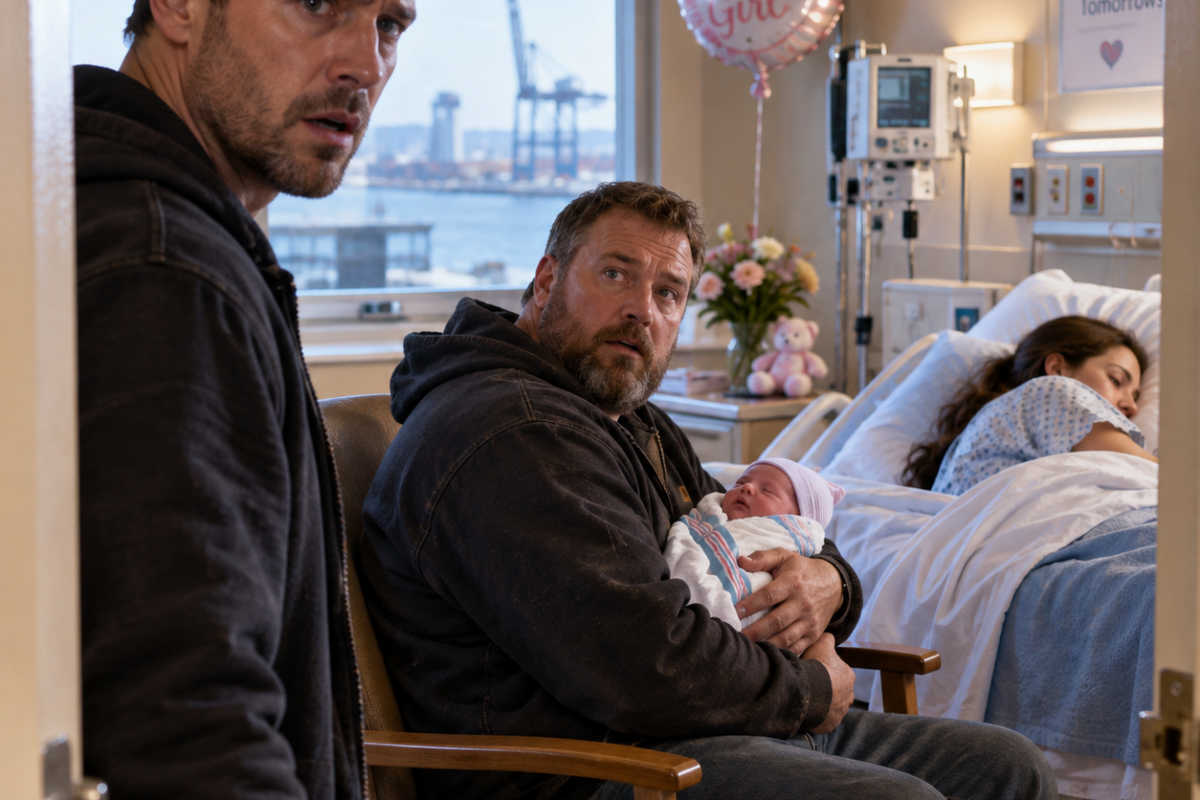
At 3 a.m., the hospital called to congratulate me on becoming a father. “Your wife just gave birth, sir. You need to come meet your baby.” I turned toward my wife, who was sound asleep beside me. “There must be a mistake,” I whispered. “My wife is right here.” The woman on the phone went quiet for a moment. Then her voice changed. “Sir, please come to the maternity ward immediately. If you refuse, we’ll have to contact the police.” I sat up, staring at my sleeping wife. Why would the hospital threaten to call the police over a baby that couldn’t possibly be ours? But when I arrived and saw who was holding that newborn, I stopped in the doorway. It was the last person I ever expected to see.
The Hospital Called at 3 A.M. to Say My Wife Had Just Given Birth. She Was Asleep Beside Me. At 3:07 on a cold Friday…
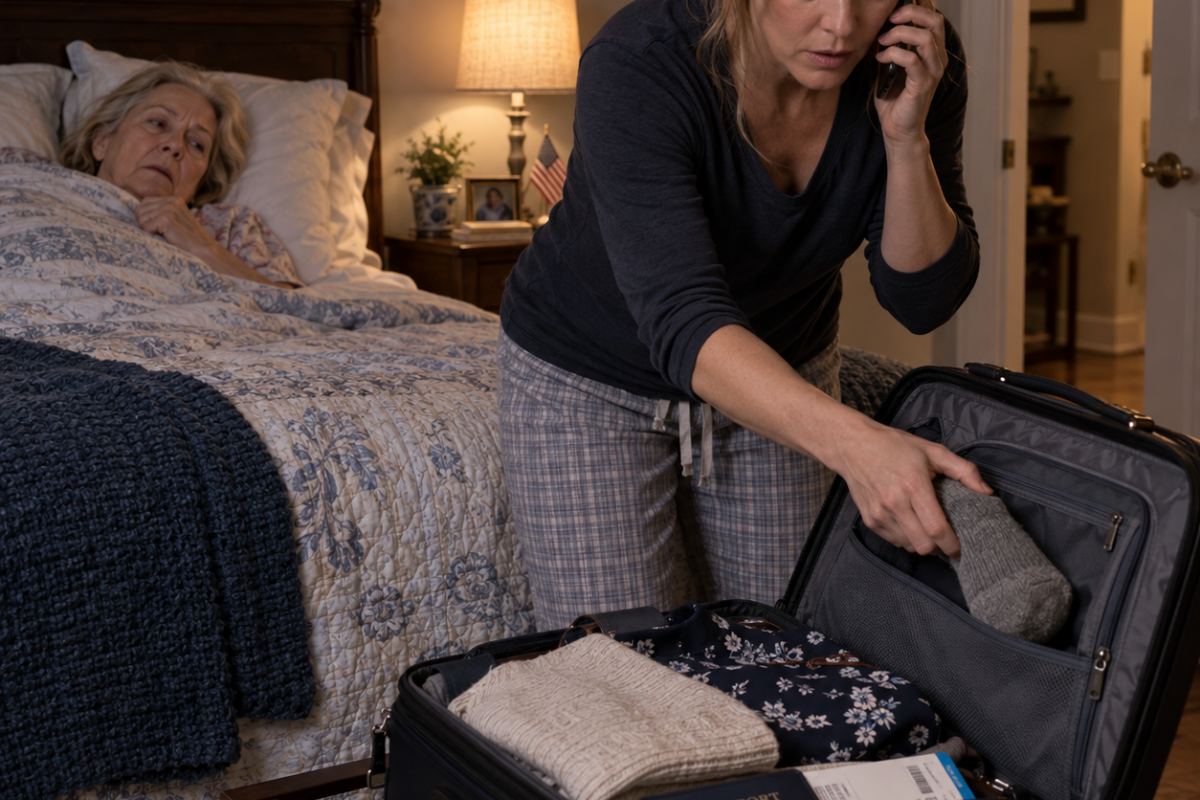
I told my daughter-in-law I had an early flight and went to bed. Just after midnight, my bedroom door slowly opened. Through barely open eyes, I watched her unzip my carry-on, slip something into the hidden inner pocket, and carefully close it again. Then she made a phone call. “It’s in her carry-on. Tip off airport security at six.” My heart started pounding, but I kept pretending to sleep. She had no idea I’d heard every word. And when morning came, I knew there was one thing I absolutely couldn’t do: take that suitcase to the airport.
At Midnight, My Daughter-in-Law Hid a Stolen Museum Pistol in My Carry-On. She Thought Airport Security Would Find It Before I Ever Knew. At 11:58…
“Thanksgiving is just for my wife’s family,” my son told me. “You’ll have to make other plans.” So I did. I booked a cruise, packed my favorite wide-brimmed hat, and turned off my phone the moment the ship left port. By Thanksgiving afternoon, I was sitting on deck with lobster on my plate, watching the ocean instead of wondering why my own son didn’t want me at his table. I didn’t turn my phone back on until that night. There were 37 missed calls. My son. His wife. Her parents. Even neighbors I barely knew. Then I opened the last voicemail. After hearing the first six words, I put down my fork. Suddenly, I understood why their Thanksgiving dinner had ended early—and why everyone was looking for me.
My Son Told Me Thanksgiving Was Just for His Wife’s Family. So I Took a Cruise, and Eleven Days Later Their Lie Collapsed in Front…
“Henry gets everything—all $80 billion,” Dad announced. “As for you, you’re out of the family. Leave.” I stared at my parents for a moment. “You already sold the company?” Mom smiled. “Every last piece of it.” I slowly closed the folder in front of me. “Without my patents?” Her smile faltered. Dad frowned. “What are you talking about?” I stood up and reached for my coat. “You might want to read page forty-seven of the sale agreement.” For the first time that night, nobody told me to leave.
My Family Said They Were Giving My Brother the Entire $80 Billion Company and Exiling Me. Then the Buyer Asked One Question About My Patents….
My Husband Left Our Children Millions. He Left Me Only His Locked Phone—Then Someone Called It During the Will Reading.
My Husband Left Our Children $8.4 Million and Me an Old Black Phone. Then It Rang. My husband had been dead for twelve days when…

A CEO Dumped Coffee on a Black Temp in Front of the Entire Office—Then She Made One Phone Call
The CEO Poured Coffee Over My Head and Fired Me. He Had No Idea the “Temp” He Humiliated Was Quietly Buying His Company. “You’re the…
End of content
No more pages to load
You Might Also Enjoy
My Husband Left Our Children Millions. He Left Me Only His Locked Phone—Then Someone Called It During the Will Reading.