My Husband Left Our Children Millions. He Left Me Only His Locked Phone—Then Someone Called It During the Will Reading.
My Husband Left Our Children $8.4 Million and Me an Old Black Phone. Then It Rang.
My husband had been dead for twelve days when his attorney placed an old black smartphone on the conference table and told me it was my inheritance.
My son Jason had just been told he would receive assets worth approximately $4.8 million.
My daughter Megan had been left about $3.6 million.
Then William Parker turned toward me.
There was no property list.
No investment account.
No check.
Just a phone.
Jason looked at it, then at me, with an expression that was almost pity.
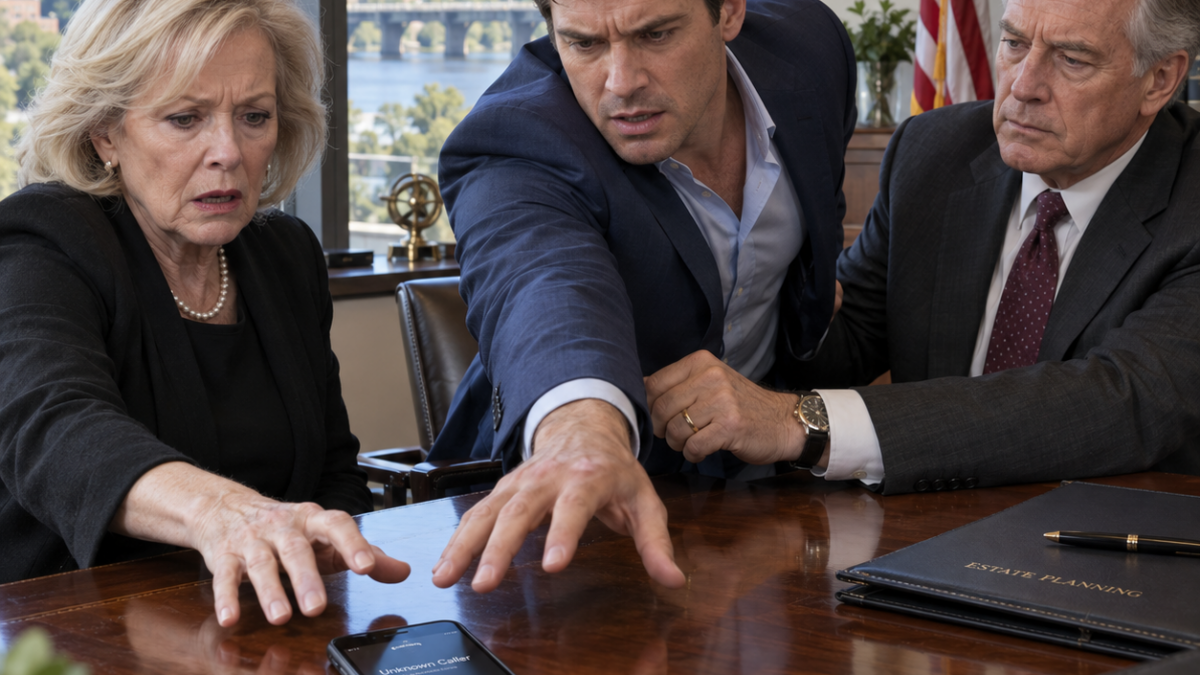
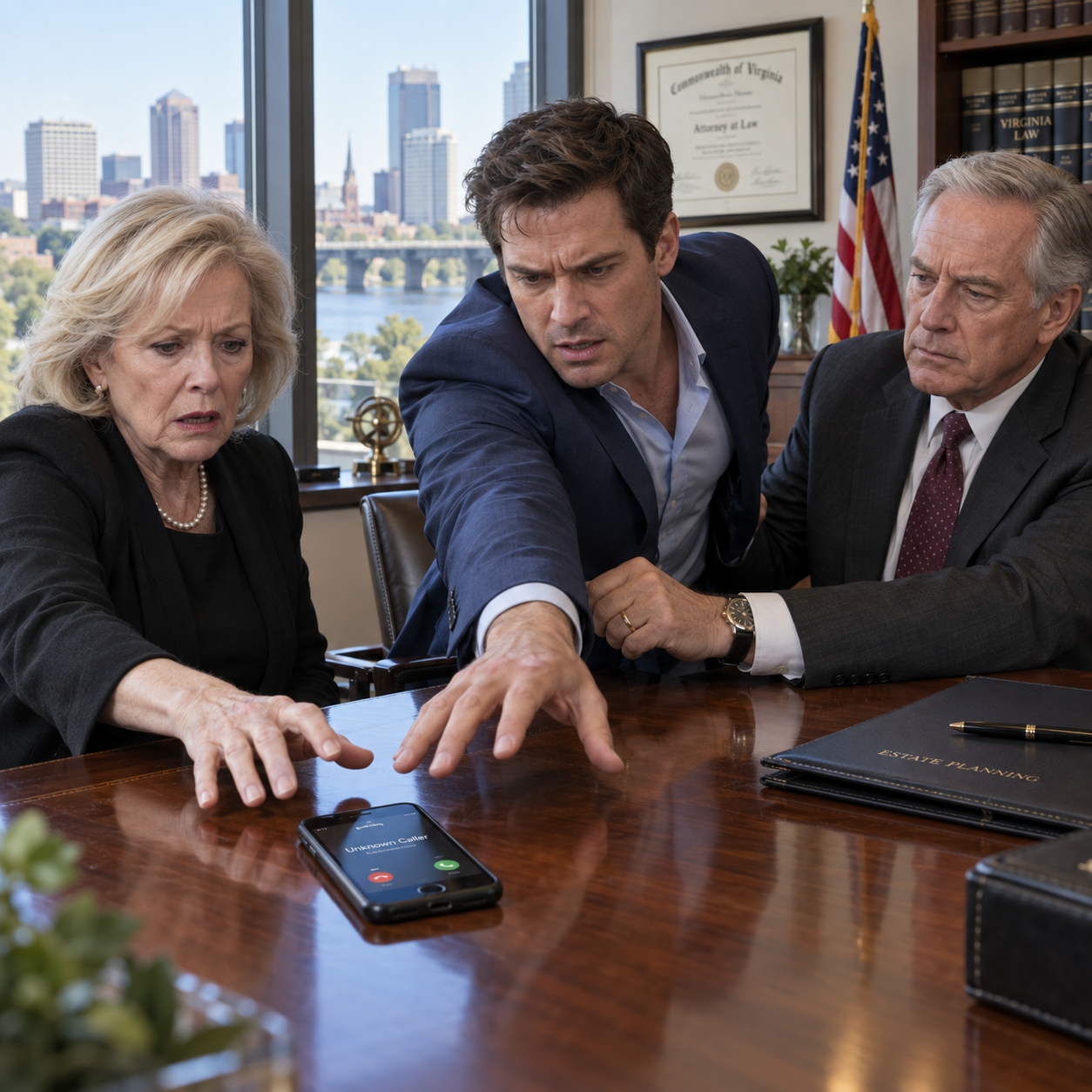
Before anyone could say another word, the phone began to ring.
UNKNOWN CALLER.
Jason reached for it.
William caught his wrist.
“Don’t.”
Jason stared at him.
“What?”
“Richard was very clear. Only Linda may answer calls received on that device.”
My fingers had already begun to tremble.
I picked up the phone.
The screen changed to a passcode prompt.
Locked.
The ringing stopped.
Three seconds later, it began again.
This time, when Jason looked at the screen, the color left his face.
Three weeks before Richard died, I still believed the greatest danger facing our family was losing him.
I had no idea my husband was trying to protect me from what would happen after he was gone.
Richard Carter and I had been married forty six years.
To most people in Richmond, he eventually became Richard Carter of Carter Industrial Supply, the man who turned a leaking rented warehouse into a regional distribution business with contracts stretching across Virginia, North Carolina, and Maryland.
That was not the man I met.
The Richard I met was twenty six, broke, stubborn, and standing in the wrong section of the Richmond Public Library holding a folded scrap of paper.
I was twenty four and working behind the reference desk while finishing my graduate certification.
He approached and asked where he could find a book on industrial purchasing.
I showed him.
The following afternoon, he came back.
Different question.
Two days later, he returned again.
Years afterward, he admitted he had understood the library system perfectly after that first visit.
He simply wanted a reason to talk to me.
That was Richard.
Not flashy.
Not sentimental in the way films teach young women to expect.
Deliberate.
If he cared about something, he paid attention.
We married two years later.
Carter Industrial Supply barely existed then.
Richard rented a warehouse near the edge of Richmond where rainwater came through the roof in five separate places. Whenever a storm passed through, he arranged dented buckets beneath the leaks and kept working.
He drove a used Ford pickup.
Invoices lived in a metal cash box beneath our kitchen table.
Our first accountant was me.
Not because I had financial training, but because somebody had to keep household checks from being mixed with business checks.
I became a school librarian.
Richard built the company.
When Jason was born, our life became smaller and harder.
Megan arrived four years later.
There were years when Richard left before sunrise and returned after both children were asleep.
I packed school lunches.
I attended parent conferences.
I sat beside children with fevers at two in the morning.
I learned which grocery store marked meat down on Thursdays and how long a pair of school shoes could survive if you replaced the laces early.
My salary paid household expenses during stretches when every available dollar went back into Carter Industrial Supply.
Richard handled the business.
I handled the structure that made his business possible.
Neither of us kept score.
At least not then.
The leaking warehouse became a proper distribution center.
Then a second one.
Then offices.
Trucks.
Contracts.
A payroll large enough that Richard stopped recognizing every employee in the parking lot.
Money entered our life slowly enough that I never developed reverence for it.
Richard used to joke that I was the only woman he knew who could walk through a million dollar house and notice the bookshelves first.
I stayed in education long after I could have quit.
I loved libraries.
When I retired, I volunteered twice a week at a community literacy program.
Richard managed most investments.
I managed most of our life.
For forty six years, that arrangement worked.
Or I believed it did.
Eleven months before he died, something changed.
At first, I blamed his health.
He was losing weight.
He tired easily.
The man who could once spend twelve hours touring warehouses began coming home after lunch.
Jason gradually assumed more authority at Carter Industrial Supply.
That seemed natural.
He had worked beside his father nearly fifteen years.
Richard had always been proud of him.
So had I.
Jason possessed the kind of confidence Richard understood.
He wore expensive suits, remembered numbers, knew how to make bankers feel they had already agreed with him.
When he walked into a room, he tended to behave as though everyone else had been waiting for him to arrive.
For years, Richard called that leadership.
Near the end, he began calling it impatience.
One evening I found Richard at our kitchen table long after dinner.
A yellow legal pad lay in front of him.
He was not writing.
He was staring at it.
“Can’t sleep?”
He looked up too quickly.
Then closed the pad.
“Did Jason bring you anything to sign?”
I stopped.
“What?”
“Documents. Forms. Anything from the company.”
“No.”
He watched me.
“If he does, read every page.”
I laughed softly.
“Richard, I have spent thirty eight years telling children not to sign things they haven’t read.”
“I’m serious, Linda.”
Something in his voice made my smile disappear.
“So am I.”
He nodded, but did not relax.
I sat opposite him.
“What is happening?”
“Nothing I can prove.”
Those words stayed with me.
“What does that mean?”
He looked toward the hallway even though we were alone.
“It means don’t sign something because somebody tells you it’s routine.”
“Somebody?”
He did not answer.
I reached across the table and covered his hand.
His fingers felt colder than I remembered.
“Is this about Jason?”
Richard withdrew his hand carefully.
Not angrily.
“I didn’t say that.”
“You didn’t have to.”
He stood and carried the legal pad toward his home office.
I followed him halfway down the hall.
“Richard.”
He stopped.
“Jason is trying to help you.”
He turned.
There was sadness in his face.
“That’s what I’m afraid you believe.”
I wish I could say I understood.
I did not.
I was a mother before I was suspicious.
That distinction would cost me.
By the time Richard was admitted to the hospital, our world had narrowed to fluorescent hallways, paper cups of coffee, medication schedules, blankets that never seemed warm enough, and doctors who spoke gently because there was nothing gentle left to say.
Jason visited often.
He frequently stood at the foot of Richard’s bed discussing company matters until I told him his father needed rest.
Megan came almost every evening after work.
She brought soup.
A clean sweater.
Magazines I never opened.
Lip balm.
A phone charger.
Little things.
I believed we were holding together.
One afternoon, after Jason had left, Richard opened his eyes.
“Linda.”
“I’m here.”
“Did you sign anything?”
I almost smiled.
He had asked three times that week.
“No.”
“Jason didn’t bring you anything?”
“No, Richard.”
His eyes stayed on mine.
“Promise me.”
I squeezed his hand.
“I promise.”
Only then did he relax.
I thought medication had made him anxious.
I mentioned it privately to a nurse.
Remembering that conversation later made my stomach turn.
Richard had not been confused.
He had been afraid.
Two nights before his death, he was unusually alert.
Rain tapped against the hospital window.
We talked about our first apartment.
Jason breaking his arm when he was nine.
Megan refusing to wear anything except purple for almost a year.
The library.
For a little while, we were young again.
Then Richard became quiet.
“Linda.”
“Yes?”
“When I’m gone, there will be noise.”
I leaned closer.
“What noise?”
“People telling you what I wanted. What you should do. What you can’t handle.”
A knot formed in my chest.
“Don’t talk like that.”
“Listen.”
His voice was weak.
The authority in it was not.
“When the noise starts, don’t listen to the loudest person in the room.”
I tried to make sense of it.
“Who should I listen to?”
Richard looked at me.
Then squeezed my fingers.
“Yourself.”
I should have asked more.
Instead, I kissed his forehead.
“Sleep.”
The next day, he barely spoke.
Early the following morning, with my hand wrapped around his, Richard Carter took his last breath.
For forty six years, I had known the sound of his footsteps entering our house.
I knew his laugh from another room.
I knew the small cough he made before saying something difficult.
I knew when he was angry by the way he set down his keys.
After he died, the sentence I heard most clearly was the one I had not understood.
When the noise starts, don’t listen to the loudest person in the room.
At first, I thought he was preparing me for grief.
I did not know he was preparing me for our children.
The first thing Jason tried to take from me was not money.
It was the right to decide where I lived.
Richard’s funeral was Thursday.
By Sunday afternoon, Jason stood at my kitchen island holding another yellow legal pad and explaining why I should sell my house.
I remember staring at him.
The same child who once climbed into bed with me during thunderstorms was now discussing my future as though I were sitting somewhere else.
“Mom, you have to be practical.”
I hated the word instantly.
Practical is what people call painful decisions when they want you to accept them without making anyone uncomfortable.
“I’m listening.”
He glanced around.
“You don’t need all this anymore.”
“All what?”
The home where Richard and I lived thirty one years.
The staircase where we photographed Jason and Megan before every first day of school.
The dining room where Richard carved Thanksgiving turkeys.
The porch where he drank coffee every Sunday.
Jason did not see memory.
He saw square footage.
“This place is almost forty five hundred square feet. Maintenance alone doesn’t make sense.”
“It made sense three weeks ago.”
“Three weeks ago Dad was here.”
The words hit harder than he intended.
Megan looked up from the table.
“Jason.”
“What? I’m not trying to hurt her.”
He turned toward me.
“I’m trying to make sure you’re taken care of.”
There it was.
Taken care of.
I had raised two children.
Worked thirty eight years.
Managed a household.
Cared for a dying husband.
And twelve days into widowhood, people had begun speaking as though I had forgotten how to cross the street.
Megan was gentler.
“Mom, there’s a beautiful community near Short Pump.”
“What kind?”
“Independent living.”
“I’m sixty eight.”
“I know.”
“Then why are we discussing where I should be moved?”
She flinched at moved.
Jason did not.
“Nobody is moving you. We’re planning.”
“No. You’re planning.”
Silence.
Jason exhaled.
“Dad worried about this.”
My attention sharpened.
“Worried about what?”
“You being alone. Handling everything.”
“What exactly is everything?”
“The house. Investments. Taxes. Insurance. Financial decisions.”
I stared at him.
“Your father told you I couldn’t handle money?”
Jason hesitated.
Only a second.
Long enough.
“He was concerned complicated financial matters might become overwhelming.”
Richard’s hospital warning returned.
Did Jason bring you anything to sign?
“When did he tell you that?”
“Mom, does it matter?”
“Yes.”
Jason became irritated.
“During the last few months.”
That did not sound like Richard.
He could be controlling about business.
He had never treated me as incompetent.
In forty six years, he had never suggested I lacked the ability to make decisions about my own life.
Yet Jason wanted me to believe that near death Richard suddenly began saying exactly what Jason needed me to believe.
Megan touched my arm.
“We’re just worried.”
I stepped away.
“I’m tired.”
Jason closed the pad.
“We’ll talk again when you’re feeling stronger.”
I almost corrected him.
Instead, I watched them leave.
For the first time since Richard died, I locked the door behind my own children.
Two days later, William Parker called.
Richard’s formal will reading would take place Monday.
Before hanging up, he added something unusual.
“Linda, I would prefer you not sign any estate related documents before then.”
My grip tightened.
“Has someone asked me to?”
Pause.
“Has someone?”
“No.”
“Then let’s keep it that way.”
Before I could question him, he ended politely.
That afternoon, I went into Richard’s office.
I had avoided it since the funeral.
His reading glasses remained beside his monitor.
A navy sweater hung across the chair.
For several seconds, I stood there breathing the faint remainder of his cologne.
Then I saw the desk.
Top drawer slightly open.
Richard did not leave drawers open.
I pulled it farther.
Pens.
Envelopes.
Paper clips.
Nothing unusual.
The second drawer was different.
Folders shifted.
Some upside down.
Someone had searched the desk.
I turned toward the gray filing cabinet against the wall.
Richard kept it locked.
The key had lived on his personal ring.
I tried the handle.
Open.
Inside were empty hanging folders.
Everything important was gone.
I remembered Jason spending nearly two hours in this room the morning after the funeral.
He said he was retrieving company papers.
I called.
“Did you go through your father’s filing cabinet?”
Silence.
Then:
“What?”
“The cabinet.”
“Yeah. I needed company files.”
“Where are they?”
“At the office, probably.”
“Probably?”
“Mom, Dad mixed personal records with business documents. I’m sorting it out.”
“Without asking me.”
“I didn’t think I needed permission to retrieve company property.”
“This is my house.”
Another pause.
Then his tone changed.
“Don’t turn this into something it isn’t.”
I looked at the empty cabinet.
“What were you looking for?”
“Contracts. Tax records. Vendor documents.”
“Did you find them?”
“No.”
Too fast.
“What didn’t you find, Jason?”
The silence lasted longer.
Then he laughed softly.
“You’re exhausted.”
My skin went cold.
He had not answered.
He had explained my mind to me.
“Get some sleep. We’ll handle everything after the will reading.”
We.
I ended the call.
I searched Richard’s office for almost an hour.
Under the desk near the wastebasket, I found a torn corner of yellow legal paper.
Three visible words in Richard’s block handwriting.
Jason.
Transfer.
Don’t sign.
I read them until the words stopped looking like language.
Richard’s hospital questions no longer felt like fear produced by illness.
They felt like instructions.
Monday morning, I carried that scrap inside the zippered pocket of my purse to William’s office in downtown Richmond.
Jason was already there.
Dark suit.
Silver tie.
He stood and kissed my cheek.
“How are you holding up?”
Practiced.
“I’m here.”
Megan arrived several minutes later with swollen eyes and coffee she barely touched.
William entered carrying a thick estate folder.
Then locked the door.
“Before we begin, Richard revised portions of his estate plan during the final year of his life. He underwent legal capacity review at the relevant times. I have documentation confirming competency.”
Jason shifted.
“Why would you need to say that?”
William looked directly at him.
“Because Richard instructed me to.”
For the first time, tension entered my son’s face.
William began with smaller bequests.
Charities.
Longtime employees.
A scholarship at Virginia Commonwealth University.
Then Jason.
Shares in Carter Industrial Supply.
Investment assets.
Cash.
Commercial holdings.
Estimated value: $4.8 million.
Megan inhaled.
Jason remained composed.
But I saw relief.
Not grief.
Relief.
“These shares are unrestricted?” he asked.
“Subject to the governing estate and trust documents, the beneficial interests are yours.”
Jason nodded.
Megan received real estate interests, investment accounts, and trust distributions estimated around $3.6 million.
She began crying.
“Oh, Dad.”
I held her hand.
For a moment, she was simply my daughter.
Then William turned to me.
I had not spent the week imagining what Richard would leave me.
Our marriage had never worked that way.
The house already existed within our marital estate.
We had retirement accounts.
Insurance.
Decades of shared assets.
Still, after hearing millions assigned to our children, I expected some description of what Richard had arranged for the wife who spent forty six years beside him.
Instead, William closed the folder.
Opened a drawer.
Removed an old black smartphone.
Placed it in front of me.
“What is this?”
“Richard left it specifically to you.”
Jason frowned.
“That’s it?”
William ignored him.
I felt embarrassed.
I hate admitting that.
But I did.
An old phone.
After decades.
Megan asked, “There isn’t another document?”
“No.”
Jason leaned back.
“You’re telling us Dad left Mom a phone.”
“The language is specific.”
Then it rang.
Unknown caller.
Jason reached.
William stopped him.
Only Linda may answer.
The phone was locked.
It rang again.
Jason’s face changed.
At the end of the meeting, William gave me a sealed envelope.
Richard’s handwriting.
Linda.
Inside was a card.
Five words.
YOU ALREADY KNOW THE CODE.
Jason leaned toward me.
“What does it say?”
I turned it facedown.
“Something from your father.”
“What?”
“To me.”
That stopped him.
I tried obvious codes.
Richard’s birthday.
Wrong.
Our anniversary.
Wrong.
Jason’s birthday.
Wrong.
Megan’s.
Wrong.
Home address.
Wrong.
Jason became impatient.
“Give it to me.”
“No.”
“Mom, you can lock it permanently.”
“Then I’ll stop guessing.”
“You’re making this harder.”
“Harder for whom?”
Neither of us moved.
Megan touched his arm.
“Leave it.”
Jason withdrew.
“Fine.”
After he left, William waited until we heard the elevator.
Then said, “Take Richard literally.”
“You already know the code.”
“Yes.”
“That’s all?”
“For today.”
I left carrying an inheritance that appeared worthless.
But driving home, one thing bothered me.
Jason had received $4.8 million.
Yet the only object in the room he desperately wanted was my phone.
At 9:17 that night, it rang again.
I did not answer.
I stared at Richard’s card.
You already know the code.
Then I realized I had been thinking of numbers the whole family knew.
Richard would never choose those.
If he wanted only me to unlock it, the code belonged to us.
Not Richard Carter the businessman.
Not our children.
Richard and Linda.
The answer came the next morning at my kitchen table.
I had automatically taken two mugs from the cabinet.
Then stood staring at them.
There was nobody to drink the second cup.
I put it back.
Grief is cruelest in ordinary moments.
I sat in Richard’s chair.
The library.
The first book.
Years after we married, he confessed he remembered its classification number because it represented the moment his life changed.
Four digits.
During the early years, when he traveled, he wrote those digits at the bottom of notes he hid around the house.
Inside my purse.
On the refrigerator.
Under my pillow.
Our number.
I had forgotten because marriage accumulates so much language that private symbols disappear into daily life.
I picked up the phone.
Entered four digits.
Unlocked.
My hand covered my mouth.
Richard had reached across decades to give me the answer.
The phone contained almost nothing.
No photos.
No email.
No contacts.
One voicemail.
I pressed play.
Static.
Breathing.
Then Richard.
“Linda.”
My eyes closed.
Hearing him hurt more than I expected.
For one impossible instant, my body believed he was in the next room.
“If you’re hearing this, they gave you the phone.”
I gripped the table.
“I know you’re confused. I’m sorry. There were things I couldn’t explain until I knew exactly what I was dealing with.”
His breathing was slower than I remembered.
“There will be people telling you this is unnecessary. People telling you to hand over the phone.”
Jason.
“Don’t.”
One word.
Firm.
“What happens next depends on you. That’s why I chose something only you could unlock. I needed to know the person listening was you.”
Tears ran down my face.
“The next time this phone rings, answer it. Say only, ‘This is Linda Carter.’ Nothing else until the caller identifies himself.”
Then his voice softened.
“There’s one more thing.”
I waited.
“If Jason asks whether you unlocked the phone, don’t tell him.”
My entire body went cold.
“Don’t confront Jason. Not yet.”
The message ended.
Not yet frightened me more than don’t trust him.
Not yet implied a sequence.
A moment coming.
At 11:03, the phone rang.
Before I could answer, the doorbell rang.
Jason stood on my porch holding coffee.
I locked the phone and put it inside my cardigan.
He entered without waiting.
His eyes went directly to the kitchen table.
“You sleep?”
“Not much.”
He handed me coffee.
“Any luck with Dad’s phone?”
“No.”
“The phone hasn’t rung?”
I felt it against my hip.
“No.”
For the first time in my life, I lied to my son without guilt.
Jason stayed forty minutes.
He suggested I travel.
Charleston.
Maybe with Megan.
A change of scenery.
“Are you trying to get me out of the house?”
His expression shifted.
“What? No.”
“You searched Richard’s office.”
“For company documents.”
“You didn’t find what you wanted.”
His eyes narrowed.
“Did you?”
“No.”
He relaxed.
Too much.
“If you find corporate records, don’t throw anything away. Dad wasn’t very organized near the end.”
Another lie.
Richard was the most organized man I ever knew.
After Jason left, the black phone rang again.
12:26.
I answered.
“This is Linda Carter.”
Silence.
Then:
“Mrs. Carter, my name is Nathan Brooks. Your husband hired me eleven months ago.”
My grip tightened.
Nathan would not discuss details by phone.
He asked me to come alone to Commonwealth Heritage Bank downtown at 2:30.
Private client entrance.
Bring identification.
Bring the phone.
I nearly refused.
Then Nathan gave me a phrase Richard had told him to use if I hesitated.
“The leaking warehouse roof.”
My breath caught.
That belonged to the beginning.
Few people knew.
“I’ll be there.”
Less than two hours later, Jason returned.
He claimed he forgot sunglasses.
He had not been wearing any.
His eyes went to my purse.
“Going somewhere?”
“Errands.”
“What errands?”
The question came too quickly.
The phone rang.
Both of us froze.
Jason looked at the purse.
“I thought you said it hadn’t rung.”
“It has now.”
“Let me see it.”
“No.”
He stepped closer.
“Mom.”
I removed the phone.
The incoming call screen appeared normally.
No passcode prompt.
Jason noticed.
His face tightened.
“You unlocked it.”
“No.”
“Yes, you did.”
“How did you get in?”
Too sharp.
I locked the screen.
“Why does it matter?”
“Dad could have stored company information.”
“Yesterday it was just a phone.”
Jason stared.
“What was the code?”
Richard’s voice returned.
Don’t confront Jason. Not yet.
So I lied.
“I didn’t unlock it. William must have changed something remotely.”
Jason did not believe me.
But he could not prove otherwise.
“If anybody contacts you about Dad’s business, call me.”
“Why?”
“There are people who could take advantage of you.”
“Because I’m confused?”
“Because you’re vulnerable.”
Vulnerable.
The word would become important.
By 2:27 I stood inside Commonwealth Heritage Bank.
Nathan Brooks was forty seven.
Charcoal suit.
No tie.
The tired expression of someone who spent more time with financial records than conversation.
He placed a small device on the table.
“Unlock the phone yourself and set it here.”
I entered the code facing away.
The indicator turned green.
“What did that do?”
“Confirmed the first authentication layer.”
“First?”
Nathan sat.
“I’m a forensic accountant.”
I knew immediately nothing ordinary would follow.
Richard hired him after noticing financial inconsistencies inside Carter Industrial Supply.
Payments to vendors.
Consulting contracts.
Expansion expenses.
Individually plausible.
Together wrong.
“How much?”
“Several million dollars may be involved.”
“Who?”
Nathan did not answer immediately.
I already knew.
“No.”
“Mrs. Carter.”
“No.”
“Richard suspected Jason was involved.”
“Suspected is not proof.”
Nathan nodded.
“Richard said exactly the same thing.”
That mattered.
He showed me vendor patterns.
Overlapping consulting agreements.
Inflated invoices.
Entities with little operating presence.
Money routed through layers before disappearing.
“Shell companies?”
“Possibly.”
“Jason owns them?”
“Some ownership connections remain under investigation.”
“Then why did Richard tell me not to confront him?”
“Because if Jason believed evidence existed, he could try to find or destroy it.”
I thought about the emptied filing cabinet.
“He already searched the house.”
Nathan went still.
“When?”
“After the funeral.”
“Did he find anything?”
“He told me no.”
“Then probably not.”
“Probably?”
“Richard did not store his most important records there.”
“Where?”
Nathan pointed to the phone.
“The phone is a key.”
Not the archive.
A key.
Richard and Nathan created an encrypted evidence repository outside company systems.
Copies of documents.
Transaction records.
Notes.
Audio.
The phone formed one authentication layer.
My passcode another.
A final step still remained.
“Why me?”
Nathan’s expression softened.
“Richard did not trust anyone else with final access.”
That should have comforted me.
Instead, it broke something open.
My husband spent his final months fighting cancer while secretly constructing a defense around me.
“There’s more.”
I laughed bitterly.
“How?”
Nathan pulled out a thinner folder.
My name on top.
Linda Carter.
Inside were inquiries concerning my financial capacity.
Draft legal material.
Notes.
A potential conservatorship petition.
For me.
I stared.
“I am not incapacitated.”
“I know.”
“Then what is this?”
“Someone was building a record.”
Grieving widow.
Forgetful.
Emotionally unstable.
Dependent on her husband for complex finances.
Increasing difficulty with judgment.
I read examples.
I misplaced keys twice during Richard’s illness.
Once, Megan had them.
Once they were in my coat pocket.
I missed an electric payment after a replacement card disrupted automatic billing.
The draft described it as evidence of financial confusion.
It referenced crying unexpectedly.
Difficulty sleeping.
Loss of appetite.
“My husband was dying.”
“Yes.”
“They’re describing grief.”
“Yes.”
“As incapacity.”
“Yes.”
I stood.
Richmond moved below the window.
Cars stopping at traffic lights.
Pedestrians crossing East Main.
Ordinary life continuing while someone had turned mine into evidence against me.
“Who gave them this information?”
Nathan did not need to answer.
Some details came only from family.
I returned to the table.
“Who would become conservator?”
He turned to the final page.
Proposed conservator:
Jason Carter.
My son.
Powers concerning accounts.
Property.
Investments.
Financial decisions.
Potential authority over major assets.
Suddenly, the house conversation changed shape.
Independent living.
Too much maintenance.
Dad worried.
Let us handle things.
If Jason could make me appear incapable, every decision afterward could be described as protection.
Sell the house.
Control accounts.
Sign documents.
Then Nathan slid one more page forward.
I recognized the signature.
Megan Carter Hayes.
“No.”
“I’m sorry.”
My daughter’s supporting statement described concern about my memory and emotional condition.
Dependence on Richard for financial decisions.
Need for additional family oversight.
“Did Richard see this?”
“Yes.”
I closed my eyes.
Imagine dying while reading your children constructing a legal theory against your wife.
No wonder he kept asking whether I had signed anything.
“I want to call them.”
Nathan leaned forward.
“Don’t.”
“They’re my children.”
“And you still don’t know whether they understood the same plan.”
“What difference does that make?”
“A great deal.”
Megan’s statement was wrong.
Her signature mattered.
But the wording did not prove she understood a conservatorship strategy.
Jason might have framed it differently.
Or she might have understood everything.
“How do I find out?”
“Do not warn them.”
Silence had never felt like strength.
I believed family problems should be discussed.
Richard could wait.
Observe.
Collect facts.
For the first time, I understood why.
Nathan gave me one name.
Patricia Collins.
Patty.
Richard’s executive assistant for eighteen years.
Six weeks before he died, she suddenly resigned.
I called Thursday morning.
Her first question was:
“Are you alone?”
An hour later, I sat at her dining room table outside Richmond.
Patty hugged me.
Then stared at the black phone.
“So it worked.”
“You knew?”
“I knew there was a phone.”
“Why did you resign?”
She told me.
Richard discovered suspicious vendor payments about a year earlier.
Jason explained them as modernization and expansion.
New suppliers.
Logistics consultants.
Market development.
Richard initially wanted to believe him.
Then the patterns worsened.
Vague services.
Inflated invoices.
Addresses with no substantial business operations.
Richard began asking questions.
Jason redirected employees.
His father was ill.
Stepping back.
Strategic vendor questions should flow through Jason.
One afternoon Patty heard them arguing.
Jason accused Richard of being unable to understand the modern company.
Old fashioned.
Controlling.
Standing in the way.
The same tactic he used on me later.
Richard stopped challenging him publicly.
Jason thought he had won.
In reality, Richard hired Nathan and began preserving evidence.
“Why not tell me?”
Patty looked at me.
“Because you would have confronted Jason.”
She was right.
I hated that.
If Richard told me a year earlier that our son might be stealing, I would have demanded we sit down together.
I would have warned Jason without intending to.
Patty resigned at Richard’s request when Jason began asking who could access historic records.
Before leaving, she helped duplicate communications and records.
“What about Megan?”
Patty looked uncomfortable.
“You saw the statement.”
“Yes.”
“I heard Jason discussing it with her.”
“What did he say?”
“That after Richard died, scammers might target you because of the inheritance.”
My jaw tightened.
“He said the family needed documentation so major financial decisions could receive additional oversight.”
“So she signed.”
“Yes.”
“Without asking me.”
“Yes.”
No softening.
Good.
Patty then gave me a small envelope in Richard’s handwriting.
Inside was a brass key.
Plain tag.
Number only.
“What is this?”
“Richard gave it to me three days before I resigned.”
“Why didn’t you give it to me after he died?”
“Because he told me not to.”
“What exactly did he say?”
Patty’s eyes filled.
“If Linda comes because she chose to keep asking questions, give her the key. If someone brings her, don’t.”
Even dead, Richard required me to choose the next step myself.
The key opened a secure storage box twenty minutes west of Richmond.
William and Nathan met me the next morning.
Inside was a gray archival case.
No jewels.
No secret cash.
Paper.
Richard trusted paper.
Duplicate ledgers.
Vendor agreements.
Emails.
Transaction summaries.
Handwritten notes.
Jason’s name appeared repeatedly.
Question marks.
Verify.
No authorization.
Trace ownership.
Nathan said the documents filled important gaps.
Not every gap.
At the bottom lay an encrypted flash drive.
A note taped to it.
LINDA FIRST.
Nathan connected it.
One video.
Richard appeared.
Sitting in our home office.
Thinner.
Pale.
Eyes completely clear.
“Linda.”
I pressed my fingers against my lips.
“If you’re watching this, then you found Patty.”
The smallest smile.
“I knew you would.”
I began crying.
“I owe you an explanation.”
He described the investigation.
His suspicions about Jason.
Then said something Nathan had not told me.
“Once I realized Jason might be involved, I had another problem. My estate.”
I leaned forward.
“If I cut him out completely, he would know I had discovered what he was doing.”
Nathan looked toward William.
Richard continued.
“He would stop. Destroy whatever he could. Search for whatever I preserved.”
The $4.8 million.
I understood.
“So I gave him what he expected.”
Richard nodded as though he could hear me.
“I needed Jason comfortable.”
My son’s relief at the will reading returned.
Richard predicted it.
“I know you may hate this. You may think I rewarded him.”
I whispered, “A little.”
“I didn’t. I bought time.”
Then Megan.
“I don’t know how much our daughter understands.”
My chest tightened.
“I know she signed something she should never have signed. I also know Jason spent years convincing her he understands business and she doesn’t.”
Richard paused.
“I will not condemn her before I know whether she acted from intent or fear.”
That was why Megan still inherited millions.
Not absolution.
Unfinished judgment.
Then Richard looked directly into the camera.
“Now I need to tell you what I actually left you.”
William sat straighter.
“Jason will think the answer was the phone.”
Richard smiled faintly.
“Let him.”
“The phone is not your inheritance.”
Twenty three years earlier, when Carter Industrial Supply began becoming valuable, William helped restructure ownership.
The controlling block moved into the Carter Marital Trust.
I knew the trust existed.
I had signed documents.
I had read them.
But at the time, the company was worth only a fraction of its current value, and Richard handled later amendments.
Jason inherited shares with substantial economic value.
But ownership and control were not identical.
Upon Richard’s death, I became controlling voting trustee.
I stared at the screen.
“No.”
William said gently, “Yes.”
Richard continued.
“You hold the decisive voting authority over Carter Industrial Supply.”
My hands trembled.
The woman Jason wanted portrayed as financially incapable controlled the company vote he needed.
Richard leaned toward the camera.
“I didn’t do this so you would run the company.”
Of course.
“I did it so nobody could use the company to control you.”
Love.
Infuriating love.
“I should have told you more. Maybe I was wrong not to. But if Jason knew you understood the structure, I was afraid he would pressure you before I had enough evidence.”
The conservatorship draft suddenly became darker.
If Jason controlled me, he might indirectly control the voting authority attached to the trust.
Richard ended with one instruction.
“Don’t act because you’re angry.”
Pause.
“Wait until Jason shows you what he intends to do.”
The screen went dark.
I sat among papers and finally understood.
Jason inherited money.
I inherited authority.
Richard arranged it so our son would not understand the difference until he revealed what he wanted.
“What now?” Nathan asked.
“We wait.”
I did not wait long.
That evening Jason called.
“Mom, I have a few routine estate documents that need your signature.”
I looked toward Richard’s empty chair.
For the first time since he died, I smiled.
“Bring them tomorrow.”
Jason arrived at ten carrying a leather portfolio.
Warm expression.
Controlled voice.
He kissed my cheek.
“How are you feeling?”
“Better.”
“Good.”
He seemed pleased.
That almost made the next part worse.
Thirty pages.
Signature tabs.
He told me most were boilerplate.
“You don’t have to read every word.”
“I have time.”
He smiled tightly.
“Of course.”
Some documents were ordinary.
Tax authorizations.
Acknowledgments.
Administrative estate matters.
Then:
CONSENT AND WAIVER OF TRUSTEE VOTING RIGHTS.
I kept my face neutral.
Dense language.
Simple intention.
I would delegate substantial voting authority attached to the Carter Marital Trust.
Representative:
Jason Carter.
I read it three times.
Jason shifted.
“Something wrong?”
“I’m reading.”
“It’s temporary.”
“I didn’t ask.”
He stopped.
“What’s temporary?”
“The authorization.”
“You said these were estate documents.”
“They are.”
“This concerns Carter Industrial Supply.”
“Technically.”
I set the page down.
“What happens if I sign?”
“It lets me handle company decisions without bothering you every time.”
“Bothering me?”
“You know what I mean.”
“I don’t.”
His patience thinned.
“The company needs to move quickly.”
“Why?”
“We are considering selling a division.”
There.
Richard’s instruction.
Wait until Jason shows you.
“Which division?”
“Mid Atlantic Logistics.”
One of the company’s most profitable operations.
“Why sell it?”
“Private equity made a strong offer.”
“How strong?”
Jason leaned back.
“Since when are you interested in acquisitions?”
“Since you asked me to give up voting rights connected to one.”
His jaw tightened.
“The sale generates liquidity. Reduces complexity. Positions us for expansion.”
“How much would you receive?”
“Not relevant.”
“It seems relevant.”
“Mom, you’re turning a routine transaction into an interrogation.”
Nathan had already explained the danger.
A large sale could restructure internal systems.
End vendor relationships.
Move money.
Complicate the forensic trail.
I pushed the papers toward Jason.
“I’m not signing.”
He stared.
“What?”
“No.”
“Why?”
“Because I don’t understand them well enough.”
The irony was deliberate.
Jason missed it.
“That’s why I’m here.”
“No.”
I looked at him.
“You’re here to tell me not to read them.”
The careful son disappeared.
“You have no idea how much pressure I’m under.”
“Then explain it.”
“I shouldn’t have to explain a corporate restructuring to someone who has never worked a day inside the company.”
The words hung between us.
He was right about one thing.
I never worked inside Carter Industrial Supply.
But the company lived inside my marriage for forty six years.
I heated dinners at ten because Richard was negotiating contracts.
I raised two children through years when he worked weekends.
My teacher’s salary bought groceries while every extra dollar went back into the warehouse.
I ironed shirts for bank meetings.
Hosted suppliers.
Listened to Richard worry about payroll at two in the morning.
Not wanting to run his company did not make me incapable of understanding one.
“Your father trusted me with his life.”
“That’s different.”
“Why?”
“Because business is complicated.”
Complicated.
The word became a weapon.
He pointed to the waiver.
“Sign it.”
“No.”
“You’re being irrational.”
“No.”
“You are proving exactly why Dad worried about leaving complicated decisions to you.”
There it was.
The mask fully gone.
I pushed the pen toward him.
“If I’m truly as confused as you say, you should not be asking me to sign anything important.”
Jason froze.
For once, no answer.
“What does that mean?”
“It means I’m not signing.”
He gathered the pages.
At the door, he turned.
“You should be careful who you’re listening to.”
I almost laughed.
Richard warned me about the loudest person in the room.
Now Jason warned me about everybody else.
After he left, Nathan’s reaction was immediate when I told him.
“He made his move.”
“My voting rights.”
“And the sale?”
“Mid Atlantic Logistics.”
“That timing isn’t accidental.”
The next evening, Megan arrived without calling.
No makeup.
Hair in a careless ponytail.
Pale.
“Is Jason here?”
“No.”
“Has he called?”
“Twice.”
“He wants me to sign something.”
My chest tightened.
“What?”
“A statement.”
“What kind?”
Megan sat.
“He says somebody may be influencing you about Dad’s estate.”
I remained standing.
“He wants me to confirm that you’ve been forgetful.”
There it was.
Not draft strategy.
Active strategy.
“What else?”
“That you’ve been making unusual decisions.”
“Such as?”
“Refusing to sign papers you don’t understand.”
I walked to my desk.
Removed the draft conservatorship petition.
Placed it before her.
Megan read.
Her face drained.
“No.”
“Keep reading.”
She reached Jason’s name as proposed conservator.
“What is this?”
I placed her supporting statement on top.
Her signature at the bottom.
She stopped breathing.
“Is that yours?”
Tears filled her eyes.
“Yes.”
Even knowing already did not soften it.
“What did you think you signed?”
“Jason said it was protection.”
“From whom?”
“Financial advisers. Scammers. People who might target you after Dad died.”
“And you did not ask me.”
“I thought…”
“That is the problem.”
She flinched.
“Everyone keeps thinking for me.”
“Mom, I didn’t know this was for conservatorship.”
“You signed a statement saying I could not manage complicated finances.”
“He told me it would only be used if somebody tried manipulating you.”
“Somebody did.”
She looked confused.
“Jason.”
The word landed.
Megan began crying.
“I’m sorry.”
Every motherly instinct told me to sit beside her and say everything was fine.
I did not.
“Being manipulated explains something. It doesn’t erase what you did.”
“I know.”
“No.”
My voice stayed calm.
“You helped create a version of me where grief became instability. Forgetting keys became incompetence. Trusting your father with investments became proof I was incapable of understanding money.”
“I didn’t write those words.”
“You signed them.”
She lowered her head.
“You’re right.”
Those words mattered more than another apology.
Then she told me Jason had been drinking after the funeral and complained that Richard hid “the real company books.”
“He said that?”
“Yes.”
“Exactly?”
“Yes.”
The storage box.
The emptied cabinet.
Everything aligned.
“And now he wants the Mid Atlantic sale rushed.”
Megan looked startled.
“That board meeting has been moved.”
“When?”
“Friday.”
Two days.
“Why?”
“The buyer wants certainty.”
Neither of us believed that was the whole reason anymore.
“Mom, what did Dad find?”
I almost told her everything.
Then stopped.
Trust did not return because someone cried.
“I’ll tell you what you need to know when you need to know it.”
Pain crossed her face.
Then she nodded.
“I understand.”
“If Jason asks for another statement?”
“I won’t sign.”
“That’s not enough.”
“What do you want?”
“Tell William and Nathan exactly what Jason said about the hidden books.”
“Who is Nathan?”
“Someone your father trusted.”
She swallowed.
“Okay.”
“Once you do, Jason will know you chose a side.”
Megan looked at the conservatorship draft.
“I’m not choosing between my brother and my mother.”
She looked at me.
“I’m choosing between a lie and the truth.”
Something softened.
Not forgiveness.
Possibility.
Friday morning, I wore the navy jacket Richard bought for our fortieth anniversary.
He had complained I owned too many cardigans.
I told him cardigans were practical.
He bought the jacket anyway.
“You may need to walk into a room someday and make people listen.”
I laughed then.
Friday morning, I did not.
William picked me up at 9:45.
Nathan sat in back.
Megan followed in her car.
Jason’s emergency board meeting began at 10:30.
We let him start without us.
At 10:42, we entered Carter Industrial Supply headquarters.
Through the glass boardroom wall, I could see Jason presenting.
For one painful second, he looked exactly like Richard at the same age.
Same posture.
One hand on the table.
Same confidence.
But whatever he inherited from his father, patience was not part of it.
William opened the door.
Conversation stopped.
Jason saw me.
“Mom.”
Then William.
Nathan.
Finally Megan.
His surprise became anger.
“This is a closed board meeting.”
“I know.”
“Whatever you think is happening, we can discuss later.”
“You are voting to sell Mid Atlantic Logistics.”
His eyes narrowed toward Megan.
“She told you.”
“I knew before Megan came.”
That unsettled him.
“Fine. Then you know it’s a good deal.”
“I know you want it approved quickly.”
“The buyer set a deadline.”
Nathan took a seat near the wall.
Jason noticed.
“Who is that?”
“Someone your father hired.”
For the first time, my son lost color.
“What does that mean?”
William placed a folder on the table.
“It means voting authority should be clarified before this board proceeds.”
Jason laughed.
“Voting authority is established.”
“Yes,” William said. “It is.”
He opened the trust documents.
“The Carter Marital Trust holds the controlling voting interest in Carter Industrial Supply.”
Jason’s expression did not change.
Not immediately.
“Upon Richard Carter’s death, Linda Carter became controlling voting trustee.”
Every eye turned toward me.
“That’s impossible.”
“It is not.”
“Dad gave me his shares.”
“He gave you shares with substantial economic value.”
William paused.
“He did not give you controlling authority.”
Jason grabbed the document.
“This was changed while he was sick.”
“No. The core structure has existed twenty three years.”
He looked at me.
“You knew?”
“Not the way I do now.”
“You don’t understand what this means.”
There was his favorite weapon.
My ignorance.
I pulled out a chair.
“Then explain why you needed me to waive rights I supposedly did not have.”
Silence.
One director looked toward Jason.
Another lowered his eyes to the documents.
Jason recovered.
“This is irrelevant. The sale is financially sound.”
William nodded toward me.
“Then the controlling trustee may vote.”
Jason’s fists tightened.
“Mom, don’t.”
I thought about Richard.
Don’t sign anything.
The empty filing cabinet.
The conservatorship petition.
Megan’s signature.
Jason at my kitchen table treating me as a problem to be managed.
“I vote against the sale.”
Quiet words.
Enough.
William confirmed the structure.
Without trust approval, the sale could not proceed.
Jason stared at me.
“You have no idea what you’ve done.”
Nathan stood.
“That is what we’re here to discuss.”
He introduced himself.
“Forensic accountant.”
No gasps.
Executives do not gasp much.
But the room changed.
Nathan distributed summaries.
Vendor payments.
Consulting agreements.
Inflated invoices.
Ownership questions.
Jason dismissed them.
“Garbage.”
“Your father disagreed.”
“My father was sick.”
“He retained me eleven months before his death.”
Jason turned toward William.
“You allowed this?”
“Richard did not need my permission to examine his own company.”
Jason looked around.
“You are listening to a stranger who manipulated a dying man.”
Then he pointed at me.
“And now he is manipulating her.”
The story he needed.
Confused widow.
Grieving.
Vulnerable.
Useful while obedient.
“Mom has struggled since Dad became ill.”
Megan stood.
“No.”
Jason turned.
“Stay out of this.”
“No.”
Her voice shook.
“I already stayed out of too much.”
Jason ignored her.
“My mother does not understand forensic accounting.”
I reached into my purse.
Placed the black phone on the table.
Jason stopped.
The phone rang.
UNKNOWN CALLER.
Fear entered his face.
Real fear.
One director asked, “What is that?”
Jason answered before I did.
“Don’t pick it up.”
Everyone turned.
I rested my hand beside the phone.
“Why not?”
“Mom.”
His voice rose.
The loudest person in the room.
Richard’s warning finally became perfectly clear.
I answered.
Speaker.
A calm electronic voice filled the boardroom.
“Identity verification required. Please state your full name.”
Jason pushed back from the table.
“Turn that off.”
Nobody moved.
“My name is Linda Carter.”
Tone.
“Voice authentication accepted.”
Nathan opened his laptop.
Jason stared.
“What are you doing?”
“Completing final authentication.”
“Secure archive authorization confirmed.”
The call ended.
For weeks, I had imagined a mysterious person repeatedly dialing.
There had never been one.
It was a secure authentication system waiting for me.
Phone device key.
Private passcode.
Voice.
Three layers.
Nathan’s screen displayed encrypted directories.
Then they began opening.
Bank confirmations.
Vendor records.
Internal communications.
Transaction histories.
Audio.
Jason stood.
“This meeting is over.”
William looked at him.
“Sit down.”
“You don’t tell me what to do in my company.”
I heard my voice.
“Sit down, Jason.”
He turned.
For several seconds, we stared at each other.
Then he sat.
Nathan projected a transaction map.
Carter Industrial Supply paid several vendors.
Those vendors sent portions onward.
Consulting entities.
Related accounts.
Layered movement.
Jason said the picture was misleading.
“These are legitimate vendors.”
Nathan opened corporate registration records.
One shell entity linked through ownership layers to an LLC.
Registered agent:
Jason Carter.
“That proves nothing.”
Nathan opened bank records.
Payments entered the shell company.
Within days, portions moved toward entities Jason controlled.
Amounts were split.
Not identical.
Patterns still visible.
“Investment vehicles.”
“Not disclosed.”
“They did not need to be.”
“Richard disagreed.”
Nathan played audio.
Richard’s voice filled the room.
“Explain why Carter Industrial is paying Westbridge Consulting when Westbridge has no employees.”
Jason’s recorded voice:
“You don’t understand the structure.”
I closed my eyes.
Same tactic.
With his father.
With me.
Richard said:
“Then explain it.”
Pause.
Jason became impatient.
“Dad, you hired me to modernize this company. Let me do my job.”
Nathan stopped playback.
More emails.
Questions about questionable vendors rerouted directly to Jason.
Accelerated payments requested despite missing documentation.
Then one ownership disclosure linked Jason directly to an entity receiving funds.
Not vague.
Not indirect.
Megan covered her mouth.
“Jason.”
He turned on her.
“Don’t.”
“You knew.”
“You have no idea what you’re looking at.”
“I know enough.”
Jason stood again.
“This is family business.”
A director spoke.
“No. This is corporate business.”
That frightened him more than anything I said.
The room was no longer family friends and subordinates.
Witnesses.
Jason looked at Nathan.
“Delete the files.”
Nathan almost smiled.
“I could not if I wanted to.”
William closed his folder.
“Evidence has been preserved with outside counsel. Appropriate materials are being provided through lawful channels.”
Jason looked trapped.
Then he looked at me.
His anger vanished.
“Mom.”
One word.
Soft.
The little boy after nightmares.
My instinct rose immediately.
Protect him.
Hear him.
Find an explanation that makes this hurt less.
Richard had not built the system to punish our son.
He built it so I could no longer hide from what Jason had chosen.
“I made mistakes.”
Nobody answered.
“This company was changing.”
Still nothing.
“Dad wouldn’t listen.”
“I moved money around, yes. But I was trying to build something.”
“Through companies you controlled?”
“It’s complicated.”
Complicated.
The word he used to convince me I could not understand my own finances.
“We can fix this privately.”
There it was.
Not remorse.
Containment.
I looked at William.
“As controlling trustee, do I have authority under our governance documents to suspend Jason from executive duties pending formal board procedure and investigation?”
“Yes.”
Jason went pale.
“Mom, don’t.”
I looked at my son.
The man who searched his father’s office.
Tried to take my voting rights.
Helped create a record portraying me as incapable.
I did not hate him.
That surprised me.
I felt grief.
Different from losing Richard.
Richard had been taken.
Jason had walked away from himself one decision at a time.
“As controlling trustee, I am directing that Jason Carter be suspended from executive authority effective immediately, subject to the company’s governance procedures and independent investigation.”
“You can’t do this.”
“I just did.”
“You don’t understand what you’re doing.”
One final insult.
I stood.
“You mistook my trust for stupidity.”
He said nothing.
“You mistook my grief for weakness.”
His eyes filled.
“And you mistook my love for permission.”
He looked around the room for rescue.
No one moved.
I picked up Richard’s phone.
For weeks, it had kept ringing because there was something I needed to hear.
But the most important voice in that boardroom was no longer Richard’s.
It was mine.
And for the first time, Jason had no choice but to listen.
The investigation lasted months.
That is how real corporate cases work.
No one was marched directly from the boardroom in handcuffs.
Outside counsel preserved records.
Independent accountants reconstructed transactions.
The board appointed a special committee.
Vendor owners were traced.
Banks answered subpoenas and formal requests where appropriate.
Several contracts were terminated.
Some transactions Jason described as legitimate investments did turn out to have business explanations.
Others did not.
The distinction mattered.
Richard had been careful not to accuse before evidence existed.
I tried to do the same.
Civil claims followed.
Regulators and law enforcement began their own reviews.
Jason’s employment suspension became permanent after the board concluded he had violated conflict rules, approval procedures, and fiduciary obligations.
What happened after that was largely between Jason, his attorneys, the company, and the authorities.
For the first few weeks, he called constantly.
Angry.
Defensive.
Apologetic.
Then desperate.
I answered once.
“Mom, please.”
I was sitting in Richard’s office.
“We can fix this.”
“No.”
“You’re my mother.”
“Yes.”
“Doesn’t that mean anything?”
My voice broke.
“It means more than you understand. That is why this hurts.”
He became quiet.
“I love you.”
I said it.
Because it was true.
“But I will not lie for you. I will not destroy evidence. I will not interfere with an investigation. And I will not pretend you did not try to take legal control of my life.”
“Mom.”
“You can face what you did.”
Then I hung up.
For most of my life as a mother, I believed love meant holding on.
At sixty eight, I learned sometimes love means refusing to stand between your child and the consequences of their own choices.
Megan responded differently.
Three weeks after the board meeting, she came to my house carrying no excuses.
She had met with William and Nathan.
She voluntarily placed disputed inherited funds into a separate account pending review.
When investigators determined certain amounts should be returned, she returned them.
“I don’t want money that came from this.”
I believed her.
I did not say everything was forgiven.
She did not ask me to.
Instead, she showed up.
Groceries, but she asked before putting anything away.
Coffee, but she waited to be invited inside.
When I disagreed with her, she stopped treating disagreement as proof that I was confused.
Those changes looked small from outside.
They were enormous.
Trust rarely returns because of one dramatic apology.
It returns through ordinary repetitions.
A hundred opportunities to hurt someone in the old way.
A hundred choices not to.
One afternoon, several months later, Megan sat with me on the porch.
“Do you forgive me?”
I took my time.
“I understand more than I did.”
“That isn’t what I asked.”
“No.”
Her eyes filled.
“Not completely.”
She nodded.
“I deserve that.”
“No.”
I looked at her.
“This isn’t about what you deserve. Forgiveness isn’t a sentence reduction.”
“What is it?”
“I’m still learning.”
She smiled through tears.
“So am I.”
That was enough.
I never became chief executive of Carter Industrial Supply.
Jason had assumed because I did not want to run a company, I could not understand power.
He was wrong.
Knowing when not to use power is one form of understanding it.
With William’s help and the board’s approval, we recruited an independent CEO named Rebecca Monroe.
Thirty years in industrial distribution.
No Carter family connection.
No interest in family mythology.
We strengthened vendor verification.
Separated authorization authority.
Required disclosure of related entities.
Created direct reporting channels to the audit committee.
No single executive could quietly redirect complaints.
No major division could be sold under rushed timelines without independent valuation and board review.
I remained controlling trustee.
I attended meetings where my vote mattered.
I read every page.
That became almost a family joke.
A board member once handed me a sixty page packet.
“You really read all of it?”
I looked over my glasses.
“Ask my son.”
He never joked about it again.
But I had no desire to spend the rest of my life inside a corporate conference room.
I wanted books.
Richard’s estate left me financial security far beyond anything I needed.
After months of discussions with William, I established the Richard and Linda Carter Community Literacy Fund.
I almost named it only for Richard.
Then Megan stopped me.
“Mom.”
“What?”
“You worked thirty eight years in education.”
“So?”
“Put your name on something.”
I laughed.
“That sounds terrible.”
“It sounds fair.”
She was right.
The fund supported neighborhood libraries, adult literacy classes, reading programs in rural schools, large print collections, and mobile programs serving older adults.
At our first grant ceremony, I stood inside a small community library outside Richmond surrounded by shelves.
Children were sitting on carpet squares.
An elderly man practiced reading with a volunteer at a side table.
I thought about a young man in an oversized brown jacket pretending he could not find a book because he wanted to talk to a librarian.
Richard would have liked that.
He would have told me we were giving away too much money.
Then he would have signed the check.
One evening, nearly six months after the board meeting, I opened the drawer where I kept the black phone.
The battery was almost dead.
I charged it.
A notification appeared.
One saved recording.
I thought I had heard everything.
I pressed play.
No video.
Only Richard’s voice.
“Linda, if you reached this message, you reached the end.”
I sat on the edge of our bed.
“I owe you an apology.”
My eyes filled.
“I spent too much of our marriage believing protecting you meant carrying things alone. Sometimes it did.”
He paused.
“This time, I’m not sure it was right.”
I whispered, “It wasn’t.”
“I didn’t tell you everything because I knew you would want to save Jason before I knew whether he could be saved.”
A painful laugh escaped me.
He knew.
“I also feared that if Jason understood what you knew, he would pressure you.”
Another pause.
“And Linda, I’m sorry I left you to discover all of this after I was gone.”
“You should be.”
I was crying now.
Then Richard said the sentence that broke me.
“But never believe I left you the phone because I thought you couldn’t handle money.”
I covered my mouth.
“I left it because you were the only person I trusted to know the difference between punishment and justice.”
Tears blurred the room.
“You have always been stronger than people notice because you never needed them to notice.”
He breathed slowly.
“If our children forgot that, remind them.”
The recording ended.
I sat there in darkness.
For forty six years, Richard and I loved each other imperfectly.
He protected too much.
I trusted too much.
He withheld things because he believed information could become danger.
I demanded answers because I believed silence always meant distance.
Near the end, each of us had been partly right.
That is marriage.
Not two perfect people understanding each other.
Two flawed people spending decades learning which flaws can still fit in the same room.
The next morning, I drove into Richmond.
Back to the library where we met.
The building had changed.
Computers where card catalogs once stood.
Different tables.
New carpet.
Shelves relocated.
I found the section anyway.
Ran my finger along the classification labels.
Then found the four digits.
Our code.
The number that opened the black phone.
I sat at a nearby table.
For the first time in six months, I thought about Richard without immediately thinking about Jason, money, lawyers, trusts, or betrayal.
I remembered a young man pretending to be lost.
I smiled.
That was when I finally understood what he had left me.
Not millions.
Not control of Carter Industrial Supply.
Not even the archive behind the phone.
A path.
He designed it so I had to walk it.
Recognize the code.
Answer the call.
Ask questions.
Choose not to sign.
Find Patty.
Turn the key.
Watch the video.
Wait.
Say no.
Walk into the boardroom.
Speak.
Most of my life I had been someone in relation to another person.
Richard’s wife.
Jason’s mother.
Megan’s mother.
Mrs. Carter at school functions.
The librarian.
The woman who kept things steady.
There was nothing wrong with those identities.
I loved them.
The problem began when other people mistook devotion for dependence.
Worse, I almost accepted their definition.
Jason thought my lack of interest in running a company meant I lacked the ability to understand one.
Megan believed my grief made outside supervision reasonable.
Even Richard sometimes confused protecting me with deciding what I needed to know.
The black phone forced each of us to confront something.
Jason confronted a mother who could say no.
Megan confronted what happens when concern is used without consent.
Richard, even after death, confronted the limits of secrecy in his final message.
And I confronted myself.
I learned saying no did not make me cruel.
Demanding respect did not make me ungrateful.
Age did not make my judgment a communal resource.
Grief did not cancel my legal personhood.
Trusting my husband with investment management did not mean I lacked financial intelligence.
Being a mother did not require me to shield an adult child from truth.
That lesson affected more than the company.
A year after Richard died, I decided to remain in the house.
Not because Jason wanted me to leave.
Not because staying proved anything.
Because I still liked living there.
I hired someone to handle the gutters.
A lawn service twice a month.
Changed the upstairs bedroom into a reading room.
Converted Richard’s office slowly.
Not immediately.
For months, his glasses remained beside the monitor.
Then one Saturday, Megan came over.
“Ready?”
“No.”
“Want me to leave?”
“No.”
We packed together.
Business papers to William.
Clothes to charity.
Personal things into boxes.
I found thirty two yellow legal pads.
Of course.
One contained a grocery list.
Eggs.
Bread.
Coffee.
Light bulbs.
At the bottom:
Ask Linda about Charleston.
I sat down.
Megan looked over.
“What?”
I showed her.
“Charleston?”
“We always said we’d go back.”
“Did you?”
“Not after you were born.”
She smiled.
“Go.”
“Alone?”
“Why not?”
That question bothered me because I had no answer.
Six months later, I went.
Not because Jason suggested travel to remove me from the house.
Because I chose it.
Different thing.
I stayed four days.
Walked slowly.
Visited bookstores.
Ate seafood alone without feeling pitied.
Called Megan once.
Did not call Jason.
Not yet.
His legal situation remained unresolved enough that direct family conversations were difficult.
Eventually, letters began arriving.
The first was defensive.
Dad never respected what I was trying to build.
I did not answer.
Second:
You embarrassed me in front of the board.
No answer.
Third:
Nathan twisted everything.
No answer.
Months passed.
Then:
Mom,
I keep thinking about the waiver.
I told myself it was easier if I could vote without bothering you.
That was a lie.
I wanted control before you understood you had it.
I read that sentence several times.
He continued.
I also knew the conservatorship papers could give me leverage if you resisted.
I hate writing that, but it is true.
I kept the letter.
Did not answer for a week.
Then wrote:
Truth is a better beginning than apology without truth.
Nothing else.
Jason replied two months later.
He did not ask for money.
Did not ask me to interfere.
He wrote about Richard.
He admitted how much he resented his father’s continued authority.
How every promotion inside Carter Industrial still felt like permission instead of ownership.
How badly he wanted to prove he could grow the company faster.
How easily he began believing rules that limited him were evidence of Richard’s outdated thinking.
None of that excused theft or deception.
But it explained the slope.
People rarely wake up one morning and decide to destroy their family.
They make one compromised choice.
Then another choice to hide it.
Then another to protect the first two.
Eventually, the lie becomes a structure.
Jason built one around himself.
The hardest thing I did was stop helping him maintain it.
Megan and I rebuilt more quickly.
Not completely.
There were awkward moments.
The first time she suggested I “might want” help with taxes, I stared at her.
She caught herself.
“I’m sorry.”
“Good.”
“I was going to ask if you wanted the name of my accountant.”
“That is different.”
“I know.”
We laughed.
Small corrections.
That is how trust returned.
She stopped assuming.
Started asking.
Would you like me to come?
Do you want advice?
Do you want company?
Can I help?
Questions instead of decisions.
The difference changed everything.
Two years after Richard died, the literacy fund opened a mobile reading program for older adults.
I rode along on the first route.
One stop was an assisted living community near Short Pump.
The same one Megan once suggested for me.
I recognized the entrance.
She looked horrified when I told her.
“Mom.”
“What?”
“I’m so sorry.”
I smiled.
“It’s a nice place.”
“That does not help.”
“No.”
I touched her arm.
“But I came here because I wanted to.”
Inside, I helped an eighty three year old woman choose a mystery novel.
Another resident asked me to help enlarge the text on her tablet.
I spent the afternoon there.
Then drove home.
To my own house.
That mattered.
Choice changed the meaning.
I began speaking occasionally about elder financial autonomy.
Not as an expert.
As a woman who learned how easily “concern” can become a vocabulary for control.
I never used Jason’s name publicly.
The point was larger.
Older adults can need help without losing authority.
A widow can be grieving and competent.
Someone can forget keys and still understand investments.
Dependence in one area does not justify control in every area.
One afternoon after a library event, a woman waited until everyone else left.
Seventy three.
Her son wanted to add himself to all her accounts.
“He says it’s easier.”
“Maybe it is.”
She looked surprised.
“You think I should?”
“I think you should understand exactly what authority you are giving before you give it.”
She began crying.
“He gets angry when I ask questions.”
My stomach tightened.
“Then ask them with someone independent in the room.”
I gave her the name of an elder law clinic funded by our program.
Months later, she sent a card.
She had reorganized her accounts with limited emergency authority instead of full control.
Her son was angry.
Then adjusted.
I kept the card.
Richard’s phone stayed in my drawer.
Eventually it stopped functioning.
Battery swollen.
Technology ages quickly.
William offered to have the data preserved.
We did.
Then I removed the battery.
The device became ordinary again.
Black plastic.
Scratched corner.
No ringing.
No danger.
I kept it.
Jason once asked whether I still had it.
Years later.
We were sitting in a coffee shop.
Our first face to face meeting since the boardroom.
“Yes.”
“Why?”
“I don’t know.”
He nodded.
“Dad was dramatic.”
I laughed.
“He was.”
“I hated him for that phone.”
“I loved him for it.”
“I know.”
Silence.
Jason looked older.
Consequences do that.
His career had changed.
He would never run Carter Industrial Supply.
The company’s civil claims and regulatory matters had taken years to resolve.
Some assets he inherited were used in settlements and restitution arrangements.
He was not destitute.
Justice did not require theatrical poverty.
He found work later with a smaller distribution business in another state, far from executive control.
He started in advisory operations.
No title inherited.
No family name opening doors.
“I had to explain a shipping delay last week,” he told me.
“To whom?”
“My boss.”
“How was that?”
“Humiliating.”
“Good.”
He smiled.
“You haven’t changed.”
“I have.”
“Not enough.”
“Probably true.”
Then his expression became serious.
“Do you forgive me?”
There it was.
Years later.
I looked through the café window.
Rain beginning.
Richard loved rainy days because they reminded him of that first warehouse.
“I love you.”
Jason’s face tightened.
“That’s not an answer.”
“No.”
I folded my hands.
“I forgive parts.”
“What does that mean?”
“I forgive the frightened part of you.”
He listened.
“I forgive the son who thought his father would never see him as equal.”
His eyes filled.
“I forgive some of the anger.”
I paused.
“I am still working on the part of you that looked at my grief and saw an opportunity.”
Jason looked down.
“That’s fair.”
“No.”
I thought about Megan.
“Fairness is not the point.”
“What is?”
“Truth.”
He nodded.
We finished coffee.
No reconciliation miracle.
No promise he could visit whenever he wanted.
But when we left, he hugged me.
I allowed it.
That was mine to choose.
Three years after Richard’s death, Carter Industrial Supply held a retirement dinner for William Parker.
I attended with Megan.
Jason was invited.
He came.
People were careful at first.
Then dinner softened the room.
Old employees told stories about Richard.
One warehouse supervisor remembered the roof leaks.
Another remembered when Richard personally drove a truck overnight because a customer’s shipment was stranded.
Jason told a story about being twelve and sweeping floors during summer vacation.
Megan told one about Richard refusing to buy a dishwasher because he believed the old one “still understood its job.”
Everyone laughed.
For one evening, Richard belonged to all of us again without belonging to the scandal.
That helped.
William gave me an envelope before leaving.
“What now?”
“Nothing dangerous.”
Inside was the original card.
YOU ALREADY KNOW THE CODE.
I had left it in his file years earlier.
“You should keep it.”
I smiled.
“I thought lawyers never gave documents back.”
“Only useless ones.”
I put it in my purse.
At home, I placed it beside the phone.
Two objects.
Neither worth much.
Together, they changed my life.
I used to think inheritance meant whatever remains after someone dies.
Money.
Property.
Jewelry.
Furniture.
Shares.
Richard taught me inheritance can also be a final responsibility.
A question.
A warning.
A trust someone places in you when they will not be there to see what you do with it.
Jason inherited $4.8 million.
Megan inherited $3.6 million.
I inherited an old phone.
Yet the phone was not really my inheritance.
Richard was right.
What he left me was authority I had forgotten I already possessed.
Not only authority over a company.
Over myself.
That was what Jason misunderstood.
He thought if he could convince everyone I did not understand business, my decisions would stop mattering.
He thought if he described control as protection, I would hand it over.
He thought my age made me easier to move.
My grief easier to interpret.
My love easier to exploit.
But being sixty eight did not make me a child.
Being a widow did not erase the woman who spent nearly four decades managing classrooms, budgets, a household, and a marriage built during years when every dollar mattered.
Not knowing every corporate term did not mean I could not ask what one meant.
And not wanting power did not mean I was incapable of exercising it.
Sometimes power is simply the ability to say:
No.
Explain that.
I need time.
I want independent advice.
I am not signing.
I disagree.
Those sentences saved me more completely than any trust.
Megan understands that now.
Jason is learning.
I am still learning too.
Because control can work in both directions.
After what happened, I became suspicious whenever anyone offered help.
That was not healthy either.
Megan once carried a heavy box from my car.
“I can do that.”
“I know.”
“Then why are you taking it?”
“Because I’m standing here.”
I almost argued.
Then stopped.
Accepting help is not surrender.
The difference is whether help leaves you with a choice.
That became my rule.
Ask.
Do not assume.
Offer.
Do not take over.
Explain.
Do not manipulate.
And if the answer is no, respect it.
Simple principles.
Families make them strangely difficult.
On the fourth anniversary of Richard’s death, I returned to the library.
Same section.
Same classification number.
I brought no phone.
No lawyer.
No mystery.
I sat at a table near the reference desk.
A young man approached a librarian and asked where to find a book.
She pointed.
He thanked her.
Walked away.
I smiled.
Maybe he really wanted the book.
Richard would have said he lacked imagination.
I stayed for an hour.
Then walked outside.
Richmond traffic.
Autumn sun.
Ordinary day.
That is where grief eventually goes if you are lucky.
From emergency to background.
Never gone.
No longer controlling every room.
I still hear Richard sometimes.
Not literally.
In decisions.
Read every page.
Listen to yourself.
Do not act because you are angry.
Those were his last lessons.
But the most important lesson was one he admitted too late.
Protection without information can become another form of control.
Richard loved me.
He also decided what I was allowed to know.
His reasons were understandable.
They still left me alone with an enormous truth after he died.
I forgave him.
That did not require pretending the decision was perfect.
Love and criticism can occupy the same marriage.
Love and boundaries can occupy the same family.
Love and consequences can occupy the same relationship between a mother and son.
That may be the thing I understand now that I did not understand at sixty seven.
I once believed family harmony meant keeping painful truths from breaking the table.
Now I believe a table held together by silence is already broken.
The goal is not avoiding conflict.
The goal is making conflict survivable without erasing anyone.
Richard died believing I could do that.
For a while, Jason forgot.
For a while, Megan followed him.
For a while, even I forgot.
Then a black phone rang.
And I answered.
News

At 3 a.m., the hospital called to congratulate me on becoming a father. “Your wife just gave birth, sir. You need to come meet your baby.” I turned toward my wife, who was sound asleep beside me. “There must be a mistake,” I whispered. “My wife is right here.” The woman on the phone went quiet for a moment. Then her voice changed. “Sir, please come to the maternity ward immediately. If you refuse, we’ll have to contact the police.” I sat up, staring at my sleeping wife. Why would the hospital threaten to call the police over a baby that couldn’t possibly be ours? But when I arrived and saw who was holding that newborn, I stopped in the doorway. It was the last person I ever expected to see.
The Hospital Called at 3 A.M. to Say My Wife Had Just Given Birth. She Was Asleep Beside Me. At 3:07 on a cold Friday…
I told my daughter-in-law I had an early flight and went to bed. Just after midnight, my bedroom door slowly opened. Through barely open eyes, I watched her unzip my carry-on, slip something into the hidden inner pocket, and carefully close it again. Then she made a phone call. “It’s in her carry-on. Tip off airport security at six.” My heart started pounding, but I kept pretending to sleep. She had no idea I’d heard every word. And when morning came, I knew there was one thing I absolutely couldn’t do: take that suitcase to the airport.
At Midnight, My Daughter-in-Law Hid a Stolen Museum Pistol in My Carry-On. She Thought Airport Security Would Find It Before I Ever Knew. At 11:58…
“Thanksgiving is just for my wife’s family,” my son told me. “You’ll have to make other plans.” So I did. I booked a cruise, packed my favorite wide-brimmed hat, and turned off my phone the moment the ship left port. By Thanksgiving afternoon, I was sitting on deck with lobster on my plate, watching the ocean instead of wondering why my own son didn’t want me at his table. I didn’t turn my phone back on until that night. There were 37 missed calls. My son. His wife. Her parents. Even neighbors I barely knew. Then I opened the last voicemail. After hearing the first six words, I put down my fork. Suddenly, I understood why their Thanksgiving dinner had ended early—and why everyone was looking for me.
My Son Told Me Thanksgiving Was Just for His Wife’s Family. So I Took a Cruise, and Eleven Days Later Their Lie Collapsed in Front…

“Henry gets everything—all $80 billion,” Dad announced. “As for you, you’re out of the family. Leave.” I stared at my parents for a moment. “You already sold the company?” Mom smiled. “Every last piece of it.” I slowly closed the folder in front of me. “Without my patents?” Her smile faltered. Dad frowned. “What are you talking about?” I stood up and reached for my coat. “You might want to read page forty-seven of the sale agreement.” For the first time that night, nobody told me to leave.
My Family Said They Were Giving My Brother the Entire $80 Billion Company and Exiling Me. Then the Buyer Asked One Question About My Patents….

A CEO Dumped Coffee on a Black Temp in Front of the Entire Office—Then She Made One Phone Call
The CEO Poured Coffee Over My Head and Fired Me. He Had No Idea the “Temp” He Humiliated Was Quietly Buying His Company. “You’re the…
Hotel Staff Thought She Was Homeless—They Had No Idea Why a Billionaire Was Watching From the Lobby
I Walked Into My Family’s Five-Star Hotel Looking Homeless. The Manager Threw Me Into the Rain, and the Clerk Who Helped Me Lost Everything. “You…
End of content
No more pages to load
You Might Also Enjoy



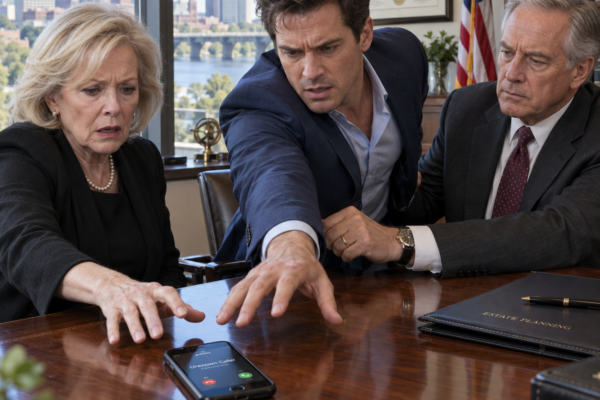
My Husband Left Our Children Millions. He Left Me Only His Locked Phone—Then Someone Called It During the Will Reading.