Hotel Staff Thought She Was Homeless—They Had No Idea Why a Billionaire Was Watching From the Lobby
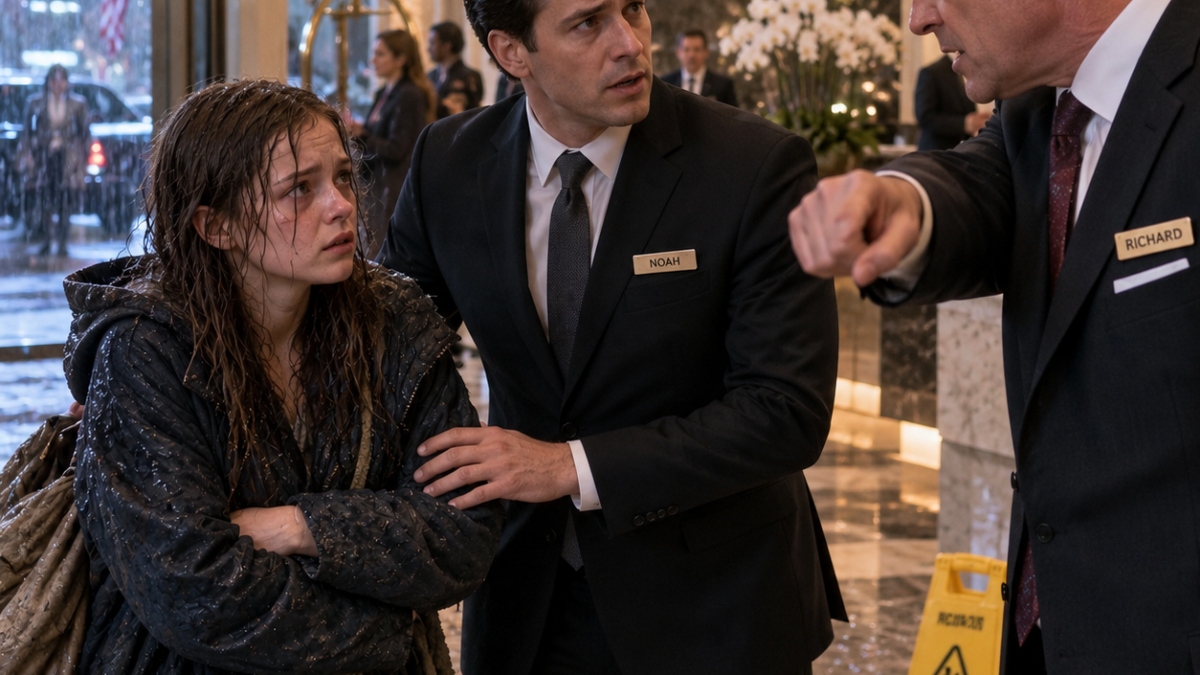
I Walked Into My Family’s Five-Star Hotel Looking Homeless. The Manager Threw Me Into the Rain, and the Clerk Who Helped Me Lost Everything.
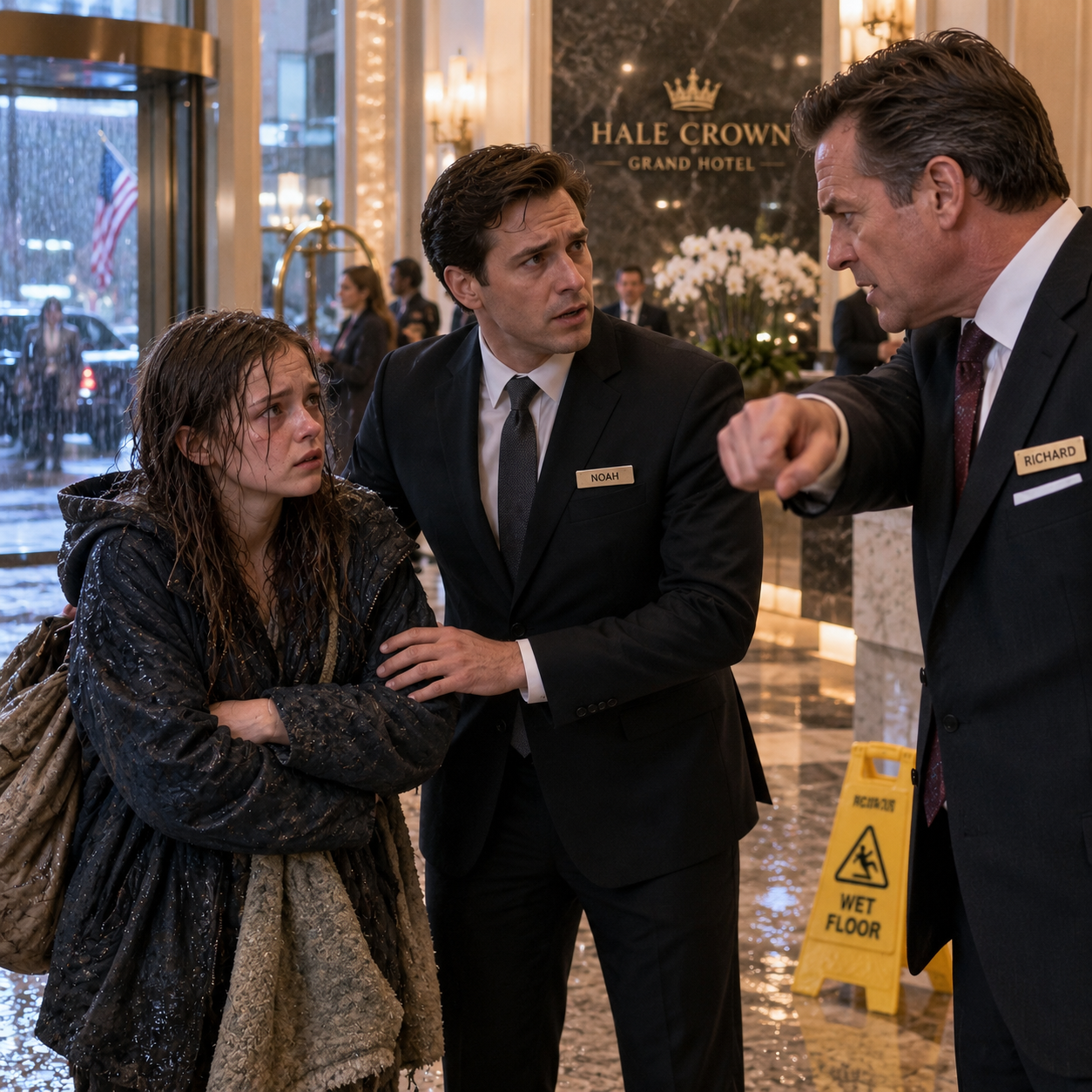
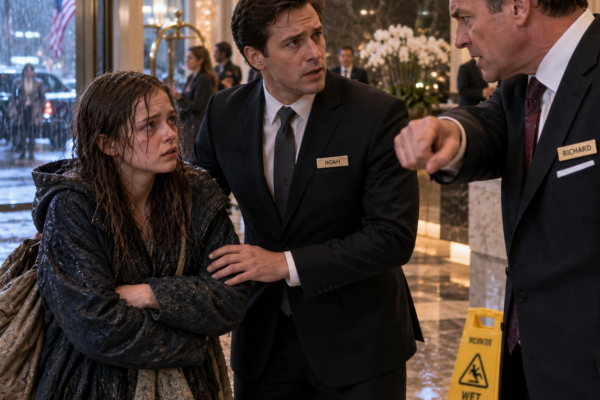
“You can’t stay here.”
The rain had been coming down for nearly an hour, hard enough to turn the sidewalks along Michigan Avenue silver under the streetlights.
I stood just inside the revolving doors of the Crown Meridian Hotel with water dripping from the hem of my coat and running into the worn canvas shoes I had bought from a thrift store that morning.
I looked at the man behind the front desk.
“It’s still raining.”
Richard Cole did not bother looking outside.
“Then get wet.”
His voice was low enough not to disturb the guests checking in three stations away.
That made it worse.
He wasn’t angry.
He was practiced.
“This is a five-star hotel,” he said. “Not a shelter.”
“I just need a few minutes.”
“Outside.”
“I’m not asking for a room.”
Richard finally looked at me.
He was in his late forties, silver beginning at his temples, tailored navy suit, discreet hotel pin on his lapel. Everything about him had been chosen to say calm authority.
“Did you hear me?”
“Yes.”
“Then we understand each other.”
He turned toward security.
That was when Noah Bennett spoke.
“She’s freezing.”
Richard stopped.
Noah stood two stations down.
Thirty-six years old.
White shirt.
Dark vest.
Hotel-issued tie.
The kind of front-desk employee most guests remember only if something goes wrong.
Richard looked at him.
“What did you say?”
Noah’s eyes flicked toward me.
Rainwater had formed a small dark pool beneath my shoes.
“I said she’s freezing.”
“And?”
“Let her dry off.”
Richard laughed once.
Not because anything was funny.
“Noah.”
“Ten minutes.”
“She’s disturbing the guests.”
“She’s standing still.”
Richard’s jaw tightened.
Noah nodded toward me.
“Look at her. She’s a person, Richard. Not a stain on the carpet.”
The lobby changed.
Not loudly.
The bellman near the revolving doors suddenly became very interested in rearranging luggage tags.
A woman waiting for an elevator looked down at her phone.
Employees notice conflict long before guests do.
Richard stepped closer to Noah.
“She is your responsibility now.”
“Fine.”
“Keep her away from paying guests.”
“I said fine.”
Richard walked toward his office.
I should have felt relieved.
Instead, I felt ashamed.
Not because I was wet.
Because I had created the entire situation.
My name was Victoria Hail.
Six weeks earlier, I had inherited enough voting shares in Hail Crown Hospitality to become chairwoman of the board.
The Crown Meridian was one of eleven luxury hotels operating under our flagship brand.
And not one person in that lobby knew who I was.
That had been the point.
My father, Alexander Hail, built Hail Crown from a twenty-eight-room roadside inn outside Cleveland into a privately held hospitality group with properties in Chicago, Boston, Nashville, Savannah, Denver, and several smaller markets.
He died in January at seventy-four.
A stroke.
Fast.
Too fast for the conversations we had been postponing for years.
My father and I loved each other.
We also fought.
Often.
He thought I was too cautious.
I thought he confused dominance with leadership.
He believed a hotel could survive almost any operational problem if the numbers stayed strong.
I believed bad numbers were usually late evidence of bad behavior.
We had not finished that argument.
Then he died.
His will gave me something I had never asked for.
Control.
Not day-to-day operations.
That belonged to Marcus Reed, Hail Crown’s chief executive officer and my father’s oldest friend.
But my father’s voting trust passed to me.
Combined with shares I already owned, it gave me enough board influence to become chair.
Marcus ran the company.
I chaired the board.
On paper, it was clean.
In practice, it felt like inheriting a machine while everyone who knew how to operate it assumed you were merely standing nearby.
During the first month after the funeral, I received the usual flood of reports.
Occupancy.
Average daily rate.
Revenue per available room.
Labor cost.
Food-and-beverage margin.
Guest satisfaction.
Employee turnover.
The Crown Meridian looked healthy.
Too healthy.
Chicago had one of the highest guest-satisfaction scores in the group.
Strong margins.
Low compensation claims.
Low incident volume.
Low overtime.
Almost no formal employee complaints.
That last number bothered me.
Hotels are complicated human systems.
Front desk.
Housekeeping.
Maintenance.
Security.
Kitchen.
Banquets.
Valet.
Reservations.
Laundry.
Guests arriving angry because a flight was canceled.
Guests leaving angry because a minibar charge was wrong.
Employees dealing with all of it while standing in polished spaces that make inconvenience look expensive.
A hotel with almost no formal complaints is either extraordinary or hiding something.
I asked Marcus.
He smiled in that patient way people smile when they remember you as somebody’s daughter.
“Richard runs a tight property.”
“Thirty-three complaints last year across four hundred employees?”
“Good management.”
“Or suppressed reporting.”
“Victoria.”
There it was.
My name spoken gently enough to sound like a warning.
“You’ve been chair six weeks.”
“I know.”
“Your father trusted Richard.”
“My father also trusted three men who tried to buy his company out from under him.”
Marcus sighed.
“Richard’s operating metrics are excellent.”
“That is not what I asked.”
“What are you asking?”
“Why eleven hotels have normal levels of employee complaints and Chicago has almost none.”
Marcus leaned back.
“Maybe because people there aren’t encouraged to dramatize ordinary management decisions.”
I remembered that sentence.
People aren’t encouraged to dramatize.
Three days later, I went to Chicago.
No board announcement.
No executive car.
No penthouse suite under my name.
I checked into a small hotel several blocks away under Victoria Lane, a surname from my mother’s side.
The next afternoon, I changed clothes.
Old jeans.
Thrift-store coat.
Worn canvas shoes.
No makeup.
Hair under a knit cap.
I removed my watch.
Left my phone in a cheap black case.
The goal was not to impersonate someone experiencing homelessness.
That would have been grotesque.
I was testing whether appearance alone changed how our employees treated someone who obviously lacked money.
I told myself that distinction made the plan responsible.
By midnight, I would learn how thin that distinction really was.
The rain helped.
I arrived soaked.
Richard saw a woman who would not increase revenue.
His response took less than a minute.
Outside.
Then get wet.
Five-star hotel, not a shelter.
Noah was the first unexpected variable.
He came around the desk after Richard disappeared.
“Come on.”
“Where?”
“There’s a chair by the staff corridor.”
“I’m fine here.”
“You’re leaving a puddle on marble.”
I looked down.
“So I am.”
He grabbed a folded housekeeping towel from beneath the desk.
Handed it to me.
“For your hair.”
“You going to charge me?”
“Don’t give Richard ideas.”
He led me to a small seating nook partially hidden behind a decorative wall near the business center.
Not glamorous.
Still inside.
“You get ten minutes.”
“That was the deal.”
“Do you have somewhere to go?”
“Yes.”
That was true.
“Tonight?”
“Yes.”
Also true.
He studied me.
“You sure?”
“Yes.”
He nodded.
No interrogation.
No demand for a story.
That mattered.
A few minutes later, an older guest came toward the elevators carrying two shopping bags.
Something slipped from her coat pocket.
A wallet.
Brown leather.
It hit the carpet without her noticing.
I picked it up.
“Ma’am.”
She turned.
“You dropped this.”
Her eyes went straight to the wallet.
Then to me.
“My wallet.”
“Yes.”
She took it quickly.
For half a second, relief crossed her face.
Then suspicion replaced it.
She opened the wallet.
Noah saw.
I saw him see.
The woman began counting.
Credit cards.
Cash.
Driver’s license.
A folded receipt.
I waited.
Noah said, “Is there a problem?”
She looked embarrassed.
“I’m just making sure nothing is missing.”
“Of course.”
His voice became polite in a way that was not polite at all.
“Take your time.”
I looked at him.
He looked back.
The woman finished.
“It’s all here.”
“There you go,” Noah said.
She moved toward the elevator.
Richard reappeared from his office at exactly the wrong moment.
He watched the woman leave.
Then looked at me.
“What happened?”
“She dropped her wallet.”
Noah answered.
Richard’s eyes narrowed.
“And she returned it?”
“She handed something back,” Richard said.
He looked at me.
Then at Noah.
“If Noah insists on keeping you inside, paying guests don’t need to look at you.”
I felt my stomach turn.
Noah took one step forward.
“Richard.”
“What?”
“That’s enough.”
Richard’s face went still.
That was when I learned Noah had already spent most of his political capital.
Later, I would discover he had once been assistant front office manager.
That night, he was a desk agent.
Richard pointed toward a printed sign tucked behind the desk.
“Corporate wants the monthly incident report before Mr. Reed’s visit.”
“I’ll handle it.”
“You’ll handle nothing.”
Richard looked at the chair I was sitting in.
“Remove that.”
Noah stared.
“Why?”
“Because I said so.”
“She’s been standing in the rain.”
“Warning number two.”
Noah’s mouth tightened.
“Put it in writing.”
Richard smiled.
“People around you seem to make very bad career decisions.”
Noah said nothing.
Richard walked away.
I looked at him.
“You shouldn’t have done that.”
“Probably not.”
“Then why did you?”
He glanced at the clock.
“Sit before he changes his mind about the chair.”
I sat.
Ten minutes became twenty.
Richard became distracted by a guest complaint.
Noah quietly brought me a paper cup.
“Something hot.”
“Coffee?”
“Tea.”
“Staff only.”
“I’ll pay.”
“No.”
“Why?”
“Richard’s orders.”
He looked toward the desk.
Then toward the staff corridor.
“Wait.”
Several minutes later, he returned carrying half a turkey sandwich wrapped in a napkin.
He held it out.
“That’s your dinner.”
“Half of it is.”
“You do this for everyone?”
“No.”
I took it.
“Usually they don’t steal half my sandwich.”
I laughed.
That was the first time all evening I forgot what I was doing there.
We sat near the staff corridor while he ate the other half standing.
Of course.
People in hotels eat standing more than guests realize.
Behind counters.
Near service elevators.
In kitchens between rushes.
I asked, “You always work front desk?”
“Now.”
“What does that mean?”
He chewed.
“I was assistant front office manager.”
“What happened?”
“Richard.”
He said it without drama.
“Family came in last winter. Mother. Two kids. Car died during a snowstorm.”
“And?”
“Every hotel from here to Oak Brook was full.”
“So?”
“One room had been taken out of inventory because the carpet was scheduled for replacement the next morning.”
“You gave it to them.”
“Six hours.”
“For free.”
“Yes.”
“Richard demoted you for that?”
“Officially?”
He wiped mustard from his thumb.
“Failure to follow revenue-protection procedures.”
“And unofficially?”
“I embarrassed him.”
“Why stay?”
Noah looked toward the front desk.
“Good people still work here.”
A bellman waved at him.
A housekeeper carried a basket of folded towels through the hallway.
Noah continued.
“Somebody has to be here when management forgets that.”
That line stayed with me.
The next day, I came back.
Different wet coat.
Same general appearance.
Richard saw me and immediately called Noah.
“Your project is here.”
Noah did not react.
He simply said, “Morning.”
I spent the day in and around the lobby.
Not interfering.
Watching.
Hotels reveal themselves in transitions.
Shift changes.
Delivery entrances.
Break periods.
How managers speak when guests cannot hear.
Near lunch, I met Elisa Morales.
Housekeeping.
Forty-one.
Three children.
She was carrying two bottles of orange juice toward the staff elevator.
“Jalil’s juice,” she said when Noah teased her.
“Who’s Jalil?”
“My youngest.”
She smiled.
“School says he needs more vitamin C. Apparently this is now a federal emergency.”
Two days later, Elisa was gone.
“What happened?” I asked.
Noah looked toward Richard’s office.
“She asked about unpaid overtime.”
“And?”
“She was creating hostility.”
“Richard said that?”
“More or less.”
“Somebody should report him.”
“To who?”
“Corporate.”
Noah gave me a look.
“Fourteen people have.”
That was the first number.
Fourteen.
“Complaints?”
“Yes.”
“What happened?”
“Closed.”
“All of them?”
“Yes.”
“By who?”
“Corporate.”
I said nothing.
He continued.
“Richard has friends above him.”
That sentence was more useful than he knew.
Later that afternoon, a housekeeping employee named Rosa came to the front desk trembling.
“Room 1108 says a towel is missing.”
Richard was standing nearby.
He barely looked up.
“It comes out of your check.”
Rosa stared.
“I counted everything.”
“Then you counted wrong.”
“I didn’t take anything.”
Richard finally looked at her.
“Keep arguing and tomorrow you won’t have a check to deduct it from.”
I heard myself speak before remembering my role.
“You can’t do that without proof.”
Richard turned.
“Nobody asked you.”
Rosa looked frightened.
Noah came forward.
“She’s telling you she didn’t take it.”
Richard laughed.
“What is happening now?”
He looked at me.
“Your guest has opinions about payroll.”
Then at Noah.
“First shelter. Then food. Now employee representation.”
He pointed toward the service corridor.
“Loading dock.”
Noah froze.
“My shift is front desk.”
“Not anymore.”
“Richard.”
“Take your project with you.”
I stood.
“You’re punishing him because I spoke.”
Richard looked at me.
“I’m reminding him who signs his schedule.”
Noah collected his badge log and followed me toward the freight elevators.
“What are you doing?” I asked.
“Helping.”
“You can leave.”
“So can you.”
“I work here.”
“Not down here.”
He pushed the service-elevator button.
“Neither did you.”
The loading dock smelled like wet concrete, cardboard, detergent, and diesel.
Noah had been sent to inventory banquet equipment.
I helped.
Not because he asked.
Because I felt guilty.
“This is ridiculous.”
“No argument.”
“You could have ignored me.”
“I tried.”
“No, you didn’t.”
He smiled.
“Fair.”
We counted chafing dishes.
Coffee urns.
Folding tray stands.
Glass racks.
At one point, a silver serving stand nearly slid off a cart.
Noah caught it.
“You all right?”
“I had it.”
“Very convincing.”
He laughed.
Then an older banquet supervisor named Vicki Chen came through.
She stopped when she saw Noah.
“What are you doing down here?”
“What Richard sent me to do.”
“He wants you upstairs.”
“Now?”
“Now.”
Noah looked at me.
“You stay here.”
That lasted five minutes.
I followed.
Richard’s office door was half-open.
I heard him before I reached it.
“Eight thousand dollars.”
Noah said, “What?”
“Your inventory discrepancy.”
“I worked that night.”
“So?”
“Fourteen hours.”
“You signed the count.”
“I would remember an eight-thousand-dollar disaster.”
Richard slapped a report onto the desk.
“Apparently you don’t.”
I stopped outside.
Vicki stood beside me.
Her expression changed.
“What?”
She whispered, “That figure wasn’t there.”
“How do you know?”
“I closed banquet inventory that week.”
Noah emerged.
His face tight.
Richard called after him.
“Fix it before Reed gets here.”
Marcus Reed.
Chief executive officer.
My father’s friend.
My company’s CEO.
According to the schedule, Marcus planned to visit Chicago Friday morning.
No one knew I was already there.
I looked at Vicki.
“Can I ask you something?”
“You ask a lot for someone who doesn’t work here.”
“You said the figure wasn’t there.”
“It wasn’t.”
“How much does this hotel actually spend helping non-guests?”
She laughed.
“Nothing.”
“Nothing?”
“Richard won’t let us give away leftover banquet food without approval.”
I thought of Noah’s demotion.
Elisa.
Rosa.
Fourteen complaints.
“Then why would there be eight thousand dollars listed somewhere?”
Vicki looked at me.
“What are you asking?”
I did not have an answer yet.
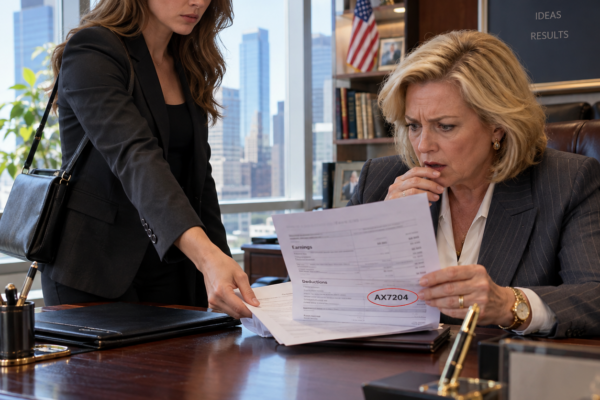
Later, while Noah worked, Vicki and I reviewed a public-facing monthly charitable activity report posted in a staff compliance binder.
The report included a category labeled emergency guest assistance and community outreach.
Twenty-nine entries.
Total annual amount: $247,000.
I stared at the number.
“What?”
Vicki looked.
“That can’t be right.”
“Why?”
“We don’t spend anything like that.”
“Twenty-nine cases.”
“No.”
“Could some be off-property?”
“Richard refuses to donate leftover food.”
She pointed at the report.
“Two hundred forty-seven thousand?”
Noah joined us.
“What are you looking at?”
“Community assistance.”
He laughed.
“Richard?”
“That’s what I said.”
We started reading vendor descriptions.
Northstar Guest Recovery Services.
Temporary shelter coordination.
Emergency transport.
Family relocation assistance.
Crisis lodging.
Noah frowned.
“Never heard of them.”
Vicki went pale.
“What?”
“Richard has a brother.”
“So?”
“Daniel Cole.”
She pointed at the vendor name.
“Northstar.”
“What about it?”
“Daniel used to have a consulting company called Northstar Property Response.”
Noah swore softly.
That changed the temperature.
I said, “Stop.”
Both looked at me.
“We don’t know anything yet.”
Vicki nodded.
Noah did not.
“You talk like an auditor.”
“Do I?”
“You also don’t talk like someone who sleeps in shelters.”
I looked at him.
“Maybe you don’t know as much about women without rooms as you think.”
He winced.
“Fair.”
That evening, Richard cornered Noah near the service elevators.
I was close enough to hear.
“You’re getting attached.”
“To what?”
“Her.”
“Leave her alone.”
“She’s using you.”
“You don’t know her.”
“Neither do you.”
Richard stepped closer.
“You had a future here until you threw it away.”
Noah said nothing.
“I can give it back.”
“I don’t want anything from you.”
Richard smiled.
“Everybody wants something.”
His eyes moved toward me.
“Especially people like her.”
I should have told Noah then.
I did not.
That became the part I regretted most.
That night, we sat in a twenty-four-hour diner several blocks away.
I had stopped pretending I had somewhere comfortable to go.
Not because I revealed the truth.
Because Noah thought I needed a place to sleep.
“Shelter full?”
I looked at him.
“Yes.”
That was partly true.
The emergency shelter I had visited for research earlier that evening was full.
I had not attempted to stay.
Noah stirred his coffee.
“Stay at my place.”
I laughed.
“What?”
“One bedroom.”
“And you?”
“Sofa.”
“Why would you do that?”
“Because I’m charming.”
I stared at him.
“Seriously?”
“Seriously.”
His apartment was in Rogers Park.
Third floor walk-up.
Old radiator.
Kitchen barely wide enough for two people.
A framed photograph of a woman sat on the bookshelf.
“Your wife?”
He looked at it.
“Emily.”
“Where is she?”
“Des Moines.”
The answer was too quick.
“Divorced?”
“Yes.”
He changed the subject.
I let him.
The guest room, if one could call it that, was his bedroom.
He gave me clean sheets.
A towel.
A sweatshirt.
“Noah.”
“What?”
“You don’t know me.”
“You appear to know that.”
“Why trust me?”
He shrugged.
“I’m not giving you my bank password.”
I smiled.
He pointed toward the bathroom.
“Hot water takes two minutes.”
“Thank you.”
“Sorry it’s not exactly five stars.”
That night, lying in his bed while he slept on the sofa, I stared at the ceiling.
My father’s final letter sat in the bottom of my bag.
I had brought it because I still did not understand it.
Victoria,
Shares are not a reward.
They are responsibility.
The company will tell you what it wants you to hear.
The board will tell you what it thinks you can absorb.
Employees will tell you the truth only if they believe the truth will not destroy them.
If I leave you anything useful, let it be this:
Do not ask whether you deserve what I built.
Ask whether you can make it better.
Dad
I had read it fifty times.
That night, in Noah Bennett’s bedroom, it finally began making sense.
The next morning, he made coffee.
I asked about the woman in the picture.
He sighed.
“My father died recently,” I said.
The words surprised him.
“I’m sorry.”
“We weren’t finished with each other.”
“Nobody ever is.”
“He left me something.”
“Money?”
“Responsibility.”
He smiled faintly.
“Worse.”
“I don’t know if I deserve it.”
Noah spread peanut butter on toast.
“Wrong question.”
“What’s the right one?”
He handed me a plate.
“Don’t ask whether you deserve what he left.”
I went completely still.
“Ask whether you can make it better.”
Almost my father’s words.
Not exactly.
Close enough to hurt.
Noah noticed.
“What?”
“Nothing.”
I should have told him.
Again, I didn’t.
By Thursday, I had enough concerns to trigger a board review.
Not a public accusation.
Not operational takeover.
A review.
I contacted outside counsel directly.
Used secure channels.
Shared the complaint closures, Northstar vendor pattern, and concerns about retaliation.
The board’s audit committee authorized temporary preservation measures.
Richard’s disciplinary authority was frozen pending review.
I did not yet know whether Marcus was involved.
That mattered.
Because all fourteen employee complaints had reached corporate.
Someone above Richard had closed them.
Friday morning, Marcus Reed arrived.
Tall.
Sixty-three.
Expensive dark suit.
My father’s closest friend for nearly forty years.
He had known me since I was six.
In public, he called me Victoria.
In private, occasionally, Vicky.
He did not know the soaked woman Richard had been insulting for three days was Alexander Hail’s daughter.
At least that was what I believed.
Richard called me into the lobby before Marcus arrived.
Security stood nearby.
So did Noah.
Richard smiled.
“We have a situation.”
“What?”
“A bracelet disappeared from a guest suite.”
I felt cold.
“Why are you telling me?”
“Because security footage shows you near the eleventh floor.”
“I used the public restroom.”
“You weren’t authorized on guest floors.”
“Noah let me use an elevator.”
Richard looked at him.
“Of course.”
Security searched my backpack with my consent.
Nothing.
Then Richard produced a small velvet jewelry pouch.
“It was found under a chair near the employee hallway.”
“That’s not mine.”
“Obviously.”
Noah stepped forward.
“She didn’t take it.”
Richard’s smile vanished.
“We also have CCTV.”
The footage showed me on the eleventh floor.
Not entering the room.
Not touching a housekeeping cart.
Nothing.
Still, Richard spoke as if accusation had become proof.
“You planted it.”
I looked at him.
“That’s a serious accusation.”
“So is theft.”
He turned to Noah.
“One last chance.”
“For what?”
“Tell security she acted alone.”
Noah stared.
Richard continued.
“I’ll restore you tomorrow.”
“What?”
“Assistant front office manager.”
Noah went still.
“Full salary. Benefits. Schedule.”
Richard lowered his voice.
“You know what that money would do for you.”
Noah’s jaw tightened.
“For your family.”
“Stop.”
“All you have to do is tell the truth.”
Richard pointed toward me.
“She manipulated you.”
Noah looked at him.
Then me.
Then back.
“No.”
Richard’s face hardened.
“You’re throwing away your career.”
Noah laughed once.
“You already took my title.”
His voice became quiet.
“You don’t get my character too.”
“You’re fired.”
Noah nodded.
“I figured.”
I could have ended it right there.
One call.
One sentence.
I could have revealed who I was.
Restored his job.
Humiliated Richard.
I did not.
Because by then I knew the bracelet accusation was probably a setup, and I needed to know who Richard would call when he felt cornered.
But knowing the strategic reason did not make my decision humane.
Noah walked away from the desk.
I followed.
“Noah.”
“Don’t.”
“I can fix this.”
He turned.
“How?”
I said nothing.
His eyes narrowed.
“How, Vicki?”
That was the name I had given him.
Vicki Lane.
I looked away for half a second.
Too long.
“Who are you?”
Before I could answer, Richard came out of his office with his phone.
“Marcus, we have a problem.”
He was calling the CEO.
Not security.
Not local HR.
Marcus.
Noah watched him.
Then looked at me.
“You know that name.”
“Yes.”
“What?”
“Nothing.”
His face changed.
“You have got to stop saying nothing.”
Marcus Reed entered through the revolving doors fifteen minutes later.
The entire lobby straightened.
Managers appeared.
Concierge.
Security chief.
Richard moved forward with both hands extended.
“Mr. Reed.”
Marcus shook once.
Then saw me.
His face stopped.
Only for a fraction of a second.
But Richard noticed.
So did Noah.
“Victoria.”
Richard turned.
Silence.
Noah stared at me.
Marcus looked between us.
“What happened?”
Richard laughed nervously.
“You know her?”
I stepped forward.
“Marcus.”
His eyes hardened.
“What are you doing here?”
“Finding out how high this goes.”
That sentence was not fair to him.
Not yet.
But his face told me there was more he knew than I liked.
Richard spoke.
“This woman has been interfering with hotel operations for days.”
Marcus closed his eyes briefly.
“Richard, I’ve had a very long morning.”
“It’s about to get longer.”
I pulled a document from my bag.
“Richard Cole, effective immediately, your disciplinary authority is suspended pending board review.”
He stared at me.
Then laughed.
A loud, disbelieving laugh.
“You couldn’t get yourself a room three nights ago and now you’re suspending me?”
Several guests looked over.
Richard spread his arms.
“Did everybody hear that?”
He turned to me.
“Who exactly do you think you are?”
“Someone with the authority to do exactly what I just did.”
“Of course you are.”
He looked toward security.
“Escort her out.”
“Check your phone.”
His smirk remained until the device vibrated.
Corporate notice.
Board review active.
Disciplinary authority temporarily suspended.
He read twice.
“Victoria, what the hell is going on?”
Marcus finally stepped between us.
“Richard.”
“No.”
Richard held up the phone.
“Who authorized this?”
I answered.
“Someone you don’t outrank.”
Richard stared at Marcus.
Then me.
“She’s homeless.”
“No,” Marcus said.
Then looked at me.
“I don’t know what she’s doing.”
That bothered me.
“You’re the CEO.”
“Which is why that bothers me.”
Richard regained composure.
“This notice freezes discipline.”
He pointed toward the doors.
“It does not give her operational control of my hotel.”
“I never said it did.”
“Good.”
He turned to security.
“Escort her off property.”
I felt the humiliation of the moment despite knowing who I was.
All that authority.
Same door.
Noah looked at me.
His expression hurt more than Richard’s contempt.
I stepped outside.
Rain had stopped.
Board counsel called immediately.
“If we establish executive-level obstruction, the emergency removal resolution becomes actionable.”
“For Richard?”
“For whoever participated.”
“What do you need?”
“Preservation failure. Interference. Retaliation tied to the audit.”
I looked through the glass at Richard entering his office.
“Then let’s see what he does.”
Richard did exactly what frightened people with control often do.
He tried to erase.
Inside his office, he ordered the audit archive locked.
Then told his controller to purge anything connected to Northstar.
What Richard did not know was that the board’s preservation notice had already placed monitoring on deletion events.
An alert triggered.
Vicki called Noah.
He was halfway home.
He came back.
That was his choice.
Not mine.
“Can you stop the purge?” I asked outside the service entrance.
“No.”
“Why?”
“I can see the backup activity through the old operations dashboard, but I can’t access the property backup without active local credentials.”
“You’re fired.”
“HR hasn’t processed it yet.”
“How long?”
“Until somebody notices.”
We entered through the loading dock.
Vicki let us into the operations office.
Noah logged in.
Credential accepted.
Forty-seven complaint records appeared.
I stared.
“Forty-seven?”
Vicki nodded.
“How many were on the official report?”
“Fourteen.”
Noah opened the archive.
“Thirty-three buried.”
Not closed.
Removed from standard review.
Unpaid overtime.
Housekeeping deductions.
Retaliatory scheduling.
Guest assistance.
Safety complaints.
Management threats.
Northstar invoices.
Eleven properties.
Not one.
Eleven.
I felt sick.
“Richard couldn’t do this.”
Noah looked at me.
“No.”
Vicki whispered, “But a CEO could.”
I looked at the screen.
Marcus.
No.
I refused to jump.
“We don’t know.”
Another deletion alert.
“Save everything.”
Noah created a legally preserved snapshot into the board-authorized repository using the credentials still active on his account.
Then a warning flashed.
Someone else had entered the backup system.
“Kill it,” I said.
“No.”
“Why?”
“If I disconnect, we may lose the audit trail.”
He kept working.
“They know somebody’s in here.”
“Who?”
“Corporate.”
My phone vibrated.
Outside counsel.
“Snapshot secured.”
I exhaled.
Then Vicki looked at me.
“Miss Hail?”
Noah stopped typing.
The room became silent.
I had not told them my surname.
Counsel’s voice was audible through the phone.
“Miss Hail, the board has the files.”
Noah slowly looked at me.
“Hail.”
I said nothing.
“Victoria Hail.”
“Yes.”
“Alexander Hail’s daughter.”
“Yes.”
He stood.
His face emptied.
Not anger yet.
Shock.
“You were never homeless.”
“No.”
“The clothes.”
“A disguise.”
“The shelter?”
“I visited one.”
“The sandwich.”
“That was real.”
He stared.
“For me?”
“Yes.”
He stepped backward.
“You watched me lose everything for you.”
“Noah.”
“You could have stopped it.”
“Yes.”
No excuse.
His face tightened.
“Richard was wrong about almost everything.”
He laughed without humor.
“Except one.”
“What?”
“You were using me.”
The sentence landed harder than anything Richard had said.
Because it was true.
Not completely.
But enough.
“I was.”
Vicki looked between us.
“Noah.”
He shook his head.
“No.”
Then to me:
“You wanted to see how people treat somebody who can’t help them.”
“Yes.”
“And when I did help you, you kept the test going.”
“I needed evidence.”
“You needed me.”
“Yes.”
“That’s different.”
I could not argue.
Marcus entered the operations room fifteen minutes later.
No entourage.
No Richard.
Just him.
He looked exhausted.
“Victoria.”
I held up the complaint archive.
“What is this?”
His face went pale.
“That system should not be accessible locally.”
“That is not an answer.”
He looked at Noah.
Then Vicki.
“Everyone out.”
“No,” I said.
Marcus’s eyes sharpened.
“This is executive business.”
“These are the employees whose complaints disappeared.”
I gestured toward them.
“They stay.”
Marcus’s jaw tightened.
That was the first moment I saw my father in him.
Authority as reflex.
“What are you accusing me of?”
“I don’t know yet.”
“Then be careful.”
“You closed fourteen complaints.”
“Corporate closed them.”
“You are corporate.”
“So is legal. So is HR. So is compliance.”
“Who protected Richard?”
Marcus looked away.
There.
I saw it.
“Marcus.”
“It wasn’t protection.”
“What was it?”
“Containment.”
I almost laughed.
“Of what?”
“A management problem.”
“Forty-seven complaints?”
His eyes snapped toward the screen.
“Forty-seven?”
He genuinely did not know.
That mattered.
“How many did you know?”
“Fourteen.”
“And?”
“I allowed Richard to resolve them locally.”
“Why?”
“Your father liked him.”
The sentence stunned me.
“My father is dead.”
“This started before he died.”
Noah said quietly, “Convenient.”
Marcus looked at him.
“Excuse me?”
“He means dead people are useful when nobody can ask them,” Vicki said.
Marcus looked offended.
Good.
My phone rang.
Board counsel.
“Victoria, we have confirmation Northstar appears across eleven properties.”
Marcus heard.
His face changed.
“Eleven?”
“Yes.”
He reached for the phone.
“Give me that.”
“No.”
“Victoria.”
“No.”
He looked at me.
Then at the screen.
The CEO finally understood that the review was not about Chicago.
Richard had not invented Northstar alone.
Invoices existed across the group.
Emergency shelter coordination.
Guest relocation.
Community support.
Charges billed at rates far higher than actual costs.
Some services never occurred.
Others appeared duplicated.
The vendor was linked through ownership records to Daniel Cole.
Richard’s brother.
But approvals at other hotels came through regional operations.
Someone had normalized the vendor.
Someone above Richard.
Marcus sank into a chair.
“No.”
“You recognize it.”
“I recognize the name.”
“How?”
“Daniel approached me two years ago.”
The room went silent.
“For what?”
“Vendor approval.”
“And?”
“I rejected him.”
“Then how did Northstar get approved?”
“I don’t know.”
I stared.
“You’re CEO.”
“Yes.”
“That answer is not enough anymore.”
Marcus looked older.
“I know.”
Richard arrived before we could go further.
He had stopped pretending to be calm.
“What is happening?”
Marcus stood.
“Go back to your office.”
Richard ignored him.
He looked at me.
“Your father may have left you shares, but this company answers to Marcus.”
Marcus closed his eyes.
I looked at Richard.
“Does it?”
Richard pointed toward him.
“He’s the chief executive officer.”
“Yes.”
“So who exactly do you think you are?”
I took the board resolution from my folder.
“The chairwoman.”
Nobody spoke.
Richard laughed once.
“Chairwoman.”
“Yes.”
“You’re going to remove a CEO over one property?”
“Eleven.”
His face changed.
“The board has the rest.”
Marcus looked at me.
“Victoria.”
“Executive-level obstruction has been established.”
“No.”
He stood.
“I did not approve Northstar.”
“Then this isn’t about Northstar alone.”
“What?”
“The complaint process.”
He looked away.
“You knowingly permitted complaints involving Richard to be closed without independent review.”
“That was not obstruction.”
“Then the board can decide.”
Richard’s confidence started collapsing.
He turned to Marcus.
“I’m still general manager.”
“No.”
I looked at the document.
“Richard Cole, terminated for cause effective immediately.”
His mouth opened.
“Uncle Marcus.”
I stopped.
Uncle.
Not literally, perhaps.
But close enough.
Marcus had known Richard’s family for years.
There was the missing relationship.
“Uncle Marcus,” Richard said again. “Do something.”
I looked at him.
“You called the most powerful man you knew.”
Then I looked at Marcus.
“You should have asked who he answers to.”
Richard’s face hardened.
“Security.”
Nobody moved.
The security director had received the corporate termination notice.
For the first time since I arrived, Richard had authority over no one in the lobby.
He stood there in his perfect suit.
No yelling.
No handcuffs.
No dramatic collapse.
Just a man discovering that a title stops working the moment the organization behind it withdraws consent.
He looked at me.
“You came into my hotel pretending to be homeless.”
“My hotel?”
He said nothing.
“That has been the problem all along.”
Security escorted him to his office to collect personal belongings under supervision.
Guests barely noticed.
Hotels are good at absorbing private disasters.
The lobby continued.
Suitcases rolled.
Phones rang.
Someone complained about valet parking.
A wedding party checked in.
Life moved.
Marcus’s situation took longer.
The board investigation lasted six weeks.
He had not designed the Northstar scheme.
That was important.
He had, however, created the conditions that allowed it to spread.
Daniel Cole initially pitched Northstar to Marcus as an emergency relocation and guest-recovery contractor.
Marcus rejected the proposal because of the family connection.
Months later, regional operations approved Northstar through a different process.
Richard’s property became the first major user.
Then neighboring hotels followed.
Marcus saw the vendor name on consolidated reports.
He did not challenge it.
Why?
Because the spending remained below thresholds that required board review.
Because Richard’s metrics were strong.
Because complaints about management were inconvenient during a period of expansion.
Because my father had liked Richard.
Because Marcus trusted people he had known too long.
That was not criminal fraud.
It was leadership failure.
The board suspended him during review.
Then negotiated his departure.
No prison.
No dramatic public disgrace.
He resigned as CEO.
The announcement cited governance failures and the need for new leadership.
Privately, he apologized to me.
“I should have looked.”
“Yes.”
“I thought I was protecting your father’s company.”
“You were protecting smooth reports.”
He nodded.
“That too.”
“Why close the complaints?”
“I believed Richard could be corrected.”
“Fourteen times?”
He looked ashamed.
“When you say the number, it sounds worse.”
“It was worse before I said it.”
That line ended the conversation.
Vicki helped rebuild the audit process.
Corporate compliance reopened all forty-seven complaints.
Thirty-three had been buried.
Not all proved valid.
Some involved misunderstandings.
Some could not be substantiated.
But enough were real.
Unpaid overtime.
Improper paycheck deductions.
Retaliatory scheduling.
Guest-assistance expenses billed through Northstar for services never provided.
Food donation prohibitions that contradicted corporate policy.
Employees fired after raising concerns.
Elisa Morales received back pay and was offered reinstatement.
She declined.
Good for her.
Rosa received reimbursement for deductions that never should have been taken.
Several other workers received settlements.
Northstar’s contracts were terminated across all properties.
The company referred irregular invoices to outside counsel and investigators.
Daniel Cole became responsible for answering questions about invoices his business submitted.
That was no longer my job.
Noah’s situation was harder.
I restored his employment immediately.
He refused.
“I’m not coming back because the chairwoman feels guilty.”
“I don’t blame you.”
“I need a job.”
“I know.”
“That doesn’t mean I want yours.”
“It was always yours.”
He laughed bitterly.
“No. Richard took it.”
“And I let him take more.”
He looked at me.
“Yes.”
I had no defense.
I offered to reimburse the wages he lost while terminated.
“That part I’ll take.”
“Good.”
“Because those hours are mine.”
“Agreed.”
“And not as a favor.”
“Back pay.”
“Correct.”
The formal investigation cleared Noah of the bracelet accusation.
Security footage from another angle showed a manager placing the pouch near the employee corridor before calling security.
Richard denied ordering it.
Evidence suggested otherwise.
Enough for termination.
Not enough for me to turn the story into something larger than it was.
Noah remained away from the hotel for three weeks.
Then he called.
“Coffee.”
“What?”
“You owe me half.”
I smiled before remembering he was still angry.
“Where?”
The same diner.
He sat in the back booth.
I arrived in ordinary clothes.
Not a disguise.
Jeans.
Sweater.
Coat.
He looked at me for a long moment.
“No thrift store?”
“No.”
“Shame. Very convincing.”
“I deserved that.”
“Yes.”
I sat.
He ordered coffee.
Nothing else.
I did too.
“I owe you more than half a sandwich.”
“I know.”
“Why didn’t you tell me?”
The question had been coming.
“Because you saw me before you saw my last name.”
His face remained still.
“And?”
“I was afraid I’d lose that.”
“So you decided for me.”
“Yes.”
“I would have helped you anyway.”
“I know that now.”
“No.”
His voice sharpened.
“You knew then.”
I stopped.
He was right.
I had known.
By the second day, I knew.
By the time he lost his front-desk shift, I knew.
By the time he took me to his apartment, I definitely knew.
“I’m sorry.”
“I’m still angry.”
“Okay.”
He stared.
“That’s it?”
“You’re allowed.”
His expression shifted slightly.
I said, “I’m not asking you to forgive me because I fired Richard.”
“Good.”
“I’m not asking because I restored your pay.”
“Good.”
“I’m not asking at all.”
The waitress brought coffee.
I wrapped both hands around the mug.
Noah leaned back.
“Sit.”
“I am sitting.”
“Stay.”
I looked at him.
“Is that forgiveness?”
“No.”
He took a sip.
“It’s coffee.”
I laughed.
He tried not to.
Failed.
That was the beginning.
Not romance.
Not instant reconciliation.
A beginning.
Noah eventually returned to Hail Crown.
Not to the same job.
And not because I personally handed him a title.
He applied for a newly created role in property integrity and employee escalation.
The role emerged from the audit recommendations.
Independent complaint handling.
Frontline operational review.
Guest-assistance controls.
Protection against retaliatory scheduling.
Noah interviewed with outside HR, compliance, and two property leaders from hotels he had never worked at.
I recused myself.
He got the job.
When he told me, I said, “Congratulations.”
“You sound surprised.”
“I’m practicing neutrality.”
“You’re terrible at it.”
His salary rose substantially.
More important, he had authority to investigate patterns Richard had once used against people.
The first week, he called me.
“We have a problem.”
“What?”
“The free-food policy.”
“What free-food policy?”
“Exactly.”
Hotels discarded safe surplus food because nobody wanted liability or administrative work.
Noah partnered with counsel and a local nonprofit to create a donation system that complied with food-safety requirements.
The first time banquet leftovers left the loading dock for a shelter partner, Vicki sent me a photograph.
No people.
Just sealed trays.
Caption:
Richard would hate this.
I replied:
Then it’s probably worth reviewing.
She sent back a laughing emoji.
Hail Crown changed in less visible ways too.
No more complaint system reporting solely through hotel general managers.
No local manager could close a complaint naming themselves.
Payroll deductions required documentation and appeal rights.
Emergency guest assistance became a real budget with clear rules rather than a fake expense category feeding a related-party vendor.
Monthly reports showed both approved assistance and denials.
Transparency made the number less pretty.
Good.
Real systems are rarely pretty.
The first quarterly review after Marcus left showed more than one hundred employee complaints across the group.
A director asked whether the company culture was getting worse.
I said, “No. We finally made it safe enough to count.”
That became a line people repeated.
I wish I had said it because I was wise.
I said it because I had learned the hard way.
The board hired a new CEO named Elena Park.
Hotel background.
Twenty-five years in operations.
Started as a front-desk agent.
She had no personal history with my father.
That was one reason I liked her.
During her final interview, I asked:
“What worries you about this company?”
She answered:
“How much everybody still talks about Alexander Hail.”
The room went silent.
I smiled.
“You’re hired.”
Not literally.
The board still voted.
But the instinct was correct.
My father built Hail Crown.
He did not need to manage it from the grave.
That realization took me longer.
Noah and I continued having coffee.
Sometimes dinner.
Months passed before I visited his apartment again.
This time, I brought groceries.
He looked at the bags.
“You think I can’t feed myself?”
“I remember your sandwich.”
“That was one sandwich.”
“Traumatic.”
He laughed.
The photograph of Emily was still there.
I finally asked.
“You said she was in Des Moines.”
“She is.”
“Alive?”
He looked at me.
“Yes.”
“You made it sound like she might not be.”
“That was your assumption.”
Fair.
They had divorced three years earlier.
No tragedy.
No secret illness.
Two people who married young and became different.
Their daughter, Hannah, was fourteen and lived primarily with Emily in Iowa.
Noah took the train or drove twice a month.
That was why Richard’s demotion had hurt so badly.
The lower salary made travel harder.
The worse schedule cost weekends.
When Richard offered his old title back in exchange for blaming me during the bracelet incident, he knew exactly what he was offering.
Time with Hannah.
That made Noah’s refusal more expensive than I understood.
“I’m sorry.”
“For what?”
“That I didn’t know.”
“You weren’t supposed to.”
That became another lesson.
Not every employee owed leadership a personal tragedy before deserving fairness.
Noah’s schedule should have been humane whether or not a daughter was waiting in another state.
By autumn, Hannah visited Chicago.
Noah introduced us carefully.
“This is Victoria.”
She looked at me.
“The hotel lady.”
I almost choked.
Noah smiled.
“She knows the story.”
“How much?”
“Enough.”
Hannah was fourteen and therefore professionally unimpressed.
“You really pretended to be homeless?”
“I did.”
“That’s weird.”
“Yes.”
“My dad got fired because of you.”
I looked at Noah.
He did nothing.
Correctly.
“Yes.”
Hannah stared.
“Then why are you here?”
Good question.
Noah answered.
“Because people can screw up and still show up afterward.”
She considered.
“That sounds like therapy.”
“Probably is.”
We ordered pizza.
That evening did more to humble me than any board meeting.
Noah and I never became a dramatic corporate romance.
I am glad.
Life did not need that storyline.
We became friends first.
Then something more careful.
By the time we called it dating, nearly a year had passed.
He insisted on paying for the first official dinner.
I let him.
The restaurant was a neighborhood Italian place.
Bill under a hundred dollars.
He looked pleased.
“Now you can’t say I’m after the hotel empire.”
“I wasn’t going to.”
“You thought it.”
“I did.”
“See?”
I laughed.
Our relationship was not easy.
Trust was a strange subject when our entire connection began with deception.
If I arrived late, he noticed.
If I avoided a question, he called it out.
If he thought I was making a decision for him “because I knew better,” he became impossible.
Once, I offered to have the company plane take him to Iowa during a snowstorm.
He said no.
“Why?”
“Because I bought a train ticket.”
“The train is delayed.”
“Then I’ll be delayed.”
“This is ridiculous.”
“Your plane creates an obligation.”
“To whom?”
“You.”
“That’s absurd.”
“Maybe.”
He kept the train ticket.
I went home furious.
Then realized he was partly right.
Generosity from people with power can become difficult to separate from influence.
I had to learn to offer without expecting acceptance.
He had to learn refusing everything did not automatically make him independent.
Relationships are inconvenient.
Two years after the audit, Hail Crown published its first full employee-trust report.
Complaint volumes.
Resolution rates.
Wage corrections.
Turnover.
Safety incidents.
Related-party vendors.
Assistance spending.
Not all numbers were flattering.
That was the point.
We also created a frontline advisory council.
Housekeepers.
Desk agents.
Maintenance.
Kitchen.
Security.
Banquets.
Not executives selecting employees known to agree with management.
Elected representatives from each property.
Noah hated the first draft.
“Too much corporate language.”
“It’s a governance charter.”
“It says ‘multidirectional culture feedback architecture.’”
“That was legal.”
“Fire legal.”
“We need legal.”
“Then confiscate their thesaurus.”
We rewrote it.
The council worked.
Not perfectly.
Nothing does.
One year, employees complained meal-break policies were unrealistic during peak check-in.
Operations disagreed.
We adjusted staffing.
Another year, maintenance teams argued corporate procurement forced them to buy cheaper equipment that failed faster.
They were right.
We changed vendors.
The company became less elegant on paper.
More functional in real life.
That was better.
Richard Cole sued after termination.
Expected.
Wrongful termination.
Defamation.
Contract claims.
The matter settled without admission after discovery confirmed enough policy violations that neither side wanted years of litigation.
He disappeared from my life.
Occasionally his name surfaced in hospitality circles.
He eventually managed a smaller independent property somewhere in Arizona.
I felt nothing.
That was freedom.
Marcus retired.
Before he left Chicago, he asked me to dinner.
We met at a steakhouse my father loved.
Marcus ordered the same bourbon Alexander used to drink.
I did not.
“You look like him sometimes,” Marcus said.
“I’m sorry.”
He smiled.
“You always hated being told that.”
“Because people mean it as instruction.”
He looked down.
“I failed you.”
“You failed the employees first.”
“Yes.”
That answer mattered.
“I spent forty years believing loyalty meant protecting people from embarrassment.”
I waited.
“Your father did too.”
“I know.”
“I closed those complaints because I thought Richard’s numbers justified giving him room.”
“And because Dad liked him.”
“Yes.”
“And because Richard called you Uncle Marcus.”
He winced.
“Yes.”
I took a sip of water.
“What would Dad have done?”
Marcus smiled sadly.
“Depends which version.”
That was true.
The younger Alexander Hail might have fired Richard in ten minutes.
The older one might have protected the executive producing strong numbers until evidence became impossible to ignore.
People change.
Not always in the direction we want.
Marcus said, “He would have been proud of you.”
I looked at him.
“You don’t get to give me that.”
His expression changed.
“I know.”
“My father had time.”
“Yes.”
“He could have said it.”
“Yes.”
“We weren’t finished.”
Marcus’s eyes filled.
“No one ever is.”
Noah’s sentence.
I almost laughed.
My father’s old world and my new one had become connected by phrases none of the men involved knew they shared.
Marcus reached into his jacket.
“I have something.”
An envelope.
Dad’s handwriting.
My name.
I froze.
“He gave me this two weeks before the stroke.”
“Why didn’t you send it?”
“He told me to wait until you stopped being angry at him.”
I stared.
“That could have taken decades.”
“He knew.”
I opened it later.
At home.
Alone.
Victoria,
If you are reading this, Marcus ignored at least one instruction, which means there is hope for him.
I laughed.
Then cried.
My father wrote that he knew we disagreed about the company.
That he knew I thought he had grown too loyal to certain executives.
That I was probably right more often than he admitted.
He wrote:
You will be tempted to prove you are tougher than I was.
Don’t.
Toughness is useful until it becomes vanity.
You will also be tempted to prove you are kinder.
Be careful with that too.
Kindness without standards becomes favoritism wearing nicer clothes.
Build systems that do not require good people to be brave every day.
And if a person tells you something you do not want to hear, do not ask first whether they are important enough to know.
Ask whether they are right.
I kept that letter.
It hangs nowhere.
Some things are not décor.
Years later, Noah became vice president of employee and property integrity.
He fought the title.
I told him to blame the board.
He interviewed formally.
Again.
Nobody handed him anything.
That was important.
Hannah finished college.
Social work.
Noah cried at graduation.
Denied it.
Wind, apparently.
Opal Sears would have respected the excuse.
Different story.
Elena Park remained CEO.
I stayed chairwoman.
Hail Crown grew modestly.
Not explosively.
We bought two properties.
Sold one.
Closed another that never recovered financially after the pandemic-era debt load.
Some years profits were excellent.
Some were not.
What changed was my relationship to the numbers.
I still cared.
A company that cannot earn money cannot protect jobs.
But strong margins no longer automatically meant good management.
Low complaint volume no longer automatically meant happy employees.
Clean dashboards no longer automatically meant clean operations.
Sometimes the absence of bad news simply means someone buried it.
The Crown Meridian became our training property for frontline leadership.
Not because it was perfect.
Because it had failed in useful ways.
New managers learned what happened when complaints became inconveniences.
They learned about Northstar.
Payroll deductions.
Retaliation.
Guest assistance.
Noah’s demotion.
My disguise.
I hated that last part.
Elena insisted.
“You want transparency?”
“Yes.”
“Then you don’t get to edit yourself out.”
Fair.
So every new general manager heard how the chairwoman of the board entered her own hotel pretending to have nowhere to go.
How a manager told her to get wet.
How a front-desk employee fed her.
How that employee was punished partly because she continued the deception longer than necessary.
I refused to tell the story as though I were the clever investigator.
I was not.
I was a woman with power borrowing powerlessness for a few days.
Noah actually had something to lose.
Elisa did.
Rosa.
Vicki.
The housekeepers.
The desk staff.
That was the distinction.
It took me years to state it clearly.
Once, at a leadership retreat, a manager asked whether I would ever repeat the experiment.
“No.”
“Why?”
“Because people are not lab conditions.”
The room became quiet.
“If I want to know how employees are treated, I should build systems where they can tell me without risking their jobs.”
That was the entire lesson.
Disguise had shown me something.
It also hurt someone who trusted me.
Better governance should make the disguise unnecessary.
Noah and I eventually married.
Small ceremony.
Hannah stood beside him.
Elena signed as a witness.
Vicki wore a dress she complained about for six months afterward.
We did not marry in a Hail Crown hotel.
Noah refused.
“Conflict of interest.”
“Cheap.”
“Correct.”
We used a small restaurant overlooking the lake.
At the reception, he handed me half a turkey sandwich on a plate.
I stared.
“You’re ridiculous.”
“You still owe me.”
“For what?”
“The first half.”
“I thought coffee settled that.”
“Interest.”
I ate it.
Years later, when the Crown Meridian underwent renovation, I walked through the lobby after closing.
The old chair where I had dried off was gone.
New furniture.
New carpet.
Different front-desk design.
For a moment, I was disappointed.
Then Noah said, “Good.”
“What?”
“You don’t need the furniture to remember.”
He was right.
The important things remained elsewhere.
In policy.
In payroll.
In the audit system.
In the people who knew they could challenge a manager.
In the records that no longer disappeared because a well-connected executive found them inconvenient.
That was the better memorial.
Not a chair.
One winter night, about eight years after the original incident, I came through the Crown Meridian lobby after a board dinner.
Snow outside.
Wind brutal.
A man stood just inside the revolving door wearing a warehouse uniform and holding a dead phone.
I stopped.
So did Noah, who was several feet behind me.
A young desk agent approached.
“Sir, are you okay?”
“My bus isn’t coming.”
“Do you need to charge your phone?”
The man nodded.
“Come over here.”
She pointed to a chair near an outlet.
“I can get you coffee.”
“No, I don’t have money.”
“It’s fine.”
I looked at Noah.
He looked at me.
No speech.
No test.
No manager rushing over to protect the marble from the sight of someone without a room.
The young employee did not know I was watching.
That was the point.
We went upstairs.
In the elevator, Noah said, “You’re smiling.”
“No.”
“You are.”
“Maybe.”
“You going to give her a promotion?”
“No.”
“Good.”
“I might tell her manager she did well.”
“That’s allowed.”
“Thank you for permission.”
He smiled.
Then became serious.
“You know the first night?”
“Yes.”
“When Richard said everyone wants something?”
“I remember.”
“I thought he was talking about you.”
“He was.”
“No.”
Noah shook his head.
“He was talking about himself.”
The elevator doors opened.
That sentence stayed with me.
Richard saw relationships as leverage because he used them that way.
My father saw responsibility as control because control had built his life.
Marcus saw loyalty as protection because he had spent decades protecting powerful friends.
I saw investigation as truth because numbers felt safer than trust.
We all carried our own assumptions into rooms and called them insight.
Noah’s gift was simpler.
He looked.
Not at categories.
At people.
A soaked woman.
A frightened housekeeper.
A hungry family in a snowstorm.
He was not perfect.
He made bad calls.
Lost his temper.
Once approved a staffing change that created a nightmare weekend at our Nashville property.
Elena still reminds him.
Integrity does not make someone infallible.
It only means mistakes do not need lies to survive.
That was the culture I wanted.
Not perfection.
Correction.
My father left me shares.
What he really left me was a question.
Can you make it better?
For years, I assumed the answer had to be dramatic.
Expose corruption.
Remove executives.
Rewrite governance.
Those things mattered.
But companies become better through smaller choices.
A manager writing down a complaint instead of burying it.
A payroll supervisor refusing an unsupported deduction.
A housekeeper knowing a missing towel will not automatically come out of her check.
A front-desk agent letting someone charge a phone without asking whether they can afford the lobby.
A chairwoman resisting the urge to test somebody because suspicion feels smarter than trust.
That last one remains mine.
Even now.
Sometimes I still feel the instinct.
A new executive says all the right things.
I wonder what would happen under pressure.
An employee returns something valuable.
Part of me wants to create another opportunity and find out.
Then I remember Noah standing behind the front desk.
She’s a person, Richard.
Not a stain on the carpet.
People are not tests.
They are people.
That should not have taken an inheritance, eleven hotels, forty-seven buried complaints, one corrupt vendor, a fired front-desk clerk, and a week in thrift-store clothes for me to understand.
But some lessons arrive late.
The important thing is what you build after they do.
The last time Noah and I were at the Crown Meridian together, we sat in the lobby with coffee.
An ordinary afternoon.
No crisis.
No audit.
No hidden identity.
He pointed toward the revolving door.
“Remember?”
“Unfortunately.”
“You were soaking wet.”
“You gave me half a sandwich.”
“You stole half my sandwich.”
“You handed it to me.”
“Revisionist history.”
I laughed.
Then I looked around.
Housekeepers crossing the lobby without lowering their eyes.
Desk agents using first names.
Security talking with a delivery driver instead of through him.
Nothing extraordinary.
Good.
I had spent much of my life surrounded by people who thought leadership had to look extraordinary.
Big decisions.
Big speeches.
Big buildings.
My father excelled at those things.
I inherited some of that appetite.
Noah never did.
He believed systems should become boring when they work.
Complaints logged.
Wages paid.
Doors opened.
People treated like people.
Coffee.
Sandwiches.
Chairs.
Maybe that was why he mattered so much.
He did not rescue me during my investigation.
I was never the one who needed rescuing.
He simply behaved decently when he believed I had nothing to offer him.
Then, when he learned I had been deceiving him, he refused to let my power convert his hurt into gratitude.
That may have been the first truly equal relationship I had ever had.
I once asked why he eventually forgave me.
He corrected me.
“I didn’t forgive you all at once.”
“What did you do?”
“Watched.”
“For what?”
“To see whether you changed when nobody was testing you.”
I laughed.
“That sounds familiar.”
“Exactly.”
Fair enough.
So if there is one thing I remember most clearly from that week, it is not Richard’s face when he learned I was chairwoman.
It is not Marcus’s resignation.
Not the board resolution.
Not the Northstar invoices.
It is a paper cup of hot tea beside a staff corridor.
Half a sandwich.
A man risking a job he needed because a woman he thought had nowhere to sleep was cold.
He had no reason to believe helping me would matter.
In fact, every reason suggested it would hurt him.
He did it anyway.
That was the test I had never meant to run.
And the only one that told me something worth knowing.
Not about Noah.
About me.
I walked into my family’s five-star hotel wanting to find out how employees treated someone they believed had no money, no influence, and no important last name.
I found out.
Then I learned the harder part.
It is easy to admire kindness when you are secretly powerful enough to reward it.
The real responsibility begins after the disguise comes off.
You have to build a place where people like Noah do not lose their careers for doing what is right.
You have to make sure Rosa does not lose pay because a guest miscounts towels.
You have to make sure Elisa can ask about overtime without becoming “hostile.”
You have to make sure complaints do not disappear because the person named in them knows the CEO.
And you have to stop congratulating yourself for discovering problems your own power allowed to exist.
That was what my father meant by responsibility.
Not owning the hotels.
Answering for what happened inside them.
One rainy night, Richard Cole looked at me and saw a woman who could do nothing for him.
Noah Bennett saw the same woman.
One of them told me to get wet.
The other handed me his dinner.
Everything that followed began with that difference.
News
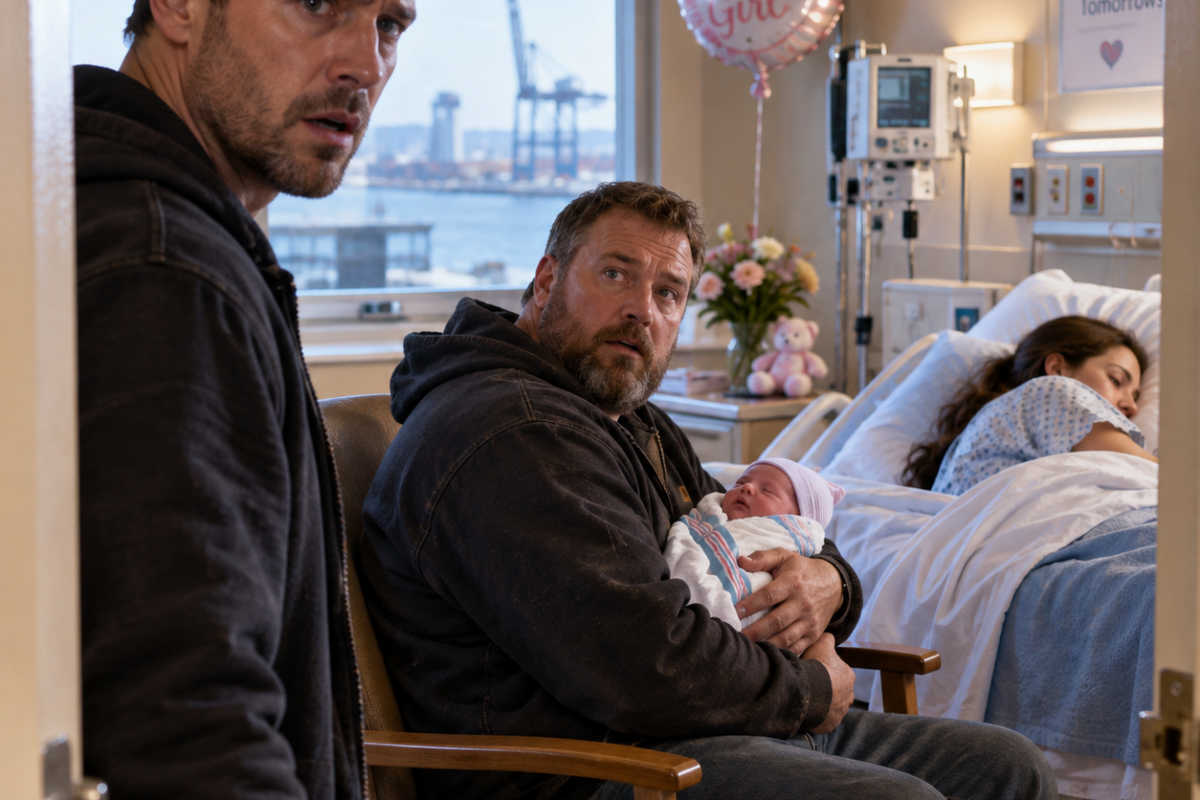
At 3 a.m., the hospital called to congratulate me on becoming a father. “Your wife just gave birth, sir. You need to come meet your baby.” I turned toward my wife, who was sound asleep beside me. “There must be a mistake,” I whispered. “My wife is right here.” The woman on the phone went quiet for a moment. Then her voice changed. “Sir, please come to the maternity ward immediately. If you refuse, we’ll have to contact the police.” I sat up, staring at my sleeping wife. Why would the hospital threaten to call the police over a baby that couldn’t possibly be ours? But when I arrived and saw who was holding that newborn, I stopped in the doorway. It was the last person I ever expected to see.
The Hospital Called at 3 A.M. to Say My Wife Had Just Given Birth. She Was Asleep Beside Me. At 3:07 on a cold Friday…
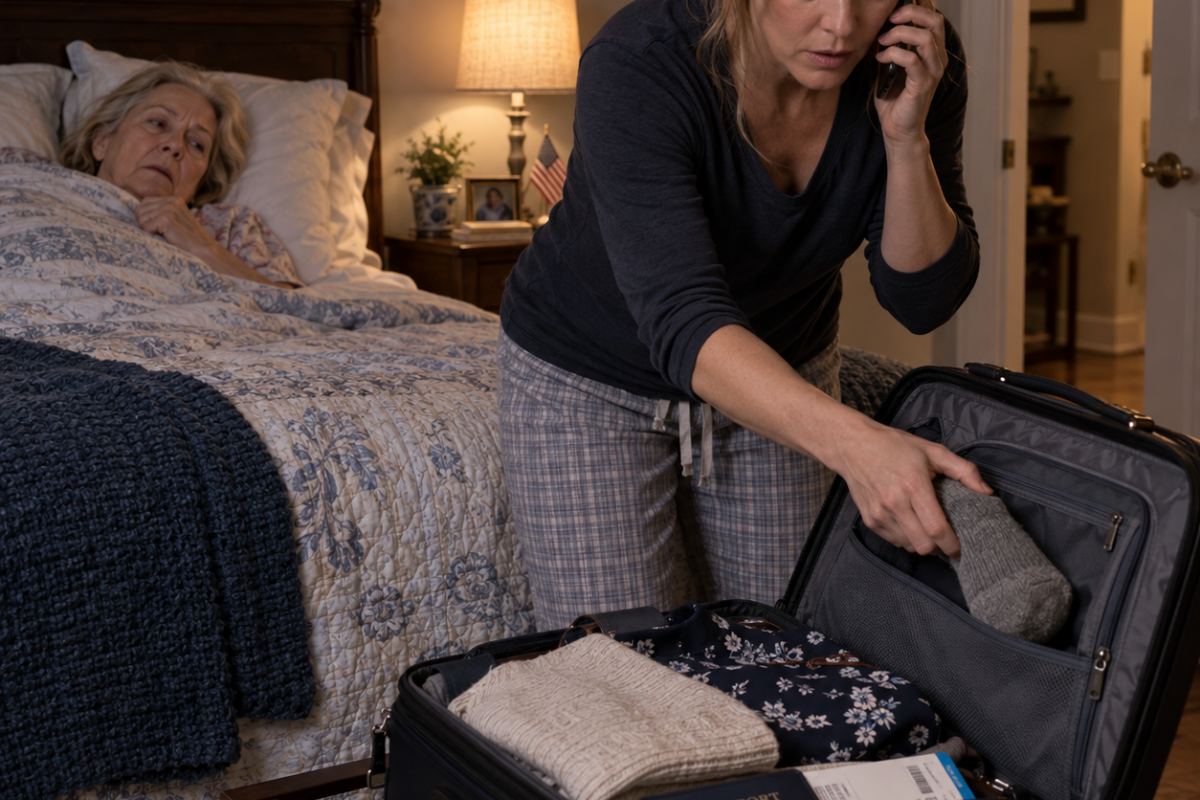
I told my daughter-in-law I had an early flight and went to bed. Just after midnight, my bedroom door slowly opened. Through barely open eyes, I watched her unzip my carry-on, slip something into the hidden inner pocket, and carefully close it again. Then she made a phone call. “It’s in her carry-on. Tip off airport security at six.” My heart started pounding, but I kept pretending to sleep. She had no idea I’d heard every word. And when morning came, I knew there was one thing I absolutely couldn’t do: take that suitcase to the airport.
At Midnight, My Daughter-in-Law Hid a Stolen Museum Pistol in My Carry-On. She Thought Airport Security Would Find It Before I Ever Knew. At 11:58…
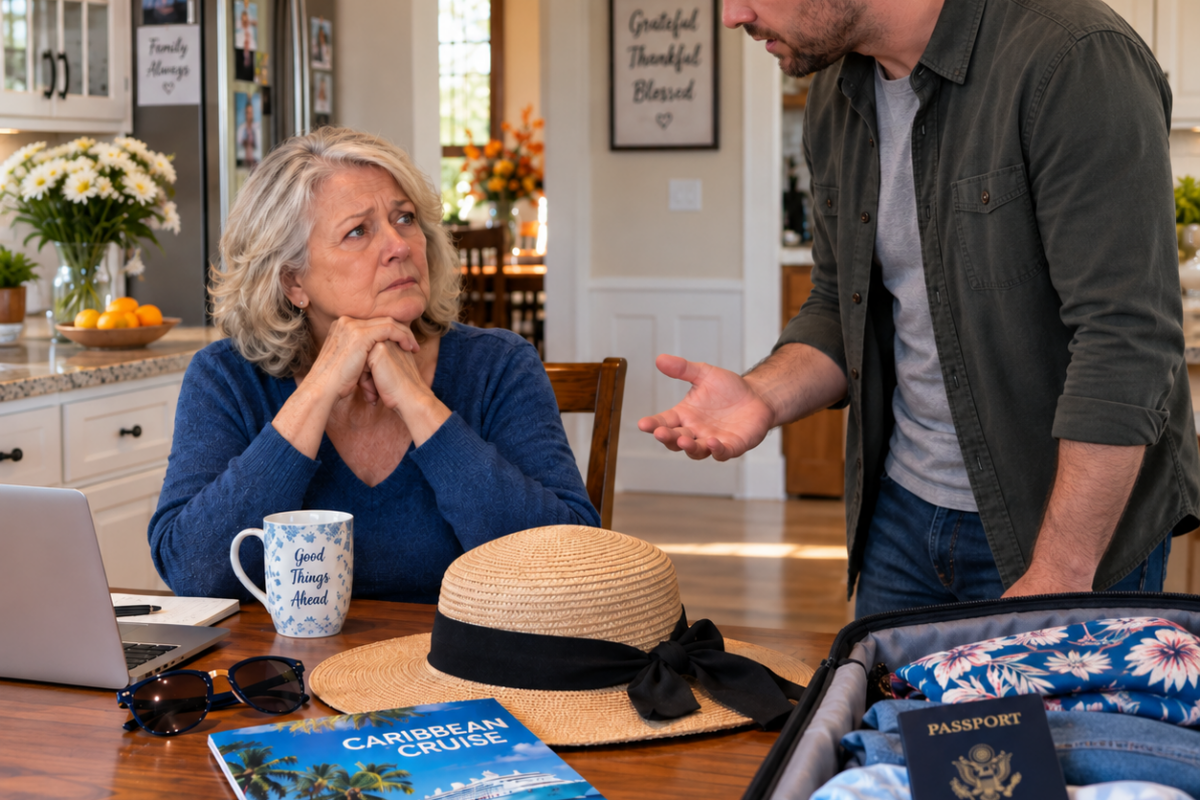
“Thanksgiving is just for my wife’s family,” my son told me. “You’ll have to make other plans.” So I did. I booked a cruise, packed my favorite wide-brimmed hat, and turned off my phone the moment the ship left port. By Thanksgiving afternoon, I was sitting on deck with lobster on my plate, watching the ocean instead of wondering why my own son didn’t want me at his table. I didn’t turn my phone back on until that night. There were 37 missed calls. My son. His wife. Her parents. Even neighbors I barely knew. Then I opened the last voicemail. After hearing the first six words, I put down my fork. Suddenly, I understood why their Thanksgiving dinner had ended early—and why everyone was looking for me.
My Son Told Me Thanksgiving Was Just for His Wife’s Family. So I Took a Cruise, and Eleven Days Later Their Lie Collapsed in Front…

“Henry gets everything—all $80 billion,” Dad announced. “As for you, you’re out of the family. Leave.” I stared at my parents for a moment. “You already sold the company?” Mom smiled. “Every last piece of it.” I slowly closed the folder in front of me. “Without my patents?” Her smile faltered. Dad frowned. “What are you talking about?” I stood up and reached for my coat. “You might want to read page forty-seven of the sale agreement.” For the first time that night, nobody told me to leave.
My Family Said They Were Giving My Brother the Entire $80 Billion Company and Exiling Me. Then the Buyer Asked One Question About My Patents….
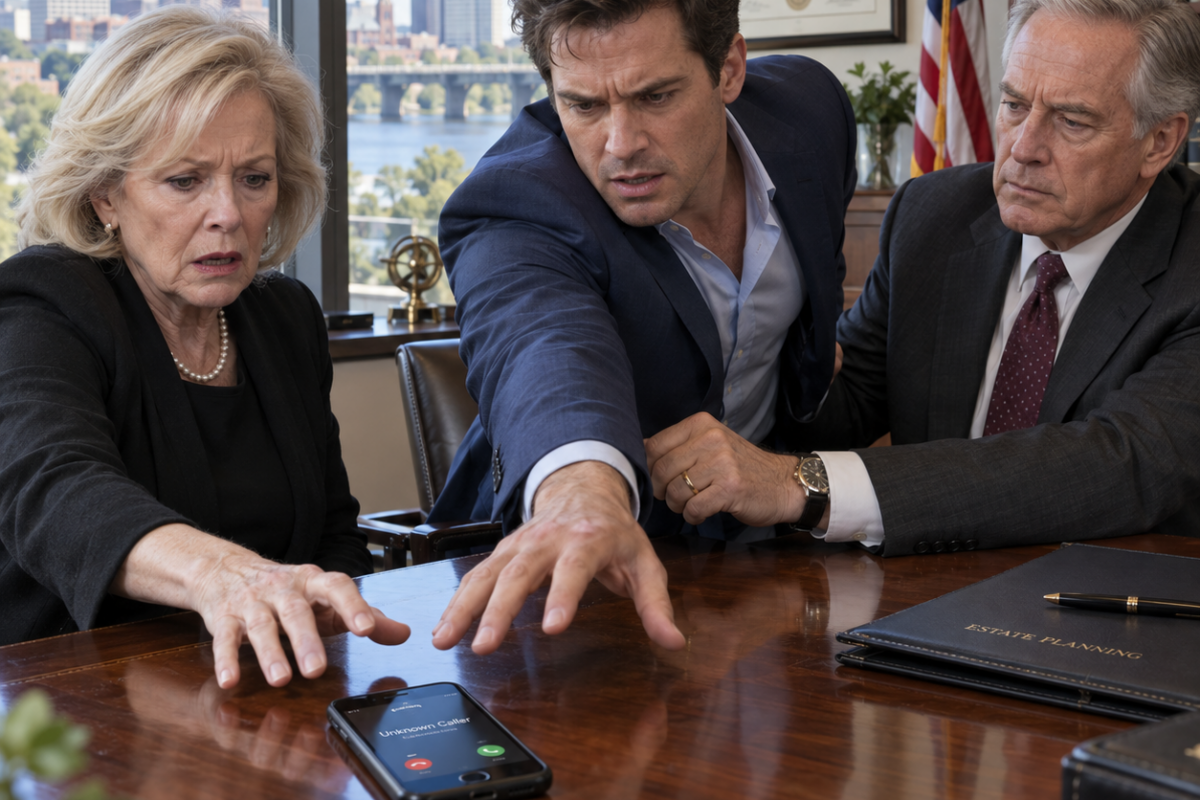
My Husband Left Our Children Millions. He Left Me Only His Locked Phone—Then Someone Called It During the Will Reading.
My Husband Left Our Children $8.4 Million and Me an Old Black Phone. Then It Rang. My husband had been dead for twelve days when…
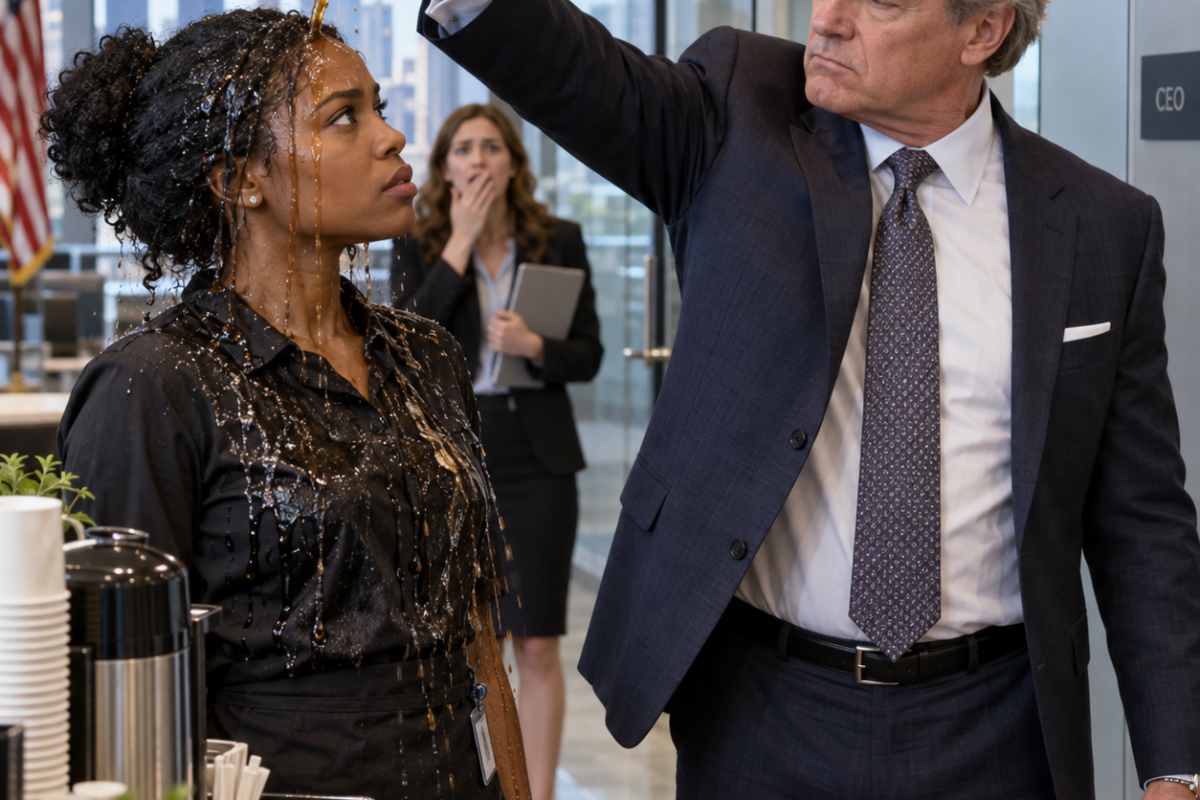
A CEO Dumped Coffee on a Black Temp in Front of the Entire Office—Then She Made One Phone Call
The CEO Poured Coffee Over My Head and Fired Me. He Had No Idea the “Temp” He Humiliated Was Quietly Buying His Company. “You’re the…
End of content
No more pages to load
You Might Also Enjoy

My Husband Left Our Children Millions. He Left Me Only His Locked Phone—Then Someone Called It During the Will Reading.