At my seventy-second birthday party, my daughter-in-law knocked a crystal vase off its pedestal with her elbow, watched it shatter, and smiled. “Oops.” Her own parents had given it to her and my son on their wedding day six years earlier. I looked at Frank, waiting for him to say something. All he managed was, “Mom…”
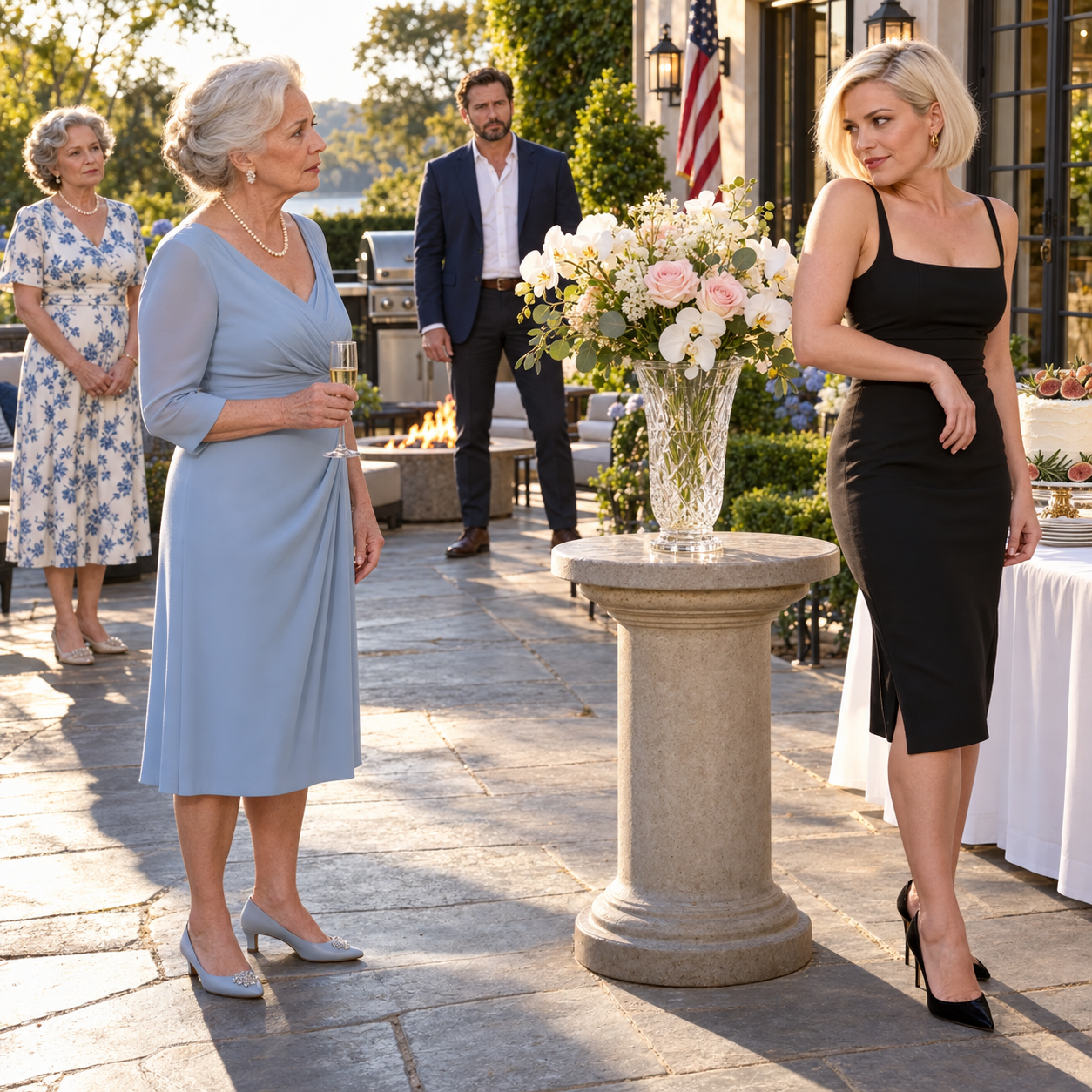
I watched my daughter-in-law break her own parents’ wedding gift with one elbow and a smile.
For months afterward, people asked me whether I was certain it had been deliberate.
Yes.
I was equally certain about what I did next.
Those two facts belonged in the same story, even though, at first, I wanted only one of them told.
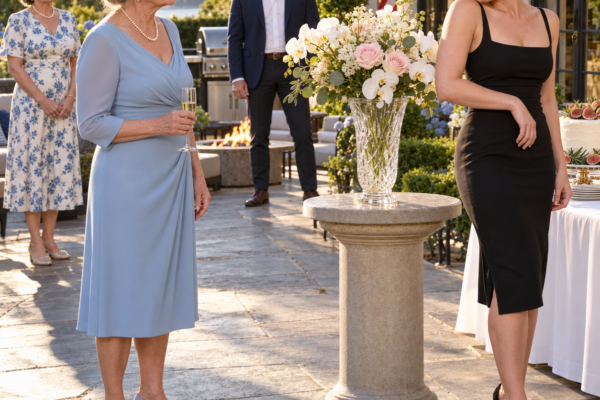
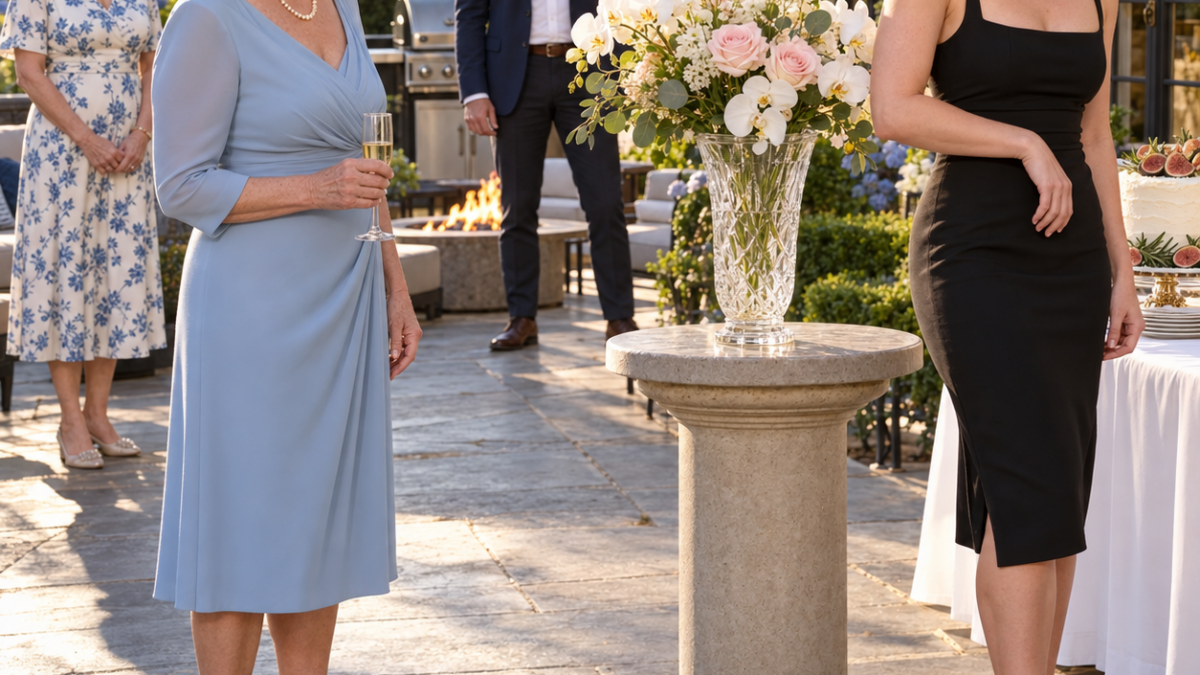
It was my seventy-second birthday. Golden evening light lay across the flagstones behind my villa, and ten guests stood among the tables with wineglasses in their hands. The fire pit burned low near the loungers. My cake waited beneath a white linen canopy, decorated with fresh figs and sugared rosemary.
I had wanted a small party.
A beautiful one, certainly. At seventy-two, I saw no reason to apologize for knowing what I liked.
But small.
People I knew. Food we could eat outside. Enough daylight to see everyone’s faces.
My son Frank stood near the grill in a navy blazer, discussing golf with our neighbor. My cousin Eleanor Pryce adjusted flowers on one of the tables, her silver curls moving in the breeze.
Beside the cake, on a pedestal table, stood a large crystal vase filled with white orchids and blush roses.
Rachel’s parents had given it to Frank and Rachel on their wedding day six years earlier.
Her mother chose it in a little shop in Charleston. The wedding date was engraved in the base.
It was one of the most generous gifts the couple received.
That evening, it was the tallest and brightest arrangement in the yard.
Rachel stood beside it in a fitted black dress, her platinum bob sharp against the sunset. She had been quiet while I opened presents. I told myself she was tired.
Then she turned toward the cake table.
Her elbow struck the vase.
Not a small brush in a crowded space.
Her arm moved directly into it.
The crystal tipped, caught the edge for a moment, and fell.
The sound brought every conversation to a stop.
Water spread across the flagstones. Orchids and roses lay among the broken pieces. On the largest fragment, the wedding date remained visible.
Rachel looked down.
She didn’t reach toward it.
She didn’t apologize.
The corner of her mouth lifted.
“Oops.”
I looked at her, and something in me went cold.
Eleanor covered her mouth. Frank turned from the broken vase to his wife, then toward me.
“Mom…”
Rachel folded her arms and raised her chin.
I crossed the space between us.
I struck her.
When she stepped backward, I shoved her toward the chair behind her. The chair tipped, and she fell to the stones. In the confusion that followed, I threw the wet flowers toward her and pushed her down again before Frank pulled me away.
It lasted seconds.
It was long enough.
Rachel shouted for me to stop. Guests moved toward us. Someone told me to get back.
Then I released her.
I stood over her, looked at the water and petals caught against her dress, and repeated the word she had used.
“Oops.”
No one laughed.
No one applauded.
Our neighbor bent to retrieve the phone she had dropped in the grass.
The screen was still lit.
Rachel’s parents had been watching the party on a video call.
They had seen their daughter break the vase.
They had also seen me.
Six years earlier, when Frank married Rachel, I cried before the ceremony began.
Not because I disliked her.
Because I had spent years imagining my son’s wedding and suddenly found myself inside the real thing, which was less orderly than the version in my head.
Frank couldn’t find his cuff links.
Someone had moved the flowers.
Rachel’s father was worried about being late even though he was already standing in the correct place.
Her mother held a small emergency sewing kit and a packet of tissues, ready to manage any disaster that could be solved with thread or kindness.
I liked her immediately.
She had a practical warmth. She noticed who needed water, who was standing alone, and which older guest had been seated where the afternoon sun would become uncomfortable.
At the reception, she showed me the vase.
It was heavy, beautifully cut, and more expensive than she had intended when she first walked into the Charleston shop.
“I went in for a smaller one,” she said.
“Of course you did.”
She laughed.
“Then I saw this.”
The engraving was discreet.
Frank and Rachel’s wedding date.
She ran a finger near it, careful not to touch the polished surface.
“I thought they could use it for anniversaries. Holidays. The ordinary occasions too.”
Rachel liked the gift.
I remember that clearly.
She lifted the ribbon from the box and smiled in a way that reached her eyes.
Her father joked that they now owned something requiring a shelf stronger than the ones in their first apartment.
Frank offered to carry it to the car.
I offered to keep it temporarily.
They were leaving for their honeymoon, their apartment was full of wedding boxes, and I had room.
That was how the vase came to my house.
Temporarily.
It is an important word.
I forgot it more easily than Rachel did.
For the first year, it lived in a cabinet where it would be safe. When they moved apartments, Frank asked whether I could keep it a little longer.
Then there was another move.
Then work travel.
Then a house project.
At some point, the vase became an object I polished, filled, and displayed on occasions I considered worthy of it.
I always said it belonged to them.
I also began behaving as though I had earned a particular authority over it by caring for it.
I didn’t see the contradiction until much later.
Rachel noticed.
She mentioned once that she wanted to bring it home.
“Of course,” I said. “Let’s wait until your new dining room is finished. I’d hate for it to be damaged while people are still working.”
She agreed.
Another time, she said she had a place for it.
I replied that the shelf looked too narrow.
I was probably right about the shelf.
Being right about a shelf did not make the decision mine.
She didn’t argue that day.
She looked at Frank.
He changed the subject.
That became a pattern among the three of us.
I offered an opinion.
Rachel heard a decision.
Frank tried to make the moment pass without anyone becoming upset.
I interpreted the absence of an argument as agreement.
Rachel interpreted it as another occasion when her husband let me have the final word.
Those interpretations could live side by side for years because we rarely examined them directly.
I thought I was being helpful.
I had helped Frank all his life.
When he was young, I managed school forms, appointments, birthday parties, and the ordinary machinery that kept our household moving.
As he grew older, I continued to offer help before he asked.
Advice about work.
Suggestions about money.
An opinion on a car.
A reminder about something he might forget.
Sometimes he appreciated it.
Sometimes he accepted it because refusing required more effort than letting me continue.
I didn’t always distinguish between the two.
Rachel entered his life as an adult who expected to have a say in her own household.
That was reasonable.
It felt difficult to me in ways I preferred not to name.
I had no intention of becoming the mother-in-law who resented another woman’s place.
I loved my son.
I wanted him happy.
I also wanted him to keep turning toward me with the same ease he always had.
When those wishes conflicted, I tended to describe the conflict as Rachel being sensitive.
That description protected me from looking too closely at myself.
There were good years too.
I don’t want to pretend the marriage began as a six-year argument moving toward a broken vase.
Rachel and I shopped together occasionally.
She helped me understand a problem with my phone without making me feel foolish.
I brought meals when they were busy.
She remembered flowers I liked.
We had dinners that felt easy.
She could be funny, especially when she stopped worrying about making an impression.
Frank looked happy beside her.
Those things were real.
So were the small moments that kept collecting beneath them.
I corrected where she placed a serving dish.
She answered too sharply.
I mentioned a purchase she and Frank made.
She asked why I needed to comment.
Frank said both of us meant well.
Then the next dinner arrived, and we acted as though not discussing the disagreement had settled it.
By the year of my seventy-second birthday, I had learned to prepare for Rachel’s mood before she entered a room.
That was how I described it to myself.
I had not yet considered how often she prepared for mine.
The birthday party was meant to be simple.
Eleanor helped choose flowers.
Our neighbor offered to take photographs.
Frank volunteered to manage the grill, which made me smile because he still asked questions every few minutes while claiming he had everything under control.
I wanted the party outside because the evening weather had been beautiful.
We arranged tables where people could move comfortably without being packed together.
The fire pit was kept away from the dining area.
The cake table stood where the last light would catch it.
The vase was my idea.
I asked Frank whether I could use it.
He said yes.
I should have asked Rachel too.
It was their wedding gift.
I knew that.
I had said it often enough when admiring it.
But Frank’s permission suited the way I already thought about the arrangement, so I stopped there.
When Rachel arrived, she saw it immediately.
Her gaze rested on the flowers, then on me.
“It looks beautiful,” I said.
“Yes.”
Her answer was flat.
“I thought your mother would like seeing it.”
Rachel looked toward Frank.
He was carrying a tray.
“She would,” he said.
There was a moment when I could have asked Rachel whether something was wrong.
I didn’t.
Guests were arriving.
The party looked lovely.
I wanted to enjoy my birthday.
Later, I would remember that choice without pretending it explained what happened.
There were several missed chances to speak honestly.
None required a vase to be broken.
None justified me striking another person.
The evening began well enough.
Eleanor brought a book she knew I wanted.
A neighbor gave me a plant and warned me that keeping it alive would require more attention than I usually gave that particular kind.
I laughed.
Frank kissed my cheek.
Rachel handed me a gift and said happy birthday.
I thanked her.
We ate outside.
The food was good.
The conversation moved comfortably.
Rachel spoke less than usual, but she did not appear distressed in a way that demanded attention.
She watched while I opened gifts.
Once, I noticed her looking at the vase.
I assumed she was admiring her mother’s taste.
That assumption was convenient.
It let me remain in the evening I wanted.
After dinner, people stood and moved around the yard.
Frank went to the grill with our neighbor.
Eleanor adjusted a flower arrangement that had begun leaning.
Someone started a video call with Rachel’s parents, who couldn’t attend in person.
Our neighbor offered to hold the phone and move around so they could see the celebration.
They greeted me.
Rachel’s mother asked to see the cake.
Then she saw the vase.
“Oh, there it is.”
Her voice warmed.
“It still looks beautiful.”
“It does,” I said.
Rachel stood nearby.
Her father joked about the strong table again.
We laughed.
Looking back, I can remember Rachel’s face without claiming I understood it then.
She seemed separate from the conversation.
As though the rest of us had taken something that belonged to her and built a pleasant little story around it without asking how she felt.
I know now that she had been angry for some time.
I did not know that anger had reached the point where she would act on it in front of guests.
The fall of the vase happened so quickly that afterward people disagreed about small details.
Which direction she turned.
Whether her hand had been reaching for a glass.
Where Frank stood.
Those disagreements did not change what I saw.
There was room.
Her elbow moved directly into the crystal.
She watched it fall.
Then she smiled.
It was the smile that made me stop considering an accident.
Not because people never smile when embarrassed.
I had spent enough time with Rachel to recognize the difference between discomfort and satisfaction.
But recognition did not give me authority to punish her.
That was the fact I refused to face in the first minutes.
I looked at the broken wedding date and felt as though she had broken something larger in front of everyone.
Respect.
The occasion.
My right to enjoy a celebration in my home.
I was furious that she dared me to object.
I was furious that Frank seemed unable to speak.
I was furious at years of small exchanges I had not resolved.
All of it arrived together.
Then I moved.
The worst part is not that I lost track of what I was doing.
I remember enough.
I remember choosing to cross the space.
I remember wanting her expression to change.
I remember believing, for a few terrible seconds, that I could make her feel the humiliation I thought she had given me.
People sometimes describe violence as though it belongs only to an emotion strong enough to overwhelm a person.
My anger was strong.
My actions still belonged to me.
When Frank pulled me away, he wasn’t protecting me from being misunderstood.
He was stopping me.
Rachel tried to get up.
Her dress was wet.
There were petals against her hair.
She kept telling me not to touch her.
I repeated “Oops.”
I had imagined the word would return something to her.
Instead, it made the yard feel colder.
It turned what I had done into something I was claiming as deliberate.
I heard my own voice and, even then, did not fully understand the damage.
The neighbor picked up the phone.
Rachel’s mother was speaking.
At first, I couldn’t make out the words.
Then I heard clearly.
“Is Rachel hurt?”
Her father leaned toward the screen.
“Put the phone where we can see her.”
Frank moved beside Rachel.
Eleanor took my arm, not harshly, but firmly enough that I stayed where I was.
“Come with me,” she said.
“I’m fine.”
“I didn’t ask.”
She guided me several steps away.
Across the yard, our neighbor held the phone toward Rachel.
Her mother asked her to look up.
Her father said someone should call for medical help if she needed it.
They did not begin by defending the vase.
They began with their daughter.
That should have been obvious.
It felt devastating to me because I was still standing inside the story where their gift had been violated and I had answered it.
On the phone, the people who gave the gift were looking at an injured person.
I had made the vase irrelevant to the most urgent question.
Eleanor kept her hand on my arm.
“Stay here.”
“I wasn’t going to—”
“Stay here.”
I stopped speaking.
The guests were no longer frozen.
They moved with purpose.
Someone kept people back from the broken crystal.
Someone brought towels.
Someone checked whether Rachel could stand safely.
Frank asked her where she hurt.
She answered sharply, then began crying.
I looked toward her.
She recoiled.
“Don’t come near me.”
I stayed where I was.
The fire pit continued burning.
The cake waited.
The light that had made everything look beautiful was fading.
I remember those details because the ordinary world did not stop to acknowledge what I had done.
A candle burned beside an abandoned plate.
A glass rested on the table where someone left it.
The flowers still looked lovely on the tables that had not been disturbed.
Only the people had changed.
Our neighbor called for help.
I didn’t tell her not to.
I didn’t claim it was unnecessary because I was seventy-two or because Rachel had provoked me.
I would like to say that was a sign of immediate moral clarity.
It was partly shock.
It was also that Eleanor had made it impossible for me to keep moving forward in anger.
We sat on a bench away from the scene.
She looked at me.
“What were you thinking?”
“I saw her do it.”
“I saw some of it too.”
“She smiled.”
Eleanor closed her eyes briefly.
“That doesn’t explain what you did.”
I looked away.
For years, Eleanor had been kind enough to hear my version of family difficulties.
She was not willing to become my audience for this one.
At the other end of the yard, Frank helped Rachel into a safer seat.
He did not come to reassure me.
I waited for him anyway.
That was another fact I had to examine later.
Even after making him watch me hurt his wife, part of me expected my son to check on my feelings first.
Rachel’s parents stayed on the call until arrangements were made and she was no longer alone in the confusion.
The phone battery ran low.
Our neighbor found a charger and moved the call inside.
Such an ordinary task.
So necessary.
I sat outside while strangers I had invited to enjoy my birthday worked around the consequences of my behavior.
When the responding officers arrived, I told them I had struck and pushed her.
I did not offer a rehearsed speech about the vase.
They asked questions.
They spoke to witnesses separately.
They asked about injuries and the available recording.
The neighbor’s phone had not captured every moment clearly because it fell during the struggle. Rachel’s parents could describe what they saw. Other guests had been present.
There was no single perfect camera angle that turned the whole event into a neat story.
There were enough people and enough evidence to establish what mattered.
Rachel received medical attention.
Frank went with her.
I remained.
When he passed me, I said his name.
He stopped.
For a moment, I saw the little boy who used to look toward me when he didn’t know what to do.
Then he spoke.
“Don’t call this a misunderstanding.”
I nodded.
“Don’t call it your birthday being ruined.”
“I won’t.”
He looked at me as though he wasn’t sure I understood the promise.
Then he left.
After the guests departed, Eleanor stayed.
The cake had been brought inside.
The broken crystal was carefully contained so no one would be injured cleaning it.
The wet flowers were gone.
On the patio, a dark patch remained where the water had spread.
I looked at it from the kitchen window.
Eleanor made tea.
I said I didn’t want any.
She put a cup beside me anyway.
Neither of us drank much.
“I’ve never done anything like that,” I said.
“I know.”
“I don’t know what happened to me.”
She looked at me steadily.
“You knew what you were doing enough to repeat her word.”
I stared at the cup.
She did not say it cruelly.
She said it because I was trying to make the event something that had happened to me.
The truth was that I had made it happen to Rachel.
At nearly midnight, my phone rang.
Rachel’s father.
I looked at Eleanor.
She nodded toward it.
I answered.
“Is she all right?” I asked.
“She’s being cared for.”
His voice was controlled.
Not calm.
Controlled.
I said I was sorry.
He waited.
The silence made me want to keep talking.
To explain.
To say he had seen the elbow.
To mention the smile.
Instead, I said, “I hurt your daughter. I shouldn’t have.”
“Yes,” he said.
I closed my eyes.
He continued.
“We saw what happened to the vase.”
I looked up.
“We also saw what happened afterward. Don’t make us choose which event we’re allowed to acknowledge.”
“I won’t.”
“The vase was a gift. We loved giving it. It was still a thing.”
“I know.”
“I’m not certain you do yet.”
He ended the call after saying practical communication should go through the appropriate channels for the time being.
I set the phone down.
Eleanor watched me.
For the first time that night, I cried.
Not because Rachel had spoiled my birthday.
Because I understood that I had made her parents watch me hurt her.
The next morning, the yard looked almost restored.
That was disturbing in its own way.
Furniture stood upright.
The tables were cleared.
The flowers remained.
The morning light made the stones look warm again.
I expected evidence everywhere.
Instead, there were ordinary traces.
A chair moved from its usual place.
A towel someone had left folded by the door.
An empty space where the pedestal table stood.
The house did not look like the home of someone who had done what I did.
I still had.
I called an attorney.
I did not ask how to make Rachel’s conduct excuse mine.
I asked what I needed to do, what obligations I had, and how to avoid making the situation worse.
The attorney wanted a complete account.
I gave one.
Including the word I repeated.
Including the fact that I moved toward her.
Including the force I used.
It was uncomfortable to speak without editing myself into a person I preferred.
It was also necessary.
I was advised not to contact Rachel directly while the immediate legal and practical matters were being addressed.
That was not what I wanted.
I wanted to apologize so the distance would feel less terrible.
The attorney reminded me that an apology could become another intrusion if I used it to demand a response.
I had already made enough demands of the moment.
I followed the advice.
There were reports, statements, and appointments.
I complied.
I kept the available messages and information.
I did not call guests to make sure they remembered the event the way I did.
When someone contacted me to express sympathy, I was careful.
One acquaintance said Rachel must have pushed me too far.
I answered, “She damaged the vase. I hurt her. Those are not the same act.”
The acquaintance became quiet.
I was still learning to say that without feeling I had erased my own hurt.
Eleanor visited three days later.
She brought groceries because I had not been eating properly.
I told her I didn’t want people caring for me as though I were the injured one.
“Then eat,” she said. “So I don’t have to keep checking.”
I laughed once, unexpectedly.
She smiled, then became serious again.
We sat at the kitchen table.
“Do you want to tell me what’s been happening with Rachel?”
“I thought you said that didn’t explain it.”
“It doesn’t excuse it. Understanding the relationship may help you stop repeating parts of it.”
That distinction mattered.
I told her about the vase.
The temporary storage that became six years.
The dining-room shelf.
The way Frank answered questions for both of them.
Eleanor listened.
“Did Rachel ever say you could keep it permanently?”
“No.”
“Did you ask her about using it for the party?”
“I asked Frank.”
“Why not Rachel?”
I looked toward the window.
“Because I thought he could answer.”
“Would you have accepted her father deciding what happened to a gift that belonged to you and Frank?”
“Probably not.”
She nodded.
We sat quietly.
I was not uncovering a reason to excuse Rachel breaking it.
I was uncovering a reason she had been angry that did not begin on my birthday.
Those were different things.
The afternoon ended with Eleanor asking whether I would speak to someone professionally.
At first, I said I was too old to need lessons in controlling myself.
Then I heard the sentence.
Too old.
As though seventy-two years of habits made them beyond examination.
As though age that deserved accommodation also deserved exemption.
I called for an appointment.
The first conversation was harder than the legal one.
The attorney asked what happened.
The counselor asked what I believed I was entitled to do when I felt humiliated.
I did not have a good answer.
“I would never normally hit someone,” I said.
“Then let’s look at the circumstances in which you allowed yourself to.”
I wanted her to tell me I was not that kind of person.
She did not.
She helped me understand that a useful question was what kind of choices I made, not what kind of label would allow me to stop thinking.
I told her about the vase.
About Rachel’s face.
About Frank failing to answer.
“What did you want from him?” she asked.
“For him to say something.”
“What?”
“That she shouldn’t have done it.”
“Would that have changed what you did?”
I thought about the moment.
“I don’t know.”
“Then it’s important not to make his silence responsible for your action.”
I nodded.
I had been doing that privately.
Frank should have stopped her.
Frank should have defended the evening.
Frank should have spoken before I moved.
He might have done any of those things.
My hands remained mine.
The legal matter did not vanish because I was an older woman with no previous history of violence.
Nor did it become the largest punishment anyone could imagine.
The process considered the evidence, the injuries, the applicable law, and the circumstances.
I followed my attorney’s advice, accepted responsibility where required, and complied with the resulting obligations.
There were financial costs.
There were conditions.
There were appointments and requirements I completed.
I did not describe those things afterward as inconveniences Rachel imposed on me.
They followed from what I did.
The practical resolution included addressing documented medical costs and other losses through the proper arrangements.
I paid what I was responsible for.
No amount made the event acceptable.
It did mean I did not leave Rachel carrying expenses while claiming I had apologized.
During that period, Frank called rarely.
When he did, the conversations were short and practical.
I did not ask whether he was still angry.
I knew.
I also knew asking would invite him to reassure me when he should not have needed to.
One evening, he said, “I keep remembering you saying ‘Oops.’”
I gripped the phone.
“So do I.”
“It wasn’t just that you lost your temper.”
“No.”
“You wanted her to know.”
“Yes.”
There was a long silence.
I did not fill it.
Then he said, “I don’t know how to be your son and her husband right now.”
I wanted to say he didn’t have to choose.
But that sentence would have been too easy.
He was living with competing responsibilities I helped create.
“You can take the time you need,” I said.
“That doesn’t solve it.”
“I know.”
He sighed.
“I’m not asking you to solve it.”
For once, I understood.
He was telling me.
I could listen.
Several weeks after the party, Rachel’s mother asked to meet me.
Not at the villa.
Not with Frank or Rachel.
At a quiet place where we could sit without an audience.
I agreed.
She arrived carrying a small paper bag.
I wondered whether it contained a fragment of the vase.
It did not.
She had brought photographs from the wedding because she wanted to show me the first time Rachel held it.
I recognized the picture.
Rachel smiling.
The ribbon still in her hand.
Her mother placed it on the table between us.
“She loved it,” she said.
“I remember.”
“I don’t want what she did to make us rewrite that day.”
“Neither do I.”
She looked at me.
“She admits she broke it on purpose.”
I felt something release in my chest.
Not satisfaction exactly.
Relief that I would not spend years wondering whether my perception would be dismissed.
Then her mother continued.
“That admission doesn’t change what you did.”
“I know.”
“We have told her both.”
I looked at the photograph.
Rachel’s mother explained that her daughter had called afterward in distress and anger. At first, the story moved quickly toward my attack.
When her parents asked about the vase, Rachel said it had been an accident.
They had watched enough to question that.
Eventually, she admitted she wanted to destroy it.
“She said she was tired of seeing it treated as yours,” her mother told me.
I looked down.
“She should have told me.”
“She says she did.”
I opened my mouth.
Then closed it.
The request to bring it home.
The shelf.
The dining room.
Yes.
She had told me.
Not that she would break it.
That she wanted it.
Her mother waited.
“I didn’t listen properly,” I said.
“No.”
I accepted the answer.
It did not make her daughter’s behavior reasonable.
It did make my earlier account incomplete.
The conversation was not pleasant.
It was useful.
Rachel’s mother told me her daughter had become so angry about small repeated dismissals that she made a public choice designed to embarrass me.
“That was ugly,” she said.
“Yes.”
“And then you made it dangerous.”
I closed my eyes briefly.
“Yes.”
She did not offer forgiveness.
She did not call me a monster.
She spoke like someone trying to preserve the difference between a person and an act without making the act disappear.
Before we left, she put the wedding photograph back in the bag.
“The vase mattered to me,” she said. “But I can lose a vase. I will not help anyone use it to make my daughter less human.”
“I wouldn’t ask that.”
“You did, in the yard.”
I had no answer.
I nodded.
The first apology I wrote to Rachel was too long.
I could see that after reading it the next morning.
It explained my feelings.
The shock.
The history.
How much the vase meant.
I had written *I am sorry* near the beginning, then spent four pages making room for myself.
I put it aside.
The second version was shorter.
I wrote that I struck and pushed her and that those actions were wrong.
I wrote that she had the right to be safe in my home.
I wrote that I would not seek direct contact without her agreement.
I did not ask her to forgive me.
I did not add the word *but*.
The letter was passed along through the appropriate channel after my attorney confirmed it was suitable.
Rachel did not respond.
I let the absence stand.
That was harder than writing it.
An apology without an answer feels unfinished to the person who wants relief.
It may be complete enough for the person receiving it.
I kept working with the counselor.
We talked about my age, my son, and the way I had confused influence with authority.
There were things I did not like hearing.
I often offered gifts that came with advice.
I expected gratitude to include agreement.
I treated my home as a place where my preferences should settle every disagreement, even when the object or decision belonged to someone else.
None of those behaviors made Rachel’s destruction inevitable.
They did help explain why ordinary family exchanges carried more weight than they needed to.
I began noticing the pattern outside the relationship.
Eleanor moved a chair one afternoon, and I immediately explained why it usually belonged elsewhere.
She looked at me.
I stopped.
“Would you like it there?”
“For now.”
“Then leave it.”
She smiled.
Such a small adjustment.
I did not need applause for it.
I needed practice.
I reviewed other things I held for Frank and Rachel.
Boxes.
Furniture.
A few household items.
I made an inventory and arranged for them to decide what they wanted returned.
I did not ask whether their home had enough space.
I did not propose the best place to put anything.
I sent the list.
They chose.
We arranged collection.
When the boxes left, the house felt emptier in ways that had little to do with storage.
I had used objects as reasons to remain involved.
A chair needed protection.
A vase needed the right shelf.
A box needed sorting together.
Some of that involvement had been affectionate.
Some had been a way to keep decisions close.
I could no longer claim not to see it.
The empty space where the vase stood bothered me.
I considered buying another one.
Not to replace their gift, but to restore the look of the room.
Then I realized I was hurrying to remove the visible reminder.
I left the space empty for a while.
Later, I put a plain bowl there.
It did not need a story.
Eleanor asked what happened to the largest piece with the wedding date.
It had been safely kept with the other recoverable fragments.
“I don’t know what they want done with it,” I said.
“Ask.”
I did.
Rachel chose to have it returned.
That was all.
I did not ask why.
Months passed.
The physical injuries healed.
The relationship did not heal on the same schedule.
Frank remained careful around me.
He visited once without Rachel.
We sat outside, but not near the old cake table.
He looked around the yard.
“It looks the same.”
“I know.”
“I don’t like that.”
“I understand.”
We spoke about ordinary things for a while.
Work.
A neighbor.
The grill.
Then he asked whether I was still seeing the counselor.
“Yes.”
“Because of the legal requirements?”
“For myself too.”
He nodded.
I waited.
He said Rachel was working on what happened before the attack.
“She knows breaking the vase was deliberate and cruel.”
“I’ve heard that.”
“She doesn’t want that to become the excuse people use.”
“I don’t either.”
He looked at me.
For the first time in months, I thought he believed I meant it.
Then he said, “I need you to stop treating every decision we make as something you should have been asked about.”
“I’m trying.”
“I need more than trying.”
“Then tell me when I do it.”
He shook his head.
“I will sometimes. But I can’t be responsible for watching all of it.”
He was right.
I had turned another promise into a job for him.
“I’ll keep working on it,” I said. “Without making you manage it.”
He stayed for another half hour.
When he left, he hugged me.
The hug was brief.
I did not hold him longer to make it mean more.
That evening, I cried after he was gone.
Relief.
Grief.
The knowledge that a small ordinary visit now required more courage than a birthday party once did.
Rachel contacted me nearly six months after the evening in the yard.
The message was formal.
She was willing to meet in a public place with Frank present.
She did not want physical affection.
She did not want a discussion of reconciliation before we had spoken.
I agreed to all of it.
On the day, I arrived early and sat where she would not need to pass close to me.
When she entered, I stood.
Then I stayed where I was.
She looked different only because I was looking differently.
The same platinum hair.
The same composed posture.
A guarded expression I had once dismissed as attitude.
Now I knew at least part of what guarded it.
Frank sat between us, slightly back, allowing us to speak without turning the meeting into a conversation through him.
I apologized again.
Briefly.
Specifically.
Rachel listened.
Then she said, “I still get angry when I think about everyone watching.”
I nodded.
“I understand.”
“No. I don’t think you can.”
“You’re right. I can listen.”
She looked at me for a moment.
Then she described the humiliation.
Not only the physical pain.
The way the evening became a spectacle.
The fact that her parents had watched.
The photographs some guests took afterward even when asked not to.
The feeling of being reduced to the woman on the ground at her mother-in-law’s party.
I listened.
I did not tell her I had been humiliated first.
That was a separate conversation.
After a while, she stopped.
Frank passed her water.
She drank, then set the glass down.
“I broke the vase on purpose.”
“I know.”
“I wanted to upset you.”
I nodded.
“I wanted you to understand that it wasn’t yours.”
The sentence landed differently now.
“Destroying it was still wrong,” she said.
“Yes.”
“I’m sorry I did that at your birthday. I’m sorry my parents saw what I did to their gift.”
“Thank you for saying it.”
She looked toward the window.
Then back at me.
“But I won’t apologize for wanting my things in my own home.”
“You don’t need to.”
Her expression changed slightly.
“I should have returned it when you asked,” I said. “I treated my opinion about protecting it as more important than your decision.”
“Yes.”
“I’m sorry for that too.”
Frank looked down at his hands.
He had his own part in that conversation.
“I kept letting both of you think I agreed,” he said. “I thought it would avoid an argument.”
Rachel looked at him.
“It avoided one that day.”
“And made the next one worse,” he said.
I nodded.
The meeting did not resolve six years of difficulty.
It established that we could speak without turning every admission into a victory for the other person.
Rachel said she did not know whether she would feel comfortable in my home again.
“I won’t pressure you,” I said.
“I need you to mean that.”
“I do.”
She did not hug me when we left.
I did not ask.
Over the following months, we rebuilt less than people expected.
That was not necessarily a failure.
Frank and Rachel’s marriage had its own work to do.
They sought help and made decisions that belonged to them.
I did not ask for reports.
I did not interpret every difficulty as a sign they should separate or every pleasant moment as proof everything was repaired.
When Frank told me something personal, I asked whether he wanted me to listen or offer an opinion.
Sometimes he wanted an opinion.
Sometimes he wanted to be heard.
I learned to accept both answers.
Rachel and I exchanged a few messages about practical things.
No warmth added to prove progress.
No hostility added to prove memory.
We could be civil without pretending we were close.
Her parents remained more distant.
I respected that.
At one point, I wanted to write to them again, telling them how much I had changed.
The counselor asked what I wanted the letter to do.
I thought about it.
“I want them to know.”
“Do they need that information now, or do you want them to relieve how you feel about being seen?”
I did not send the letter.
Change could be visible through conduct over time.
It did not need a press release.
The guests who witnessed the party remained part of my life in different ways.
Some relationships returned to ordinary conversation.
Others never quite did.
I accepted that people might remember the event when they saw me.
I could not ask them to erase it because I had become uncomfortable with the memory.
I also did not need to spend every gathering announcing my regret.
The work was to behave differently.
To leave space when angry.
To stop an argument before approaching someone physically.
To recognize that a humiliating comment or damaged object did not assign me authority over another person’s body.
Those were ordinary responsibilities.
They did not become optional at seventy-two.
The following birthday, I declined a large celebration.
At first, Eleanor thought I was avoiding the anniversary.
Perhaps I was, partly.
I also wanted a quieter day.
We had lunch at a restaurant.
Frank came.
Rachel chose not to.
Her absence was not a message I needed to interpret for the rest of the afternoon.
She had made a choice.
We ate.
Eleanor gave me a book.
Frank brought flowers in simple wrapping, not a vase.
I noticed.
I did not turn it into a speech.
After lunch, he walked me to the car.
“Happy birthday, Mom.”
“Thank you.”
He kissed my cheek.
It was enough.
At home, I arranged the flowers in a plain container and put them on the kitchen table.
The birthday cake was smaller.
There were no fig decorations.
I ate a slice with tea.
For years, I thought a good family occasion needed everyone in the correct place, behaving in a way that allowed the evening to look whole.
Now I could see how much pressure that idea put on people.
Rachel’s absence did not ruin the day.
Frank leaving before dinner did not reduce his affection.
A modest cake did not make the birthday less real.
The event could remain smaller than the picture I had imagined.
That was a useful lesson to learn at seventy-three.
Later that year, Rachel returned to the villa for a short visit.
It was her suggestion.
Frank came with her.
We sat inside.
She did not want to go into the yard.
I did not ask why.
I made coffee and set out food.
When she moved a plate to make room for her cup, I left it where she put it.
Such a small thing.
I remembered how often I would have corrected it.
We talked about a trip they were considering.
I asked whether they wanted suggestions.
Rachel looked at me.
Then she smiled faintly.
“No. We’ve made the plans.”
“Then I hope you enjoy it.”
Frank looked relieved.
After an hour, they left.
Rachel said thank you for the coffee.
I said I was glad they came.
There was no embrace.
There didn’t need to be.
The yard remained difficult for me too.
Not because I believed it was cursed by the event.
Because I remembered what I did there.
For a while, I avoided the part near the cake table.
Then I began sitting outside again.
I planted flowers.
I had the loose stone repaired.
I moved furniture because I liked the new arrangement, not because I expected a different layout to erase the old one.
The fire pit still burned low on cool evenings.
I used it carefully.
The light still came across the stone in the way I remembered.
I learned that beauty does not guarantee kindness in the people standing inside it.
It also does not become dishonest because something terrible happened nearby.
The garden could remain beautiful.
I could remain responsible.
Both could be true.
One afternoon, Eleanor brought a small plant and sat with me outside.
We talked about a mutual friend.
Then she looked toward the place where the vase once stood.
“Do you still miss it?”
I considered.
“Yes.”
“The vase?”
“Yes. And what I thought that evening was going to be.”
She nodded.
“Do you wish she hadn’t broken it?”
“Of course.”
“Do you wish you had done something else?”
“Every time I remember.”
She took my hand.
I let the comfort be comfort, not absolution.
I had spent the first weeks wanting someone to tell me I was still a good person.
Eventually, I learned that being reassured was less useful than becoming safer to be around.
That required decisions.
Not a verdict about my character.
Rachel’s parents sent me a holiday card the following year.
It was brief.
Their names.
A simple wish for the season.
No message about the past.
No photograph of the vase.
I placed it with the others.
I did not call Frank to ask what it meant.
It meant they chose to send a card.
That was enough information.
Around the same time, Rachel told me she had kept the piece with the wedding date.
It rested in a small box, wrapped so no one would be cut.
“I thought about throwing it away,” she said.
“Why didn’t you?”
“I don’t know yet.”
I nodded.
I did not offer an interpretation.
For once, an object in her possession could remain hers to understand.
That felt like progress.
There are still people who tell the story as though it had a clear hero.
Some remember Rachel’s elbow and smile.
Some remember me crossing the patio.
Some describe the video call as a perfect exposure of the person they already disliked.
I don’t repeat those versions.
Rachel’s parents did see everything.
That was not a triumphant final twist.
It was a terrible burden for them.
They watched their daughter destroy a gift chosen with love.
Then they watched someone hurt her over it.
They were entitled to be angry at both choices without treating them as equal in every way.
I understand that now.
I wish I had understood it before I moved across the yard.
The vase had been theirs to give.
Frank and Rachel’s to keep.
Mine to store temporarily.
I had confused those roles.
Rachel tried to end the confusion with destruction.
I answered with violence.
Neither action solved the original problem.
The actual repair began much later, when each of us stopped demanding that another person’s wrongdoing erase our own.
Frank stopped using agreement as a way to postpone conflict.
Rachel acknowledged that the damage was deliberate.
I acknowledged that I had hurt her and had no right to.
Those admissions did not produce an instant family reunion.
They made a more limited, honest relationship possible.
I am older now than I was on that birthday.
My hands look older.
I move more slowly.
I still have opinions quickly.
Eleanor says that last quality may be permanent.
I laugh when she says it.
Then I try to remember that having an opinion is not the same as being owed obedience.
When something upsets me, I give myself distance before speaking.
I put down the glass.
I move to another chair.
I ask for a few minutes.
If someone damages something, I can ask them to leave.
I can document a loss.
I can decide not to invite them again.
I do not need to make their body carry my anger.
That knowledge should not have required what happened.
It did.
I cannot change that.
What I can change is the next moment in which I feel certain I have been wronged.
Last spring, Frank and Rachel came for dinner.
A small dinner.
No occasion.
No presents.
I set the table simply.
Rachel brought flowers wrapped in brown paper.
She handed them to me.
“For you.”
“Thank you.”
I reached for a plain jug in the kitchen.
She watched.
“Would that one work?”
“I think so.”
“Good.”
We arranged the stems together, briefly and without ceremony.
Then she carried the jug to the table and placed it where she liked.
I left it there.
During dinner, Frank told a story from work.
Eleanor, who had joined us, interrupted with a question that made everyone laugh.
Rachel leaned back in her chair.
For a moment, the room felt easy.
I did not mistake ease for forgetting.
I did not need to.
After they left, I washed the dishes while Eleanor dried.
She looked toward the flowers.
“Lovely.”
“Yes.”
The jug was ordinary.
No engraving.
No place of honor.
No story anyone needed to defend.
Later, I carried it outside and set it on a small table near the loungers.
The evening light caught the petals.
I sat down, listened to the garden, and let the flowers belong to that evening alone.
News
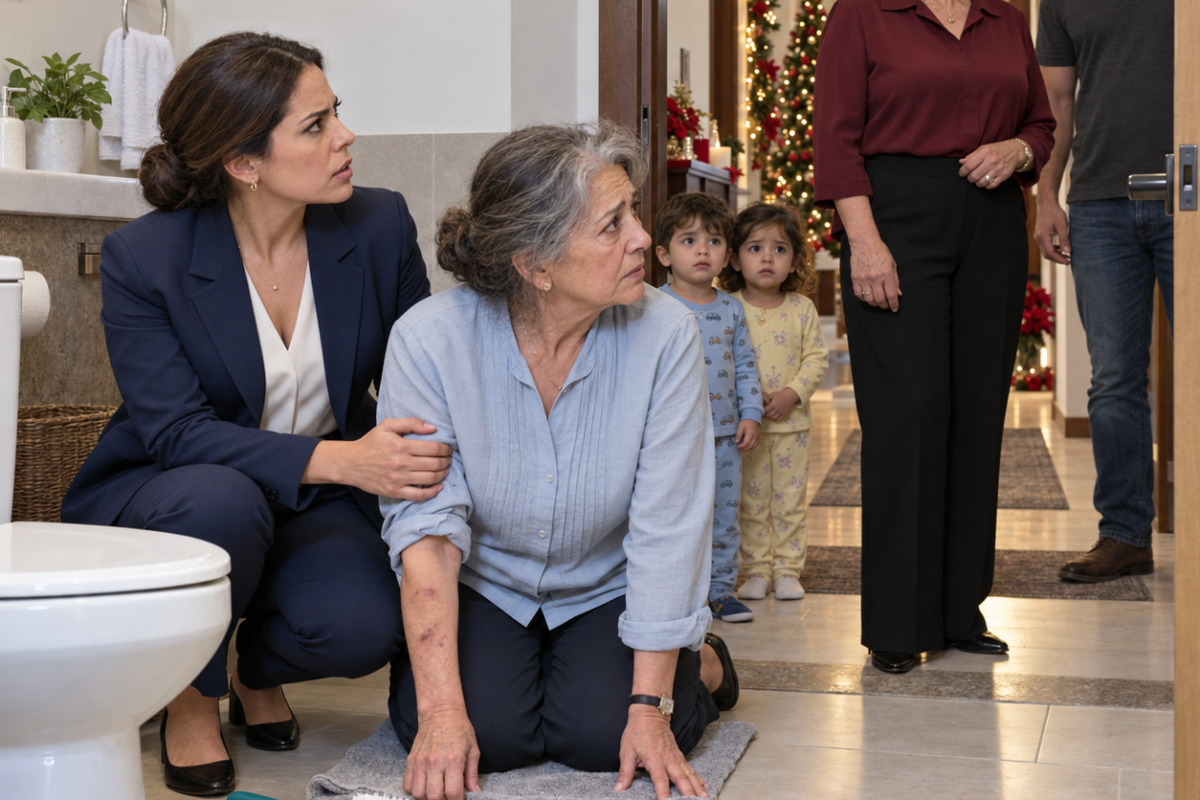
I came home three hours early and found my sixty-eight-year-old mother on her knees scrubbing my mother-in-law’s bathroom. When I helped her stand, her sleeve slipped back, revealing dark marks around her wrist. My husband stepped into the doorway. “Daniela, don’t make a scene.” That was when I remembered my father’s last warning: “If you ever see your mother hurt, don’t argue with anyone. Open the hidden compartment in her sewing machine.”
I came home three hours early and found my sixty-eight-year-old mother on her knees beside a toilet. Her hands were stiff with arthritis. One gripped…
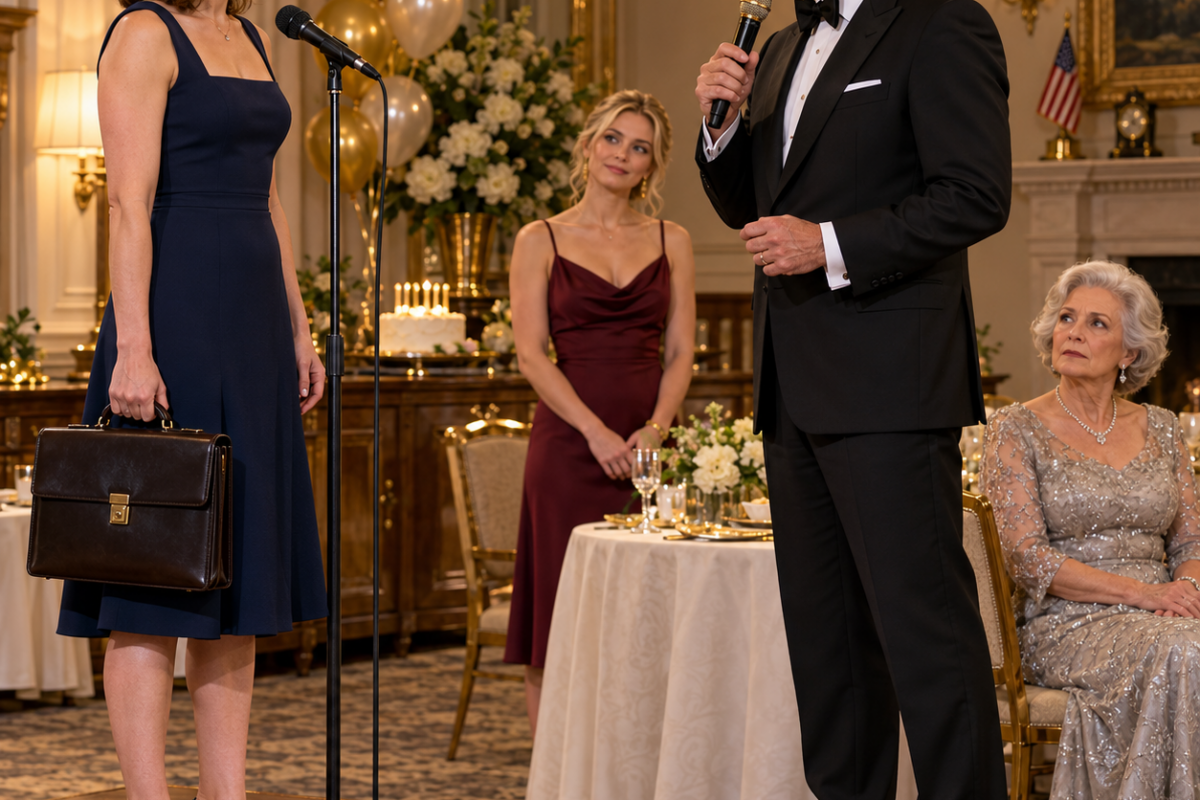
“I already promised your house to your sister,” my father told me four days after I bought it. “They’re moving in Monday. Rent-free for three years.” I was thirty-one, had saved for nine years, and had bought the five-bedroom home entirely in my own name. When I said no, he threatened to tell the family I had abandoned my sister’s children. Days later, he took the microphone at my grandmother’s seventy-fifth birthday dinner and did exactly that.
My father called twelve times in forty minutes after discovering I had bought a house without consulting him. When I answered, he didn’t ask whether…
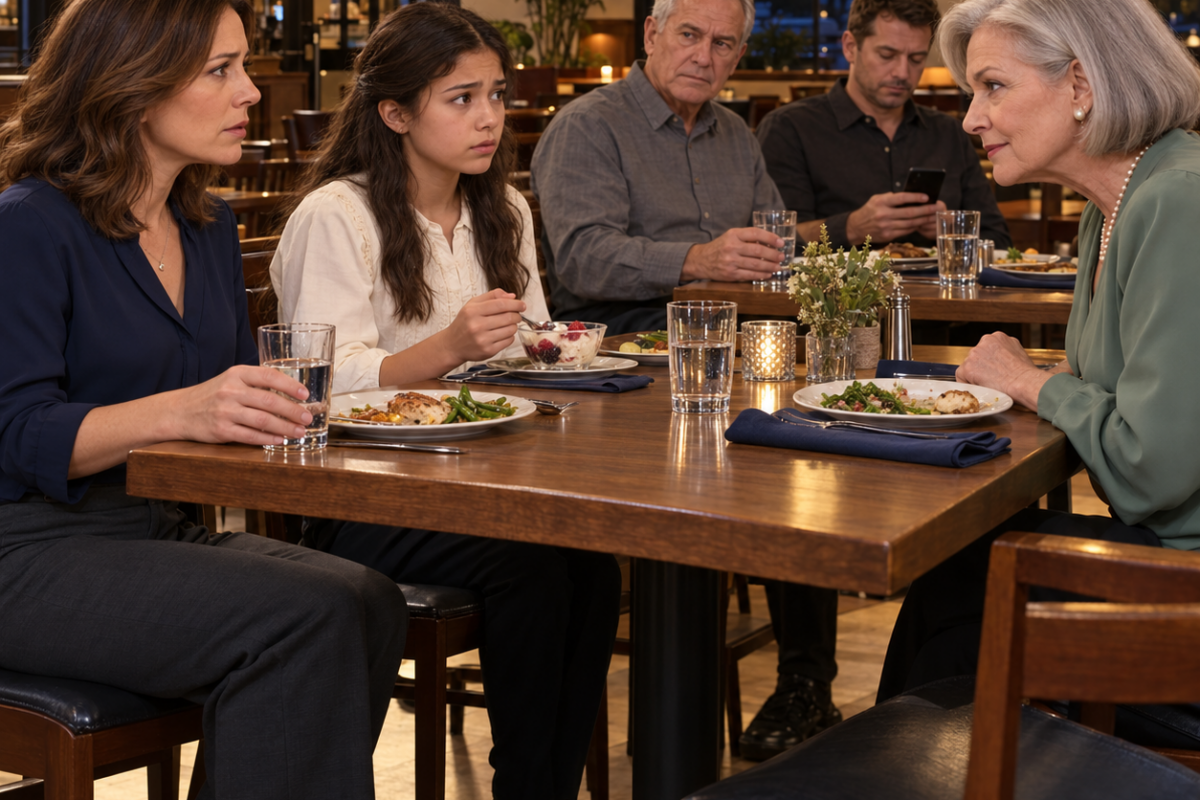
My mother leaned across the restaurant table, looked at my thirteen-year-old adopted daughter, and whispered, “We don’t sit with mistakes.” I took Sole’s hand and walked her out. That night, my father texted, “You’re still making the car payment tomorrow, right?” By midnight, I had canceled the payments I’d been making for my family. Then I remembered something Sole had told me about her grandmother.
My mother looked at my thirteen-year-old daughter and whispered, “We don’t sit with mistakes.” She said it softly enough to avoid attracting attention from the…
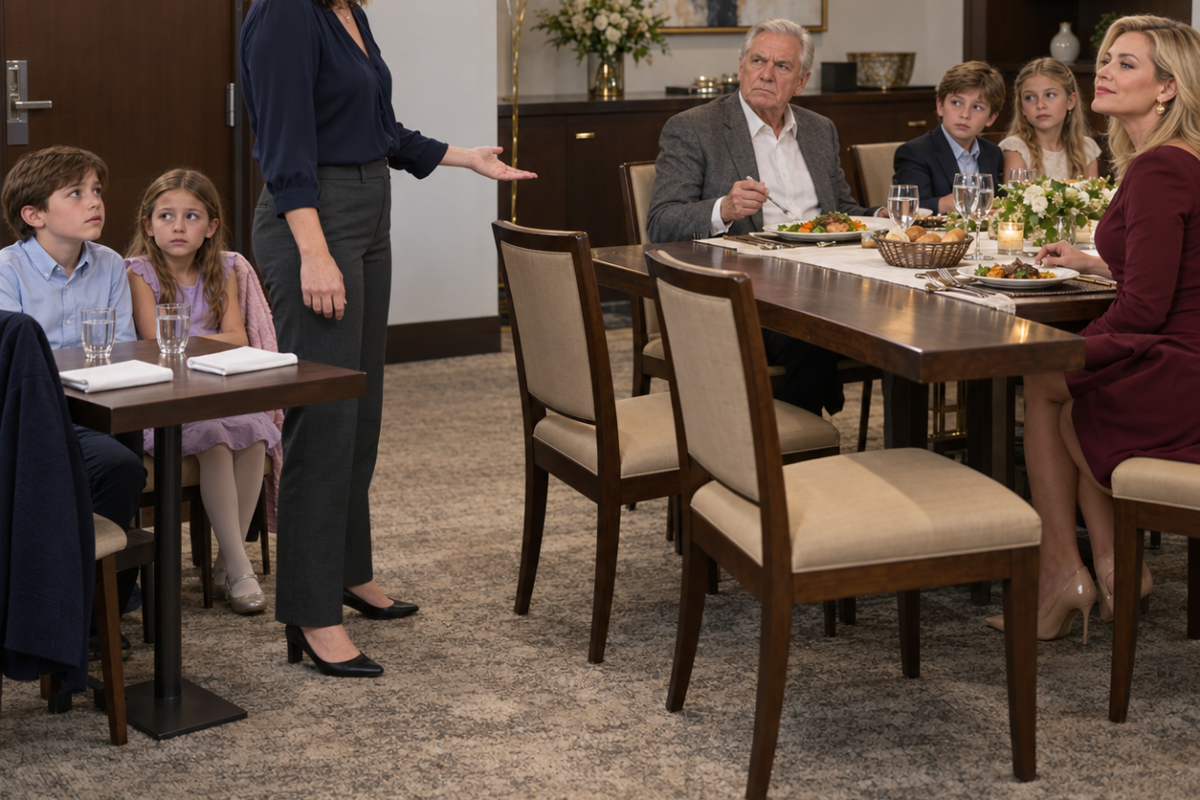
At my father’s seventieth birthday dinner, my eleven-year-old son and eight-year-old daughter were seated beside the service door with water glasses—but no dinner plates. Their cousins sat beside Grandpa with warm bread and full place settings. “They’ll eat after everyone else,” my sister said. I turned to my father, expecting him to object. “They can wait another hour,” he replied. There were two empty chairs at his table.
At my father’s seventieth birthday dinner, the first thing that stopped me wasn’t the cake or the gold balloons. It was my children. Ethan and…
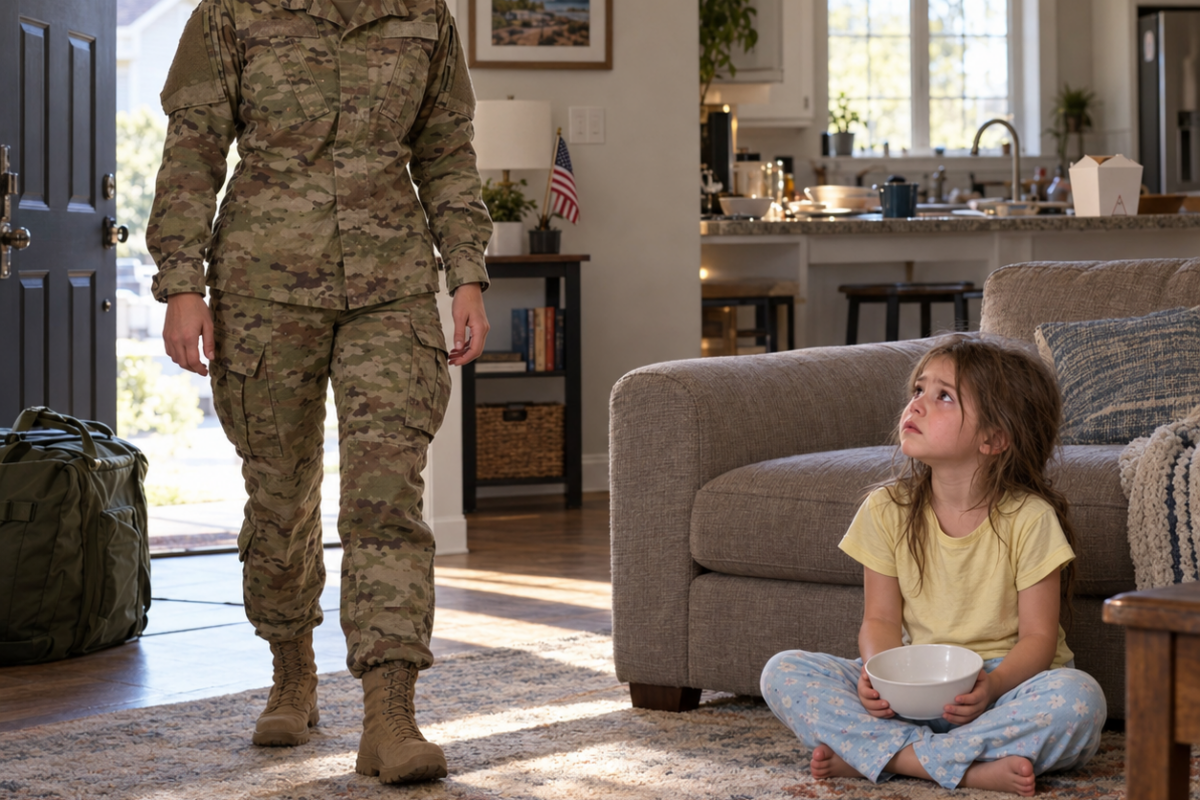
“Mommy, are you real?” my four-year-old daughter whispered when I came home from deployment three weeks early. She was sitting alone on our living room floor with an empty cereal bowl. My husband was on a Caribbean cruise with his mother and sister. Twenty-two minutes earlier, they had posted a photo captioned “Family time.” I was still in uniform when Sophie asked if she could have something to eat.
The first thing my daughter said when I found her was, “Mommy, are you real?” She was sitting cross-legged on our living room floor with…
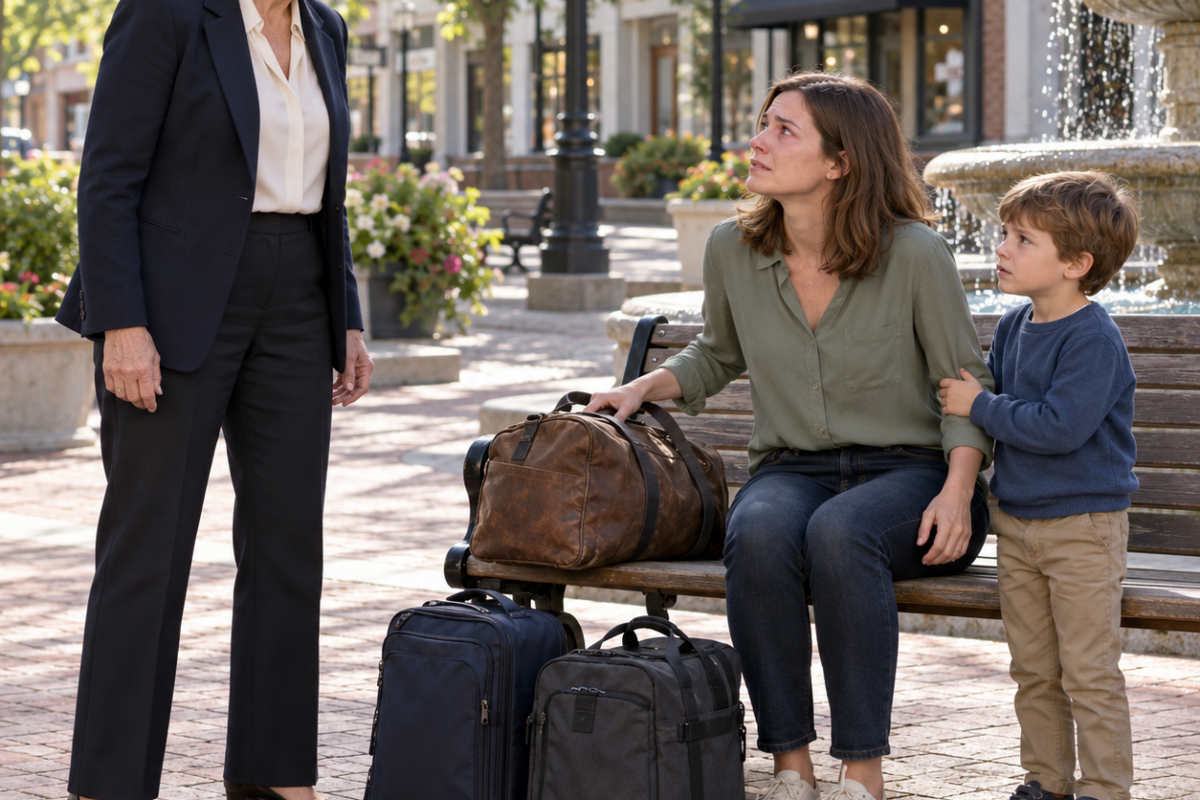
I found my daughter sitting beside the town-square fountain with my five-year-old grandson and three bags at her feet. “Why aren’t you at work?” I asked. She looked down. “My mother-in-law fired me. She said our family name brought nothing of value to the company.” I stared at her. It was my company. I had built it from $62 and a borrowed sewing machine. “Get in the car,” I said. “It’s time I spoke to Adelaide.”
The bag tipped first. It was a brown duffel, worn at the corners, and it slid off the bench onto the brick sidewalk with a…
End of content
No more pages to load