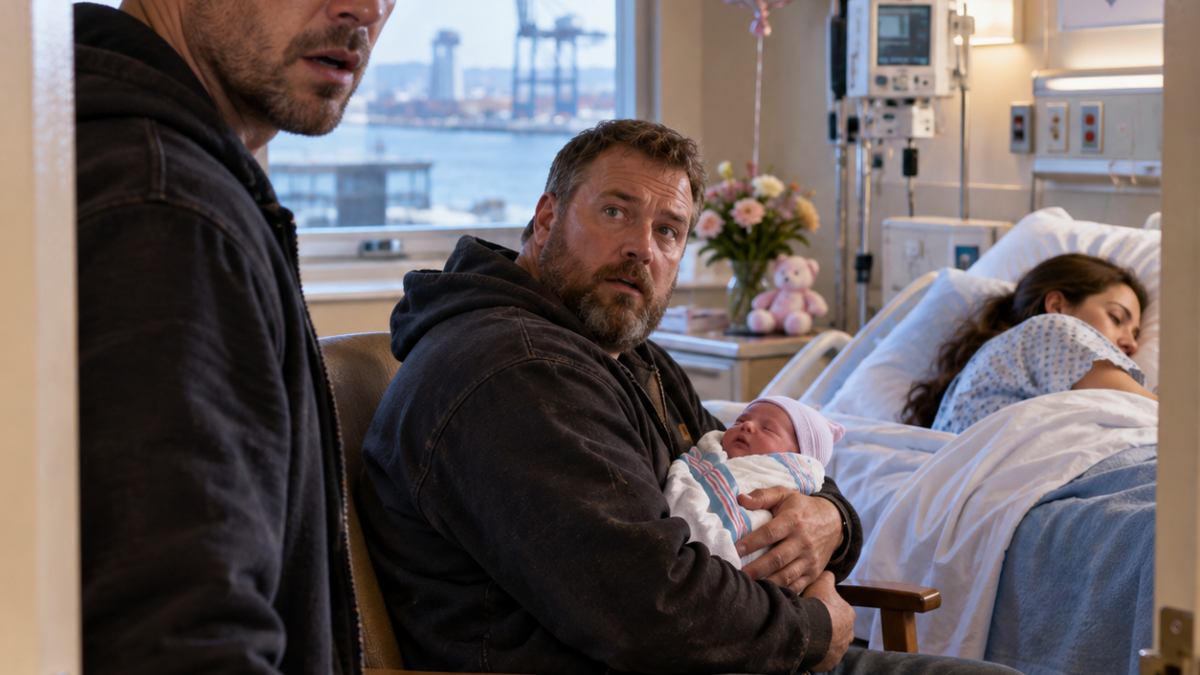
At 3 a.m., the hospital called to congratulate me on becoming a father. “Your wife just gave birth, sir. You need to come meet your baby.” I turned toward my wife, who was sound asleep beside me. “There must be a mistake,” I whispered. “My wife is right here.” The woman on the phone went quiet for a moment. Then her voice changed. “Sir, please come to the maternity ward immediately. If you refuse, we’ll have to contact the police.” I sat up, staring at my sleeping wife. Why would the hospital threaten to call the police over a baby that couldn’t possibly be ours? But when I arrived and saw who was holding that newborn, I stopped in the doorway. It was the last person I ever expected to see.
The Hospital Called at 3 A.M. to Say My Wife Had Just Given Birth. She Was Asleep Beside Me.
At 3:07 on a cold Friday morning in late October, Joel Keller woke to his cell phone vibrating across the nightstand.
For fifteen years, Joel had worked the waterfront in Harbor Glen, Washington, operating one of the enormous ship-to-shore cranes that rose above the harbor like steel skeletons. Calls in the middle of the night usually meant somebody had been hurt, a shift had changed, or a ship had arrived early.
He reached for the phone without opening his eyes.
“Joel Keller?”
The woman on the other end sounded tired but pleasant.
“Yes.”
“My name is Dorothy Whitaker. I’m the charge nurse on the maternity floor at St. Aurelia Medical Center.”
Joel sat up.
He looked automatically toward the bedroom window, where rain tapped softly against the glass.
“I think you have the wrong number.”
There was a brief rustle of paper.
“I have the number listed for the husband of Kristen Keller.”
Joel turned toward the woman sleeping beside him.
Kristen was on her side beneath the quilt, dark hair spread across her pillow. She had taken her sleeping medication around ten, the way she did most nights now, and had barely moved since.
Dorothy continued.
“Congratulations. Your wife delivered a baby girl at 2:51 this morning. She’s a little premature, just over five pounds, but she’s breathing beautifully. Mother and baby are stable. We’ve been trying to reach you.”
Joel stared at Kristen.
Her shoulder rose beneath the blanket.
Then fell.
He could hear her breathing.
“Ma’am,” he said quietly, “my wife is right here.”
Silence.
Not the ordinary kind.
The kind that makes a man fully awake before his mind has caught up.
When Dorothy spoke again, the brightness was gone from her voice.
“Mr. Keller, say that again.”
“My wife is asleep beside me.”
Joel looked harder at Kristen, as though the woman in his bed might somehow disappear.
“She’s been here all night. She isn’t pregnant. She hasn’t been pregnant.”
More papers moved on Dorothy’s end.
“I have a patient here using your wife’s full name, her date of birth, and a member card from the Longshore Welfare Fund. I also have a pre-registration form listing you as her husband.”
“I never filled out a pre-registration form.”
“It has your signature.”
“I didn’t sign it.”
Another pause.
Then Dorothy lowered her voice.
“Mr. Keller, I’m going to be very direct with you. I don’t know exactly what I’m looking at yet. The woman who delivered has no physical identification matching the name she gave us. A man brought her in and said you were on your way. He has been here since before midnight.”
Joel’s hand tightened around the phone.
“What man?”
“He says he’s a close family friend.”
Joel looked at Kristen again.
The little crease between her eyebrows was still there, even in sleep.
“His name?”
“Curtis Wolf.”
Joel stopped breathing for a second.
Dorothy continued.
“He’s holding the baby right now.”
Curtis Wolf had been Joel’s best friend for nearly twenty years.
He had been best man at Joel and Kristen’s wedding.
He had stood beside Joel at his father’s funeral.
He ran Joel’s crane gang.
He was vice president of Longshore Local 62 and chairman of the trustees overseeing the union welfare fund.
And three months earlier, while standing beside the grill at his own backyard barbecue, Curtis had clinked a bottle against Joel’s and grinned.
“When your miracle finally comes, I’m godfather. No argument.”
At the time, Joel had laughed.
Now he sat in the dark staring at his wife.
Dorothy spoke again.
“I need you to come here.”
“I’m not signing anything.”
“I understand.”
“I’m serious.”
“So am I. There is a woman in my maternity unit using your wife’s identity, a newborn registered under your last name, and another man who tried to discourage me from calling you. Hospital security is already involved.”
Joel swung his legs out of bed.
“I’ll be there.”
He ended the call.
For several seconds, he did nothing.
That had always been one of Joel’s strengths.
Waiting.
A twenty-ton shipping container suspended from a crane did not stop swinging because the operator wanted it to. Wind came in hard off the water, caught the steel box, and sent it moving like a pendulum. An impatient operator could put forty thousand pounds through the side of a truck.
Joel had learned young that there were moments when the smartest thing a man could do was keep both hands steady and wait for the load to settle.
Every instinct told him to shake Kristen awake.
Instead, he dressed in the dark.
In the hallway, he opened the narrow drawer in the entry table where Kristen kept the insurance cards, spare keys, stamps, and the little collection of things households accumulate without thinking.
His union welfare card was there.
Kristen’s dependent card was not.
Joel stared at the empty slot.
That was the moment the possibility of a hospital mistake disappeared.
Someone had taken the card from his house.
Someone had used Kristen’s name.
Someone had forged his signature.
And whoever had arranged it knew exactly where Joel would be tonight.
Beside a wife who took a sleeping pill strong enough to keep her unconscious until morning.
He put on his jacket, took his truck keys, and left without making a sound.
St. Aurelia Medical Center sat on a hill overlooking the harbor, a pale brick building with a rooftop helipad and a parking structure that always smelled of rain and concrete.
Joel parked at 3:40.
The maternity floor was quieter than he expected. Somewhere down the hall, a newborn cried once and stopped.
The nurses’ station was curved around a bank of computers. Behind it stood a tall woman in her late fifties with reading glasses hanging from a beaded chain.
Her badge read DOROTHY WHITAKER, RN.
She recognized him immediately.
“Mr. Keller?”
“I’m Joel Keller.”
He heard how strange the next words sounded before he finished saying them.
“The real husband.”
Dorothy came around the desk.
She studied his face.
“You look like you got dressed without turning on a light.”
“I did.”
“Come with me before we go into that room.”
She led him into a small family lounge with a vinyl couch, a coffee machine, and a bulletin board covered with thank-you cards and newborn photographs.
A hospital security officer remained near the doorway.
Dorothy sat across from Joel.
“A little after one-thirty,” she began, “a woman came through the emergency department in active labor. Contractions less than two minutes apart. She was frightened and already close to delivering.”
Joel said nothing.
“A gray pickup arrived behind her. Mr. Wolf came in and said the patient was his friend’s wife. He gave registration a photograph of a driver’s license on his phone and the welfare fund card.”
“Kristen’s card.”
“Yes.”
“He didn’t have the license?”
“He said it was lost.”
Dorothy folded her hands.
“A woman in active labor gets treated first and paperwork gets sorted later. That’s the way it should be. But the deeper we got into the chart, the less anything made sense.”
“How?”
“The patient said she was twenty-six.”
Joel frowned.
“Kristen is thirty-six.”
“I know. She also failed to respond when staff called her Kristen from across the room. Twice. Mr. Wolf kept answering for her.”
Dorothy took off her glasses.
“The pre-registration record had been entered several months ago. It listed you as the father and included a signature in your name, but the phone number provided for you was disconnected.”
Joel felt something cold move through him.
“I never filled it out.”
“I believe you.”
“Why?”
“Because Mr. Wolf tried very hard to keep me from speaking to you.”
She leaned back.
“When I told him I intended to call the husband directly, he took me aside and said it would upset the family. He said he would handle everything.”
Joel looked toward the hallway.
“What happened after that?”
“The baby came quickly. She’s early, but strong. The neonatal team is watching her because of her size.”
“And the mother?”
Dorothy hesitated.
“She hasn’t said much that wasn’t related to pain.”
“Has she asked about the baby?”
“No.”
The answer troubled Dorothy more than Joel expected.
“She won’t look at her. She turns toward the wall every time somebody brings the baby near the bed.”
Joel rubbed both palms down his face.
Dorothy continued.
“And somebody wrote your name in pencil on the father line of the hospital birth worksheet.”
“Curtis?”
“I didn’t see who did it.”
Joel stood.
“I want to see the room.”
Dorothy watched him carefully.
“You don’t have to.”
“Yes, I do.”
The security officer joined them.
They walked down a dim hallway decorated with paper stars and pastel signs.
Beside one door, a whiteboard had been filled in by a cheerful hand.
Kristen K.
Dad: Joel K.
Baby girl.
Underneath, someone had drawn a little heart.
Joel stopped looking at it.
Dorothy pushed open the door.
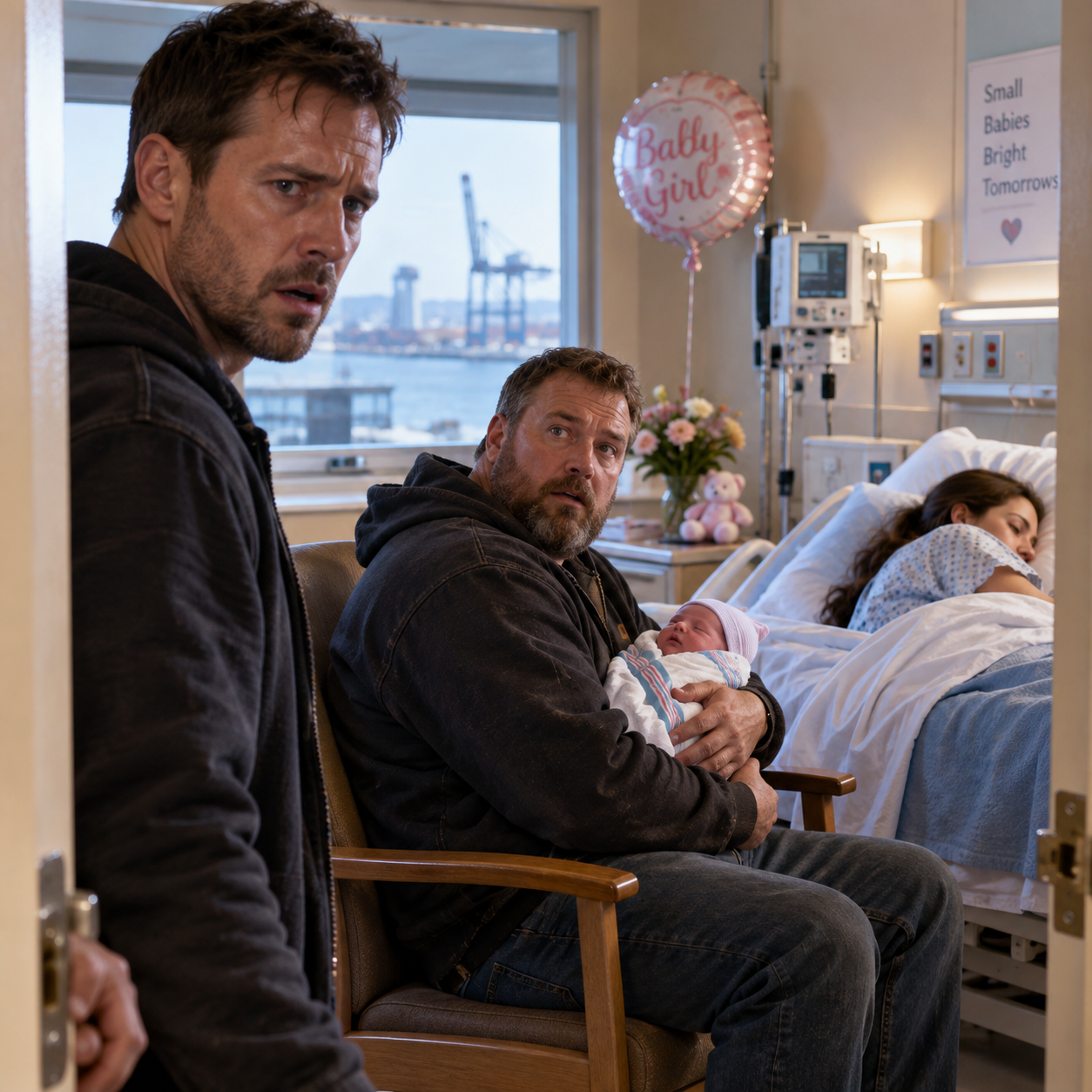
The room was warm and dim.
A young woman lay in the hospital bed facing the wall. She had short brown hair, a pale exhausted face, and freckles across the bridge of her nose.
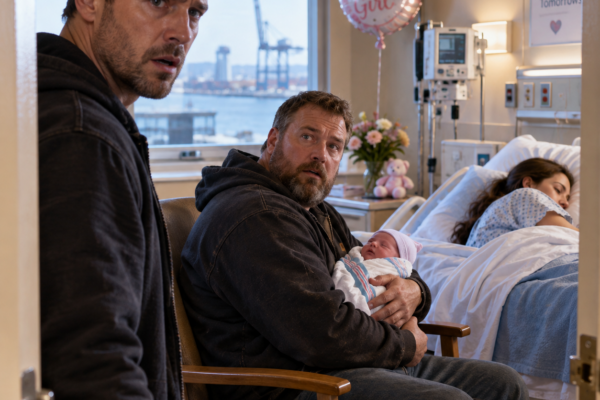
Near the window, a large man sat in a rocking chair wearing a canvas work jacket with a Local 62 patch on the sleeve.
Curtis Wolf.
He held a tiny baby wrapped in a striped hospital blanket.
He was humming.
Joel knew the song.
An old waterfront tune men sang badly at retirement parties and memorials.
Curtis had sung it at Joel’s father’s wake.
Joel stood in the doorway.
The baby’s hand slipped from the blanket and opened against Curtis’s sleeve.
Curtis turned.
For one second, Joel expected panic.
Instead, Curtis looked relieved.
Almost grateful.
“Joel,” he whispered. “Thank God.”
Joel said nothing.
Curtis kept rocking.
“Come in. Close the door. I can explain this.”
The woman in the bed moved.
For the first time, she turned toward Joel.
Her eyes were swollen from crying.
“She told me you knew,” she whispered.
Joel stayed in the doorway.
“Say whatever you need to say from there.”
Curtis gave him the sad, patient smile Joel had seen at union disputes, funerals, and hospital visits.
“You’re angry.”
Joel looked at the child in his arms.
“Who is she?”
Curtis exhaled.
“My daughter.”
The words landed almost softly.
For a second, Joel thought he had misunderstood.
Curtis continued.
“Kristen and I have been together for two years.”
Dorothy remained near the door.
The security officer said nothing.
Curtis looked down at the baby.
“It started after the second fertility treatment failed. You were working nights. Kristen was lonely. I went over to help with something at the house. We talked. Then we kept talking.”
Joel’s eyes stayed on him.
“You slept with my wife.”
“Yes.”
“And that baby is yours.”
Curtis nodded.
“Mine and Kristen’s.”
Joel finally stepped inside.
The room felt oddly tilted.
Not spinning.
Just wrong.
Like the sensation inside a crane cab when a sudden gust pushed against the boom.
Curtis spoke faster now.
“Kristen wanted a child more than anything. You know that.”
Joel did know it.
For five years, the second bedroom in their little house on Alder Street had been painted pale yellow.
Nothing had ever lived in it except a folded drop cloth, an old box fan, and expectations.
Joel and Kristen had spent years believing they could still fill it.
For the last three, Kristen had told him they were undergoing fertility treatment in Spokane.
She scheduled the appointments.
She brought home folders.
She brought home bills.
Three failed rounds, she said.
Joel worked double shifts to pay for them.
Thirty-eight thousand dollars disappeared from the savings account he had been building since his twenties.
After the third supposed failure, Kristen sat across from him at the kitchen table and gave him the result that changed the way he saw himself.
Two percent sperm motility.
Natural conception highly unlikely.
Further treatment using his sample almost pointless.
She had circled the number on a printed report.
When Joel went quiet, Kristen held his face in both hands.
“It doesn’t change anything,” she told him. “I married you, not a lab result.”
Joel had cried in her arms.
He had never mentioned the subject again.
Now Curtis was holding a newborn.
“You said you and Kristen planned this,” Joel said.
Curtis nodded.
“She couldn’t carry the pregnancy herself.”
“What pregnancy?”
“We used a surrogate.”
He motioned toward the young woman in the bed.
“Beth.”
Beth closed her eyes.
“Kristen’s egg,” Curtis continued. “My sperm. There was a clinic in Wenatchee. I covered part of it. The plan was for Beth to deliver, paperwork would be completed, and the baby would come home with Kristen.”
Joel stared at him.
“Come home where?”
Curtis hesitated.
“To your house.”
The silence inside the room changed.
Even Dorothy seemed to stop breathing.
Curtis leaned forward.
“Listen before you decide what that sounds like.”
“I know what it sounds like.”
“No, you don’t.”
Curtis’s voice remained soft.
“You would have had the family you wanted. Kristen would have had the baby she wanted. The little girl would have had a good father.”
“Me.”
“Yes.”
“While you stayed what?”
Curtis swallowed.
“Her godfather. Her uncle. Whatever made sense.”
Joel looked at him for a long time.
“You were going to have me raise your child.”
“You were going to be her father in every way that mattered.”
Joel glanced at Beth.
She was staring at Curtis now.
“You told me he knew,” she said.
Curtis closed his eyes briefly.
“Beth, this isn’t the time.”
“You said he knew.”
“I said we had an understanding.”
“No. You said he knew exactly what we were doing.”
Her voice trembled.
Joel turned toward her.
“What is your name?”
“Beth Jennings.”
“How old are you?”
“Twenty-six.”
“What were you promised?”
Curtis rose halfway from the chair.
“Joel, she just delivered a premature baby. Don’t interrogate her.”
“I’m not talking to you.”
Beth pushed herself higher against the pillows.
“I work at the cannery,” she said. “Packing line. My sister had medical bills. I saw something posted through a church community table about a local couple looking for a gestational carrier.”
“What church?”
“First Methodist.”
Joel knew who volunteered at that table every Thursday.
Kristen’s mother.
Marilyn Turner.
Beth wiped her face.
“Kristen met me at a diner. She was kind. She said you couldn’t come because the whole fertility thing was too painful for you to talk about.”
Curtis said her name again.
“Beth.”
She ignored him.
“They offered twenty-two thousand dollars plus medical expenses. I got three thousand at the clinic. They told me I’d get the rest after delivery.”
Joel looked at the baby.
Beth’s voice cracked.
“Kristen said you knew everything. She said this was your baby too. She said you were ashamed because you couldn’t have children, so I shouldn’t bring it up if I ever met you.”
Joel felt the cruelty of that more sharply than the affair itself.
His shame had not been collateral damage.
His shame had been part of the plan.
Beth continued.
“They gave me Kristen’s insurance card and told me to use her information at the hospital so there wouldn’t be trouble with coverage. I didn’t understand that part. They said the legal paperwork would fix everything afterward.”
Dorothy’s expression hardened.
“Who gave you the card?”
Beth looked at Curtis.
“He did.”
Joel turned back to his oldest friend.
Curtis did not deny it.
“The thirty-eight thousand dollars,” Joel said. “The money I thought we were spending on fertility treatments.”
Curtis’s jaw tightened.
“It covered expenses.”
“What expenses?”
“The clinic. Beth. Attorneys. Travel.”
Joel nodded slowly.
“So the treatments Kristen told me failed never happened.”
Curtis said nothing.
“That money financed this.”
Curtis looked frustrated now, as though Joel were refusing to appreciate something obvious.
“It financed your family.”
“My family?”
“You wanted a child.”
Joel’s voice stayed level.
“You forged my signature.”
Curtis’s eyes shifted.
“The hospital form was just paperwork.”
“Did you sign my name?”
Curtis did not answer.
That was enough.
Then Curtis made the mistake that finally showed Joel exactly what kind of man stood in front of him.
He held the baby a little tighter and said, “Think about what happens if you refuse to cooperate.”
Joel’s eyes lifted.
“What happens?”
“She has no father listed under your plan. She’s premature. Do you know what a neonatal stay can cost?”
Dorothy took one small step forward.
Curtis continued.
“The welfare fund won’t cover her unless she’s enrolled. Beth can’t pay for this. I can’t pay for this.”
“So you need my name.”
“I need you to be decent.”
Joel almost laughed.
He didn’t.
Curtis stood.
“You’ve always been the decent one, Joel. That’s what Kristen loves about you.”
Joel looked at the sleeping child.
“No.”
“What?”
“That’s what made me useful.”
For the first time, Curtis’s expression changed.
Joel pointed toward Dorothy.
“Hand the baby to the nurse.”
Curtis did not move.
“Joel.”
“Hand her to the nurse.”
The security officer shifted near the doorway.
Curtis looked around the room.
Joel watched him calculate.
Curtis had chaired enough meetings to know when a room had turned against him.
Finally, he lowered his head and kissed the baby’s forehead.
Then he placed her into Dorothy’s arms.
“This isn’t finished,” he said.
Joel nodded.
“No. It isn’t.”
Curtis walked out.
Before Joel left, he crossed to Beth’s bed.
She looked frightened.
“I’m sorry,” she whispered.
“For what?”
“For all of this.”
“You didn’t build this.”
“I should have asked more questions.”
“So should I.”
He took a pen from the bedside clipboard, wrote a phone number on the back of a visitor pass, and handed it to her.
“A lawyer is going to call you.”
“I can’t afford one.”
“You won’t need to.”
“Why are you helping me?”
Joel looked toward the hallway where Dorothy was carrying the baby.
“Because you’re the only person in this room who may have been lied to almost as much as I was.”
Joel took the stairs down to the parking structure.
He needed cold air.
Halfway to his truck, he looked at his phone.
A message from Kristen had arrived at 3:12.
Five minutes after the hospital called.
Where are you? Please come home. Please don’t do anything until we talk. I love you.
Joel read the time twice.
Kristen had been awake.
While he sat on the edge of the bed telling a nurse his wife was sleeping beside him, Kristen had been listening.
She had kept her eyes closed.
Then, after he left, she sent the message.
By the time Joel returned home, it was almost five.
The kitchen light was on.
Kristen sat at the table fully dressed in jeans and a gray cardigan. Her hair had been brushed. A mug of coffee sat untouched in front of her.
A packed duffel bag rested near the back door.
Joel took the chair across from her.
Neither spoke.
Silence was something else Joel had learned to use at work.
People often rushed to fill it.
Kristen finally did.
“I heard the phone.”
“I know.”
“I woke up when it rang.”
“No.”
She looked at him.
“You were already awake enough to understand what was happening. You texted me five minutes later, before I told you where I was going.”
Kristen looked at the phone when Joel slid it across the table.
Something inside her face seemed to give up.
“All right.”
She stared at the screen.
“I heard everything.”
“You lay there pretending to sleep.”
“I panicked.”
“You knew a baby was being born.”
“Yes.”
“You knew another woman was using your name.”
“Yes.”
“You knew Curtis was there.”
Her eyes filled.
“Yes.”
Joel folded his hands on the table.
“Start with the lab report.”
Kristen flinched.
“What?”
“The report saying I had two percent motility.”
She looked away.
“It wasn’t real.”
Joel had known it already.
Hearing it still hurt.
“None of it?”
“No.”
“The doctor in Spokane?”
“I went to the clinic once.”
“How many fertility rounds?”
She wiped her face.
“None.”
“Thirty-eight thousand dollars.”
“It went toward the pregnancy.”
“Curtis’s child.”
“Our child.”
Joel looked at her.
Kristen corrected herself.
“The child I wanted.”
He waited.
She began crying harder.
“You don’t understand what happened to me.”
“Then explain it.”
“Two years ago, I learned I might not be able to carry a pregnancy.”
Her voice came in bursts.
“I went for testing alone. They told me there were serious problems. I was thirty-four. I sat in my car afterward and couldn’t breathe.”
Joel said nothing.
“My father left my mother. You know that. Everybody leaves eventually. And I thought if I told you I was the reason we couldn’t have children, maybe someday you would decide you deserved somebody else.”
“So you told me I was the reason.”
Kristen covered her face.
“I was scared.”
“You printed a fake medical report.”
“Yes.”
“You watched me believe it for years.”
“I hated myself every time you looked sad.”
“But you kept doing it.”
“I didn’t know how to undo it.”
Joel leaned back.
That was the most believable thing she had said.
Lies often grew because people did not know how to confess the first one.
But Kristen had not merely failed to confess.
She had built around it.
Clinic folders.
Fake results.
Money transfers.
Appointments that never happened.
A surrogate.
An affair.
A stolen insurance card.
A forged signature.
A baby.
“How long have you been with Curtis?”
“Almost two years.”
“Before or after you made me believe I was infertile?”
Kristen hesitated.
Joel had his answer.
She reached for him.
He moved his hands away.
“I still love you.”
“Don’t use that sentence right now.”
“I do.”
“You listened to me blame myself for something that wasn’t true.”
“I was trying to keep us together.”
“No.”
Joel’s voice remained calm.
“You were trying to keep everything.”
Kristen stared at him.
“You wanted me. You wanted Curtis. You wanted a baby. You wanted my house. You wanted my health coverage. You wanted my reputation attached to the child so nobody would ask who her father was.”
Her mouth trembled.
“I could leave him.”
Joel looked at her with genuine disbelief.
“You think that’s the decision left to make?”
The front door opened.
Marilyn Turner entered carrying a foil-covered casserole dish and her purse.
She had her own key.
Joel had never minded before.
Marilyn had been the kind of mother-in-law who brought soup when he had the flu and remembered which pie he liked at Thanksgiving.
She stopped when she saw them.
The casserole tilted in her hands.
“Oh,” she said.
Joel looked at her.
“He knows?”
Marilyn closed her eyes.
That answered another question.
“Mrs. Turner,” Joel said, “you run the community table at First Methodist.”
Marilyn put the casserole down.
“Joel, honey.”
“You helped Kristen find Beth.”
Her face folded.
“It wasn’t supposed to hurt anyone.”
Joel looked toward Kristen.
Then back to Marilyn.
“How many people have said that tonight?”
Marilyn sat beside her daughter.
“The girl needed money. Kristen needed help. Curtis said everything could be handled properly.”
“Curtis says a lot of things.”
Kristen leaned across the table.
“Joel, please. There is one thing you can still do.”
He waited.
“Sign the acknowledgement.”
Marilyn looked up hopefully.
Kristen continued.
“The hospital needs the father documented. The welfare fund needs the baby enrolled. You only have to sign once.”
Joel stared at the woman he had slept beside for ten years.
“And then what?”
“We bring her home.”
“To this house?”
“Yes.”
“And tell everybody she’s ours.”
Kristen nodded.
“I’ll end things with Curtis.”
Joel could barely believe the calm practicality of it.
“You expect me to raise his daughter while everyone thinks she’s mine.”
“She would be yours.”
“No.”
“She could be.”
“No, Kristen.”
“She deserves a good father.”
Joel’s expression changed.
“Stop using that baby to make your choices sound generous.”
Kristen went quiet.
He continued.
“She has done nothing wrong. Not one thing. That’s why I’m not putting my name on a lie before she’s even old enough to open her eyes.”
Kristen whispered, “What are you going to do?”
“I’m asking you to leave.”
She began crying again.
“Go to your mother’s house. Both of you.”
“Joel.”
“I won’t throw anything. I won’t embarrass you in the street. I won’t call Curtis tonight. Take your bag.”
Marilyn stood slowly.
Kristen remained seated.
“Are you going to destroy him?”
“I don’t know yet.”
“Are you going to destroy me?”
Joel looked at her.
“You keep asking me what I’m going to do to you.”
He nodded toward the hallway.
“You should start thinking about what you already did.”
Kristen wiped her cheeks.
Before she stood, Joel asked one final question.
“Who signed my name on the August hospital form?”
Marilyn looked at the floor.
Kristen whispered, “Curtis.”
“He forged it himself?”
“He said your signature was easy.”
Joel nodded once.
Then he put on his cap and left.
He did not drive to the police station.
He did not drive to Curtis’s house.
He drove to the Local 62 union hall.
The building was a squat concrete rectangle on Dock Street with a flagpole out front, fluorescent lights inside, and a bulletin board full of retirement notices, safety reminders, benefit updates, and photographs of men who had spent their lives near water.
Every Local 62 member kept a small gray copy of the welfare fund bylaws somewhere.
Most never opened it.
Joel found his in the glove compartment of his truck.
He sat beneath a parking-lot light while dawn began turning the harbor from black to gray.
Then he read.
Every page.
Six years earlier, Curtis had written one of the fund’s toughest anti-fraud rules after a benefits scandal involving an ineligible dependent.
Rule 9.
The language was severe.
Knowingly causing the fund to pay benefits for an ineligible dependent could lead to removal from the local and welfare plan, repayment obligations, and additional discipline available under the union’s rules.
Curtis had defended it passionately.
There could be no exceptions, he told members.
Not for officers.
Not for friends.
Not for popular people.
Nobody.
Joel remembered that speech.
Most of the hall did.
Then Joel reached Section Three.
No trustee accused under Rule 9 could preside over the hearing, participate in the vote, or select the body reviewing the accusation.
A refusal to step aside could itself be treated as acceptance of the conflict provision and trigger removal from control of the proceeding.
Joel read it twice.
Near the end of the booklet was another rule.
Every member in good standing had the right to address the trustees in open session for three uninterrupted minutes.
The next trustee meeting was Thursday.
Six days away.
Joel closed the booklet.
For the first time since Dorothy’s call, he breathed deeply.
All he needed to do was wait.
Friday morning, he called Cascade Reproductive Group in Spokane.
After several minutes on hold, the receptionist returned.
They had no fertility treatment record under Joel Keller.
No semen analysis.
No series of three treatment cycles.
There was a limited file under Kristen Keller connected to testing and an egg retrieval paid through an outside arrangement.
Nothing resembling the history Joel had been shown.
He thanked the receptionist and ended the call.
Then he drove to see Harlan Marshall, a sixty-seven-year-old attorney whose office sat above a bait and tackle shop near Water Street.
Harlan listened without interrupting.
When Joel finished, the old attorney tapped a pencil against his desk.
“The first person I’m concerned about is Beth Jennings.”
“So am I.”
“Good.”
Harlan removed his glasses.
“Whatever private arrangement they thought they had, they don’t get to improvise parentage in a maternity ward using another woman’s insurance card and somebody else’s signature. If they failed to complete the legal steps required for a gestational arrangement, Beth may have rights and responsibilities nobody explained to her.”
“She thinks she has to hand the child over.”
“Then she needs independent counsel before she signs another piece of paper.”
“Will you talk to her?”
“I will.”
Joel nodded.
Harlan studied him.
“Now you.”
“What about me?”
“You have a forged signature, alleged misuse of your benefit information, and an attempted claim under your membership.”
“I know.”
“Do you want law enforcement involved?”
“Eventually, maybe.”
“Eventually?”
Joel took the gray booklet from his jacket.
“I want the union to see it first.”
Harlan read Rule 9.
Then he looked over his glasses.
“You want Curtis judged under the rule he wrote.”
“I want the people paying into that fund to know what was done in their names.”
Harlan leaned back.
“You could make this personal.”
“It is personal.”
“Yes.”
Joel looked out the window toward the harbor.
“But if I walk into that hall yelling about my wife, people will argue about marriages and affairs and who knew what.”
He tapped the booklet.
“This isn’t an argument. Either he used the fund or he didn’t. Either he signed my name or he didn’t. Either his own rule applies or it doesn’t.”
Harlan’s mouth lifted slightly.
“You spend all day waiting for things to stop swinging, don’t you?”
Joel did not smile.
“Something like that.”
On Saturday, Joel returned to St. Aurelia.
Beth had been discharged from her room but stayed near the neonatal unit.
He found her in a plastic chair beside the incubator wearing a sweatshirt, jeans, and the hospital bracelet she had forgotten to remove.
She looked exhausted.
“I talked to Mr. Marshall,” she said.
“He tell you anything useful?”
“That I shouldn’t sign what Kristen’s lawyer sent.”
“That sounds useful.”
Beth looked through the incubator window.
“I haven’t held her.”
Joel sat beside her.
“Why not?”
“I thought if I held her, I wouldn’t be able to do what I agreed to do.”
“What did you agree to?”
Beth gave a tired laugh.
“For a while, I thought I knew.”
The nurse opened the incubator access.
Beth hesitated.
Then she slipped one hand inside.
The baby’s tiny fingers closed around Beth’s index finger.
Beth made a sound so small Joel almost missed it.
Tears ran down her face.
“She has Curtis’s chin,” Beth whispered.
Joel looked at the baby.
“She has her own.”
Beth kept her hand inside until the nurse gently told her it was time for the baby to rest.
On Tuesday afternoon, Joel went to the welfare fund office.
Norah Clayton had administered the plan’s paperwork for nearly twenty years. She was known for remembering member numbers without looking them up and correcting trustees when they tried to skip procedure.
When Joel walked into her office, she shut the door.
“I was hoping you’d come.”
“Why?”
Norah opened a folder.
“Friday morning, an emergency enrollment request hit my desk.”
Joel sat down.
“Whose?”
“Yours.”
She turned the paper toward him.
The document sought immediate enrollment of a premature infant as Joel Keller’s dependent.
The projected hospital charges were already climbing into six figures.
The request had been pushed through under emergency trustee authority.
Curtis’s approval appeared on the form.
So did Joel’s name.
Joel stared at it.
“I never filed this.”
“I didn’t think you did.”
“Why process it?”
“I flagged it and preserved the record. Emergency medical claims still have procedures we have to follow until eligibility is formally challenged.”
Norah removed her glasses.
“This fund isn’t an insurance company sitting on endless money, Joel. It belongs to working families. Employers contribute by the hour. Members depend on it when somebody needs surgery, when a spouse gets cancer, when a kid lands in the hospital.”
She tapped the document.
“A fraudulent claim doesn’t hurt a corporation somewhere. It hurts everybody waiting in the same line.”
Joel opened the gray booklet.
“Rule 9.”
Norah looked at it.
Then at him.
“You read it.”
“Yes.”
A sad expression crossed her face.
“My sister was part of the case that led to that rule.”
Joel knew the story vaguely.
Norah continued.
“She put someone on coverage who wasn’t eligible. She was wrong. Curtis stood in front of the hall and said rules only matter when they apply to people we like.”
Norah’s voice grew quieter.
“He said exceptions destroy trust.”
Joel looked again at the claim form.
“What happens if the member whose name is on this swears he never filed it?”
“It goes to the trustees.”
“And if the chairman is accused?”
Norah did not answer immediately.
Finally she said, “Then the chairman cannot control the proceeding.”
The meeting was two days away.
Wednesday evening, Joel was eating canned soup in the living room when the doorbell rang.
Curtis stood on the porch.
He wore a pressed shirt beneath his union jacket.
A manila envelope rested under one arm.
Behind him, parked at the curb, was his gray pickup.
Kristen sat in the passenger seat.
“Can I come in?” Curtis asked.
“No.”
Curtis accepted that with a nod.
“All right. I came because I want to solve this.”
Joel leaned against the doorframe.
“Go ahead.”
Curtis lifted the envelope.
“There’s a cashier’s check in here for sixty thousand dollars.”
Joel said nothing.
“It more than covers what came out of your savings.”
“My money.”
“Yes.”
“Used for your child.”
Curtis’s jaw tightened.
“Used badly. I admit that.”
“That’s an interesting way to put it.”
“Kristen will agree to the divorce. House stays with you. No fight over property.”
“And what do you want?”
Curtis looked almost relieved that they had reached the part he understood.
“At the trustee meeting tomorrow, the infant enrollment comes up under the emergency claim.”
“I know.”
“You stand and say you acknowledge the child as your dependent.”
Joel watched him.
“One sentence.”
“One sentence.”
“And then?”
“The medical bills get handled. Kristen and I leave you alone.”
Joel glanced toward the pickup.
“What happens if I don’t?”
Curtis lowered the envelope.
His expression remained kind.
That made the threat worse.
“Then people are going to learn things.”
“About?”
“Your marriage.”
Joel almost smiled.
Curtis continued.
“I’ve known those men twenty years. So have you. You know what a dock is like. Stories spread. People pick sides. You’ll be the guy whose wife was with his best friend while he worked nights.”
Joel let him talk.
“I don’t want that for you.”
“No?”
“No.”
Curtis’s voice softened.
“You’ve already lost enough.”
Joel studied the man who had helped carry his father’s casket.
“What time is the meeting?”
“Seven.”
“I’ll be there.”
Curtis visibly relaxed.
He placed the envelope into Joel’s hand and clapped him on the shoulder.
“That’s my brother.”
Joel watched him walk back to the truck.
Inside, he put the unopened envelope into the entry-table drawer.
Right where Kristen’s missing welfare card used to be.
At ten minutes to seven Thursday night, every folding chair inside the Local 62 hall was occupied.
More people stood along the walls.
Word had traveled that an unusual emergency benefit matter was on the agenda.
The room smelled of coffee, wet jackets, and the diesel that seemed permanently embedded in waterfront clothing.
Joel entered through a side door wearing a clean flannel shirt.
Beth sat in the third row with Harlan beside her.
Norah Clayton sat at the trustees’ table with the minute book open and a digital recorder beside it.
Against the rear wall stood Kristen and Marilyn.
Joel had not expected them.
Kristen wore a navy dress he once told her he liked.
At seven precisely, Curtis called the meeting to order.
He looked composed.
Professional.
Exactly like the man everyone trusted to explain complicated rules.
After routine business, Curtis reached the emergency benefit item.
“We have a premature infant requiring immediate coverage,” he said into the microphone. “The child is connected to the family of one of our own members, Joel Keller.”
Heads turned.
“Joel has agreed to address the board.”
Curtis smiled warmly.
“Come on up, brother.”
Joel walked down the aisle.
Forty steps.
He counted them.
At the podium, he removed the gray bylaws booklet from his pocket.
Curtis sat back.
He looked pleased.
Joel opened to Rule 9.
“I’m going to read something.”
A few men shifted.
“Rule 9. A member or officer commits a serious violation by knowingly causing fund benefits to be paid for an individual who is not an eligible dependent.”
The room quieted.
Joel continued.
He read the provisions covering repayment, discipline, and removal.
Then he reached Section Three.
“No person accused under this rule may preside over, vote upon, or select the body hearing the matter.”
Joel looked up.
“Curtis Wolf helped write that rule six years ago.”
Curtis’s smile remained on his face.
Barely.
“Everybody in this hall voted for it.”
Someone coughed.
Joel closed the booklet.
“Now I’d like to say the sentence I actually came here to say.”
Curtis shifted.
Joel faced the room.
“I have never acknowledged the infant on this claim as my child or eligible dependent. I did not sign the hospital pre-registration form. I did not request emergency enrollment. My wife’s welfare card was removed from my home and given to another woman.”
The room went completely still.
Curtis reached for his microphone.
“Joel.”
Joel raised one finger.
“I have three uninterrupted minutes.”
Several heads turned toward Curtis.
He released the microphone.
Joel continued.
“The woman who delivered the baby is Beth Jennings. She’s sitting in the third row. She was promised twenty-two thousand dollars to act as a gestational carrier. She was told I knew about the arrangement.”
Beth lowered her eyes.
“I did not.”
Joel looked toward Norah.
“Ms. Clayton, would you please read the emergency request into the minutes?”
Norah picked up the paper.
Curtis stood.
“That isn’t necessary.”
An older trustee named Elmer Boyd looked at him.
“Sit down and let the member finish.”
Curtis remained standing.
Norah read.
The claim named a premature infant as Joel Keller’s dependent.
It requested emergency coverage.
It carried Curtis’s authorization.
The recorded approval time was shortly after the birth.
Before Joel had ever reached the hospital.
Norah finished.
Joel looked around the hall.
“At the time Curtis authorized a claim using my name, hospital staff were still trying to determine why a woman who wasn’t my wife was using my wife’s identity.”
Curtis grabbed the microphone.
“That is a complete distortion.”
Joel turned toward him.
“Then step aside under Section Three.”
Curtis stared at him.
“This is a private family matter.”
“No.”
Joel’s voice stayed quiet.
“My marriage is private. Your affair with my wife is private until you choose otherwise.”
A ripple moved through the room.
Joel tapped the claim form.
“This is everybody’s money.”
Curtis’s face flushed.
“You don’t know what you’re doing.”
“I know what your rule says.”
“I’m not stepping aside.”
The room changed.
Elmer Boyd slowly removed his glasses.
Joel looked at Curtis.
“Then you’ve made the conflict question very simple.”
Curtis saw the faces around him.
Men he had worked beside for decades.
Women whose families depended on the fund.
Shop stewards.
Retirees.
Young operators he had trained.
For the first time that week, Curtis lost control.
“You want private?” he snapped.
He pointed toward Joel.
“Ask him where his wife has been for two years. Ask him who was there while he sat in that crane working double shifts. Kristen was alone. I was the one who listened to her. I was the one who kept her from falling apart.”
Kristen closed her eyes at the back of the hall.
Curtis’s voice grew louder.
“That baby is mine.”
Nobody moved.
Curtis seemed to realize what he had said only after the words were already inside the recorder.
He gripped the edge of the table.
“And I’m not ashamed of her.”
Joel looked at Norah.
The recorder’s little red light remained on.
Then Joel looked back at Curtis.
“Thank you.”
Curtis blinked.
“That’s in the minutes.”
A long breath moved through the room.
Elmer Boyd stood.
“Under Rule 9, Section Three, the vice chair assumes control of this matter.”
Curtis turned toward him.
“Elmer.”
“You wrote it.”
“This is ridiculous.”
“You wrote it,” Elmer repeated. “Take your seat away from the table.”
Curtis did not move.
A shop steward named Larry Watkins made a motion to refer the emergency claim, the forged hospital paperwork, and Curtis’s conduct to a formal Rule 9 hearing.
Someone seconded it immediately.
Elmer looked across the hall.
“All in favor?”
Hands rose.
Not a few.
Not half.
Nearly every hand in the room.
Joel had attended union votes his whole adult life.
He had never seen one like it.
Elmer scanned the hall.
“Motion carries.”
Curtis stood beside the chair he had controlled for years.
His union jacket suddenly looked too large.
He searched the room for a friendly face.
Then he looked at Joel.
“You took her father away.”
Joel thought about the newborn’s fist wrapped around Beth’s finger.
He thought about Kristen’s fake medical report.
The empty card slot in his hallway drawer.
The sixty-thousand-dollar check.
The yellow bedroom.
“No,” Joel said.
“I made sure whatever she grows up believing starts with something real.”
The formal union hearing took place nine days later.
Joel attended but did not testify beyond confirming the documents already in the record.
He did not need to.
The hospital form carried his forged signature.
The welfare claim had been submitted under his name.
The meeting recorder contained Curtis openly identifying himself as the child’s biological father.
Beth had independent counsel.
Norah had preserved the administrative trail.
Curtis offered little defense.
The union imposed the consequences available under its own rules, removed him from his leadership and benefit positions, pursued repayment of improperly authorized expenses, and referred the suspected forgery and benefit fraud to outside authorities.
Months later, Curtis entered a plea on criminal charges related to the falsified paperwork and benefit claim. He received probation, restitution obligations, and the kind of public record that could not be softened by a good handshake.
The presidency of Local 62, which Curtis had once expected to win easily, went to another longtime dockworker without a serious contest.
Kristen’s consequences were quieter.
She resigned from the dental office after the story began spreading through the small community.
Marilyn stepped away from her church volunteer work.
Nobody asked her to.
The divorce was settled in a lawyer’s conference room.
Kristen did not fight Joel over the house.
Money connected to the false fertility treatments was accounted for as part of the settlement.
Before signing the last page, Kristen looked across the conference table.
“I really did love you.”
Joel believed her.
That was one of the saddest parts.
“I know,” he said.
Love, he had learned, did not automatically make someone honest.
It did not make them safe.
And it certainly did not erase what they were willing to do to keep from losing what they wanted.
A few weeks after the divorce began, Joel went to a real fertility clinic in Tacoma.
He almost canceled twice.
The old report still lived somewhere in his head even though he knew it was fake.
When the clinic called with his test results, the nurse sounded completely ordinary.
His numbers were normal.
Healthy.
Nothing suggested he could not father children.
Joel thanked her.
Then he sat in his truck for nearly half an hour.
He expected anger.
Instead, he felt relief.
For years, he had carried a private sense of failure because someone he trusted placed it in his hands and told him it belonged to him.
Now he could finally put it down.
Beth’s situation took longer.
Her arrangement with Kristen and Curtis had not been handled the way she had been led to believe. With Harlan’s help, she obtained separate legal advice before making any permanent decision.
She visited the neonatal unit every day.
At first, she sat beside the incubator.
Then she held the baby.
Then the nurses stopped asking whether she wanted to.
Beth named her Lucy.
She said the name quietly one afternoon while the baby slept against her chest.
For several weeks, Beth wrestled with what came next.
Kristen and Curtis were Lucy’s intended and biological parents under the arrangement they claimed to have created. Beth was the woman who had carried her, delivered her, and nearly been deceived into disappearing before understanding what rights or choices she had.
There were lawyers.
Court filings.
Background checks.
Arguments.
Supervised plans.
Nothing happened as easily as Curtis had promised in the hospital room.
In the end, Beth agreed to a structured arrangement under court supervision that recognized the intended parents while protecting the continuing contact she wanted with Lucy.
Before she signed, she asked for one thing.
“I want her to know who I am.”
Harlan nodded.
“That can be put in writing.”
“No. I mean really know.”
Beth wiped her eyes.
“I don’t want anybody telling her I handed her over because I didn’t want her.”
Joel was sitting behind her in the courthouse hallway.
Beth looked at him.
“I almost never looked at her.”
“You were scared.”
“I know.”
“She’ll know that too.”
On the courthouse steps afterward, Beth stood with both hands inside the pockets of her coat.
“I’m not doing this for Kristen or Curtis,” she said.
“I know.”
“I’m doing it so one day Lucy can ask me what happened and I can tell her the truth.”
Joel nodded.
“That’s probably the best thing anybody can give her now.”
A year passed before Joel heard directly from Kristen again.
There was no letter.
No apology.
Just an envelope.
Inside was a photograph of Lucy wearing a yellow raincoat, laughing as she stepped into a puddle.
She had Curtis’s chin.
Beth’s freckles.
And a look on her face that belonged entirely to herself.
Joel stood in the kitchen for a long time holding the photograph.
Then he placed it in the drawer of the entry table.
The same drawer that had once held Kristen’s union card.
The same drawer where he had put Curtis’s sixty-thousand-dollar offer.
Life moved.
Not quickly.
Joel repainted the pale-yellow bedroom a quiet gray.
He tore the front porch apart and rebuilt it properly.
He stopped taking every overtime shift that was offered.
In spring, he transferred into the crane training program.
New apprentices often hated Joel’s first lesson.
Wait.
They wanted to touch the controls.
Move the load.
Prove they belonged in the cab.
Joel would point through the glass toward a container swinging beneath them.
“Don’t fight it.”
Sometimes a young operator would look at him, impatient.
“So what do I do?”
“Watch.”
“For how long?”
“Until you know what it’s doing.”
Then the wind would ease.
The swing would shorten.
Joel would nod toward the controls.
“Now.”
A year after the hospital call, an envelope arrived from St. Aurelia Medical Center.
Inside was a small plastic hospital bracelet.
KELLER, BABY GIRL.
There was also a yellow sticky note in Dorothy Whitaker’s handwriting.
Wrong name. Right night.
Joel smiled for the first time in several minutes.
He put the bracelet in the entry-table drawer.
Then he stood there looking at all the ordinary things around it.
Keys.
Tape.
A flashlight.
Old receipts.
A warranty card.
The remains of a life that had once seemed simple.
The strange thing was that Joel no longer hated the drawer.
He no longer hated the hospital.
He did not even hate the pale-yellow paint that sometimes still showed beneath the gray where the brush had missed a corner.
Those things had not lied to him.
People had.
And people could only keep a lie alive as long as everybody around them agreed not to look too closely.
For years, Joel believed a laboratory result because the person handing it to him was his wife.
He believed expensive treatments had happened because folders appeared on his kitchen table.
He believed Curtis was his closest friend because Curtis had stood beside him during the hardest days of his life.
He had mistaken familiarity for proof.
Loyalty for evidence.
Love for honesty.
There was no grand lesson that made any of that painless.
His marriage was still gone.
His oldest friendship had been built partly on deception.
A little girl had entered the world surrounded by adults trying to decide which version of the truth would be most convenient.
But Joel had refused one final convenience.
One signature.
One sentence.
One quiet agreement to pretend.
It would have been easy.
There was money waiting for him.
There was social pressure.
There was the promise that hospital bills would disappear and everyone could stop asking questions.
All he had to do was put his name beneath something that was not true.
Instead, Joel did what he had spent his working life learning to do.
He let everything swing.
He waited until he could see clearly.
Then he set the weight down exactly where it belonged.
News
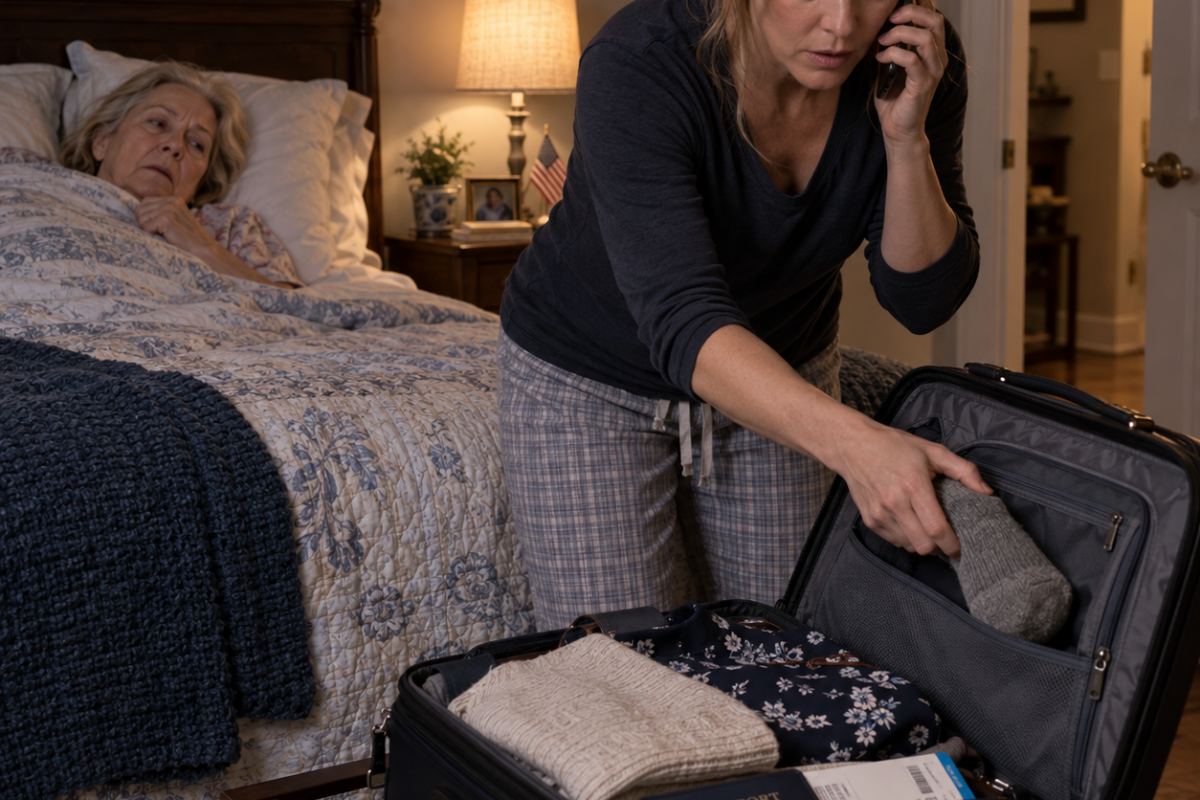
I told my daughter-in-law I had an early flight and went to bed. Just after midnight, my bedroom door slowly opened. Through barely open eyes, I watched her unzip my carry-on, slip something into the hidden inner pocket, and carefully close it again. Then she made a phone call. “It’s in her carry-on. Tip off airport security at six.” My heart started pounding, but I kept pretending to sleep. She had no idea I’d heard every word. And when morning came, I knew there was one thing I absolutely couldn’t do: take that suitcase to the airport.
At Midnight, My Daughter-in-Law Hid a Stolen Museum Pistol in My Carry-On. She Thought Airport Security Would Find It Before I Ever Knew. At 11:58…
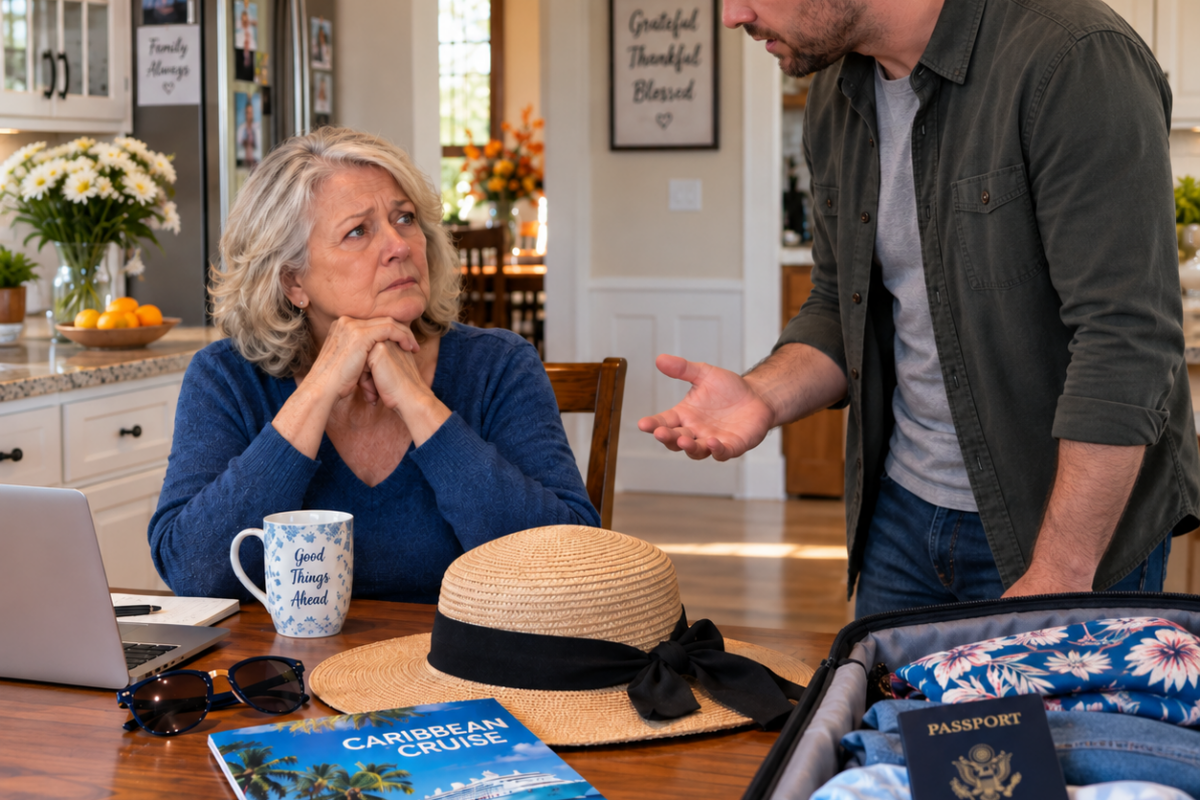
“Thanksgiving is just for my wife’s family,” my son told me. “You’ll have to make other plans.” So I did. I booked a cruise, packed my favorite wide-brimmed hat, and turned off my phone the moment the ship left port. By Thanksgiving afternoon, I was sitting on deck with lobster on my plate, watching the ocean instead of wondering why my own son didn’t want me at his table. I didn’t turn my phone back on until that night. There were 37 missed calls. My son. His wife. Her parents. Even neighbors I barely knew. Then I opened the last voicemail. After hearing the first six words, I put down my fork. Suddenly, I understood why their Thanksgiving dinner had ended early—and why everyone was looking for me.
My Son Told Me Thanksgiving Was Just for His Wife’s Family. So I Took a Cruise, and Eleven Days Later Their Lie Collapsed in Front…

“Henry gets everything—all $80 billion,” Dad announced. “As for you, you’re out of the family. Leave.” I stared at my parents for a moment. “You already sold the company?” Mom smiled. “Every last piece of it.” I slowly closed the folder in front of me. “Without my patents?” Her smile faltered. Dad frowned. “What are you talking about?” I stood up and reached for my coat. “You might want to read page forty-seven of the sale agreement.” For the first time that night, nobody told me to leave.
My Family Said They Were Giving My Brother the Entire $80 Billion Company and Exiling Me. Then the Buyer Asked One Question About My Patents….
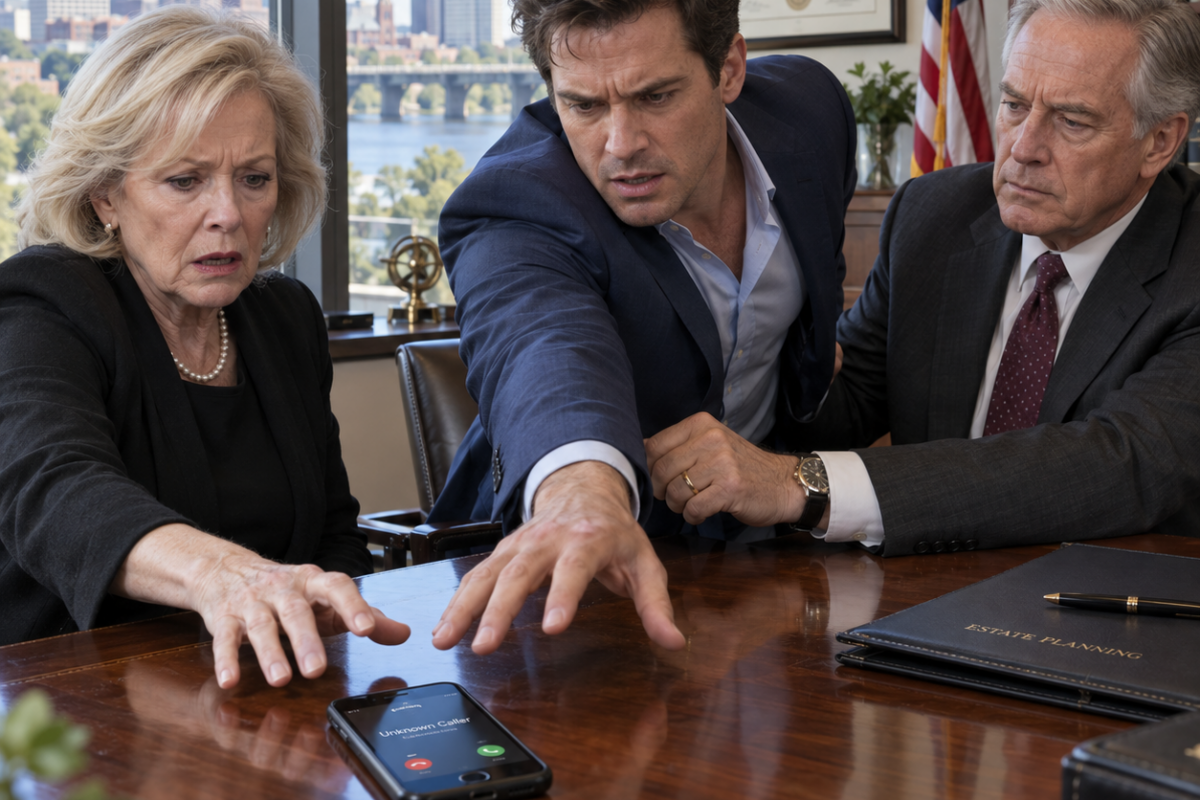
My Husband Left Our Children Millions. He Left Me Only His Locked Phone—Then Someone Called It During the Will Reading.
My Husband Left Our Children $8.4 Million and Me an Old Black Phone. Then It Rang. My husband had been dead for twelve days when…

A CEO Dumped Coffee on a Black Temp in Front of the Entire Office—Then She Made One Phone Call
The CEO Poured Coffee Over My Head and Fired Me. He Had No Idea the “Temp” He Humiliated Was Quietly Buying His Company. “You’re the…
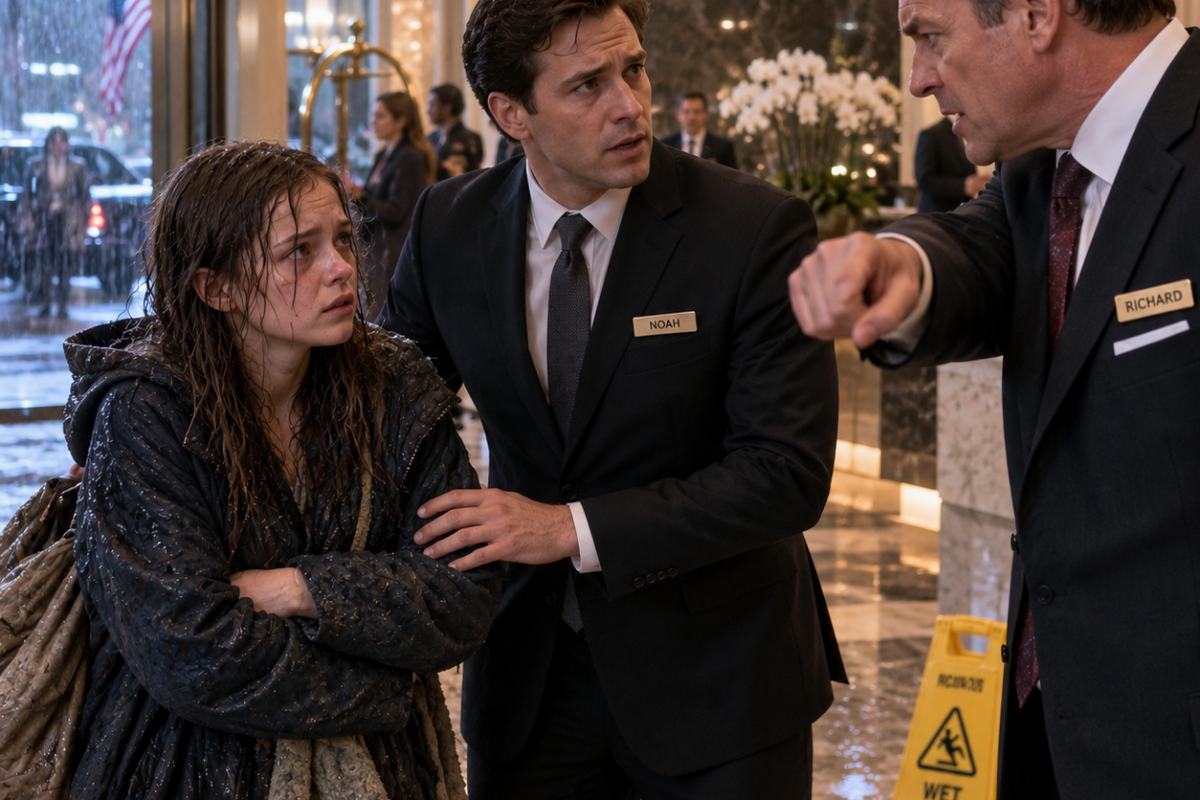
Hotel Staff Thought She Was Homeless—They Had No Idea Why a Billionaire Was Watching From the Lobby
I Walked Into My Family’s Five-Star Hotel Looking Homeless. The Manager Threw Me Into the Rain, and the Clerk Who Helped Me Lost Everything. “You…
End of content
No more pages to load
You Might Also Enjoy

My Husband Left Our Children Millions. He Left Me Only His Locked Phone—Then Someone Called It During the Will Reading.