I told my daughter-in-law I had an early flight and went to bed. Just after midnight, my bedroom door slowly opened. Through barely open eyes, I watched her unzip my carry-on, slip something into the hidden inner pocket, and carefully close it again. Then she made a phone call. “It’s in her carry-on. Tip off airport security at six.” My heart started pounding, but I kept pretending to sleep. She had no idea I’d heard every word. And when morning came, I knew there was one thing I absolutely couldn’t do: take that suitcase to the airport.
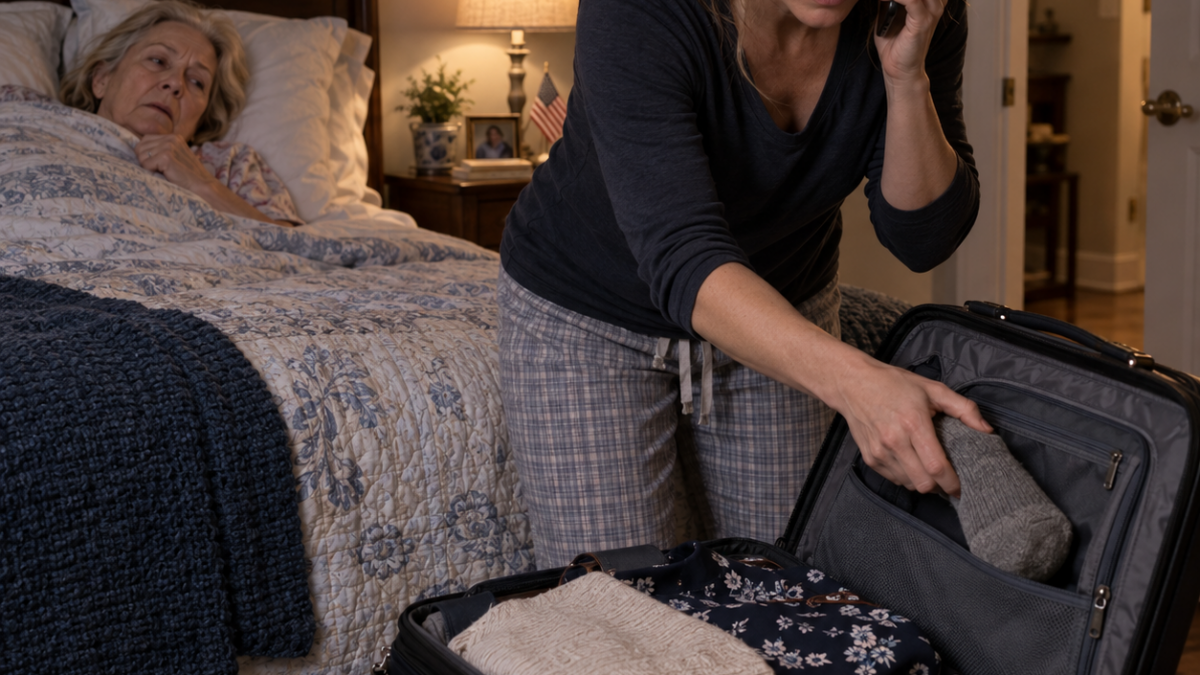
At Midnight, My Daughter-in-Law Hid a Stolen Museum Pistol in My Carry-On. She Thought Airport Security Would Find It Before I Ever Knew.
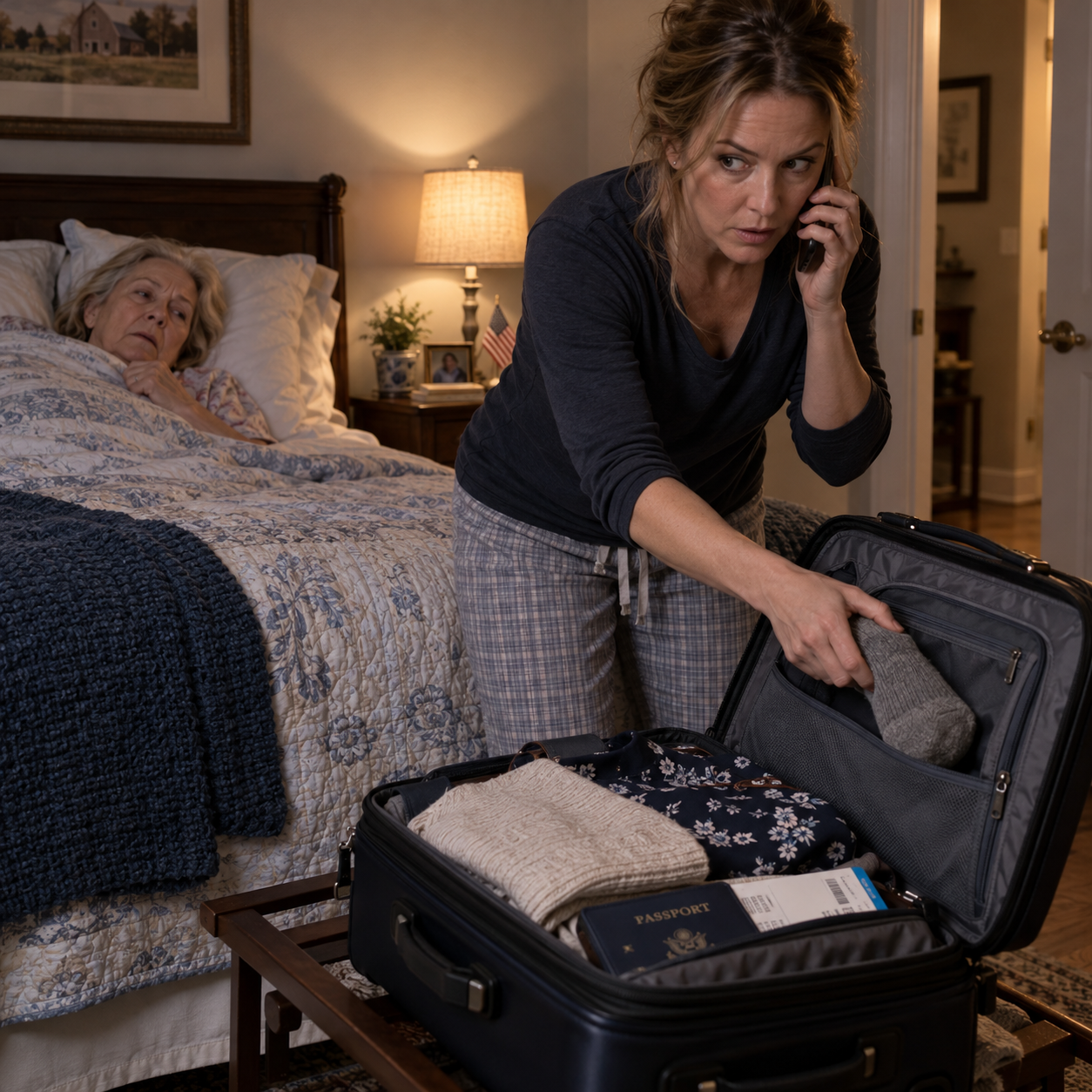
At 11:58 on a Saturday night in September, the brass knob on my bedroom door turned.
I was supposed to be asleep.
My alarm was set for 3:30 in the morning. My flight to Arizona left Columbus at 6:50, and everyone in the house knew I intended to be gone before sunrise.
So when the door opened, I did what thirty-five years of museum work had taught me to do when something did not belong where it was.
Nothing.
I did not sit up.
I did not speak.
I kept my breathing slow.
A thin bar of hallway light stretched across the rug.
Through my eyelashes, I saw my daughter-in-law Christa step into the room wearing socks so her footsteps would not make a sound on the hardwood.
She crossed to the luggage rack.
My navy carry-on sat there packed and zipped.
I heard the main zipper.
Slowly.
One tooth at a time.
Then the smaller zipper inside.
The little passport pocket I had never used.
Something went in.
It made a soft, heavy sound against the lining.
Christa closed the inner zipper.
Then the outer one.
For a few seconds, she remained beside my suitcase.
I could hear her breathing.
She returned to the doorway.
Her phone screen glowed between her fingers.
Then she whispered:
“It’s in her carry-on. Tip off airport security at six.”
A pause.
Someone answered.
“Not before six. She has to be through security first.”
Another pause.
“Use the shop phone. Say it came from the museum.”
Then, softer:
“I know. Me too.”
The door clicked shut.
Her footsteps faded down the hallway.
My clock said 12:09.
I remained motionless.
One breath.
Two.
Three.
I counted to four hundred.
My name is Harleen Eakins.
I was seventy-one years old that September.
And for thirty-five years, I had been the registrar at the Tolbert County Historical Museum in Coral Mill, Ohio.
Most people do not know what a museum registrar does.
The simple version is this:
A registrar knows where everything is.
What it is.
Where it came from.
Where it has been.
Who touched it.
Why it moved.
And most importantly, how to prove all of that after someone starts lying.
I had spent most of my adult life around people who loved old objects.
Donors.
Collectors.
Researchers.
Dealers.
Curators.
Schoolchildren.
Descendants who wanted family things back after their grandparents had donated them legally forty years earlier.
Most were decent.
Some were confused.
A few were dishonest.
And old objects, unlike people, cannot tell you who moved them.
They need records.
That is why, at 12:50 that morning, I did not touch my suitcase with bare hands.
I took a pair of white cotton gloves from my purse.
I had carried gloves for decades.
Skin leaves oil.
Oil damages metal and paper slowly.
A registrar learns to respect slow damage.
I sat on the carpet.
Turned the reading lamp toward the floor so no light showed beneath my door.
Then unzipped the suitcase.
The inner pocket held a gray work sock.
A man’s sock.
On the cuff were two black letters written in laundry marker.
GE.
I had written them myself.
My son Garrick lived in my house.
I labeled his work socks because his laundry and his six-year-old son Chase’s socks somehow migrated through every bedroom no matter how carefully they were sorted.
GE.
Garrick Eakins.
I opened the sock.
Inside was a pistol.
Small.
Old.
Walnut grip.
Brass frame darkened with age.
A two-shot pocket pistol from roughly 1866.
I knew it instantly.
Not because I owned guns.
I do not.
Because it belonged to the museum.
More precisely, it belonged to the people of Tolbert County.
Accession number 1979.44.2.
Three days earlier, I had opened Drawer 14 in the museum’s basement study collection and discovered three empty cavities in the gray foam.
One of those cavities was shaped exactly like the pistol now sitting inside my carry-on.
The painted accession number that should have been visible on the bottom of the grip was gone.
Sanded away.
Someone had worked the wood until only pale bare grain remained.
Nobody removes a museum number accidentally.
I turned the lamp lower.
Did not lift the pistol.
Did not touch the trigger.
Did not move the hammer.
Instead, I placed a six-inch sewing ruler beside it for scale.
Then photographed everything.
Sock.
Pocket.
Grip.
Brass frame.
Sanded wood.
Six photographs.
The first time stamp was 12:58 a.m.
Then I leaned closer.
Inside the trigger guard, on the inner curve where nobody normally looked, were three tiny red characters.
44.2.
My handwriting.
From 1988.
I sat back on the carpet.
For years, the museum had marked objects twice.
The visible accession number was for ordinary identification.
The second mark was mine.
Hidden.
Red archival ink.
Not because I distrusted everyone.
Because registrars plan for the day something obvious disappears.
Paint gets scraped.
Paper labels fall.
People make mistakes.
People also sometimes decide a number is inconvenient.
I had rehoused more than six thousand objects in 1988 and 1989 when the museum upgraded to new steel cabinets.
Each one received a secondary mark in a place documented only in the registrar’s location file.
The practice was old-fashioned.
So was I.
At 12:58 in the morning, that old-fashioned habit told me something nobody in my house knew.
The pistol was unquestionably the museum’s.
And somebody had put it in my bag so airport security would find it.
I sat on the floor and thought.
My first instinct was to wake Garrick.
My son was at work, though.
Night shift at a distribution center near the interstate.
He had left at 9:30.
Christa and their children were asleep across the hall.
Or at least Kaye and Chase were.
Christa clearly was not.
I could call 911.
Police could arrive.
Christa could deny everything.
Maybe retrieve the pistol before anyone entered the room.
Maybe claim I had packed it myself.
Maybe panic.
Maybe wake the children into a shouting match involving a firearm.
No.
I had been a registrar too long to convert evidence into family theater.
You do not solve a disputed object by arguing over it.
You document.
Preserve.
Transfer custody properly.
Let the record become stronger than anybody’s story.
So I zipped the inner pocket closed.
Then the outer zipper.
Put my gloves back in my purse.
Lay down.
And watched the ceiling until my alarm rang.
At four, I rolled my suitcase down the hallway.
A thin line of light showed beneath Christa’s bedroom door.
I did not stop.
Outside, the September air was cool.
My suitcase wheels clicked over the front walk.
I loaded it into my car.
Then did not drive toward Columbus.
At the end of Fourth Street, where I should have turned east, I turned north.
Twenty-two minutes later, I entered the lobby of the Tolbert County Sheriff’s Office.
The desk was staffed overnight behind thick glass.
The deputy on duty looked younger than my museum retirement plaque.
Crew cut.
Blue uniform.
Coffee mug reading WORLD’S OKAYEST UNCLE.
Name tag: GARRISON.
He looked up.
“Morning, ma’am.”
“There is a firearm in my suitcase that does not belong to me.”
His hand stopped halfway toward his coffee.
“It belongs to the county museum.”
Now both hands came off the mug.
He looked at me.
Then the suitcase.
“How do you know?”
“I cataloged it.”
That answer apparently moved me from ordinary airport traveler to something he had not been trained for.
He came around the side door wearing gloves.
I respected him immediately.
We placed the suitcase on a bench under fluorescent light.
I did not open it.
He did.
Outer zipper.
Inner pocket.
Gray sock.
Pistol.
He looked for a long time.
“It’s unloaded.”
“I didn’t check.”
“When did you find it?”
“Twelve fifty this morning.”
“You didn’t touch it?”
“Not with my hands.”
He looked up.
“That’s a very specific answer.”
“I wore cotton gloves.”
I showed him the photographs.
Then explained the midnight visit.
The whispered phone call.
The planned airport tip.
The shop phone.
He gave me a statement form.
I filled both sides.
Block letters.
Date.
Time.
Everything in order.
At the top, I wrote the full accession number.
1979.44.2.
Deputy Garrison read it.
“You know that from memory?”
“I know six thousand numbers from memory.”
He raised his eyebrows.
“Okay.”
“Do not trust my memory anyway. Verify it with the museum.”
Another eyebrow.
“You sure you’re retired?”
“Mostly.”
He issued a case number.
I remained in the lobby.
Not because I had to.
Because whoever planned this expected a phone call at six.
I wanted to see whether it happened.
The vending machine sold coffee for $1.25.
I bought one.
It tasted like wet cardboard.
I kept it anyway.
At 6:31, Deputy Garrison came through the side door.
His face had changed.
“The Columbus airport police called us.”
I put down the coffee.
“When?”
“Seven minutes ago.”
He checked his notes.
“At 6:04, somebody phoned airport police.”
I felt my pulse in my neck.
“Caller reported an older woman scheduled on the 6:50 flight to Phoenix had a stolen pistol from the Tolbert County museum in her carry-on.”
I said nothing.
“Airport checked passenger status. You hadn’t checked in.”
“No.”
“Because the caller referenced our county museum, airport police contacted us.”
He glanced at the wall clock.
“Your report is time stamped 4:41.”
“Eighty-three minutes early.”
Deputy Garrison looked at me.
“Whoever made that call expected you at the airport.”
“Yes.”
“And you say you heard your daughter-in-law arranging it.”
“Yes.”
He looked again at the suitcase.
“Ma’am, I think I need a detective.”
My plane left at 6:50 without me.
At 7:15, Detective Sergeant Mercy Havamp arrived.
Forty-six.
Reading glasses hanging from a beaded cord.
Farm-girl handshake.
No small talk.
I liked her immediately.
She read my statement twice.
Then each photograph.
Asked me to repeat the bedroom sequence.
“What exactly did you hear?”
I repeated it word for word.
“Did she say pistol?”
“No.”
“Gun?”
“No.”
“What did she say?”
“It’s in her carry-on.”
“Anything else?”
“Tip off airport security at six.”
“And?”
“Not before six. She has to be through security first.”
“Then?”
“Use the shop phone. Say it came from the museum.”
Mercy wrote.
“Shop.”
“Yes.”
“You know anyone with a shop?”
Several.
But one name arrived first.
Twila Truax.
Christa’s mother.
Antiques dealer.
Garage shop.
White van.
Booth 41 at the county fall antique show.
And a five-year grudge against me.
I did not say the grudge proved anything.
It did not.
I gave Mercy the name because facts matter, not because I wanted Twila blamed.
Mercy closed her notebook.
“One instruction.”
“What?”
“Do not discuss this with your family today.”
“My son is going to notice I missed my flight.”
“You can say you’re safe.”
“Nothing else?”
“Nothing.”
I nodded.
“My word.”
At 9:02, Christa texted.
Did you make your flight? 💛
I looked at the yellow heart for a long time.
Did not answer.
Instead, I drove eight miles along Route 9 to Velma Shupp’s farmhouse.
Velma had been my friend since 1986.
The year my husband Lanny left.
He took the car.
The good cast-iron skillet.
And nearly all his patience with fatherhood.
Garrick was two.
Velma, a fourth-grade teacher then, arrived at my house with a casserole.
She stayed until Garrick slept.
Some friendships begin with shared hobbies.
Ours began with a pan of chicken and rice.
Velma opened the door before I knocked.
She wore a robe and slippers.
“What happened?”
“I missed my flight.”
She looked at my face.
“No. What happened?”
That was Velma.
She never asked a question when she could already see the answer.
She put on tea.
Her old beagle rested its chin on my shoe.
And while I sat at her table, I thought about February 2024.
Christa standing in my kitchen crying.
Her vintage boutique had failed.
She needed work.
“Nobody has ever trusted me with anything real,” she said.
So I walked her résumé into Elwood Frell’s office at the museum.
I recommended her.
Personally.
Elwood hired her as collections assistant.
Then I trained her.
I showed Christa how to lift porcelain by supporting the body, never the handle.
How to open nineteenth-century albums without forcing the spine.
How to make foam cavities.
How to check accession numbers.
How to record temporary movement.
She was good.
Patient hands.
Careful knife work.
I was proud of her.
Now those same hands had apparently emptied museum drawers.
The pistol itself I could give to the sheriff.
The betrayal was harder to place.
At 11:40, Mercy called.
“Your museum director has information.”
Elwood arrived at Velma’s at 12:58.
Bow tie.
Sunday clothes.
Fifty-eight years old.
He had come directly from church.
Before Tolbert County, he ran registration at a major Cleveland museum.
He still used the word object when normal people used thing.
Even about sandwiches.
He sat.
Mercy nodded.
Elwood began.
“At 7:30 this morning, Sergeant Havamp called me.”
He looked at me.
“She read an accession number.”
“1979.44.2.”
“Yes.”
“What did you tell her?”
“That it belongs to our collection.”
Mercy had instructed him not to contact staff.
He complied.
Then, at 8:34, Christa called his personal cellphone.
Christa had never called him on a weekend.
Not once in two and a half years.
Elwood pulled out his phone.
“I emailed Mercy the exact wording seven minutes after we hung up.”
He read:
“Elwood, I’m so sorry. Harleen got caught at the airport with the little pistol from Drawer 14.”
Velma set down the mustard jar.
I felt nothing for a moment.
Then everything.
Nobody had been caught at any airport.
Nobody outside law enforcement knew I turned in a pistol.
The three-item loss list had gone only to Elwood.
Even he had not been told an arrest occurred.
Because there was no arrest.
Mercy removed her glasses.
“Who told Christa the missing object in your suitcase was a pistol?”
No answer was required.
“Guilty people like getting ahead of news,” Mercy said.
“Tomorrow I’ll interview her.”
My phone buzzed all afternoon.
Christa.
Haven’t heard from you. Everything okay?
Again.
Garrick’s worried. Please call us.
At six, Garrick called.
His voice thick from sleeping after night shift.
“Mom, where are you?”
“Velma’s.”
“You didn’t fly?”
“No.”
“Why?”
“I’ll explain tomorrow.”
Long exhale.
“Christa’s been crying all day. She thought you got arrested.”
I looked through Velma’s kitchen window toward the soybean field.
“Why would she think that?”
Silence.
Long enough for me to hear the hum of his refrigerator at home.
My refrigerator, technically.
They lived in my house.
Garrick said:
“She had a feeling.”
Feelings do not know which drawer a pistol came from.
I did not say that.
I had promised Mercy.
My word mattered.
“I love you, honey.”
“Love you too.”
I slept in Velma’s spare room.
Monday was my sister Neva’s seventy-fifth birthday.
At eight, I called Arizona and sang badly.
She laughed.
Then asked:
“Are you safe?”
“Yes.”
That was enough for the moment.
At ten, Mercy interviewed Christa at the museum.
At one, she called me.
Christa had a story.
Tidy.
Saturday around nine, she claimed she saw me put something wrapped in a sock into my suitcase.
Around midnight, she became worried.
Checked the bag.
Found the pistol.
Panicked.
Called her mother.
Twila then called airport police to protect the museum.
Christa said the words I overheard, “It’s in her carry-on,” were a warning to Twila, not an instruction.
“She called Elwood because she wanted management to hear it from family.”
Mercy paused.
“Clever.”
“True?”
“Tidy and true are different things.”
“But right now?”
“Your word against hers on what happened in the bedroom.”
Christa remained employed.
I remained the retired registrar who still volunteered.
She had created an explanation.
Then Mercy confirmed the 6:04 airport call came from Twila’s shop phone.
Christa admitted that much herself.
By Monday evening, I went home.
I had promised Garrick an explanation.
All three were at my kitchen table.
Garrick.
Christa.
Twila.
Twila still wearing her coat.
Christa stood when I entered.
Her eyes were red.
“I covered for you for months.”
I set down my purse.
“What did you cover?”
“You know.”
“No.”
Twila remained seated.
“Like the sword, Harleen. You always know what’s real except when it’s you.”
That sword.
May 2021.
Twila tried selling the museum what she said was a Civil War cavalry saber for six thousand dollars.
I examined it.
Cast brass hilt.
Visible mold seam.
Machine-etched blade.
It was a centennial reproduction from the 1960s.
The board declined.
Someone talked.
Within a month, half the county knew Twila Truax had attempted to sell the museum a souvenir sword.
I never called her dishonest.
I said the sword was not Civil War era.
She heard humiliation.
Sometimes people hate the person who identifies reality more than the reality itself.
I remained standing.
Then told Garrick four sentences.
Christa entered my room at midnight.
Something was placed in my suitcase.
I delivered the museum pistol to the sheriff at 4:41.
Airport police received the call at 6:04.
My son looked at his wife.
She covered her mouth.
He looked at me.
Three seconds.
Only three.
But I watched his face decide which reality he could afford.
Wife.
Children upstairs.
Mother standing calmly in the kitchen.
He chose the version that kept his household intact.
“Mom.”
He looked miserable.
“They’ll go easy on you.”
I did not understand.
“You’re seventy-one. No record.”
My stomach dropped.
“Garrick.”
“Just say you took it.”
Upstairs, Chase asked Kaye whether they could watch another show.
“I didn’t take it.”
“Mom.”
“I am not going to say I did.”
He stared.
“Then we can’t stay here.”
He said it to the table.
Not me.
They packed for two hours.
I helped the children with their backpacks.
Kaye held her stuffed rabbit by one ear.
Chase whispered:
“Is Grandma going to jail?”
I crouched.
“No, bud.”
“Then where are you going?”
“To bed.”
He considered that acceptable.
At the car, I touched Garrick’s arm.
“I will love you through anything.”
He looked away.
“I will not lie for you.”
He drove them to Twila’s.
Tuesday morning, Elwood called.
Until the investigation ended, my volunteer access had to be suspended.
Christa placed on paid leave.
Keys.
Badge.
He apologized.
“Don’t.”
I told him.
“You’re right.”
I drove to the museum.
Handed over nine keys.
And the badge with my 2009 photograph where I looked surprised because the camera flash went off early.
I had carried some version of that key ring thirty-nine years.
That evening, my house was silent.
No cartoons upstairs.
No Garrick coming home at dawn.
No Christa opening cabinets.
I sat at the kitchen table.
And thought about the sanded pistol grip.
You scrape an accession number off an object because you want the object disconnected from its record.
Why?
Sale.
That was the most obvious reason.
Modern antique dealers do not wait for county shows alone.
They list online.
I opened my laptop.
Searched.
Antique pocket pistol.
Two shot.
Walnut grip.
Ohio.
I scrolled.
Reproductions.
Modern curiosities.
Actual antiques.
Then, at 11:50 p.m., there it was.
Seller:
Twila’s Back Porch.
Estate fresh Ohio farm.
Two-shot pocket pistol circa 1866.
Walnut grip.
Lovely patina.
Price: $1,450.
Posted August 8.
Ended by seller September 11 at 10:14 a.m.
The morning after I discovered Drawer 14.
There were six photographs.
Green velvet background.
Photo four showed the trigger guard.
I enlarged.
Pixels became blocks.
Then there it was.
Red.
44.2.
Twila had listed the pistol more than a month before Christa put it in my suitcase.
That changed everything.
I saved all images.
Printed the listing at 1:20.
Did not sleep.
Wednesday at nine, I sat across from Mercy at a metal desk in the sheriff’s office with a manila folder.
She read.
At photo four, she leaned close.
“Red speck.”
“Number.”
I explained the secondary marks.
In 1988, the museum rehoused 6,412 objects.
Every one received hidden archival identification.
The location file recorded where.
“Who knows the hiding spots?”
“Me.”
“And the file?”
“Yes.”
“Christa?”
“She knows the primary system. Not my secondary marks.”
“Why didn’t you train her?”
I thought.
“A registrar plans for the day someone she trusts turns out to be wrong.”
Mercy studied me.
“Is that something registrars say?”
“No.”
“It should be.”
She sent a preservation request to the marketplace.
That meant account history, images, messages, listing data, and transaction records could not quietly disappear.
At three, she called.
“Twila’s Back Porch is no longer active.”
I closed my eyes.
“They’re cleaning up.”
“Looks like.”
By Thursday, our little town had heard another version.
Twila’s.
She told the story at the Legion Auxiliary luncheon.
Then at the Cut & Curl.
Harleen has been helping herself to museum drawers for years.
My Christa finally turned her in.
A woman from church repeated it to me because she thought I deserved to know.
My hairstylist of twenty-two years called Friday and claimed she was suddenly overbooked.
A woman I had sat beside in church for a decade crossed the street to avoid me, then pretended to examine a parking meter.
Small towns can love you for forty years and decide they always suspected something by lunchtime.
I did not argue.
No newspaper letter.
No Facebook post.
No confrontation at Kroger.
Twila spent words.
I saved mine.
Silence cost me.
For that week, it cost almost my entire town.
Friday night, my tablet chimed.
Kaye.
Nine years old.
No punctuation.
Grandma did you steal the gun
I typed slowly.
No sweetheart. I found it in my bag and gave it to the police.
Three dots.
Gone.
Returned.
Okay I miss you
I sat holding the tablet after the screen went dark.
Monday the twenty-first was the museum’s scheduled full inventory.
Elwood brought two board members.
An outside registrar from a neighboring county.
Good procedure.
Nobody could later claim the count was arranged to protect me or blame Christa.
I stayed home.
Cleaned an already clean oven.
At 5:40, Elwood called.
“Nineteen.”
The number sounded like a diagnosis.
“Nineteen missing?”
“Yes.”
Three from Drawer 14, including the pistol in evidence.
Sixteen more.
“Signed out?”
“None.”
Then Elwood told me something that hurt.
One board member, a retired banker who always called me “our Harleen,” had looked at the empty foam and said:
“Well, she had keys for thirty-nine years.”
The other board member did not disagree.
I understood.
Access matters.
If I were investigating, I would include myself too.
Then Elwood surprised me.
“I need your help.”
“The board won’t.”
“I’m not asking as a suspect.”
“Then what?”
“As a registrar.”
He sent the missing-object list.
Nineteen entries.
Accession number.
Description.
Drawer.
Last known handling date.
I read it first as a woman whose reputation was dissolving.
Then again as a registrar.
Different eyes.
All nineteen objects were small.
Portable.
Sellable.
No paper.
No bulky furniture.
No ugly fragments researchers loved but dealers ignored.
Mourning brooch.
Brass spectacle case.
Silver pocket watch.
Powder horn.
Tintype in leather case.
Pewter child’s cup.
Cast-iron toy fire engine.
Every object came from Drawers 9 through 16.
That pattern mattered.
The museum had rehoused Drawers 9 through 16 in spring 2025.
Five-month project.
One collections assistant assigned.
Christa.
Tuesday morning, I called Elwood.
“Who rehoused Drawers 9 through 16?”
He opened the project record.
Then went quiet.
“Christa.”
“Anyone else?”
“No.”
For five months, she had worked alone with those drawers.
Cut every new foam cavity.
Handled every object.
Knew which pieces could disappear without notice until full inventory.
There was another fact.
Twila’s Booth 41.
Tolbert County Fall Antique Show.
Twenty years.
By the kettle corn.
The show opened Saturday.
Five days away.
Mercy listened when I called.
“Someone needs to identify what’s ours.”
“I can.”
“You’re part of the case.”
“I’m also the only person alive who knows some of the hidden marks without a file.”
She knew I was right.
But proper procedure takes time.
Wednesday afternoon, Garrick arrived for the children’s remaining belongings.
Christa came too.
He made eleven trips up and down the stairs.
Spoke almost nothing.
Christa found me in the garage pretending to sort Christmas lights.
“You’ll be charged by Friday.”
I looked at her.
“Will I?”
“Mom has a friend at the courthouse.”
“Then I’ll see you Friday.”
She folded her arms.
For one second, something changed.
Her chin trembled.
“Do you know what forty-one thousand dollars is to people like us?”
The number.
There it was.
Second Story Vintage.
The boutique Christa and Twila opened on Main Street in April 2023.
Closed May 2024.
I knew it failed.
I did not know the landlord sued for remaining lease payments.
Judgment September 2024.
$41,500.
Christa had never told Garrick.
“That’s why you moved here.”
She wiped her face.
“They were going to garnish wages. Garrick would have seen.”
For a moment, she was not a villain.
Just a frightened forty-year-old woman who had turned one failed business into a secret debt and then kept making worse choices because each new one seemed easier than admitting the first.
Understanding did not make her innocent.
It made the tragedy more ordinary.
“You could have told him.”
“He would’ve left.”
“You don’t know that.”
“I do.”
“No.”
I shook my head.
“You knew what you were afraid he might do.”
Those are different things.
Christa’s face hardened.
“You’ll never prove anything.”
She stepped toward me.
“You’re a volunteer. Nobody listens to volunteers.”
Then left.
Thursday, the marketplace produced account records under lawful process.
Twila’s shop history survived the deleted page.
Digital records usually do when someone asks quickly and properly.
Since April 2025, Twila’s Back Porch had sold eleven objects linked to the museum.
Total payouts: $14,860.
Deposited to Twila’s checking account.
The sheriff’s office gave me a borrowed desk.
Terrible coffee.
Four-inch stack of paper.
Three hundred twelve listing photographs.
I examined every one.
Most objects I knew without secondary numbers.
A dent in our brass sleigh bell.
A scratch beside the hinge of a spectacle case.
A chip on a carved needle holder.
The small flaws become familiar when you handle objects for decades.
Still, wherever possible, I found the red mark.
Match safe: red digits under hinge.
Bone needle case: faint pink trace beneath lid.
Twila’s camera captured what she had not known existed.
By three, I had eleven identification sheets.
Museum catalog image left.
Online listing right.
Circle around hidden mark.
Mercy stood behind me.
“Eleven sold.”
“One pistol with you.”
“Seven left.”
She smiled without humor.
“Possibly headed to kettle corn.”
That evening, deputies watched Twila’s storage unit.
She loaded boxes labeled SHOW into the white van.
Friday setup at the fairgrounds.
Then my son called.
10:15 p.m.
Forklift beeping behind him at work.
“Mom, I have ten minutes.”
“I’m listening.”
“Christa talked to her mother’s courthouse friend.”
I waited.
“If you confess, the museum might not press charges.”
His voice cracked.
“Please. For the kids.”
Eleven days.
My son had never once asked:
Mom, what happened?
So I asked something for him.
“Garrick, what was the pistol wrapped in?”
Silence.
“What?”
“A gray work sock.”
Nothing.
“Men’s size.”
Still nothing.
“GE on the cuff in black laundry marker.”
I heard him inhale.
Not exhale.
“I wrote those letters.”
“Anybody could take a sock.”
“Honey.”
My voice was gentle.
“I wash your socks. I don’t hide museum pistols inside them.”
Another silence.
“Anybody could have taken it.”
“Who had a reason?”
He hung up.
No goodbye.
I sat alone in my kitchen.
My son was part of the evidence now.
Not guilty.
Not innocent.
A piece.
He needed to find the edge of truth himself.
Friday evening, a judge signed the search warrant for Booth 41 and Twila’s van.
But a warrant allows officers to search.
It does not teach them what they are seeing.
A sheriff’s deputy cannot identify a museum mourning brooch from among fifty similar objects.
Elwood could recognize some things, but he had been director less than three years.
Insurance adjuster handled hailstorms more often than nineteenth-century metalwork.
Mercy called.
“If this goes to court, we need the person who wrote those hidden numbers.”
At seven, Elwood appeared on my porch.
Museum letterhead.
Formal request for me to serve as identification witness.
He also brought a copy of my 1989 rehousing report.
Final page.
One line:
6,412 objects, each verified and secondary marked.
He read it.
“I had no idea.”
“That was the point.”
Mercy’s conditions were simple.
Identification only.
Gloves.
No confrontation.
No comments to Christa or Twila.
I agreed.
That night, I laid everything on the kitchen table.
Fresh white cotton gloves.
Brass-rimmed magnifying glass from the registrar before me.
Pen flashlight.
Nineteen photocopied location sheets showing where each hidden number should be.
I knew most from memory.
I still brought paper.
Memory does not become more trustworthy because the person using it is honest.
Paper lets someone else verify you.
At nine, I called Neva in Tucson.
Three weeks late for her birthday.
She had saved cake in the freezer.
“Seventy-five,” I said. “How is it?”
“Seventy-four with more cake.”
We laughed.
Then she became serious.
“Tomorrow?”
“Tomorrow.”
“You sleeping?”
“Some.”
“You always stayed up worrying for both of us.”
“Somebody had to. You kept losing shoes.”
That made her laugh again.
Afterward, I read Kaye’s text.
Okay I miss you.
Then slept four hours.
Saturday morning, I parked behind the Merchants Building at the county fairgrounds at 7:45.
Navy blazer.
White blouse.
Low black shoes.
The outfit I wore when testifying at insurance hearings years earlier.
The Merchants Building is a long metal structure with a concrete floor.
Eighty-six dealers.
Folding tables.
Furniture polish.
Old paper.
Kettle corn drifting in from the north entrance.
Bud Kinnaman ran the fall show.
Seventy.
Canvas apron full of badges.
He had managed the event thirty-one years.
“Building was locked at nine last night.”
He showed Mercy the dealer contract.
Paragraph 6: dealers warranted clear title to merchandise.
Paragraph 7: show management could close booths.
“I added that in 2015,” Bud said. “Man tried selling a church its own candlesticks.”
Twila’s Booth 41 stood near the kettle corn.
Green velvet cloths.
Price tags on white strings.
Boxes beneath the tables.
Nobody touched anything before Twila arrived.
That mattered.
Mercy wanted her present so she could never claim evidence had been planted.
At 8:52, the side door opened.
Twila entered first.
Cash bag under one arm.
Christa behind her carrying a box.
Garrick last, carrying two more.
He had apparently agreed to help set up.
At nine, Bud opened the front doors.
Early shoppers came inside.
Twila unzipped her cash bag.
Same sound.
Zip.
Christa looked up.
Saw me beside the kettle corn.
Stopped in the aisle.
The box pressed against her chest.
Mercy approached Booth 41.
Showed the warrant.
Spoke quietly.
Twila did not.
“This is harassment!”
Heads turned.
“She’s the thief.”
Her finger pointed toward me.
A fishing-lure dealer stood.
Two women pretended to study a butter churn while clearly listening.
Bud asked people to make room.
Nobody did.
Within a minute, perhaps forty people had gathered around Booth 41.
Dealers.
Shoppers.
One teenager holding funnel cake.
An elderly man in a VFW cap said:
“Now this is a show.”
Mercy nodded to me.
I crossed the aisle.
Christa found her voice.
“Don’t let her touch anything. She’ll plant something.”
I ignored her.
Removed the white gloves.
Put them on slowly.
Finger by finger.
The crowd quieted.
First object.
Powder horn.
Honey-colored surface.
Brass collar.
$680.
Ohio circa 1840.
Primary museum number scraped away.
I knew the hidden mark.
I said where it would be before anyone touched the horn.
“Inside the brass collar. Inner rim facing the wooden plug. Red six, dot, eight.”
Then stepped back.
Hands at my sides.
Deputy lifted it.
Flashlight.
Rotated slowly.
Stopped.
“Six point eight.”
Murmur through the crowd.
Mercy photographed the mark.
Price tag.
My location sheet dated 1988.
Twila laughed.
“There are hundreds of horns like that.”
“Then the next one will be coincidence too.”
“You could have marked it.”
The deputy answered before I did.
“She has not touched it.”
The VFW man raised one hand.
“I’ve watched her hands. She hasn’t touched a thing.”
Twila’s face reddened.
She grabbed a mourning brooch.
Black oval.
Gold.
Braided human hair beneath glass.
“Do this one, Miss Expert.”
I did.
“Back of the pin hinge. Very small. Sixty-two point one.”
Deputy turned it.
“Sixty-two point one.”
Someone whispered:
“Well, I’ll be.”
Then spectacle case.
Inside the left hinge.
There.
Silver pocket watch.
Inside the case back.
There.
Tintype of a young soldier.
Under the velvet pad.
There.
Pewter child’s cup.
Under handle attachment.
There.
Cast-iron toy fire engine missing one wheel.
Inside ladder bracket.
There.
Seven objects.
Seven marks.
$3,240 in price tags.
Twila’s hands shook.
Then she shoved another brooch toward me.
Black enamel.
Gold rim.
Similar.
“And this?”
I studied it.
“No.”
“What?”
“That one is not ours.”
The fishing-lure dealer laughed.
“She just cleared one for you.”
It may have been the most important thing I said that morning.
A liar would claim everything.
I did not want everything.
I wanted museum property.
Truth.
Nothing more.
That was when Christa broke.
“She knows where the marks are because she put them there!”
Her voice carried through the building.
“She could have done this anytime.”
Bud put on his reading glasses.
“Young lady, the hall was locked at nine last night. Fair board keys only.”
“Then earlier.”
Christa was crying now.
“At home. She was supposed to be at the airport.”
She stopped.
Silence.
Even the kettle corn machine seemed quieter.
I looked at Mercy.
One nod.
I spoke to Christa.
“Sunday the thirteenth at 8:34 in the morning, you called Elwood.”
Her face emptied.
“You told him I had been caught at the airport with the pistol.”
She stared.
“Nobody had been caught.”
I kept my voice low.
“Nobody told you it was a pistol.”
“I saw it.”
“You told the detective you saw me pack it at nine.”
Christa opened her mouth.
“But at midnight, you were in my bedroom.”
I looked directly at her.
“I was awake.”
Twila said, “Stop talking.”
“I heard every word.”
Then I repeated the sentence.
Quietly.
“It’s in her carry-on.”
Christa’s mouth opened.
Nothing came out.
Mercy placed a sheet on the green velvet.
Online listing.
Twila’s Back Porch.
Pocket pistol circa 1866.
Posted August 8.
Ended September 11.
Price $1,450.
Same green velvet.
Same pistol.
“You were listing this in August,” Mercy said to Twila.
“Before Harleen reported anything missing.”
Twila turned on me.
Not the detective.
Me.
“You ruined me over that sword.”
“A reproduction.”
“Five years of people laughing.”
“I identified it.”
“You always identify things.”
That was her grievance.
Truth itself.
Then she turned on Christa.
“You brought it back to me. You swore she would never look in that pocket.”
Christa shouted:
“You told me to put it in her bag!”
Twila’s face changed.
“Shut up.”
“You said it had to be the pistol because airport security would care about a gun.”
“Christa.”
“Calling the airport was your idea!”
“You wanted her arrested!”
And there it was.
Mother and daughter shouting the plan across Booth 41 in front of forty witnesses.
Mercy did not interrupt.
Why would she?
The best interview sometimes happens when nobody knows it is one.
I folded my gloved hands.
Nothing left for me to say.
At the back of the booth, Garrick still held a cardboard box.
Nobody had looked at him in minutes.
He seemed not to breathe.
Then he said:
“Christa.”
Not loudly.
She turned.
“You wrapped it in my sock.”
Christa opened her mouth.
Closed it.
Then made the worst mistake available.
“You weren’t supposed to know.”
My son set the box down.
Carefully.
The same way I had taught him to carry glass negatives when he was six.
Crouch.
Support bottom.
Never drop history.
He stood again.
Looked at me across the table.
His face became the face of the two-year-old boy who waited at our front window for a father who did not come back.
“I asked you to say you took it.”
I nodded.
“You did.”
Nothing more.
Some sentences already carry enough weight.
Garrick walked out.
Past fishing lures.
Butter churn.
North door.
Kettle corn.
Christa called him.
He did not stop.
My knees wanted to follow.
I stayed.
He needed to leave under his own power.
I needed to finish what I came to do.
Bud walked to the microphone table.
Tapped twice.
“Attention dealers and guests. Booth 41 is closed for the remainder of the show.”
He returned.
Held one palm toward Twila.
“Badge.”
“I’ve had this booth twenty years.”
“Paragraph Seven.”
“You can’t.”
“I can.”
“And next year?”
“No invitation.”
Twila tore the badge from her lanyard.
Dropped it.
Bud picked it up.
Put it in his apron.
The deputy wrapped museum pieces.
Evidence labels.
Photographs.
Chain-of-custody sheet.
Mercy turned toward Twila and Christa.
“Nobody is leaving in handcuffs this morning.”
Twila looked relieved too quickly.
“You’ll be hearing from the prosecutor.”
Then Elwood stepped out near the coffee urn.
Bow tie.
Museum director.
He walked down the aisle.
Stopped in front of me.
Reached into his jacket.
My key ring.
Nine keys.
Museum badge.
He held them out.
“These are yours.”
I stared.
“They should never have left you.”
Someone clapped.
Then another.
I shook my head.
The clapping stopped.
I did not want applause.
Applause belongs to performances.
I had simply done the same job I started decades earlier on an electric typewriter for barely four dollars an hour.
I took my keys.
Then my gloves off.
One finger at a time.
Folded them.
Christa caught me near the north door.
Grabbed my sleeve.
Mascara had run down her cheeks.
“Harleen.”
I looked at her hand.
She let go.
“Please.”
I waited.
“The kids.”
“I always think about the kids.”
“Then help me.”
“I did.”
She stared.
“That is why I drove to the sheriff instead of waking the house.”
She looked confused.
“If I confronted you at one in the morning, Kaye and Chase would have awakened to screaming and police.”
Her mouth trembled.
“If I had put that pistol back in your bag, I would be you.”
I slipped the gloves into my pocket.
“I wasn’t going to become you.”
“What happens to me?”
“I don’t know.”
My voice remained quiet.
“That is not my drawer.”
Then I walked outside.
Bright September sun.
Pickup trucks.
Kettle corn.
Behind me, Twila’s voice rose again.
The door closed.
Silence.
Christa was fired by the museum the following Monday after the internal review confirmed her access pattern and the evidence already collected.
My volunteer privileges were fully restored.
Elwood sent a formal letter.
I framed it mostly to embarrass him.
The retired banker who had said, “She had keys for thirty-nine years,” mailed me a note.
Harleen, forgive an old fool.
I still have it.
Not because I needed his apology.
Because it reminded me decent people can be wrong publicly and correct themselves privately.
That matters too.
The county prosecutor later filed charges against Christa and Twila related to theft, evidence tampering, and false reports.
The exact legal outcome took longer.
Months.
Lawyers.
Hearings.
Negotiations.
No satisfying instant punishment.
Real cases rarely end at the fairgrounds.
The $41,500 judgment against Second Story Vintage was real.
The only major thing Christa told me that month that required no correction.
Investigators recovered museum property from online buyers.
Most buyers had no idea items were stolen.
Eight mailed pieces back promptly after law enforcement explained.
One sent cookies.
I did not understand the cookies, but they were good.
The seven Booth 41 items returned after evidence processing.
The pistol remained held longer because it was central to the criminal case.
Of nineteen missing pieces, sixteen eventually came home.
Three remained unlocated.
For months, every Tuesday when I volunteered, I checked those empty cavities.
Not because I expected objects to walk back.
Because empty space matters.
At first, three silhouettes remained.
Then two after a pocket watch surfaced in an estate dealer’s inventory.
Eventually one.
A small silver thimble.
Nothing dramatic.
Maybe worth two hundred dollars.
But value has little to do with why museums keep things.
The thimble had belonged to a woman named Martha Keene who sewed uniforms during the Civil War.
Her granddaughter donated it in 1927.
Somebody trusted the county to keep it.
That promise mattered more than price.
Elwood changed procedures.
Nobody worked study drawers alone.
Two staff.
Two signatures.
Every object movement logged immediately.
Quarterly spot inventory.
Online market checks when an item disappeared.
He asked me to draft the chain-of-custody update.
One afternoon.
Block capitals.
Very satisfying.
Bud Kinnaman mailed me a dealer badge for the following year’s fall show.
FREE TABLE.
I called.
“Bud, I do not sell antiques.”
“Sell advice.”
“Nobody would buy it.”
“People have been getting it free for forty years.”
I went for kettle corn.
Garrick moved into a two-bedroom apartment near the distribution center.
The children stayed with him on school nights while custody arrangements were being worked out.
Christa lived with Twila.
My house became quiet again.
Too quiet.
On October 2, Garrick came to my door alone.
Hands in jacket pockets.
He did not step inside.
“I should have asked what the pistol was wrapped in.”
“Yes.”
“You should have.”
He looked at his boots.
“I knew those socks.”
“I know.”
“I just…”
He stopped.
I waited.
“I didn’t want to believe her.”
“I know.”
“Can the kids still come over?”
I felt something inside me loosen.
“Every Tuesday.”
He looked up.
“That isn’t a reward for you.”
“I know.”
“It is just true.”
He nodded.
At the bottom step, he turned.
“Night, Mom.”
The same way he used to.
That was not forgiveness.
Not yet.
It was a door that was not locked.
Three weeks after my missed flight, I finally flew to Tucson.
Neva had saved a slice of birthday cake in the freezer.
It tasted slightly like frozen peas.
I ate it anyway.
Before leaving Ohio, I checked the inner pocket of my navy suitcase.
Empty.
Checked twice.
At the airport, when my bag entered the security scanner, my stomach tightened anyway.
Trauma is inconvenient.
Your mind knows the danger ended.
Your body wants a second opinion.
I cleared security.
Bought tea.
Sat beside the window.
Watched luggage carts.
My hands stopped shaking somewhere over Kansas.
Neva met me in Phoenix.
She hugged me so hard my bun came loose.
“You look terrible.”
“Happy birthday.”
“Three weeks late.”
“Still seventy-five?”
“Barely.”
We laughed.
That visit gave me something I had not expected.
Distance.
In Ohio, I was the woman accused.
The registrar.
Garrick’s mother.
Christa’s mother-in-law.
The woman Twila hated.
In Tucson, I was just Neva’s little sister who still folded towels wrong.
Identity can be a form of rest.
When I came home, the first Tuesday arrived.
At four, Garrick dropped Kaye and Chase off.
He remained outside.
“Six okay?”
“Yes.”
“Need anything?”
“No.”
He hesitated.
“Mom?”
“Yes?”
“I’m sorry.”
Not enough.
Still important.
“I know.”
Kaye ran inside.
I had bought her child-size white cotton gloves.
She wore them through dinner.
Chase asked whether gloves came with a badge.
“Eventually.”
“What kind?”
“Depends what you do.”
He thought.
“I want the flashlight.”
Naturally.
That winter, our family rearranged itself.
No one lived in my house rent-free anymore.
That was a practical boundary, not revenge.
When Garrick asked whether he could move back temporarily during the separation, I said no.
The answer hurt us both.
“I can pay rent.”
“That isn’t the issue.”
“What is?”
“You need a home that is yours.”
“Mom.”
“And I need mine.”
He looked wounded.
For years, I would have interpreted that expression as evidence I should change my answer.
I did not.
He rented the apartment.
Later, he admitted it was better.
Christa and I had no direct contact during the criminal case except through necessary family channels.
I did not block her from the children.
That was Garrick and the court’s responsibility.
I did not campaign to have her punished more severely.
That belonged to the prosecutor and judge.
One thing I have learned after decades around historical disputes is that revenge makes terrible documentation.
People start adjusting facts toward the ending they want.
I did not need Christa to become a monster.
She was a woman who made terrible choices.
That was enough.
Her debt mattered.
Her fear mattered.
Twila’s influence mattered.
None erased her decisions.
Twila was easier to understand and harder to forgive.
The sword incident had become mythology in her mind.
She believed I ruined her reputation.
In reality, she offered a fake antique to a museum at a genuine-antique price.
I identified it.
The board declined.
Someone else talked.
But resentment does not require accurate causation.
It requires a story that protects pride.
For five years, Twila told herself I had cost her customers.
When Christa’s boutique debt became desperate, museum objects looked like a solution.
Small.
Sellable.
Difficult to trace if numbers disappeared.
And perhaps, somewhere in Twila’s thinking, taking from my museum felt like justice.
Then, when the pistol threatened to expose them, they decided the cleanest exit was to turn the registrar into the thief.
The irony might have been funny if it had not nearly worked.
What saved me was not intelligence.
It was habit.
Gloves.
Photographs.
Times.
Secondary numbers.
Reporting first.
Preserving the marketplace account.
Chain of custody.
Boring things.
People want justice to arrive through dramatic revelation.
Usually it arrives through somebody filling out both sides of a form at 4:41 in the morning.
That became one of the lessons I later taught younger museum workers.
After the case, Elwood asked me to lead annual collection-security training.
I said:
“Do not begin by telling staff thieves are clever.”
They looked at me.
“Most theft survives because procedure is inconsistent.”
I held up a pair of gloves.
“Make honesty easier to prove.”
That was what Caleb Rowan would say in another building in another story, but it became true in our little museum too.
Documentation protects objects.
It also protects people.
The museum board apologized publicly at its January meeting.
I did not ask.
Elwood insisted.
The retired banker stood at the podium.
His face red.
“We made assumptions.”
I wanted to say:
That is what boards do.
I did not.
He continued.
“Mrs. Eakins served this institution for thirty-nine years. We allowed suspicion to outrun evidence.”
That was well said.
Afterward, people who had crossed the street began returning.
My hairstylist suddenly found room in her schedule.
I changed salons.
Not because I wanted revenge.
Because after twenty-two years, if you cancel me the first week someone whispers thief, perhaps we have completed our professional relationship.
At church, the woman who studied the parking meter sat beside me.
She whispered:
“I didn’t know what to say.”
“Hello works.”
She cried.
I felt bad.
Then less bad.
Small towns heal awkwardly.
Everyone wants to return to normal without discussing how quickly normal abandoned you.
I did not force conversations.
But I stopped pretending they never happened.
Kaye asked more questions.
Children always do when adults stop lying around them.
“Did Mom steal all the museum stuff?”
“Some of the evidence suggests she took objects.”
“Why?”
“She owed money.”
“So stealing was for money?”
“Yes.”
“Was Grandma Twila bad?”
I thought carefully.
“People are more complicated than bad or good.”
“Was what she did bad?”
“Yes.”
That was easier.
“What about Dad?”
“What about him?”
“He didn’t believe you.”
I looked at her.
“No.”
“Was that bad?”
“Yes.”
She nodded.
“Does he know?”
“I think so.”
Children do not need elaborate moral theories.
They need adults willing to name behavior honestly without making them choose who to love.
Garrick and I eventually talked about those three seconds at the kitchen table.
Almost a year later.
He came over to fix a loose porch rail.
I could have hired someone.
I let him.
Afterward, we drank lemonade.
He said:
“I thought if I believed you, my marriage was over.”
I looked at him.
“So you decided I could be guilty instead.”
His face tightened.
“Yes.”
“That hurt.”
“I know.”
“No.”
I shook my head.
“You know now.”
He nodded.
“What did you think when I told you to confess?”
“That you were afraid.”
“I was.”
“For the kids?”
“For everything.”
He looked toward the yard.
“I had just moved my family into your house because we were supposedly saving for a home.”
He laughed bitterly.
“Then I learned we were there because my wife had hidden a forty-one-thousand-dollar judgment.”
He rubbed his hands together.
“I wanted one thing to still be true.”
“Which?”
“That Christa hadn’t done what you said.”
I understood.
“But wanting truth does not change it.”
“I know.”
That was when I forgave him.
Not because he deserved forgiveness.
I dislike that vocabulary now.
Forgiveness is not wages.
He finally stopped asking me to support the story he needed.
That made a new relationship possible.
He and Christa divorced eventually.
Not because I demanded it.
I never asked.
He attended counseling.
So did the children.
Christa completed whatever legal conditions followed her case and later found administrative work outside museum collections.
She wrote me a letter after everything was resolved.
I did not open it for a week.
Then I did.
Harleen,
I have rewritten this five times because every version starts sounding like I want you to make me feel better.
I don’t.
I want to say something clearly.
You got me the museum job.
You taught me the work.
You trusted me in rooms where I did not trust myself.
I stole from those rooms.
Then I tried to make your honesty look like theft.
There is no version where my debt makes that acceptable.
Mom pushed. I agreed. Sometimes I pushed first.
I am sorry.
I don’t expect anything back.
Christa
I read it twice.
Then put it away.
Six months later, I answered.
Thank you for telling the truth without asking me to carry it for you.
That was all.
We never became close.
That did not mean nothing healed.
Sometimes healing means the relationship stops injuring you.
Twila never apologized.
She blamed Christa publicly.
Christa blamed Twila during arguments.
Their relationship became its own problem.
Not mine.
That was important.
For most of my life, when people I loved fought, I tried to organize the conflict.
Registrar instinct.
Put everything in proper location.
Label.
Stabilize.
Family cannot always be cataloged.
Some objects are not yours.
Neither are some consequences.
I became good at saying:
That is not my drawer.
The phrase made Garrick laugh eventually.
He would call about some argument between Christa and her attorney.
“What do you think?”
“Not my drawer.”
Kaye complained about school drama.
“Grandma.”
“Maybe your drawer.”
She rolled her eyes.
Chase loved the phrase.
He used it whenever asked to unload the dishwasher.
Incorrect application.
The museum recovered the last missing object two years later.
The silver thimble.
A collector in Indiana contacted Elwood after reading an article about recovered artifacts.
He bought the thimble at an online estate auction.
The seller account had been one Twila used briefly under another name.
No hidden red number remained.
Worn away.
But the thimble had a tiny crescent dent on the rim documented in a 1978 conservation photograph.
Enough.
When it returned, I placed it back into the gray foam cavity.
White gloves.
Location sheet.
Two witnesses.
Signatures.
I slid the drawer closed.
All silhouettes filled.
For several seconds, I kept my hands on the steel handle.
Elwood stood beside me.
“You all right?”
“Yes.”
“Feels good?”
I thought.
“Feels complete.”
Different.
Good often means pleasure.
Complete means the record matches reality again.
That was all I needed.
The museum later installed a small exhibit on collection stewardship.
Not about the theft specifically.
About provenance.
Accession.
Documentation.
I helped write the labels.
One case displayed an ordinary duplicate catalog card from the 1980s.
Visitors probably found it boring.
Good.
Museums survive through boring systems.
So do lives.
The suitcase kept its sheriff’s evidence tag.
I left it tied to the handle.
Neva laughed when she saw it.
“You traveling with police décor now?”
“Conversation piece.”
“Morbid.”
“Accurate.”
Every time I zip the inner pocket, I check it.
Even now.
Sometimes twice.
I know nothing is there.
Still check.
Trust and habit recover at different speeds.
My white gloves remain in my purse.
Tuesday and Thursday at the museum.
Not every week now.
My knees have negotiated reduced hours.
Kaye is older.
She volunteers some summers.
The first time I took her into the study collection, I gave her gloves.
“Rule one?”
She said, “Don’t touch anything.”
“No.”
She frowned.
“You literally gave me gloves.”
“Rule one is know what you’re touching.”
I showed her a small pewter cup.
“Who owned it?”
She read the card.
“Samuel Porter.”
“Age?”
“Three?”
“Why is it here?”
She read.
Donated by his granddaughter in 1911.
“Objects are not valuable because they are old,” I told her.
“They’re valuable because they carry information.”
Kaye looked at me.
“Like evidence?”
Exactly.
That child listened more carefully than half the museum board ever had.
Garrick remarried years later.
Slowly.
Carefully.
A woman named Denise who teaches high-school science.
The first time she came to dinner, she brought nothing.
“I didn’t know whether to bring wine.”
“I don’t need gifts.”
“I know.”
“I like her,” I told Garrick after they left.
“You’ve met her once.”
“She asked before opening the refrigerator.”
Low bar.
Useful bar.
When they married, I attended.
Christa attended too because the children were in the wedding.
People expected awkwardness.
It was.
Adults survived.
Christa and I spoke briefly near the cake.
“You look well.”
“So do you.”
“Kaye says you still volunteer.”
“Yes.”
“She talks about registration.”
“She is good.”
Christa smiled.
“She always liked your gloves.”
Then:
“I’m glad she has you.”
That sentence could have carried manipulation years earlier.
Now it did not.
I believed her.
“Thank you.”
We returned to separate tables.
Peace does not require closeness.
That may be one of the best things age teaches.
My trip to Arizona eventually became an annual joke between Neva and me.
“Remember the birthday you missed because your daughter-in-law planted a Civil War pistol in your luggage?”
“Hard to forget.”
“For the record, it wasn’t Civil War military issue.”
“Harleen.”
“What?”
“Normal people call it a gun.”
“No wonder civilization collapses.”
She turned eighty.
Then eighty-one.
I flew each year.
Empty inner pocket.
Evidence tag still on suitcase.
No drama.
The first time I went through Columbus security after the case, an agent pointed at the tag.
“Ma’am, you can remove old evidence labels.”
“I know.”
“Want me to cut it?”
“No.”
He shrugged.
“Okay.”
Sometimes we keep reminders not because we enjoy pain.
Because we survived by noticing details.
The tag reminds me I listened at midnight.
I trusted what I heard.
I did not let family pressure convince me reality was rude.
That matters.
There is a particular way women are trained to doubt themselves inside families.
You hear something.
But perhaps you misunderstood.
Someone crosses a boundary.
But maybe they meant well.
Something disappears.
Maybe you misplaced it.
A relative lies.
Do not make a scene.
A son asks you to confess to a crime you did not commit.
Think about the children.
A daughter-in-law plants evidence.
She was under financial stress.
All those explanations may contain truth.
None changes the central fact.
Reality still occurred.
Compassion should expand truth, not replace it.
Christa had debt.
True.
She feared Garrick leaving.
Perhaps true.
Twila felt humiliated by me.
True.
Garrick feared his family breaking apart.
True.
I loved all of them in different ways.
True.
And the pistol was still placed in my suitcase.
Also true.
Maturity is learning not to use one truth to erase another.
The hardest boundary I ever set was not asking Garrick to leave.
It was refusing to lie so he could remain.
That difference mattered.
He said:
“Just say you took it.”
What he meant was:
Please make reality cheaper for me.
For most of his life, I had done that.
Paid school fees.
Covered emergencies.
Provided a room after his father left.
Recommended Christa for work.
Opened my home when they said they were saving for a down payment.
I solved problems because I could.
Then one problem arrived where solving it for him required destroying myself.
No.
That became the limit.
I will love you through anything.
I will not lie for you.
Years later, Garrick told me that sentence saved him.
I laughed.
“You didn’t seem saved.”
“I wasn’t.”
“What do you mean?”
“It gave me something solid.”
He looked embarrassed.
“When everything with Christa was falling apart, I kept thinking you were still there.”
“Even though I made you move out.”
“Yes.”
“You have a strange definition of comfort.”
“You said you loved me.”
“I did.”
“And then you proved you meant it by not doing the thing I asked.”
That was more insight than I expected from my son.
I hugged him.
Some of us improve slowly.
Still counts.
The town forgot the scandal eventually.
Small towns always do once a newer one arrives.
A councilman’s affair helped enormously.
So did a zoning fight about a Dollar General.
By Christmas three years later, Twila’s Booth 41 was just empty space filled by a dealer who sold Depression glass.
The Cut & Curl closed.
My church friend stopped crossing the street.
The retired banker died at eighty-seven.
His apology card remains inside my desk.
Not because I want to remember his mistake.
Because apology is a form of record too.
We keep too few of those.
When people correct themselves, write it down.
Otherwise future memory becomes unfair in the opposite direction.
I was almost framed for stealing museum property.
That is true.
I was also believed by Deputy Garrison at 4:41 in the morning because I arrived before anybody called me guilty.
Mercy investigated instead of performing certainty.
Elwood followed policy even when it temporarily hurt me.
Bud closed a twenty-year dealer booth when evidence demanded it.
Online buyers returned stolen objects.
My son eventually faced what he had done.
Christa eventually told the truth.
Those are part of the story too.
If I make everyone except myself into villains, I become as dishonest as Twila’s listings.
A registrar’s job is complete description.
Not convenient description.
At seventy-eight, I reduced museum volunteering to Tuesdays.
Thursday became lunch with Velma until she moved into assisted living.
I visited her there.
Her beagle had died.
She complained the facility tea was criminal.
I brought real tea in a thermos.
One afternoon she said:
“Remember when you came to my house after the gun?”
“Yes.”
“You looked ninety.”
“Thank you.”
“I mean scared.”
“I was.”
“You never acted scared.”
“I was too busy.”
“That sounds unhealthy.”
“Probably.”
Velma smiled.
“You were always good at putting things in boxes.”
“Professionally.”
“Emotionally too.”
I considered.
She was right.
The whole case had worked because I compartmentalized.
Object.
Time.
Evidence.
Witness.
Chain.
I could function.
Later, grief arrived.
Betrayal.
The fact I had trained Christa.
The fact Garrick chose her story.
Those took longer.
Therapy helped.
Yes, seventy-one-year-old retired museum registrars can go to therapy.
I recommend it.
My counselor once asked:
“What would have happened if Christa had simply asked you for help with the debt?”
“I would have helped.”
“How much?”
“I don’t know.”
“Forty-one thousand?”
“Possibly.”
“Does that make you angrier?”
“Yes.”
“Why?”
“Because none of it had to happen.”
There.
That was the grief beneath the crime.
Not only what happened.
How unnecessary it was.
Christa had access to a woman who helped her get a job.
Opened a home.
Loved her children.
If she had sat at my table and said:
I made a financial mistake. I’m ashamed. Garrick doesn’t know. I’m afraid.
We might have found options.
Payment plan.
Lawyer.
Bankruptcy advice.
Temporary help with conditions.
Hard conversation with Garrick.
Anything.
Instead, shame chose secrecy.
Secrecy needed money.
Money led to theft.
Theft needed cover.
Cover led to framing.
Every bad choice created the next requirement.
That is how ordinary people end up doing extraordinary harm.
Not one leap.
A staircase.
Step.
Step.
Step.
By the time they look down, the ground is gone.
I told Kaye that when she was sixteen.
Not the full criminal detail.
The principle.
“If you make a mistake,” I said, “tell someone before the mistake hires employees.”
She laughed.
“What does that mean?”
“You’ll understand.”
Two months later, she dented Garrick’s car and told him immediately.
He called.
“Mom, did you teach her some weird mistake speech?”
“Yes.”
“Annoying.”
“Effective?”
“Yes.”
Good.
The museum rehousing records were digitized eventually.
I fought it for three years.
Then admitted the searchable database was useful.
They scanned my old secondary-location notes.
Red marks.
Tiny drawings.
My handwriting.
One young registrar asked why we did not simply microchip every object.
I stared at her.
Then laughed.
“Because 1988.”
She had the decency to look embarrassed.
Technology changed.
The principle did not.
One object.
One identity.
One location.
One record.
The same became true of my relationships.
Garrick was my son.
Not my protector.
Not my tenant.
Not my judge.
Christa was mother of my grandchildren.
Not my responsibility.
Twila was a woman with whom I shared family connections.
Not my enemy to monitor.
The museum was somewhere I loved.
Not the source of my entire identity.
Once I separated those roles, life became lighter.
Nobody lives in my house now.
Not rent-free.
Not temporarily.
Not because I am lonely.
Guilt does not get a bedroom.
That line makes Kaye laugh.
The room Garrick’s family used became a sewing room and guest room.
Neva stays there sometimes.
So does Kaye when home from college.
Chase prefers the couch because apparently beds are too conventional.
My suitcase remains in the hall closet.
Navy.
Four wheels.
Evidence tag.
The inner pocket usually holds nothing.
Once I put socks in it.
Then took them out.
Too soon.
The hidden marks remain in museum records.
Not secret anymore.
After the theft, we created a formal secondary-identification register.
Two staff know locations.
Electronic copy encrypted.
Hard copy secured.
Better system.
My private red marks had worked.
They also represented too much dependence on one person’s knowledge.
That is another lesson.
Being indispensable feels flattering.
It is actually a risk.
I spent decades believing the museum needed me because only I knew certain things.
Good institutions should survive the people who love them.
So I documented everything.
Trained younger registrars.
Stopped enjoying the phrase “only Harleen knows.”
The first time a new employee found a misfiled brooch without calling me, I felt offended.
Then proud.
Then old.
In that order.
At eighty, if I am lucky enough to reach it, I plan to stop volunteering completely.
Elwood says he does not believe me.
He may be right.
But I know this:
A life cannot become one long effort to keep every drawer full.
Some things leave.
People.
Objects.
Years.
Hair color.
Husbands.
Jobs.
The work is not preventing every empty space.
It is knowing which emptiness needs recovery and which needs acceptance.
Lanny leaving in 1986 left an empty space.
I filled it with work and raising Garrick.
Russell does not exist in this story. Different life.
Neva lives far away.
Velma aged.
Garrick grew.
Children moved through my house.
Objects disappeared.
Some came back.
Some did not.
The thimble did.
My reputation did.
My relationship with my son did, differently.
Trust with Christa never returned to its original shelf.
That may be okay.
Not everything belongs where it started.
The pistol eventually came back after legal proceedings finished.
Elwood called.
“You want to do it?”
“Of course.”
We stood in the basement study room.
Drawer 14 open.
Gray foam.
The curved cavity waiting.
I wore gloves.
So did the new registrar, Emily Tran.
Young.
Careful.
She read the accession number from the return document.
“1979.44.2.”
I checked.
“Yes.”
She asked:
“Would you like to place it?”
I thought about midnight.
The sock.
The suitcase.
Sheriff’s office.
Airport call.
Booth 41.
Then shook my head.
“You do it.”
She looked surprised.
“You’re sure?”
“Yes.”
Emily lifted the pistol with both hands.
Placed it in the foam.
Perfect fit.
Silhouette gone.
She updated the database.
Two signatures.
Drawer closed.
That was the moment the story ended for me.
Not the antique show.
Not charges.
Not apologies.
A younger registrar returning the object without needing my hand.
Procedure working.
Truth where it belonged.
On my way upstairs, I passed Christa’s old desk.
Another employee sat there.
Photographs.
Coffee cup.
Sticky notes.
Life had moved on.
Good.
Museums teach that too.
Everything becomes history eventually.
The question is whether history will have accurate records.
Mine does.
At 11:58 on a Saturday night, Christa entered my bedroom.
At 12:58, I photographed the museum pistol.
At 4:41, I handed it to law enforcement.
At 6:04, Twila’s shop phone called airport police.
At 8:34, Christa told the museum director I had been caught before anyone had told her there was a pistol.
Dates.
Times.
Objects.
Words.
People can argue interpretations for years.
Those facts remain.
And that is why, when I think back on the night my daughter-in-law opened my suitcase, I do not remember feeling clever.
I remember being afraid.
I remember lying still and counting my breaths.
I remember realizing someone living under my roof intended for me to walk through airport security carrying stolen property.
I remember wanting to wake my son.
Wanting the whole thing to be a misunderstanding.
Then I remember the gloves.
Simple white cotton gloves.
Tools I had carried most of my adult life.
They reminded me who I was before fear told me to become somebody else.
A registrar.
A woman who documents first.
A mother who can love without lying.
A grandmother who can protect children without protecting adults from consequences.
A seventy-one-year-old woman who does not need anyone’s permission to trust her own ears.
When someone slips their guilt into your bag, do not carry it for them.
Do not quietly put it back in theirs either.
Document what happened.
Hand it to the people whose job it is to open it.
Then let truth keep its own records.
News
At 3 a.m., the hospital called to congratulate me on becoming a father. “Your wife just gave birth, sir. You need to come meet your baby.” I turned toward my wife, who was sound asleep beside me. “There must be a mistake,” I whispered. “My wife is right here.” The woman on the phone went quiet for a moment. Then her voice changed. “Sir, please come to the maternity ward immediately. If you refuse, we’ll have to contact the police.” I sat up, staring at my sleeping wife. Why would the hospital threaten to call the police over a baby that couldn’t possibly be ours? But when I arrived and saw who was holding that newborn, I stopped in the doorway. It was the last person I ever expected to see.
The Hospital Called at 3 A.M. to Say My Wife Had Just Given Birth. She Was Asleep Beside Me. At 3:07 on a cold Friday…
“Thanksgiving is just for my wife’s family,” my son told me. “You’ll have to make other plans.” So I did. I booked a cruise, packed my favorite wide-brimmed hat, and turned off my phone the moment the ship left port. By Thanksgiving afternoon, I was sitting on deck with lobster on my plate, watching the ocean instead of wondering why my own son didn’t want me at his table. I didn’t turn my phone back on until that night. There were 37 missed calls. My son. His wife. Her parents. Even neighbors I barely knew. Then I opened the last voicemail. After hearing the first six words, I put down my fork. Suddenly, I understood why their Thanksgiving dinner had ended early—and why everyone was looking for me.
My Son Told Me Thanksgiving Was Just for His Wife’s Family. So I Took a Cruise, and Eleven Days Later Their Lie Collapsed in Front…
“Henry gets everything—all $80 billion,” Dad announced. “As for you, you’re out of the family. Leave.” I stared at my parents for a moment. “You already sold the company?” Mom smiled. “Every last piece of it.” I slowly closed the folder in front of me. “Without my patents?” Her smile faltered. Dad frowned. “What are you talking about?” I stood up and reached for my coat. “You might want to read page forty-seven of the sale agreement.” For the first time that night, nobody told me to leave.
My Family Said They Were Giving My Brother the Entire $80 Billion Company and Exiling Me. Then the Buyer Asked One Question About My Patents….
My Husband Left Our Children Millions. He Left Me Only His Locked Phone—Then Someone Called It During the Will Reading.
My Husband Left Our Children $8.4 Million and Me an Old Black Phone. Then It Rang. My husband had been dead for twelve days when…
A CEO Dumped Coffee on a Black Temp in Front of the Entire Office—Then She Made One Phone Call
The CEO Poured Coffee Over My Head and Fired Me. He Had No Idea the “Temp” He Humiliated Was Quietly Buying His Company. “You’re the…
Hotel Staff Thought She Was Homeless—They Had No Idea Why a Billionaire Was Watching From the Lobby
I Walked Into My Family’s Five-Star Hotel Looking Homeless. The Manager Threw Me Into the Rain, and the Clerk Who Helped Me Lost Everything. “You…
End of content
No more pages to load
You Might Also Enjoy
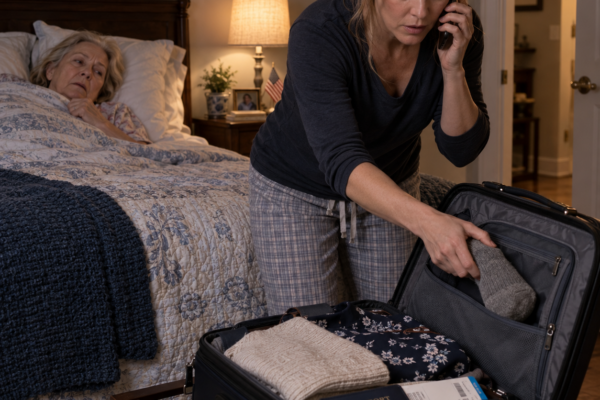
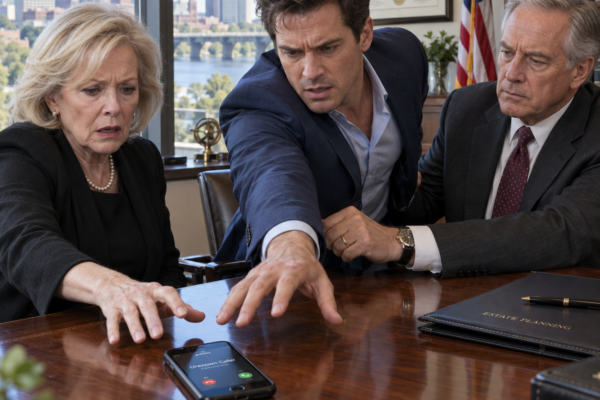
My Husband Left Our Children Millions. He Left Me Only His Locked Phone—Then Someone Called It During the Will Reading.