The security guard called me. “Sir, your eight-year-old granddaughter has been sitting inside the elevator for two hours. She won’t come out, and she won’t tell us where her mother is.” My heart dropped. Then he lowered his voice. “She said you’d understand one word: lighthouse.” I drove there as fast as I could. When the elevator doors opened, my granddaughter looked up at me without saying a word. Then I saw her mother’s purse on the floor beside her. Her phone was still inside. But her mother was nowhere in the building. I looked at my granddaughter again. She whispered, “Grandpa… now you know where we have to go.”
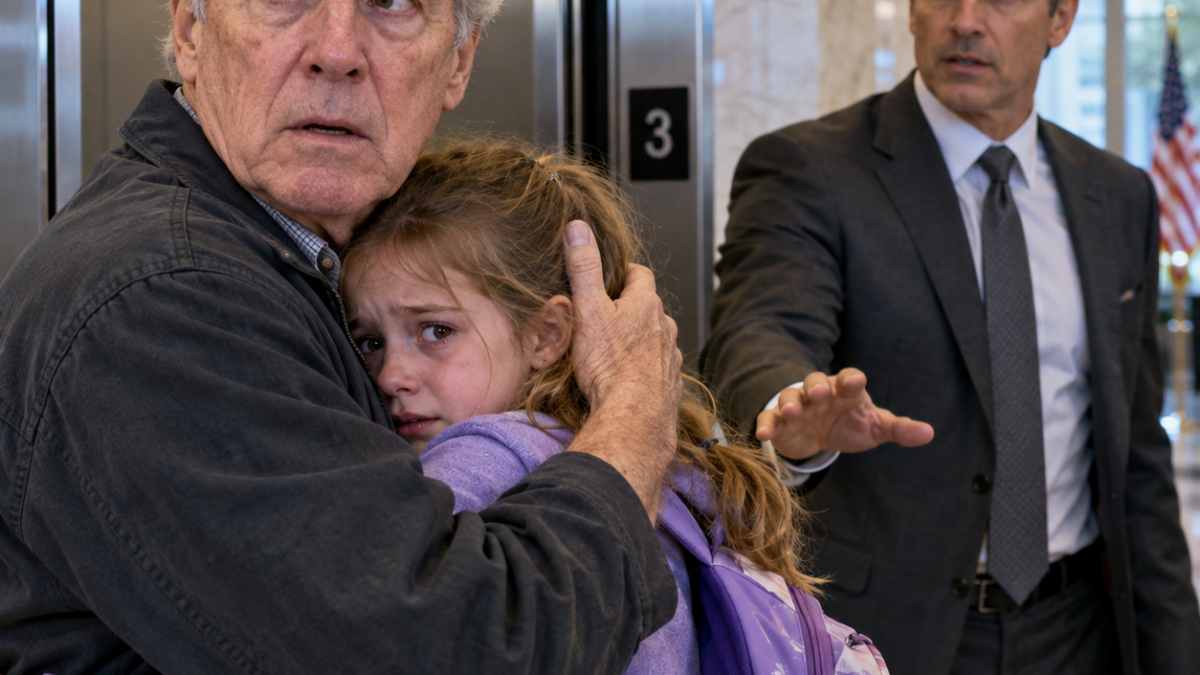
The Security Guard Said My 8-Year-Old Granddaughter Had Been Riding the Elevator for Two Hours. Then He Told Me the One Word She’d Given Him: “Lighthouse.”
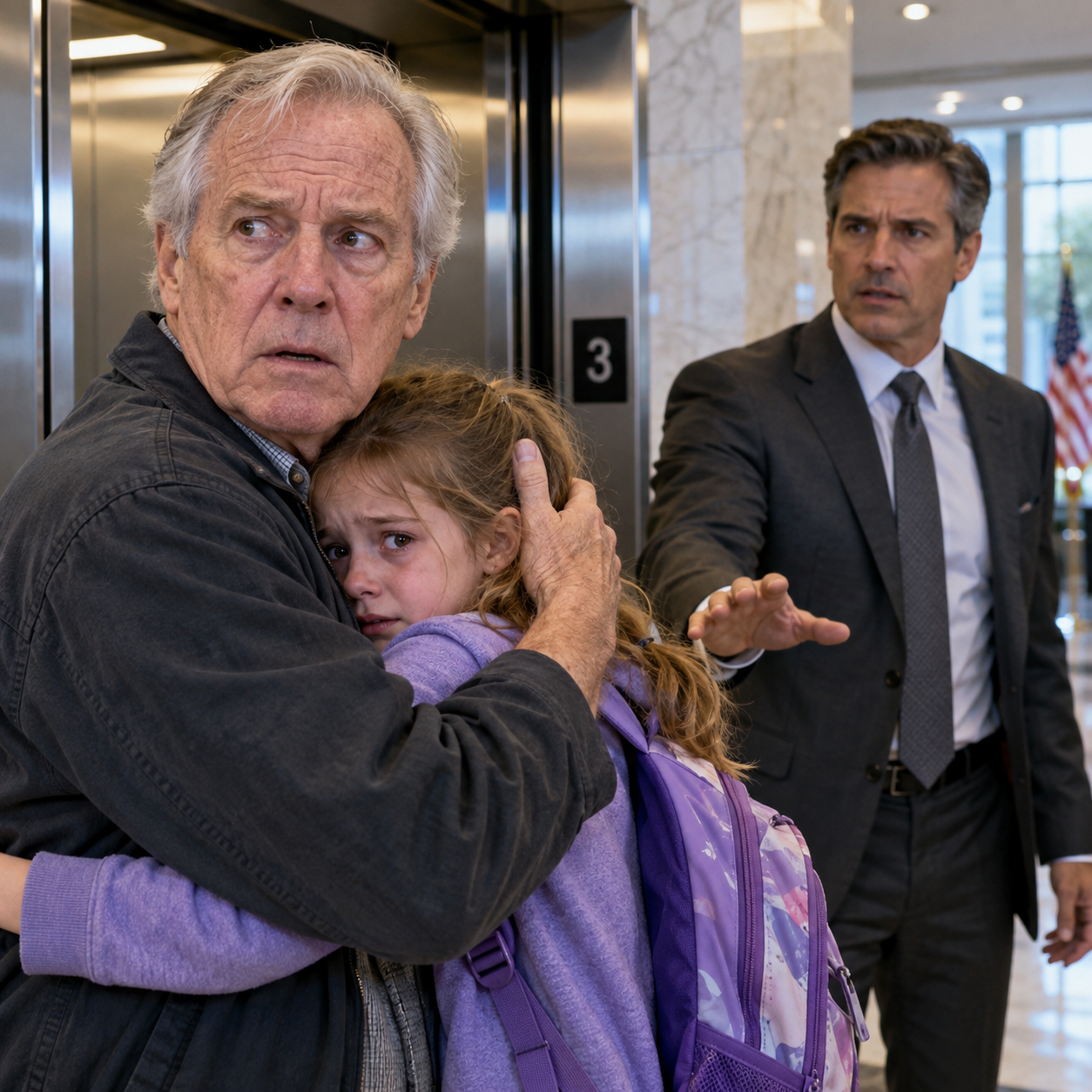
My phone rang at 4:12 on a Thursday afternoon while I was standing in my garage with a screwdriver in one hand and a coffee cup in the other.
I almost let it go to voicemail.
At sixty-eight, I had reached the age when unknown numbers usually meant somebody wanted to extend a warranty I did not have, sell me a roof I did not need, or ask whether I had considered changing my Medicare plan.
But something made me answer.
“Michael Hale?”
The man’s voice was low and careful.
“Yes.”
“My name is Raymond Ortega. I’m the head of security at Whitfield Tower downtown. Sir, your granddaughter is here.”
I stopped turning the screwdriver.
“My granddaughter?”
“Lily.”
I set the tool down.
“Is she hurt?”
“I don’t believe she needs immediate medical attention, but there’s something you need to know.”
The way he said it made the back of my neck tighten.
“What?”
“She won’t leave one of our elevators.”
For half a second, I almost laughed from sheer confusion.
Lily was eight. Eight-year-olds could be stubborn about vegetables, bedtime, shoes, homework, the exact color of a cup, or whether pancakes cut into triangles tasted better than pancakes cut into squares.
An elevator seemed like a strange place to choose for a standoff.
“How long has she been in there?”
The security guard paused.
“Two hours and eleven minutes.”
The coffee cup stopped halfway to my mouth.
“What do you mean, she’s been in there for two hours?”
“She rides up. She rides down. If the doors open and someone approaches, she presses the close button. We’ve tried talking to her. She won’t come out.”
“Where are her parents?”
Another pause.
That one was worse.
“Sir, she asked me to call you.”
My fingers tightened around the coffee mug.
“Did she say why?”
“She said I should give you one word.”
I already knew.
Not consciously.
Not in any way I could explain.
But somewhere beneath my ribs, the answer was waiting before he spoke.
“What word?”
“Lighthouse.”
The cup slipped out of my hand.
It hit the concrete floor and broke into three large pieces.
Coffee spread beneath my workbench, running toward an old cardboard box of Christmas lights, and I did not even look down.
Because there were only two people in the world who knew what that word meant.
Lily.
And me.
“Mr. Ortega,” I said, “listen carefully. Do not force her out of that elevator.”
“All right.”
“Do not let anyone take her. I don’t care who they say they are. Not her father. Not one of his employees. Nobody.”
His voice changed.
Not much.
Just enough.
“I was hoping you’d say that.”
My stomach dropped.
“What have you seen?”
“I’ll tell you when you get here.”
“No. Tell me now.”
There was silence on the line.
Then he said, “Two nights ago, I saw Lily on a hallway camera around three in the morning. She was barefoot outside a unit on the thirty-first floor. A man came out and took her back inside. I filed an incident note.”
“Which man?”
“You know which man.”
My son-in-law.
Grant Whitfield.
The man whose name was on the building.
The man who had been married to my daughter for nine years.
The man I had loaned $140,000 eighteen months earlier because my daughter had called me crying and said her husband needed help.
I closed my eyes.
“Is Grant there now?”
“Not in the lobby.”
“And Emma?”
“I haven’t seen your daughter.”
I grabbed my keys.
“Keep Lily on camera.”
“Yes, sir.”
“I’m coming.”
I do not remember closing the garage.
I do not remember locking the back door.
I remember getting into my old Ford, throwing my phone into the cup holder, and hearing Maggie’s voice in my head.
Safety first, Michael.
My wife used to say I had turned those two words into a religion.
For thirty-eight years, I worked on elevators.
Not designed them.
Not sold them.
Not stood in a showroom wearing a suit and talking about brushed steel fixtures.
I worked on them.
I climbed into machine rooms at two in the morning. I stood on top of elevator cars with a flashlight between my teeth. I came home with grease under my fingernails and small cuts across my knuckles. I learned to recognize trouble from sounds most people never noticed.
A drag in a door operator.
A delayed relay.
A vibration that was not there yesterday.
A motor that sounded tired.
Most people stepped into an elevator and pressed a button without thinking about what was above them, below them, or behind the walls.
That was the point.
If people thought about the machinery, somebody like me had probably failed.
Maggie understood that better than anyone.
We were married forty-two years.
She could hear my truck turn onto our street and tell by the engine whether I had eaten dinner.
She could look at my face when I walked through the kitchen door and know whether I had spent the night changing a simple roller or dealing with something that could have killed somebody.
“You checked the stove three times,” she once told me as we were leaving for a weekend in Wisconsin.
“Four.”
“Michael.”
“The fourth time is where the disaster hides.”
She laughed so hard she had to put her suitcase down.
For the next twenty years, whenever I worried too much, she would look at me and say, “Still hunting for the fourth disaster?”
Then cancer found her.
There was no safety inspection for that.
No backup brake.
No emergency stop.
No part number I could order and replace.
Eleven months after the doctor said the word we were afraid to hear, I was sitting beside a hospice bed in our living room while snow gathered outside the window.
Maggie died with my hand around hers.
For months afterward, our house felt like someone had removed the sound from it.
I would wake up and listen for her in the kitchen.
I would come home from the grocery store and start saying something before remembering there was nobody there.
Then Sunday would come.
And Lily would arrive.
She was six when Maggie died, with brown hair that escaped every ponytail Emma ever attempted and a gap between her front teeth that made every smile look slightly mischievous.
Every Sunday morning, I made blueberry pancakes.
Lily poured too much syrup.
I pretended to object.
She asked questions.
“Grandpa, why do elevators skip thirteen?”
“Some buildings do because people are superstitious.”
“Does the elevator know?”
“No.”
“Can elevators get lonely?”
“Only when nobody presses their buttons.”
“That’s sad.”
“It was a joke.”
“I still think it’s sad.”
Then she would ask something about birds, gravity, electricity, clouds, why grown-ups drank coffee if it smelled burned, whether her grandmother could see us, and whether dogs understood Sundays.
She listened with her whole face.
Lily kept me moving when grief had given me every excuse to stop.
That was how the lighthouse rule began.
When I was in my twenties, I responded to a hospital elevator call involving a little boy who had gotten separated from his mother.
He wandered into an elevator alone.
The doors closed.
The car stalled.
He was physically safe, but he did not know that.
He screamed until his voice went hoarse.
When we finally opened the doors, the boy stood in the corner shaking so hard that one of the nurses had to carry him.
I remembered him for decades.
After Lily started spending more time away from Emma as Grant’s business grew, I found myself thinking about that boy again.
So one Sunday, when Lily was six, I put down my fork and said, “I’m going to teach you something.”
She looked suspiciously at me.
“Is it math?”
“No.”
“Good.”
“It’s a safety rule.”
“That sounds worse.”
I smiled.
“Do you know what a lighthouse does?”
“It keeps ships from crashing.”
“Partly. But think about where a lighthouse stands.”
She considered it.
“By the water?”
“Yes, but more important, it stands where it can be seen.”
I pointed toward her.
“If you ever feel scared, and the person who is supposed to keep you safe is the reason you feel scared, I want you to remember something.”
Her expression became serious.
I told her to go somewhere public.
A lobby.
A store counter.
A reception desk.
Anywhere with cameras, employees, other families, or people who could see her.
I told her not to hide in an isolated place.
I told her not to leave with a stranger just because that stranger said an adult had sent them.
I told her to find someone in authority and say one word.
“Lighthouse.”
She smiled.
“That’s our password?”
“It’s more than a password.”
“What happens when I say it?”
“If somebody calls me and says you used that word, I come.”
“What if you’re sleeping?”
“I wake up.”
“What if you’re at the store?”
“I leave my cart.”
“What if you’re in the shower?”
I gave her a look.
She giggled.
Then she held out her pinkie.
“Promise?”
I wrapped mine around hers.
“Promise.”
We practiced.
I would pretend to be the security guard.
She would pretend to be lost.
Then we would switch.
For her, it became a game.
For me, it was one more thing an overprotective grandfather did because the world had already taken one person he loved and he had no intention of giving it another without a fight.
I never expected Lily to use it.
Certainly not because of Grant.
When Emma first brought Grant Whitfield home, Maggie was still alive.
He arrived carrying a bottle of wine expensive enough that Maggie whispered to me in the pantry, “Are we supposed to drink that or insure it?”
Grant was thirty-seven then.
Tall.
Fit.
Gray already beginning at his temples in a way that made him look distinguished rather than older.
He wore a navy jacket without a tie and shoes that probably cost more than the lawn mower in my garage.
But he was charming.
That is the word everybody used.
Charming.
He remembered names.
He made eye contact.
He knew enough about baseball to talk to one person, enough about municipal politics to talk to another, and enough about architecture to make people feel he understood cities better than the people who lived in them.
He owned Whitfield Residential.
At first, that meant a handful of apartment properties.
Then ten.
Then twenty.
Eventually, glass towers started appearing downtown with discreet brass plaques carrying his company’s name.
Emma had met him through a marketing project.
She was thirty-two, independent, funny, and perfectly capable of deciding whom she loved.
So when she told us she was serious about Grant, I tried not to act like the father who inspected his daughter’s dates as if they were faulty equipment.
Maggie tried too.
But after dinner that first night, while Grant and Emma were outside, Maggie stood beside me at the sink drying a plate.
“He didn’t ask us one question.”
“What?”
“About ourselves.”
“He was nervous.”
“He talked for two hours.”
“People talk when they’re nervous.”
“He asked what your house was worth.”
I looked at her.
“He asked about the neighborhood.”
“No. He asked what the house was worth.”
I shrugged.
Maggie kept drying the plate.
Then she said, “Just remember it.”
I did.
For years, nothing dramatic happened.
That is how these things often work.
If Grant had walked into our lives acting cruel or controlling, Emma would have seen him.
We all would have.
Instead, everything happened in degrees.
Emma skipped a Sunday dinner because Grant had clients in town.
Then Christmas Eve became complicated because Grant’s investors were hosting something.
Then Emma started checking with him before accepting invitations.
Then she began apologizing for things that did not require apologies.
“Sorry we can only stay an hour.”
“Sorry Grant has to take this call.”
“Sorry we missed your birthday dinner.”
“Sorry I didn’t call back.”
Maggie noticed.
I noticed.
But noticing is not the same as understanding.
After Maggie died, Emma became even harder to reach.
I told myself grief looked different on everybody.
Grant said she was overwhelmed.
Grant said she needed space.
Grant said she was focusing on Lily.
Grant said they were traveling.
Grant always had an explanation.
Then came the money.
Emma called on a Tuesday evening.
I could hear immediately that something was wrong.
“Dad, can I ask you something?”
“Of course.”
“It’s awkward.”
“Then ask awkwardly.”
She gave a weak laugh.
Grant, she explained, had a development project nearing completion. A financing delay had created what she called a temporary liquidity gap.
Those were not Emma’s words.
Emma would have said, “They’re short on cash.”
Grant said “temporary liquidity gap.”
He needed $140,000 for ninety days.
I had $140,000.
Exactly.
It came from Maggie’s life insurance.
I had never spent it.
Not because I had a plan for it.
Because seeing the number in that account made me feel as though Maggie had left one last hand on my shoulder.
Emma knew that.
“Dad, you don’t have to.”
That should have been enough for me to say no.
Instead I heard my daughter sounding frightened and thought the fastest way to remove that fear was to solve the problem.
“Will this help you?”
“Yes.”
“Then send me the paperwork.”
Grant did.
Beautiful paperwork.
Heavy cream-colored pages.
Embossed letterhead.
Signature blocks.
A promissory note.
A repayment schedule.
The next afternoon I sat in a conference room at Whitfield Residential while Grant shook my hand.
“You won’t regret this.”
I remember looking at our joined hands.
“I’m not doing this for you.”
His smile did not change.
“Of course not.”
Ninety days passed.
Then one hundred twenty.
Then six months.
No repayment.
No meaningful update.
Grant’s assistant began answering when I called.
Emma’s messages became shorter.
All good, Dad.
Busy week.
Will call soon.
Love you.
I started to worry.
Then two Sundays before Raymond Ortega called me, Lily came for pancakes.
She hardly ate.
She moved one blueberry around her plate until it left a purple streak through the syrup.
“What’s wrong?”
“Nothing.”
“You’ve been pushing that berry around long enough to give it a name.”
She almost smiled.
Then she asked, “Grandpa?”
“Yeah?”
“What do you do if the person who’s supposed to keep you safe isn’t safe?”
Every muscle in my body went still.
I kept my voice calm.
“Is somebody making you feel unsafe?”
Her eyes lifted to mine.
For a second I thought she was going to tell me.
Then she shook her head.
“No.”
“Lily.”
“Can I have more syrup?”
I should have pushed.
That question lived inside me afterward.
I called Emma that night.
Voicemail.
The next morning.
Voicemail.
Grant texted an hour later.
Emma’s not feeling well. We’re taking some family time. She’ll call when she’s rested.
I wrote back.
I want to hear that from Emma.
No answer.
I considered driving over.
Then I told myself I was becoming the interfering father Grant already believed me to be.
Ten days later, Raymond Ortega called.
Now I was driving downtown with both hands locked around the steering wheel, asking every red light in the city to change faster.
Whitfield Tower came into view twenty-six minutes after I left home.
Thirty-four floors of black glass.
A gold W above the entrance.
I had been there before.
Investor dinners.
A Christmas reception.
One of Lily’s birthday lunches.
That afternoon, the building looked different.
Maybe buildings always do once you know what has happened inside them.
I left the truck crooked beside the curb, ran through the revolving door, and nearly collided with a man wearing a gray security blazer.
“Mr. Hale?”
“Ortega?”
He nodded.
Raymond Ortega was probably in his late fifties, broad through the shoulders, with a salt-and-pepper mustache and the posture of someone who had spent years being expected to stay calm when everyone else lost control.
“Where is she?”
“Elevator three.”
We walked quickly.
“Tell me everything.”
“I first noticed her a little after two. She came down from the thirty-first floor by herself. When the doors opened, she saw one of our guards and immediately pressed close.”
“Did she look hurt?”
“She looked scared.”
Ray glanced toward me.
“But controlled. Too controlled for an eight-year-old.”
We passed the reception desk.
Several people stood near the bank of mailboxes, watching.
A woman holding a grocery tote whispered something to another resident.
Ray lowered his voice.
“I approached the car and asked if she needed help. She asked whether the camera inside was working.”
I looked at him.
“She asked that?”
“First question.”
“What did you say?”
“I said yes.”
“Then?”
“She said she was staying.”
My throat tightened.
“I asked if I could call her parents. She said no. I asked if there was another adult. She gave me your name.”
We reached the elevators.
Car three stood open.
Ray had arranged for it to remain at the lobby under supervision.
And there she was.
My granddaughter sat on the elevator floor in the far corner with her purple school backpack against one wall.
Her knees were pulled to her chest.
Her hair had partly fallen from its ponytail.
One sneaker was untied.
There was a faint red mark along her cheek.
But that was not what stopped me.
Emma’s purse was beside her.
So were Emma’s keys.
Her wallet.
Her passport.
And her phone.
Lily had lined everything up neatly against the wall.
Like evidence.
Like she had been waiting for an adult to understand what she already understood.
I could not move.
Lily looked up.
Her face changed when she saw me.
Not relief.
Not yet.
First came verification.
“Grandpa?”
“I’m here.”
She raised one hand.
“Say it.”
I knew exactly what she wanted.
I lowered myself slowly until I was kneeling outside the doors.
“A lighthouse doesn’t chase the ships.”
Her chin trembled.
She finished the sentence.
“It stands where everybody can see it.”
“Yes.”
Only then did she move.
She crossed the elevator on her knees, scrambled up, and threw both arms around my neck.
Her whole body began to shake.
I held her so tightly I worried I might hurt her.
“You came.”
“Always.”
“You really came.”
“I promised.”
She buried her face against my shoulder.
Behind me, I heard Ray take a slow breath.
I rubbed Lily’s back.
“Where’s your mom?”
Lily became still.
Then she whispered into my collar.
“Daddy says Mommy went away.”
I pulled back enough to see her face.
“But she didn’t.”
“What do you mean?”
“She’s here.”
“Here where?”
“In the building.”
Ray and I looked at each other.
“How do you know?”
“I heard her.”
“When?”
“The night before last.”
My stomach turned.
“Lily, look at me.”
She did.
“Did someone hurt you?”
Her fingers tightened in my jacket.
“I tried to get Mommy’s phone.”
“Who stopped you?”
She looked toward the lobby.
She did not have to say his name.
I kept my voice steady.
“What happened?”
“Daddy got mad.”
I resisted every instinct that told me to demand details from a frightened child standing in a public lobby.
There would be police.
Doctors.
People trained to ask those questions properly.
“What’s on your mom’s phone?”
Lily looked down at it.
“I recorded him.”
Ray was already reaching for his radio.
“Calling police.”
“Yes.”
He stepped away.
I stayed beside Lily.
“Recorded what?”
“Daddy talking.”
She swallowed.
“He didn’t know I had Mommy’s phone.”
“Okay.”
“He said nobody listens to kids.”
I closed my eyes for one second.
When I opened them, I said, “He was wrong.”
That was when I heard Grant.
“Michael.”
The voice came from behind me.
Smooth.
Familiar.
Almost relieved.
“Thank God.”
I turned.
Grant Whitfield crossed the lobby wearing a charcoal suit and an expression of concerned patience.
Two men walked several steps behind him.
I recognized one as someone from his corporate office.
The other I did not know.
“There she is,” Grant said. “Lily, sweetheart. You’ve had everybody terrified.”
Lily wrapped both arms around my waist.
Grant saw it.
His smile remained.
“Come on, honey. Let’s go upstairs.”
“No.”
It was the first word I had said to him.
He stopped.
“Michael.”
“Stay there.”
His eyebrows lifted.
He gave me the look reasonable men use when they want everyone else to believe the other person is behaving irrationally.
“I know you’re worried.”
“My daughter’s purse is on that elevator floor.”
Grant glanced inside.
“So?”
“Her wallet.”
No reaction.
“Her keys.”
Nothing.
“Her passport.”
His expression barely moved.
Then I held up Emma’s phone.
That did it.
Not much.
A small tightening near his mouth.
But after nine years of watching him perform charm, I noticed.
Grant sighed.
“Emma left for Arizona.”
“Without her passport?”
“Domestic flight.”
“Without her wallet?”
“She has other cards.”
“Without her phone?”
“She needed a break.”
“From what?”
His gaze moved to the people watching us.
“Michael, this isn’t the place.”
“It’s exactly the place.”
Lily pressed closer to me.
Grant softened his voice.
“Lily has been having a difficult time.”
I stared at him.
“What does that mean?”
“She’s been anxious. Making up stories. Emma’s absence upset her.”
“My mother isn’t absent,” Lily said.
Grant’s smile disappeared for half a heartbeat.
Then it returned.
“Sweetheart.”
Lily hid behind me.
Ray came back.
“The police are on their way.”
Grant turned slowly.
“Why?”
“Because I called them.”
Grant stared at him.
“Ray.”
“Yes, sir.”
“You understand who employs you?”
Raymond Ortega had probably heard that sentence in one form or another hundreds of times in his career.
His face did not change.
“Yes, sir.”
“And you called the police to my building without consulting management?”
“I called the police because an eight-year-old child told me she was afraid to leave an elevator.”
Grant lowered his voice.
“You are making a serious mistake.”
Ray looked toward the camera mounted above car three.
“No, sir. I think I finally stopped making one.”
Grant’s eyes hardened.
That was the first time Lily saw it too.
I felt her grip tighten.
So I stepped fully into view of the lobby camera.
“Everybody stays right here.”
Grant laughed once.
Not because anything was funny.
“Michael, what exactly do you think is happening?”
“I don’t know yet.”
“Then maybe stop acting like you do.”
“Good advice.”
I held Emma’s phone up.
“We’ll wait for the police and let them figure it out.”
The lobby doors opened a few minutes later.
Two officers entered.
The first was a woman in her forties named Officer Reyes.
Her partner looked younger.
Ray met them halfway and spoke quietly.
Grant immediately stepped forward.
“Officer, I’m Grant Whitfield. I own this property.”
Reyes glanced at him.
“Okay.”
It clearly was not the response Grant expected.
“My daughter has been having an emotional episode.”
“Your daughter is the child?”
“Yes. Lily.”
Officer Reyes looked toward Lily.
“What kind of episode?”
“Anxiety. Family stress.”
“Has she been evaluated?”
Grant hesitated.
“We’ve spoken to professionals.”
“Which professionals?”
“My wife handles that.”
“Where is your wife?”
“Arizona.”
Reyes turned toward me.
“And you are?”
“Michael Hale. Emma’s father. Lily’s grandfather.”
“Why were you called?”
“Because Lily asked for me.”
Lily was still holding my hand.
Reyes crouched several feet away, leaving space between them.
“Hi, Lily. My name is Elena. I’m a police officer. Is it okay if I ask you one question?”
Lily nodded.
“Are you afraid to go home with your dad?”
“Yes.”
The lobby seemed to become quieter.
“Okay,” Reyes said.
She stood.
That one answer changed everything.
Grant understood it.
His jaw tightened.
Reyes asked her partner to remain with Lily and moved Ray and me several feet aside.
I told her about Emma.
The ten days without a call.
The belongings in the elevator.
The security footage Ray had seen.
Then I mentioned the recording.
Reyes looked at the phone.
“Do you have permission to access it?”
“Lily says Emma taught her the code.”
Lily called it out.
It was Maggie’s birthday.
I entered it.
The phone unlocked.
For a moment, seeing Emma’s familiar home screen felt strangely intimate, as though I had opened a door into a room she should have been standing in.
Lily showed us the voice recorder app.
Several files appeared.
The newest was nineteen minutes long.
Officer Reyes told everyone except essential personnel to step back.
Then she pressed play.
At first there was static.
Fabric moving.
A child breathing.
Then Grant’s voice.
Muffled, but recognizable.
“She’ll sign.”
Another man said something I could not make out.
Grant answered.
“I don’t care how long it takes.”
My eyes moved toward him.
He had gone perfectly still.
The recording continued.
They were talking about debt.
A lender.
A property Emma had inherited from Maggie.
A small commercial building on the west side that Maggie’s father had owned decades earlier and eventually left through the family.
Grant wanted Emma to sign documents allowing him to pledge the building against one of his company loans.
Emma had refused.
Then I heard a voice farther away.
Weak.
“Grant, please.”
Emma.
There are sounds a parent knows forever.
A newborn’s cry.
A child calling from another room.
Your daughter laughing in the back seat.
Your grown child saying “Dad” in exactly the same frightened tone she used when she was six.
I knew my daughter.
“Grant, let me see Lily.”
Nobody in the lobby moved.
The recording went quiet for several seconds.
Then Grant said, “The kid knows nothing.”
A second voice asked something.
Grant replied, “She’s eight. Nobody listens to an eight-year-old.”
Officer Reyes stopped the recording.
Grant spoke immediately.
“That file has been manipulated.”
Reyes did not argue.
She simply looked at her partner.
“Separate him from the child.”
Grant took one step backward.
“Officer.”
“Sir, keep your hands visible.”
“This is absurd.”
“We can sort that out.”
“You’re listening to a recording made by a child.”
“Correct.”
“On a phone that has been out of my possession for two days.”
“Correct.”
“You have no idea what context you’re hearing.”
“That’s why we investigate.”
For the first time since I had known him, Grant looked like a man who could not find the right room to control.
He glanced toward the garage corridor.
Then toward the elevators.
Then at the people watching.
Phones had begun to appear.
Residents.
Staff.
A delivery driver.
Too many witnesses.
Too many cameras.
Grant’s shoulders lowered.
For a moment, I thought he had decided to cooperate.
Then one of the men who had arrived with him stepped between Ray and the officers.
Everything happened quickly after that.
Voices rose.
Someone bumped the reception stand.
Officer Reyes ordered everyone to stop moving.
Grant turned and ran toward the service elevator.
He reached it before anyone else.
The doors closed.
Ray swore under his breath.
“He’ll take it to the garage.”
I looked at the floor indicator.
Then at the fire safety panel.
Thirty-eight years of habit took over.
I knew what that building’s safety system was designed to do during an emergency.
I also knew better than to start manipulating equipment in a building full of people while police were present.
“Ray,” I said, “can your authorized building control recall that car?”
His eyes snapped toward me.
“Yes.”
“Tell Reyes.”
Ray did.
Within seconds, under the officer’s direction, building security activated the approved recall procedure.
The service elevator changed direction.
Grant could press whatever buttons he wanted inside.
The building’s safety system had priority.
We watched the numbers descend.
Then return.
A chime sounded.
The doors opened in the lobby.
Grant stood inside.
His tie had come loose.
For once, his hair was not perfect.
His eyes went first to the officers.
Then Ray.
Then me.
I do not know what expression he saw on my face.
But I remember exactly what I said.
“You chose the wrong elevator.”
Officer Reyes ordered him out.
He did not cooperate at first.
A few moments later, he was in handcuffs.
But I barely watched.
Because Lily was tugging on my hand.
“Grandpa.”
I crouched.
“What?”
“Mommy’s downstairs.”
“How do you know?”
“The place by the machines.”
Ray heard her.
His face changed.
“There’s a restricted storage corridor in sub-basement two.”
Officer Reyes turned.
“What’s down there?”
“Mechanical rooms. Building storage. Boiler access.”
“Any occupied space?”
“Not legally.”
“Locks?”
Ray nodded.
“One storage room has been kept under Mr. Whitfield’s direct control.”
Reyes reached for her radio.
Within minutes, more officers and paramedics were on the way.
I wanted to go downstairs.
Reyes initially said no.
She was right.
It was a potential crime scene.
But Ray knew the building, and I knew the elevator and machine-room layout from inspections I had worked on years earlier.
After additional officers arrived, I was allowed only as far as a controlled area while professionals moved ahead.
The service elevator dropped below the parking garage.
When the doors opened, the air changed.
Concrete.
Dust.
Old pipes.
Mechanical ventilation.
Every large building has a hidden body beneath the polished lobby.
People see marble, glass, brass fixtures, and expensive furniture upstairs.
Down below are valves, switchgear, pumps, service corridors, storage cages, electrical rooms, and locked doors nobody notices unless something fails.
Ray led the officers toward the mechanical corridor.
A newer padlock had been installed on an old steel door.
One officer photographed it.
Another called for building maintenance and emergency access equipment.
I stood back.
For once in my life, I let somebody else handle the machinery.
Then I heard it.
Not screaming.
Not banging.
A cough.
Faint.
From behind the door.
Everything inside me broke loose at once.
“Emma!”
An officer held an arm in front of me.
“Sir.”
“That’s my daughter.”
“I know.”
“Emma!”
There was a pause.
Then something from inside.
Barely a sound.
“Dad?”
My knees nearly gave out.
“I’m here.”
I pressed one hand against the concrete wall because I needed something solid beneath it.
“I’m right here, sweetheart.”
The officers forced access.
Paramedics moved in.
I saw only fragments at first.
A thin gray blanket.
Emma’s hair.
Her face turning toward the light.
She looked exhausted and pale, but alive.
Alive.
That word became the only word that mattered.
A paramedic helped her sit up.
Then she saw me.
“Daddy.”
Emma had not called me Daddy since middle school.
I was not supposed to rush into the room.
I did anyway.
Nobody stopped me.
I knelt beside her and wrapped my arms carefully around her shoulders.
She felt too light.
“I’ve got you.”
“Lily.”
“She’s safe.”
Emma pulled back.
“Where?”
“Upstairs.”
“Grant?”
“The police have him.”
Her eyes closed.
For a moment she simply leaned into me.
Then she began to cry.
Not loudly.
Not dramatically.
She cried the way people do when they have spent too long believing they are not allowed to fall apart.
I held my daughter while paramedics worked around us.
“She found you,” I whispered.
Emma looked at me.
“What?”
“Lily.”
I smiled through tears I was no longer pretending not to have.
“She remembered the lighthouse.”
Emma covered her mouth.
That was the first moment she truly broke.
The ambulance ride was quiet.
Lily sat beside her mother holding her hand with both of hers.
Emma kept looking at her as if she needed to verify every few seconds that her daughter was real.
I sat across from them.
Nobody told stories.
Nobody tried to make things feel normal.
Some silences are too large to fill.
At the hospital, Lily was examined separately.
A child advocate was called.
The mark on her cheek was documented.
Emma received fluids and treatment for dehydration and exhaustion.
Detectives began interviewing Ray and other building employees.
Officer Reyes came to find me shortly before midnight.
We were in a hospital corridor under fluorescent lights that made everybody look more tired than they felt.
Grant had been booked.
His two associates were being questioned.
Officers had secured his office and the restricted areas of the building pending warrants.
“You did the right thing by not confronting him physically,” Reyes told me.
“I wanted to.”
“I know.”
“I still do.”
She gave me a look that said she had heard that sentence before.
“Let the evidence do the damage.”
I looked through the small window in Emma’s hospital room.
Lily was curled in a chair beside the bed.
“She was in that elevator for two hours.”
Reyes followed my gaze.
“She made herself visible.”
“She’s eight.”
“Yes.”
“I should’ve known.”
Reyes turned toward me.
“Known what?”
“Two weeks ago, she asked what to do if the person who was supposed to keep you safe wasn’t safe.”
“What did you do?”
“I asked if somebody was scaring her.”
“And?”
“She said no.”
“You called your daughter?”
“Yes.”
“More than once?”
“Yes.”
“Then you noticed.”
“Not enough.”
Officer Reyes was quiet.
Then she said, “Parents and grandparents always think there was one perfect question they should have asked. One perfect visit they should have made. Usually there wasn’t.”
I looked at her.
“You see this often?”
“Too often.”
She nodded toward Lily.
“But that girl did something extraordinary.”
“No eight-year-old should have to be extraordinary.”
“No,” Reyes said. “They shouldn’t.”
Around midnight, Emma woke.
I was sitting beside her bed.
The hospital had gone into that strange nighttime rhythm where machines beep softly, shoes squeak in distant hallways, and the world outside seems to disappear.
Lily was asleep in the chair with a hospital blanket over her.
Emma watched her for a long time.
Then she whispered, “Dad?”
“I’m here.”
“I’m sorry.”
“For what?”
Her eyes filled.
“Everything.”
“There is no everything.”
“The money.”
I knew immediately which money she meant.
“Maggie’s insurance.”
She nodded.
“Grant took it.”
“I gave it to him.”
“Because of me.”
“Because you asked for help.”
“I knew something was wrong by then.”
“Emma.”
“I should’ve told you.”
Her voice cracked.
“He controlled the accounts. Then he started borrowing against projects without telling partners. I found transfers. Fake consulting invoices. Companies I’d never heard of.”
She swallowed.
“I confronted him.”
“When?”
“Months ago.”
“What happened?”
“At first he apologized.”
Of course he did.
Men like Grant rarely begin with threats.
They begin with explanations.
Emma told me he had blamed the market.
Interest rates.
Construction delays.
A dishonest partner.
An accountant.
A lender.
Everybody except himself.
He said he could fix everything if she would help him secure one more loan.
The collateral would be the old commercial property she had inherited from Maggie’s side of the family.
Emma refused.
Then Grant changed.
Not all at once.
That would have been easier.
He became watchful.
Her passwords stopped working.
He knew where she went.
Employees she had trusted were suddenly reassigned.
He convinced her that if his business collapsed, dozens of families would lose their jobs because of her refusal.
Then he threatened divorce.
Then custody.
“He said he’d take Lily.”
Emma stared at her sleeping daughter.
“He said nobody would give me custody after his lawyers were finished with me.”
“Why would you believe that?”
“You don’t understand what it’s like when somebody has spent years making you doubt every decision.”
I did not answer.
She was right.
I did not understand.
Not from inside it.
Grant had money.
Connections.
Employees who called him Mr. Whitfield.
Attorneys.
Pictures with city officials.
Charity gala plaques.
A seat on a hospital foundation board.
When a man like that tells his wife he can make her look unstable, maybe it does not sound impossible.
Especially after years of being told that every problem is somehow your fault.
“I found proof about your money,” Emma said.
“What proof?”
“It never went into the project he showed you.”
I felt something inside me turn cold.
“Where did it go?”
“To cover an older loan.”
“So the contract was fake.”
“The project existed. The reason he asked you for money didn’t.”
Emma closed her eyes.
“When I told him I was going to you and the police, he panicked.”
She did not tell me every detail that night.
I did not ask.
There would be time.
What mattered was that Grant had prevented her from leaving, isolated her inside the building, and tried to force her signature on financial documents.
Lily had heard pieces of it.
Enough to understand her mother was in danger.
Enough to take Emma’s phone when Grant left it unattended.
Enough to remember a silly safety game her grandfather had taught her over blueberry pancakes.
“What made her go to the elevator?” I asked.
Emma looked toward Lily.
“I told her once.”
“Told her what?”
“That cameras are witnesses.”
I almost smiled.
“Sounds familiar.”
“She said, ‘Grandpa says that too.’”
Emma began crying again.
“He underestimated her.”
“Yes.”
“He always underestimated everybody.”
I took her hand.
“Not anymore.”
The first week after Emma came home from the hospital was harder than the rescue.
People imagine there is a moment when the police arrive and the victim becomes safe and everything immediately starts moving toward normal.
Real life is not like that.
Safety is the beginning.
Then comes paperwork.
Interviews.
Doctors.
Lawyers.
Sleep that does not come.
Sleep that comes with nightmares.
Phone calls from detectives.
Insurance notices.
Questions from relatives.
Neighbors who mean well but ask too much.
Reporters who discover the name Grant Whitfield and realize they have a story involving one of the city’s best-known developers.
By Monday morning, there were news vans outside Whitfield Tower.
By Tuesday, Grant’s company issued a statement calling the matter “a private domestic dispute containing serious factual misunderstandings.”
That phrase made me angrier than anything Grant had said in the lobby.
A private domestic dispute.
As though Emma had argued with him about the dishwasher.
His board announced that he was taking a temporary leave.
Two days later, lenders started asking questions.
Then investors did.
Then former employees called police.
Once the first wall cracked, everything behind it began spilling out.
Detective Aaron Pruitt took over much of the financial investigation.
He was a quiet man in his early fifties with tired eyes, inexpensive suits, and a habit of tapping his pen against a yellow legal pad when he was thinking.
Three weeks after the rescue, he came to my house.
Emma and Lily were living with me by then.
My house was no longer quiet.
Lily’s shoes appeared by the back door.
Emma’s tea mugs accumulated beside the sink.
A pink backpack hung from the same chair where Maggie used to leave her purse.
I did not mind any of it.
Pruitt sat at our kitchen table.
The pancake table.
He placed a folder in front of him.
“Mr. Hale, I need to ask about your $140,000 transfer.”
I told him everything.
He showed me a bank record.
My money had entered one Whitfield Residential account on a Wednesday.
By Friday, nearly all of it had moved through two other entities.
One existed mainly on paper.
The money had been used to satisfy an overdue obligation from an unrelated project.
Grant had never intended to use it the way he had described.
“Can I get it back?”
Pruitt exhaled.
“I wouldn’t plan your budget around it.”
“I’m sixty-eight. My budget is coffee, property tax, and whatever blueberries cost.”
He almost smiled.
Then he became serious.
“You weren’t the only one.”
“How many?”
“We’re still counting.”
“Detective.”
He tapped the pen once.
“Forty-one potential victims so far.”
I leaned back.
“Forty-one?”
“Families. Retirees. Small investors. Business acquaintances. Some gave him twenty thousand. Some gave him several hundred thousand.”
“And nobody noticed?”
“People noticed pieces.”
That sentence stayed with me.
People noticed pieces.
An accountant questioned a transfer.
An investor complained about a delayed repayment.
A secretary wondered why a company existed only as a mailbox.
A security guard saw a little girl barefoot in a hallway.
A father noticed his daughter no longer used emojis.
A granddaughter asked what happened when the person who should keep you safe was not safe.
Pieces.
Nobody had the whole picture.
That was Grant’s protection.
Not secrecy.
Fragmentation.
He made sure everybody knew just enough to doubt themselves.
Pruitt opened another document.
“Your daughter finding the records may have forced his timetable.”
“For what?”
“The commercial property.”
The building Emma inherited was worth far more than I had realized.
It sat near a district that had recently been rezoned.
Grant had planned to pledge it against a short-term loan large enough to cover several obligations coming due.
Emma’s signature was required.
She refused.
“He was collapsing,” Pruitt said.
“Financially?”
“Yes.”
“So he did all this because his company was failing?”
Pruitt shook his head.
“Be careful with that explanation.”
“What do you mean?”
“Plenty of people lose businesses without terrorizing their families.”
He closed the folder.
“Money created pressure. It didn’t create his character.”
That was one of the smartest things anybody said to me during the whole case.
Because for weeks I kept looking for the moment Grant became Grant.
Maybe if his business had succeeded.
Maybe if lenders had waited.
Maybe if I had refused the money.
Maybe if Emma had confronted him differently.
That kind of thinking is seductive because it suggests there was a lever somewhere that could have changed everything.
But Grant had made choices.
Again and again.
Small choices first.
Then larger ones.
He lied.
Then lied to protect the lie.
Then controlled people to protect the second lie.
Then frightened them to protect the control.
By the time he stood in that lobby telling a police officer my granddaughter suffered from “episodes,” the path had been built one decision at a time.
Raymond Ortega lost his job three days after Grant’s arrest.
Technically, the company called it administrative suspension.
The board reversed it almost immediately when the news became public.
Ray was offered reinstatement.
He refused.
I found that out because he came to my house one Sunday.
He stood on the porch holding a grocery-store bouquet for Emma and a plastic bag.
“What’s in the bag?” I asked.
“Blueberries.”
I let him in.
Lily ran from the kitchen when she heard his voice.
“Mr. Ortega!”
Ray bent down.
“There’s my elevator tenant.”
Emma gave him a warning look.
“Too soon?”
“A little.”
“Sorry.”
Lily did not care.
“I wasn’t a tenant. I didn’t pay rent.”
Ray laughed.
“That is technically correct.”
He stayed for pancakes.
I learned more about him that morning.
Twenty-six years in security.
Eleven at Whitfield Tower.
Two grown daughters.
One granddaughter in Phoenix.
He had seen Grant pressure employees before.
Nothing like what happened to Emma, but enough that Ray had learned Grant could turn a person’s livelihood into a weapon without raising his voice.
“Why did you call me?” I asked.
Ray looked at Lily.
“Because she was specific.”
“What do you mean?”
“She wasn’t screaming. She wasn’t confused. She asked if the camera worked. Then she gave me your full name and phone number.”
He drank his coffee.
“And because I’d already ignored my instincts once.”
“The hallway.”
He nodded.
“When I saw her barefoot at three in the morning, I wrote the report. My supervisor told me Mr. Whitfield had said Lily was sleepwalking.”
“You believed him?”
“No.”
“Then why didn’t you call somebody?”
Ray stared into his cup.
“Because I wanted to keep my job.”
The room became quiet.
“I’ve replayed that a thousand times.”
Emma spoke before I could.
“You called when it mattered.”
“I should’ve called earlier.”
“So should I,” I said.
Ray looked at me.
For a moment, the two of us sat there competing over which grown man had failed Lily more.
Then she walked into the kitchen carrying her empty plate.
“Can I have another pancake?”
That ended the argument.
Children have a way of reminding adults that guilt is not the same thing as usefulness.
We made another pancake.
The criminal case moved slowly.
Much more slowly than television teaches people to expect.
There were hearings.
Motions.
Financial records.
Digital evidence.
Witness interviews.
Arguments over what prosecutors could introduce.
Grant hired attorneys whose names appeared on billboards and magazine lists.
For a while, his strategy seemed simple.
Make everything complicated.
The recording was unclear.
The corporate transfers were misunderstood.
Emma was emotional.
Ray was disgruntled.
I was a grieving widower with a personal grudge.
Lily was a frightened child whose memories could not be trusted.
Each explanation was plausible if you looked at it alone.
Together, they collapsed.
The elevator footage mattered.
Not because it showed some dramatic act.
It showed behavior.
At 2:01 p.m., Lily entered car three on the thirty-first floor.
At 2:17, Grant appeared when the doors opened.
He leaned toward her.
She pressed the close button.
At 2:53, he returned.
She stayed inside.
At 3:26, Ray approached with another guard.
Lily spoke to him but did not leave.
At 3:41, Ray brought water and placed it just inside the doorway without entering.
At 4:12, he called me.
Two hours and eleven minutes of a child refusing to leave the one place she believed had a reliable witness.
The recording on Emma’s phone was authenticated.
Financial specialists traced the transfers.
Employees started cooperating.
One former bookkeeper produced copies of documents she had quietly saved because numbers in Whitfield Residential’s accounts had stopped making sense.
Another investor came forward.
Then another.
The forty-one victims Pruitt mentioned became part of a broader fraud case.
Not all of it ended up in the same courtroom.
Different charges moved through different legal channels.
What mattered to us was simpler.
Grant could no longer make reality disappear by speaking calmly.
Five months after that Thursday afternoon, the main trial began.
I had never spent much time in courtrooms.
They were smaller than television made them look.
Less polished.
More ordinary.
People shuffled papers.
Attorneys whispered.
The judge drank water from the same kind of insulated tumbler half the country owns.
The fluorescent lights were unforgiving.
Grant arrived each morning wearing a dark suit.
He looked thinner.
But still composed.
Still Grant.
On the second day, his attorney referred to me as “a retired elevator mechanic” in a tone that was supposed to reduce me.
I almost laughed.
I had spent thirty-eight years keeping strangers alive inside steel boxes suspended hundreds of feet above concrete.
I had never been embarrassed by honest work.
Apparently, Grant’s attorney thought I should be.
He questioned the decision to use the building’s safety recall procedure when Grant attempted to leave.
Was I trained?
Had I been authorized?
Did I understand the risk?
The prosecutor stood.
“Mr. Hale did not activate building controls independently. Security personnel did so under police direction.”
That ended most of it.
Still, Grant’s attorney continued.
“You clearly disliked my client before that day, correct?”
“No.”
“You had concerns about him.”
“Yes.”
“You had lent him a substantial amount of money.”
“Yes.”
“Which had not been repaid.”
“Correct.”
“So you had a financial grievance.”
“I had a financial question.”
“Were you angry?”
“About the money?”
“Yes.”
“No.”
His attorney looked surprised.
“You weren’t angry about losing $140,000?”
“I was worried.”
“What’s the difference?”
“Money can be replaced.”
I looked toward Emma.
“My daughter can’t.”
The courtroom became quiet.
The attorney moved on.
Ray testified after me.
He described the elevator.
The security camera.
The hallway incident.
His decision to call me.
The prosecutor asked, “Why didn’t you remove Lily from the elevator?”
Ray looked toward the jury.
“Because I realized the elevator wasn’t the problem.”
“What was?”
“Everything outside it.”
No one moved.
“She had found the one place in the building where she knew she was being recorded. If I dragged her out because an adult told me to, I would have taken away the one thing she believed was protecting her.”
The prosecutor displayed a still image from the footage.
Lily sitting against the wall.
Purple backpack.
Shoelace untied.
Looking directly toward the camera.
“Did she appear confused?”
“No.”
“Did she know where she was?”
“Yes.”
“Did she know whom she wanted contacted?”
“Yes.”
“Who?”
“Her grandfather.”
Then the recording played.
Hearing Emma’s voice in the courtroom was harder than hearing it in the lobby.
I knew she was safe now.
She was sitting ten feet away.
I could see her.
But sound does not understand time.
A frightened voice remains frightened forever inside a recording.
When Grant’s voice said, “Nobody listens to an eight-year-old,” several jurors looked toward him.
He did not look back.
The hardest decision involved Lily.
I did not want her testifying.
Emma did not want to force her.
Prosecutors had alternatives that could reduce what Lily would be required to do.
But Lily wanted to speak.
Her child advocate prepared her carefully.
The judge allowed accommodations.
When Lily entered, she wore a blue dress and white cardigan.
Her shoes barely reached the floor from the witness chair.
The judge spoke gently.
“If you need a break, you tell me.”
“Okay.”
“If you don’t understand a question, say so.”
“Okay.”
“You’re not in trouble.”
“I know.”
The prosecutor smiled.
“Lily, do you remember being in an elevator at Whitfield Tower?”
“Yes.”
“Why did you stay there?”
Lily looked toward me.
I wished she would look anywhere else because I knew I was going to cry.
She said, “My grandpa taught me the lighthouse rule.”
“What is that?”
“If you’re scared, you go where people can see you.”
“Why?”
“So somebody knows where you are.”
“Did you think the elevator was safe?”
“Yes.”
“Why?”
“The camera.”
“Were you waiting for someone?”
“Yes.”
“Who?”
“My grandpa.”
“How did you know he would come?”
She frowned slightly.
The question seemed strange to her.
“Because he said he would.”
That was it.
No speech.
No performance.
An eight-year-old had been promised something by an adult she trusted.
So she believed him.
The prosecutor asked, “Did your grandfather come?”
Lily smiled.
“Yes.”
“Did Mr. Ortega help you?”
“Yes.”
“How?”
“He watched me.”
That answer affected Ray more than anything else.
He stared down at his hands.
Grant’s attorney asked very few questions.
Whatever strategy his team had discussed, even they seemed to understand that aggressively challenging an eight-year-old in front of a jury would accomplish nothing useful.
The jury deliberated less than three hours on the primary charges before returning guilty verdicts.
Additional financial matters were resolved afterward through related proceedings and agreements.
In the end, Grant received a combined sentence of fourteen years.
Fourteen years.
People asked whether that felt satisfying.
I never knew how to answer.
Watching him taken away did not bring Maggie back.
It did not erase ten days of fear from Emma.
It did not give Lily those two hours back.
It did not remove the part of me that still wakes sometimes and hears a phone ringing at 4:12.
But consequences matter.
Not because they heal people.
Because they draw a line around what society is willing to tolerate.
At sentencing, the judge looked directly at Grant.
“You relied on status, wealth, and intimidation to convince the people closest to you that resistance was useless.”
Grant stared ahead.
“You were wrong.”
That was enough for me.
As he was escorted past our row, he turned his head slightly.
For a second, I thought he might apologize.
Instead he said quietly, “It was just an elevator.”
I looked at him.
“No.”
He waited.
“It was a lighthouse.”
His expression told me he still did not understand.
Maybe he never would.
Whitfield Residential did not survive.
Projects were sold.
Lenders seized assets.
The company’s offices closed.
The black-glass tower eventually changed ownership and lost the gold W above the entrance.
Grant’s cars were sold.
His boat was sold.
Properties were liquidated.
Accounts were recovered where possible.
The fraud victims entered a restitution process that took more than a year.
One afternoon, I opened my mailbox and found a legal envelope.
Inside was a check.
$140,000.
I sat at the kitchen table for almost twenty minutes looking at it.
Maggie’s money.
Back where it had started.
Except it did not feel like Maggie anymore.
Maybe that was healthy.
For years, I had treated that account like a shrine.
Maggie would have hated that.
She believed money was supposed to do something.
Pay the electric bill.
Send a child to school.
Buy somebody dinner.
Fix a leaking roof.
Help.
So I divided it.
One part went into a college account for Lily.
One part helped Emma establish a new life without Grant.
The last part became something I had never planned.
The Maggie Hale Lighthouse Fund.
The name embarrassed me at first.
It sounded too grand for what we were doing.
We started with one elementary school.
Ray and I sat in the principal’s office with a guidance counselor and explained the rule.
Stay visible.
Find trusted adults.
Know important phone numbers.
Use public places.
Ask for help clearly.
Never assume a child is being difficult simply because they refuse to go somewhere with an adult.
The counselor loved the idea.
She helped us improve it.
Then another school called.
Then the public library.
Then a community center.
We worked with professionals to make sure we were teaching children practical safety without frightening them.
Every child who completed the program received a small brass-colored lighthouse keychain.
Nothing expensive.
Just something they could touch.
A reminder.
You can ask for help.
You can stay where people can see you.
You are allowed to say no.
You are allowed to tell another adult.
Ray became better at talking to children than I ever was.
He had a serious face, so kids assumed everything he said was important.
Then he would surprise them.
“What’s the first rule of an elevator?” he asked one group.
A boy raised his hand.
“Don’t jump?”
“Good rule.”
Another child shouted, “Don’t press every button!”
Ray pointed at her.
“That rule is mainly for grandfathers with high blood pressure.”
The children laughed.
I did not.
Much.
The new owner of Whitfield Tower offered Ray the head security position.
More money.
Better benefits.
He turned it down.
“Why?” I asked.
We were sitting at a diner near my house, the kind with laminated menus and coffee refills before you ask.
Ray shrugged.
“I spent eleven years protecting a building.”
“And?”
“I’d rather protect people.”
He eventually took a security training position with a regional property company and negotiated enough flexibility to keep working with the Lighthouse Fund.
Officer Reyes attended our first annual fundraiser.
So did Detective Pruitt.
Emma almost did not.
Crowds were still difficult for her.
But she arrived twenty minutes after we started and sat near the exit.
I saw her from across the room.
She wore a navy dress Maggie had bought her years earlier.
She looked nervous.
Then Lily walked beside her holding her hand.
Emma stayed.
Healing was not dramatic.
No swelling music.
No perfect moment.
It happened in grocery store aisles.
Therapy offices.
School pickup lines.
Legal meetings.
Sunday breakfasts.
The first time Emma went to Costco by herself and did not call me from the parking lot afterward, she considered it a victory.
The first night she slept six hours without waking, another.
The day she opened a bank account Grant had never touched, another.
She started consulting for a small marketing firm owned by two women she had known before her marriage.
Three days a week became four.
She laughed more.
At first, the laughter surprised her.
Sometimes she would stop after laughing as if she had forgotten she was allowed.
Lily changed too.
For several months she hated elevators.
Understandable.
We never forced her into one.
If a building had stairs, we took the stairs.
Then one afternoon we had a pediatric appointment on the eighth floor.
Lily stood outside the elevator doors holding my hand.
“You want the stairs?” I asked.
She stared at the indicator.
“No.”
“You sure?”
She nodded.
The doors opened.
Nobody was inside.
Lily stepped in.
Then stepped back out.
“That’s okay,” I said.
She looked annoyed.
“I know it’s okay.”
“All right.”
“I’m thinking.”
“Yes, ma’am.”
The doors closed.
We waited for another car.
When it arrived, a nurse and an elderly couple were inside.
Lily walked in.
I followed.
She reached for the button.
Eight.
Then she looked up.
“Camera.”
I followed her gaze.
A security camera sat in the corner.
“Yes.”
She pressed eight.
The doors closed.
She held my hand the entire ride.
When they opened again, she walked out.
No celebration.
No applause.
Just an ordinary hallway.
That mattered.
Recovery is often the return of ordinary things.
A year passed.
Then another.
Lily turned ten.
The gap in her front teeth disappeared.
Her questions did not.
She became obsessed with bridges for three months.
Then weather systems.
Then elevators.
One Sunday morning, she sat at the kitchen table sketching something on graph paper while Emma washed blueberries.
“What’s that?” I asked.
“An elevator.”
“Looks expensive.”
“You can’t tell that from a drawing.”
“I worked in the trade thirty-eight years. I can smell expensive.”
She rolled her eyes.
The exact same way Maggie used to.
“What’s special about it?”
“It has cameras.”
“Most elevators have cameras.”
“More cameras.”
“Sounds like a privacy lawsuit.”
“Grandpa.”
“I’m listening.”
“And a screen.”
“For what?”
“So if a kid is scared, they can push a help button and see the person they’re talking to.”
“That’s not bad.”
“And it won’t move until the person says they’re okay.”
“That might create traffic problems.”
She frowned at the drawing.
“I’ll fix it.”
I poured coffee.
“Engineer?”
“Yes.”
“Still your plan?”
“Yes.”
“Good.”
She continued drawing.
Then she said, “I’m going to design elevators that never leave anyone behind.”
I looked toward Emma.
She had stopped washing blueberries.
Our eyes met.
Neither of us said anything.
There are moments when speaking makes something smaller.
So we let that one remain silent.
The second anniversary of the Thursday at Whitfield Tower came quietly.
I did not realize what day it was until I saw 4:12 on the microwave clock.
For a moment I was back in the garage.
Broken coffee cup.
Phone in my hand.
Lighthouse.
Then I heard Lily laughing in the living room.
The memory released me.
That Sunday, we made pancakes.
Blueberry, obviously.
Emma had started dating again by then, very cautiously, with the vigilance of somebody who had learned expensive lessons.
The man’s name was Nathan.
He taught high school history.
On his third visit to my house, he helped clear the table without being asked.
Maggie would have approved.
He also spent twenty minutes listening while Lily explained elevator counterweights.
I approved.
But that morning it was only the three of us.
Emma left after breakfast to meet a friend.
Lily stayed while I cleaned.
I was washing the skillet when she came beside me.
“Grandpa?”
“Yeah?”
“Can I ask you something?”
“Always.”
She leaned against the counter.
“Do you remember when I was in the elevator?”
I turned off the water.
“Yes.”
“I wasn’t scared the whole time.”
“No?”
“I was scared when Daddy came.”
I waited.
“And when the doors opened on our floor.”
She stared at the dish towel in my hands.
“But mostly I wasn’t.”
“How come?”
She looked at me as if the answer should be obvious.
“Because I knew you were coming.”
I could not speak for a moment.
Lily continued.
“When Mr. Ortega called you, I knew.”
“You didn’t know I answered.”
“Yes, I did.”
“How?”
“Because you promised.”
That nearly finished me.
I put down the towel.
“Come here.”
She stepped forward, and I wrapped my arms around her.
She was getting taller.
Soon she would be too old to stand in the kitchen hugging her grandfather without feeling embarrassed.
I tried not to think about that.
“I love you more than all the stars in the sky,” I whispered.
“I know.”
“You’re supposed to say it back.”
“I love you too.”
“That’s better.”
She pulled away.
“Grandpa?”
“What?”
“Did Grandma know the lighthouse rule?”
“No.”
“Why not?”
“I thought of it after she died.”
Lily considered that.
Then she said, “I think she would’ve liked it.”
I looked toward the window above the sink.
Outside, the maple Maggie planted twenty-seven years earlier moved gently in the wind.
“Yes,” I said.
“She would have.”
For a long time, I thought the most important thing that happened that Thursday was Grant getting arrested.
Then I thought it was finding Emma alive.
Then the trial.
Then the restitution.
Then the program.
But after two years, I understand it differently.
The most important thing happened before my phone ever rang.
It happened at a kitchen table.
A grandfather gave a little girl a rule.
A little girl believed him.
That was all.
No expensive technology.
No perfect system.
No heroic plan.
A promise.
If you are scared, stay where people can see you.
Ask for help.
Say the word.
I will come.
Adults underestimate promises made to children.
We think children forget.
They do not.
They remember who showed up.
They remember who looked away.
They remember whether “later” meant later or never.
They remember which adults made them feel safe enough to tell the truth.
Lily sat in a steel box for two hours and eleven minutes because everything outside it had become uncertain.
Her father lied.
Her mother disappeared.
Adults in expensive suits obeyed the wrong person.
A security system nobody thought about became the one witness she trusted.
But underneath all of that, one thing remained certain.
Grandpa said he would come.
So Grandpa would come.
Grant spent years building towers so people would look up at his name.
Glass.
Steel.
Stone.
Brass letters.
Lobby chandeliers.
Private offices.
Security desks.
Thirty-four floors that told the city he mattered.
In the end, none of it protected him.
Because power built on fear only works while everybody agrees to stay quiet.
Ray stopped staying quiet.
Emma stopped staying quiet.
The investors stopped staying quiet.
Employees stopped staying quiet.
An eight-year-old girl pressed the close button, stayed in front of a camera, and refused to disappear.
Grant once said nobody listened to eight-year-olds.
He was wrong.
A security guard listened.
A grandfather listened.
A police officer listened.
A jury listened.
Eventually, a whole city listened.
That is what I tell parents when they ask about the Lighthouse Fund.
The rule is not really about elevators.
It is not about cameras.
It is not even about a secret word.
It is about making sure a child knows there is at least one trustworthy adult somewhere in the world who will believe that their fear matters.
Someone who will answer.
Someone who will come.
I still live in the same house.
The same kitchen.
Same scratched oak table.
Same garage where my coffee cup shattered.
I finally repaired Maggie’s old radio.
It sits on a shelf above my workbench.
Sometimes the reception fades and I have to tap the side.
Lily says that means I did not repair it properly.
I tell her vintage electronics require personality.
She tells me that is something old men say when they do bad work.
I have no idea where she gets that attitude.
Emma has her own place now, ten minutes from me.
She kept the commercial building Grant tried to use as collateral.
She could have sold it.
Instead, she renovated the first floor and rents it to three small businesses.
A physical therapist.
A tax accountant.
And a bakery that makes blueberry muffins good enough to create serious competition with my pancakes.
The second floor became office space.
One small suite belongs to the Maggie Hale Lighthouse Fund.
Emma handles our communications.
Ray coordinates safety training.
I mostly make coffee, carry folding chairs, and tell everybody I am retired.
Nobody believes me.
Every few months, we receive a letter.
A school counselor who used the program.
A grandmother whose grandson remembered the rule when he became separated from his family at a crowded fair.
A twelve-year-old who refused to get into a car with someone claiming his mother had sent them.
Nothing dramatic.
That is how I like it.
Safety is most successful when there is no story afterward.
One letter stays in my desk.
It came from a mother I have never met.
Her daughter heard us speak at a library.
Months later, the child became frightened during a family situation and went directly to a neighbor’s porch where a security camera was visible.
She waited there.
She asked the neighbor to call her aunt.
Everything turned out safely.
The mother ended the letter with one sentence.
My daughter said she became the lighthouse.
I read that line whenever I wonder whether any of this matters.
It matters.
Sometimes people ask whether I hate Grant.
I used to.
For a while, hatred felt productive.
It gave me energy.
Something hard to hold while Emma recovered and Lily woke from nightmares.
But hatred charges rent.
Eventually, I got tired of paying.
Grant is where the law put him.
That is enough.
I do not visit.
I do not follow stories about him.
I do not care whether he regrets what he did.
Regret is his business.
My business is Sunday morning.
Blueberries.
A ten-year-old future engineer.
A daughter learning to laugh without apologizing.
A retired security guard who arrives too early and pretends he only came for coffee.
A little brass lighthouse on my key ring.
People sometimes call what happened to Grant revenge.
I do not.
Revenge would mean he remained the center of the story.
He does not.
The real ending belongs to the people he tried to make small.
Emma rebuilt her life.
Ray found work he was proud of.
Forty-one families learned they were not foolish or alone.
Children across the city learned how to ask for help.
And Lily grew up knowing that the day she needed someone, somebody came.
That is better than revenge.
That is restoration.
That is what I think about when I remember 4:12 on that Thursday afternoon.
Not the handcuffs.
Not Grant’s face when the elevator doors opened.
Not the courtroom.
I remember Lily sitting in the corner of car three.
Purple backpack.
Untied shoe.
Her mother’s purse beside her.
Watching the doors.
Waiting.
Certain.
Then they opened.
She looked up.
“Grandpa, you came.”
Of course I came.
I had promised.
And a lighthouse does not chase the ships.
It stands where everyone can see it.
News
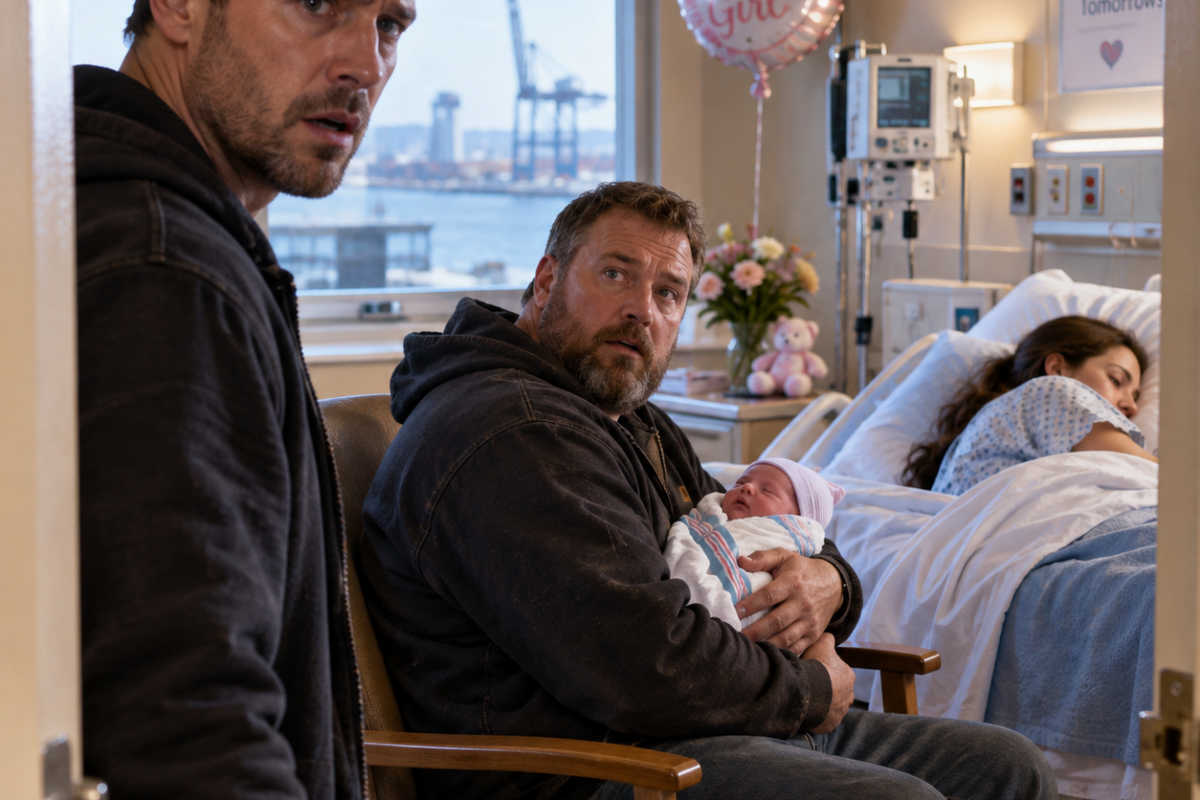
At 3 a.m., the hospital called to congratulate me on becoming a father. “Your wife just gave birth, sir. You need to come meet your baby.” I turned toward my wife, who was sound asleep beside me. “There must be a mistake,” I whispered. “My wife is right here.” The woman on the phone went quiet for a moment. Then her voice changed. “Sir, please come to the maternity ward immediately. If you refuse, we’ll have to contact the police.” I sat up, staring at my sleeping wife. Why would the hospital threaten to call the police over a baby that couldn’t possibly be ours? But when I arrived and saw who was holding that newborn, I stopped in the doorway. It was the last person I ever expected to see.
The Hospital Called at 3 A.M. to Say My Wife Had Just Given Birth. She Was Asleep Beside Me. At 3:07 on a cold Friday…
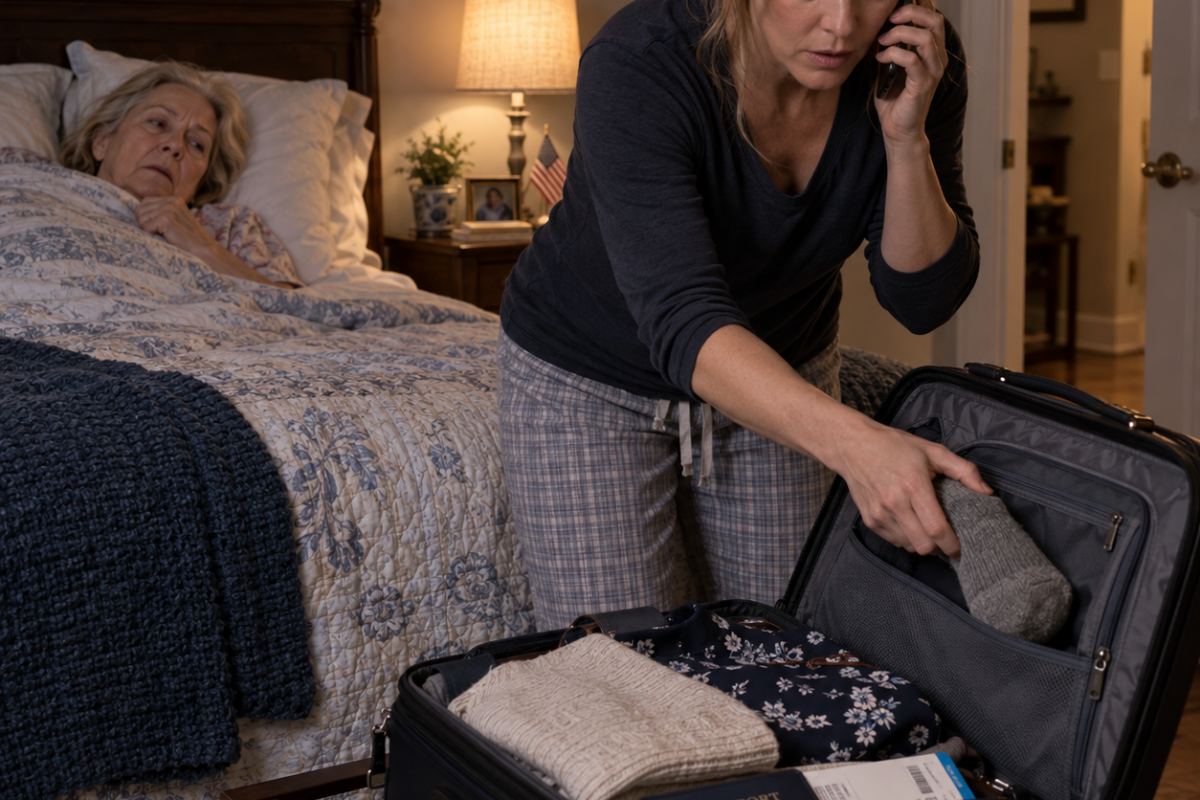
I told my daughter-in-law I had an early flight and went to bed. Just after midnight, my bedroom door slowly opened. Through barely open eyes, I watched her unzip my carry-on, slip something into the hidden inner pocket, and carefully close it again. Then she made a phone call. “It’s in her carry-on. Tip off airport security at six.” My heart started pounding, but I kept pretending to sleep. She had no idea I’d heard every word. And when morning came, I knew there was one thing I absolutely couldn’t do: take that suitcase to the airport.
At Midnight, My Daughter-in-Law Hid a Stolen Museum Pistol in My Carry-On. She Thought Airport Security Would Find It Before I Ever Knew. At 11:58…
“Thanksgiving is just for my wife’s family,” my son told me. “You’ll have to make other plans.” So I did. I booked a cruise, packed my favorite wide-brimmed hat, and turned off my phone the moment the ship left port. By Thanksgiving afternoon, I was sitting on deck with lobster on my plate, watching the ocean instead of wondering why my own son didn’t want me at his table. I didn’t turn my phone back on until that night. There were 37 missed calls. My son. His wife. Her parents. Even neighbors I barely knew. Then I opened the last voicemail. After hearing the first six words, I put down my fork. Suddenly, I understood why their Thanksgiving dinner had ended early—and why everyone was looking for me.
My Son Told Me Thanksgiving Was Just for His Wife’s Family. So I Took a Cruise, and Eleven Days Later Their Lie Collapsed in Front…

“Henry gets everything—all $80 billion,” Dad announced. “As for you, you’re out of the family. Leave.” I stared at my parents for a moment. “You already sold the company?” Mom smiled. “Every last piece of it.” I slowly closed the folder in front of me. “Without my patents?” Her smile faltered. Dad frowned. “What are you talking about?” I stood up and reached for my coat. “You might want to read page forty-seven of the sale agreement.” For the first time that night, nobody told me to leave.
My Family Said They Were Giving My Brother the Entire $80 Billion Company and Exiling Me. Then the Buyer Asked One Question About My Patents….
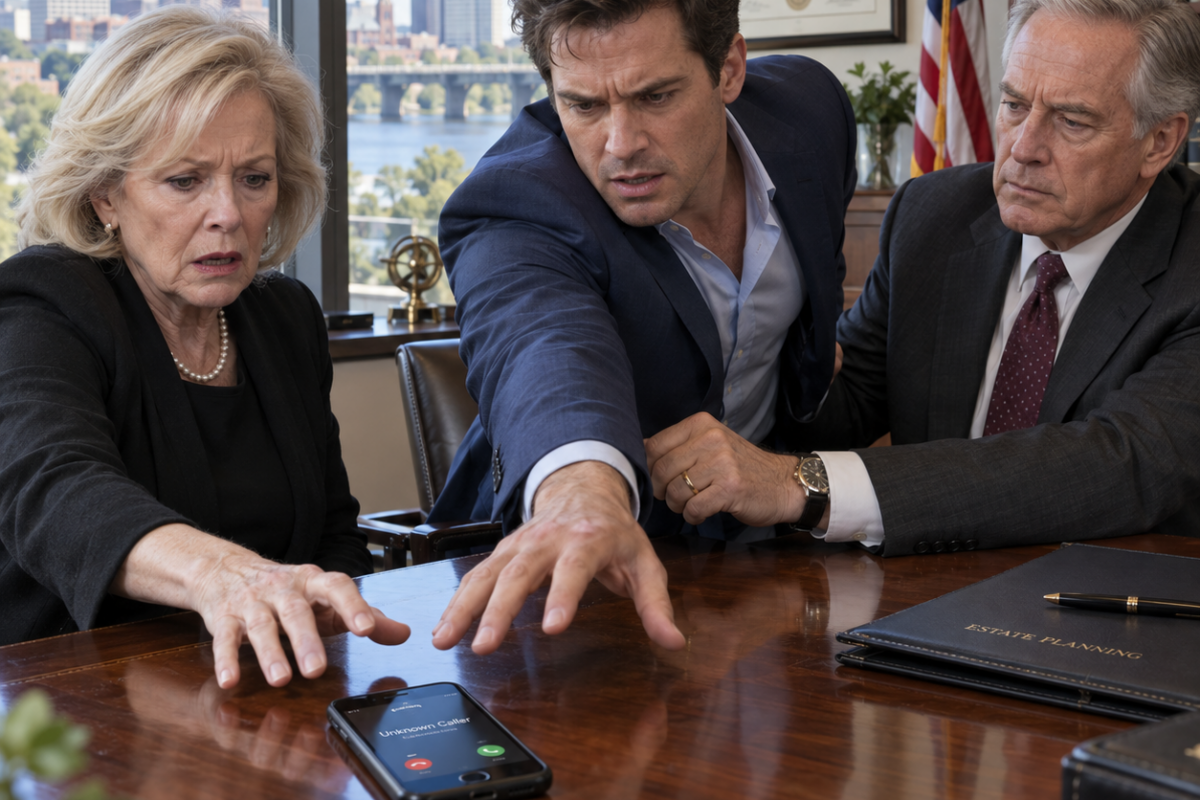
My Husband Left Our Children Millions. He Left Me Only His Locked Phone—Then Someone Called It During the Will Reading.
My Husband Left Our Children $8.4 Million and Me an Old Black Phone. Then It Rang. My husband had been dead for twelve days when…

A CEO Dumped Coffee on a Black Temp in Front of the Entire Office—Then She Made One Phone Call
The CEO Poured Coffee Over My Head and Fired Me. He Had No Idea the “Temp” He Humiliated Was Quietly Buying His Company. “You’re the…
End of content
No more pages to load
You Might Also Enjoy
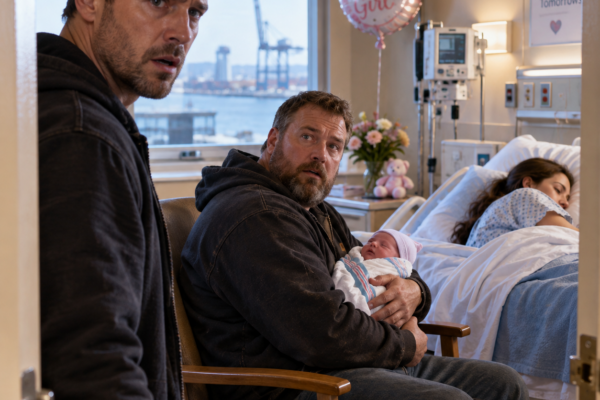
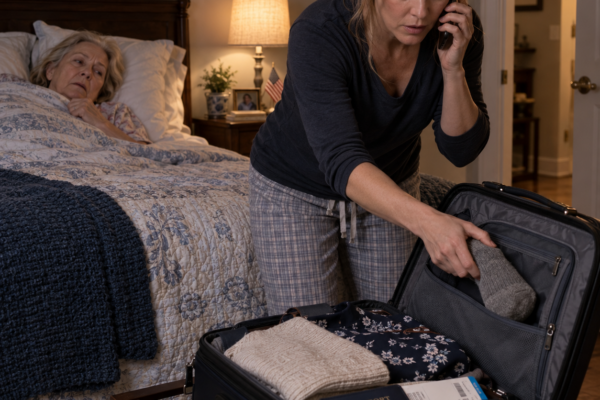

My Husband Left Our Children Millions. He Left Me Only His Locked Phone—Then Someone Called It During the Will Reading.