My son texted me, “This is my home. Stop coming by uninvited.” I stared at the message for a moment, then replied, “You’re right. I’ve just emailed you a lease. Rent is $1,450 a month, starting next month.” He didn’t respond. Twenty-three minutes later, my phone rang. It was him. And the first thing he said told me he had finally checked whose name was actually on the deed.
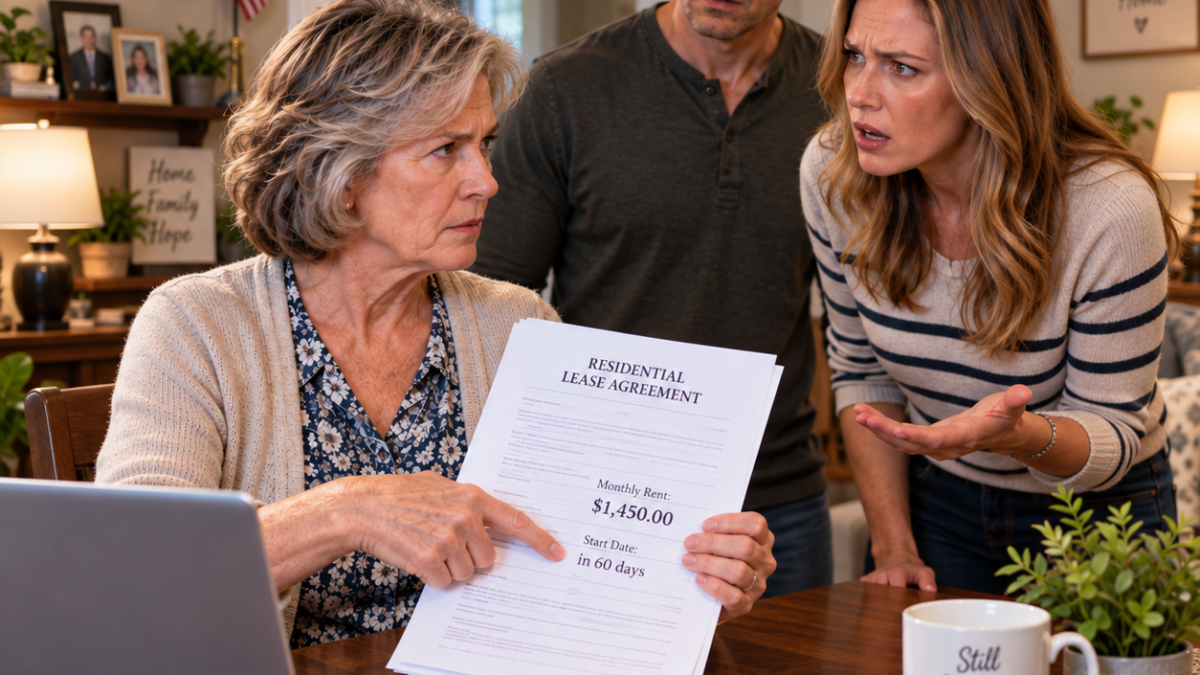
My Son Texted, “This Is My Home. Stop Coming By Uninvited.” He Forgot I Owned the House.
The text arrived at 8:14 on a Tuesday evening while I was wiping down my kitchen counters.
My son David wrote:
“Mom, this is my home. Stop coming by uninvited. We need boundaries.”
I stood there with a damp dishcloth in one hand and my reading glasses halfway down my nose, staring at the words until the screen dimmed.
Then I tapped it awake and read them again.
My home.
Those were the two words that stayed with me.
Not the complaint about boundaries.
Not the accusation that I was showing up uninvited.
My home.
The three-bedroom Craftsman where David lived with his wife, Sarah, and their six-year-old son, Leo, was not David’s home in the sense he seemed to believe.
It belonged to me.
My name was on the deed.
My late husband, Arthur, and I had bought it twelve years earlier as a retirement investment. After Arthur died, I inherited his share. I paid the property taxes, homeowner’s insurance, major repairs, furnace maintenance, roof work, and every other expense that came with owning it. David and Sarah had lived there rent-free for five years.
And that afternoon, when I had supposedly violated their privacy, I had not even entered the house.
I had left Leo’s birthday present on the front porch.
That was all.
Apparently, my car being visible in the driveway for less than two minutes had been enough to offend Sarah.
I folded the dishcloth over the edge of the sink and walked into the small room Arthur had once called our den and I now called my office.
I didn’t cry.
I didn’t call David.
I didn’t send one of those long texts mothers write when they are trying to make their adult children understand how deeply they have hurt them.
I had done enough explaining over the years.
Instead, I opened my laptop.
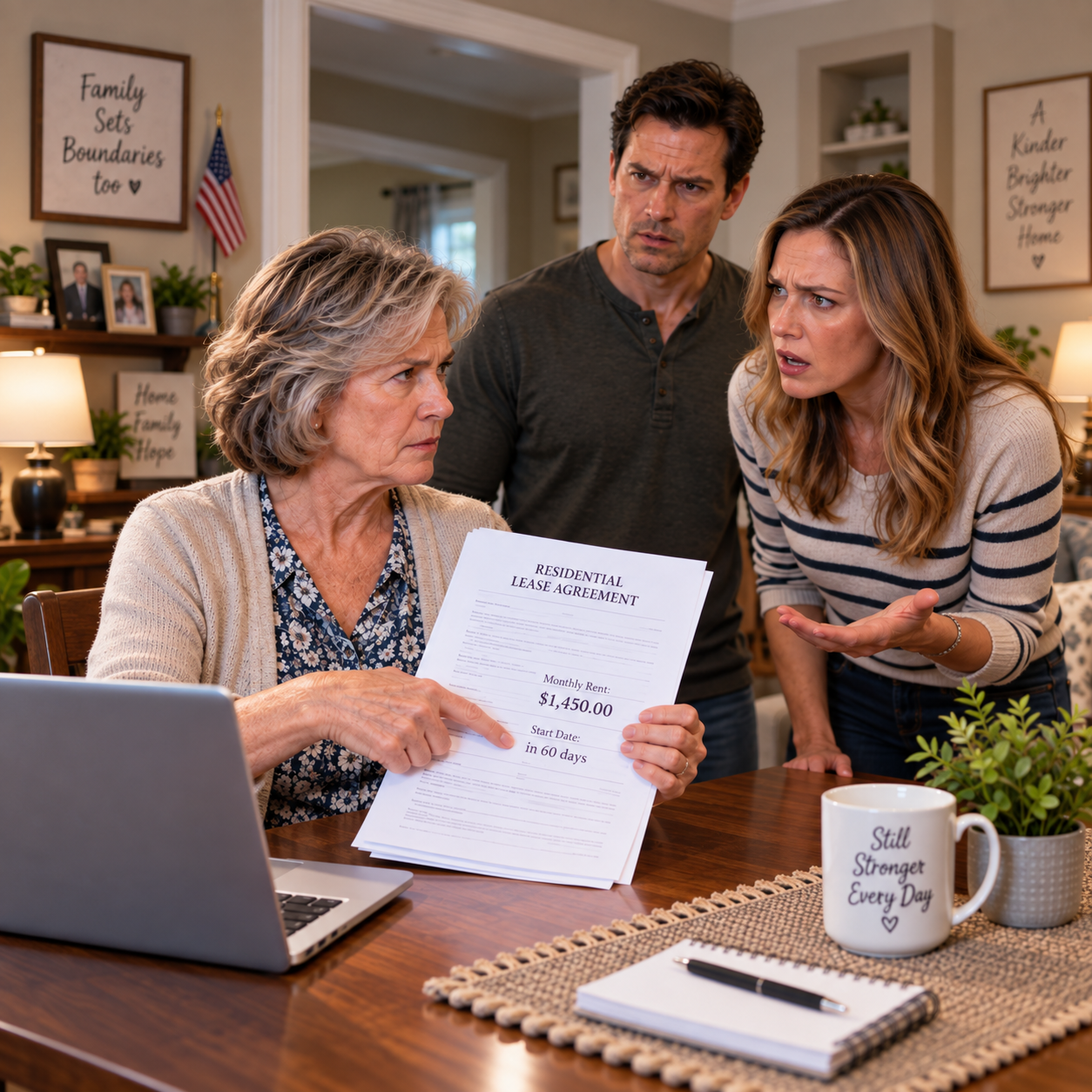
In a folder labeled RENTAL PROPERTY, I found a residential lease agreement I had drafted the previous year and never sent.
I had prepared it after my accountant asked why one of my largest assets produced no income while I paid all the expenses.
At the time, I made excuses.
“They’re getting back on their feet.”
“They have a child.”
“David had a difficult year at work.”
“My husband would have wanted me to help.”
The truth was simpler.
I was afraid that if I asked my son to behave like an adult tenant, he might stop behaving like a loving son.
So I had left the lease sitting on my computer.
That Tuesday night, I opened it.
I changed the proposed rent to $1,450 a month.
That was still far below market rate in the neighborhood.
I gave them sixty days before the first payment would be due.
Utilities would be their responsibility.
Routine maintenance would become theirs within the limits allowed by the lease.
Major structural repairs would remain mine because I was the owner.
Alterations required written permission.
No demolition.
No permanent changes.
No removing original fixtures.
No repainting cabinetry.
No flooring replacement.
No improvements involving plumbing or electrical work without approval.
I read every line twice.
Then I attached the lease to an email.
I did not write anything angry.
David,
You are correct that we need clearer boundaries regarding the house. Attached is a proposed residential lease beginning in sixty days. Please review it and let me know by Friday whether you wish to remain in the property under these terms.
Mom
Then I picked up my phone and replied to his text.
“You’re right. We do need boundaries. I’ve emailed you a lease for $1,450 per month beginning in sixty days. Utilities and household expenses will now be your responsibility.”
I put the phone face down.
Twenty-three minutes later, it rang.
David.
I watched his name flash three times before answering.
“Hello?”
“Mom, what is this?”
The confidence from his text had disappeared.
“What is what?”
“The lease.”
“It’s a lease.”
“Don’t do that.”
“Do what?”
“Talk like I’m stupid.”
“I’m not.”
“You know what I mean.”
In the background, I heard a chair scrape across a floor.
Then Sarah’s voice.
“Put her on speaker.”
A second later, the sound changed.
Sarah said, “Caitlyn, this is ridiculous.”
“Good evening, Sarah.”
“You know we can’t suddenly afford fourteen hundred dollars a month.”
“Fourteen fifty.”
“That makes it better?”
“It makes it accurate.”
“We’re saving for a new SUV.”
I leaned back in my chair.
That sentence clarified more than she intended.
For years, I had been telling myself David and Sarah were struggling.
They were not struggling in the way I had imagined.
They were making choices.
A newer vehicle.
Restaurant dinners.
Weekend trips.
Subscription boxes.
Furniture replacements.
Expensive sports programs for Leo.
None of those things were immoral.
But they looked very different when I remembered that I was paying to keep a roof over their heads.
“If fourteen hundred fifty dollars is outside your budget,” I said, “you have sixty days to find a place that fits your budget.”
David jumped back in.
“You’re doing this because we asked for privacy.”
“No.”
“Of course you are.”
“I’m doing it because you were right.”
“What?”
“The current arrangement is unhealthy.”
I kept my voice calm.
“I have been treating that property as my financial responsibility while you have been treating it as your personal property. A formal lease fixes that.”
“Mom.”
“You said you wanted boundaries.”
“I meant normal boundaries.”
“This is normal.”
“No, it isn’t.”
“For adults living in property they don’t own? Yes, David. It is.”
He went quiet.
Then he used the weapon I should have known was coming.
“Dad would never do this.”
For years, mentioning Arthur had been enough to make me retreat.
Your father would have helped.
Dad believed family came first.
Dad wouldn’t care about money.
Every time I heard it, guilt rose automatically.
Arthur had been gone seven years, and somehow the dead version of him always agreed with whatever David wanted.
That night, for the first time, I didn’t let it work.
“Your father believed in helping people get back on their feet,” I said.
David said nothing.
“He did not believe in carrying healthy adults indefinitely.”
“That’s not fair.”
“What isn’t fair is using your father’s memory whenever you want me to pay for something.”
Sarah cut in.
“We’re family. You don’t charge family rent.”
“Family also doesn’t tell a sixty-eight-year-old widow she is not allowed to stop in the driveway of a house she owns when she is dropping off a birthday gift for her grandson.”
Silence.
Then Sarah said, “You’re twisting this.”
“No. I’m clarifying it.”
The call ended.
They hung up on me.
I sat there for a minute, listening to the quiet house.
Then I opened a spreadsheet.
For the first time in five years, I calculated what my generosity had actually cost.
Property taxes.
Insurance.
A new water heater.
Two emergency plumbing calls.
Tree removal after an ice storm.
Gutter replacement.
HVAC servicing.
A refrigerator I bought after Sarah told me the old one was embarrassing.
A new dishwasher.
Pest treatment.
A roof repair.
The property alone had cost me far more than I wanted to admit.
Then I started listing everything else.
David and Sarah were still on my family cellphone plan.
David’s sedan was covered under my multi-car insurance policy because combining the vehicles had originally saved him money.
I paid for an annual warehouse-club membership they used more than I did.
Several streaming services were charged to my credit card because, years earlier, David had signed us all up.
I had paid Leo’s summer camp deposit.
I routinely bought groceries when I stopped by.
I had covered two preschool tuition gaps.
I had paid an unexpected dental bill.
Arthur’s voice came back to me, not the imaginary version David used, but the real one.
Arthur sitting at our kitchen table while David was in college, reading a credit card statement after our son had overdrawn his checking account.
“If we fix every mistake before he feels it,” Arthur had said, “he’ll never learn what anything costs.”
I had laughed.
“He’s twenty.”
“Exactly.”
“He’ll grow up.”
Arthur had folded the statement.
“Only if we let him.”
I had forgotten that conversation.
Or perhaps I had chosen to.
The next morning, my doorbell rang at exactly nine.
Sarah stood on the porch.
No Leo.
Expensive leather tote over one shoulder.
Cream sweater.
Hair perfectly blown out.
The expression she wore was the same one she used when a restaurant hostess told her there would be a twenty-minute wait.
“Can I come in?”
It sounded less like a request than an announcement.
I stepped aside.
Sarah went directly to the living room and dropped her bag beside the sofa.
“David was up half the night.”
“I’m sorry to hear that.”
“You really upset him.”
I sat in the armchair opposite her.
“He sent the first message.”
“That was about privacy.”
“I know.”
“You know he didn’t mean you should start charging us rent.”
“Then perhaps he should be more careful when telling the owner of his house that she needs boundaries.”
Sarah folded her arms.
“You made your point.”
“I wasn’t making a point.”
Her expression shifted.
“The lease is real?”
“Yes.”
“We are not paying you rent for a house that is going to belong to David anyway.”
There it was.
No hesitation.
No embarrassment.
Not might belong to David.
Going to belong to David.
I studied her.
“What makes you think that house will be David’s?”
For the first time since she arrived, Sarah looked uncertain.
“Because he’s your son.”
“I also have a daughter.”
“You have this house.”
“That has nothing to do with ownership.”
“You don’t need two houses.”
I almost smiled.
The entitlement was so complete that it had become honest.
She truly believed my needs determined my rights.
If I already possessed enough, then anything beyond that was apparently available for distribution.
“Sarah, I bought that property.”
“With Arthur.”
“Yes.”
“And David is Arthur’s son.”
“Yes.”
“So eventually—”
“No.”
One word.
Quiet.
Clear.
She stared at me.
“My estate is my business.”
Her cheeks reddened.
“I cannot believe you’re talking to me this way.”
“How am I talking to you?”
“Like some stranger.”
“No. I’m talking to you like an adult.”
She stood.
“You are trying to control us.”
“Actually, I am doing exactly the opposite.”
“What does that mean?”
“If I become your landlord instead of your financial safety net, I no longer need to be involved in your household.”
I counted on my fingers.
“I don’t bring groceries unless invited. I don’t stop by. I don’t pay your phone bill. I don’t insure your vehicle. I don’t cover household purchases.”
Sarah’s eyes narrowed.
“You wouldn’t.”
“A landlord collects rent, maintains the property, respects proper notice, and otherwise stays out of the tenant’s life.”
She picked up her purse.
“You’re going to regret this.”
“Maybe.”
“You’re pushing your only son away.”
“I have two children.”
“You know what I mean.”
“Yes.”
I stood too.
“And I’m not pushing anyone away over money. I’m simply pulling my money back.”
She walked toward the door.
At the threshold she turned.
“David is devastated.”
“I love David.”
“You have a strange way of showing it.”
I opened the door.
“So does he.”
After she left, I made coffee.
At ten thirty, my daughter Jenna called.
Jenna lived three states away and had perfected the art of loving our family without getting trapped in its daily arguments.
“Tell me you really sent David a lease.”
“I did.”
There was a pause.
Then she laughed.
Not politely.
Full-bodied laughter.
“Mom.”
“What?”
“Good for you.”
“I’m glad somebody is enjoying this.”
“I’m not enjoying it. I’m relieved.”
“Why?”
“Because it’s about time.”
I stirred my coffee.
“David says I’m destroying the family.”
“David says that every time someone makes him uncomfortable.”
“That’s not fair.”
“Mom, I love him. I’m still allowed to know him.”
I smiled despite myself.
Then Jenna said, “Did you know about the bathroom?”
My hand stopped.
“What bathroom?”
Another pause.
“Oh boy.”
“Jenna.”
“Sarah told me last week they’re redoing the primary bathroom.”
“What do you mean, redoing?”
“Soaking tub. New tile. Different vanity.”
I put my coffee down.
“They never asked me.”
“I assumed you knew.”
“No.”
“She sent me inspiration pictures.”
“When?”
“Saturday.”
“Did she say when they were starting?”
“Next month, I think.”
A cold clarity moved through me.
This was no longer about hurt feelings.
They were making permanent changes to a property they did not own.
“Anything else?”
Jenna hesitated.
“That question makes me nervous.”
“Tell me.”
“The floors.”
“What floors?”
“She mentioned replacing the wood because it looked dated.”
I closed my eyes.
Arthur and I had restored those floors ourselves.
Not because the house was sentimental.
It had always been an investment property.
But Arthur loved old craftsmanship.
We had spent three weekends stripping carpet, pulling staples, sanding oak boards, and learning more about polyurethane than either of us ever wanted to know.
“Mom?”
“I’m here.”
“You okay?”
“Yes.”
And strangely, I was.
Something had shifted.
For five years, every conflict with David had felt emotional first and practical second.
Now the order reversed.
This was an asset.
A house.
A legal and financial responsibility.
I thanked Jenna and hung up.
Then I opened my cellphone account.
Transferring David and Sarah’s numbers out of my billing plan took twelve minutes.
I made sure their service would remain uninterrupted while responsibility transferred to David.
Then the auto insurance.
His vehicle was removed effective at the end of the billing period, giving him time to secure his own coverage.
I forwarded the confirmations.
No speech.
No lecture.
Just:
Transferring these accounts to you as part of the new financial boundaries. Please arrange replacement coverage before the dates shown.
That afternoon I walked through my own house and noticed how peaceful it was.
My fern near the dining window needed water.
I watered it.
The pantry shelf had become cluttered.
I reorganized it.
I folded laundry.
Ordinary things.
And sometime around four, I realized I had gone nearly three hours without wondering whether David had enough money.
That should not have felt revolutionary.
But it did.
For years, part of my mind had been permanently assigned to his household.
Could they pay daycare?
Was Sarah getting enough hours?
Did the car need tires?
Was Leo’s school fundraiser covered?
Was David’s employer stable?
I had called it concern.
Some of it was.
But some of it had become management.
And worse, neither David nor Sarah seemed grateful anymore.
Gratitude wasn’t something I wanted to demand.
But there is a difference between accepting help and building your life around the assumption that help belongs to you.
Four days passed.
Sunday afternoon, David texted.
“Can I buy you dinner tonight? Just us. We should talk.”
I knew immediately why Sarah wasn’t coming.
This was the soft approach.
David had always been better at it.
He would apologize enough to reopen the door, then ask me to reverse everything that had caused the apology.
Still, he was my son.
I agreed.
We met at a diner halfway between our houses.
Not trendy.
No polished concrete or artisanal ketchup.
Red vinyl booths.
Bottomless coffee.
A waitress named Donna who had probably been working there since David was in high school.
He was already seated when I arrived.
He looked tired.
Dark circles.
Button-down shirt still wrinkled from the office.
He was aggressively stirring decaf as if the coffee had personally offended him.
“Hi, Mom.”
“Hi.”
I slid into the booth.
Donna brought me coffee without asking.
David waited until she left.
“Things have gotten out of hand.”
“Yes.”
He looked surprised that I agreed.
“Sarah is a mess.”
“I’m sorry.”
“I’m stressed at work.”
“I know that feeling.”
He rubbed his forehead.
“I’m sorry about the text.”
I looked at him.
“Specifically?”
“For saying not to come by.”
“I appreciate that.”
“We just needed some space.”
“You’re entitled to space.”
He waited.
I opened the menu.
He waited longer.
Finally he said, “So.”
“So?”
“The lease.”
“What about it?”
“You made your point.”
I put the menu down.
“David, there is no point to make. The lease is not punishment.”
“It feels like punishment.”
“Because free housing became paid housing.”
“Exactly.”
“That’s called a bill.”
He looked toward the window.
“We can’t afford it.”
“How much do you make?”
“Mom.”
“I’m not asking for an exact salary. You told me six months ago that the promotion put you around ninety thousand.”
His jaw tightened.
“That’s before taxes.”
“Of course.”
“Sarah only works part-time.”
“Why?”
“Daycare.”
“Leo is in school.”
“After-school care still costs money.”
“Then the two of you need to build a budget.”
He lowered his voice.
“We have credit card debt.”
“How much?”
“That’s private.”
I nodded.
“Fair enough.”
He looked relieved.
“Your debt is private. Therefore, I will not solve it.”
His relief vanished.
“You’d really make your grandson move?”
“I am offering you a house at roughly half the market rent.”
“It still feels like you’re kicking us out.”
“I am giving you two choices. Stay under a written agreement or rent somewhere else.”
“Sarah says you’re using the house to control us.”
“What do you think?”
He stirred his coffee again.
“I think you’re angry.”
“I am.”
“At her?”
“At both of you.”
His eyes lifted.
“You too?”
“Yes.”
“What did I do?”
That question hurt more than I expected.
Not because it was cruel.
Because it seemed sincere.
“You let me carry responsibilities that belonged to you for five years.”
His expression hardened.
“You offered.”
“At first.”
“Then why didn’t you say something?”
“I should have.”
“That’s not my fault.”
“No.”
I took a sip of coffee.
“That part is mine.”
He seemed unprepared for me to agree.
“I made it easy for this arrangement to become permanent. I kept solving problems. You stopped seeing the help as help.”
“That’s not true.”
“Then why did you call my house yours?”
He opened his mouth.
Closed it.
I continued.
“You can live there. You can build a life there. You can feel at home there. But ownership is a fact, not a feeling.”
He stared at me.
“I don’t even recognize you right now.”
“That makes two of us.”
The sentence came out more sadly than I intended.
David looked away.
We ordered.
He ate half a turkey club.
I ate soup.
Neither of us enjoyed dinner.
When the bill came, he reached for it quickly.
“I said I’d buy.”
“Thank you.”
It was a small thing.
But I let him.
Two days later, I called a real estate attorney named Helen Carver.
Arthur and I had used her firm years earlier when buying the rental.
Helen was in her early sixties, practical, unsentimental, and incapable of pretending a family arrangement was safer merely because relatives were involved.
I showed her the proposed lease.
I explained that David and Sarah had been living rent-free without a written agreement.
Then I told her about the planned renovations.
Helen removed her glasses.
“Have they started?”
“I don’t know.”
“You need to find out.”
“Can I just go over there?”
“Not if you want to establish proper boundaries.”
She smiled slightly.
“You started treating this as a landlord-tenant relationship. Continue.”
She explained that because they had occupied the property for years, I needed to observe the applicable notice rules carefully even though no rent had been charged.
No surprise lock changes.
No shutting off utilities.
No tossing belongings onto the curb.
No dramatic shortcuts.
Good.
I had no desire for drama.
“What should I do?”
“Give proper written notice of entry for a legitimate inspection or repair. Document the current condition. Photograph any unauthorized alterations. Then we decide next steps.”
“That simple?”
“The law is often simple until families decide feelings should replace paperwork.”
I thought of David’s text.
My home.
Helen continued.
“One more thing.”
“Yes?”
“Do not threaten access to your grandson.”
“I never would.”
“And if they do?”
I paused.
“What do you mean?”
“If they say you only get to see Leo if you withdraw the lease, do not make financial decisions under pressure. Call me.”
That possibility had been sitting at the edge of my thoughts since Tuesday.
I didn’t like hearing it spoken aloud.
“Do you think they’ll do that?”
“I think people who feel entitled to something sometimes use whatever leverage they believe they have.”
I went home and sent David formal written notice that I would enter the property the next afternoon with an HVAC technician.
I had the furnace serviced every fall anyway.
This gave me a legitimate reason to inspect.
David did not respond.
The next day, Greg Lawson met me in the driveway.
Greg had serviced our properties for years.
Quiet man.
Late fifties.
Work boots always clean when he arrived and dirty when he left.
“Been a while,” he said.
“Too long.”
“Furnace acting up?”
“Annual inspection.”
He looked toward the house.
“You still renting this to your boy?”
“Something like that.”
I unlocked the front door.
The first thing I noticed was the floor.
I stopped.
Greg nearly walked into me.
“You okay?”
The original oak flooring in the hallway was gone.
Or covered.
I couldn’t tell at first.
In its place was gray laminate.
The kind designed to imitate weathered wood.
It ran from the entry through the living room.
I crouched near the wall.
They had floated it over the original boards.
At least they had not ripped everything out.
But several transitions had been screwed directly through the old flooring.
“Mrs. Russell?”
“I’m fine.”
We moved into the kitchen.
The oak cabinets Arthur and I had refinished had been painted matte black.
Black.
Not professionally sprayed.
Rolled.
I could see brush marks along the door edges.
The original brass hardware was gone.
Cheap black pulls had replaced it.
One cabinet door no longer closed properly.
Greg looked at me.
“Want me to pretend I don’t see any of this?”
“Yes.”
“Good plan.”
He went downstairs.
I kept walking.
The dining room light fixture had been replaced.
The original was missing.
Living room walls were a pale gray instead of warm cream.
That was reversible.
I could live with paint.
Then I reached the primary bathroom.
The door was open.
A sledgehammer leaned against the wall.
Several shower tiles had been broken away.
Drywall was exposed.
A new boxed vanity sat in the bedroom.
Plumbing fixtures were stacked on the floor.
There was no permit posted.
No contractor information.
Nothing.
I took out my phone.
Photographs.
Wide shots.
Close-ups.
Date-stamped.
Then I walked back through the house more slowly.
This time I wasn’t seeing a home.
I was seeing an investment.
Every unauthorized change had a cost.
Restoration.
Potential water damage.
Code compliance.
Reduced value if the work was poor.
Insurance exposure.
If somebody connected plumbing incorrectly and caused a leak, whose insurer would get the call?
Mine.
If unpermitted electrical work caused a fire?
My house.
My policy.
My liability.
For five years, I had been acting like David’s mother while remaining legally responsible as the property owner.
They had enjoyed the benefits of ownership without carrying any of the risk.
Greg came upstairs forty minutes later.
“Furnace is fine.”
“Good.”
He looked toward the bathroom.
“Whatever they’re doing in there, tell them not to touch the vent run in that wall.”
“Why?”
“Old layout. Easy to damage if they don’t know where it turns.”
“Thank you.”
He hesitated.
“You sure you’re okay?”
“Yes.”
And I meant it.
I was angry.
But underneath the anger was something steadier.
Certainty.
When I got home, I called Helen.
She asked me to email the photographs.
Twenty minutes later she called back.
“This is substantial.”
“Yes.”
“Did you authorize any of it verbally?”
“No.”
“Text?”
“No.”
“Email?”
“No.”
“Then do not argue about whether the design is attractive. That doesn’t matter.”
I almost laughed.
“Sarah says they’re building equity.”
Helen was silent for a moment.
“In your house?”
“Yes.”
“Interesting theory.”
“What do I do?”
“We send written notice to stop all alterations immediately. The bathroom should be made safe and no additional demolition performed. Because your original lease offer hasn’t been accepted, we can withdraw that proposal and issue a revised written offer that reflects the increased risk, provided we comply with the required notice period.”
“How much?”
“That’s a business decision.”
Market rent was nearly $2,900.
I had offered $1,450.
Even after what I had seen, I did not want to charge full market rent.
Not yet.
I revised the proposal to $1,800 with a $2,000 security deposit.
Still generous.
But no longer symbolic.
That evening Sarah called before I had even finished dinner.
“You went into our house while we were gone.”
I set down my fork.
“I gave written notice.”
“You used your key.”
“Yes.”
“That is such a violation.”
“I entered with an HVAC technician for scheduled maintenance.”
“You were snooping.”
“I was walking through property I own.”
David’s voice joined hers.
“You saw the floors.”
“Yes.”
“They look better.”
“That is subjective.”
“Sarah picked them.”
“I assumed she did.”
Sarah said, “The original floor made the house look eighty years old.”
“The house is almost eighty years old.”
“Exactly.”
I closed my eyes for a moment.
“Did either of you ask before installing the laminate?”
David answered.
“We didn’t think we needed to.”
“That is the problem.”
Sarah jumped in.
“We improved your property.”
“No. You changed it.”
“It was outdated.”
“The kitchen cabinets were solid oak.”
“They were ugly.”
“They were mine.”
Silence.
Then I said, “I also saw the bathroom.”
David sighed.
“Mom.”
“You have begun demolition.”
“We’re updating it.”
“Without authorization.”
“We live here.”
“You reside there.”
Sarah’s voice sharpened.
“What is that supposed to mean?”
“It means exactly what I said.”
I kept my tone even.
“Your residence is not automatically your asset.”
“Caitlyn, we’re building equity.”
“For whom?”
She had no answer.
“You cannot build equity in property you do not own.”
“We’ve been there five years.”
“That does not change the deed.”
David said, “So what now?”
“I sent a stop-work notice. Do not remove another tile.”
“You can’t be serious.”
“I am.”
“We already bought everything.”
“That was your decision.”
“Sarah ordered a tub.”
“Return it.”
“What about the lease?”
“The original offer has been withdrawn.”
Silence.
Then both of them started speaking at once.
I waited.
When they stopped, I continued.
“The revised proposal is $1,800 per month and a $2,000 security deposit.”
Sarah practically shouted.
“You raised it?”
“Yes.”
“Because we renovated?”
“Because you demonstrated that I need to account for property risk.”
“That’s retaliation.”
“No. It is a new offer that you are free to reject.”
I had Helen’s advice in front of me.
I chose my words carefully.
“You have the full notice period required before any change takes effect. If you do not wish to accept the lease, you may use that period to arrange another residence. Nothing about your legal occupancy rights changes tonight.”
David sounded panicked.
“Mom, please.”
“I mean this.”
“We can’t pay eighteen hundred.”
“Then start looking for another place.”
“We spent money on the bathroom.”
“You spent money altering property without permission.”
Sarah said, “You should reimburse us.”
I actually laughed.
Just once.
Not mockingly.
It escaped me.
“For what?”
“The improvements.”
“You removed functioning materials from a house you do not own.”
“Because they were old.”
“That does not make them yours to destroy.”
Sarah hung up.
David stayed on for several seconds.
“Mom?”
“Yes?”
“I don’t understand how we got here.”
I looked around my quiet dining room.
“I do.”
Then he disconnected.
The next morning, I woke at six without an alarm.
For years, conflict with David could ruin my sleep.
That night, I had slept almost seven hours.
I made coffee.
Went into the backyard.
Pulled weeds around the tomatoes.
A cardinal hopped along the fence.
It struck me that my life had become smaller since Arthur died.
Not because anyone intentionally took it.
I had given pieces away.
First to grief.
Then to David.
Then to being useful.
Being needed had felt close enough to being loved that I stopped noticing the difference.
When Arthur was alive, we traveled.
Nothing luxurious.
We liked road trips.
State parks.
Small towns.
Places where you could eat breakfast at a diner and ask the waitress what to see.
We had once driven nine hours because Arthur wanted to photograph a covered bridge.
After he died, I canceled everything.
Then David’s problems became my schedule.
I watched Leo.
I delivered groceries.
I paid bills.
I drove across town when Sarah’s car battery died.
I made myself indispensable.
Then resented them for depending on me.
That was not entirely their fault.
It was simply time to stop.
Friday came.
At noon, David pulled into my driveway.
Alone.
I was kneeling beside the tomato bed wearing gardening gloves.
He got out slowly.
No angry stride.
No phone in his hand.
He looked tired.
“Hi, Mom.”
“Hi.”
“We need to talk.”
I stood and brushed soil from my jeans.
“Porch?”
He nodded.
We sat.
For a minute, neither spoke.
Then David said, “We can’t pay eighteen hundred.”
“All right.”
He looked surprised.
“And we don’t have two thousand for a deposit.”
“Then you’ll need another place.”
He rubbed his palms over his face.
“Sarah maxed out our main credit card.”
“For what?”
“Furniture.”
I waited.
“For the living room.”
“The living room in a house you thought you couldn’t afford fourteen hundred dollars to rent?”
He looked embarrassed.
“She thought we’d be staying long-term.”
“You were staying long-term.”
“You know what I mean.”
Yes.
They thought ownership was approaching.
They had spent money as though inheritance had already happened.
“Where are we supposed to go?”
“You both have income.”
“That doesn’t mean we can afford anything around here.”
“Then look farther out.”
“Leo’s school.”
“There are rentals in the district.”
“Small ones.”
“Then you may live in a smaller home.”
He looked toward my yard.
“Do you hear yourself?”
“Yes.”
“You have two houses.”
“Correct.”
“And you’re going to make your son live in an apartment.”
I studied him.
“When you were twenty-four, would you have said that to your father?”
He knew the answer.
“No.”
“Why?”
“Dad was different.”
“No.”
I shook my head.
“Your father was generous. But he respected ownership.”
David looked down.
After a while, he said, “Sarah says you’re dead to her.”
I felt the pain immediately.
Not because Sarah and I had ever been particularly close.
Because statements like that are never only about the speaker.
They are warnings.
Choose me or choose your mother.
Choose my anger or preserve your family.
“She says you’re choosing money over Leo.”
There it was.
The leverage Helen had predicted.
I took my time before answering.
“I love Leo.”
“I know.”
“I will always love Leo.”
“Then why do this?”
“Because loving my grandson does not require funding his parents indefinitely.”
He winced.
“Sarah says you won’t see him.”
“That would be her decision.”
“You’re okay with that?”
“No.”
The answer came quickly.
“I would be devastated.”
David finally looked at me.
“But I will not buy access to my grandson.”
His face changed.
For a second, I saw shame.
“Mom, nobody said—”
“You just did.”
“I’m telling you what Sarah said.”
“And I’m telling you my answer.”
We sat quietly.
A lawn mower started somewhere down the block.
David stared at the porch boards.
“I should’ve stopped the bathroom.”
“Yes.”
“I knew you’d be mad.”
“That means you knew you should ask.”
He nodded.
“She had already ordered everything.”
“Sarah is not your supervisor.”
“I know.”
“Do you?”
He gave me a tired smile.
“Apparently not.”
I softened.
Not enough to rescue him.
Enough to be his mother.
“David, I think you’ve spent a long time avoiding conflict with Sarah by letting someone else absorb the cost.”
His shoulders stiffened.
“I’m not discussing my marriage.”
“You don’t have to.”
I gestured toward myself.
“But sometimes that someone else was me.”
He said nothing.
“When she wanted something you couldn’t afford, I helped.”
Silence.
“When she wanted the house changed, you let her treat it as though ownership was already decided.”
Still nothing.
“When she wanted me pushed back, you sent the message.”
His face tightened.
“I wrote it.”
“I know.”
“That wasn’t Sarah.”
“Good.”
I nodded.
“Then own it.”
He took a breath.
“Fine. I own it.”
“Good.”
We sat there for another minute.
Then I said, “I need my house key.”
He looked up.
“What?”
“The key to this house.”
“Your house?”
“The one you’re sitting at now.”
“Why?”
“Because you told me we need boundaries.”
Understanding came slowly.
Years earlier, I had given David a key to my home.
He used it occasionally.
When I traveled.
When I was sick.
When he needed something from the garage.
There had never been a problem.
But if he wanted formal separation, then we were going to practice it both ways.
“You don’t trust me?”
“This isn’t about trust.”
“It obviously is.”
“No. It’s about clarity.”
I held out my hand.
David looked at it.
Then pulled out his key ring.
He worked the small brass key free and placed it in my palm.
It weighed almost nothing.
Yet I felt something settle inside me.
Not victory.
Peace.
“Are we done?” he asked.
“No.”
His expression tightened again.
“We’re still family.”
I closed my fingers around the key.
“But the part where I manage your life is done.”
He stood.
At the steps, he turned.
“Did Dad ever get this mad at me?”
I smiled sadly.
“Many times.”
“He never showed it.”
“Oh, he showed me.”
David almost smiled.
Then he walked to his car.
The next four weeks were quiet.
I did not call.
That was harder than I expected.
Every instinct told me to check.
Had they found a place?
Were they packing?
Did they have enough for deposits?
What was happening with Leo’s school?
Had David changed insurance?
Were the utilities set?
Each question was an invitation to step back into the role I had just left.
So I resisted.
Jenna gave me occasional information, but even she finally said, “Mom, stop asking me sideways.”
“I’m not.”
“You absolutely are.”
“What did David say?”
She laughed.
“See?”
I sighed.
“All right.”
“Let him handle it.”
“I know.”
“He’s thirty-four.”
“I know.”
“He has survived several days without you arranging anything.”
“Miraculous.”
“Very.”
She lowered her voice.
“For what it’s worth, they found an apartment.”
I said nothing.
“Two bedrooms. Neighboring town.”
“How much?”
“Mom.”
“Sorry.”
“They’ll be fine.”
That was enough.
On the fifty-seventh day, David emailed me.
Move-out scheduled for Saturday. We will return keys after the truck is loaded.
No emotion.
No accusation.
Just information.
I replied:
Thank you. Please leave all property keys on the kitchen counter. I will inspect after you vacate.
Saturday morning, I drove over.
A moving truck was backed into the driveway.
I parked across the street.
I had no intention of supervising.
David’s friends carried boxes.
Sarah moved in and out directing traffic.
Leo came outside holding a stuffed dinosaur and climbed into the back seat of their SUV.
For one second, I nearly opened my car door.
I wanted to hug him.
Then Sarah saw me.
She pointed.
David looked across the street.
Our eyes met.
I lifted my hand slightly.
He did not wave.
He turned back toward the truck.
I stayed where I was.
The old version of me would have walked over.
Offered sandwiches.
Held doors.
Taken Leo home for the afternoon.
Probably written them a check for the movers.
Instead, I waited.
They were moving.
Adults move.
It is tiring.
It is expensive.
It is inconvenient.
People survive it every day.
About three hours later, the truck pulled away.
The SUV followed.
I waited ten more minutes.
Then I crossed the street.
The key turned.
I stepped inside.
Empty houses are honest.
Furniture hides damage.
Rugs hide floors.
Pictures hide nail holes.
Decorations turn neglect into atmosphere.
Once everything was gone, I could see the property clearly.
Several laminate boards had begun lifting where they were poorly installed.
The kitchen cabinet paint was uneven.
A drawer front had chipped.
The bathroom was worse than I remembered.
Some demolished material had been removed.
The shower wall remained partially open.
The boxed tub was gone, presumably returned or taken with them.
I found the house keys on the kitchen counter.
Beside them was an envelope.
My name on the front.
For a moment, I expected a letter from David.
There was only one sheet inside.
Mom,
I’m angry, but I know you were right about some things.
I should not have let the renovations happen without asking.
I’m sorry about that.
I don’t know when things will feel normal again.
David
I read it twice.
Then folded it and put it in my purse.
Not a full apology.
Not a transformation.
But something.
I called Helen to confirm possession had been returned voluntarily.
Then I called a contractor.
His name was Miguel Santos, and Arthur and I had used him years earlier for a porch repair.
Miguel walked through the house carrying a clipboard.
At the bathroom, he stopped.
“Oh.”
“That good?”
“No.”
He crouched near the opened wall.
“They got lucky.”
“Meaning?”
“They didn’t cut anything important.”
“Greg said there was ductwork nearby.”
“There is.”
He stood.
“Could’ve been worse.”
That became my phrase for the month.
Could have been worse.
The flooring could be removed without destroying most of the oak underneath.
Could have been worse.
The cabinets could be stripped and refinished.
Could have been worse.
No major plumbing changes had been completed.
Could have been worse.
The bathroom would cost several thousand dollars to restore properly.
Could have been worse.
For years, I had thought keeping David happy protected our relationship.
That could have been worse too.
Three months passed.
The house slowly became itself again.
We removed the gray laminate.
Miguel’s flooring crew repaired damaged boards and refinished the oak.
The kitchen cabinets returned to a warm natural finish, not exactly the way Arthur and I had done them, but close enough.
The bathroom became better than before.
I chose simple white tile.
A good walk-in shower.
Classic fixtures.
Nothing trendy enough to look embarrassing in six years.
When everything was finished, I stood in the hallway and ran my hand along the banister.
For a moment, I thought of Arthur.
Not sadly.
Just clearly.
He would have walked around checking every corner.
He would have found one detail to complain about so the contractor didn’t think we were easy.
Then he would have paid promptly.
“You would’ve enjoyed this mess,” I said aloud.
The empty house did not answer.
By early fall, I hired a property manager.
Another boundary.
I no longer wanted to be personally involved in every repair or tenant call.
We listed the property at market rent.
A week later, a young married couple named Aaron and Michelle applied.
Both public school teachers.
One elementary.
One middle school.
No children yet.
One elderly golden retriever.
They arrived for the showing fifteen minutes early.
Michelle walked into the living room and said, “Oh, these floors are beautiful.”
I liked her immediately.
Not because she admired my floors.
Because five years of Sarah calling original oak outdated had apparently made me unreasonable about hardwood.
They signed a one-year lease.
Full market rent.
Security deposit.
Pet agreement.
Move-in inspection.
Everything in writing.
The first rent payment arrived by electronic deposit on the first morning of the month.
I stared at the bank notification.
Then laughed.
For twelve years, Arthur and I had called the house an investment.
For five of those years, it had been a subsidy.
Now it was an investment again.
I took part of the first month’s rent and did something I had not done since Arthur died.
I booked a trip.
My friend Margaret had been inviting me to Sedona for years.
She called when she received my message.
“You’re serious?”
“Yes.”
“You always say you can’t go because David might need you.”
“David has my phone number.”
There was a pause.
“Who are you and what have you done with Caitlyn?”
“I’m evolving.”
“You’re sixty-eight.”
“Late bloomer.”
We spent seven days in Arizona.
Red rock trails.
Coffee on a hotel balcony.
A ridiculous amount of time browsing pottery we had no intention of buying.
One afternoon Margaret and I sat outside a café while the sun turned the cliffs orange.
She said, “You look different.”
“Sunburn?”
“No.”
“New haircut?”
“You’re not worried.”
I looked at her.
“You used to check your phone constantly.”
I realized mine had been inside my purse for almost two hours.
“I guess I did.”
“Was it David?”
“Mostly.”
“What changed?”
I considered telling the whole story.
The text.
The lease.
The bathroom.
The moving truck.
Instead I said, “I stopped confusing being needed with being close.”
Margaret reached across the table and touched my hand.
“That took you long enough.”
“Everybody has become very comfortable criticizing me lately.”
“I’ve been criticizing you for twenty years. You just started listening.”
Thanksgiving came.
I invited both children.
Jenna flew in with her husband.
David responded that he and Leo would come for a few hours.
Sarah would not.
I did not ask David to change her mind.
I did not call Sarah.
I did not send an apology disguised as a holiday message.
She was entitled to her anger.
I was entitled not to manage it.
David arrived at noon holding a grocery-store pie.
Leo ran past him and into my arms.
“Grandma!”
That one word almost undid every boundary I had built.
I crouched and hugged him.
He smelled like cold air and the strawberry shampoo Sarah bought for him.
“I missed you.”
“I missed you too.”
“Dad says your tomatoes died.”
I looked at David.
“Traitor.”
He smiled.
It was the first easy smile between us in months.
“Most of them died.”
“One plant survived.”
Leo nodded solemnly.
“I knew it.”
Jenna came in from the kitchen.
“Look who escaped his apartment.”
David hugged her.
“Very funny.”
During dinner, nobody mentioned the house.
Nobody mentioned Sarah.
We talked about school.
Football.
Jenna’s flight.
The pie, which was much better than I expected and therefore clearly not made by David.
Afterward, Leo went into the backyard.
David and I stood by the window with mugs of hot cider.
“The apartment is small,” he said.
“So Jenna tells me.”
He looked at me.
“She tells you everything?”
“Apparently not enough to preserve plausible deniability.”
He laughed.
Then his face became serious.
“We’re managing.”
“I’m glad.”
“I took on some freelance accounts.”
“Marketing?”
“Yes.”
“Nights?”
“Some weekends.”
“That sounds exhausting.”
“It is.”
He sipped his cider.
“But we paid down one card.”
“Good.”
“I switched car insurance.”
“I assumed.”
“Turns out yours was cheaper.”
“I know.”
“You knew?”
“I had the bill.”
He smiled slightly.
“Right.”
We watched Leo kick leaves across the yard.
Then David said, “Sarah is still angry.”
“I assumed that too.”
“She thinks you humiliated us.”
“I never told anyone about your finances.”
“She means making us move.”
“I understand.”
“She says you chose a rental property over family.”
I looked at him.
“What do you think?”
He took a long time.
“I think we were living in a fantasy.”
I said nothing.
“If you’d asked me six months ago whether the house was mine, I would have said technically no.”
“Technically?”
“I know.”
He rubbed the side of his cup.
“But in my head, yes.”
“Why?”
“Because we’d been there so long.”
“Anything else?”
He hesitated.
“Because I assumed I’d inherit it.”
I appreciated the honesty.
“And once I assumed that, every dollar we put into it felt like we were improving our future.”
“Without asking whether that future was yours to plan.”
“Yes.”
I nodded.
He looked outside.
“I should have stopped Sarah.”
“Stop blaming everything on Sarah.”
He flinched.
“I’m not.”
“You do it gently.”
“What do you mean?”
“Sarah wanted the bathroom. Sarah wanted the furniture. Sarah was angry. Sarah thought the house would be yours.”
I turned toward him.
“But you lived there too.”
He stared down.
“You sent the text.”
“I know.”
“You knew the renovations were happening.”
“Yes.”
“You enjoyed not paying rent.”
He gave a humorless laugh.
“Definitely.”
“Then own your part.”
He nodded.
“I’m trying.”
That was enough.
I did not need a movie-scene apology.
I did not need him on his knees.
I needed him to become responsible for his own life.
Responsibility rarely arrives with dramatic speeches.
Sometimes it looks like freelance work on Saturdays.
A smaller apartment.
A balance on a credit card slowly going down.
A man finally realizing his mother’s generosity is not a permanent financial category.
A month later, I mailed Leo a Christmas gift.
To David and Sarah’s apartment.
Not the old house.
The address looked strange on the package.
I wrote Sarah’s name too.
Because whether she was angry or not, she was still my grandson’s mother and my son’s wife.
She did not thank me.
That was fine.
I had spent too many years measuring peace by whether Sarah was pleased with me.
January brought snow.
One evening, David called.
Not to ask for money.
That mattered immediately.
“Do you remember that chicken thing Dad used to make?”
I smiled.
“Which chicken thing?”
“With mustard.”
“Arthur made exactly one chicken dish.”
“That one.”
“Why?”
“I’m trying to cook more.”
“Are you ill?”
“Very funny.”
I gave him the recipe from memory.
Dijon mustard.
Garlic.
A little brown sugar.
Breadcrumbs.
Too much butter, because Arthur believed butter was a constitutional right.
Before hanging up, David said, “Mom?”
“Yes?”
“Thanks.”
“For the recipe?”
“For answering.”
My throat tightened.
“Always.”
And I meant it.
Boundaries had not made me stop being his mother.
They had simply changed what being his mother meant.
I would answer the phone.
I would love him.
I would watch Leo.
I would bring soup if he was sick.
I would sit beside him in a hospital.
I would help in a true emergency.
But I would no longer make ordinary adulthood feel like an emergency just because solving it was inconvenient.
There was a difference between help and rescue.
I had confused them for years.
Helen once put it another way.
I saw her at the grocery store a few months after the house rented.
We stood beside the apples discussing nothing important.
“How are the tenants?” she asked.
“Wonderful.”
“And your son?”
“Learning.”
“Aren’t we all.”
I smiled.
“Was I wrong to let them live there free for so long?”
She considered it.
“No.”
That surprised me.
“I expected a lawyer answer.”
“That is a lawyer answer.”
“You don’t think I enabled them?”
“I think generosity can become enabling without having been a mistake from the beginning.”
She placed two apples in her bag.
“You helped them during a period when they needed help. The problem was that nobody defined when the help would end.”
That stayed with me.
People often tell stories like mine as if one person was foolish and another was selfish from the beginning.
Real families are messier.
David had genuinely struggled after his firm downsized.
Sarah really had been pregnant.
Childcare really was expensive.
Arthur and I had owned an empty rental property.
Letting them live there made sense.
The first year, maybe the second, I would make the same decision again.
The mistake was allowing temporary help to become invisible.
Once nobody talked about it, it stopped feeling temporary.
Then it stopped feeling like help.
Then it became normal.
Then normal became entitlement.
And eventually entitlement became:
My home. Stop coming by uninvited.
That text was rude.
But it also did me a favor.
It forced me to see the arrangement clearly.
I had created a household where my son could live rent-free in my property while telling me I had crossed a line by stopping at the driveway.
And instead of asking whether the arrangement itself was backwards, my first instinct had almost been to apologize.
That frightened me more than the text.
How many times had I made myself smaller to keep family comfortable?
How many times had I told myself, It’s easier if I just pay?
How often had I used Arthur’s death as a reason not to make decisions he would have insisted we make together?
Widowhood changed me in ways I did not understand until years later.
When Arthur died, I lost the person who confirmed my reality.
If I thought David was being unreasonable, Arthur would say so.
If I was being unreasonable, he said that too.
After he was gone, I became easier to manipulate—not because my children were monsters, but because guilt no longer had a counterweight.
Whenever David said, “Dad would have helped,” there was nobody beside me to say, “Actually, I would not.”
I had to become that voice for myself.
That might have been the most important boundary of all.
By spring, David’s relationship with me had become almost normal.
Not the old normal.
Better.
He called once a week.
Sometimes twice.
I rarely asked about money.
He rarely mentioned it.
Sarah remained distant.
At first, that bothered me.
Then I accepted something adults should understand sooner than we do.
Not every relationship can be repaired by one person behaving better.
Sarah needed to decide what she wanted our relationship to become.
I could leave the door open.
I could not drag her through it.
One Saturday in April, Leo had a soccer game.
David invited me.
I arrived early carrying a folding chair and coffee.
Sarah was already on the sideline.
For one uncomfortable moment, we saw each other.
I considered walking to the other end of the field.
Then I thought, no.
I was not going to make a six-year-old’s soccer game into a territorial dispute.
I approached.
“Morning.”
Sarah looked at me.
“Hi.”
Not warm.
Not cruel.
A beginning.
I sat several feet away.
Halfway through the game, Leo scored a goal mostly by accident.
All three of us jumped up cheering.
Sarah laughed.
I laughed.
David yelled something completely unhelpful about defense.
For thirty seconds, none of us remembered to be angry.
After the game, Leo ran over.
“Did you see?”
“I saw.”
“I kicked it!”
“You definitely did.”
“Dad said it was supposed to go to Mason.”
“Goals don’t ask how they happen.”
Sarah almost smiled.
Then she said, “Leo wants you at his birthday.”
“I’d love to come.”
“Okay.”
That was all.
No apology.
No speech.
But when his birthday came, I was there.
I brought one present.
Not six.
I did not pay for the party.
I did not offer.
They had it at a public park.
Pizza.
Cupcakes.
Children running everywhere.
Simple.
Affordable.
Leo looked perfectly happy.
At one point, David stood beside me watching him play.
“Funny,” he said.
“What?”
“He doesn’t care that it isn’t one of those trampoline places.”
“Of course not.”
“We spent eight hundred dollars on his party last year.”
I looked at him.
“Why?”
“Sarah wanted it.”
I gave him a look.
He laughed.
“Fine. We wanted it.”
“Progress.”
By summer, Aaron and Michelle, my tenants, emailed the property manager asking permission to plant herbs beside the back porch.
Permission.
The word almost made me emotional.
I approved it.
Two weeks later Michelle sent a photo through the management portal.
Basil.
Rosemary.
Mint.
A little handwritten sign that said TEACHER GARDEN.
I showed Jenna.
She said, “You realize normal tenants asking before changing your yard should not be this exciting.”
“I’ve been through a lot.”
“You really have.”
My finances improved too.
Not dramatically.
I had always been comfortable.
But for the first time since retirement planning began, I could look at the rental income without mentally assigning it to David’s household.
I increased my travel savings.
Added money to my own home maintenance fund.
Met with my financial adviser.
He looked at the changes and said, “You’re in stronger shape than last year.”
“I stopped supporting another family.”
“That will do it.”
There was no judgment in his voice.
Just arithmetic.
Arithmetic has no guilt.
That became comforting.
The following Thanksgiving, Sarah came.
She arrived with sweet potato casserole.
When I opened the door, we both hesitated.
Then I said, “Come in.”
She did.
Dinner was polite.
Then easier.
After dessert, while David and Jenna argued over football in the living room, Sarah came into the kitchen carrying plates.
“You don’t have to help.”
“I know.”
She set them near the sink.
For a while we worked without talking.
Then she said, “The apartment is awful.”
I glanced at her.
“That bad?”
“The upstairs neighbor has a treadmill.”
“Oh.”
“At five thirty in the morning.”
“That should be illegal.”
She laughed.
A real laugh.
It surprised both of us.
Then she became serious.
“I was very angry with you.”
“I know.”
“I’m still not sure I agree with everything.”
“You don’t have to.”
She rinsed a plate.
“But I shouldn’t have said you were choosing money over Leo.”
I waited.
“That was unfair.”
“Thank you.”
“And the house.”
“Yes?”
“I acted like it belonged to us.”
“You did.”
She looked almost offended that I agreed so quickly.
I smiled.
“Sorry. Continue.”
Sarah shook her head.
“I think somewhere along the way I stopped remembering what you were giving us.”
That was more than I expected.
“I also should have spoken sooner.”
She looked at me.
“I resented you for things I never told you bothered me.”
“Like what?”
“You coming over with groceries.”
I blinked.
“I thought you liked that.”
“Sometimes.”
“Other times?”
“It made me feel like you thought I couldn’t take care of my family.”
“That wasn’t my intention.”
“I know that now.”
I dried my hands.
“Why didn’t you tell me?”
“Because it would have sounded ungrateful.”
“Maybe we were all avoiding the conversation.”
She nodded.
“The driveway text was too much.”
“Yes.”
“David wrote it, but I wanted him to.”
“I know.”
“How?”
“I’m old, Sarah, not stupid.”
She smiled despite herself.
Then I said, “Can I tell you something you may not like?”
“Probably.”
“If you want me to respect a boundary, tell me directly.”
“All right.”
“Do not punish me and expect me to guess what I did.”
She nodded slowly.
“That’s fair.”
“And I’ll do the same.”
She held out her hand.
“For real?”
I looked at it.
“What?”
“Are we shaking on boundaries?”
“Apparently.”
I shook her hand.
From the living room, Jenna shouted, “Should I be worried about how quiet it is in there?”
Sarah called back, “Very.”
That Thanksgiving did not erase the previous year.
I did not want it to.
Erasing conflict means erasing the lesson.
Instead, we built something different.
David and Sarah remained in the apartment another year.
Then they bought a modest townhouse.
Their own.
They saved the down payment.
No check from me.
No hidden contribution.
No “early inheritance.”
When David told me their offer had been accepted, I cried.
He laughed.
“You’re crying because your son got a mortgage?”
“I’m crying because somebody else finally has to pay for your roof.”
“Very funny.”
“I’m serious.”
He brought over the closing papers one Sunday because he had a question about homeowners insurance.
We sat at my kitchen table.
The same table where Arthur had once lectured us about consequences.
David spread the papers out.
“This is terrifying.”
“Yes.”
“You did this more than once?”
“Your father loved debt.”
“What?”
“Responsible debt.”
“That’s not what you said.”
I laughed.
He studied one page.
Then he asked, “Would you come see the place?”
“Am I invited?”
He looked at me.
“That joke is getting old.”
“Not to me.”
The townhouse was smaller than the house I had owned.
Two bedrooms upstairs.
Compact yard.
No grand kitchen.
No original oak floors worth fighting over.
Sarah had already chosen paint samples.
But this time she held one up and asked David, “Do you think the HOA allows this?”
I nearly choked.
She saw me.
“Don’t.”
“I didn’t say anything.”
“You were thinking loudly.”
On the refrigerator was a folder.
HOME PROJECTS.
Inside were HOA rules.
Contractor estimates.
Receipts.
Permits.
I smiled.
Sarah caught me looking.
“What?”
“Nothing.”
“Caitlyn.”
“Growth.”
She rolled her eyes.
That evening, David walked me to my car.
“Thanks for coming.”
“Thanks for inviting me.”
He leaned against the driver’s door.
“You know what I realized?”
“What?”
“When we lived in your house, I thought being secure meant having somebody behind me who could fix everything.”
I waited.
“Now I think security is knowing Sarah and I can handle it if something breaks.”
I smiled.
“That sounds expensive.”
“It is.”
“Welcome to adulthood.”
He hugged me.
Not because he needed money.
Not because we had solved a problem.
Just because he wanted to.
That hug felt different from all the years I had spent making sure he needed me.
It felt better.
I still own the Craftsman.
Aaron and Michelle renewed their lease.
Then renewed again.
They had a baby their second year there.
The herb garden expanded.
The dog got older and slower.
Once, during a routine inspection scheduled through the property manager, I saw a small scratch on the living-room floor.
Michelle apologized immediately.
“The dog slipped.”
I looked at the mark.
A tiny line in the oak.
Arthur would have sighed dramatically and then forgotten about it.
“It’s a floor,” I said.
She looked relieved.
That surprised me too.
For all the energy I had spent defending that house from David and Sarah’s renovations, I had eventually remembered that a property is supposed to be lived in.
Respecting ownership does not mean preserving every surface like a museum.
It means understanding which decisions belong to you and which do not.
That was the real conflict from the beginning.
Not black cabinets.
Not laminate.
Not $1,450.
Not even the text.
It was the assumption that because we were family, ownership could be treated as emotional rather than factual.
And once I stopped accepting that assumption, everything changed.
I did not lose my son.
For a while, I lost the version of our relationship built around dependency.
That loss hurt.
Then something healthier grew in its place.
I did not lose my grandson.
I learned that love strong enough to survive boundaries is stronger than love purchased through accommodation.
I did not destroy my family over money.
I stopped allowing money to quietly define my role in the family.
Most important, I stopped using generosity to avoid discomfort.
That was a hard truth.
Giving can be noble.
It can also be cowardly.
Sometimes we give because we love someone.
Sometimes we keep giving because saying no would force a conversation we are afraid to have.
I had done both.
The first was motherhood.
The second was fear.
Arthur had understood the difference sooner than I did.
I wish he had been there when David sent that text.
Not because I needed him to fight for me.
I think I would have enjoyed watching his expression.
He would have read the message.
Adjusted his glasses.
Looked at me.
Then said something like:
“Well, Cat, the boy asked for boundaries.”
Arthur called me Cat only when he was amused.
“And?”
“And I suppose we should give him some.”
Then he would have opened the filing cabinet and found the deed.
I like imagining that.
But in a way, I did not need Arthur there.
After seven years of widowhood, I finally made the decision without borrowing his authority.
That mattered.
I was sixty-eight.
A mother.
A grandmother.
A widow.
A property owner.
A retired woman with plans I had postponed for too long.
I was allowed to make decisions about my own life because they were mine.
Not because my late husband would have approved.
Not because my son understood.
Not because my daughter-in-law agreed.
Mine.
A few months ago, David came over for Sunday lunch.
Leo was in the backyard.
Sarah had gone to visit her sister.
David helped me carry a box down from the hallway closet.
Inside were old family photographs.
We sat on the floor looking through them.
There was one of David at seven years old standing beside Arthur with a toy hammer.
One from high school.
One from his college graduation.
Then we found a photograph from the day Arthur and I bought the rental house.
We were standing on the porch.
Arthur held the SOLD folder.
I looked younger.
So did the house.
David picked it up.
“I remember this.”
“You were in college.”
“Dad made me help paint.”
“He believed unpaid family labor built character.”
“He was cheap.”
“That too.”
David studied the picture.
Then he said, “You know, when I sent that text, I genuinely thought of the place as mine.”
“I know.”
“I never once thought about you paying the tax bill.”
“I know.”
“Or the insurance.”
“I definitely know.”
He smiled.
Then his face became serious.
“I’m embarrassed by that.”
I took the photograph from him.
“You learned.”
“Took me long enough.”
“Some people never do.”
He looked toward the backyard where Leo was throwing a tennis ball against the fence.
“I don’t want to do that to him.”
“Do what?”
“Make everything so easy that he doesn’t know what anything costs.”
I laughed.
“You’ve met your father.”
“Which father?”
“You.”
He smiled.
“Exactly.”
I put the photograph back.
“Help Leo when he needs help.”
“I will.”
“But tell him what the help is.”
David nodded.
“Temporary.”
“Exactly.”
“And if he tells me to stay out of his house?”
I looked at him.
“Check the deed.”
He laughed so loudly Leo came inside asking what was funny.
We never explained.
Some lessons can wait.
Looking back, I no longer think of that Tuesday night as the evening my son disrespected me.
I think of it as the evening an unhealthy arrangement finally became impossible to ignore.
One text.
My home.
Two careless words.
They forced me to ask questions I had avoided for years.
What did I own?
What did I owe?
What was help?
What was enabling?
What was generosity?
What was fear?
Where did motherhood end and adulthood begin?
I discovered there was no single answer.
Families are not contracts.
But contracts can sometimes save families from assumptions.
Money is not love.
But money can distort love when nobody talks about it.
Boundaries are not punishment.
But they often feel like punishment to the person who benefited from their absence.
And saying no does not always push people away.
Sometimes it is the first thing that gives them enough room to stand on their own.
I still keep the original text.
Not because I enjoy rereading it.
I don’t.
But I never deleted it.
Every so often, when I start feeling guilty about saying no to something, I remember myself standing in that kitchen.
Dishcloth in hand.
Phone glowing.
My home.
Then I remember the lease.
The key in my palm.
The empty house.
The restored oak floors.
The first rent deposit.
Sedona.
Thanksgiving cider.
David’s smaller apartment.
His first paid-down credit card.
His townhouse.
His mortgage.
His hug beside my car.
And I understand something I wish I had understood much earlier.
Supporting an adult child does not mean removing every consequence from his path.
Sometimes support means believing he is capable of facing those consequences himself.
I had spent years protecting David from discomfort because I thought discomfort meant danger.
It did not.
He needed to worry about rent.
He needed to compare insurance rates.
He needed to tell his wife they could not afford certain furniture.
He needed to work extra hours.
He needed to understand that wanting a soaking tub did not mean someone else had to finance the life surrounding it.
Those things did not harm him.
They matured him.
And I needed discomfort too.
I needed to survive my son being angry.
I needed to survive Sarah disliking me.
I needed to survive the possibility of not seeing Leo whenever I wanted.
I needed to learn that other people’s disappointment was not proof that I had done something wrong.
That lesson came late.
But it came.
Today, when I drive past the Craftsman, I sometimes see Michelle pushing a stroller along the sidewalk.
There are flowerpots on the porch.
The golden retriever sleeps near the steps.
The oak floors are probably collecting new scratches.
Good.
Houses should collect evidence of life.
What they should not collect is confusion about who is responsible for them.
My son has his home now.
Truly his.
His name on the paperwork.
His mortgage.
His insurance.
His repairs.
His choices.
If he paints the kitchen cabinets black, I may question his taste.
But I will not question his right.
That is the difference ownership makes.
And when I visit, I knock.
Not because I was wrong to leave Leo’s birthday gift on that old porch.
I wasn’t.
I knock because David and Sarah finally have a home that belongs to them.
They earned it.
They pay for it.
They decide who comes through the door.
The funny thing is that now, when I knock, they usually tell me I don’t need to.
“Mom, just come in.”
I smile.
“No.”
I wait until somebody opens the door.
Boundaries work both ways.
That was what David asked for.
In the end, it was one of the best things he ever gave me.
News
At 3 a.m., the hospital called to congratulate me on becoming a father. “Your wife just gave birth, sir. You need to come meet your baby.” I turned toward my wife, who was sound asleep beside me. “There must be a mistake,” I whispered. “My wife is right here.” The woman on the phone went quiet for a moment. Then her voice changed. “Sir, please come to the maternity ward immediately. If you refuse, we’ll have to contact the police.” I sat up, staring at my sleeping wife. Why would the hospital threaten to call the police over a baby that couldn’t possibly be ours? But when I arrived and saw who was holding that newborn, I stopped in the doorway. It was the last person I ever expected to see.
The Hospital Called at 3 A.M. to Say My Wife Had Just Given Birth. She Was Asleep Beside Me. At 3:07 on a cold Friday…
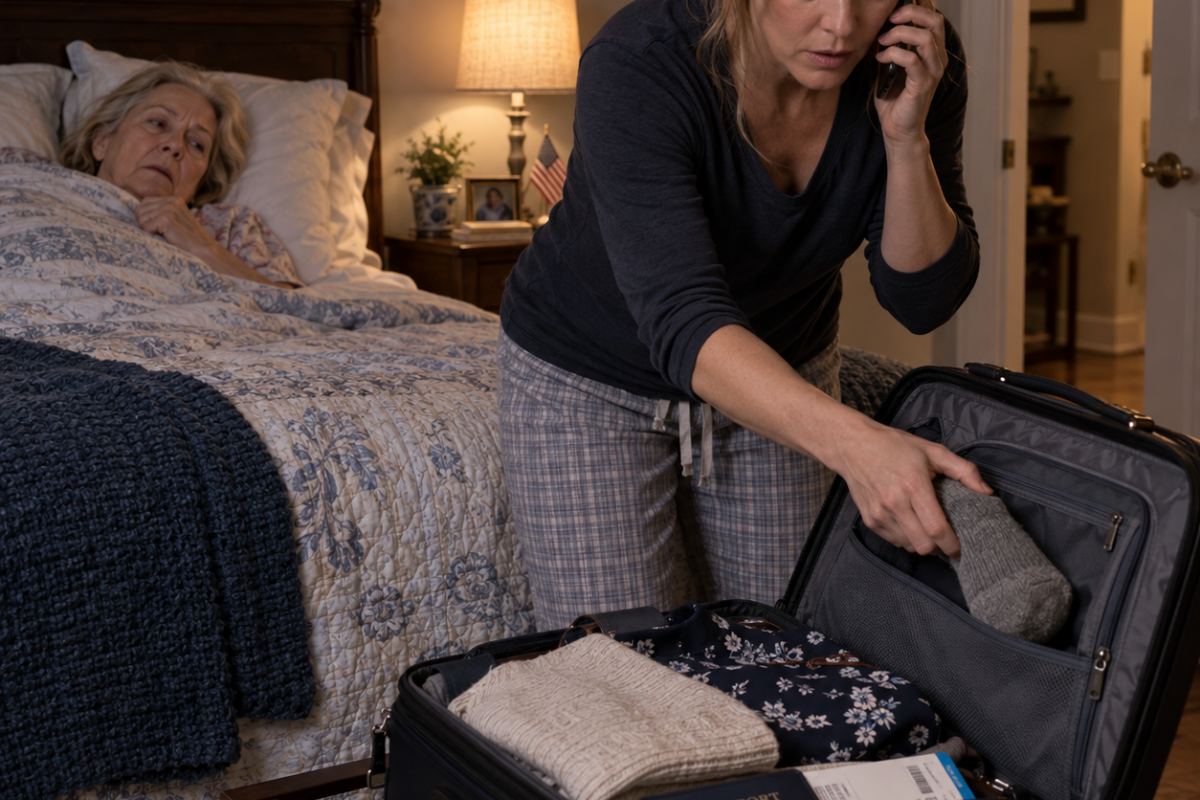
I told my daughter-in-law I had an early flight and went to bed. Just after midnight, my bedroom door slowly opened. Through barely open eyes, I watched her unzip my carry-on, slip something into the hidden inner pocket, and carefully close it again. Then she made a phone call. “It’s in her carry-on. Tip off airport security at six.” My heart started pounding, but I kept pretending to sleep. She had no idea I’d heard every word. And when morning came, I knew there was one thing I absolutely couldn’t do: take that suitcase to the airport.
At Midnight, My Daughter-in-Law Hid a Stolen Museum Pistol in My Carry-On. She Thought Airport Security Would Find It Before I Ever Knew. At 11:58…
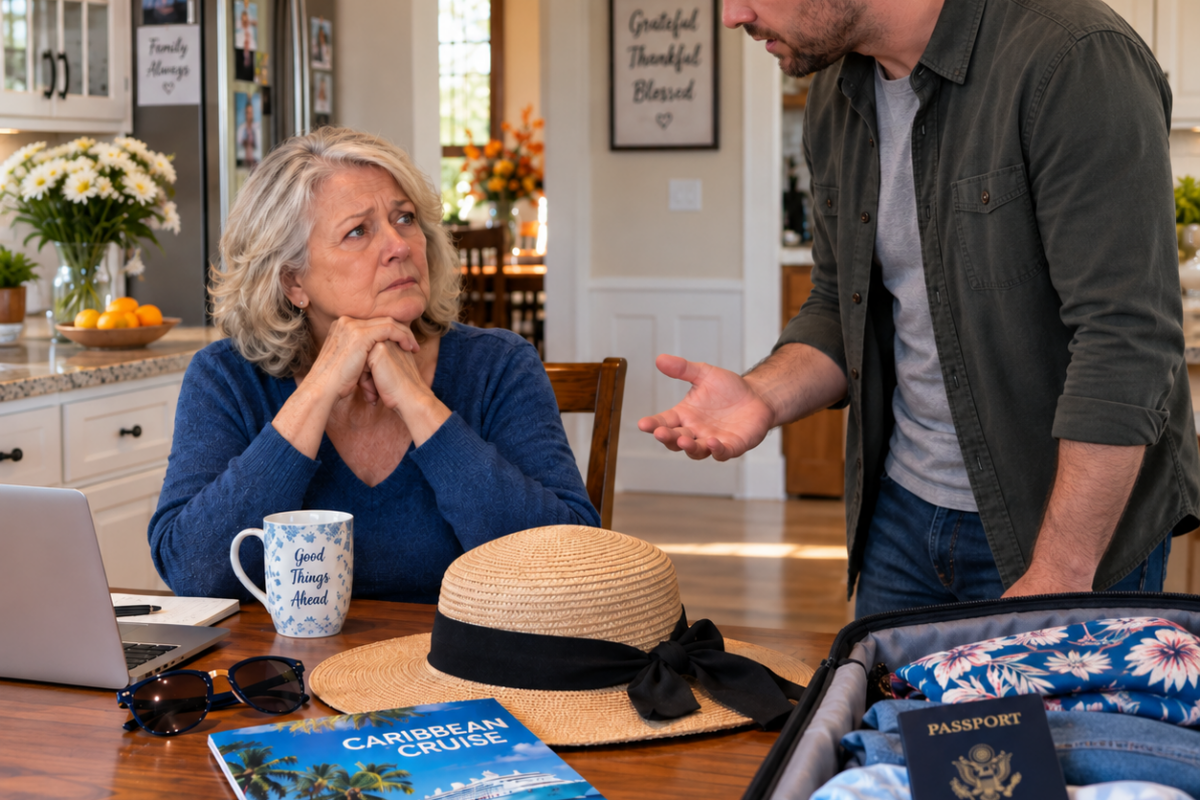
“Thanksgiving is just for my wife’s family,” my son told me. “You’ll have to make other plans.” So I did. I booked a cruise, packed my favorite wide-brimmed hat, and turned off my phone the moment the ship left port. By Thanksgiving afternoon, I was sitting on deck with lobster on my plate, watching the ocean instead of wondering why my own son didn’t want me at his table. I didn’t turn my phone back on until that night. There were 37 missed calls. My son. His wife. Her parents. Even neighbors I barely knew. Then I opened the last voicemail. After hearing the first six words, I put down my fork. Suddenly, I understood why their Thanksgiving dinner had ended early—and why everyone was looking for me.
My Son Told Me Thanksgiving Was Just for His Wife’s Family. So I Took a Cruise, and Eleven Days Later Their Lie Collapsed in Front…

“Henry gets everything—all $80 billion,” Dad announced. “As for you, you’re out of the family. Leave.” I stared at my parents for a moment. “You already sold the company?” Mom smiled. “Every last piece of it.” I slowly closed the folder in front of me. “Without my patents?” Her smile faltered. Dad frowned. “What are you talking about?” I stood up and reached for my coat. “You might want to read page forty-seven of the sale agreement.” For the first time that night, nobody told me to leave.
My Family Said They Were Giving My Brother the Entire $80 Billion Company and Exiling Me. Then the Buyer Asked One Question About My Patents….

My Husband Left Our Children Millions. He Left Me Only His Locked Phone—Then Someone Called It During the Will Reading.
My Husband Left Our Children $8.4 Million and Me an Old Black Phone. Then It Rang. My husband had been dead for twelve days when…

A CEO Dumped Coffee on a Black Temp in Front of the Entire Office—Then She Made One Phone Call
The CEO Poured Coffee Over My Head and Fired Me. He Had No Idea the “Temp” He Humiliated Was Quietly Buying His Company. “You’re the…
End of content
No more pages to load
You Might Also Enjoy


My Husband Left Our Children Millions. He Left Me Only His Locked Phone—Then Someone Called It During the Will Reading.