“We already made copies of your key,” my mother said after I refused to let fifteen people use my house for New Year’s weekend. “Your brother’s in-laws are flying in. You have five bedrooms.” I reminded her that I would be away. “Perfect,” she replied. “Just leave clean sheets and stock the refrigerator.” Three days later, she opened my front door with her copied key. The living room was empty except for one enormous black box with her name on it.
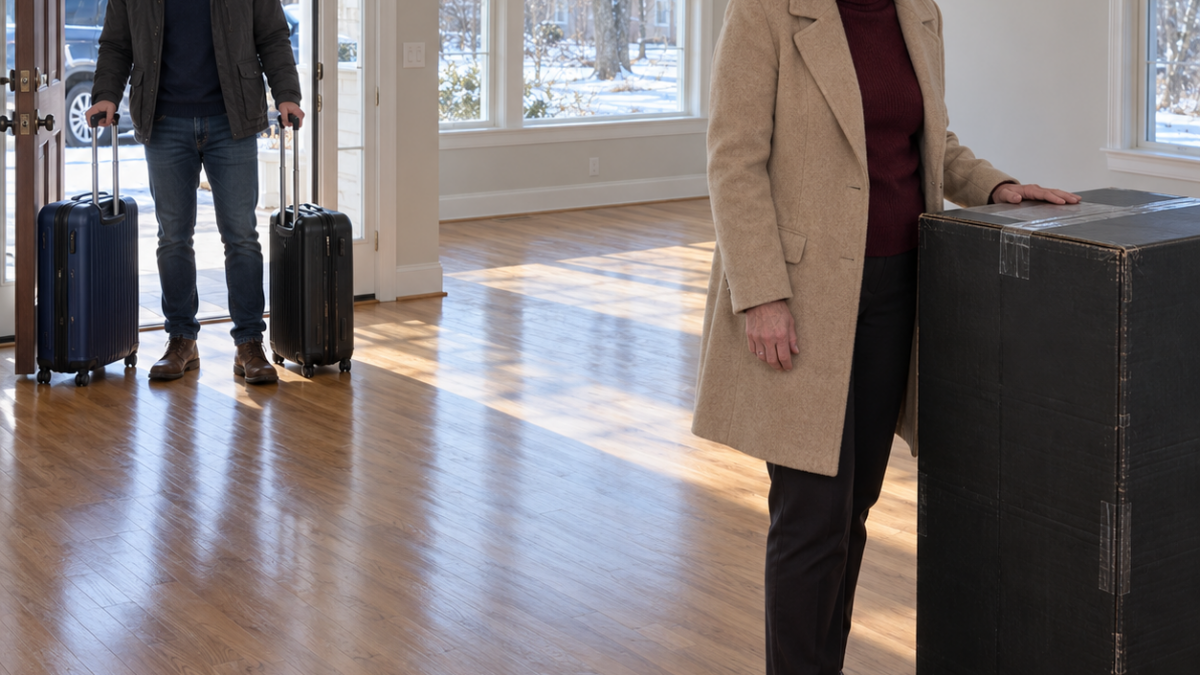
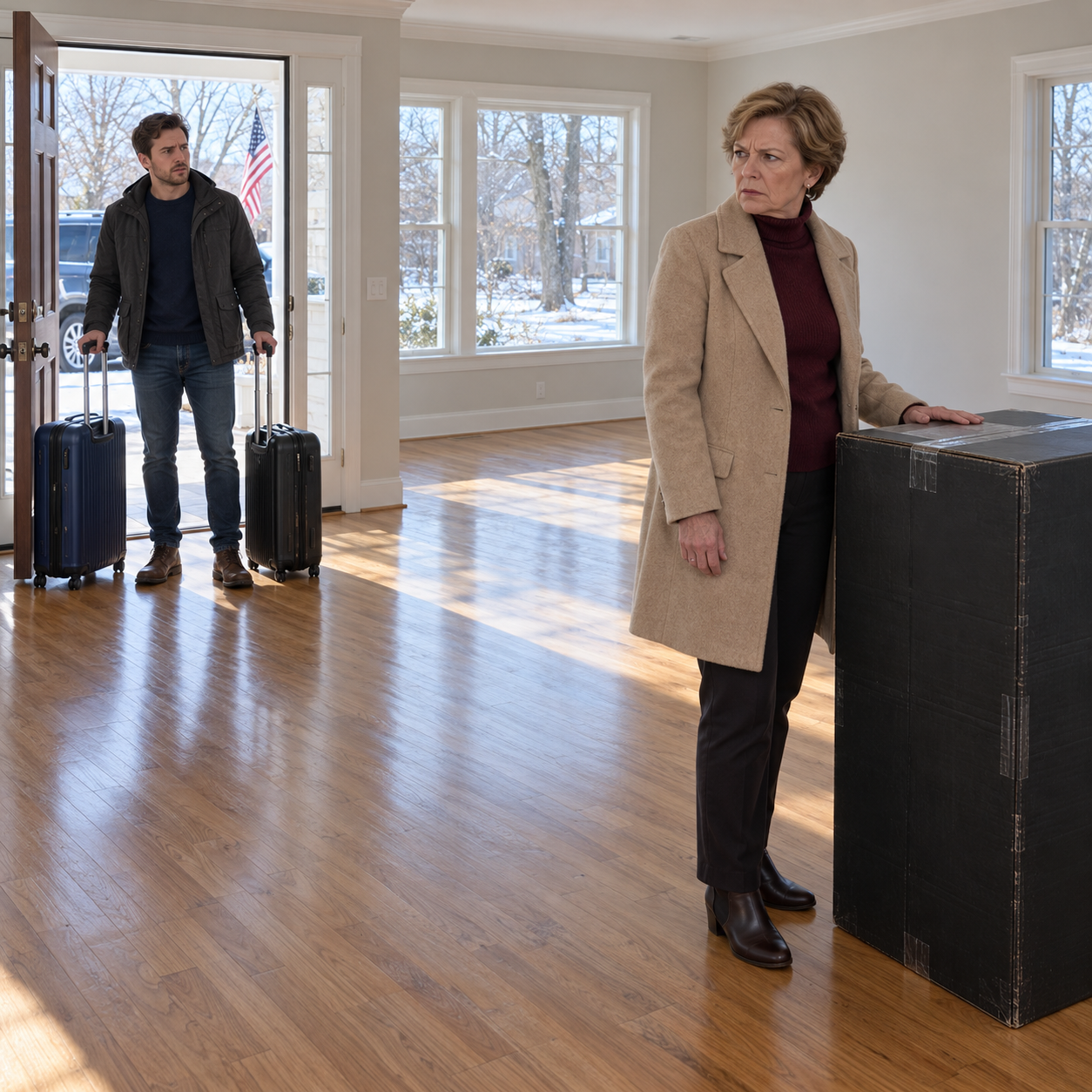
“We need your five-bedroom house for New Year’s weekend,” my mother said. “Your brother’s in-laws are flying in.”
I was standing in the middle of my boxing gym holding two focus mitts while Marcus, one of my amateur fighters, explained why missing the heavy bag twice should count as defensive movement.
“Again,” I told him.
My phone was wedged between my shoulder and my ear.
“There are fifteen people altogether,” Mom continued. “Your house has the most bedrooms.”
“I’m away that weekend.”
“Perfect. You can rent an Airbnb.”
I lowered one mitt.
“Excuse me?”
“You won’t be there anyway.”
“I said I’m away. I didn’t say I’d moved out.”
“Oh, Henry. Don’t make this difficult.”
There it was.
The sentence my family used whenever the word no entered a conversation involving something I owned.
As a child, it meant give Ryan the bigger bedroom.
As a teenager, it meant let Ryan use your bicycle because he lost the key to his lock.
As an adult, it meant pick up six people at the airport, move a couch, pay the deposit, make room, change your plans.
Don’t make this difficult.
Apparently, being forty, single, and reasonably successful meant my life was a collection of vacant spaces other people could reserve.
“I’m not giving fifteen people my house,” I said.
Mom sighed.
Not an angry sigh. An exhausted one, as though I were an employee who had misunderstood an obvious instruction.
“They’re family.”
“They’re Melissa’s family.”
“Exactly.”
We waited.
Apparently, exactly meant something different to each of us.
Then she added, almost cheerfully, “Anyway, we already made copies of your key.”
Marcus finally landed the combination he had been trying to throw.
I missed it.
“You did what?”
“Oh, don’t start.”
“How did you copy my house key?”
“You gave us one.”
“For emergencies.”
“This is an emergency.”
“Fifteen adults needing free lodging for New Year’s is not an emergency.”
“You have five bedrooms.”
“And one toothbrush. That doesn’t mean I’m opening a dental clinic.”
She ignored that.
“We’ll take good care of everything.”
I looked across the gym at a water fountain with a dent in its side, the result of an unrelated incident involving a teenager who thought a medicine ball was supposed to be thrown at maximum speed in every direction.
I could fix a dent.
The sentence about my key was going to require something else.
“No,” I said. “The house is not available.”
“Henry, I’ve already told everybody.”
“You’ll have to tell them something different.”
“That would be embarrassing.”
I waited for her to hear herself.
She didn’t.
“You can’t expect me to call fifteen people and change everything now.”
“But you can expect me to change everything.”
“It’s one weekend.”
That was another family favorite.
One weekend.
One ride.
One check.
One little favor.
Nothing was ever large enough to count when I was the person being asked to provide it.
I took the phone away from my shoulder and held it properly.
“Mom, I am not hosting. I am not lending the house. You do not have permission to use the key.”
She went quiet for a moment.
Then she said, “You’ll feel better once you’ve had time to think.”
I looked at Marcus.
He had stopped moving and was watching me with the solemn attention he usually reserved for discussions about making weight.
“I’ve had time,” I said.
“Fine. We’ll talk later.”
She hung up.
For a few seconds, I stood there holding the phone.
Marcus lifted one glove.
“Coach?”
“What?”
“Should I be worried?”
“About your footwork? Constantly.”
“No. About whatever that was.”
I put the phone in my pocket.
“No.”
“You’ve got the face.”
“What face?”
“The one you make before you say we’re doing burpees.”
“No burpees.”
His shoulders relaxed.
“I’m moving,” I said.
He blinked.
“Moving where?”
“Closer.”
“Good. Does that mean you’ll be less cranky in the morning?”
“No. You’ll just have fewer excuses for being late.”
He nodded, accepting the terms.
Then I raised the mitts again.
“Left. Right. Move.”
Marcus threw the combination.
This time, I saw it.
I had been planning to move for nearly four months.
That was the part my family would later insist could not possibly be true.
In their version, I emptied an entire house because my mother annoyed me on the telephone.
In mine, I had finally admitted that living forty-five minutes from a business I opened before sunrise was a poor use of the one life I had.
The five-bedroom house had made sense when I bought it eight years earlier.
At least, it had made sense to the person I was then.
I was thirty-two, growing the gym, and coming out of a relationship that had lasted long enough for us to discuss marriage, children, and which part of town had good schools.
We split up before any of that happened.
There was no betrayal.
No secret second life.
We wanted different things and spent a while pretending those differences would disappear because we cared about each other.
They didn’t.
By then, I had fallen in love with a house.
It had a wide porch, a fenced yard, five bedrooms, and an old upright piano the previous owner offered to include because moving it sounded exhausting.
I knew almost nothing about playing piano.
I bought the house anyway.
For a while, I told myself the extra rooms were an investment in a future that hadn’t arrived yet.
Later, I admitted three of them had become expensive closets.
One held old gloves, resistance bands, and equipment I might repair someday.
Another contained unopened mail, a folding table, and a stationary bike that had developed a second career as a coat rack.
The third was a guest room that my mother referred to as “available” regardless of what I had planned.
I used my bedroom, the kitchen, the bathroom, and a chair in the living room.
Everything else seemed to belong to possibilities or relatives.
Meanwhile, the gym had changed.
We had taken over the unit next door.
There were more members, more classes, and two professional fighters training with us regularly. I had hired a gym manager, added early sessions, and discovered that success could create the same problem as failure.
You ran out of hours.
I was spending an hour and a half each day driving past places I never had time to visit.
On nights when I finished late, I ate standing at the kitchen counter, showered, and went to bed.
Then I got up and did it again.
One September morning, I pulled into the gym parking lot carrying coffee I had already reheated twice.
My manager, Paul, looked at me and said, “You know there are homes within twenty minutes of this place.”
“I’ve heard rumors.”
“You should investigate.”
I did.
A townhouse came on the market fifteen minutes away.
It had two bedrooms, a small office, a garage, a patio, and exactly enough space for the life I was actually living.
No ceremonial guest wing.
No imaginary nursery.
No dining room that required me to buy twelve chairs in case somebody else decided to have a holiday.
I walked through it twice.
The second time, I stood in the kitchen and realized I could leave home at five-thirty and still unlock the gym before six.
That sold me more thoroughly than the countertops.
By late fall, I had arranged the purchase, put my old house on the market, and accepted an offer.
The contract was signed.
The old-house closing would take place in early January, after I moved out. Until then, the property was still mine, and I was responsible for delivering it in the condition required.
The movers were booked for December 29.
Most of my belongings would go into temporary storage while the townhouse was painted and a few minor repairs were finished. I had already arranged the schedule.
I had not told my family.
That sounds secretive.
It wasn’t intended as a dramatic withholding of information.
I had mentioned, months earlier, that the commute was wearing me down and I was considering something smaller.
Mom said, “But where would everyone stay?”
Dad said moving was expensive.
Ryan asked whether selling meant I would get rid of the grill.
Nobody asked whether I liked the townhouse.
Nobody asked how early I was getting up.
Nobody asked why I wanted a change.
After that conversation, I stopped presenting the move as a family topic.
I discussed it with the people whose advice was useful.
My agent.
My lender.
My accountant.
Paul, who knew what our mornings actually looked like.
Originally, I planned to tell everyone once the move was complete.
Then my mother announced that she had copied my key.
Suddenly, the fact that she knew nothing about my plans felt less like an oversight and more like a consequence of how rarely she asked about them.
She knew how many bedrooms I owned.
She did not know how many hours I spent driving.
She knew I had an espresso machine.
She did not know I had started falling asleep in a chair while waiting for dinner to heat.
She knew where she wanted Melissa’s mother to sleep.
She did not know I had signed a contract to sell the room.
I left the gym that evening feeling oddly calm.
Usually, conversations with Mom left me composing arguments all the way home.
I would think of better sentences.
Clearer examples.
Something I should have said before she hung up.
This time, I didn’t need a better sentence.
No was already a complete answer.
What I needed was to stop behaving as though the answer remained available for revision by committee.
At home, I walked through the rooms.
The piano stood beneath the front window.
The guest beds were neatly made.
The refrigerator held eggs, leftovers, and a jar of olives I had forgotten purchasing.
It was a pleasant house.
It had also become a place where I expected to find evidence that somebody else had been there.
A changed thermostat.
A moved chair.
Food missing from a cupboard.
A towel in the wrong bathroom.
Nothing catastrophic by itself.
Enough small signs to make privacy feel conditional.
The spare key had begun reasonably.
A few years earlier, I had been away for a fight weekend when a pipe connection under the kitchen sink leaked. Mom and Dad lived closer than the plumber could get there, and I asked them to turn off the water.
They helped.
I appreciated it.
Afterward, I left the key with them.
“For emergencies,” I said.
Mom put it on a ring.
“Of course.”
For a while, that was what it meant.
Then she used it to leave food while I was at work.
That seemed kind.
Then she brought an aunt by to see the house.
Then Ryan used it to retrieve something from the garage.
Then I came home one day and found Mom showing a neighbor my kitchen because the neighbor was considering new cabinets.
Every change was small enough that objecting made me sound inhospitable.
“Would you rather I waited outside?” she asked once.
“I’d rather you called before coming.”
“Well, you never answer when you’re training people.”
“That doesn’t make the house open.”
She acted wounded.
I apologized for my tone.
The next visit happened anyway.
My family was not evil.
That would have made things easier to explain.
They could be generous, funny, helpful, and loving.
My father had driven across town at midnight when my truck broke down.
My mother had sat with me through a fever when I was young and still remembered which soup I liked.
Ryan could make me laugh harder than almost anyone.
They also believed my availability was a family resource.
When I objected, they treated the objection as a temporary inconvenience rather than information.
And because I usually gave in eventually, they had evidence that persistence worked.
The Fourth of July was an example.
Ryan said he wanted to have a few people over.
I said I wasn’t hosting a party.
He said it would be eight people.
It became eighteen.
Then somebody brought a friend.
Then somebody’s friend invited someone else.
I came home late from the gym to find a cooler beside the patio, music playing, and a man balancing a paper plate over my koi pond.
The next morning, I fished hamburger buns out of the water.
Mom told me I should have been glad everyone had enjoyed themselves.
I said the fish hadn’t.
She said I was impossible when I got into a mood.
Thanksgiving was another example.
Mom volunteered me to host twenty-two people.
I found out from Aunt Linda, who called to ask whether she should bring sweet potatoes.
“Bring them where?”
“To your house.”
I called Mom.
She said her dining room was too small.
I said that didn’t make mine automatically available.
She said she had already sent the invitations.
By the time we finished talking, I was ordering extra chairs.
During dinner, she complained that they didn’t look festive.
I had a private moment of admiration for her ability to criticize the furniture she had created a need for.
The bachelor party was the event I should have treated as final.
Ryan asked whether his friends could use the house while I was away.
I said no.
Not maybe.
Not if they were careful.
No.
He said they would find somewhere else.
They didn’t.
I came home Sunday to find a traffic cone in my bathtub and a man asleep beneath the piano.
His name was Trevor.
Nobody could explain the cone.
Trevor couldn’t explain much of anything.
Ryan paid for part of the cleaning and said he was sorry things had “gotten out of hand.”
Mom told me not to ruin his wedding over a party.
I didn’t.
I also didn’t retrieve the spare key.
That was the error beneath every later argument.
I kept saying no while leaving the mechanism for ignoring me in place.
At the gym, I would never teach a fighter to stand still and complain that an opponent kept landing the same punch.
Move.
Adjust.
Change what happens next.
Somehow, I had been giving better advice to teenagers than I gave myself.
That evening, I sent Mom a text.
To be clear, I am not hosting New Year’s. The house is not available. Do not bring guests or use the key. Please make other arrangements.
I sent the same message to Dad and Ryan.
Ryan replied, What’s going on?
I wrote, Mom said she’s bringing fifteen people to my house. I told her no.
He didn’t answer immediately.
Mom did.
You’re being unnecessarily rigid. We’ll discuss it when you’ve calmed down.
I took a screenshot.
Then I put the phone down.
The next day, she called during the lunch break between classes.
Her voice was bright again.
“I spoke to Melissa. They’ll arrive around three on New Year’s Eve.”
“I told you the house isn’t available.”
“Yes, but you’ll be away. There’s no point leaving all that space unused.”
I looked through the office window at Paul, who was showing a new member how to adjust a jump rope.
“Mom.”
“And clean sheets on all the beds, please.”
I sat down.
“Anything else?”
“Melissa’s mother has a bad back, so she’ll need your room.”
There was a moment when I could have ended the call.
Instead, I wanted to hear how far the list went.
“Of course she will.”
“And leave instructions for the espresso machine. Your brother says it’s complicated.”
“It has buttons.”
“Well, label them.”
“Anything else?”
“Maybe stock the refrigerator. Breakfast things. Nothing elaborate.”
I looked at the office ceiling.
“Nothing elaborate.”
“And they’re bringing two dogs.”
There it was.
Fifteen adults.
Two dogs.
My bedroom.
My food.
My sheets.
My key.
No invitation from me.
I said, “You need to make other arrangements.”
She gave the familiar sigh.
“We’re going in circles.”
“We are, because you keep treating my answer as a discussion.”
“I have to go. Melissa’s calling.”
She hung up.
I didn’t chase the conversation.
I sent one more written message.
My answer remains no. Do not arrive expecting accommodation at my house.
Then I made three phone calls.
The first was to the movers.
“Any chance you can come one day earlier?”
The dispatcher checked.
“We’ve had a cancellation. December 28 would work.”
“Let’s do that.”
The second was to the storage facility near the townhouse.
I confirmed two units, one for furniture that would stay in storage temporarily and one for equipment and boxes I wanted to sort without filling my new home immediately.
The third was to an Airbnb host named Gail.
Her listing was called Cozy New Year’s Tiny Cabin.
Sleeps two.
I had never appreciated an honest description more.
The cabin had one bedroom, one bathroom, a kitchenette, a small porch, and enough floor space to make a person selective about luggage.
It was about forty minutes from my old house.
I contacted Gail before booking.
“My parents would be the guests,” I explained. “Two adults. I’m paying for their stay.”
She confirmed that arrangement was acceptable, asked for the correct names, and reminded me that the occupancy limit was two.
“No additional overnight guests,” she said.
“I understand.”
“No parties.”
“That is a very attractive rule.”
She laughed.
I booked two nights.
I wasn’t arranging lodging for fifteen people.
I was giving my parents somewhere safe to go while refusing to become responsible for a trip I had expressly declined to host.
It was more help than I was obligated to provide.
It also prevented my mother from claiming she had nowhere at all to sleep.
Then I went looking for boxes.
I wish I could say the next part was purely mature.
It wasn’t.
The move was practical.
The written refusals were practical.
The cabin was practical.
Twelve nested boxes were something else.
I had spent years being told not to embarrass anybody while cleaning up situations they had created.
For once, I wanted the answer to take a little time to reach.
Not an explosive device.
Not a threat.
Not anything that would harm the house, the guests, or the dogs.
Just cardboard.
A great deal of cardboard.
I found an enormous black shipping carton large enough to hold a refrigerator. Then I found another carton that would fit inside it, and another that would fit inside that one.
Twelve boxes altogether.
The smallest was large enough for an envelope and a ridiculous plastic toy key.
That key deserved its own introduction.
It was nearly a foot long, aggressively pink, with a yellow cartoon star at the top.
Press the star and it squeaked.
There was nothing subtle about it.
There was nothing useful about it.
It represented the precise level of access I was prepared to offer.
I bought two.
One for the box.
One because a spare key should always have a backup.
At the checkout, the cashier held one up.
“Birthday party?”
“Family meeting.”
She looked at me.
I looked at her.
She scanned it without another question.
I spent $43 on packing tape, $18 on black wrapping paper, and $7 on the first key.
The cost of the second key was money I would later consider well spent.
That night, Paul stopped by the house to help me sort a few things.
He looked at the stack of boxes.
“What’s all this?”
“An educational project.”
“For children?”
“Not officially.”
I told him what Mom had said.
He stood still for a moment.
“She copied the key after you said no?”
“She announced that she’d copied it. I don’t know exactly when.”
“And she’s still bringing them?”
“Apparently.”
He looked around the living room.
“You know, changing the lock would be simpler.”
“Yes.”
“Then why aren’t you?”
I considered the answer.
Because I wanted her to see an empty house.
Because I wanted one consequence she could not talk me out of while I stood beside it.
Because I was angry.
All of those were true.
“I’m still the owner until closing,” I said. “The house will be empty anyway. I’ve warned her, and I’ll make sure they leave. I’m not leaving anyone’s belongings here for them to use.”
Paul nodded, but he didn’t let me skip the harder part.
“Make sure you don’t spend the whole fight weekend watching this instead of your fighter.”
That landed.
Marcus had worked months for his bout.
He deserved a coach who was mentally in the building.
“I won’t.”
“And don’t let your mother turn fifteen strangers into your enemies.”
“They aren’t my enemies.”
“Good. They may not know what she’s doing.”
I thought they probably did.
I would find out later that I was wrong.
On December 28, the movers arrived.
Luis was the crew leader, a broad-shouldered man with a careful way of touching doorframes before carrying furniture through them.
He walked through the house with me and checked the inventory.
“Most to storage?”
“Yes.”
“Some to the townhouse later?”
“Once the work is finished.”
He looked at the piano.
“That one, too?”
“That one, too.”
“Do you play?”
“Badly enough that I usually don’t.”
He smiled.
For nine hours, the house slowly emptied.
The sofa went first.
Then the dining table.
Beds.
Dressers.
Kitchen chairs.
Lamps.
Televisions.
The stationary bike surrendered its coats and left under protest from gravity.
I watched strangers carry out the physical evidence of eight years and felt more than I expected.
I had been looking forward to leaving.
That didn’t mean every memory had become disposable.
There was a mark beside the kitchen doorway from the day Ryan helped me carry in a bookcase and insisted he had the angle right.
He hadn’t.
There was a patch in the yard where a tomato plant had survived one summer despite my complete lack of agricultural skill.
There was a place on the porch where I used to sit after late nights, still too wired to sleep.
I had loved the house.
I had simply outgrown the life I kept trying to justify inside it.
Luis found me looking at the empty dining room.
“You all right?”
“Yeah.”
“Moving’s strange.”
“That’s a good word for it.”
He nodded toward the truck.
“New place closer to work?”
“Half an hour closer.”
“You’ll feel that every morning.”
I would.
By late afternoon, there were no beds upstairs.
The kitchen cabinets were empty.
The espresso machine had gone into a padded box labeled with more care than any item I owned besides the piano.
The movers packed the shower curtains.
They packed the toilet brushes without consulting me about the future significance of that decision.
I left toilet paper in the bathrooms.
The utilities stayed on.
The house was clean, heated, and structurally unchanged.
It simply contained none of the things required for fifteen people to settle in for a holiday.
Luis looked around the empty living room.
“So people are coming here?”
“My mother says so.”
“How many?”
“Fifteen.”
He stared at me.
“Do they know you’re moving?”
“My mother knows she doesn’t have permission to stay.”
“That wasn’t exactly what I asked.”
“No. They don’t know I’m moving.”
He gave me a long look.
Then I showed him the enormous black box.
He folded his arms.
“I’m guessing that isn’t going to storage.”
“No.”
We carried it into the living room and placed it in the center.
On top, in silver letters, I had written:
For Mom. Happy New Year.
Luis read it.
“What’s inside?”
“Eleven more boxes.”
He closed his eyes briefly.
“And inside those?”
“A toy key.”
He looked at me again.
“A toy key.”
“And information about the cabin I booked for my parents.”
He nodded, considering the full picture.
“I’m going to leave one folding chair in the garage until the final pickup.”
“Fine.”
“Fifteen people and one chair.”
I shrugged.
“They weren’t invited.”
He shook his head, smiling despite himself.
Then he went back to work.
After the trucks left, I assembled the boxes properly.
Each fit inside the next.
I used tape, though not so much that opening them would require power tools or an engineering degree.
The key went into the smallest box with a tag.
Your new spare key.
Beneath it, I placed an envelope containing the cabin details and a note.
Since you decided I should rent an Airbnb while you used my house, I booked one for you and Dad instead. The reservation is for two adults only. The other guests will need to arrange their own accommodation.
The house is not available for overnight use. Please leave it as you found it.
A second slip of paper held a sentence I had written mostly for myself.
New year, new locks, new address, same mom, hopefully new boundaries.
I made copies of everything.
Then I stood in the living room for a minute.
The refrigerator hummed in the kitchen.
A passing car made a brief line of light across the wall.
The giant black box sat where my sofa had been.
I clapped once.
The sound echoed.
There was something satisfying about that echo.
No couch to offer.
No bed to assign.
No room of mine that could be converted into generosity by somebody else.
I turned off the lights and left.
The next morning, Mom texted.
Make sure the house is ready.
I replied.
I have told you the house is not available. You need other arrangements.
She sent back a thumbs-up.
Not agreement.
Not acknowledgment.
A small digital gesture that allowed her to avoid answering the sentence.
I saved it.
Then I went to the gym.
The last few days of the year were busy.
People who had ignored exercise since October arrived determined to begin early. Members brought visiting relatives. Teenagers on school break discovered they had enough energy to be tiring indoors and outdoors.
Marcus trained carefully.
He had a sanctioned amateur bout scheduled for New Year’s Day at a regional event three hours away.
We had worked toward it for months.
He was stronger than he knew and less patient than he needed to be.
He also had a habit of confusing effort with effectiveness.
If he threw twelve punches and landed two, he felt productive.
We were trying to teach him that a quiet step to the right could accomplish more than an ambitious swing into empty air.
On December 30, he stayed after a session while I cleaned the mitts.
“Did you move?”
“Most of the way.”
“Did your mom find out?”
“Not yet.”
He looked interested.
I gave him the coach’s stare.
“Don’t ask me about my family when you should be sleeping, hydrating, and remembering your defense.”
“Yes, sir.”
He paused.
“Is there at least a good story?”
“There may be.”
“Can I hear it after the fight?”
“If you keep your right hand up.”
He immediately raised it.
I laughed.
That was the first moment I noticed how different the week felt.
I wasn’t rearranging fifteen people’s bedding.
I wasn’t buying breakfast groceries for people whose names I barely knew.
I wasn’t preparing to come home exhausted to laundry and complaints.
I was doing the job I had chosen.
That should not have felt like a rebellion.
It did.
On December 31, I drove to the hotel near the event with Marcus and another coach.
We checked in, went over the schedule, and made sure Marcus had what he needed.
The lounge was quiet by midafternoon.
I sat with coffee and paperwork from the event.
Marcus was nearby with a modest plate of food, looking as though he had been deprived of a six-course meal.
My phone buzzed.
3:12 p.m.
Doorbell camera.
I opened the app.
A convoy had arrived.
Three SUVs.
Two rental cars.
A minivan.
Fifteen adults.
Two dogs.
Rolling suitcases.
A cooler.
A folded card table.
An object that I later learned was a portable fondue fountain.
And my mother, marching toward the door in a beige winter coat with the confidence of a woman arriving at a property she had successfully managed without owning it.
Ryan followed carrying two suitcases.
His expression suggested that being the favored child had recently developed administrative duties.
Melissa was behind him, speaking to her mother.
Dad stood beside the minivan studying the weather as though none of this involved him.
Mom pulled out the copied key.
It worked.
I had left the old lock in place until this visit was over, while retaining the ability to secure the property before closing.
She opened the door.
Then stopped.
The people behind her compressed.
Someone bumped a suitcase against a heel.
One of the dogs barked.
For several seconds, nobody moved.
Then Ryan leaned past her.
“Why is there no furniture?”
Mom stepped inside.
Her voice echoed through the open doorway.
“Henry?”
Ryan said, “He told you he was away.”
“Henry!”
“Mom.”
“Where is everything?”
I couldn’t see the whole living room through the doorbell camera, but I could hear enough.
People began entering.
Someone said, “Maybe he’s redecorating.”
Another voice asked whether the beds were upstairs.
Ryan went to look.
A moment later, his voice carried down.
“Nothing upstairs.”
Melissa appeared in the doorway.
“What do you mean nothing?”
“I mean nothing.”
One of her relatives said, with remarkable optimism, “Is this a minimalist thing?”
I put my coffee down.
Marcus noticed.
“What happened?”
“They’re there.”
He came closer, then remembered he was supposed to be behaving like a serious athlete.
“Should I not look?”
“You should eat.”
“I can do both.”
The doorbell feed showed Mom disappearing farther into the house.
Then somebody said, “There’s a box.”
I did not have a camera in the living room.
I hadn’t arranged one.
The interior details came later from three different phones, including a recording Ryan sent me after his irritation gave way to reluctant appreciation.
At the time, I knew only that there was a box and that my mother had found it.
She read the silver letters.
“For Mom. Happy New Year.”
According to Ryan, she smiled.
“There,” she said. “He left instructions.”
Ryan looked at the carton.
“Those are very large instructions.”
“Maybe the linens are inside.”
There were no linens inside.
Dad found a kitchen drawer containing nothing but an old takeout menu.
Somebody checked the refrigerator.
One of the dogs lay down beside the wall.
Mom opened the first box.
Inside was the second.
She stared.
Ryan said, “Interesting.”
She opened that one.
Inside was the third.
A few people gathered.
By the fourth box, someone was filming.
By the fifth, Melissa had stopped explaining that there must be a reasonable misunderstanding.
By the sixth, Mom said, “This had better be the house keys.”
Ryan looked at the copied key still in her hand.
“We already have the house key.”
“Don’t correct me.”
Box seven.
Box eight.
Dean, one of Melissa’s relatives, offered to help.
Mom refused.
She had begun the operation and apparently intended to remain in command.
“Maybe it’s jewelry,” Melissa’s mother said.
Ryan shook his head.
“Henry doesn’t generally package jewelry like a washing machine.”
Mom pulled away another strip of tape.
“He might start.”
Box nine.
Box ten.
Then she said, “I did not bring fifteen people here to play Russian nesting dolls with cardboard.”
Dean made the mistake of being accurate.
“Technically, those are usually wood.”
Mom looked at him.
He went to check on the dogs.
By box eleven, Ryan had found the folding chair in the garage.
He offered it to his mother.
She rejected it, perhaps because sitting down would have implied the task was defeating her.
The final box was small enough to rest on the chair.
She pulled off the lid.
There lay the pink key.
The yellow star faced upward.
Nobody spoke.
Then Mom pressed the star without realizing it was a button.
The key squeaked.
In the recording, Ryan turned away.
His shoulders moved.
He insisted later that he had been coughing.
I had trained enough people to recognize uncontrolled laughter when it tried to disguise itself.
Mom lifted the key by its ring.
She read the tag.
“Your new spare key.”
Melissa put a hand over her mouth.
Dean, now back in the doorway, took one look and left again.
Mom walked toward the front door holding the key.
I saw that part live.
She held it beside the lock, then pushed the narrow pink tip toward the keyway.
It did not fit.
It was a foot-long piece of molded plastic with a cartoon star.
There was no plausible universe in which it would fit.
She turned it.
Tried again.
Then looked at Ryan.
“Try it.”
He stared at her.
“Mom. It’s a toy.”
“You don’t know that.”
“It squeaks.”
“Maybe it’s some kind of novelty key.”
“It is. That’s the whole category.”
She looked at the lock again.
I had to cover my mouth.
Marcus leaned against the back of a chair.
He was silently laughing now, which was probably the best core exercise he had done all day.
Then Ryan found the envelope.
He read the note.
Sat down in the folding chair.
And put a hand over his face.
Mom asked, “What?”
He handed her the paper.
She read it once.
Then again.
Her head turned slowly toward the people in the hallway.
Fifteen adults.
Two dogs.
No beds.
One cabin.
Sleeps two.
“Well,” she said, “some of you can squeeze in.”
Ryan looked around.
“The youngest person here is twenty-seven.”
“Then you’ll be flexible.”
That was when my phone rang.
3:41 p.m.
Mom.
I answered.
“Happy New Year.”
“Where is your sofa?”
No hello.
No discussion.
Straight to infrastructure.
“Storage.”
“The beds?”
“Storage.”
“The television?”
“Storage.”
“The dining table?”
“Storage.”
There was a pause.
Then, in a smaller voice, “The coffee maker?”
“Storage.”
The sound she made suggested this was the loss that finally exceeded her tolerance.
“You put an entire house in storage to spite me?”
“No.”
“Then why would you do this?”
“I’m moving.”
Silence.
Not ordinary silence.
The kind in which a person begins rebuilding the last ten minutes of reality from the ground up.
Then she said, loudly, “Without asking your mother?”
I moved the phone away from my ear.
“Mom, I’m forty.”
“That is not an answer.”
“It’s a fairly complete one.”
“Where are you moving?”
“Closer to the gym.”
“Where?”
“To a townhouse.”
“What’s the address?”
“I’m not sharing it yet.”
She inhaled.
I recognized that inhale.
In boxing, people have tells.
A shoulder shifts before a punch.
A heel lifts.
A person looks where they intend to go.
Mom’s tell was a particular breath before she tried to make her disappointment my responsibility.
“Henry, you have stranded fifteen people.”
“No. Fifteen people arrived at a house they weren’t invited to use.”
“You knew we were coming.”
“You told me you were coming. I told you the house wasn’t available.”
“That’s the same thing.”
“No. It isn’t.”
In the background, someone asked where the towels were.
Another person said there was no food.
A dog barked.
Mom’s voice dropped into a tone that suggested she was about to reveal an injury too serious for jokes.
“You can’t do this to me.”
I waited.
“I have a charcuterie board in the car.”
I blinked.
“I’m sorry?”
“A charcuterie board, Henry.”
I looked at Marcus.
He was already losing the fight with laughter.
I held up a finger to keep him quiet.
“Put it in the cooler.”
“It isn’t that simple.”
“It generally is.”
“There’s brie.”
“I’m sorry to hear the brie is involved.”
“And prosciutto.”
“Has anyone contacted its next of kin?”
“Henry.”
“There are ice machines at hotels.”
“There are three kinds of olives.”
“Then you’ll have options.”
Marcus bent forward with both hands on his knees.
I turned away so Mom wouldn’t hear me laughing.
Humor was not solving the problem.
It was keeping me from answering in anger.
I took a breath and returned to a normal voice.
“Mom, the cabin is booked for you and Dad. Everyone else needs accommodation. There are hotels in the area.”
“On New Year’s Eve?”
“Yes.”
“You expect us to pay holiday rates?”
“I expected you not to copy my key and use my house after I said no.”
That finally stopped her.
Three seconds.
I counted.
Then she recovered.
“Call the movers.”
“No.”
“Have them bring the beds back.”
“No.”
“We only need everything until the weekend is over.”
“No.”
“You cannot keep saying that.”
“I can.”
Ryan took the phone.
“Henry.”
“Ryan.”
“What the hell?”
“Could you narrow that down?”
“Everyone’s here.”
“I can see that.”
“They flew in.”
“Yes.”
“They’re Melissa’s family.”
“I understand.”
“Mom said—”
“I know what Mom said to me. I don’t know what she said to you.”
He paused.
“Can we at least use the house empty?”
“No.”
“Why?”
“Because I’ve said no. Because I’m preparing it for closing. Because fifteen people and two dogs aren’t staying in an empty house.”
“We could get air mattresses.”
“That’s another decision you don’t get to make about my property.”
He went quiet.
Then he lowered his voice.
“Mom is losing it.”
“I can hear.”
Somewhere behind him, she asked who had packed the fondue machine.
I closed my eyes.
Ryan said, “I didn’t know she copied the key.”
I believed him.
He had many flaws, but advanced planning involving duplicate keys was not typically one of his strengths.
“Then don’t take responsibility for that part.”
He sounded surprised.
“What do you mean?”
“You didn’t copy it. You don’t have to defend it.”
Another pause.
“So what are we supposed to do?”
“Take Mom and Dad to the cabin. Find hotel rooms for everyone else. Tell them the house wasn’t available.”
“Hotels are expensive.”
“Yes.”
He breathed out.
I could almost hear an unfamiliar concept entering the room.
Accommodation costs money when nobody else is paying for it.
“Okay,” he said.
Mom took the phone back.
“No, not okay. You are coming here.”
“No.”
“You are going to fix this.”
“I’ve given you a place to stay. I am not coming back.”
“Family does not treat family like this.”
I looked at the message on my screen, the one where I had told her not to use the key.
“Correct,” I said.
Then I ended the call.
For a minute, the lounge felt too quiet.
Marcus straightened.
“Are you all right?”
I set the phone down.
“Yeah.”
“That was kind of impressive.”
“Your job is to be impressive tomorrow.”
He nodded.
Then he said, more carefully, “Did those people know you said no?”
I thought of Paul asking the same question.
“I don’t know.”
The laughter faded.
That uncertainty mattered.
I had assumed the whole group understood what was happening.
But Melissa’s mother had looked confused.
The relatives had arrived with food, suitcases, and expectations.
People who knowingly invade somebody’s home do not usually stand in the hallway discussing whether the owner has adopted minimalism.
I sent Ryan a message.
Make sure everyone knows I did not offer the house. Mom has the written refusal. If anyone needs to speak to me directly, they can.
Then I put the phone away and took Marcus for a walk.
He needed to move a little, settle his nerves, and talk about tomorrow.
I needed to stop staring at the consequences of a boundary and return to the life the boundary was supposed to protect.
Outside, the late afternoon air was cold.
Marcus walked with his hands in his pockets.
“What if I freeze?”
“You won’t.”
“What if I do?”
“Then you listen to my voice and do one thing at a time.”
“What if I get hit?”
“You’re boxing, Marcus.”
“Right.”
“The question is whether you keep thinking afterward.”
He nodded.
We walked another block.
Then he asked, “Is that what happened with your mom?”
I looked at him.
“You’re getting uncomfortably thoughtful.”
“Sorry.”
“Don’t be.”
I considered the question.
“Something like that.”
He smiled.
I nudged his shoulder.
“Tomorrow, keep your right hand up.”
“Yes, Coach.”
By five o’clock, the family group chat had become a hearing in which everyone wanted to deliver a verdict before asking what happened.
Aunt Linda wrote that humiliating my mother was cruel.
Uncle Pete pointed out that older people were involved.
The oldest guest was sixty-three and played competitive pickleball. Age was not the accommodation issue, but I understood that Uncle Pete had reached for whatever detail made the accusation sound more serious.
Melissa wrote, My parents are mortified.
Ryan wrote, Everybody stop texting for five minutes.
Mom wrote, He removed the toilet brushes.
I had not personally plotted the removal of the toilet brushes.
The movers had packed them.
Still, I understood why that detail appealed to her. It was small, vivid, and easy to present as evidence of malice.
Dad finally joined.
Your mother may have handled this poorly, but you didn’t have to be vindictive.
I looked at the screen.
For years, Dad’s version of balance had meant acknowledging that Mom had done something wrong while insisting my reaction was the real problem.
She shouldn’t have.
But you didn’t have to.
The second half always received more attention.
I wrote one message.
I did not offer the house. I told Mom it was unavailable and that she did not have permission to use the key. I was already scheduled to move. My sale contract and mover booking existed before this conversation. Mom and Dad have a paid reservation for two adults. The other travelers need to arrange their own lodging.
Then I attached screenshots.
The first showed my clear refusal.
The second showed her announcement about copying the key.
The third showed my later written warning.
I did not send the cabin confirmation to the entire group because the reservation included information only the guests needed. I sent that privately to Dad and Ryan again.
Then I wrote one final line.
Being told that guests are coming is not the same as agreeing to host them.
The chat went quiet.
Thirteen minutes.
I enjoyed every one.
Then cousin Laura wrote, Wait. She copied the key and you had already said no?
Mom didn’t answer.
Uncle Pete reacted to the screenshot with a thumbs-up.
Aunt Linda said nothing.
Dean, who had apparently been added during the travel planning, wrote, For the record, the cabin looks nice.
Mom removed him from the chat.
I put my phone facedown.
The removal told me she understood at least one aspect of boundaries.
She simply preferred to be the person enforcing them.
Later, Melissa called.
I almost let it go to voicemail.
Then I answered.
“Hi.”
She sounded tired.
“Henry, my mother wants to know if she did something to offend you.”
“No. Absolutely not.”
“Because this feels directed at them.”
“I understand why it feels that way. It wasn’t.”
She was quiet.
I said, “I told Mom the house wasn’t available. I thought you knew.”
“No.”
There it was.
“Did she tell you I offered?”
“Yes.”
I leaned back in the hotel chair.
“She said you were going to be away and wanted us to enjoy it. She told us you insisted.”
I closed my eyes.
Insisted.
My mother had taken a refusal, reversed it, and increased the warmth.
“Melissa, I’m sorry you and your family were put in that position.”
“Why didn’t you tell us you were moving?”
“I didn’t know Mom had told you I was hosting. I told Ryan the house wasn’t available. I should have contacted you directly once it became clear she wasn’t accepting it.”
I meant that.
I could maintain the boundary without pretending every choice I made was perfect.
The box had been aimed at Mom.
Other people had stood around it because they had been misled.
That was not their fault.
Melissa breathed out.
“We found some rooms. We’re still working on the dog situation.”
“I’m glad you’re finding places.”
“I’m not asking you to pay.”
“Okay.”
“Mom would like an apology.”
“Your mother?”
“Yes.”
“For the confusion, she has one. She wasn’t the person I was trying to make a point to.”
Melissa paused.
Then she said, “I’ll tell her.”
“If she wants to speak to me, I’m happy to explain.”
“Not tonight.”
“That’s fine.”
Before she hung up, her voice softened.
“I wish your mother had just told the truth.”
“So do I.”
That conversation left me quieter than the call with Mom.
A boundary can be necessary and still produce a mess.
A joke can be deserved by one person and uncomfortable for another.
I didn’t need to undo my decision.
I needed to stop treating everyone in the doorway as though they had made it.
At 7:20, Ryan called again.
He sounded exhausted.
“We found rooms.”
“Good.”
“Not cheap.”
“I figured.”
“Mom and Dad are at the cabin.”
“How is it?”
“Small.”
“That was prominently advertised.”
He laughed once.
“Mom walked in, looked at the bed, looked at Dad, and said, ‘We are not sleeping vertically.’”
I smiled.
“There’s a bed. They’ll manage.”
“Gail messaged her.”
“The host?”
“Yeah. Mom asked whether eleven people could stop by.”
I sat forward.
“Eleven?”
“She said they wouldn’t take up much room.”
“The cabin sleeps two.”
“I know.”
“What did Gail say?”
“She said the maximum occupancy is two and visiting groups aren’t allowed.”
“And Mom?”
Ryan sighed.
“She said we’re emotionally two.”
I stared at the wall.
“What does that mean?”
“I no longer have the qualifications to answer.”
I laughed, then stopped.
“Make sure nobody goes there. Gail didn’t sign up for our family.”
“They’re not going. Dad told Mom to leave the woman alone.”
“That’s useful.”
“Apparently, he really likes the cabin.”
“Good.”
“He found a chair, a television, and no relatives asking him questions. He thinks you’ve done him a favor.”
For the first time that day, I could imagine Dad happy.
Then Ryan’s voice changed.
“You were really already moving?”
“Yes.”
“Before Mom called?”
“Yes.”
“The furniture would have been gone anyway?”
“Yes.”
He was quiet.
Then he said, “She told everyone you offered.”
“Melissa told me.”
“She said you wanted to do something nice for her parents.”
“I did not.”
“I know that now.”
I looked out the lounge window.
Outside, hotel guests were arriving with bags and holiday clothes. People were doing the ordinary work of travel, including paying for somewhere to sleep.
My family had treated that same work as a crisis because someone had promised them my home.
“Ryan,” I said, “why didn’t you ask me?”
He exhaled.
“I should have.”
“Yes.”
“I thought Mom handled it.”
“She handled it by saying I agreed when I hadn’t.”
“I know.”
“And I sent you the message.”
“I figured you two were arguing and you’d work it out.”
That answer was painfully familiar.
My no had been treated as a stage in a process that ended with yes.
Not only by Mom.
By everybody who had watched the process work before.
“I’m not doing that anymore,” I said.
“I get it.”
“I don’t mean just the house.”
He went quiet.
“My time. My truck. My money. Keys. Plans. If somebody promises something that belongs to me, you need to check with me.”
“All right.”
“And if I say no, don’t make travel plans around the hope that somebody will wear me down.”
He took a breath.
“All right.”
I could hear noise behind him.
A lobby.
Suitcases.
Someone asking where the fountain should go.
Then he said, “For what it’s worth, Dean thinks the boxes were funny.”
“I suspected.”
“Melissa’s mother doesn’t.”
“I understand that.”
“I told her it wasn’t aimed at them.”
“Thank you.”
We ended the call without solving our entire childhood.
That was more progress than I expected from one evening.
New Year’s Eve at the hotel was uneventful after that.
Marcus turned in early.
I reviewed the next day’s schedule, checked in with the other coach, and silenced the family chat.
At midnight, I heard a few people cheering somewhere down the hallway.
I was in bed.
My old house contained no overnight guests.
My parents had a clean cabin.
Melissa’s relatives had hotel rooms.
The world had not ended because I declined to furnish it.
That thought stayed with me as I fell asleep.
The next day, Marcus was nervous.
He tried to pretend he wasn’t.
I knew the difference.
He adjusted his hand wraps twice.
Asked the same scheduling question three times.
Went to the bathroom with the serious expression of a man reporting for a dangerous assignment.
I sat beside him before warm-ups.
“Tell me the plan.”
He did.
“Again.”
He did again.
“Now tell me what you do if the plan gets messy.”
“Listen. Breathe. Move.”
“Good.”
He looked at me.
“Are you going to make another mom joke?”
“No.”
“Good.”
“Unless you drop your right hand. Then I’m calling her.”
He laughed.
The tension loosened.
That was what coaching often required.
Not a grand speech.
Just enough trust for a person to keep thinking when their body wanted to panic.
His opponent was solid.
The bout was close.
Marcus took a few clean punches, landed his own, and remembered enough of what we had practiced to avoid turning the whole thing into a brawl.
Between rounds, I kept the instructions simple.
He listened.
In the final round, he stepped out instead of reaching after a missed punch.
It was the move we had practiced all month.
I wanted to applaud.
Instead, I kept coaching.
When the decision was announced, Marcus won.
He looked first at the referee, then at me.
For a second, he seemed surprised that months of ordinary work had produced a public result.
Then he grinned.
I hugged him.
“Good job.”
“Right hand stayed up.”
“Mostly.”
“Mostly counts today.”
“Today, it does.”
We celebrated with the kind of dinner an athlete enjoys after a long preparation period.
He asked whether Mom had found the toy key.
“Eventually.”
“Did it go well?”
“Define well.”
He laughed.
I showed him a short part of the recording Ryan had sent, the moment the key squeaked.
Marcus watched it twice.
Then he set the phone down.
“Your mom really tried the lock?”
“Yes.”
He shook his head.
“That’s confidence.”
“It’s something.”
He looked at me more seriously.
“Are you going to be okay with her?”
“I don’t know yet.”
He nodded.
I appreciated that he didn’t tell me everything would be fine.
Sometimes adults could learn a thing or two from a twenty-something who knew when he didn’t have an answer.
The next morning, at 11:30, Mom sent twenty-four messages.
I counted because the phone kept lighting up while I was trying to pack.
She accused me of embarrassing her.
Abandoning family.
Choosing boxing people over blood relatives.
Turning Ryan against her.
Wasting food.
The charcuterie board appeared in four messages.
Apparently, the brie had become a witness.
I read them.
I answered none.
There was no question in the messages that required a practical response.
No missing medication.
No issue with checkout.
No request for the cabin address.
Just anger that the outcome had survived her disapproval.
I saved the relevant messages and returned to packing.
Dad sent one text.
Cabin was good. Gail says thanks for following the rules. We’re heading home.
I read it twice.
There was something almost funny about my father thanking me for an accommodation my mother was treating as abandonment.
I replied, Glad it worked out. Safe drive.
Then I called the property manager helping coordinate the empty house before closing.
We arranged to change the remaining locks and check the property.
I had the copied keys rendered useless.
We confirmed the house was clean, undamaged, and ready for the final walk-through.
The giant black carton and the smaller boxes were cleared away.
The folding chair went with the last items.
There was no prank left for the buyer.
No family argument attached to the sale.
I was not entitled to let my personal conflict interfere with someone else’s purchase.
When I signed the final papers, I felt a kind of relief that had nothing to do with the boxes.
The house had served its purpose.
The life I had imagined there had not happened.
That did not make the years wasted.
It meant I could stop preserving extra bedrooms as evidence that I might still become somebody my family found easier to understand.
I took the proceeds through the ordinary channels.
Paid what needed paying.
Confirmed the new mortgage arrangements.
Moved the furniture I wanted into the townhouse.
The rest stayed in storage while I decided what I actually used.
That process was more revealing than I expected.
I owned three sets of guest bedding I didn’t need.
Enough mugs for a small committee.
A serving platter I had bought because Mom said holidays required one.
Two folding tables.
An entire box of things I kept because someone might ask to borrow them.
I donated some.
Sold some.
Kept a few.
The new place began to feel like a home instead of an accommodation strategy.
The office held my books, gym paperwork, and a chair by the window.
The second bedroom had a bed because I occasionally wanted a friend to stay.
It did not become a reservation system.
The espresso machine went on the counter.
I learned that when nobody moved it, using it was considerably less complicated.
The first Monday morning, I left home later than usual and still arrived early.
Paul was unlocking the gym.
He looked at me.
“You appear less hostile.”
“It’s temporary.”
“Coffee’s still hot?”
I held up the cup.
“Miracle.”
He smiled.
That extra half hour felt like a gift I had been declining for years.
I didn’t immediately fill it with more work.
Some mornings, I sat down to eat breakfast.
Some evenings, I cooked.
I went for walks in a neighborhood I had time to notice.
I answered messages when I wanted rather than while driving between obligations.
None of that was impressive enough for a family announcement.
It improved my life anyway.
A week after New Year’s, Mom showed up at the gym.
She came during a quiet afternoon.
I was wrapping a teenager’s hands before a supervised sparring session when I saw her through the office glass.
She wasn’t shouting.
That surprised me.
She waited beside the front desk while Paul finished checking someone in.
I completed the wraps, reminded the teenager to listen to the coach, and handed him off.
Then I walked over.
“Hi.”
“Can we talk?”
I looked at Paul.
He gave me a small nod.
We went into my office.
Mom sat across from me, purse in her lap.
For almost a minute, neither of us spoke.
Without the phone, the group chat, and the audience, she looked tired.
She was sixty-three.
Not frail.
Not helpless.
Just a woman who had spent a week being angry and had not found it as effective as expected.
Finally, she said, “You made me look ridiculous.”
I rested my hands on the desk.
“I didn’t tell you to try a plastic key in the deadbolt.”
Her jaw tightened.
“That’s not what I mean.”
“I know.”
“You could have warned me.”
“I did.”
“You could have been clearer.”
“I said the house wasn’t available. I said not to use the key. I put it in writing.”
She looked down at her purse.
“You know how I am.”
That sentence had excused a remarkable amount of behavior over the years.
You know how I am.
Meaning I will do this, and your job is to prepare for it.
I leaned back.
“Yes,” I said. “I do.”
She looked up.
“And now you know how I am when I mean no.”
Her expression changed.
“You always have to make a point.”
“I usually don’t. That’s why we’re here.”
She stared at me.
I continued before she could redirect us.
“I’ve let things happen because arguing felt worse than cleaning up. That taught you that if you went ahead anyway, I would eventually make it work.”
“I never wanted to hurt you.”
“I believe you didn’t think of it that way.”
“That’s a strange answer.”
“It’s an honest one.”
Her eyes narrowed.
“I was trying to help your brother.”
“I’m not stopping you from helping him.”
“You did.”
“No. I stopped you from using my house to help him.”
She went quiet.
That distinction landed.
Maybe because it was simple.
Maybe because there was no way to argue with it without saying the quiet part aloud.
She had resources.
Time.
A home of her own.
The ability to help find lodging.
The ability to contribute money if she chose.
What she did not have was the right to offer my property and call it her help.
“Ryan told me you really were moving,” she said.
“I was.”
“So this wasn’t all some elaborate punishment?”
“The move wasn’t.”
“The boxes?”
I looked at her.
“The boxes were me making a point.”
“A childish point.”
“Possibly.”
She blinked.
She had expected a defense.
I didn’t need one.
“I could have handled that part more quietly,” I said. “And I’ve apologized to Melissa for her family being caught in it. But the house still would not have been available.”
Mom looked dissatisfied.
Admitting something small did not give her the larger reversal she wanted.
“I was humiliated in front of fifteen people.”
“You told fifteen people I volunteered.”
“They were excited.”
“That doesn’t change what I said.”
“You have no idea what it was like standing there.”
“I know what it was like hearing you tell me my bedroom belonged to someone else for the weekend.”
“That’s different.”
“Yes,” I said. “One involved embarrassment. The other involved you deciding my life wasn’t mine to arrange.”
She looked toward the office window.
On the gym floor, the teenager was working the bag.
Paul was helping a new member.
A bell sounded.
The world continued without waiting for my mother to approve my explanation.
After a while, she said, “Where do you live now?”
“I’m not giving you the address yet.”
Her head turned sharply.
“I’m your mother.”
“Yes.”
“You don’t trust your own mother?”
“I don’t trust you with access to my home right now.”
She looked hurt.
I did not enjoy that.
I also did not retract it.
“Who has a spare key?” she asked.
“Paul.”
“You gave your gym manager a key before your parents?”
“He has not copied one or used it after I told him no.”
“That was unnecessary.”
“It was the answer.”
She stood.
For a moment, I thought she was leaving.
Then she opened her purse and placed the giant pink key on my desk.
I stared at it.
She said, “Very funny.”
I pressed the yellow star.
The squeak filled the office.
Mom closed her eyes.
“Henry.”
“Yes?”
“I hated that thing.”
“I bought a backup.”
Her eyes opened.
“You didn’t.”
I opened the drawer and took out the second key.
Placed it beside the first.
For the first time since the phone call, my mother laughed.
One short, unwilling sound.
Then she covered it with a cough.
I smiled.
I did not mistake it for an apology.
The moment was real.
So was everything unresolved beneath it.
She picked up her purse.
At the door, she turned.
“When will you give me the address?”
“When I’m comfortable.”
“When will that be?”
“I don’t know.”
She stood still for a moment.
Then she nodded.
Not happily.
But she nodded.
After she left, Paul leaned into the office.
“How’d it go?”
I looked at the two keys on the desk.
“She didn’t ask for the real one.”
He smiled.
“That’s progress.”
“Limited progress.”
“Most progress is.”
I put the backup in the drawer.
The key Mom had returned stayed on the desk for the rest of the afternoon.
People asked about it.
I told them it was a reminder.
I didn’t tell the whole story to every member of the gym.
My mother’s embarrassment did not need to become public entertainment forever.
The joke had done its work.
The boundary needed to become ordinary.
Two days later, Ryan texted a photograph.
Mom had framed the pink key.
It hung in her kitchen.
Beneath it, she had placed a little plaque.
Henry’s attitude, New Year’s 2026.
I stared at the image.
Then I laughed.
The frame was absurd.
The plaque was an attempt to recast the event as my personality rather than her decision.
It was also the first time she had kept something of mine without being able to use it.
I sent Ryan a photograph back.
A simple frame on the wall of my townhouse held the note I had copied before leaving the old house.
New year, new locks, new address, same mom, hopefully new boundaries.
Ryan replied, She’s going to hate that.
I wrote, She doesn’t have a key.
He sent six laughing emojis.
Then, a few minutes later, another message.
Seriously, though. I get it now.
I looked at that one longer.
Over the next month, we talked more than we had in a while.
Not because the incident magically repaired everything.
Because for once, we had a problem that couldn’t be solved by having me make life easier for him.
He had to hear the answer.
He admitted he’d assumed I would give in.
I admitted I had given him reason to expect that.
“You’d complain,” he said, “then do it.”
“Yes.”
“I thought that was just how you were.”
“So did I.”
He was quiet.
Then he said, “I’m sorry about the bachelor party.”
I laughed.
“Several years late.”
“I know.”
“And the traffic cone?”
“I still don’t know where that came from.”
“Trevor?”
“He’s an accountant.”
“Of course he is.”
Ryan laughed.
Then he said, “I mean it.”
“I know.”
That apology mattered because it named something.
Not sorry you were upset.
Not sorry it became a problem.
Sorry I did this.
It did not erase the event.
It gave us somewhere honest to stand.
Melissa’s parents also spoke to me.
I called them once the holiday travel was over.
The conversation was awkward for the first minute.
Then I explained that I had not offered the house, that I had been moving, and that my mother had continued the plan after I refused.
I apologized for allowing the situation to reach them as a surprise.
Melissa’s mother sighed.
“We thought you were being very generous.”
“I understand.”
“We brought food to thank you.”
I looked at the wall.
That detail hurt.
While I had imagined a group arriving to take, some of them had arrived prepared to contribute.
They had not been given the truth.
“I wish we’d spoken directly,” I said.
“So do I.”
Her father was more direct.
“We wouldn’t have come if we knew.”
“I believe you.”
There was a pause.
Then he said, “The key was funny.”
His wife made a noise beside him.
“It was not funny at the time.”
“At the time, no,” he agreed.
I smiled.
We ended without becoming close friends.
We ended with the right people responsible for the right things.
That was enough.
Mom remained annoyed.
She made remarks at family gatherings.
Not all of them reached me.
Some did.
Apparently, I had become a person who cared more about locks than relatives.
Apparently, living in a smaller home meant I had become selfish.
Apparently, the townhouse was “not suitable for family.”
I agreed with that last statement in a way she had not intended.
It was suitable for the family I invited.
It was not suitable for fifteen people arriving because someone else promised them beds.
There was a difference.
I attended Sunday lunch at my parents’ house in February.
I arranged it with them beforehand.
No surprise arrival.
No key.
Just a visit.
Dad opened the door.
“Good to see you.”
“You, too.”
The framed pink key hung where Ryan had said it would.
Mom noticed me looking.
“I hope you’re proud of yourself.”
“I like the frame.”
She tried not to smile.
Failed slightly.
Then she asked whether I wanted coffee.
We sat at the table.
For a while, things were ordinary.
Dad talked about the cabin.
He wanted to go back in warmer weather.
Mom said he had been far too comfortable there.
Ryan and Melissa arrived later.
We ate.
Nobody mentioned the house for twenty minutes.
Then Mom said, “I suppose your new place doesn’t have enough room for visitors.”
“It has room for visitors I arrange with.”
She set down her fork.
“You know what I mean.”
“Yes.”
The table went quiet.
I kept eating.
A year earlier, I would have made a joke, changed the subject, and let the implication stand.
This time, I answered it.
Not harshly.
Not loudly.
Accurately.
Mom looked at Dad.
He took a drink of water.
Then he said, “People should call before going.”
I looked at him.
He did not look back.
It was a small sentence.
It was also a sentence he had rarely been willing to say while Mom sat beside him.
I appreciated it.
After lunch, she asked again for my address.
I said, “Not yet.”
She sighed.
Then she asked whether we could have dinner near the gym sometime.
“Yes,” I said. “We can arrange that.”
Her expression softened.
A boundary did not mean every door was closed.
It meant access had terms.
That was new to us.
We had confused closeness with unlimited availability for so long that any limit initially looked like rejection.
I was learning to offer connection without handing over control.
Mom was learning, reluctantly, that saying I’m your mother did not turn a request into a right.
There were setbacks.
In March, she texted that Aunt Linda might need somewhere to stay.
I replied, My guest room is not available that week.
Mom wrote, It would only be two nights.
I replied, It is not available.
She sent a frowning face.
I did nothing.
Aunt Linda booked a hotel.
The visit happened.
Nobody died.
In April, Ryan asked to borrow my truck.
He included the date, the purpose, and when he would return it.
I said yes.
He brought it back with fuel in it.
I noticed.
“Thanks,” I said.
He looked a little embarrassed.
“I’m trying.”
“I can tell.”
That was the difference I wanted.
Not a lifetime of refusal.
Not withholding every useful thing because I had once been overused.
I wanted the choice to remain mine.
Generosity felt different when it came after a real question.
I helped Ryan carry furniture one Saturday because I had time and wanted to.
I drove Dad to an appointment because he asked and because I cared.
I invited Mom to dinner near the gym.
She complained that the restaurant chairs were uncomfortable.
I told her I had not selected them personally.
She laughed.
Ordinary family life continued.
It simply stopped being built around the assumption that I would absorb every inconvenience.
The new home helped.
There were fewer places for someone else to imagine a use.
More importantly, I was no longer preserving space as an apology for being single.
That had been part of the problem.
My family treated marriage and children as proof that a person’s time belonged to them.
Without those things, my time looked unclaimed.
They never said it quite that plainly.
They said I had flexibility.
They said I didn’t understand how hard things were.
They said I could afford to help.
Sometimes I could.
Sometimes I wanted to.
Sometimes I had plans that mattered even if nobody else considered them sufficiently important.
Sleep mattered.
Work mattered.
A quiet evening mattered.
Training a young fighter who trusted me mattered.
Having a home where I did not wonder who had used the key mattered.
I didn’t need a wife beside me to make those things legitimate.
At the gym, I began noticing how often people apologized before stating what they needed.
A woman in her fifties wanted a slower beginner session because her knees bothered her.
She began with, “I know I’m difficult.”
“You’re not,” I told her. “We’ll adjust.”
A young man needed to change his training time because he worked nights.
He explained for three minutes.
“You can just tell me the schedule changed,” I said.
A teenager asked whether he was allowed to say no when another student wanted to borrow his equipment.
“Yes.”
“What if they get mad?”
“They may. The answer can still be no.”
I heard myself.
I smiled.
Apparently, I was finally attending my own classes.
Marcus noticed, too.
“You’ve changed,” he said one morning.
“How?”
“You don’t look at your phone like it’s about to assign you a job.”
“That’s because it mostly contains you asking whether tacos count as protein.”
“They do.”
“Not in the way you mean.”
He grinned.
He had another bout coming up.
We worked.
The gym grew.
Life became busy in ordinary ways.
I was not suddenly free of stress.
The difference was that the stress mostly belonged to things I had chosen.
Bills.
Repairs.
Training schedules.
A member who left gloves in the lost-and-found long enough for them to become a scientific concern.
Those were manageable.
At night, I went home.
My home.
No convoy.
No surprise guests.
No relative asking why the espresso machine had instructions.
I cooked, watched something, read, or went to bed.
Sometimes the quiet felt lonely.
I don’t want to pretend otherwise.
A smaller home can be peaceful and still leave room for feelings you used to avoid through obligation.
I began inviting friends more deliberately.
Dinner for four.
A game on television.
Coffee after training.
People arrived because I asked.
They left without taking towels, copying keys, or promising the rooms to somebody else.
One friend asked whether he could stay overnight after an early event.
I said yes.
He stripped the bed before leaving and asked where the laundry basket was.
I nearly gave him an award.
Instead, I said, “Thanks.”
He looked puzzled.
“It’s just sheets.”
Exactly.
It was just sheets.
Ordinary consideration should not feel remarkable.
After a while, it stopped feeling remarkable.
It became what I expected.
In early summer, Mom asked if she could visit the townhouse.
She asked.
That was the important part.
Not announced.
Not assumed.
Asked.
I considered it for a day.
Then I said she and Dad could come for dinner the following Sunday.
I sent the address.
No door code.
No spare key.
Just the address and the time.
Mom replied, Finally.
I almost withdrew the invitation out of irritation.
Then I decided not to make a single word carry more meaning than it needed to.
She was still Mom.
The boundary did not require her to become a different person before every pleasant moment.
It required behavior I could live with.
They arrived on time.
Rang the bell.
Waited.
I opened the door.
Mom looked past me into the living room.
“Oh.”
“What?”
“It’s nice.”
I smiled.
“Thank you.”
She walked through the rooms with me.
The second bedroom.
The office.
The kitchen.
The little patio.
Dad asked about the garage.
Mom examined the espresso machine as though encountering an old acquaintance she had been unfairly separated from.
“You brought it.”
“I was moving, not abandoning civilization.”
She smiled.
At dinner, she asked how the commute was.
I looked at her.
“Much better.”
“How much better?”
“An hour less driving most days.”
“That’s a lot.”
“Yes.”
For a moment, I waited for her to say something about guests.
She didn’t.
She asked about Marcus instead.
I told her.
She listened.
It was such a simple conversation that I wondered why it felt unfamiliar.
Then I understood.
She was asking about my life without trying to arrange it.
After dinner, Dad helped carry plates to the kitchen.
Mom stood by the patio door.
“You seem happier here,” she said.
“I am.”
She nodded slowly.
“I didn’t know you wanted to move that much.”
“I mentioned it.”
“I suppose I was thinking about the space.”
“I know.”
There was a long pause.
Then she said, “I shouldn’t have copied the key.”
I turned toward her.
She kept looking outside.
“I thought you’d come around.”
“I know that, too.”
“I was wrong.”
The words were quiet.
No audience.
No dramatic apology.
No promise that she would never misunderstand anything again.
Just a statement with an action attached to it.
It was more than she had said in six months.
“Thank you,” I replied.
She looked at me.
“I still hate those boxes.”
“I understand.”
“Twelve was excessive.”
“Eleven would have looked unfinished.”
She tried to glare.
Then laughed.
I laughed with her.
This time, the humor did not replace acknowledgment.
It followed it.
That made a difference.
Before they left, Mom looked at the little tray near the entrance where I kept my keys.
I saw her notice it.
She saw me notice.
Neither of us said anything.
She picked up her purse.
Dad shook my hand, then hugged me.
Mom hugged me, too.
At the door, she said, “We’ll call next time.”
“Please do.”
And they left.
I closed the door.
Locked it.
Not because I disliked them.
Because it was my door.
That distinction had taken a ridiculous amount of cardboard to reach.
Later that evening, Ryan called.
“How’d it go?”
“Good.”
“Really?”
“Really.”
“Did she ask for a key?”
“No.”
He laughed.
“That’s growth.”
“She apologized for copying it.”
He went quiet.
“Seriously?”
“Yes.”
“Wow.”
I sat on the patio.
The light was fading.
Somewhere nearby, a dog barked once, then stopped.
I had a cup of coffee, no driving left to do, and no need to prepare a defense of my evening.
Ryan said, “I’m glad.”
“So am I.”
Then he asked whether I wanted to come over the next weekend.
“I’ll check my schedule.”
“Okay.”
That okay meant more than Mom’s first one had.
It meant the answer was actually pending.
It meant he had asked.
It meant I could choose.
Toward the end of the year, the family began discussing the holidays again.
I watched the group chat with mild interest and no sense of dread.
Melissa offered to host a dinner.
Aunt Linda suggested a restaurant for another gathering.
Uncle Pete said hotels were cheaper if people booked early.
Nobody announced that my townhouse was available.
Then Mom wrote, Does anyone know what Henry’s doing for New Year’s?
I read it twice.
What was I doing?
Not what could I provide.
Not how many people could fit.
Not whether my travel would leave a building unattended.
What was I doing?
I replied.
I’ll be at a boxing event. We have a fighter competing.
Mom wrote, Hope it goes well.
Then, a moment later, she added a photograph.
The framed pink key.
Under it, the plaque still read Henry’s attitude, New Year’s 2026.
I sent back a photograph of the backup key on my office desk.
Ryan immediately wrote, Please do not encourage him.
Dean, who had been restored to the group months earlier, replied, Technically, those are usually made of plastic.
Mom sent a laughing face.
I put the phone down.
For years, I had confused being useful with being loved.
I had believed that if I kept making life easy, eventually someone would notice the person doing the work.
Sometimes they did.
More often, they noticed the work only when it stopped.
The guest room.
The truck.
The airport ride.
The credit card.
The house with enough bedrooms to solve a problem somebody else created.
I had become infrastructure.
Reliable.
Available.
Mentioned mainly when something wasn’t functioning as expected.
Moving did not make my family suddenly thoughtful.
The boxes did not cure entitlement.
A toy key did not repair every old hurt.
What changed was simpler.
I stopped treating their expectations as ownership.
I stopped explaining a clear answer until it lost its shape.
I stopped assuming disappointment meant I had failed.
And I began letting the people who cared about me learn that there was a person beneath all the usefulness.
A man who liked his work.
Who wanted a shorter commute.
Who occasionally enjoyed ridiculous jokes.
Who could help because he chose to, and decline because he needed to.
The enormous black box had been memorable.
The quiet decisions afterward mattered more.
When Mom asked instead of announced.
When Ryan returned the truck with fuel.
When Dad said people should call.
When I left a message unanswered because I was coaching.
When I opened my own front door and knew nobody else had decided what would happen behind it.
On the last evening before my next New Year’s trip, I packed a bag in the townhouse.
Two shirts.
Training clothes.
Event paperwork.
The usual things.
The backup pink key sat on the dresser because I had brought it home after somebody at the gym tried to claim it as a trophy.
I picked it up and pressed the star.
It squeaked.
I laughed alone in the room.
Then I set it down beside my real keys.
One opened my front door.
The other reminded me why that mattered.
My mother had not lost a five-bedroom house for New Year’s.
She had never owned one.
What she lost was the assumption that anything belonging to me automatically became hers when she found a use for it.
And what I gained was not a victory over my family.
It was an ordinary life that no longer required their permission to belong to me.
News
At my seventy-second birthday party, my daughter-in-law knocked a crystal vase off its pedestal with her elbow, watched it shatter, and smiled. “Oops.” Her own parents had given it to her and my son on their wedding day six years earlier. I looked at Frank, waiting for him to say something. All he managed was, “Mom…”
I watched my daughter-in-law break her own parents’ wedding gift with one elbow and a smile. For months afterward, people asked me whether I was…
I came home three hours early and found my sixty-eight-year-old mother on her knees scrubbing my mother-in-law’s bathroom. When I helped her stand, her sleeve slipped back, revealing dark marks around her wrist. My husband stepped into the doorway. “Daniela, don’t make a scene.” That was when I remembered my father’s last warning: “If you ever see your mother hurt, don’t argue with anyone. Open the hidden compartment in her sewing machine.”
I came home three hours early and found my sixty-eight-year-old mother on her knees beside a toilet. Her hands were stiff with arthritis. One gripped…
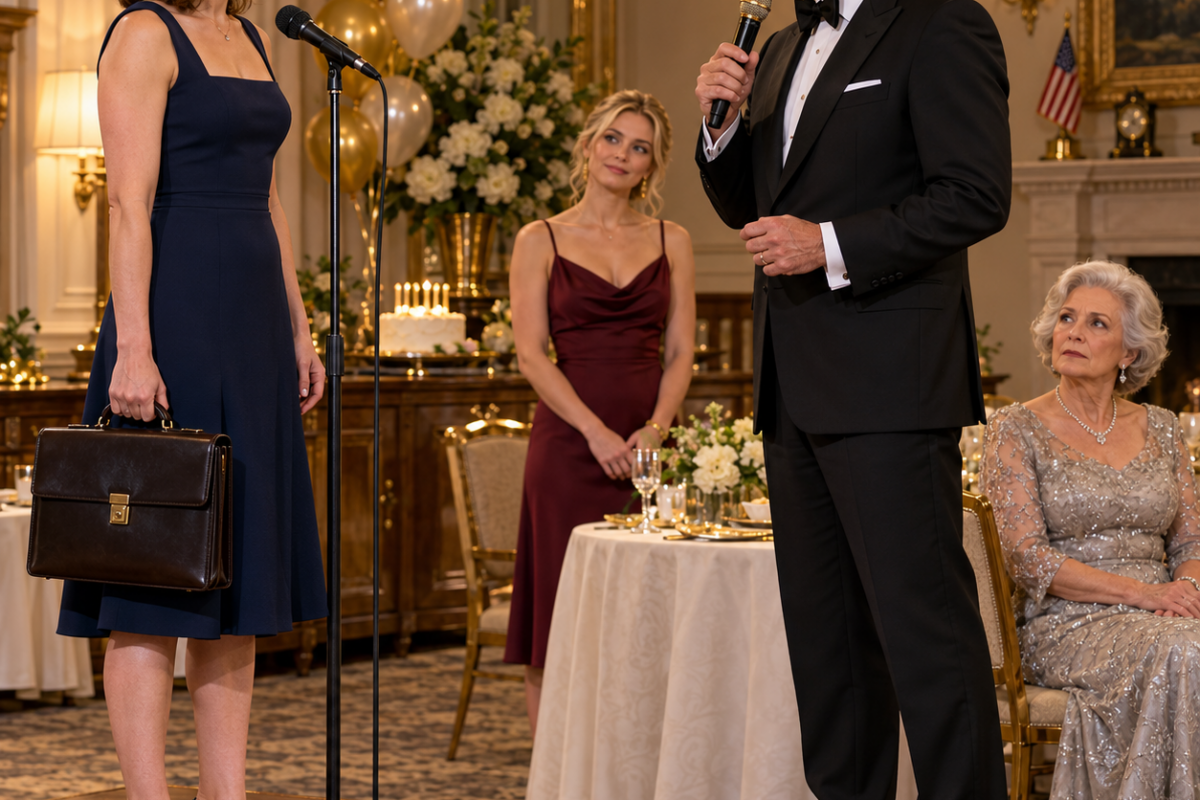
“I already promised your house to your sister,” my father told me four days after I bought it. “They’re moving in Monday. Rent-free for three years.” I was thirty-one, had saved for nine years, and had bought the five-bedroom home entirely in my own name. When I said no, he threatened to tell the family I had abandoned my sister’s children. Days later, he took the microphone at my grandmother’s seventy-fifth birthday dinner and did exactly that.
My father called twelve times in forty minutes after discovering I had bought a house without consulting him. When I answered, he didn’t ask whether…
My mother leaned across the restaurant table, looked at my thirteen-year-old adopted daughter, and whispered, “We don’t sit with mistakes.” I took Sole’s hand and walked her out. That night, my father texted, “You’re still making the car payment tomorrow, right?” By midnight, I had canceled the payments I’d been making for my family. Then I remembered something Sole had told me about her grandmother.
My mother looked at my thirteen-year-old daughter and whispered, “We don’t sit with mistakes.” She said it softly enough to avoid attracting attention from the…
At my father’s seventieth birthday dinner, my eleven-year-old son and eight-year-old daughter were seated beside the service door with water glasses—but no dinner plates. Their cousins sat beside Grandpa with warm bread and full place settings. “They’ll eat after everyone else,” my sister said. I turned to my father, expecting him to object. “They can wait another hour,” he replied. There were two empty chairs at his table.
At my father’s seventieth birthday dinner, the first thing that stopped me wasn’t the cake or the gold balloons. It was my children. Ethan and…
“Mommy, are you real?” my four-year-old daughter whispered when I came home from deployment three weeks early. She was sitting alone on our living room floor with an empty cereal bowl. My husband was on a Caribbean cruise with his mother and sister. Twenty-two minutes earlier, they had posted a photo captioned “Family time.” I was still in uniform when Sophie asked if she could have something to eat.
The first thing my daughter said when I found her was, “Mommy, are you real?” She was sitting cross-legged on our living room floor with…
End of content
No more pages to load