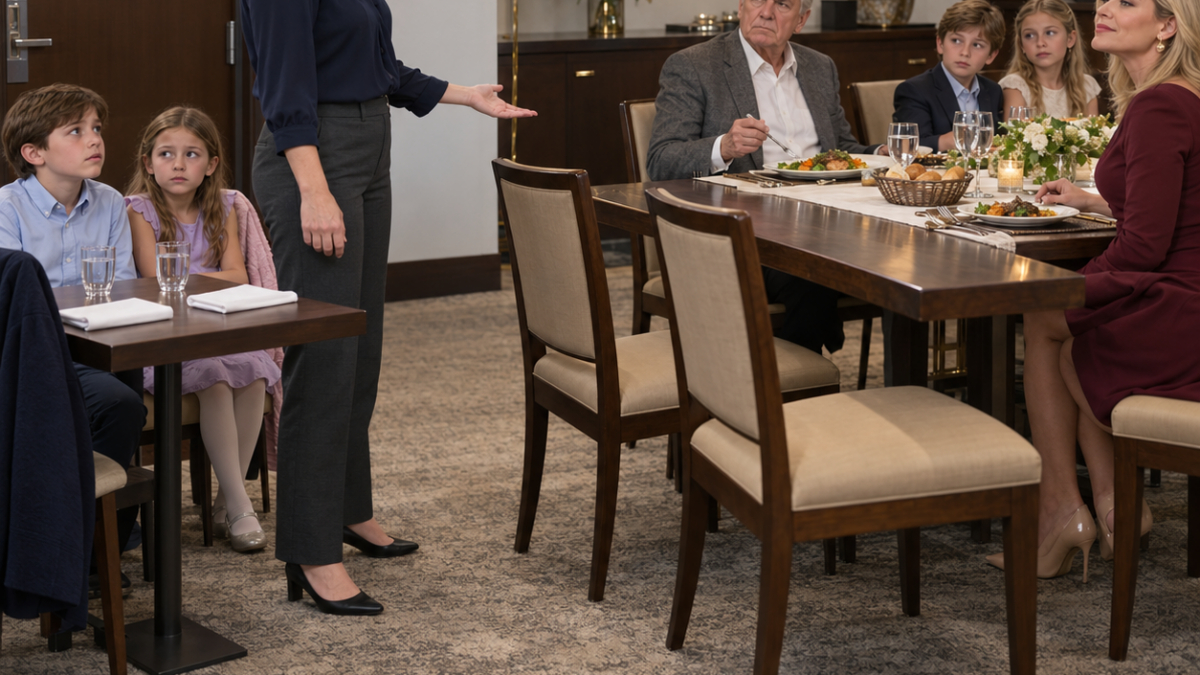
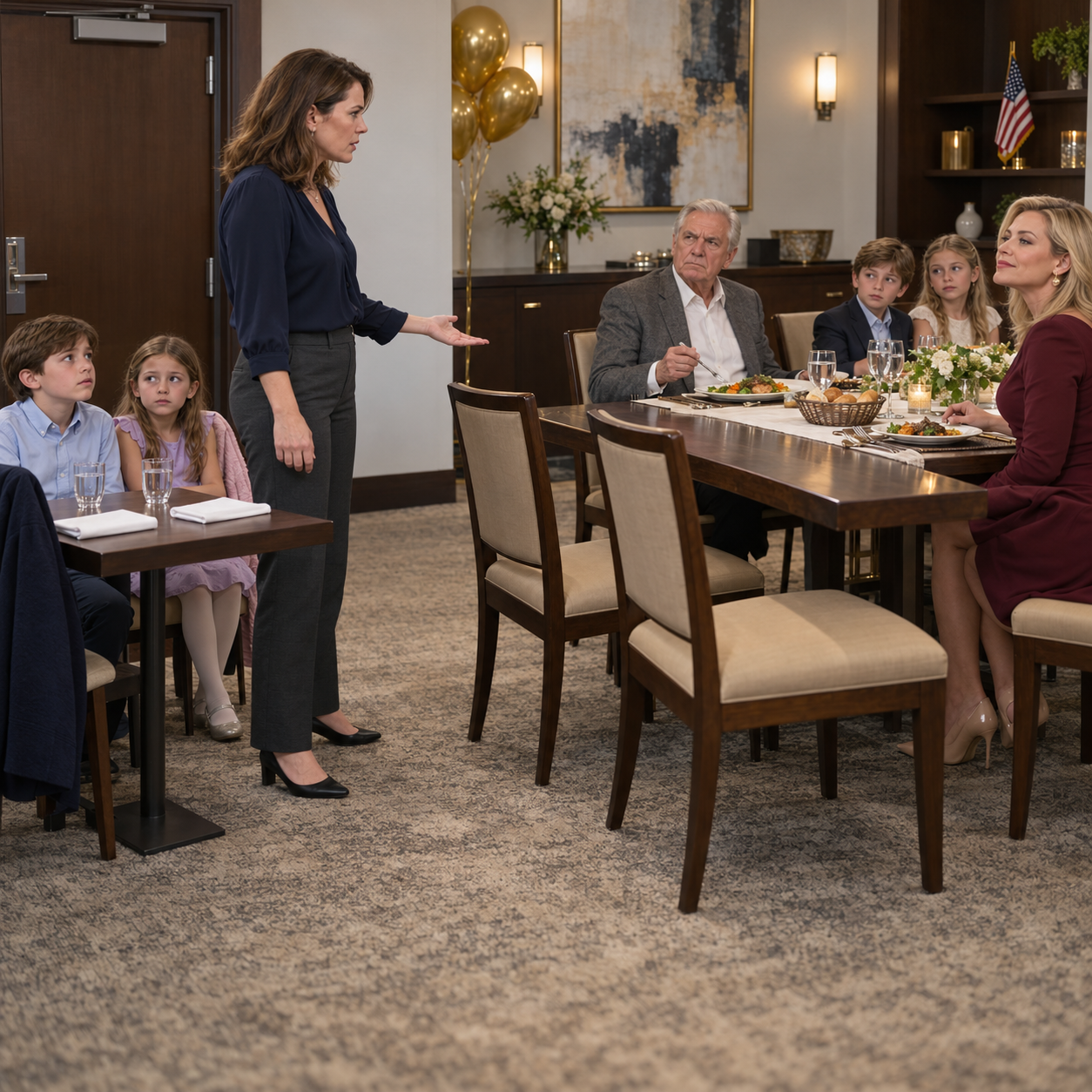
At my father’s seventieth birthday dinner, my eleven-year-old son and eight-year-old daughter were seated beside the service door with water glasses—but no dinner plates. Their cousins sat beside Grandpa with warm bread and full place settings. “They’ll eat after everyone else,” my sister said. I turned to my father, expecting him to object. “They can wait another hour,” he replied. There were two empty chairs at his table.
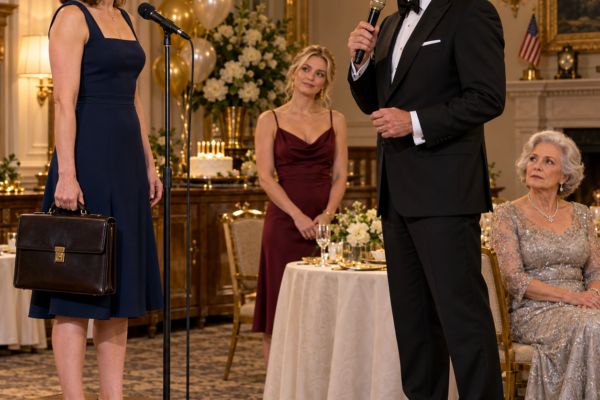
At my father’s seventieth birthday dinner, the first thing that stopped me wasn’t the cake or the gold balloons.
It was my children.
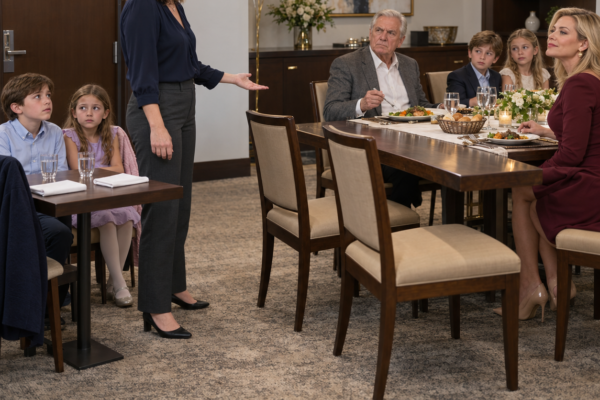
Ethan and Sophie were sitting at a narrow table beside the swinging service door. They had water glasses and folded napkins, but no dinner plates. Across the room, my sister Vanessa’s children sat beside Grandpa at the main table with menus, warm bread, and full place settings.
There were two empty chairs at that table.
I counted them twice before asking when my children would be served.
Vanessa looked up from her wine.
“They’ll eat later.”
“Later?”
“After everyone else.”
My father heard every word. He looked directly at me and said, “They can wait another hour.”
Ethan touched my sleeve.
“It’s okay, Mom.”
That was the moment I stopped trying to understand the arrangement and started understanding what it meant.
My son was eleven. My daughter was eight. They had spent the week looking forward to their grandfather’s birthday. Sophie had made him a card with seventy tiny gold stars because she thought writing seventy individual numbers would take too long.
Now they were watching their cousins reach for warm rolls while a gold banner above the main table announced FAMILY FIRST.
I picked up their coats.
“My children aren’t staying here to wait for leftovers.”
My father’s expression hardened.
“If you walk out of my birthday dinner, don’t expect to come back when you’ve calmed down.”
For most of my life, that would have worked.
That night, it didn’t.
I took my children to a diner ten minutes away. While Sophie studied the cake display and Ethan tried to convince me we could have waited, a notification arrived on my personal phone.
My access to Bennett Office Supply had been revoked.
Payroll. Purchasing. Inventory. Vendor management. Financial reporting.
For twelve years, I had been the company’s director of operations.
At first, I thought my father had retaliated because I left his dinner.
Then I saw the effective time.
6:12 p.m.
We hadn’t arrived at the restaurant until 6:45.
Before I could make sense of that, my cousin Marisol sent a video with a message.
*Claire, I think you need to see this.*
In the recording, Vanessa stood beside the little table where my children had been seated.
My father was next to her.
“Once she realizes she’s out of the company,” Vanessa said, “she’ll either fall in line or walk away.”
Dad looked toward the two places without plates.
“Tonight she chooses.”
I watched the clip again.
The humiliation hadn’t been a family dinner going wrong.
It had been waiting for us.
Four days before Christmas, I had left my house carrying a gift for my father, two children’s coats, and the kind of optimism that came more from habit than conviction.
The week had already been busy. Bennett Office Supply was closing out the year, customers were trying to use remaining budgets, and several vendors had changed delivery schedules for the holidays. I had spent most of Friday dealing with a shipment that should have arrived Wednesday.
By Saturday afternoon, I wanted a quiet evening.
Instead, I ironed Ethan’s shirt, helped Sophie find the shoes she insisted matched her dress, and checked the invitation again to make sure we weren’t late.
“Six forty-five,” I told them.
Sophie stood in the hallway holding her card.
“Does Grandpa know I did seventy?”
“I don’t think so.”
“Good. Don’t tell him.”
“I won’t.”
Ethan had helped her count the stars. He pretended it was annoying, but I had heard him sitting at the kitchen table with her, patiently starting over after she lost track.
She had written *I love you, Grandpa* across the inside in purple marker.
I remembered watching her bend over that card, tongue caught between her teeth, concentrating as though the result mattered more than anything else she had done all week.
It mattered to me.
I thought it would matter to him.
On the drive, Ethan asked whether his cousins would be there.
“Yes.”
“Can we sit together?”
“I assume so.”
“Grandpa said he wanted a picture with all of us.”
“He probably does.”
Sophie leaned forward as far as her seat belt allowed.
“Will there be chocolate cake?”
“I don’t know.”
“Seventy is a chocolate birthday.”
“What makes it chocolate?”
“It’s a big number.”
Ethan looked out the window, trying not to smile.
I drove toward the restaurant thinking about the present on the seat beside me. It was a framed photograph of my father outside the first Bennett Office Supply warehouse, taken years before I joined the business.
He stood beside a delivery van with the company name painted unevenly on the side.
My mother had taken the picture.
I had found the original while sorting old albums and arranged to have it restored. I thought Dad would like seeing how far he had come.
Even now, I don’t regret choosing that gift.
His work mattered.
The problem was that he had begun treating everyone else’s work, time, and affection as extensions of his own.
Bennett Office Supply started as a small regional company. My father borrowed money, rented space, and delivered boxes himself. My mother handled invoices at the kitchen table after we went to bed.
There were years when they worried about every bill.
I knew that history because I had lived around it. I remembered being told not to touch the paperwork spread across the dining room. I remembered waiting in the van while Dad carried printer paper into an office.
I admired what he built.
When I joined full time, I wanted to contribute to it.
I did not arrive expecting ownership or a special place because I was his daughter. I started with practical work, learned the systems, and gradually took on more responsibility.
By the time I became director of operations, the business had grown beyond what could be managed with a notebook and a few telephone calls.
There were employees to schedule, customer requirements to track, insurance renewals, purchasing controls, inventory discrepancies, and payroll deadlines that did not care whether anyone in the family was upset.
I liked the work.
I liked finding the reason a recurring problem kept happening. I liked helping a warehouse employee get the information needed to do a job properly. I liked turning a confusing process into something ordinary people could follow without calling me every time.
What I didn’t recognize was how often I made exceptions for my family.
After my mother died, I became the person Dad called first.
At home, that meant appointments, paperwork, and making sure he had eaten.
At work, it meant nearly everything he no longer wanted to manage.
When he had heart surgery, I rearranged my life around the company. I dealt with vendors, staff, deliveries, and customers while keeping him informed in a way that wouldn’t overwhelm him.
He thanked me afterward.
“I don’t know what I would have done without you.”
I believed he meant it.
Perhaps he did.
But somewhere along the way, needing me began to bother him.
Vanessa’s role developed differently. She was good with customers, comfortable at events, and better than I was at making people feel enthusiastic about possibilities.
Those were real skills.
I had sometimes acted as though the work behind the scenes mattered more than the work she did in front of people.
That was unfair.
It was also something we could have discussed without putting my children beside a kitchen door.
When Vanessa wanted the vice president title, I stepped aside rather than turn it into a fight.
Dad said it would give the company a clearer leadership structure.
I asked what responsibilities would change.
“We’ll work that out,” he said.
We never really did.
The title changed. The work mostly didn’t. Vanessa gained authority in conversations, while I continued handling problems when the practical details became inconvenient.
It was an arrangement designed to create resentment.
I kept telling myself that if I remained patient, we would eventually settle into something better.
Patience became the answer to everything.
Be patient with Dad.
Be patient with Vanessa.
Don’t take it personally.
Don’t make this harder.
And when patience failed, the family treated my reaction as the new problem.
By the time we reached the restaurant that December evening, I had spent years practicing how to be agreeable without admitting how tired I was.
The private dining room looked beautiful.
Gold balloons clustered beside the windows. Framed photographs stood on a long sideboard. The cake had white frosting and a gold seventy on top.
Several relatives had already arrived.
Vanessa stood near the main table, giving instructions to a server. Dad sat at the head, talking to one of our uncles.
I put the gift on the sideboard.
Then I noticed my children were no longer beside me.
A relative had directed them to the little table near the service door.
Ethan was sitting upright, his hands in his lap. Sophie had placed her card beside her water glass and was looking around the room.
At first, I thought it was a children’s table.
That would have been ordinary enough.
Then I saw Vanessa’s children beside Grandpa.
They had bread.
They had plates.
They were included in the conversation at the main table.
My two children had a view of a door that kept opening against the back of Ethan’s chair.
I walked over.
“Let’s move this chair a little.”
He stood while I adjusted it.
Sophie looked up.
“Are we sitting here?”
“I’m going to check.”
I turned toward Vanessa.
“When are Ethan and Sophie getting their plates?”
“They’ll eat later.”
I waited for an explanation.
None came.
“Why?”
“We’re serving the main table first.”
“They’re guests too.”
Vanessa glanced toward Dad, then back at me.
“Claire, it’s one dinner.”
I looked at the empty chairs.
“Who are those for?”
“Guests.”
“Everyone who confirmed is already here.”
“I’m sure someone might come.”
Her expression told me the excuse didn’t need to be convincing.
She expected me to accept it because the decision had already been made.
I caught a waiter as he passed.
“Could you bring two children’s meals to that table, please?”
He stopped and looked at Ethan and Sophie.
Then he glanced toward Vanessa.
Before he could respond, she spoke.
“Their meals are coming later.”
“I’m asking him.”
“And I’m telling you the arrangement.”
“What arrangement?”
Dad put down his fork.
“Claire, sit down.”
I looked at him.
“Dad, there are empty places at your table.”
“Don’t argue with Vanessa.”
“I’m asking why my children don’t have dinner.”
“They can wait another hour.”
A few people looked down.
Someone reached for a water glass.
The waiter stood there, caught between the person who had organized the event and the mother asking for food for her children.
I didn’t blame him.
I knew that particular hesitation. In my father’s presence, people often calculated the cost of saying something simple.
Ethan touched my sleeve.
“It’s okay, Mom.”
I turned toward him.
His eyes were shiny, but he was trying to smile.
Sophie was watching the bread basket at the main table. She didn’t complain. She didn’t make a scene.
She was learning the room.
Who could ask.
Who could have.
Who should wait.
I picked up her coat.
“My children aren’t staying here to wait for leftovers.”
The word left my mouth before I considered whether their delayed meals would technically be leftovers.
It wasn’t a menu description.
It was what the arrangement communicated.
Dad’s face hardened.
“Don’t start.”
“I’m not starting anything.”
“You always do this when things aren’t exactly your way.”
I stared at him.
Two children receiving dinner at a birthday celebration had become a demand for perfection.
“They’re leaving with me.”
“If you walk out of my birthday dinner, don’t expect to come back when you’ve calmed down.”
There was the old threat.
He didn’t shout.
He didn’t need to.
The room understood him.
I could stay, accept the arrangement, and preserve the evening.
Or I could leave and become the reason it was ruined.
For a moment, the familiar shame rose in me so quickly that I almost sat down.
Then Sophie picked up her card and held it against her chest.
I looked at the seventy stars.
“Come on, sweetheart.”
Ethan stood immediately.
Vanessa shook her head.
“You’re really doing this?”
“Yes.”
“Over dinner?”
“Over how you decided my children could be treated.”
Dad pushed back his chair.
“Claire.”
I turned.
“If you walk out that door—”
Marisol stood.
She rarely interrupted family conflict. Usually, she waited until afterward and tried to say something kind privately.
That night, she took a roll from the bread basket, walked across the room, and placed it in Sophie’s hand.
“I’m sorry,” she whispered.
Sophie looked up.
“Thank you.”
It was a small act.
At the time, it felt enormous.
One adult had crossed the space between the main table and my children.
We left without another word.
I made it to the car before crying.
Even then, I turned toward the windshield and took a few breaths before starting the engine.
Ethan sat quietly.
Sophie held the roll in one hand and her card in the other.
For several minutes, nobody spoke.
Then she asked, “Can we still get cake somewhere?”
A laugh came out of me, broken and unexpected.
“Yes.”
“Real cake?”
“Real cake.”
“Chocolate?”
“Absolutely.”
Ethan looked toward me.
“We really could have waited.”
“I know.”
“I didn’t want you to fight with Grandpa.”
“I know.”
“He’s going to be mad.”
I stopped at a red light.
The car beside us had a wreath attached to the grille. Someone’s Christmas music drifted faintly through a closed window.
“Ethan?”
“Yeah?”
“You don’t have to accept someone treating you badly because you’re afraid they’ll be angry if you object.”
He looked out the window.
I wondered how many times he had already watched me do exactly that.
The diner was warm and nearly full.
There were vinyl booths, thick white coffee mugs, and a glass case displaying cakes that looked as though they had been made to satisfy people rather than impress them.
A waitress led us to a booth and called Sophie sweetheart.
She brought extra napkins without being asked.
Ethan ordered a cheeseburger and fries. Sophie ordered pancakes and a chocolate milkshake because, she explained, birthday dinners should have breakfast rules.
I ordered soup.
My stomach felt too tight for anything else.
When the food arrived, neither child ate much.
Sophie cut a pancake into careful pieces. Ethan moved fries around his plate.
I wanted to tell them everything was fine.
Instead, I said, “That was an upsetting evening. You don’t have to pretend it wasn’t.”
Ethan looked at me.
“Are you upset?”
“Yes.”
“With us?”
“No.”
Sophie studied my face.
“Not even a little?”
“Not even a little.”
My phone vibrated against the table.
Dad.
Then Vanessa.
Then Dad again.
I turned it facedown.
The waitress refilled my coffee and asked whether we needed anything.
“We’re all right for now,” I said.
It was the first sentence I had spoken that evening that felt true without requiring an explanation.
We had food.
We had seats.
Nobody was waiting for permission to deserve them.
Then the company notification arrived.
Access changes had been configured to send a security notice to my recovery address as well as my work account. I had helped set up that process years earlier so employees would know if something unexpected happened to their credentials.
I opened the message, assuming there had been a technical problem.
My account had been disabled.
The list of affected systems went on far longer than I expected.
I stared at it.
For twelve years, those systems had formed the beginning and end of most of my days.
I knew which customer needed deliveries before ten because the loading entrance closed afterward. I knew which warehouse section needed attention after heavy rain. I knew which vendor invoices required a second review because their freight charges changed without warning.
I knew the business in the practical way people know something they have touched every day for years.
Now I couldn’t get in.
At first, I thought Dad had done it after we left.
That would have fit the family pattern.
You embarrass me.
I remove something.
You return.
You apologize.
Then I saw the effective time in the notice.
6:12 p.m.
I checked it again.
Our arrival had been 6:45.
My access had been removed thirty-three minutes before I entered the private dining room.
Before I asked about the plates.
Before Dad told me they could wait.
Before I picked up their coats.
Ethan noticed my expression.
“What happened?”
“Nothing.”
The word came automatically.
Then I stopped.
That was the old family language.
Nothing.
Fine.
Don’t worry.
I placed the phone beside my plate.
“Something happened at work.”
“Bad?”
“I don’t know everything yet.”
It wasn’t reassuring.
It was honest.
Then Marisol’s message arrived.
The video was short.
I put in my earbuds before opening it.
The camera moved past flowers, balloons, and framed photographs. Marisol had apparently been recording the decorations before most people arrived.
Vanessa and Dad stood in the background, near the small table.
Their voices were clear enough.
“Once she realizes she’s out of the company, she’ll either fall in line or walk away.”
Dad looked toward the places set for Ethan and Sophie.
“Tonight she chooses.”
I stopped the recording.
The diner’s sounds continued around me. Cutlery touched plates. Someone laughed at the counter. A child in another booth complained about ketchup.
For several seconds, I felt separate from all of it.
Then I replayed the clip.
The same words.
The same table.
The same two water glasses.
They had discussed the company and my children’s place in that room before we arrived.
The clip didn’t explain every part of the plan.
It didn’t show the access request being submitted.
It didn’t tell me what they intended to offer afterward.
But it showed enough.
They expected discomfort.
They expected a choice.
And my children had been included in the pressure.
Sophie stopped cutting her pancake.
“Mom?”
I removed the earbuds.
“Yes?”
“Are we in trouble?”
“No.”
“Grandpa’s mad.”
“That doesn’t mean you’re in trouble.”
Ethan looked at the phone.
“Did Aunt Vanessa do something?”
I took a breath.
“They made some decisions before we got there that I didn’t know about.”
“About us?”
“Partly.”
His expression changed.
“Why?”
“I don’t know everything yet.”
I was angry enough to invent the missing pieces.
I didn’t.
There would be time to ask questions.
Right then, there was a little girl watching me to see whether the world had become less safe and a boy trying to decide how much responsibility he should carry.
I put the phone away.
“We’re going to finish dinner, get cake, and go home.”
Sophie nodded.
“Can mine be in a box?”
“Yes.”
When the waitress brought the cake, the slice was large enough for all three of us.
She saw Sophie examining it and smiled.
“That one looked like it had your name on it.”
Sophie gave her the first real smile of the evening.
I paid, thanked her, and drove home with my phone switched off.
At the house, I helped Sophie change into pajamas.
Her card lay on the kitchen counter.
“Should I keep this?” she asked.
“Of course.”
“Even though Grandpa didn’t get it?”
“Yes.”
She ran one finger over the stars.
“I don’t want to throw it away.”
“You don’t have to.”
After she went upstairs, Ethan stayed at the counter.
“Are you going back?”
“To the restaurant?”
“To Grandpa’s.”
“Not tonight.”
“Ever?”
“I don’t know.”
He looked surprised.
So was I.
After every family argument, the answer had always been eventually.
Eventually, I would go back.
Eventually, Dad would say Vanessa had been upset.
Eventually, Vanessa would say I had misunderstood.
Eventually, I would apologize for my tone, and everyone would behave as though the disagreement itself had been the injury.
Ethan looked at his hands.
“You didn’t ruin his birthday.”
“Who said I did?”
“Nobody.”
He didn’t need anyone to say it.
He knew what would come next.
I walked around the counter and hugged him.
He stood stiffly for a moment, then hugged me back.
“I’m sorry,” he said.
“For what?”
“For making you leave.”
I pulled back enough to see his face.
“You didn’t make me leave.”
“If we had just waited—”
“Ethan, listen to me.”
He looked up.
“I decided to leave. That was my responsibility as your mother.”
“But now your job—”
“The decisions about my job started before dinner. You didn’t cause them.”
He swallowed.
I kept my voice calm.
“You and Sophie deserved to be treated respectfully.”
He shrugged.
“It was just food.”
I heard the family habit in that word.
Just.
Just a seat.
Just an hour.
Just a joke.
Make the object small enough, and the treatment becomes easier to dismiss.
“It was the way they arranged things,” I said. “A children’s table would have been fine if you were welcomed and fed like everyone else.”
He nodded.
“You don’t belong beside the service door watching other people eat.”
He looked at me for a long moment.
“Neither do you.”
I had to look away.
After he went upstairs, I stood in the kitchen with the cake box open and the birthday card beside it.
I had spent years thinking that if I protected the children from adult arguments, they wouldn’t notice how the family worked.
They had noticed everything.
They had learned when I lowered my voice.
When I apologized unnecessarily.
When I changed plans because Grandpa called.
When I told them we had to be understanding.
I had never intended to teach them that being loved meant becoming easy to inconvenience.
Intentions hadn’t prevented the lesson.
I went to bed late and woke before six.
My body expected a problem.
That was what twelve years in operations had trained it to do.
I opened my work laptop out of habit.
Email failed.
The operations dashboard refused my login.
The secure connection rejected my credentials.
I closed the laptop.
Then I opened a notebook.
6:12 p.m. Account access disabled.
6:45 p.m. Arrival at restaurant.
Children seated separately without dinner settings.
Vanessa says they will eat after everyone else.
Dad says they can wait another hour.
Departure.
Diner.
Notice discovered.
Video received.
I wrote only what I knew.
Then I saved the notice and Marisol’s original video.
I did not post anything online.
I did not send it around the family.
I wanted the facts preserved before they could become a story about my temperament.
At seven fifteen, Dad called.
I watched the phone ring.
Then I answered.
“Claire.”
“Dad.”
“You embarrassed me last night.”
“I left because Ethan and Sophie were being treated differently.”
“They weren’t being denied dinner.”
“Why were they told to wait while their cousins ate?”
“Vanessa organized the seating.”
“And you supported it.”
“Don’t interrogate me.”
I looked at the notebook.
Once, that voice would have ended the conversation.
“Why were my children seated by the service door?”
“You made a spectacle out of nothing.”
“That doesn’t answer the question.”
“I’m not doing this with you.”
“Then let’s discuss work.”
He went quiet.
“My access was disabled at 6:12.”
“I’m aware.”
“Before we arrived.”
“Business decisions aren’t made around birthday parties.”
“Then tell me what decision was made.”
“We’ll discuss it after the holidays.”
“I need to know my employment status now.”
“You don’t dictate terms to me.”
“I’m asking whether I’m expected to work, whether I’m being paid, and what responsibilities I still have.”
He exhaled sharply.
“You’ve been difficult.”
“About what?”
“You undermine Vanessa.”
“How?”
“You don’t respect her position.”
“I need examples, Dad.”
“That is exactly the attitude I mean.”
I rested my hand on the table.
Specific questions had become insubordination.
“What happened to my job?”
“We’ll talk at the office.”
“When?”
“After the holidays.”
“Am I fired?”
Silence.
“Am I suspended?”
Another silence.
“Am I expected to continue handling calls?”
“You always have to complicate everything.”
I looked at the video thumbnail on my laptop.
“Did you and Vanessa plan the seating as part of the work discussion?”
“Who have you been talking to?”
“Did you say, ‘Tonight she chooses’?”
He didn’t answer immediately.
Then he said, “Marisol had no right to record a private family conversation.”
It wasn’t a denial.
I closed my eyes.
He continued.
“You need to stop before you create damage you can’t undo.”
“Dad, the access change happened before I arrived.”
“It was a business decision.”
“The seating happened before I arrived.”
“That was Vanessa.”
“You stood beside her.”
“Claire.”
“You talked about whether I would fall in line.”
“You’ve been making this family choose for years.”
The accusation caught me off guard.
“How?”
“By making everything about how much you do.”
“I almost never talk about how much I do.”
“You make people feel it.”
I sat still.
If I named my work, I was self-important.
If I kept quiet, my work apparently accused them.
There was no answer that would satisfy a complaint that broad.
“I need written clarification of my status,” I said.
“I told you we’ll discuss it.”
“Please send it today.”
He hung up.
I wrote down the time and the questions he had refused to answer.
Documentation sounded cold when I thought about it.
Doing it felt stabilizing.
At nine, Vanessa texted.
*Stop harassing Dad.*
Then:
*You ruined his seventieth birthday.*
Then:
*Your kids weren’t going to starve. You’re teaching them entitlement.*
I typed several responses.
Deleted them.
Finally, I wrote, *Please communicate about company matters in writing. I’m not discussing the children this way.*
Her reply arrived almost immediately.
*Unbelievable.*
I left it there.
Marisol called around ten.
“I’m sorry.”
“For what?”
“For not telling you before dinner.”
“You knew what they were planning?”
“Not really.”
I waited.
She explained that she had arrived early and was recording the room to send to a relative who couldn’t attend.
Dad and Vanessa were in the background.
“I heard something about the company, but I wasn’t paying close attention. When you left, I remembered they’d been talking near that table. I listened to the clip.”
“Did you send it to anyone else?”
“No. Just you.”
“Please keep the original.”
“I will.”
She hesitated.
“Vanessa’s been talking for weeks about a cleaner chain of command.”
“What did she mean?”
“I don’t know.”
“Did she say I was being fired?”
“No.”
“Did Dad?”
“No.”
I wrote that down too.
Rumor was still rumor, even when it fit what I suspected.
Marisol said Vanessa had complained that I made people believe the company couldn’t function without me.
I looked toward the closed laptop.
I had never wanted it to be true that the company couldn’t function without me.
I wanted the company to function well.
But I had also taken too much satisfaction in being the person who could solve things quickly.
Those weren’t comfortable thoughts.
They were useful ones.
“I should have done more last night,” Marisol said.
“You gave Sophie a roll.”
“That seems very small.”
“It wasn’t small to her.”
After the call, I made breakfast.
The children came downstairs slowly.
Sophie placed the birthday card in a drawer beside her coloring supplies.
Ethan asked whether we were still going to Grandpa’s for Christmas.
“No.”
His shoulders lowered.
“Okay.”
I didn’t announce that we would never see them again.
I didn’t know that.
I knew we weren’t going four days later and pretending everything was normal.
That afternoon, a warehouse supervisor called my personal number.
“Are you okay?”
“I’m dealing with something.”
He hesitated.
“Vanessa told us you’re taking time away.”
“What exactly did she say?”
“That management is restructuring and you won’t be involved in daily operations.”
“Did she say I resigned?”
“No.”
“Did she say I was fired?”
“No.”
I thanked him.
“Are you coming back?” he asked.
“I don’t know yet.”
Saying it hurt.
For twelve years, I had never imagined the company opening after Christmas without me knowing what needed to happen.
He started asking about a purchasing problem.
I stopped him gently.
“I don’t currently have access or clear authority. Please send that through the company’s designated management contact.”
There was an awkward pause.
“Right.”
“I’m not upset with you.”
“I know.”
Afterward, I sat at the table for a long time.
The instinct to solve his problem had been immediate.
I knew the likely answer.
I could have made two calls.
But doing work without access, authority, or clear terms would have recreated the exact arrangement I was trying to leave.
My usefulness couldn’t remain available while my status stayed deliberately uncertain.
That evening, I told the children a little more.
“Grandpa and Aunt Vanessa made decisions about my job before dinner.”
Ethan’s expression tightened.
“So they did that on purpose?”
“The seating?”
He nodded.
“It looks like they expected me to be upset and wanted to see what I would do.”
“That’s mean.”
“Yes.”
Sophie looked confused.
“Does Grandpa not like us?”
“I think he loves you.”
“But he made us sit there.”
“Yes.”
“How can both happen?”
I took my time.
“Sometimes people who love you still make hurtful choices. Loving someone doesn’t make every choice they make okay.”
“Do we have to forgive him?”
“Not right now.”
“Later?”
“You’re allowed to have feelings about it. Nobody gets to rush them.”
She considered that.
Then she asked whether Christmas dinner could include pancakes.
“We can discuss the menu.”
“Because birthday dinner did.”
Ethan smiled.
For the first time since the restaurant, I felt the room loosen around us.
Over the next several days, I separated things I had allowed to remain tangled for years.
Family.
Employment.
Loyalty.
Dad had treated them as a single obligation.
Working for him was helping the family.
Helping the family meant respecting his authority.
Respecting his authority meant accepting Vanessa’s position.
Accepting Vanessa’s position meant not asking too many questions about how responsibilities actually worked.
I had professional obligations to the company.
I had personal relationships with my father and sister.
Those relationships did not require me to let business decisions follow me into my children’s dinner.
I contacted an employment professional privately to understand my position. I brought the notification, correspondence, and my records.
The advice was practical.
Get the status in writing.
Preserve what I was entitled to preserve.
Return company property appropriately.
Do not access systems after authorization had been removed.
Do not assume that an unfair family situation automatically made every employment decision unlawful.
I appreciated that last point.
I needed clear advice, not someone promising a dramatic victory because my father had behaved badly.
Dad eventually sent an email.
Bennett Office Supply was restructuring management responsibilities effective immediately.
My role would be reviewed.
I remained employed pending further discussion.
He did not provide the apology or explanation I wanted.
He provided something in writing.
I saved it and asked follow-up questions about pay, responsibilities, and the proposed meeting.
Vanessa continued sending family messages.
Dad hadn’t slept.
I was tearing everyone apart.
People thought I was vindictive.
I answered once.
*Please keep family matters separate from company communications.*
She disliked that almost more than anything else.
The old arrangement depended on moving freely between the two.
A question about job duties could become disrespect to Dad.
A complaint about the children could become proof that I wasn’t committed to the company.
If I insisted on separate conversations, some of their leverage disappeared.
Christmas morning was quiet.
Ethan woke Sophie before she could wake him. They came downstairs arguing about whether he had actually been awake first.
I made coffee.
We opened presents without checking the time for when we needed to leave.
That alone felt unfamiliar.
For years, Christmas had followed Dad’s schedule. We ate when he wanted, arrived when he expected, and stayed until leaving could be explained without sounding disloyal.
This year, we stayed in pajamas until nearly noon.
Sophie put on a new sweater over hers and declared that she was dressed.
Ethan made breakfast toast and burned the first batch.
Nobody turned it into a lesson about responsibility.
We opened a window, laughed, and made more.
Marisol came by with a pie.
She stayed for coffee while the children decorated cookies.
Sophie used enough frosting on one cookie to conceal its shape completely.
“It’s a snowstorm,” she explained.
“Very convincing,” Marisol said.
At lunch, Sophie looked around the table.
“Can I sit anywhere?”
She was joking.
Mostly.
“Yes.”
She chose my chair.
Of course she did.
I moved my plate without comment.
Christmas wasn’t triumphant.
I missed my father.
I missed my mother more.
I missed the version of Vanessa I remembered from childhood, when we could whisper in the same room without wondering which of us was winning.
Anger didn’t erase attachment.
At one point, I went upstairs under the excuse of getting another sweater and sat on the edge of my bed.
From below, I heard Ethan telling Sophie not to put frosting in the dog-shaped cookie’s eyes because it would look alarming.
Marisol laughed.
I wiped my face and went back down.
I could miss my family and still be right to stay home.
On December 27, I met Dad at the office.
He insisted Vanessa attend.
I agreed, provided the discussion stayed focused on work and any proposal was put in writing.
Walking through the building felt strange.
The receptionist looked uncertain about whether to greet me normally. A warehouse employee lifted a hand, then returned to what he was doing.
I didn’t want anyone to feel watched for being friendly.
I said good morning and kept walking.
The conference room was the same room where I had reviewed vendor terms, staffing plans, and quarterly inventory issues for years.
Dad sat at the head.
Vanessa sat beside him.
I chose a chair on the opposite side.
No one offered coffee.
Dad began.
“This has gone too far.”
“Which part?”
“Everything.”
“I need you to be specific.”
Vanessa rolled her eyes.
“There she goes.”
I looked at her.
“This is a work discussion.”
Dad held up a hand.
“We’ve decided the company needs a new structure.”
“Okay.”
That surprised him.
“You’re not going to argue?”
“About having a structure? No. I want to understand it.”
Vanessa leaned forward.
“My role is expanding.”
“What responsibilities will you take over?”
“Operational oversight.”
“What does that include?”
“Claire, you know what it means.”
“I know what it can mean. I’m asking what it means here.”
They had ideas.
Some were reasonable.
Purchasing approvals could be shared.
Certain functions could move to dedicated staff.
My role could become less central.
None of those possibilities offended me.
What concerned me was how little preparation existed.
There was no written responsibility list.
No confirmed replacement for functions I handled.
No transition schedule.
They wanted me to train people who had not been selected while treating questions about training as resistance.
“You’ll help Vanessa get settled,” Dad said.
“In what role?”
“In the role we’re discussing.”
“What will my role be during that period?”
“We’ll determine that.”
“What authority will I have?”
Vanessa leaned back.
“Why do you need to control everything?”
“I need to know what I’m accountable for.”
Dad’s jaw tightened.
“This is why we had to act.”
I looked at him.
“Why was my access removed before the birthday dinner?”
“Because we knew you would resist.”
“Resist a plan you hadn’t told me about?”
“You would have made it difficult.”
“How?”
“Like this.”
I sat back.
Every question proved their reason for not informing me.
It was a closed circle.
They did not need an answer because asking was the offense.
“Was there a security concern?” I asked.
Vanessa said, “We had to protect the company.”
“From what?”
Neither answered.
I waited.
Dad finally said, “We needed to establish the new chain of command.”
“Then why wasn’t I informed professionally before you changed access?”
“We’re informing you now.”
“After using your birthday dinner to make a point.”
Vanessa’s expression hardened.
“That had nothing to do with work.”
“Marisol’s video says otherwise.”
The room became still.
I did not play it theatrically.
I did not push my phone across the table.
They knew the words.
“I heard you say I would fall in line or walk away.”
Vanessa looked toward Dad.
“I heard you say, ‘Tonight she chooses.’”
Dad closed his eyes briefly.
“Claire.”
“My children were part of that choice.”
“They were never in danger.”
I stared at him.
“That’s the standard you’re using?”
“They were going to eat.”
“Why did they have to wait when their cousins didn’t?”
He looked away.
Vanessa answered.
“Because you always choose them over everything.”
I turned toward her.
“They’re my children.”
“So?”
The word arrived before she could stop it.
She immediately shook her head.
“That isn’t what I meant.”
“Then tell me what you meant.”
“You make everything stop for them.”
“They are eleven and eight.”
“The company matters too.”
There it was.
The loyalty test made plain.
I had missed school events.
Canceled plans.
Answered calls during dinner.
Told my children that Mom had to fix something at work.
I had done enough of that for Dad and Vanessa to expect the company to remain the winning answer whenever a choice appeared.
Now they were angry that I had chosen differently.
I thought of Ethan touching my sleeve.
*It’s okay, Mom.*
No.
I wasn’t going to teach him that lesson again.
“I’m willing to discuss a professional transition,” I said. “I’m not willing to accept my children being used to pressure me.”
Vanessa folded her arms.
“You make everything sound terrible.”
“It was terrible.”
Dad tapped the table.
“We need to move forward.”
“We can move forward when the work proposal is clear.”
“You’re not leaving until we settle this.”
I looked at him.
That was the family voice again.
The voice that assumed remaining in the room was the first proof of respect.
I closed my notebook.
“We aren’t settling it today. Please send a written proposal.”
Dad frowned.
“We’re not finished.”
“I am for today.”
“You walk away whenever things get hard.”
For a moment, the old shame returned.
I had spent so much of my life proving that I could stay through difficulty.
Hospital rooms.
Business emergencies.
Grief.
Family arguments.
He knew exactly where to press.
I stood anyway.
“I stayed through plenty of hard things. I’m leaving this meeting because it isn’t producing a workable agreement.”
Vanessa laughed bitterly.
“There’s that superiority.”
I ignored her.
Dad said, “If you leave, your future here is uncertain.”
I picked up my bag.
“It already was at 6:12.”
He went quiet.
I left the room, said goodbye to the receptionist, and walked to my car.
I sat there for several minutes.
My hands were shaking.
Calm behavior did not mean I felt calm.
It meant I had decided what I would do while feeling something else.
The weeks afterward were difficult in ways that would have looked uninteresting to anyone watching from outside.
There were emails.
Questions about pay.
Proposals.
Meetings with professional advice.
Lists of responsibilities.
Arrangements for returning equipment.
I did not threaten to destroy the company.
I did not take customer information.
I did not tell employees to choose sides.
Whatever my father and sister had done, the people working at Bennett Office Supply still had bills and children and ordinary lives.
They hadn’t seated Ethan and Sophie beside the service door.
I would not make them pay for it.
When information was legitimately required for a transition, I provided it through authorized channels and under clear terms.
When someone asked me to solve a problem outside my role, I redirected it.
That was harder than I expected.
I knew the answers.
I disliked letting people struggle.
But helping without limits had become part of the problem.
One morning, an employee called about a vendor renewal.
I explained where the relevant records should be and asked that the request be sent to the designated manager.
“Can’t you just tell me what to do?”
“I don’t have authority to approve it.”
“You used to.”
“Yes.”
The silence afterward hurt.
I let it remain.
The company experienced problems during the transition.
Not a collapse.
Not the dramatic punishment some people seemed to expect.
Problems.
Approvals took longer.
A purchasing question moved between several people.
Someone misunderstood a delivery requirement.
A process that had seemed straightforward when I handled it became confusing when its informal steps were exposed.
Nobody is irreplaceable.
Abruptly removing someone after twelve years still creates gaps.
I also had to admit that some of those gaps reflected my own choices.
There were processes documented less thoroughly than they should have been because I was always available.
There were shortcuts I understood but hadn’t explained well enough.
There were decisions I made quickly because waiting for a meeting seemed inefficient.
I had wanted to be useful.
Sometimes I had made myself too central.
Recognizing that did not justify my family’s conduct.
It gave me something to improve in my next job.
For a while, I worried that leaving meant admitting they were right.
That fear made no sense, but it was powerful.
If I stayed, perhaps I could prove I wasn’t difficult.
If I helped enough, perhaps Dad would finally distinguish my care for the company from a desire to control it.
If I accepted a smaller role gracefully, perhaps Vanessa would stop hearing criticism in everything I did.
I discussed those thoughts with a counselor.
She listened, then asked, “What would count as enough?”
I had no answer.
That was the problem.
The conditions were never complete.
My father could always need one more sacrifice.
Vanessa could always need one more concession.
Peace could always require one more apology.
I had built a life around passing a test whose rules changed whenever I got close.
At home, the children noticed changes before I did.
One Saturday, Ethan asked whether I was working.
“No.”
“What about later?”
“No.”
He looked at me.
“What?”
“You always work.”
The words weren’t accusing.
They were factual.
I felt them anyway.
Sophie appeared in the doorway.
“Can we go somewhere?”
“Where?”
“Anywhere.”
We went to a bookstore.
That was all.
No special event.
No expensive outing to compensate for the birthday dinner.
Ethan wandered into a section of books I wouldn’t have guessed interested him. Sophie chose three and then spent twenty minutes trying to decide which one mattered most.
I didn’t hurry them.
I didn’t take a call in the parking lot.
We bought drinks afterward and sat by a window while rain moved down the glass.
At one point, Ethan began telling me about a project at school.
He got halfway through, stopped, and glanced at my phone.
“It’s okay,” I said. “Keep going.”
He did.
I realized how often my attention had come with an expiration time he could predict.
I couldn’t get those moments back.
I could stop offering him more of the same.
There were financial worries.
I had savings, but uncertainty made every ordinary expense feel larger.
I reviewed the budget carefully.
I didn’t tell the children the adult details.
I told them we were making thoughtful decisions while I worked out what came next.
Sophie asked whether that meant we couldn’t buy cake anymore.
“We can still buy cake sometimes.”
“Good.”
Ethan asked a more serious question.
“Are we okay?”
“Yes. I have a plan.”
“Even without Grandpa’s company?”
“Yes.”
I said it firmly enough that he believed me.
Later, I stood in the laundry room and practiced believing it myself.
For twelve years, director of operations had answered much of the question of who I was.
I was the person who knew.
The person who handled it.
The person people called before the problem became worse.
Without that role, I felt strangely unnecessary.
The first mornings without urgent messages were uncomfortable.
I checked my phone.
Opened the laptop.
Closed it.
Walked into the kitchen as though I had forgotten something.
Then, gradually, I began sleeping better.
Not immediately.
Not every night.
But enough to notice.
I hadn’t realized how much of my body’s attention belonged to the company.
Dad’s mood could change my day.
A vendor email could take over Sunday.
Vanessa’s frustration could follow me into dinner.
Without constant access, there was silence.
At first, I disliked it.
Then I began protecting it.
Dad called several times during that period.
I started asking whether the call concerned work or family.
He hated the question.
“Do I need an appointment to speak to my daughter?”
“No.”
“Then why are you making this formal?”
“If it’s about work, I need it in writing.”
“You sound like a stranger.”
That hurt.
I didn’t pretend it didn’t.
“I’m trying to keep different conversations separate.”
“We’re family.”
“Yes.”
“Does that mean nothing?”
“It should mean we can have a relationship even if I don’t work for you.”
He didn’t answer.
Perhaps none of us had tested that idea before.
Dad had made the company the center of the family for so long that stepping away from it felt, to him, like stepping away from love.
I couldn’t make him understand the difference by returning to the same arrangement.
One evening, he called to ask about a procedural detail.
I told him to send it through the agreed transition contact.
He became irritated.
“It would take you two minutes.”
“Then it should be a straightforward request.”
“I don’t know why you have to do this.”
“Because two minutes has rarely stayed two minutes.”
He hung up.
I sat with the phone in my hand.
Then Sophie asked whether I could help her open a jar of paint.
I put the phone down.
“Yes.”
That tiny choice mattered more than any argument I could have won.
Vanessa and I barely spoke.
She sent one long message accusing me of turning Dad against her by leaving.
I didn’t understand the logic. He had supported her in most practical ways.
Still, she sounded furious.
I began to see that our relationship had been organized around a competition I kept claiming not to participate in.
The title?
Take it.
The public credit?
Fine.
Dad’s attention?
I don’t care.
Except I did care.
I cared about being treated fairly.
I cared about having my work acknowledged.
I cared about not being expected to step back every time she wanted something.
Pretending otherwise hadn’t made me generous.
It had made me resentful in ways I didn’t express clearly.
Vanessa knew I cared.
She also knew I would usually surrender rather than admit it.
When I stopped, both of us lost familiar roles.
She couldn’t be the sister who won if I no longer stood in the contest.
I couldn’t be the noble, dependable sister if I admitted that some of my patience had been avoidance.
Those were uncomfortable realizations.
They helped me stop seeing the entire story as good Claire and bad Vanessa.
What she did to the children was wrong.
Our adult relationship had also needed work long before that evening.
Months later, she asked to meet for coffee.
I agreed to an hour in a public place, without Dad and without discussion of a return to the company.
She arrived early.
That surprised me.
She had already ordered and was turning the cup between her hands when I sat down.
For a moment, we looked like two ordinary sisters meeting after a busy week.
Then she said, “You made me look terrible.”
I took off my coat.
“By leaving?”
“By acting calm afterward.”
I looked at her.
“That’s an interesting complaint.”
“Everyone kept asking what happened, and you wouldn’t say anything.”
“I didn’t want the children’s experience turned into family gossip.”
“So I had to explain.”
“Yes.”
“No matter what I said, it sounded bad.”
I waited.
She looked away.
“Vanessa, you put my children beside the service door and delayed their dinner to pressure me.”
“When you say it like that—”
“How should I say it?”
She pressed her lips together.
“We were angry.”
“Before I arrived.”
“Yes.”
“About what?”
“You.”
I almost laughed.
“I need more than that.”
She rolled her eyes, then seemed to catch herself.
After a long pause, she said, “You always made me feel irresponsible.”
“I tried very hard not to.”
“That made it worse.”
The sentence sounded like Dad.
I sat back.
“Did I dismiss you at work?”
“Sometimes.”
“Give me an example.”
She did.
A vendor situation in which I had contacted the supplier directly after she promised something the existing agreement didn’t support.
A staffing decision I handled before consulting her.
A purchasing discussion where I had explained the budget constraints in front of someone else.
I remembered those situations differently.
I also remembered my own tone.
I had sometimes behaved as though the practical answer was enough to excuse the way I delivered it.
It wasn’t.
“I should have spoken to you privately in some of those situations,” I said.
She looked surprised.
“And I should have made more room for your role instead of assuming I needed to fix everything first.”
“Thank you.”
I held her gaze.
“That doesn’t excuse involving Ethan and Sophie.”
Her face tightened.
“I know.”
“Do you?”
She looked down.
For a while, she didn’t speak.
Then she said, “I knew they’d be uncomfortable.”
I felt my chest tighten.
“That was the point?”
She nodded once.
Hearing it stated plainly still hurt, even after all the evidence.
“We thought if you saw how serious Dad was, you’d stop fighting the restructuring.”
“I didn’t know there was restructuring.”
“I know.”
“What did you expect me to do?”
“Sit down.”
She gave a small, bitter smile.
“Like always.”
I looked through the café window.
People passed carrying shopping bags. Someone struggled with an umbrella that had turned inside out.
The world continued around an admission that changed the way I understood years of my own behavior.
They had counted on my history.
My reliability.
My fear of causing a scene.
The fact that I would usually absorb discomfort before letting anyone else feel it.
Vanessa wiped her eyes.
“We handled it badly.”
“That phrase is too small.”
“Yes.”
She nodded again.
“I’m sorry.”
I believed she meant it.
Believing an apology wasn’t the same as restoring trust.
“What happens between us will take time,” I said.
“I know.”
“And you don’t contact the children about this without talking to me.”
“I won’t.”
We finished the coffee.
There was no hug in the parking lot.
No dramatic reconciliation.
We said goodbye like people who had finally stopped pretending they were having a different conversation.
My employment situation eventually resolved into a clear separation from daily operations.
It took longer than I wanted and required more discussion than I expected.
There were terms to review, obligations to clarify, and a transition that had to be handled professionally.
I got advice.
I read what I signed.
I returned what belonged to the company and retained only what I was entitled to keep.
I didn’t leave with secret copies of customer lists or a plan to destroy my father’s business.
I left with twelve years of experience and a painful education in what happens when family affection is used to avoid ordinary management practices.
The company continued.
It should have.
Employees kept coming to work.
Deliveries left the warehouse.
Vanessa and Dad had problems to handle, successes to pursue, and decisions to make.
None of that required my supervision from outside.
At first, I checked the company website too often.
I looked for staff changes.
I asked former colleagues questions that sounded casual and weren’t.
I listened too carefully when someone mentioned an operational problem.
Eventually, I realized I was still working there emotionally.
I had left the building but kept reporting for duty in my head.
I stopped asking.
That was another transition.
Dad and I went months without seeing each other.
Some relatives urged me to make peace.
“He’s seventy.”
“I know.”
“You don’t get these years back.”
“I know.”
“He’s your father.”
“Yes.”
They kept offering facts I already understood, as though the facts automatically decided what I owed.
I missed him.
I worried about him.
I did not want the rest of his life to be organized around our worst evening.
I also didn’t want to resume contact simply because other people were uncomfortable watching him face a consequence.
One relative told me children were resilient.
“Yes,” I said. “They are. That’s one reason I’m trying to teach them they can expect better.”
The conversation ended after that.
Ethan changed in small ways.
He stopped apologizing every time I looked tired.
When he needed help with something, he still hesitated, but less.
One night, he asked whether he could tell me something without making me upset.
“You can tell me.”
“At Grandpa’s dinner, I thought maybe Sophie and I had done something.”
My chest tightened.
“What?”
“I don’t know. Maybe we were too loud before. Or he thought we didn’t say thank you enough.”
I sat beside him.
“You didn’t do anything that justified how you were treated.”
“He used to like when we visited.”
“I think he still does.”
“Then why?”
I didn’t offer a long explanation.
“He was trying to control a situation with me, and he made a bad choice involving you.”
Ethan nodded slowly.
“Does he know that?”
“I don’t know how much he understands yet.”
“Okay.”
He leaned against me for a moment before moving away.
I let the moment stay small.
He didn’t need every honest conversation to become an emotional event.
Sophie’s questions came differently.
She wanted to know whether all birthday dinners had assigned seats.
Whether restaurant workers were allowed to bring bread to anybody.
Whether Grandpa’s banner meant what it said.
I answered without turning the questions into lectures.
Some dinners have assigned seats.
Restaurant staff follow the arrangements they’re given, but adults should make arrangements that treat children appropriately.
And people sometimes say values they haven’t learned to practice.
“That’s weird,” she said.
“Yes.”
Then she asked for a snack.
Children can move from philosophy to crackers in a single breath.
I was grateful for that.
I wanted them to understand what happened.
I did not want it to become the center of how they understood themselves.
When Ethan’s birthday arrived, Dad called.
He asked whether he could speak to him.
I checked with Ethan first.
My son considered it, then said yes.
The call lasted four minutes.
Afterward, he handed me the phone.
“Grandpa wants you.”
I nearly said I would call later.
Instead, I took it.
“Hello?”
“Claire.”
“Dad.”
His voice sounded older.
There was a pause.
“How are the children?”
“They’re doing well.”
“I owe them an apology.”
I waited.
“I know I do.”
No explanation followed immediately.
That was new.
“I thought I was teaching you something that night.”
“What?”
“That you couldn’t keep dividing your loyalty.”
I closed my eyes.
“I was their mother.”
“I know.”
“Did you understand that then?”
A long silence.
“No.”
The answer surprised me.
“I thought they were children and would get over being uncomfortable.”
I sat down.
There it was.
The assumption that the people least able to resist could absorb the cost most easily.
“They remember.”
“I know.”
“Do you?”
“I’m starting to.”
He took a breath.
“I’m sorry.”
I believed he was sorry.
I didn’t know yet what he was sorry enough to change.
“I’ll ask whether they want to see you,” I said.
“All right.”
“No pressure.”
“All right.”
Afterward, I put down the phone and stayed at the table.
For years, I had wanted an apology.
Now that one had arrived, I understood that an apology was an opening, not a conclusion.
Sophie said no at first.
She didn’t want to see him.
I told Dad.
He sounded hurt.
I did not rescue him from that feeling.
Ethan eventually agreed to lunch.
I chose an ordinary place and told him we could leave if he became uncomfortable.
Dad arrived early.
He stood when we came in, then seemed unsure whether to hug Ethan.
My son offered his hand.
Dad shook it.
That small exchange told me they were both paying attention.
Over lunch, Dad apologized plainly.
“I should never have used your dinner or your seat to make a point to your mother.”
Ethan looked at his plate.
“Okay.”
“You didn’t do anything wrong.”
“I know.”
I was proud of how quickly he said it.
Dad asked about school.
Ethan answered briefly at first, then more normally.
There was no requirement that he forgive everything before ordering dessert.
There was no demand for affection as proof the conversation had succeeded.
We left after an hour.
In the car, Ethan said, “That was better.”
“Yes.”
“Can it just be better without being normal yet?”
“Absolutely.”
A few weeks later, Sophie agreed to come.
Beforehand, she asked whether there would be enough plates.
The question hurt.
I answered it seriously.
“Yes.”
Dad met us at the door of his house.
He let Sophie decide whether she wanted a hug.
She didn’t.
He accepted it.
We sat in the living room, and he apologized without looking to me for help.
“I should never have made you wait for your dinner to teach your mother a lesson.”
Sophie studied him.
“Why did you?”
He looked down briefly, then back at her.
“Because I was angry and thought being in charge meant I could decide how everybody learned things.”
“That’s not nice.”
“No,” he said. “It isn’t.”
“Did you know it wasn’t nice?”
“I should have.”
She considered that answer.
Then she asked whether he still had the little wooden puzzle she liked.
He did.
She went to get it.
The visit didn’t erase the dinner.
It gave them a different experience to place beside it.
That mattered.
My relationship with Dad never returned to the old version.
I was grateful.
The old version depended too heavily on my usefulness and my willingness to remain manageable.
The new one had more distance.
More questions.
More moments when I said no and let him dislike it.
It also had more honesty.
Sometimes he called simply to ask how I was.
At first, I waited for the work question.
When none came, I didn’t know what to do with the conversation.
We both had to learn.
Once, he began talking about a vendor issue, then stopped himself.
“You don’t need to handle that.”
“No.”
“I know.”
He changed the subject.
It was a small effort.
I noticed.
Vanessa remained in the company.
That was her choice.
I stopped measuring her work from outside.
We spoke occasionally.
Some conversations were awkward.
Some were almost easy.
She apologized to the children separately when they were ready to hear it. She did not ask them to make her feel better. She acknowledged that she had arranged things unfairly because she was angry with me.
Ethan listened.
Sophie asked whether Vanessa’s children knew.
“No,” Vanessa said. “That wasn’t their decision.”
“Okay.”
That answer mattered too.
I did not want cousins turned into enemies because adults had behaved badly.
The children gradually spent time together again in settings that didn’t require pretending the birthday dinner had never happened.
There were still boundaries.
I kept them.
I also learned to say no without explaining the whole history every time.
“No, that weekend doesn’t work.”
“No, I’m not available for that company event.”
“No, the children won’t be attending if the plans are unclear.”
A boundary did not need to arrive carrying a courtroom exhibit.
It needed to be understood and followed.
My search for work took time.
I updated a résumé I had barely looked at in years.
At first, writing down my experience felt uncomfortable.
Inside the family, naming what I did had become boastful.
On a résumé, it was necessary.
I listed responsibilities.
Projects.
Improvements.
The scope of the work.
I asked former professional contacts whether they would serve as references, without asking them to comment on the family conflict.
I practiced explaining why I was leaving a family business.
“The company is changing its leadership structure, and I’m looking for a role with clear operational responsibilities.”
That was accurate.
It also left my children’s dinner where it belonged: outside a job interview.
I eventually found work that used many of the same skills.
The business was different.
The expectations were written.
My manager asked questions about systems rather than treating questions as personal criticism.
During an early meeting, I disagreed about an inventory process.
I explained why.
The person across from me considered it and said, “Let’s test your approach.”
That was all.
No one accused me of undermining the family.
No one brought up an argument from Christmas.
No one expected me to surrender the point to prove affection.
I went home stunned by how ordinary it had been.
A few weeks later, a colleague thanked me for catching a discrepancy before it affected a customer order.
“Good eye, Claire.”
I smiled and said thank you.
Then I sat in my car after work and cried.
Relief can arrive in embarrassing places.
I had not known how much effort I spent translating professional work into acceptable family behavior.
At my new job, competence could be useful without being an accusation.
I was careful about what I carried forward.
I documented processes more thoroughly.
I shared information instead of becoming the only person who knew.
I asked before stepping into another person’s responsibility.
I learned that doing something quickly wasn’t always the same as doing it well.
When a coworker suggested a different approach, I tried to listen without feeling that my usefulness was being taken away.
Those lessons belonged to me.
I did not need to remain perfect in order to know that my father and sister had been wrong.
At home, the children adjusted to my new schedule.
There were busy days.
There were evenings when I needed to finish something.
I didn’t turn every work obligation into a failure.
I did become clearer about what was urgent and what could wait.
Once, during dinner, my phone rang.
Ethan glanced at it automatically.
I checked the screen, saw that it could wait, and set it down.
He kept talking.
Neither of us commented.
That was progress.
I also tried not to teach them that every inconvenience was mistreatment.
Sometimes we waited at restaurants.
Sometimes another person received the better seat.
Sometimes plans changed.
I wanted them to understand the difference between an ordinary disappointment and being deliberately diminished to control someone else.
When a restaurant forgot Sophie’s meal one evening, I politely asked the server to check.
The server apologized and brought it promptly.
Sophie looked at me.
“That was different.”
“Yes.”
“They didn’t mean to leave me out.”
“Exactly.”
Ethan nodded.
The distinction mattered.
I didn’t want them growing up suspicious of every mistake.
I wanted them able to notice patterns without having to excuse everything.
Marisol and I became closer.
She came over more often.
The children loved her because she listened without correcting every story into something more efficient.
She and I could sit at the kitchen table and discuss family without making every conversation a report about Dad.
Months after the dinner, I told her the roll mattered more to me than the video.
She laughed.
“A dinner roll?”
“Yes.”
“You’re being sentimental.”
“Probably.”
Then I shook my head.
“You were the only adult in that room who crossed over to Sophie.”
Marisol became quiet.
“I should have done more.”
“Maybe. But don’t dismiss what you did.”
She looked toward the children playing outside.
“I kept thinking someone else would say something.”
“So did everyone else.”
We sat with that.
Courage didn’t always arrive as a speech.
Sometimes it arrived as one person standing while others remained seated.
The video helped me establish what had been planned.
The roll reminded my daughter that someone had seen her.
Both mattered.
As the year passed, I stopped looking at the timestamp as often.
For months, 6:12 had been an anchor.
Whenever someone suggested my behavior at dinner caused the company decision, the chronology corrected them.
The decision came first.
My reaction came later.
That distinction protected me from a story I might otherwise have believed.
But eventually, I no longer needed to rehearse it every time I felt uncertain.
I knew what happened.
I knew what I had done.
I knew why.
There were still moments of doubt.
Could I have handled the dinner more quietly?
Could I have asked the restaurant manager directly?
Could I have taken the children somewhere else in the building while the adults ate?
Perhaps.
Those possibilities did not make the arrangement acceptable.
I had spent too much of my life evaluating my response until the original conduct disappeared.
I stopped doing that.
I could improve my communication without apologizing for protecting my children.
As Dad’s seventy-first birthday approached, he called.
“I’d like to have dinner at the house.”
“With whom?”
“You and the children. Vanessa and hers. Marisol.”
“No company people?”
“No.”
“What are the plans?”
“Dinner. Cake.”
I waited.
He gave a small sigh.
“Everyone eats together, Claire.”
“I need the children to know what they’re arriving to.”
“I understand.”
I asked Ethan and Sophie.
They both agreed.
Sophie wanted to know whether she should make another card.
“Only if you want to.”
“I think I do.”
This one had a large seventy-one in the middle.
She did not draw seventy-one stars.
“I learned,” she said.
I smiled.
We arrived at Dad’s house on a cool evening, carrying the card and a dish I had agreed to bring.
There were no gold balloons.
No banner.
No private room full of relatives watching which person would yield.
Dad opened the door and stepped back.
“Come in.”
Three extra plates sat on the kitchen counter.
Sophie noticed immediately.
“Are those ours?”
“Yes.”
“Where are we sitting?”
“Wherever you’d like.”
She inspected the table.
Then she chose the chair beside him.
Ethan chose the end.
I sat across from Vanessa.
For a moment, I considered the symbolism.
Then I let it go.
Not every chair needed to become a statement.
Sometimes it could be a chair.
Dinner came.
Everyone ate at the same time.
Dad asked Ethan about school.
Vanessa passed Sophie the bread basket without being asked.
Marisol told a story that made everyone laugh.
Nobody discussed the previous birthday.
That wasn’t avoidance.
The conversations had happened.
The apologies had happened.
The arrangements were different.
Reopening the injury over dinner would not have made the food taste better or the children feel safer.
Dad cut himself an oversized piece of cake.
Sophie looked at it.
“That’s too much.”
“It’s my birthday.”
“That doesn’t change the cake.”
He laughed.
So did I.
The laughter surprised me less than it once would have.
An ordinary evening had returned in a new shape.
It didn’t mean we had become the family I once imagined.
It meant we had found a version that required less pretending.
After dinner, Dad took Sophie’s card to the sideboard.
The restored photograph I had brought the year before stood there too.
Someone had made sure it reached him after we left the restaurant.
I looked at it.
The younger version of my father stood beside the delivery van, proud and tired.
For years, I had believed honoring that man meant accepting everything the older man demanded.
Now I could admire what he built without surrendering my judgment to him.
Dad noticed me looking.
“It was a good gift.”
“I thought you’d like it.”
“I do.”
There was more he could have said.
There was more I could have said.
Neither of us needed to force the moment.
When we left, he asked whether he could hug the children.
They both said yes.
He asked me too.
I paused, then stepped forward.
The hug was brief.
It was honest.
On the drive home, Sophie was quiet for several minutes.
Then she said, “That was a normal birthday.”
“It was.”
“Even the cake.”
“Especially the cake.”
Ethan looked out the window.
“I liked picking my own chair.”
“I noticed.”
He smiled.
At home, they put their coats away and argued about who would use the bathroom first.
Ordinary life.
The thing I had once sacrificed so easily to keep a larger peace.
I stood in the hallway listening and felt grateful.
Later, Ethan came into the kitchen while I was putting away the dish we had brought home.
“Do you still think about last year?”
“Sometimes.”
“Me too.”
I turned toward him.
“What do you think about?”
He considered.
“Mostly that we left.”
“Does that bother you?”
“No.”
He shook his head.
“I think it was good.”
I leaned against the counter.
“It was hard.”
“I know.”
He looked at me.
“But you didn’t make us stay.”
“No.”
He nodded as though confirming something important.
Then he went upstairs.
I finished putting away the dish.
For a while after the first birthday dinner, I thought walking out had cost me my job.
Later, I understood the work decision was already underway.
Walking out had cost me something different.
The belief that my family’s affection and my usefulness were safely separate.
Losing that belief hurt.
It also allowed me to ask questions I had avoided for years.
Could Dad be my father without being my boss?
Could Vanessa be my sister without requiring me to surrender every disputed piece of ground?
Could the company continue without me?
Could I continue without it?
The answers took time.
They did not arrive perfectly.
They arrived in ordinary ways.
A call that stayed about family.
A workday that ended when it was supposed to.
A sister accepting no.
A child asking for what she needed without looking ashamed.
A boy no longer trying to manage his mother’s emotions before expressing his own.
I still remembered Ethan’s hand on my sleeve.
*It’s okay, Mom.*
He had meant that we could avoid trouble.
That Grandpa didn’t need to be angry.
That he and Sophie could manage another hour.
I knew the sentence because I had spoken versions of it all my life.
That evening, I finally answered it differently.
I picked up their coats.
I let the room become uncomfortable.
I let my father be angry.
And I showed my children that keeping everyone calm was not more important than treating them with care.
The company notice came later.
The evidence came later.
The long work of separating family from business came later.
But the first decision was simple.
Two children were sitting beside a service door, learning what they were expected to accept.
I could sit down and help teach it.
Or I could take them somewhere they were welcome.
On my father’s seventy-first birthday, Sophie chose the chair beside him without asking whether she deserved it.
Ethan reached for bread without checking my face first.
I sat across from my sister and ate dinner while it was warm.
And when it was time to leave, we said goodbye, put on our coats, and went home without anyone threatening what would happen if we walked through the door.
News

At my seventy-second birthday party, my daughter-in-law knocked a crystal vase off its pedestal with her elbow, watched it shatter, and smiled. “Oops.” Her own parents had given it to her and my son on their wedding day six years earlier. I looked at Frank, waiting for him to say something. All he managed was, “Mom…”
I watched my daughter-in-law break her own parents’ wedding gift with one elbow and a smile. For months afterward, people asked me whether I was…

I came home three hours early and found my sixty-eight-year-old mother on her knees scrubbing my mother-in-law’s bathroom. When I helped her stand, her sleeve slipped back, revealing dark marks around her wrist. My husband stepped into the doorway. “Daniela, don’t make a scene.” That was when I remembered my father’s last warning: “If you ever see your mother hurt, don’t argue with anyone. Open the hidden compartment in her sewing machine.”
I came home three hours early and found my sixty-eight-year-old mother on her knees beside a toilet. Her hands were stiff with arthritis. One gripped…
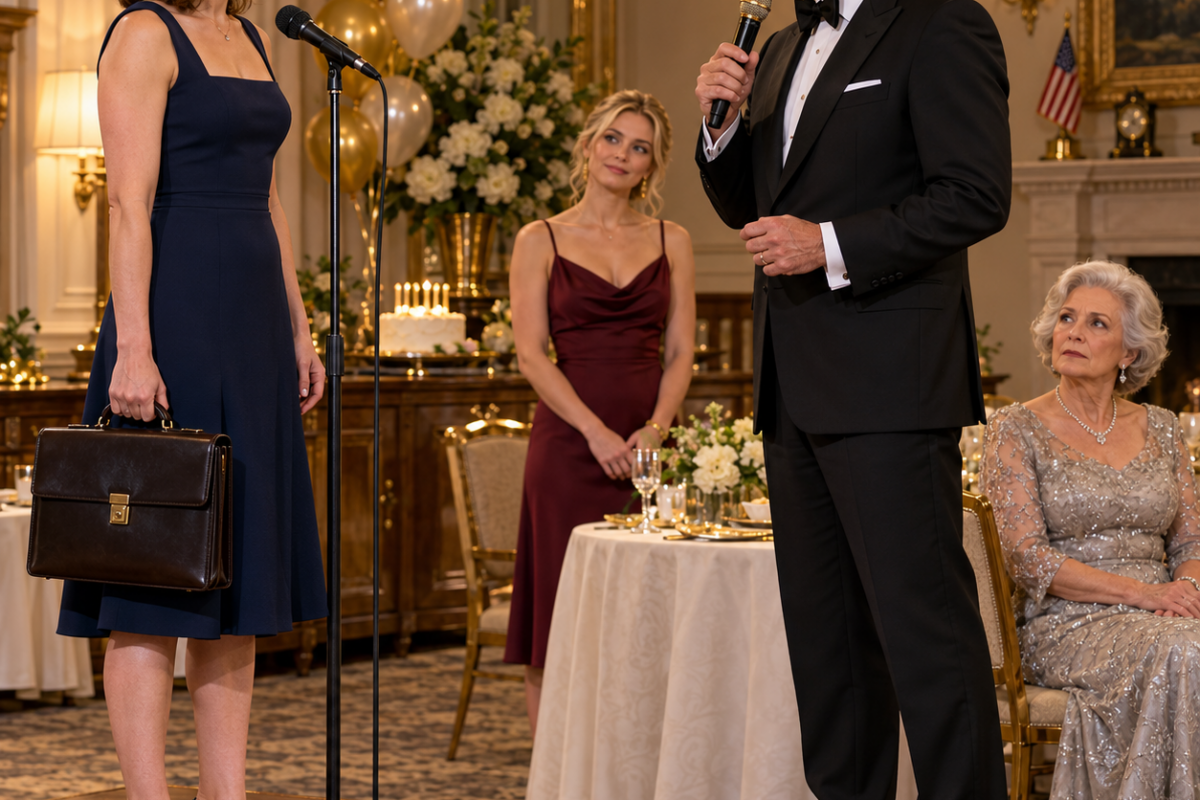
“I already promised your house to your sister,” my father told me four days after I bought it. “They’re moving in Monday. Rent-free for three years.” I was thirty-one, had saved for nine years, and had bought the five-bedroom home entirely in my own name. When I said no, he threatened to tell the family I had abandoned my sister’s children. Days later, he took the microphone at my grandmother’s seventy-fifth birthday dinner and did exactly that.
My father called twelve times in forty minutes after discovering I had bought a house without consulting him. When I answered, he didn’t ask whether…
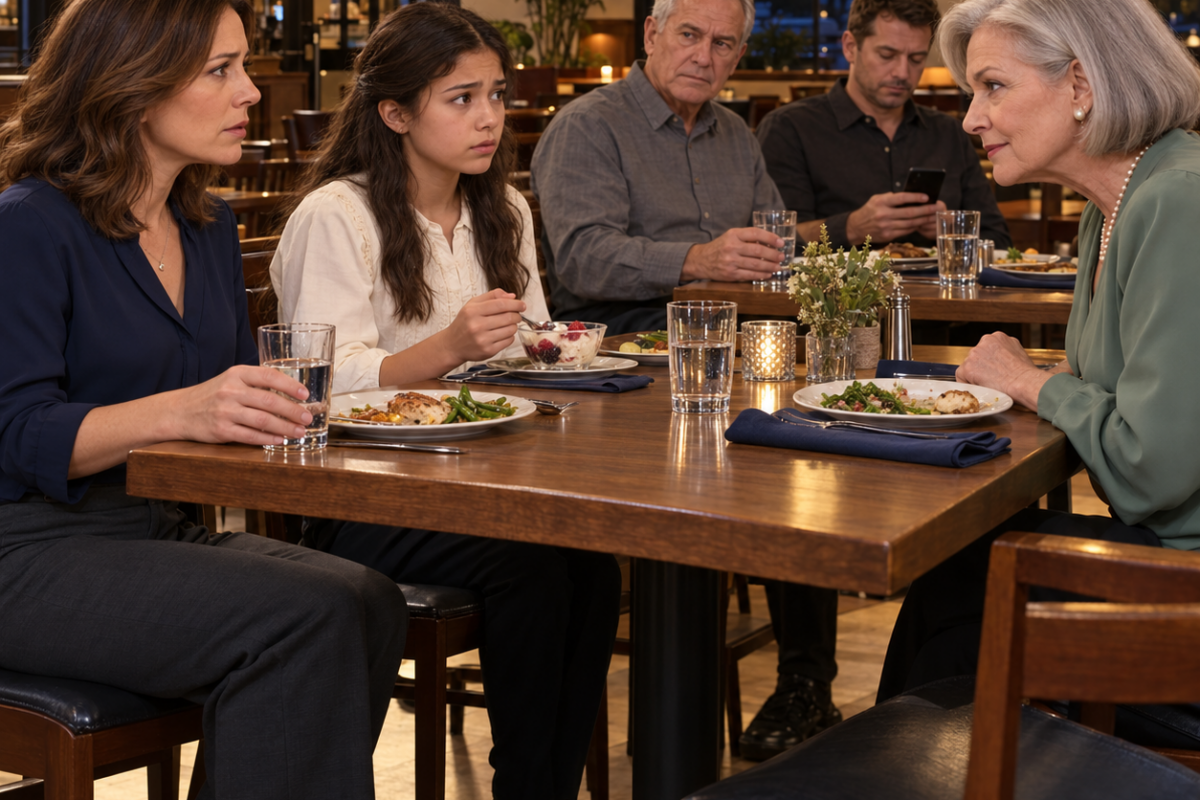
My mother leaned across the restaurant table, looked at my thirteen-year-old adopted daughter, and whispered, “We don’t sit with mistakes.” I took Sole’s hand and walked her out. That night, my father texted, “You’re still making the car payment tomorrow, right?” By midnight, I had canceled the payments I’d been making for my family. Then I remembered something Sole had told me about her grandmother.
My mother looked at my thirteen-year-old daughter and whispered, “We don’t sit with mistakes.” She said it softly enough to avoid attracting attention from the…
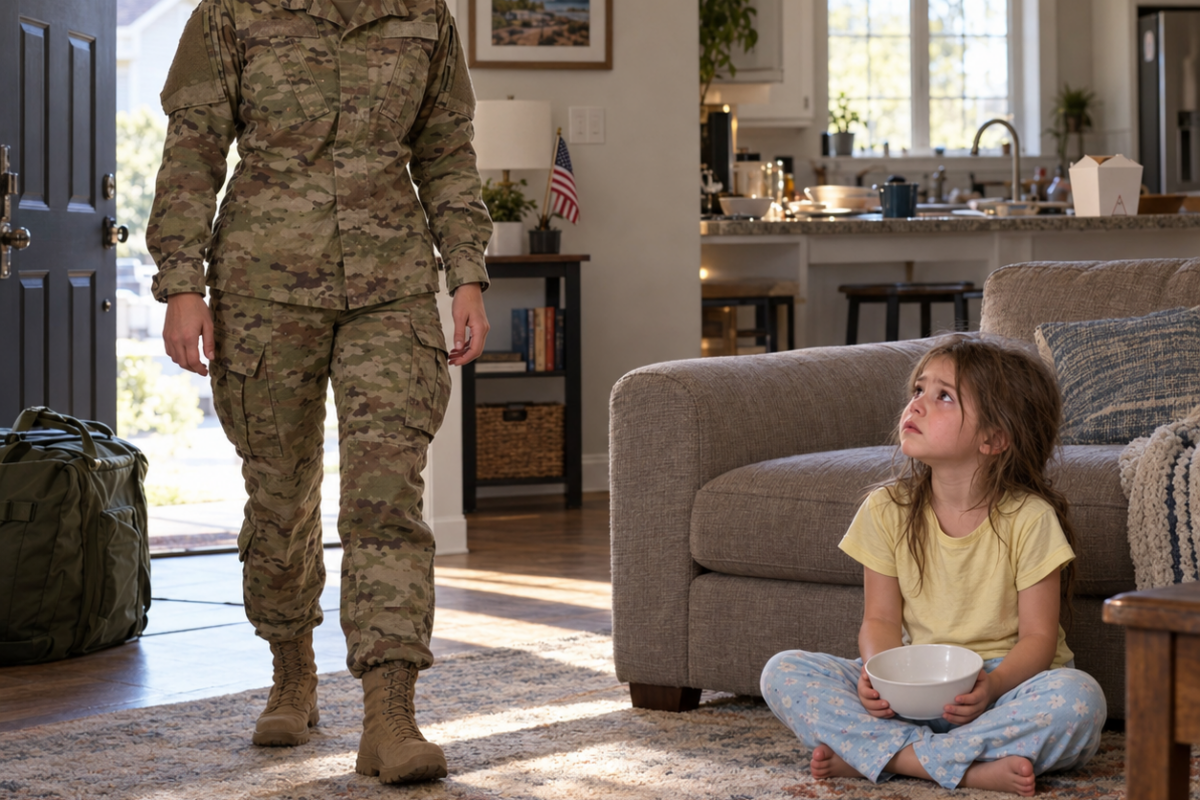
“Mommy, are you real?” my four-year-old daughter whispered when I came home from deployment three weeks early. She was sitting alone on our living room floor with an empty cereal bowl. My husband was on a Caribbean cruise with his mother and sister. Twenty-two minutes earlier, they had posted a photo captioned “Family time.” I was still in uniform when Sophie asked if she could have something to eat.
The first thing my daughter said when I found her was, “Mommy, are you real?” She was sitting cross-legged on our living room floor with…

I found my daughter sitting beside the town-square fountain with my five-year-old grandson and three bags at her feet. “Why aren’t you at work?” I asked. She looked down. “My mother-in-law fired me. She said our family name brought nothing of value to the company.” I stared at her. It was my company. I had built it from $62 and a borrowed sewing machine. “Get in the car,” I said. “It’s time I spoke to Adelaide.”
The bag tipped first. It was a brown duffel, worn at the corners, and it slid off the bench onto the brick sidewalk with a…
End of content
No more pages to load