I came home three hours early and found my sixty-eight-year-old mother on her knees scrubbing my mother-in-law’s bathroom. When I helped her stand, her sleeve slipped back, revealing dark marks around her wrist. My husband stepped into the doorway. “Daniela, don’t make a scene.” That was when I remembered my father’s last warning: “If you ever see your mother hurt, don’t argue with anyone. Open the hidden compartment in her sewing machine.”
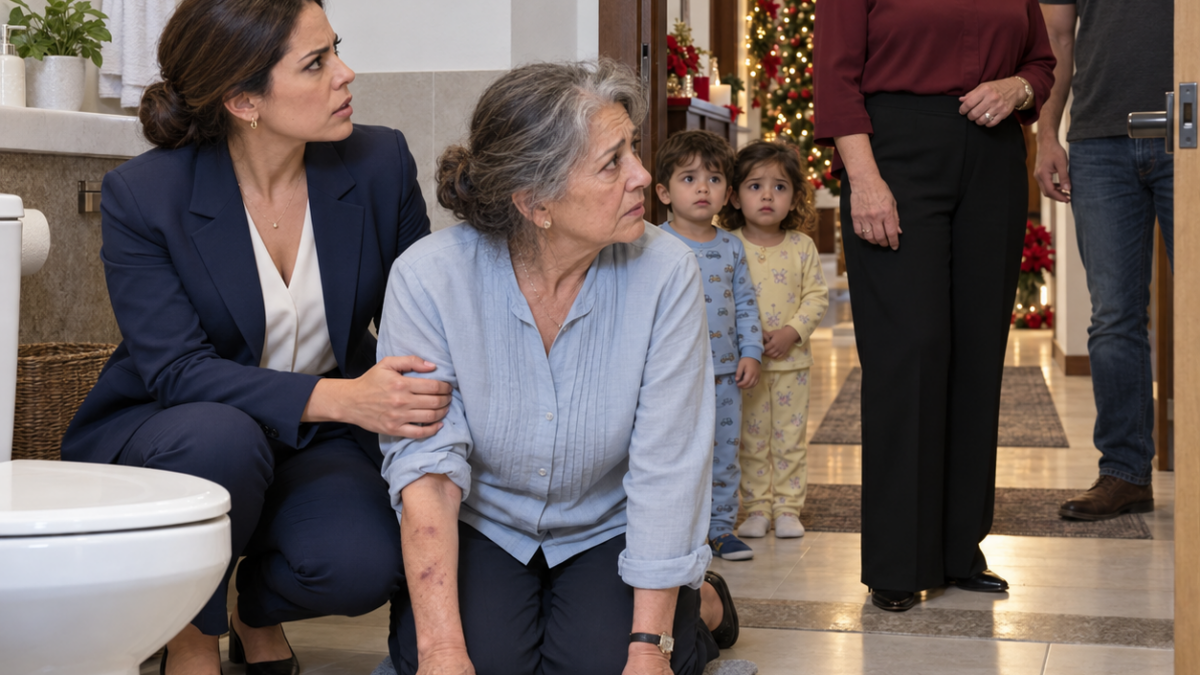
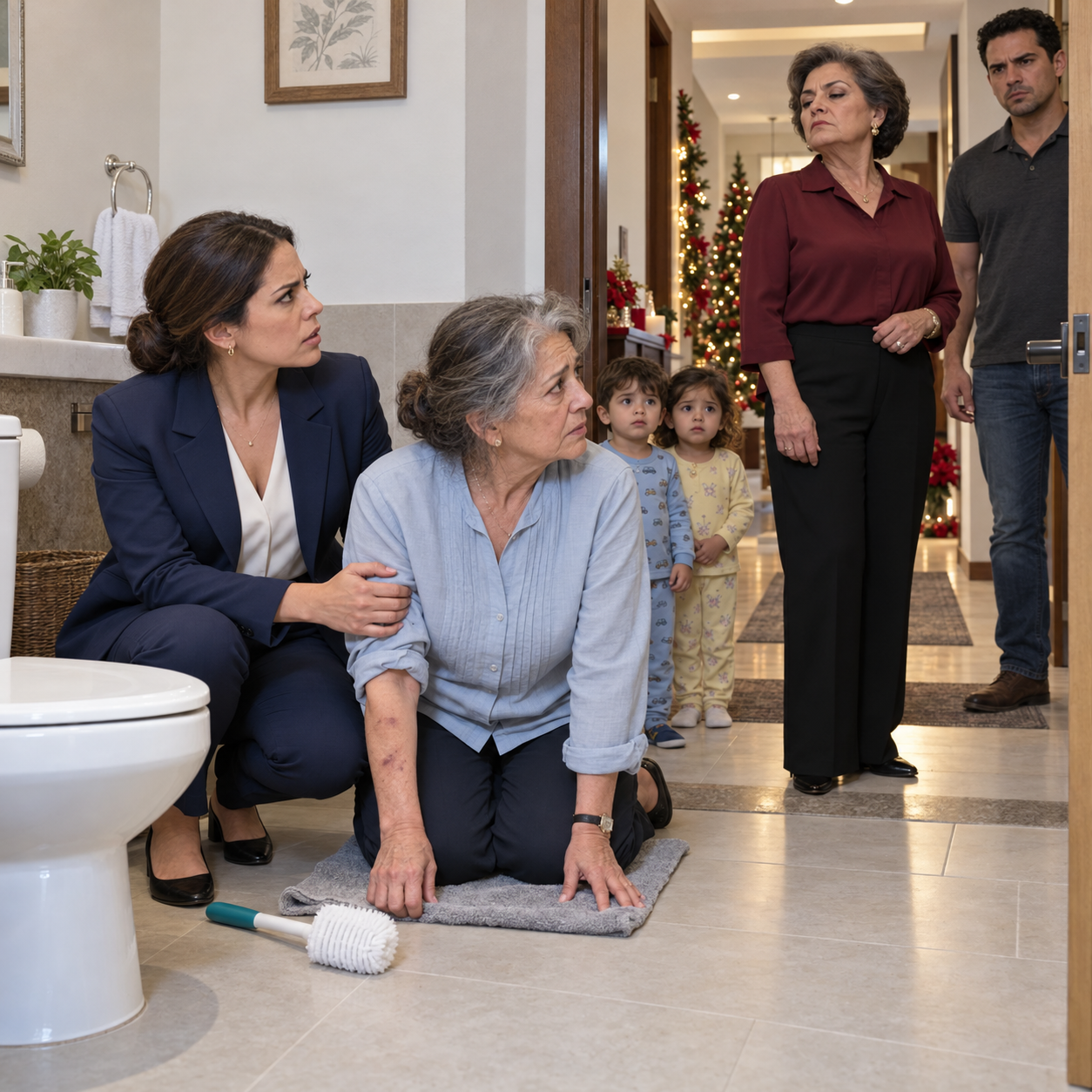
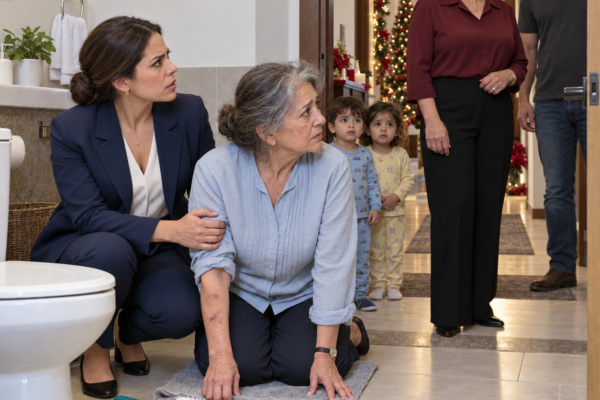
I came home three hours early and found my sixty-eight-year-old mother on her knees beside a toilet.
Her hands were stiff with arthritis. One gripped a cleaning brush. The other rested on the floor to keep her steady.
My three-year-old son, Mateo, clung to her leg. His twin sister, Sofia, sat nearby crying.
When I helped Mom stand, her sleeve slipped back.
Several dark marks circled her wrist.
My husband appeared in the doorway.
“Daniela, don’t make a scene.”
That was when I remembered the last warning my father ever gave me.
“If you ever see your mother hurt, don’t argue with anyone. Open the hidden compartment in her sewing machine.”
He had died seven months earlier.
Until that afternoon, I had thought the medication had confused him.
My flight from Monterrey landed in Querétaro three hours ahead of my original schedule, two days before Christmas. A business meeting ended sooner than expected, and I changed to an earlier flight.
I had spent eight days finishing a contract. All I wanted was to get home.
I didn’t tell Mauricio.
I imagined opening the front door and hearing the twins’ feet running toward me. There were little gifts in my suitcase, along with a soft scarf for Mom.
She had arrived twelve days earlier to help while I was away.
Before leaving, I went over the arrangements with Mauricio. He would handle evenings. Cleaning help would come. We would order meals when needed. Mom was there for the children, not to manage the household.
“Daniela, I can take care of my own children,” he said.
“I know. I just don’t want Mom overdoing it.”
“She won’t.”
During the trip, our calls became shorter.
The twins were asleep.
Mom was tired.
Mauricio was busy.
His mother, Patricia, had come over to help.
I accepted those explanations because I wanted to trust the people at home. I was tired of feeling that every ordinary arrangement required me to check behind someone.
The taxi dropped me outside our duplex shortly after noon.
A wreath hung on our door. Through the window, I could see the Christmas tree the children and I had decorated before I left.
The other half of the duplex stood beside ours with its curtains closed.
For three years, Mauricio had said it was tied up in a dispute with a bank. The garden looked neglected, and no one seemed to live there. Patricia had even placed a PRIVATE PROPERTY sign near the entrance to discourage curious neighbors.
I paid the driver and carried my suitcase to our door.
Inside, I heard Sofia crying.
Then Patricia’s voice.
“Elena, the guest bathroom still needs to be finished.”
I left my suitcase by the entrance and followed the sound.
For a moment, my mind tried to make the scene ordinary. Perhaps Mom had dropped something. Perhaps the children had spilled water.
Then I saw the brush and the bucket.
“Mom?”
She looked up.
The change in her expression frightened me more than the mess around her.
“Daniela.”
I crouched beside her.
“What are you doing?”
She tried to smile.
“Patricia wanted everything ready before Christmas.”
“You’re on the floor.”
“I was almost finished.”
Mateo climbed into my lap. Sofia began crying harder, reaching toward me with both hands.
I gathered them close.
Then I saw the mark beneath Mom’s cheekbone.
“What happened?”
“I slipped.”
She answered quickly and looked away.
Mom usually gave too much detail about an accident. She gardened, carried things she shouldn’t, and once bruised her shin on a chair she refused to admit was in the wrong place.
This explanation had no detail at all.
Laughter came from the living room.
I stood and walked toward it.
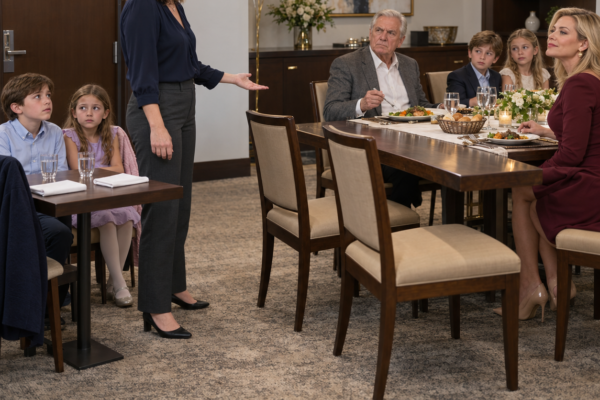
Mauricio sat in front of the television with a beer in his hand. Patricia had her feet on the coffee table I had bought four months earlier. Plates and cups covered the surface.
He glanced at me.
“You’re back early.”
Patricia didn’t stand.
“Good. Tell your mother to hurry. Mauricio still has shirts that need ironing.”
“My mother doesn’t work for you.”
Patricia gave a short laugh.
“She’s staying here for free.”
Mom had traveled to care for our children because we asked her. She wasn’t living at Patricia’s expense.
“Where’s the cleaning help?” I asked.
“It didn’t work out,” Mauricio said.
“What didn’t work out?”
He looked back at the television.
“Don’t start interrogating me the minute you arrive.”
I returned to the bathroom.
Mom was reaching for the brush again.
“No.”
She looked up.
“Put it down.”
I took it gently from her and helped her stand.
She moved slowly, trying not to show how much her knees hurt. Her sleeve slid upward, exposing the marks around her wrist.
I held her hand still.
“Mom.”
She pulled the sleeve down.
Mauricio appeared behind us.
“Daniela, don’t start.”
“I’m taking my mother and the children out of here.”
He stepped into the doorway.
“The kids aren’t going anywhere.”
“Move.”
He stayed where he was.
Mauricio was taller than me. I had seen him use his size to end arguments before, although I had always found another description for it.
That afternoon, I stopped looking for one.
“If you turn this into a scene,” he said, “I’ll call a lawyer tomorrow.”
“Then call one.”
His expression changed into a small, unpleasant smile.
“My mother can explain how often you travel.”
Patricia stood farther down the hallway, arms crossed.
“I’ve seen plenty, Daniela.”
“And your mother is too old to take proper care of them,” Mauricio added.
Mom lowered her eyes.
He was standing beside the bathroom where she had been cleaning on her knees while watching his children, and he was using her age against her.
I took out my phone.
The home-control application opened. Mauricio had never paid attention to it, even though I had installed it when we upgraded the household systems.
I switched off the television and the decorative lights downstairs. I turned down the climate system, leaving essential functions alone.
Then I opened my banking application and suspended the supplementary cards attached to my individual accounts.
Mauricio’s phone began vibrating.
He looked down.
“What did you do?”
“I suspended the additional cards I pay for.”
Patricia moved toward us.
“You can’t cut everything off two days before Christmas.”
“You’ll need to make other payment arrangements.”
Mauricio stared at the notifications.
The doorway was clear.
I picked up Mom’s small suitcase from the guest room, took Sofia’s hand, and asked Mateo to stay beside Grandma.
We walked outside.
Mauricio followed, expecting me to go to my car.
Instead, I turned toward the other half of the duplex.
A few weeks earlier, an estate administrator had contacted me about a property my father held through a private trust. I completed the identity checks, received the access instructions, and learned that the property was next door.
I had intended to inspect it after Christmas.
There had been so much unfinished paperwork since Dad died. I wanted time to understand what he had arranged before discussing it with Mauricio.
Now I was grateful I hadn’t discussed it.
“Where are you going?” he asked.
I pressed my thumb against the digital lock.
A red light flashed, then turned green.
The door opened. Lights came on inside, and warm air reached us.
“Come in, Mom.”
She looked at me, bewildered, then stepped through with the twins.
I put the suitcase down and turned back.
Mauricio had stopped in the middle of the walkway.
“How do you have access to that house?”
“Because it never belonged to the bank.”
Patricia came outside behind him.
“Daniela,” she said.
Her voice was different.
“Who gave you that property?”
“My father bought it three years ago through a private trust. There’s no mortgage owed on it.”
Mauricio looked toward the windows.
Patricia looked lower, toward the little basement windows near the ground.
Then she said, almost to herself, “Your father promised nobody would ever open that basement again.”
I stood still.
The sewing machine.
The warning.
My father’s hand gripping mine beside his hospital bed.
I closed the door without asking her what she meant.
The house smelled faintly of wood polish. There was a sofa, a dining table, basic kitchen supplies, and beds upstairs.
A caretaker had maintained it through the trust.
Dad hadn’t simply bought an empty property. He had arranged a place someone could enter without asking my husband.
I checked the rear door, then knelt in front of the children.
“We’re staying here with Grandma for now.”
Sofia touched my cheek.
“Daddy mad?”
“Daddy’s upset. Grown-ups will handle that.”
“Are we bad?”
“No, sweetheart.”
Mateo looked at Mom.
“Grandma hurt.”
“We’re going to help her.”
Mom stood beside the sofa, holding her wrist close to her body.
I asked what hurt, whether she felt dizzy, and whether she had fallen.
She began saying she was fine.
“Mom, I need a real answer.”
She sat down.
“My wrist. My knee.”
“And your face?”
She looked away again.
I arranged medical care and contacted the authorities about what I had found, including Mauricio blocking the doorway.
I didn’t need to understand the basement before taking care of the people in front of me.
Then I called Tomás Rivas, the administrator who had contacted me about the trust.
I told him where we were.
“Are you safe inside?” he asked.
“For now.”
“Has anyone else entered?”
“No.”
“Keep the doors secured. I’ll contact the attorney responsible for the documents.”
“Why did Dad buy this house?”
“There are records you need to review. Tonight, let’s make sure your mother has what she needs.”
Mauricio called while I was speaking to him.
Then he sent messages.
He wanted the children back.
I had embarrassed him.
Patricia was crying.
Did the house belong to me?
Not one message asked about Mom’s wrist.
I replied once that the children were safe, that Mom was receiving care, and that necessary communication should remain in writing until we had made proper arrangements.
A medical professional examined Mom that evening.
Her injuries were documented, her pain addressed, and follow-up arranged. She spoke privately for part of the evaluation.
I was glad she could answer without worrying about my face.
She didn’t need to stay in the hospital. That was the first relief of the day.
When we returned, the twins were exhausted. I helped them into bed and sat between them until they stopped reaching for me every time I moved.
Sofia asked whether Grandma had to clean again tomorrow.
“No.”
“Never?”
“She won’t be cleaning Patricia’s bathroom.”
That satisfied her.
Downstairs, Mom sat at the kitchen table with untouched tea.
I sat beside her.
“Will you tell me what happened?”
She stared into the cup.
“I didn’t want you to lose the contract.”
“That wasn’t your responsibility.”
“I know how hard you worked for it.”
“Mom, you being hurt matters more than a meeting.”
Her eyes filled.
She told me the cleaning help had never been arranged.
Patricia arrived the morning after I left. At first, Mom did the ordinary things she would have done anywhere.
Made breakfast.
Washed dishes.
Folded the children’s clothes while they napped.
Then the requests became orders.
Bathrooms. Floors. Laundry. Ironing.
When Mom said her hands hurt, Patricia told her everyone had problems.
Mauricio said staying busy would keep her from worrying about Dad.
“He said I needed something to do,” she told me.
“You had the twins.”
“He said you used to manage them and work too.”
I looked at her hands.
They had carried babies, cut fabric, cooked meals, and worked for years. Now she was being asked to prove that they were still useful.
“What happened to your wrist?”
She began crying silently.
I waited.
Patricia had grabbed her during an argument, holding her arm when she tried to leave the room.
Mauricio witnessed part of it. He told them both to stop arguing, then said Patricia was under stress and Mom should be patient.
The mark on her face came later, when she stumbled carrying laundry and struck the edge of a door.
“They were separate things,” she said, as though I might be unfair if I confused them.
“I understand.”
“Patricia didn’t hit my face.”
“I understand, Mom.”
She breathed out.
I let her make the distinction. She was telling me what happened, not auditioning for my belief.
“Why didn’t you call?”
“The children were there. I thought I could get through the week.”
“Did someone stop you using the phone?”
“Not exactly.”
She rubbed her thumb against the cup.
“Patricia said you needed to concentrate. When you called, Mauricio kept saying we were about to eat or the children were sleeping.”
I remembered the short calls.
I also remembered accepting them.
“I’m sorry,” I said.
“You were working.”
“I still wish I’d asked more.”
We sat quietly.
Then I asked about the basement.
Mom’s face changed.
“Your father told you something?”
“He said if I ever saw you hurt, I should open the hidden compartment in your sewing machine.”
She stared at me.
“He repaired the wooden base when the hinge broke,” she said.
“I remember.”
“He took forever. I kept telling him to take it to someone.”
“Did you know about a compartment?”
“No.”
The machine was at her house.
We didn’t need to go back through Mauricio’s door to get it.
I called Tomás again. He had reached the trust attorney, Lucía Herrera.
They arranged to come the following morning.
Lucía also connected me with the family-law advice I needed.
“What your husband says in the hallway isn’t a court decision,” she told me. “We’ll help you deal with the actual questions.”
After the call, I gave Mom the scarf from my suitcase.
She unfolded it.
“I was going to give it to you after I surprised the children.”
She held the soft fabric against her cheek.
“It’s lovely.”
It was such a small gift beside everything else.
I was glad I had brought it.
The following morning, a trusted person collected the sewing machine from Mom’s house.
It arrived in its old carrying case.
Mom touched the handle.
“This thing gets heavier every year.”
There was a little of her ordinary voice in the complaint.
I welcomed it.
Lucía and Tomás arrived after breakfast. The children stayed upstairs with someone we trusted while we put the machine on the table.
I repeated Dad’s warning exactly.
Lucía listened, then asked whether I was comfortable opening the compartment with them present.
“Yes.”
The machine had a solid wooden base. Dad’s repair was easy to identify once we turned it over.
A narrow section near the hinge had newer screws.
Tomás pointed it out.
I removed them carefully.
The panel lifted, revealing a space just deep enough for an envelope wrapped against dust and moisture.
Dad’s handwriting was on it.
*For Elena and Daniela. Read together.*
For a moment, I couldn’t pick it up.
Mom put her hand over mine.
“Open it.”
Inside were a letter, a small key, document copies, and Lucía’s contact information.
She looked at the papers.
“Your father deposited related materials with our office. The envelope identifies the file and the instructions he wanted you to receive.”
“Why didn’t anyone contact us sooner?”
“The property administration was released first. The separate file required his written identification instructions, or a direct request from Elena supported by her documents. He was very particular about not releasing it through family intermediaries.”
I looked at Dad’s handwriting.
He had made a system intended to keep Patricia out.
He had also made it too difficult for us to find our way in.
I unfolded the letter.
*If you’re reading this because Elena has been hurt, then I failed to explain something clearly enough while I still could.*
Mom closed her eyes.
Dad wrote that the house was held through the trust for our protection and use.
The basement contained records from a business arrangement involving Patricia.
He warned us not to sign anything she presented concerning that business or the property until we received independent advice.
Then I read a sentence that made me stop.
*Elena’s work helped create assets she was never properly told she had an interest in.*
I looked at Mom.
“What assets?”
She shook her head.
“I don’t know.”
I knew she had worked in a small sewing operation when I was young. There were uniforms, alterations, and larger orders she sometimes brought home to finish.
Patricia handled customers and business paperwork.
That was how the families knew each other long before I married Mauricio.
Mom had always said the operation ended because the debts were too large.
Whatever remained went to paying them.
Dad had believed that too.
Years later, while helping with old property papers, he found documents that didn’t match the story.
Mom’s name appeared on early agreements as more than an employee.
There were contributions to equipment.
Profit-sharing provisions.
An interest connected to the premises where the work took place.
Then came waivers and transfers that supposedly ended those rights.
Some bore signatures Mom might recognize.
Others did not.
Dad began obtaining copies through legitimate channels, comparing the records with what Patricia had told them.
He discovered that the other half of our duplex had once been part of the same business ownership structure.
When the property became available, he acquired it through the trust.
Patricia believed he had helped an outside buyer.
She knew old records remained in the basement and had wanted them left alone while she claimed to be settling outstanding matters.
Dad allowed her to believe he agreed.
Meanwhile, he preserved copies there and with Lucía’s office.
He had been afraid that a direct confrontation would lead Patricia to destroy what remained or pressure Mom into signing another document.
Reading that explanation, I could hear him.
Careful.
Practical.
Convinced he could manage the danger by staying ahead of it.
Then his health deteriorated.
*I told myself I was buying time,* he wrote. *Then I became ill, and time stopped being something I could count on.*
I read the sentence twice.
At his bedside, I had thought the warning was confusion.
He had been giving me an instruction without the explanation that would make it usable.
I loved him.
I was angry with him too.
Mom finished the letter herself.
“He thought he was protecting me.”
“Yes.”
“He should have told me.”
“Yes,” I said.
Lucía didn’t interrupt that moment with reassurance.
She let us have it.
Then she explained that the key opened a secured cabinet in the basement. The materials there corresponded with copies held by her office.
We arranged for the space to be checked before going down.
There was no reason to turn a room full of old paperwork into another risk.
Mom chose to wait upstairs.
The basement smelled of wood, paper, and closed air.
There were shelves, covered equipment, and filing cabinets.
No terrible hidden room.
No startling object that explained everything at once.
Just records.
Boxes of invoices.
Agreements.
Photographs.
A working woman’s name on papers she had never been invited to understand.
One photograph showed Mom standing beside two sewing machines. She was younger, sleeves rolled up, smiling toward someone outside the frame.
Patricia stood near a desk.
I stared at Mom’s face.
That was the woman I remembered: capable, busy, not apologizing for taking up space.
The woman in the bathroom had been made to explain why she deserved a bed.
We opened the secured cabinet and brought the relevant folders upstairs.
Mom recognized some early signatures.
“I remember this,” she said, touching one page. “We were buying more machines.”
“What did you understand the agreement to mean?”
“That I would put in work and some money. Patricia would bring clients.”
“And this later document?”
She studied it.
“I never saw it.”
It purported to settle her interest in the operation.
The attached acknowledgment said she had received payment in full.
Mom read it again.
“No.”
Lucía leaned closer.
“No, you didn’t receive it?”
“I didn’t receive that payment.”
“Then we’ll trace it.”
The simplicity of the answer steadied the room.
Not *Are you sure you remember?*
Not *Perhaps Patricia explained it differently.*
We would trace it.
Mom’s memories would be examined alongside records, not dismissed before we began.
As she looked through the pages, another memory returned.
“Patricia brought papers this week.”
I turned toward her.
“What papers?”
“She said your father left business unfinished.”
“When?”
“Two days before you came home.”
“What did she want you to sign?”
Mom frowned, trying to recall the wording.
Something about old debts.
A release.
The property next door.
“She said it was only to tidy things up.”
“Did you sign?”
“No.”
I breathed out.
“Why not?”
“I wanted you to look at it.”
Lucía noted the date.
“Is that what the argument was about?”
Mom nodded.
“I said I would wait until Daniela came home. Patricia said I always made things difficult.”
“And then?”
“She grabbed me when I tried to leave.”
Mom’s wrist rested carefully on the table.
The cleaning was no longer an isolated example of Patricia exploiting her helpfulness.
It happened while Patricia was trying to obtain a signature.
I took Mom’s hand.
“You did the right thing.”
“I wasn’t sure.”
“You did.”
Lucía asked whether there was a copy.
Patricia had taken the papers away.
But now we knew what to request.
We also knew why her eyes had moved toward the basement.
She had been trying to settle rights before we understood what they were.
Christmas Eve arrived without the plans we had made.
I sent a brief message that we wouldn’t attend Patricia’s dinner.
Communication concerning the children followed the advice I had received. Mauricio remained their father. That required careful arrangements, not surrender to a threat made in a doorway.
I provided travel schedules, care plans, household messages, and the agreements made before my trip.
The question was not whether I ever traveled for work.
The question was what happened when the children were entrusted to the adults at home.
Professionals asked about what the twins had seen.
I answered what I knew.
I didn’t question Mateo and Sofia repeatedly or ask them to confirm my interpretation. When they spoke, I listened.
They needed calm more than another adult waiting for evidence.
That evening, Sofia asked whether Santa knew the new door.
“Yes.”
Mateo looked around.
“No tree.”
There wasn’t one in the trust house.
I found paper, crayons, and tape.
We made a tree on the wall.
Sofia wanted a purple star.
Mateo wanted two.
Grandma said two would be lovely, so we put them both at the top.
The children accepted the arrangement more easily than I did.
I kept looking toward the wall separating us from our other home.
The distance was small.
The change was enormous.
After they slept, Mom and I ate soup at the kitchen table.
Her medical instructions lay beside the kettle.
“Do you want to talk about the records?” I asked.
“Not tonight.”
“Okay.”
She looked at me.
“You don’t need to solve everything before morning.”
I smiled tiredly.
“I’m trying to learn that.”
“Your father thought solving things meant carrying them alone.”
I looked at the letter.
“He was wrong.”
“Yes,” she said. “He was.”
On Christmas morning, Mateo asked whether we lived there forever.
“I don’t know yet.”
He frowned.
“Today?”
“Yes. Today.”
That was enough.
We opened the gifts from my suitcase.
Sofia wanted help with the packaging.
Mateo wanted his toy to eat breakfast with us.
Grandma laughed.
It was the first full laugh I had heard from her since returning.
She caught me watching.
“What?”
“I’m glad you’re laughing.”
Her expression softened.
“Me too.”
Patricia tried contacting Mom directly.
The messages began with concern and ended with requests.
We should put things behind us.
Dad had misunderstood.
The business records were complicated.
Mom had always been too trusting.
Lucía advised us not to debate the accounting by text.
Formal requests would be made. Documents would be preserved. Patricia could provide explanations through the proper process.
That gave Mom something she hadn’t had before.
A way to ask questions without being trapped alone with the person answering them.
Mauricio came to the door two days later.
I saw him on the camera, holding a bag.
“Can we talk?” he asked through the intercom.
“About what?”
“Our family. The children’s things.”
“We can arrange the practical matters in writing.”
“Daniela, we live next door.”
“That doesn’t make an unplanned visit appropriate.”
He looked toward the camera.
“You’re treating me like a stranger.”
“I’m being careful.”
He lowered his voice.
“Mom didn’t mean for your mother to get hurt.”
“That needs to be addressed properly.”
“You’re going to ruin everything over bruises?”
I ended the conversation.
For a while, I stood with my hand against the wall.
I had hoped he came because the images from that afternoon had finally reached him.
Instead, he had brought another smaller word for what happened.
Bruises.
As though the size of the mark decided the importance of the person wearing it.
Upstairs, Sofia was asking Grandma to draw a cat.
The cat had five legs.
I sat beside them and let that be the problem we discussed.
The following weeks filled with medical visits, document requests, childcare arrangements, and meetings.
Mom’s account of the physical mistreatment was taken through the appropriate process. The financial matters were reviewed separately.
Her wrist improved.
Her knee took longer.
The arthritis remained.
Leaving Patricia did not make her young or pain-free. It meant the pain could be taken seriously without someone treating it as an excuse.
At first, Mom apologized for resting.
“I can wash those.”
“I can wash them.”
“You have work.”
“And you have instructions to let your wrist recover.”
She looked frustrated.
I understood that too.
I didn’t want safety to become another person telling her what she was allowed to do.
We began asking what she wanted to do and what she could manage comfortably.
She liked making breakfast with the twins nearby.
She liked folding little clothes while listening to the radio.
She did not want to scrub floors.
That was a reasonable distinction.
One afternoon, she told me, “I’m not made of glass.”
“I know.”
“You watch every time I stand.”
I smiled.
“I’m working on it.”
“Good.”
I was glad she could correct me.
The records did not produce one instant answer.
An independent accountant helped reconstruct the business history. Lucía examined the agreements, transfers, and disputed signatures.
Some suspicious-looking entries turned out to have ordinary explanations.
Others did not.
We kept those distinctions.
The central problem grew clearer.
Mom had contributed money and work under agreements that gave her rights in the business and related property. Later papers claimed those rights were settled.
The settlement payment could not be traced to her.
Money recorded as having been paid to her had moved elsewhere.
A waiver bore a signature she disputed.
And the new document Patricia brought during my absence would have reaffirmed that the old settlement was complete and released further claims.
Mom’s refusal to sign had kept Patricia from obtaining that new acknowledgment.
When Lucía explained it, Mom sat very still.
“She wanted me to say I had already been paid.”
“Yes.”
“But I wasn’t.”
“The records we have do not show that you were.”
Mom looked down at her hands.
For years, she had thought the business ended with debts and disappointment.
Now she was learning that someone had written a different ending in her name.
Patricia’s lawyer eventually produced a copy of the document she brought to our home.
Mom identified it.
The title was reassuring.
The contents were not.
Lucía placed it beside the old settlement and showed us the connection.
“This is why waiting to sign mattered,” she said.
Mom looked at me.
“I only wanted you to read it.”
“That was enough.”
The financial review gave us evidence.
The injury report gave Mom’s experience a formal record.
The attempt to obtain a fresh release connected the past with what happened during my trip.
For the first time, the different parts of the story stopped feeling like separate shocks.
Patricia had believed Mom still didn’t know what she was entitled to question.
She expected the same obedience she had received for years.
Mauricio’s threats encountered records too.
Before my trip, he had agreed in writing to the care arrangements.
The children’s routines were documented.
So were my travel dates.
The messages after I left the house showed what he prioritized and how he spoke.
Temporary parenting arrangements were made through the appropriate process while the concerns were addressed.
Patricia was not automatically accepted as the dependable witness he promised she would be.
Her conduct required examination.
I didn’t tell the children about filings or disputed assets.
I told them Daddy loved them and that grown-ups were making plans. They would know what happened next.
One night, Mateo asked whether Daddy could come through the wall.
I sat beside his bed.
“No.”
“Next house.”
“Yes.”
“Can he come?”
“Visits will be arranged. The doors are locked.”
He considered that.
Then he asked for water.
I gave him water and stayed until he slept.
Downstairs, I let myself feel what the question meant.
The twins were not making legal distinctions.
They were trying to understand who could enter the place where they rested.
Mauricio asked to meet after several weeks.
We arranged the conversation in a professional setting.
He looked tired.
“I didn’t hit your mother.”
“I’m not attributing every action to you.”
“Then why are you treating me like I did?”
“Because you allowed her to be mistreated and blocked the doorway when I tried to leave.”
“I thought they were arguing.”
“She was cleaning your bathroom on her knees.”
“I didn’t ask her.”
“Did you tell her to stop?”
He said nothing.
“Did you arrange the help you promised?”
“No.”
“Did you object when your mother said Mom was staying for free?”
His jaw tightened.
“You know how she talks.”
“Yes. I do.”
He rubbed his forehead.
“The children were difficult. I was tired.”
“They were three. Mom was there to help you.”
“I know.”
“You made her responsible for more because it was easier.”
He stared at the table.
Finally, he said, “I should have done more.”
“Yes.”
“We can fix it.”
“What does that mean?”
“Come home. I’ll keep my mother away.”
It was a promise in the same shape as the one he made before Monterrey.
A simple sentence intended to close a complicated discussion.
I didn’t accept it as a plan.
“I’m not returning under another promise. The children’s arrangements will continue through the proper process. Our marriage is a separate question.”
He looked disappointed.
For years, his disappointment had made me hurry toward a solution.
This time, I let it remain his feeling.
The decisive financial meeting took place months later.
By then, Patricia’s lawyers had the reconstructed accounts. The disputed signatures and payment records had been examined. Several of her original explanations no longer matched the evidence.
Mom had independent advice and understood the choices before her.
She wanted the records corrected, her interests protected, and the money supported by the accounting recovered through an enforceable arrangement.
She did not want another private assurance.
We sat in a conference room.
Patricia arrived dressed as though she were attending a social luncheon.
She looked at Mom.
“Elena, surely we can talk like people who’ve known each other for years.”
Mom opened her notebook.
“That’s what I thought we were doing.”
Patricia’s expression tightened.
Lucía directed the conversation to the documents.
There were still points to resolve. Some would require further proceedings if no agreement was reached.
But the central accounting was no longer something Patricia could dismiss as Dad’s confusion.
A payment credited to Mom had not reached her.
The supposed final settlement could not be defended as it stood.
The proposed release brought during my absence would have concealed those unresolved issues.
Patricia said Mom had never understood business.
Mom looked up.
“Then you should have explained it.”
The room became quiet.
“You gave me papers and told me where to sign,” Mom continued. “You didn’t tell me I was signing away something.”
Patricia began to answer.
Mom held up one hand.
“I’m not asking you to explain it to me now. I have someone who does that.”
She looked toward Lucía.
I had never heard my mother speak to Patricia that way.
Not loudly.
Without asking to be allowed to finish.
The agreement that followed was not a sudden fortune or a perfect recovery. It corrected the accounting, recognized the interests supported by the documents, and established enforceable obligations for repayment and protection.
Other disputed matters continued through the proper channels.
Mom read what she signed.
She asked questions.
She refused one proposed clause until it was changed.
When we left, she stood outside the building for a moment.
“Are you all right?” I asked.
She nodded.
“I want lunch.”
I laughed.
“What kind?”
“Something I didn’t make.”
We went.
That afternoon mattered more to me than seeing Patricia embarrassed would have.
Mom had entered a room where people once expected her signature without her understanding.
She left having made a decision.
The separate matter involving her injuries also reached a resolution through the authorities and counsel involved. Protective arrangements remained clear, and Patricia’s contact with Mom did not resume.
There was no single punishment large enough to undo what happened.
There were consequences that made it harder for her to do it again.
That was useful.
Our separation moved toward a final legal resolution.
Mauricio began cooperating more consistently with the children’s schedule. He attended the work recommended for him and stopped using my travel as an insult in every conversation.
That improvement mattered for Mateo and Sofia.
It did not require me to restore the marriage.
“I’m trying,” he said once.
“I can see that.”
“Doesn’t that change anything?”
“It changes what the children can expect from you.”
He looked disappointed, but he didn’t argue.
Our practical communication became easier after that.
I missed him sometimes.
The man who held a newborn in each arm and looked overwhelmed.
The person who made me laugh during a long drive.
The husband I thought would care for my mother because he knew what she meant to me.
Those memories were real.
So was the doorway.
I didn’t need to erase one to act on the other.
Mom and I continued living in the trust house while the remaining arrangements were completed.
She began receiving clear statements and speaking directly with advisers.
At first, she took a notebook and wrote little.
Then more.
One day, she returned from an appointment and told me she had questioned a payment listed twice.
“What did they say?”
“That I was right to ask.”
She smiled.
I nearly cried.
The woman who once supervised a sewing room was beginning to expect explanations again.
Dad’s letter remained in a folder.
Mom and I read it together once more.
“I keep wishing he had just told us,” I said.
“He was afraid.”
“Of Patricia?”
“Of what a confrontation would do. Of making things worse.”
“He made it worse by waiting.”
“Yes.”
We sat quietly.
Then Mom said, “He also did something useful before he ran out of time.”
I looked around the house.
“Yes.”
We allowed both truths.
He preserved records.
He created a place we could enter.
He also left the explanation hidden when we needed it plainly.
I began organizing my own documents differently.
Clear instructions.
Accessible records.
People who knew where things were and what authority they had.
No warning that depended on remembering a whispered sentence at the exact moment something went wrong.
Mom laughed when I told her.
“No secret compartments?”
“Only for Christmas presents.”
“Good.”
The sewing machine stayed.
We had it cleaned and checked. Mom wanted to keep the old wooden base.
“Your father worked hard on it.”
“I know.”
She ran her hand across the repaired hinge.
“I don’t want fear to be the only thing I remember about it.”
We set it up in a room with good light.
When her wrist allowed, she began sewing again.
The first project was pillow covers for the children’s beds.
Mateo chose fabric that matched nothing.
Sofia chose birds.
Mom accepted both.
They watched her thread the machine and asked where the stitches went.
She told them to keep their fingers back.
She explained what she was doing.
I stood in the doorway.
For years, I had thought of her sewing as something she did for other people.
Now it looked like a skill she could enjoy.
She caught me watching.
“The worried face again.”
I laughed.
“Sorry.”
She smiled and returned to the fabric.
The children’s routines became steadier.
They knew where their toys were.
They knew when they would see Daddy.
They knew Grandma wasn’t going back to clean Patricia’s house.
Transitions still took care. Sometimes Sofia cried at a handover. Sometimes Mateo came home quiet.
I sought guidance instead of using their moods to confirm my own feelings.
They could love their father.
They did not need to choose a side to remain safe with me.
Mom changed in smaller ways too.
She stopped apologizing for resting.
She said, “That doesn’t suit me,” without providing ten minutes of reasons.
She chose a blouse because she liked it.
She invited friends for tea.
When they came, they talked too loudly, brought food, and admired the sewing room.
I worked upstairs and listened to her laughter.
No one asked her to finish a bathroom before joining them.
Near the anniversary of Dad’s death, we visited the place where we remembered him.
We spoke about him as a whole person.
His jokes.
His stubbornness.
The repairs that took too long.
The way he tried to help without always explaining what he was doing.
Mom cried.
So did I.
On the way home, she said, “I don’t want what he knew to keep us afraid forever.”
I thought about the locks, appointments, records, and routines.
We had done the necessary work.
We didn’t need to rehearse the danger every day to prove we remembered it.
I began making room for afternoons with no purpose beyond enjoying them.
A picnic.
A walk.
A meal with friends.
A morning when my phone stayed upstairs.
The house had first been an escape.
Then it became a place full of papers and appointments.
Gradually, it became home.
We changed the curtains.
Mom chose plants for the garden.
The neglected front area improved.
The PRIVATE PROPERTY sign came down.
There were still locks and boundaries. We no longer needed the house to look abandoned.
Sofia helped water the plants and soaked her shoes.
Mateo arranged little stones into a road.
Mom sat nearby because she wanted to watch, not because someone had forbidden her to help.
I brought drinks outside.
For a moment, I looked at the neighboring door.
I remembered the suitcase I left beside it.
The crying.
The brush.
Then Sofia called me to admire a leaf.
I went.
The next Christmas, our plans were clear.
The children’s time with Mauricio was arranged in advance.
Mom and I decorated a real tree.
Mateo wanted two stars again.
We put one on top and hung the other nearby.
Sofia asked about the purple paper stars from the year before.
We had kept them.
Mom placed them on the mantel.
On Christmas Eve, she told the twins a story about a noisy sewing machine and a little girl who kept asking where the stitches went.
“That was you,” Sofia told me.
“It was.”
“Grandma taught you?”
“She tried.”
Mom laughed.
“Your mother was impatient.”
“Still am.”
Later, after the children slept, we sat in the kitchen with tea.
Mom’s wrist had healed.
Her arthritis still needed care.
The legal matters had not all ended perfectly, but her records were no longer hidden from her.
“I kept thinking,” she said, “that if I finished what Patricia wanted, everyone would settle down.”
I remembered her reaching for the brush after seeing me.
“You didn’t have to finish it before leaving.”
“I know that now.”
She looked at me.
“Do you regret coming home without calling?”
“No.”
“Neither do I.”
The surprise I imagined never happened.
There was no happy rush of feet at the door.
There was a crying child and an older woman trying to stand without showing pain.
Afterward, I wondered what would have happened if I came at the original time. If I called first. If someone finished the bathroom before I entered. If Mom’s sleeve stayed down.
Those questions had no answers.
I had come home.
I had seen.
And we had left.
The compartment mattered. So did the house and the records.
But the first useful thing I did was take the cleaning brush out of her hand.
Months later, Mom opened the machine’s base while looking for a tool.
She lifted the little panel, looked inside, and laughed softly.
“Empty.”
“Yes.”
She closed it and began working on a hem for something she wanted to wear.
“Do you need help?” I asked.
“Not with this.”
“Okay.”
I went to the kitchen, where the twins were arguing about which plate belonged to whom.
“They look exactly the same,” Mom called.
“That has never stopped them.”
The machine began running.
Steady.
Familiar.
That evening, I found her in the living room with a book across her lap.
Mateo leaned against one side.
Sofia against the other.
Her sleeves were pushed above her wrists.
She looked up.
“Dinner ready?”
“Almost.”
“Then we have time for one more page.”
The children agreed enthusiastically.
I returned to the kitchen and let them finish.
When we sat down, Mom reached for the serving spoon without hesitating.
There were no instructions waiting from the next room.
She gave Sofia a little more, told Mateo to move his cup away from the edge, and began describing something funny that happened with her friends.
I listened.
Her hands rested on the table between sentences, in full view.
News
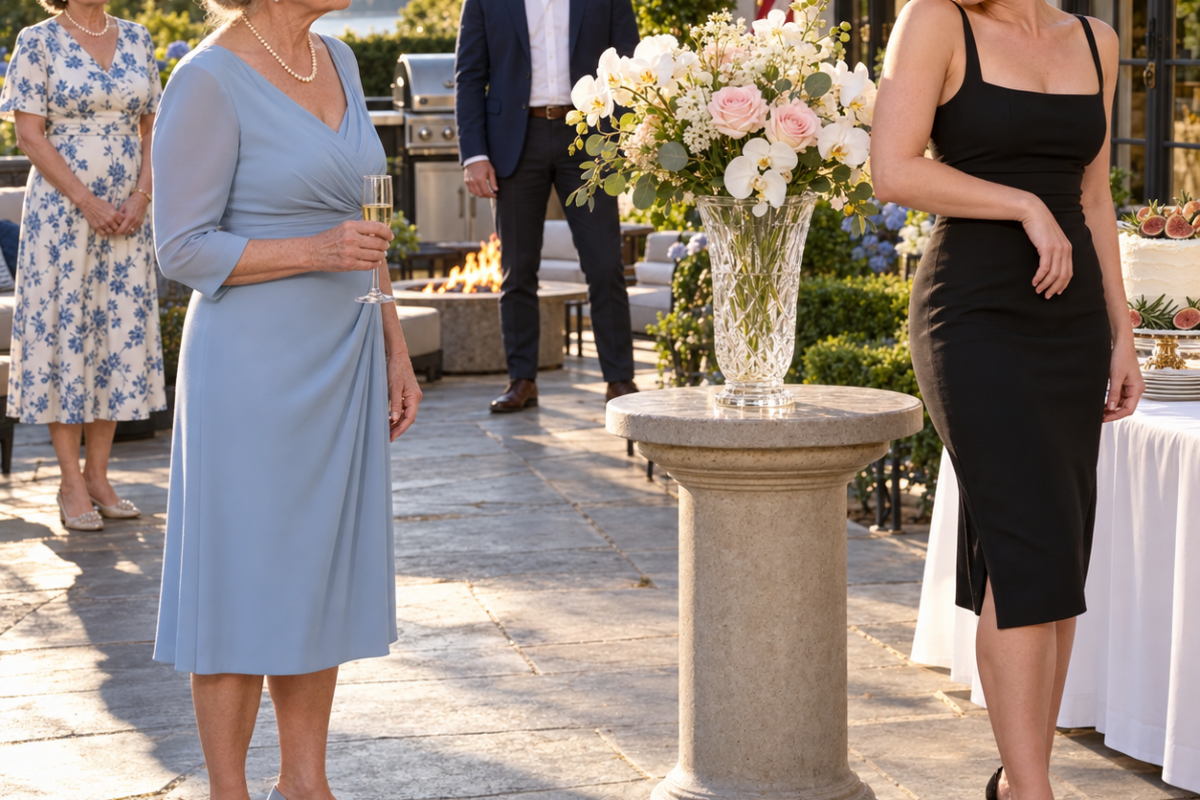
At my seventy-second birthday party, my daughter-in-law knocked a crystal vase off its pedestal with her elbow, watched it shatter, and smiled. “Oops.” Her own parents had given it to her and my son on their wedding day six years earlier. I looked at Frank, waiting for him to say something. All he managed was, “Mom…”
I watched my daughter-in-law break her own parents’ wedding gift with one elbow and a smile. For months afterward, people asked me whether I was…
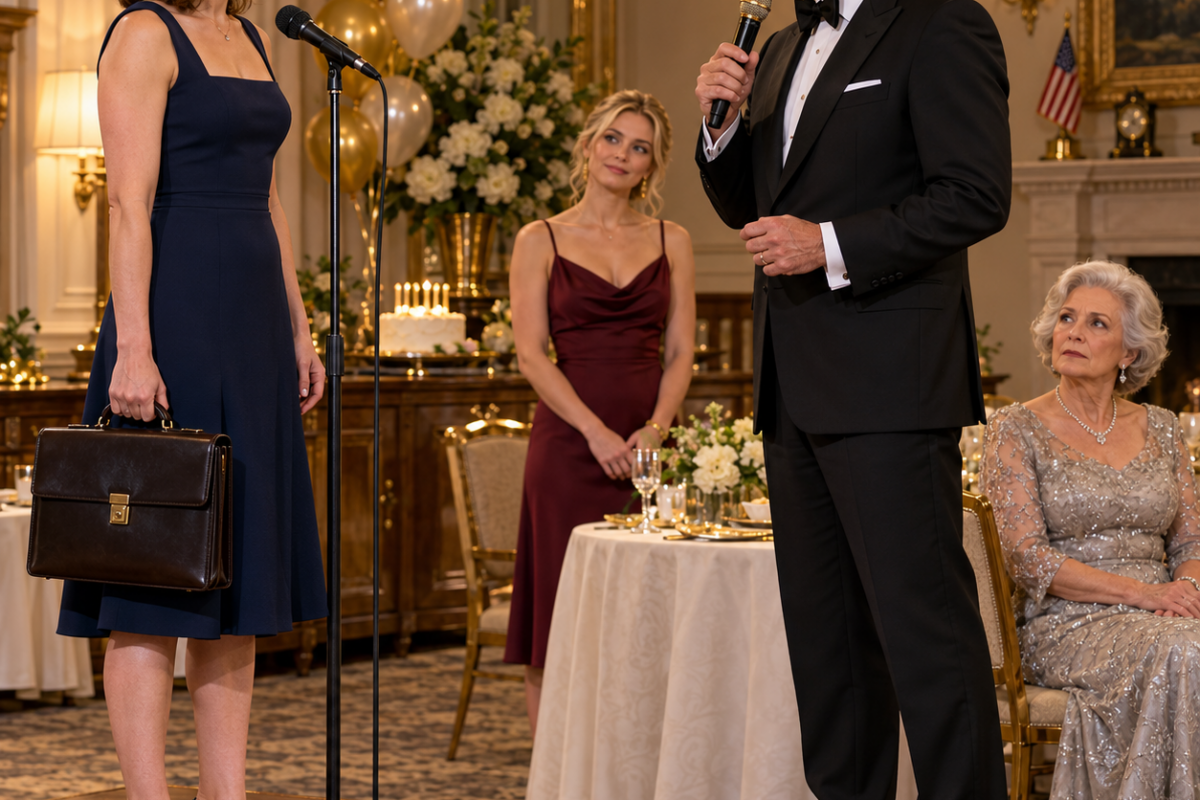
“I already promised your house to your sister,” my father told me four days after I bought it. “They’re moving in Monday. Rent-free for three years.” I was thirty-one, had saved for nine years, and had bought the five-bedroom home entirely in my own name. When I said no, he threatened to tell the family I had abandoned my sister’s children. Days later, he took the microphone at my grandmother’s seventy-fifth birthday dinner and did exactly that.
My father called twelve times in forty minutes after discovering I had bought a house without consulting him. When I answered, he didn’t ask whether…
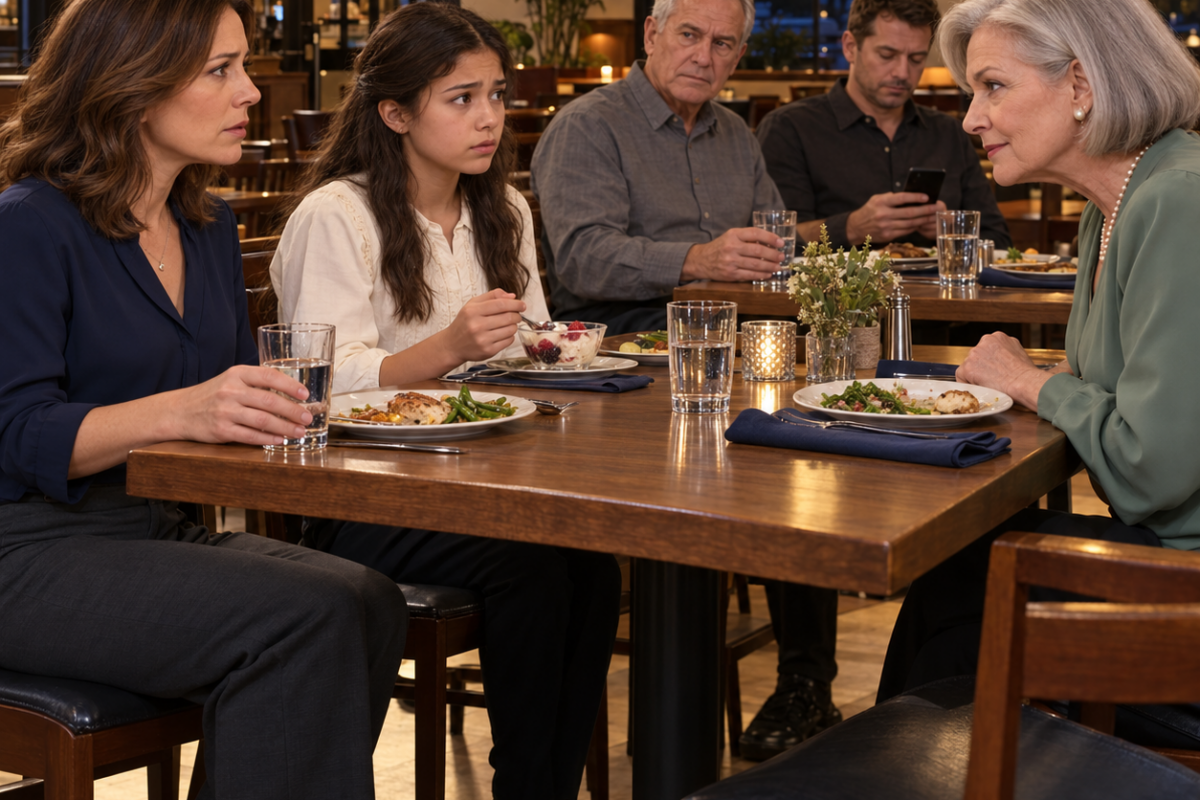
My mother leaned across the restaurant table, looked at my thirteen-year-old adopted daughter, and whispered, “We don’t sit with mistakes.” I took Sole’s hand and walked her out. That night, my father texted, “You’re still making the car payment tomorrow, right?” By midnight, I had canceled the payments I’d been making for my family. Then I remembered something Sole had told me about her grandmother.
My mother looked at my thirteen-year-old daughter and whispered, “We don’t sit with mistakes.” She said it softly enough to avoid attracting attention from the…
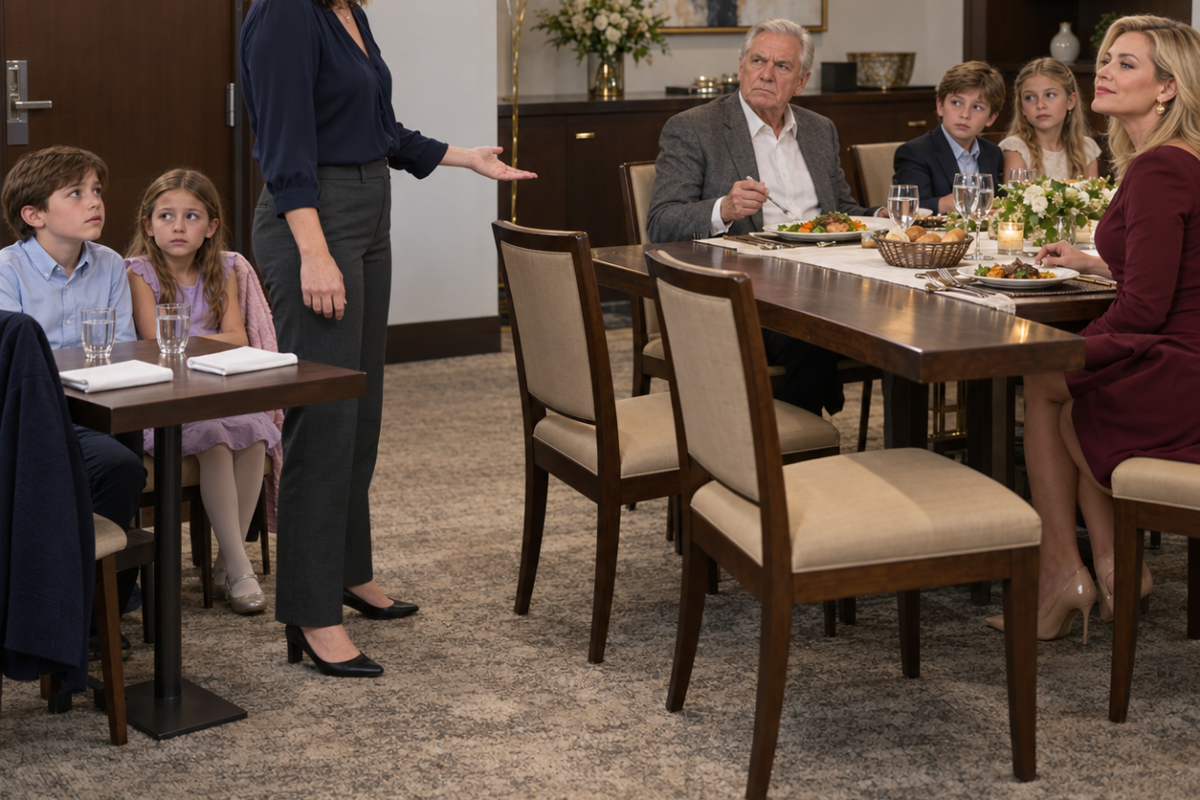
At my father’s seventieth birthday dinner, my eleven-year-old son and eight-year-old daughter were seated beside the service door with water glasses—but no dinner plates. Their cousins sat beside Grandpa with warm bread and full place settings. “They’ll eat after everyone else,” my sister said. I turned to my father, expecting him to object. “They can wait another hour,” he replied. There were two empty chairs at his table.
At my father’s seventieth birthday dinner, the first thing that stopped me wasn’t the cake or the gold balloons. It was my children. Ethan and…
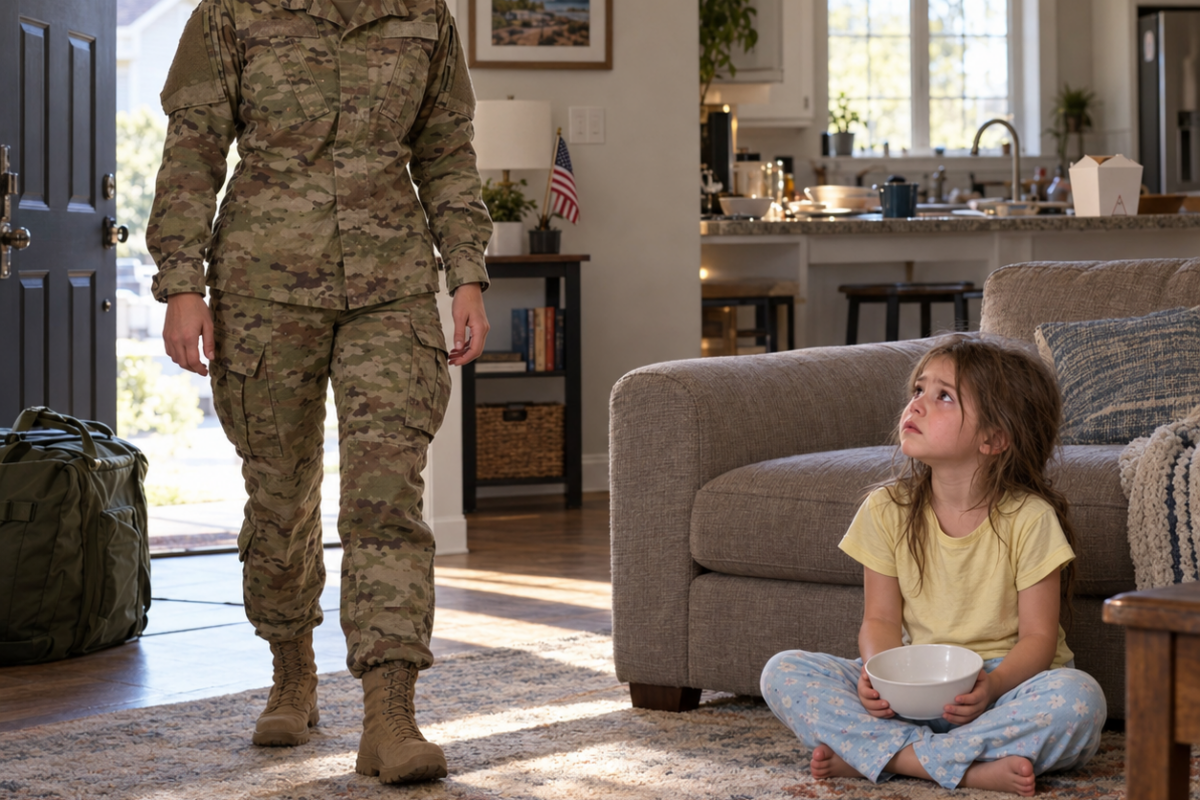
“Mommy, are you real?” my four-year-old daughter whispered when I came home from deployment three weeks early. She was sitting alone on our living room floor with an empty cereal bowl. My husband was on a Caribbean cruise with his mother and sister. Twenty-two minutes earlier, they had posted a photo captioned “Family time.” I was still in uniform when Sophie asked if she could have something to eat.
The first thing my daughter said when I found her was, “Mommy, are you real?” She was sitting cross-legged on our living room floor with…
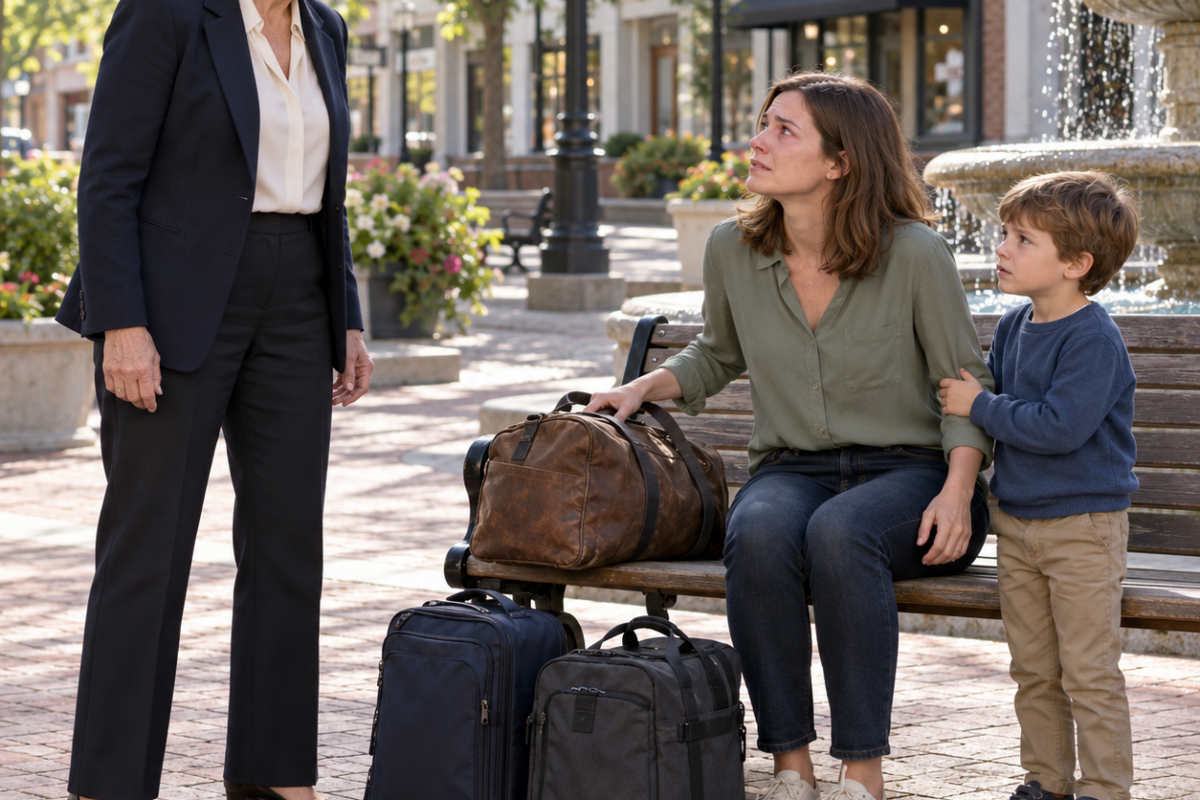
I found my daughter sitting beside the town-square fountain with my five-year-old grandson and three bags at her feet. “Why aren’t you at work?” I asked. She looked down. “My mother-in-law fired me. She said our family name brought nothing of value to the company.” I stared at her. It was my company. I had built it from $62 and a borrowed sewing machine. “Get in the car,” I said. “It’s time I spoke to Adelaide.”
The bag tipped first. It was a brown duffel, worn at the corners, and it slid off the bench onto the brick sidewalk with a…
End of content
No more pages to load