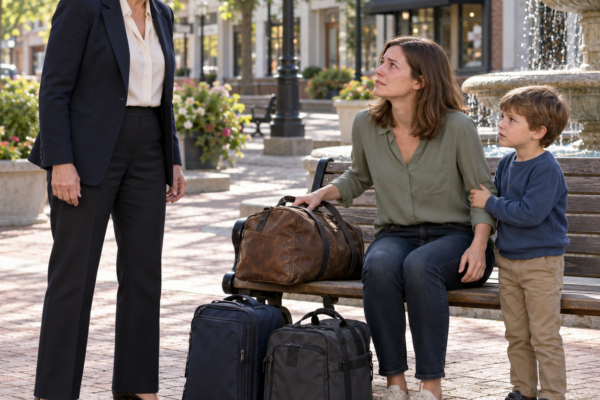
“Take your baby to a hotel. We’re moving in tomorrow,” my mother said on my first night in the home I had bought for myself and my eight-day-old daughter. She had already claimed my bedroom and assigned my sister’s three toddlers to the nursery. I refused. Minutes later, my security app showed someone at the back door, trying a key.
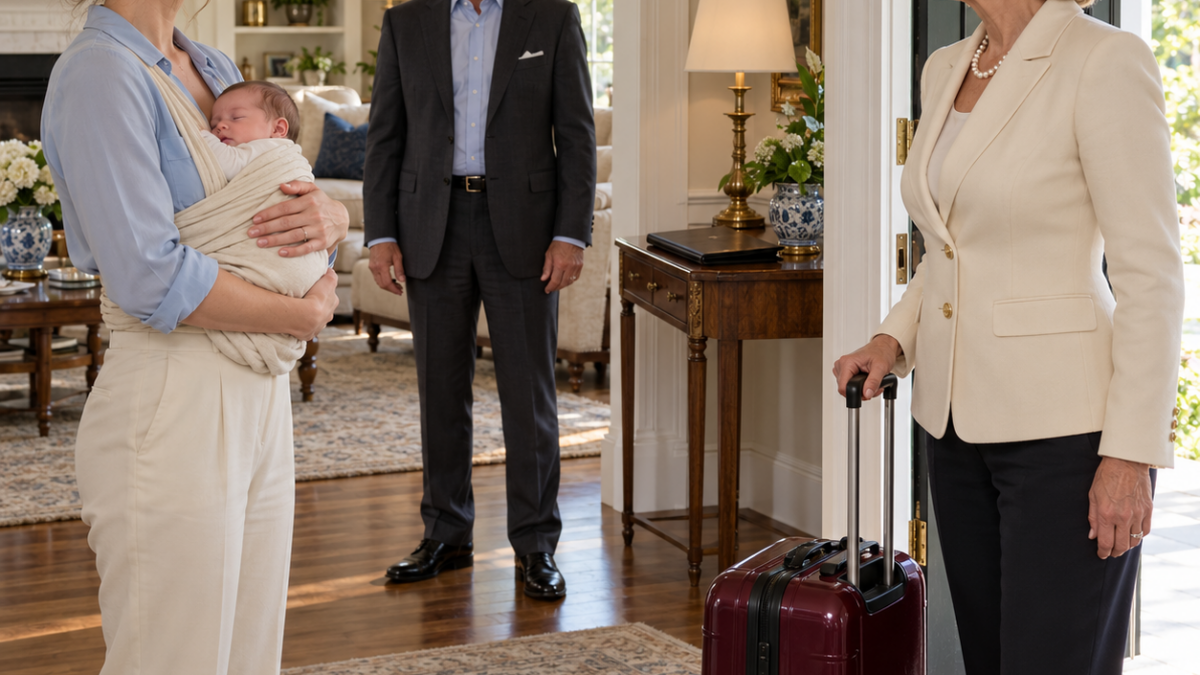
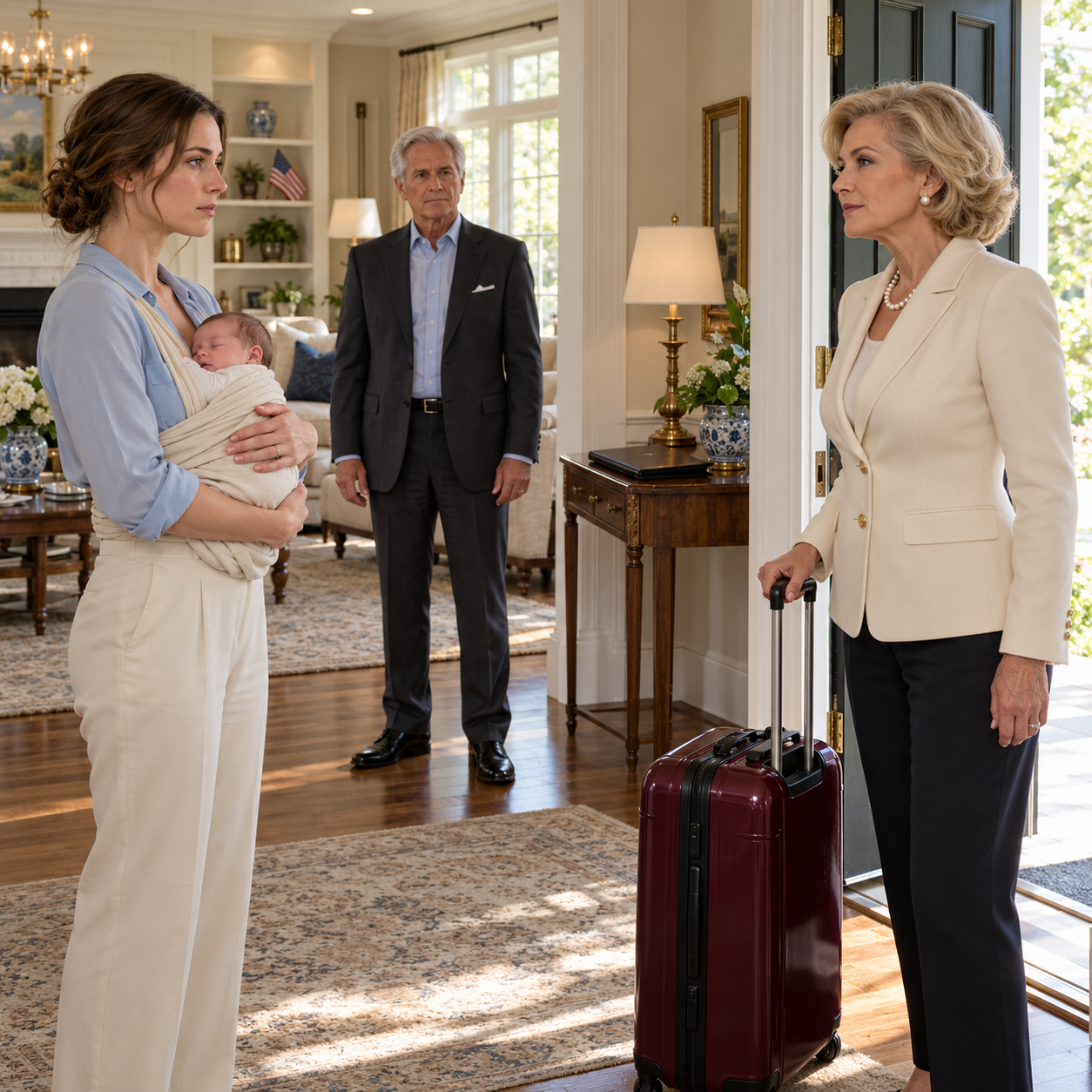
At 9:15 on the first night in my new house, my mother called to tell me she was moving in.
My daughter was eight days old.
Clara lay against my chest in a soft cotton sleeper, one tiny hand curled beneath her chin. I had finally managed to get her to sleep after an evening of feeding, changing, and walking slow circles between the kitchen and the living room.
There were still unopened boxes against the dining room wall. My dinner sat cold beside the sink. The washing machine was running its second load of the day.
I was exhausted.
I was also happy.
For the first time in my life, the front door I had locked belonged to me.
Then my phone vibrated.
“Your stepfather and I are driving down tomorrow morning,” my mother said. “I’ve already organized everything with Krista.”
No hello.
No question about Clara.
No question about whether I had eaten, whether my stitches hurt, or whether the baby was sleeping.
Just an announcement.
“What have you organized?”
“The move, Jocelyn. Don’t make me explain things twice.”
I looked toward the boxes.
For a moment, I thought she meant helping me unpack.
Then she continued.
“I’ll take the master suite. Gil can put his things in the downstairs study. Krista and Pete will use the guest room. The children can have air mattresses in the nursery.”
My arm tightened around Clara.
“You’re moving in?”
“Obviously.”
“All of you?”
“Your sister needs somewhere to get back on her feet.”
“And you?”
“Well, I’m not leaving her to manage that by herself.”
I stared at the dark window above the kitchen sink. My reflection stared back: pale, tired, wearing the same loose sweatshirt I had worn all afternoon.
“I didn’t invite anyone, Mom.”
She sighed.
“You can’t manage a house that size alone.”
“I can manage deciding who lives in it.”
“Let’s not start.”
“Clara is eight days old. The pediatrician told me to keep visits limited, especially while the children have been sick.”
“They have runny noses. Children get runny noses.”
“That doesn’t mean they’re sleeping beside my newborn.”
“You’re being dramatic.”
I closed my eyes.
That word had followed me for most of my life.
I was dramatic when I objected to Krista borrowing my clothes without asking. Dramatic when I wanted my college savings left alone. Dramatic when my mother volunteered me to watch the children on a weekend I was scheduled to work.
Now I was dramatic because I did not want seven people moving into my house.
“Mom, I need you to listen. Krista is not moving in. Neither are you and Gil.”
Her voice hardened.
“I don’t have any interest in following whatever rules you think you’re going to make.”
“This is my house.”
“And we are your family.”
“Those are separate facts.”
“Listen to yourself. You’ve been a mother for a week, and already you think you know everything.”
Clara stirred. I lowered my voice.
“I know who bought this house.”
“If you’re going to be difficult, take the baby to a hotel until you come to your senses.”
I went completely still.
“You’re telling me to leave?”
“I’m telling you not to make tomorrow unpleasant. We’ll be there at ten.”
The line went dead.
For several seconds, I held the phone against my ear after there was nothing left to hear.
Then the security app chimed.
Motion detected at back door.
I opened the camera feed.
My older sister stood on my patio, trying a brass key in the lock.
They were not waiting until morning.
For the first time in my life, I did not wonder how to make my mother less angry.
I wondered whom I needed to call.
My name is Jocelyn. I was thirty-one when I bought the house, and I had spent nearly all of those years learning to take up less room than my sister.
Krista was four years older, louder, prettier in the effortless way our mother admired, and always in the middle of some difficulty that required everyone else to adjust.
When she missed an assignment, the teacher had explained it poorly.
When she lost a job, the manager had singled her out.
When she spent money meant for a bill, something urgent had come up.
My mistakes were different.
Mine were failures of judgment.
If I forgot something, I was careless. If I needed help, I should have planned better. If I became upset, I was too sensitive.
Our father noticed.
Before the divorce, he would sometimes find me doing homework at the kitchen table and sit beside me with his coffee.
“You don’t have to be easier to love,” he told me once.
I was twelve. I did not understand why the sentence made me cry.
I understood later.
My parents’ divorce was ugly in ways a child could feel without understanding the details. Doors closed when lawyers called. My mother began describing ordinary requests from my father as attempts to control her. Krista repeated whatever she heard.
I mostly stayed quiet.
Dad moved into a small apartment with a dining table too large for the room. When we visited, he cooked spaghetti, let us choose movies, and asked questions he actually wanted answered.
Then, when I was fourteen, he died of an aneurysm.
One day there was a message from him asking whether I wanted to spend Saturday looking at dogs at the shelter.
The next day there was a hospital corridor and my mother telling me not to cry so loudly.
Victor Ames stood beside me at the funeral.
He and my father had met at Georgetown Law. Victor had become a lawyer; Dad eventually moved into compliance work for a regional company, where the hours were more predictable and he could get home for dinner.
Their friendship lasted through careers, marriages, arguments, and the divorce.
Victor was not a relative, but he behaved more like family than several people who were.
He attended my high school graduation. He helped me review my first apartment lease. When I was accepted into nursing school, he sent a card with a little plastic stethoscope taped inside.
Your father would be unbearable with pride, he wrote.
My mother disliked him.
She said he interfered.
What she meant was that he remembered things she preferred to revise.
After Dad died, Victor continued to handle certain matters connected with the trust my father had established for me. He did not hand me money whenever I wanted it. He explained documents, answered questions, and made certain I understood what belonged to me.
That distinction would matter years later.
At the time, it simply meant there was one adult in my life who could say, “Let’s look at the facts,” without first asking what my mother thought of them.
I became a pediatric nurse.
The work suited me. I liked children. I liked clear instructions, practical kindness, and the fact that a frightened parent usually needed someone to explain the next step rather than make a speech.
For years, I worked extra shifts and saved.
Some of my savings disappeared into family emergencies.
Not all at once.
A utility payment here. A car repair there. A grocery order delivered to Krista’s apartment because the children needed food and Pete was between jobs again.
I told myself I was fortunate enough to help.
Sometimes I was.
Sometimes helping meant I postponed something important while people who claimed to have no options continued making choices.
The year before Clara was born, I began saying no more often.
My mother called it a personality change.
I called it checking my bank account.
Clara’s father, Evan, was someone I had cared about deeply and misjudged quietly.
We had not been married.
When I told him I was pregnant, he said he needed time. Time became distance. Distance became a series of careful messages about what he could and could not promise.
There was no spectacular confrontation.
No woman appearing in a doorway.
Just a man who wanted to be thought of as decent while explaining that he was not ready for the life already arriving.
We worked through the necessary arrangements with counsel. He agreed to financial responsibilities. I made plans that did not depend on him becoming someone different.
My mother took that as evidence that I needed her.
“You can’t raise a baby alone.”
“I won’t be entirely alone.”
“Friends aren’t family.”
“Sometimes they show up more reliably.”
She did not speak to me for six days after that.
By then, I was looking at houses.
I wanted a place near the clinic, with manageable stairs, a small yard, and enough room for Clara to grow without moving every time a landlord increased the rent.
The house I chose was larger than I originally intended, but it needed work, and its price reflected that. It had four bedrooms, a little downstairs study, and a kitchen with cabinets that were solid beneath a dreadful coat of paint.
The owner had moved into assisted living. Her son wanted a straightforward sale.
I had my own savings, the portion of Dad’s trust available to me, and a mortgage I could afford on my salary.
Victor reviewed the trust distribution with me.
A lender reviewed the mortgage.
An inspector crawled into places I did not wish to imagine.
I closed on the house during my sixth month of pregnancy.
Then I spent the following months making it habitable.
The painting took longer than expected. A plumbing repair became two repairs. The nursery remained a collection of labeled boxes while I slept in my apartment and went to work with a growing belly.
Krista helped one afternoon.
I gave her a spare key because she offered to let a flooring contractor in while I was at a prenatal appointment.
“Keep it for emergencies,” I said.
I should have taken it back afterward.
At the time, she was my sister.
I did not think I needed a written definition of emergency.
Three days before my due date, Clara arrived.
The birth was difficult but uncomplicated enough that we went home on schedule. For the first week, I stayed in my apartment, where everything I needed was already within reach.
My friend Tessa and two colleagues finished the final move.
They assembled the bassinet. They put clean sheets on my bed. Someone stocked the refrigerator with meals in containers labeled in blue tape.
On Clara’s eighth day of life, I brought her to the house.
Our house.
I remember carrying her through the front door and saying, “We made it.”
I did not mean we had solved everything.
I meant we had somewhere to begin.
The first thing I installed after closing had been an alarm system and additional interior locks.
Victor recommended changing the old locks immediately, and I did. Later, after a contractor accidentally left the back door unsecured, I added interior latches to the patio and side doors and a swing bar to the front entrance.
I wanted to feel safe.
I wanted the doors arranged so I could get out easily from inside while keeping anyone with an old key from letting themselves in during the night.
That decision was the reason Krista remained on the patio.
On my phone, I watched her turn the key and press her shoulder against the door.
The outside lock opened.
The interior latch held.
She tried again.
Then she looked over her shoulder toward the driveway.
I could see the back corner of her minivan.
She had not rung the bell.
She had not called.
She was trying to enter quietly while I was alone with a newborn.
I pressed the intercom button.
“Krista.”
She jerked so sharply that she almost dropped the key.
Her face tilted toward the camera.
“Jocelyn?”
“Why are you trying to come inside?”
“Mom said you were expecting me.”
“No, she didn’t.”
“She said we talked.”
“We did. I told her nobody was moving in.”
Krista looked away.
“I just need to put some things down.”
“What things?”
“Suitcases. A few bags.”
“Where are the children?”
“With Pete.”
“In the van?”
“Yes.”
I could hear Clara beginning to fuss against my chest.
“Are they safe and warm?”
“Yes, Jocelyn. We’re not animals.”
“I didn’t say you were. I’m asking because it’s late.”
“Then let us in.”
“No.”
She stared at the camera.
The word had surprised her more than hearing my voice through the speaker.
“Are you serious?”
“Yes.”
“It’s your sister.”
“I know.”
“We have nowhere to go.”
“Call Mom.”
“She said to come here.”
“She was wrong.”
Krista rubbed her forehead.
“I can’t believe you’re doing this with the kids outside.”
“I didn’t bring the children to a house where you weren’t invited.”
Her expression changed.
For a moment, I saw anger without the usual layer of grievance.
Then she looked toward the van again.
“Fine. We’ll wait.”
“Don’t wait on my property. I’m not opening the door tonight.”
She lifted the key.
“You gave me this.”
“For an emergency. Not to move in without asking.”
She stood there another few seconds.
Then she walked toward the driveway.
I watched her get into the passenger seat. The minivan remained for several minutes before its headlights came on and it pulled away.
I saved the footage.
Then I called Victor.
He answered on the second ring.
“Jocelyn?”
“I’m sorry. I know it’s late.”
“What happened?”
I told him about my mother’s call, the room assignments, the hotel remark, and Krista trying the back door.
He did not interrupt.
When I finished, he asked three questions.
“Are all the doors secured?”
“Yes.”
“Are you and Clara physically safe?”
“Yes.”
“Do you want them inside your house?”
“No.”
“Then that is where we begin.”
The steadiness of his voice made my eyes fill.
“My mother says she’ll be here at ten.”
“I’ll be there at nine-thirty.”
“You don’t have to—”
“Jocelyn.”
I stopped.
“You called because you need someone to stand beside you. I can do that.”
I pressed my hand over Clara’s back.
“Thank you.”
“Have you eaten?”
I looked toward my cold dinner.
“Not really.”
“Eat something. Charge your phone. Keep the doors closed. I’ll stay on the line while you decide what else you need.”
“I saved an attorney’s number.”
“Good.”
“Rebecca Haines. Property lawyer. Someone at the clinic recommended her.”
“Contact her. Tell her exactly what happened. Don’t call it something you can’t prove. Describe the actions.”
That was Victor.
Even while supporting me, he kept me tethered to facts.
I texted Rebecca and left a voicemail.
Then I called the alarm company, confirmed how to save the recordings, and asked that no access code be added or changed without my authorization.
I did not spend the next hour arguing with my mother.
For once, I spent it making decisions.
Rebecca called at 11:15.
She had represented me briefly during the purchase, reviewing a title issue that turned out to be minor. I was not a stranger calling a number from the internet.
Her voice was alert.
“I’ve listened to your message. Is anyone inside?”
“No.”
“Has anyone ever lived there with your permission?”
“No.”
“Do they receive mail there?”
“Not that I know of.”
“Have you promised your sister a room, even temporarily?”
“No.”
“Good. I’m going to send you a written notice you can deliver by text tonight. I also want to look at the deed and closing documents.”
“I have them.”
“I’m nearby after a late meeting. I can stop for a short consultation if you’re comfortable with that.”
I almost laughed.
A few hours earlier, my mother had decided who would sleep in my bedroom.
Now a stranger was asking whether she could come through my door.
“Yes,” I said. “Please.”
While I waited, I called a locksmith.
Shari arrived at 11:45 in a paneled van.
She was a practical woman with silver hair tucked beneath a baseball cap and a voice that made ordinary problems sound solvable.
“New baby?” she asked when she saw Clara.
“Eight days.”
“Then we’ll keep this as quiet as we can.”
She checked my identification and proof that I owned the house.
Then she rekeyed the exterior locks, examined the interior hardware, and made certain I could open the doors readily from inside.
I sat at the kitchen island with Clara in a wrap and a cup of tea I kept forgetting to drink.
Shari worked without making conversation she did not need.
Rebecca arrived while she was finishing the patio door.
She came carrying a briefcase and wearing a navy coat over a suit that looked as though it had already endured a long day.
“Before anything else,” she said, “where would you feel most comfortable sitting?”
I pointed toward the kitchen.
She sat.
Not in my bedroom.
Not in the chair she preferred.
Where I chose.
I noticed every small courtesy that night.
Rebecca reviewed the documents while Shari finished.
Then she read the message she had drafted.
It was plain.
I did not consent to anyone moving into the property. No one had permission to enter the house without my express invitation. Any spare keys or access codes previously provided were revoked. Arriving with belongings did not create permission to reside there.
There was no threat of instant arrest.
No theatrical legal language.
Just a written record.
“Send it to your mother, your stepfather, your sister, and Pete,” Rebecca said. “Include the address so there can be no confusion.”
I did.
My mother replied within a minute.
Stop embarrassing yourself. We’ll discuss it tomorrow.
Rebecca read the response.
“Don’t debate.”
“What do I say?”
“Nothing further tonight.”
Shari placed two sets of new keys on the counter.
“All done.”
I stared at them.
Such small things.
Such an enormous difference.
After Rebecca explained what I should do if anyone attempted entry or refused to leave, she said she would come back in the morning for the first part of the conversation.
“You can tell them no yourself,” she said. “I’ll be there to make sure the legal facts stay clear.”
I nodded.
That was exactly what I needed.
Not someone to become my voice.
Someone to keep my voice from being erased.
I slept in pieces that night.
Clara woke, fed, and went back to sleep. I changed her diaper under the soft nursery light. Around four, I stood beside the bassinet watching her little chest rise and fall.
The house was quiet.
I thought about taking her to a hotel.
For one frightened moment, the idea seemed easier.
I could leave before ten. They could arrive to an empty house. There would be no confrontation, no witnesses, no terrible argument while my body still hurt and my baby needed me.
Then I looked around the nursery.
The walls were a pale warm green. Tessa had hung the curtains. I had chosen the little dresser during a lunch break and carried the drawer knobs in my purse for two weeks because I kept forgetting to take them home.
Every ordinary thing represented a decision I had made.
A place I had prepared.
A life I had begun building.
My mother was telling me to leave because she did not believe those decisions counted more than hers.
If I left that morning, she would never forget the lesson.
Neither would I.
I kissed Clara’s forehead.
“We’re staying,” I whispered.
At eight, I showered while Tessa sat beside the bassinet.
She had arrived with breakfast after reading the message I sent the night before.
“You should have called me.”
“I already called three people.”
“You can call four.”
She wore leggings, an old college sweatshirt, and the expression she used at work when a patient’s family tried to turn a simple instruction into an argument.
Tessa and I had worked together for six years.
She had seen me handle feverish toddlers, frightened parents, and doctors who forgot that nurses could count.
She knew I was not helpless.
She also knew I was tired enough to need help.
“I’ll stay upstairs with Clara during the conversation,” she said. “If she needs you, I’ll bring her. If you need her, come get her.”
“Thank you.”
“Have you pumped?”
“A little.”
“Then we have options.”
She helped me eat half a bagel.
At nine-thirty, Victor arrived.
He carried coffee, more bagels, and a small stuffed rabbit in a paper bag.
“For Clara,” he said.
“She’s eight days old.”
“I’m aware. She can grow into appreciating my excellent taste.”
I hugged him.
He held me carefully.
When he stepped back, his eyes searched my face.
“How much sleep?”
“Enough to remain upright.”
“We’ll keep this short.”
He set the rabbit beside the bassinet before returning downstairs.
Rebecca arrived at nine-forty.
By then, the dining room table held my closing folder, printed copies of the messages, and a simple list of what I wanted.
No one was moving in.
No one was being given keys.
Visits would happen by invitation.
The decision was not open for a family vote.
I looked at the list.
It was not cruel.
It was not complicated.
Still, writing it had taken more courage than I expected.
At nine-fifty-eight, the first vehicle entered my driveway.
Gil drove a rented moving truck.
My mother sat beside him.
Krista and Pete followed in the minivan, then a second car driven by one of Pete’s friends.
I watched through the front window.
The scale of it almost made me dizzy.
There were mattresses tied inside the truck, plastic storage tubs, a lamp I recognized from my mother’s living room, and the corner of a dining chair visible near the rear door.
They had not packed for a visit.
They had packed for a move.
My mother got out before Gil had fully stopped.
She wore the expression of someone arriving to supervise work that should already have begun.
Krista looked exhausted.
Pete looked irritated.
The children remained in their seats, watching through the van windows.
I felt a pang for them.
Then I reminded myself that caring about the children did not require letting their parents take over my house.
My mother climbed the porch steps and tried the key Krista handed her.
It did not turn.
She tried again.
Then she looked toward the window.
“I know you’re in there, Jocelyn.”
Rebecca glanced at me.
I walked to the door.
Victor remained in the living room, visible from the entrance.
I opened the door far enough to speak, keeping the swing bar in place.
My mother’s eyes went immediately to it.
“Take that off.”
“No one is unloading,” I said.
“We need to talk.”
“We can talk here.”
“I’m not discussing family business on a porch.”
“Then you can come in for a short conversation. You, Gil, Krista, and Pete. No luggage. The children stay with the adults outside until their parents make another plan.”
My mother gave a disbelieving laugh.
“You’re setting conditions?”
“Yes.”
Gil looked at the moving truck.
“Let’s just hear her out, Nancy.”
She turned on him.
“Don’t start.”
Then she looked back at me.
“Open the door.”
I paused.
This was the moment I had dreaded.
Not because I did not know what to say.
Because I knew exactly how she would react when I said it.
Rebecca spoke from beside me.
“Jocelyn decides whether to invite anyone inside.”
My mother leaned slightly, trying to see her.
“Who is that?”
“My attorney.”
Her mouth tightened.
“You hired a lawyer against your own mother?”
“I hired a lawyer to explain my rights in my own house.”
She stared at me.
Then she said, “Fine. Let’s get this nonsense over with.”
I removed the bar and stepped aside.
My mother pushed the door farther open with her palm.
She took two steps into the foyer.
Then she saw Victor.
She stopped.
For several seconds, her face did not move at all.
Victor stood beside the living room chair.
“Good morning, Nancy.”
My mother’s hand remained on the door.
“What are you doing here?”
“Jocelyn asked me to come.”
“You have no business interfering.”
“I’m not interfering. I’m here at the homeowner’s invitation.”
Her eyes moved from him to Rebecca, then to the folder on the dining table.
That was when she understood.
She was not walking into a tired daughter’s kitchen.
She was walking into a conversation she could not rewrite afterward.
Gil entered behind her.
Krista and Pete followed.
I closed the door.
No one carried a suitcase inside.
My mother stayed standing.
“I don’t know what story Jocelyn told you.”
Victor looked at me.
“The one she wants to tell you herself.”
The small gesture mattered.
He did not take over.
I walked to the dining table.
“Sit down if you’d like.”
My mother remained where she was.
Gil sat.
Pete pulled out a chair reluctantly. Krista sat beside him with her arms folded.
Rebecca introduced herself.
“I represent Jocelyn concerning this property and the attempted entry last night.”
“Attempted entry,” my mother repeated. “Listen to yourself.”
Rebecca’s expression did not change.
“Krista tried to unlock the rear door after Jocelyn had refused permission for anyone to move in. The camera recorded it.”
Krista looked at me.
“You recorded me?”
“The camera did.”
“You’re treating me like a criminal.”
“I’m treating what happened as something that happened.”
My mother stepped toward the table.
“We are not strangers. We are family.”
I met her eyes.
“I know.”
“This house is too large for one woman and a baby.”
“That is your opinion.”
“It is common sense.”
“It does not give you permission to move in.”
She opened her mouth.
I continued before fear could stop me.
“You told me you were taking my bedroom. You told me three toddlers would sleep in Clara’s nursery. You told me you would not follow my rules. Then you told me to take my baby to a hotel.”
Gil looked at her.
“You said that?”
My mother waved a hand.
“She’s twisting it.”
I picked up my phone.
“I wrote it down immediately afterward. Then I sent everyone a notice saying no. You replied that we would discuss it today.”
“You’re making records of conversations with your mother?”
“Yes.”
The word landed hard.
Victor sat quietly beside me.
Rebecca kept her hands folded on her briefcase.
My mother looked around the room, searching for the old arrangement.
Krista offended.
Me apologizing.
Gil trying to smooth things over.
Everyone agreeing that my tone was the problem.
It was not there.
“I am not hosting a move today,” I said. “I am not hosting one tomorrow. Nobody is unloading.”
Krista leaned forward.
“We already gave notice.”
“Where?”
“Our apartment.”
“Why?”
“Because Mom said it was handled.”
I looked at my mother.
She looked away.
Pete rubbed his jaw.
“We can’t just go back.”
“That should have been discussed with the person whose house you intended to use,” Rebecca said.
My mother snapped, “We are discussing it now.”
“No,” I said. “You are hearing an answer you already received.”
Gil sat very still.
For the first time, he seemed to be taking in the difference between an invitation and an instruction.
“Where did you think you were going to stay?” I asked him.
“Here,” he said.
“Why?”
“Nancy said you needed help.”
“What help?”
“With the baby. With the house.”
“Did you ask me?”
“No.”
“Did I ask you?”
“No.”
He looked at my mother.
“Nancy.”
She turned sharply.
“Don’t look at me like that.”
He looked back at me.
“I’m sorry. I should have called.”
It was the first apology of the morning.
It was also the first sentence that did not attempt to make my refusal seem unreasonable.
My mother sat down then.
Not because she had become calmer.
Because standing no longer gave her control of the room.
She placed her handbag on the table.
“Let’s be practical.”
I almost laughed.
“Go ahead.”
“Your sister needs stability. You have rooms. We would help with the mortgage.”
“No.”
“You haven’t heard the amount.”
“I’m not interested.”
“We would contribute.”
“I do not want tenants, roommates, or an arrangement with you.”
Krista’s eyes filled.
“So you want us homeless.”
“No. I want you to arrange housing without claiming mine.”
“You know we’re struggling.”
“I know.”
“And you don’t care?”
I took a breath.
This was the sentence that had always worked.
Not because it was fair.
Because I did care.
I cared about the children. I cared about my sister’s fear. I cared about how badly it would hurt to be described as selfish by the people whose approval I had spent years trying to earn.
“I can care without saying yes,” I said.
Pete gave a short, humorless laugh.
“That’s convenient.”
I looked at him.
“So is telling someone else to solve a problem you didn’t ask her about.”
He sat back.
Krista touched his arm.
“Don’t.”
My mother looked at the folder.
“And where did all this money come from?”
The question changed the room.
Victor’s eyes lifted.
I answered.
“My savings. My mortgage. The distribution from Dad’s trust.”
My mother nodded as though I had finally admitted something.
“Exactly. Family money.”
“No,” Victor said.
His voice remained calm.
“The trust distribution belongs to Jocelyn.”
“It came from her father.”
“Yes.”
“He had two daughters.”
“He did.”
“Then explain why one daughter gets a house while the other gets nothing.”
I looked at Krista.
She stared at the table.
That was the first time I understood my mother had used the trust as more than an argument with me.
She had used it to build Krista’s expectation.
Victor asked, “Nancy, have you told Krista that Jocelyn received money belonging to both of them?”
My mother’s jaw tightened.
“I said the circumstances were unfair.”
Krista lifted her head.
“You said Dad meant it for us.”
My mother looked at her.
“I said he would have wanted you looked after.”
“No,” Krista said. “You said Jocelyn had access to money that should have been shared.”
I felt my stomach drop.
Victor turned toward me.
“Would you like me to clarify?”
“Yes.”
He opened the thin folder he had brought.
“There were separate arrangements for both daughters,” he said. “They were not identical at every stage because the circumstances and prior distributions differed. But Jocelyn did not take Krista’s inheritance.”
Krista’s face changed.
“What prior distributions?”
My mother said, “This isn’t the time.”
Victor looked at Krista.
“I can discuss your records privately with you, with the appropriate documents. I won’t disclose personal financial details in front of everyone.”
“Was there money?”
“Yes.”
“Did I receive it?”
“Some payments were made for your benefit before adulthood. Later distributions were handled under the terms applying to your share. You signed acknowledgments at the time.”
Krista stared.
“I signed what Mom put in front of me.”
My mother’s voice rose.
“You needed help. Your father left a mess.”
Victor did not react.
“Your father left instructions. We followed them.”
“I had expenses.”
“That does not make Jocelyn’s current assets communal property.”
My mother turned toward me.
“You always did enjoy having Victor rescue you.”
My face grew hot.
For a moment, I was fourteen again.
Standing outside a hospital room.
Being told my grief was making things harder.
Then I heard Clara make a small sound upstairs.
The house brought me back.
“I asked him to support me,” I said. “That is different.”
My mother leaned forward.
“You wouldn’t have any of this without your father.”
“That doesn’t give you ownership of it.”
Victor closed the folder.
He did not produce some enormous secret or announce that my mother was under arrest.
He simply kept the facts from turning into a story that made my house available to everyone.
That was enough.
Rebecca shifted the conversation back to the reason everyone was there.
“There are no ownership rights arising from being a parent or sibling of the homeowner,” she said. “No one here has permission to establish residence.”
My mother looked at her with open dislike.
“You don’t understand our family.”
“I understand the property documents.”
Gil cleared his throat.
“We need to stop unloading.”
“No one has started,” I said.
Outside, a truck door slammed.
Everyone turned toward the window.
Pete stood.
“That’s probably Aaron.”
His friend had opened the back of the moving truck.
A plastic bin sat on the driveway.
Rebecca looked at me.
I walked to the front door, opened it, and spoke clearly.
“Nothing comes inside. Put the bin back, please.”
Aaron looked toward Pete.
Pete stood behind me.
For a second, I thought he would challenge me in front of his friend.
Then he said, “Put it back.”
The bin returned to the truck.
I closed the door.
My mother stared.
“You’re enjoying this.”
“No.”
“You’ve humiliated your sister.”
“I didn’t tell her she could live here.”
“You could have waited until the children weren’t present.”
“I refused last night. You brought the children anyway.”
Krista covered her face.
The sight hurt.
I wanted to soften everything.
Instead, I sat down.
There were times when standing by a decision felt less like strength than refusing to run from someone else’s disappointment.
That morning was one of them.
Gil finally asked the question everyone had avoided.
“Nancy, what happened to our apartment?”
My mother looked at him.
“What do you mean?”
“Did you end the lease?”
“We talked about it.”
“We talked about moving closer to the girls.”
“And this is closer.”
“That is not what I asked.”
Her silence lengthened.
He rubbed his forehead.
“Tell me you haven’t canceled it.”
“I gave notice.”
“When?”
“Last week.”
He stared at her.
“You said we would discuss options this weekend.”
“We are discussing them.”
“No,” he said. “You made a decision.”
I had never heard Gil say that to her so directly.
He was not a bad man.
He was a man who had made a habit of agreeing with the strongest voice in the room.
That habit had carried him to my driveway in a moving truck.
Now he was looking at the consequences.
“Can we withdraw the notice?” he asked.
“I don’t know.”
“Then we need to call.”
My mother’s eyes flashed.
“We have a perfectly good house right here.”
“No,” he said. “Jocelyn has a house.”
The room went quiet.
I looked at him.
He looked embarrassed.
He should have said it before renting the truck.
Still, he had said it.
My mother turned toward Victor.
“This is what you wanted.”
He shook his head.
“I wanted Jocelyn to be safe in her home.”
“She is safe. We’re not dangerous.”
“Then you can respect her refusal without trying to enter.”
She looked away.
Rebecca checked the time.
“We need a practical plan for departure now.”
My mother laughed.
“You’re dismissing us?”
“I’m asking when you intend to remove the vehicles and belongings from Jocelyn’s property.”
Pete stood again.
“We can get a hotel for tonight.”
Krista looked up.
“With what money?”
“We have enough for tonight.”
“And tomorrow?”
He hesitated.
“That’s tomorrow.”
“No,” she said suddenly. “That’s exactly how we got here.”
He looked at her.
She lowered her hands.
“No one plans. Then everyone says we’ll work it out tomorrow.”
I sat very still.
There was no pleasure in watching their situation become real to them.
But it was becoming real.
Not a room assignment.
Not a favor my mother had already extracted.
A housing problem belonging to the adults who needed housing.
Tessa appeared at the top of the stairs.
“Jocelyn? Clara’s ready for you.”
My body responded before my mind did.
“I’ll be right there.”
My mother turned immediately.
“Bring her down. I haven’t seen my granddaughter.”
“Not today.”
Her face hardened.
“You’re keeping her from me?”
“I’m feeding her.”
“I can wait.”
“No.”
She pushed back her chair.
“Jocelyn, don’t you dare use that baby—”
Victor stood.
“Nancy.”
One word.
Not shouted.
My mother stopped.
I looked at her.
“Clara is not part of this negotiation. There is no negotiation.”
Then I went upstairs.
For the first time in my life, I left my mother angry in a room without staying to manage it.
Clara’s face was red with the effort of waiting.
I took her from Tessa and sat in the nursery chair.
“There you are,” I whispered.
She settled against me.
Downstairs, voices continued, quieter now.
Tessa stood near the window.
“You did well.”
“I feel terrible.”
“You can do well and feel terrible.”
I laughed once, then cried.
Not dramatically.
Not beautifully.
Just a tired woman holding a baby while the life she had practiced for years stopped working.
Tessa passed me tissues.
“Do you want me to stay?”
“Yes.”
“Then I’m staying.”
There was no argument about whether I was entitled to ask.
By the time Clara finished feeding, the truck was leaving.
Victor came upstairs only after Tessa asked whether I was comfortable with it.
He stood in the doorway.
“They’re going.”
“All of them?”
“Yes.”
“Where?”
“Gil is calling their landlord. Krista and Pete have arranged a hotel for tonight. There are other options to discuss after today.”
“Did Mom agree?”
“She left.”
That was not the same thing.
I knew it.
He knew I knew.
Rebecca came to the bottom of the stairs and said she would email a summary of the consultation and the notice already sent.
She advised me to keep the recordings, avoid granting access casually, and contact the proper authorities if someone attempted to force entry or threatened me.
Nothing about family transformed an unsafe act into a harmless one.
Nothing about an unpleasant conversation automatically made it a criminal matter either.
She kept both truths clear.
I thanked her.
When Victor returned downstairs, I followed with Clara.
The front door was closed.
The driveway was empty.
The lilies Tessa had brought that morning sat on the kitchen counter.
My mother’s handbag was gone.
So were her plans for my bedroom.
I stood in the living room and looked around.
The house had not changed.
I had.
That afternoon, I slept for two hours while Tessa watched Clara.
When I woke, there were messages.
My mother had sent seventeen.
The first accused me of cruelty.
The next three described everything she had ever done for me.
Another said Victor had poisoned my mind.
Then came the message I had expected all my life without ever seeing it written so plainly.
You think owning a house makes you better than us.
I read it twice.
Then I put down the phone.
Owning a house did not make me better than anyone.
It made me responsible for a mortgage, a roof, a furnace, and deciding who came through the door.
That was enough.
Krista had sent one message.
The kids are asking why Aunt Jocelyn won’t let them stay.
I stared at it for a long time.
Then I typed:
Please do not tell the children I refused them. I refused an uninvited move by adults. They are loved. They are not responsible for arranging housing.
I deleted the last sentence, then put it back.
I sent it.
Pete called.
I let it go to voicemail.
His message said they were in a difficult position and I needed to understand that.
I understood.
Understanding did not create an obligation to surrender my house.
That evening, I wrote one message to the family group.
I had not invited anyone to move in. I had refused clearly the night before. My sister attempted to unlock the back door without permission, and the family arrived with a moving truck anyway. Clara and I were staying in our home. Future visits would require an invitation.
I did not attach the video.
I did not publish anyone’s financial history.
I simply stated what happened.
My aunt replied first.
Your mother told us you asked them to help.
Then a cousin wrote:
She said you were overwhelmed and wanted everyone there.
I closed my eyes.
Of course she had.
A move into my home became an act of generosity when described from the right angle.
My mother had not told people she intended to displace me.
She had told them she was rescuing me.
I answered:
I did not ask.
Then I muted the conversation.
Clara needed a diaper.
Real life was less interested in the family narrative than my mother was.
The next week was quiet in practical ways and loud in emotional ones.
The doors stayed locked.
No truck returned.
The nursery remained Clara’s.
But my mother’s voice lived in my head.
When I rested, I heard her calling me lazy.
When I ordered groceries, I imagined her asking why I could not go to the store.
When Tessa folded laundry, I worried I was imposing.
That was the strange thing about finally stopping someone at the door.
It did not instantly remove everything they had taught you to believe inside your own mind.
On Wednesday, I called a counselor whose practice included postpartum support.
I did not want every difficult feeling explained away as hormones.
I also did not want to pretend childbirth had left me untouched.
I was healing physically. I was sleeping in fragments. I was responsible for a person who could not tell me what she needed except by crying.
And I had just confronted my family in a way I had spent decades avoiding.
All of those things mattered.
The counselor, Mara, met with me by video while Clara slept in the bassinet beside my desk.
I told the story quickly.
At the end, I said, “I keep wondering whether I should have just given them a week.”
She asked, “What would have happened at the end of that week?”
I thought about it.
“My mother would have said Krista wasn’t ready.”
“And then?”
“Another week.”
“And who would have decided when it ended?”
I looked at Clara.
“My mother.”
Mara nodded.
“Then you weren’t refusing a week.”
The sentence settled in me.
I had known that.
I needed to hear it without being accused of selfishness.
We did not spend the session calling my mother names.
We talked about guilt, fear, sleep, support, and what I wanted my home to feel like.
At the end, Mara asked, “What would you tell a patient who described this situation?”
I almost smiled.
“That she’s allowed to decide who lives in her house.”
“Can you practice saying that to yourself?”
I could.
Not easily.
But I could.
Victor came by Friday with soup.
He called first.
He always called first after that morning, even though I told him he could knock.
“I would rather be overly polite than accidentally become a symbol,” he said.
I laughed.
We sat at the kitchen table while Clara slept.
He looked around.
“Your father would have liked this place.”
“Even the cabinets?”
“Especially the cabinets. He would have had opinions about the hinges.”
I smiled.
Then I asked the question I had avoided.
“Did Mom spend Krista’s money?”
Victor set down his spoon.
“I can’t discuss Krista’s private financial records without her permission.”
“I know.”
“But I can tell you that you did not receive money belonging to her.”
“Mom made it sound like I did.”
“Yes.”
“Why?”
He took a moment.
“Because your mother often describes what she wants as what someone else owes.”
I looked at him.
He continued carefully.
“That does not mean every difficult financial decision in the past was dishonest. It does mean we should look at documents rather than assumptions.”
“Did Dad expect me to look after everyone?”
“No.”
The answer came immediately.
My eyes filled.
Victor leaned back.
“He hoped you and your sister would have choices. He did not appoint you responsible for your mother’s plans.”
I looked toward the bassinet.
Clara’s mouth moved in her sleep.
“I wish he were here.”
“So do I.”
For a while, neither of us spoke.
Then Victor said, “He would have been proud of you.”
“For buying a house?”
“For staying in it.”
Krista came to see me three weeks later.
She asked first.
That was why I said yes.
I told her she could come alone for an hour, provided she was well, and that we would meet downstairs while Clara remained with Tessa.
Her reply was short.
Okay.
No argument.
No demand to bring the children.
She arrived carrying nothing but her handbag.
I opened the door.
For a moment, we simply looked at each other.
We had grown up in the same house but lived inside different versions of it.
She had been the child whose difficulties rearranged everyone’s plans.
I had been the child praised for not needing much.
Neither arrangement had prepared us well for adulthood.
Krista sat at the dining table.
The same table.
She noticed.
“I suppose you don’t want me in the living room.”
“You can sit in the living room. I chose the table.”
“Oh.”
She looked embarrassed.
I sat across from her.
“How are the children?”
“Fine.”
“Where are you staying?”
“With Pete’s cousin for now. We found an apartment. Smaller.”
“When do you move?”
“Next month.”
I nodded.
She looked at her hands.
“Mom says you want an apology.”
“I haven’t spoken to Mom.”
“She says you’re making everyone jump through hoops.”
“What do you think?”
Krista did not answer immediately.
Then she said, “I think I should have asked you.”
“Yes.”
“I thought Mom had.”
“She told you I agreed?”
Krista nodded.
“But you heard me at the back door.”
Her eyes lowered.
“Yes.”
“And you still came the next morning.”
She rubbed a thumb over the strap of her handbag.
“I thought if we were all there, you’d feel differently.”
I stared at her.
She looked up quickly.
“I know how that sounds.”
“How does it sound?”
“Like we were pressuring you.”
“You were.”
She nodded.
For a moment, I wanted to help her through the apology.
I wanted to say I understood, that it was fine, that she had been frightened.
Then I remembered how often my comfort had become the place other people set down responsibility.
I waited.
Krista swallowed.
“I’m sorry I tried to use the key.”
I kept waiting.
“And I’m sorry I brought the children into it.”
“Thank you.”
“I was angry.”
“I know.”
“I’m still embarrassed.”
“I imagine you are.”
She let out a small breath.
“You’re not making this easy.”
“No.”
We looked at each other.
Then she gave a sad little laugh.
“Fair enough.”
That was the first honest laugh we had shared in months.
She had spoken with Victor about her financial records.
She did not tell me every detail.
I did not ask.
What she said was enough.
“Things weren’t the way Mom explained them.”
“I’m sorry.”
“She paid for things. Some of it was legitimate. Some of it was stuff I didn’t realize came from that money.”
I nodded.
“I thought you had this giant account and I had been forgotten.”
“I didn’t know you thought that.”
“She said you never offered to share.”
I felt a familiar ache.
“I’ve helped you for years.”
“I know.”
“You’ve asked me to cover groceries, bills, deposits—”
“I know.”
“Did you think that was money I owed you?”
Her face reddened.
“Sometimes.”
The answer hurt more because it was honest.
I looked toward the nursery monitor on the table.
Then back at her.
“It wasn’t.”
“I understand that now.”
“Do you?”
She nodded.
“I’m trying to.”
That was more believable than a perfect declaration.
She asked whether we could rebuild something.
I said I did not know yet.
She accepted it.
Before leaving, she asked whether she could see Clara from the doorway.
I asked Tessa to bring her down.
Krista looked at the baby without reaching.
“She has Dad’s little crease beside her mouth.”
I had noticed it too.
My eyes filled.
“So do you,” I said.
She looked at me.
For a second, we were sisters without our mother’s version of us standing in between.
Then Clara began to fuss.
I took her.
Krista stepped back.
“Thank you for letting me come.”
“Thank you for asking.”
My mother took longer.
At first, she sent gifts.
A blanket.
A baby swing I had not requested.
A framed photograph of herself holding me as an infant.
Each arrived with a message that made it less a gift than an argument.
Remember who took care of you first.
I returned the swing because I already had one and because the delivery instructions listed my mother as an authorized contact for my address.
I kept the blanket unopened for several weeks before deciding I could use it without accepting the message attached to it.
The photograph went into a drawer.
I did not destroy it.
I did not display it to prove gratitude.
I simply was not ready.
My mother called from different numbers when I stopped answering hers.
I sent one written boundary.
I would not discuss the house move again. I would not accept insults or threats. If she wanted contact, she could write to me respectfully.
She responded:
You cannot put conditions on a relationship with your mother.
I did not reply.
Conditions had always existed.
The old ones were simply hers.
Gil called once.
He apologized again.
Their landlord had allowed them to withdraw the notice after charging a fee and confirming the apartment had not yet been relet.
They were back home.
“We never needed to move that morning,” he said.
I sat very still.
“What?”
“We were considering a smaller place eventually. Nancy thought this would solve everything.”
I looked at the hallway.
“She told me you were already committed.”
“I know.”
“Why didn’t you stop her?”
He was silent for a long time.
“Because I’m used to letting her decide.”
I appreciated the truth.
I did not make it comfortable.
“That habit brought a moving truck to my house.”
“Yes.”
“And it frightened me.”
“I’m sorry.”
I believed he meant it.
I also knew an apology did not replace the next decision.
“If she decides to come again, you need to tell her no.”
“I will.”
“You need to mean it when she gets angry.”
Another pause.
“I understand.”
I hoped he did.
That was all I could offer.
My mother finally wrote a letter when Clara was nearly three months old.
It began badly.
She described herself as heartbroken. She described me as distant. She described the family as divided.
Then, halfway down the second page, the tone changed.
Gil says I should not have told you to leave your house.
I stopped reading.
Not because the sentence was enough.
Because it was the first time she acknowledged the actual words.
I continued.
I thought if everyone was together, things would be easier. I can see now that you did not want that.
That was not the same as understanding she had no right to arrange it.
But it was closer.
At the end, she asked to visit Clara.
I waited two days.
Then I wrote back.
Before a visit, I needed her to acknowledge that I owned the house, that she had no authority to move anyone in, and that future access would depend on my invitation.
I also needed her to agree that no one would come with her unless I approved it.
She called.
I let it go to voicemail.
Her message began with indignation.
Then she stopped.
I could hear her breathing.
Finally, she said, “I will put it in writing.”
She did.
The first visit lasted forty minutes.
Victor was not there.
Rebecca was not there.
Tessa was in the kitchen because I wanted support and because I was not interested in pretending confidence meant doing everything alone.
My mother arrived without luggage.
She knocked.
I opened the door.
For several seconds, her eyes moved around the foyer.
The house looked finished now.
There were photographs on the walls. Clara’s little blanket lay folded on the couch. A basket of clean laundry sat near the stairs.
My mother said, “You’ve done a lot.”
“Yes.”
She looked at me.
“You look tired.”
“I have a baby.”
“I could—”
She stopped.
I waited.
Then she said, “Would you like me to hold her?”
“If you wash your hands first.”
Her jaw tightened.
It was slight.
I saw it.
Then she walked to the sink.
That was how change looked with my mother.
Not a sudden transformation.
A small visible effort to follow a request she would once have dismissed.
She held Clara while I sat beside her.
For a while, we talked about the baby.
Feeding.
Sleeping.
A little rash that had already been checked.
Ordinary things.
Then my mother said, “I never meant to frighten you.”
I looked at her.
“But you did.”
Her eyes lowered.
“I know.”
She did not add that I was too sensitive.
She did not say I misunderstood.
The silence that followed felt strange and fragile.
I did not rush to fill it.
After forty minutes, I stood.
“That’s enough for today.”
She looked disappointed.
Then she handed Clara back.
At the door, she said, “May I come again?”
I thought about it.
“Yes. We can arrange another visit.”
Not a key.
Not an open invitation.
A visit.
She nodded.
When she left, I locked the door.
Then I stood with Clara against my shoulder and allowed myself to feel both hope and caution.
Neither required erasing the other.
Returning to work was its own adjustment.
I found a small licensed childcare program near the clinic. I reviewed everything, asked too many questions, and cried in my car after the first drop-off.
Tessa told me asking questions was part of my professional brand.
I laughed because it was true.
My mother offered to provide childcare.
This time, she asked.
I thanked her and said I was keeping the arrangement I had made.
She was offended.
She did not threaten to come anyway.
That distinction mattered.
Krista found part-time work through someone she knew from the children’s preschool. Pete accepted a job he had previously considered beneath him.
Their apartment was crowded.
Their budget was tight.
They were still their own responsibility.
I helped once with groceries after Krista asked directly and accepted the amount I offered without trying to enlarge it.
I did not pay the rent.
I did not apologize for the difference.
Sometimes I worried that I had become cold.
Then I watched Clara wake from a nap and smile when she saw me.
There was nothing cold about protecting the home where that smile belonged.
There was nothing unloving about keeping enough money to repair my own furnace, pay my own bills, and raise my child.
Care did not have to end where boundaries began.
It simply needed a shape.
Months later, I invited Krista and the children for lunch.
Not because my mother requested it.
Because I wanted to.
The children played in the yard while Clara sat on a blanket beside me.
They were not chaotic little invaders.
They were children.
Loud, curious, affectionate, occasionally sticky.
The problem had never been their existence.
It had been adults using them to make refusal feel impossible.
When one of them asked whether they could sleep in Clara’s room, Krista answered before I did.
“No. We’re visiting. Aunt Jocelyn decides when we come.”
I looked at her.
She kept pouring juice.
No performance.
No glance asking whether I noticed.
Just the right answer.
I noticed anyway.
Later, she helped wash dishes.
“Pete says you were harsh that morning.”
I looked at her.
“What do you say?”
“That we should have asked.”
I nodded.
“He’s still embarrassed.”
“He can be embarrassed.”
She smiled faintly.
“I’m learning that.”
We stood beside the sink.
Then she said, “I used to think if Mom was sure about something, it must already be settled.”
“So did I.”
“She still tries.”
“I know.”
“What do you do?”
“Answer the question I’m actually being asked. Not the one she pretends was already answered.”
Krista thought about that.
“I might need practice.”
“So did I.”
The afternoon ended without an argument.
When the children complained about leaving, she did not ask me to extend the visit.
She gathered their shoes.
That ordinary act meant more than another apology.
On Clara’s first birthday, the house was full by invitation.
Tessa came.
Victor came with a wrapped book and a stuffed rabbit larger than the first.
Rebecca sent a card.
Krista and Pete brought the children.
Gil arrived with my mother, who had asked whether she could bring a fruit platter and accepted my answer about what time to come.
There were balloons, a small cake, and crumbs everywhere.
Clara preferred the paper wrapping to most of her gifts.
Victor said this proved she had excellent priorities.
I laughed.
My mother watched me light the candle.
For a moment, our eyes met.
She looked as though she wanted to say something.
Then she simply smiled.
I did not need the day turned into a grand reconciliation.
I needed my daughter to have a birthday in a house where everyone understood they were guests.
That was what happened.
Near the end of the afternoon, my mother stood in the foyer putting on her coat.
“This is a good home,” she said.
“Yes.”
She looked toward the staircase.
“You’ve managed.”
There was an old version of me that would have seized those words and tried to make them into approval I could keep.
The newer version simply answered.
“We have.”
She nodded.
Then she asked whether she could come next Sunday.
“I’ll check our plans and let you know.”
For a second, disappointment crossed her face.
Then she said, “All right.”
After everyone left, Tessa helped me clear the dishes.
Victor carried the trash out.
When he returned, he stood beside the kitchen island and looked at the little birthday crown lying next to an empty cake plate.
“A year,” he said.
“I know.”
“Your father would have loved her.”
“He would have spoiled her.”
“Shamelessly.”
I smiled.
Then I looked toward the back door.
The place where Krista had stood with a key.
Victor followed my glance.
“Do you think about that night often?”
“Less than I used to.”
“What do you remember most?”
I considered it.
Not my mother’s voice.
Not the moving truck.
Not even the moment she froze when she saw him.
“I remember people asking before they came in.”
He looked at me.
“Rebecca asked where I wanted to sit. Shari asked about the locks. Tessa asked whether I needed her to stay.”
Victor nodded.
“They treated your choices as real.”
“Yes.”
For years, I had imagined support would look like someone powerful silencing my mother.
Instead, it looked like people standing beside me while I spoke.
That was what stayed.
When Clara was asleep and the house was quiet, I checked the doors.
I still did it every night.
Not because I expected my family to appear with another truck.
Because safety was part of the life I had built.
The front door closed securely.
The patio latch held.
The alarm showed every entry point ready.
I put the phone on the kitchen counter and looked around.
A small toy lay beneath a chair. A cup needed washing. Tomorrow’s lunch containers waited beside the refrigerator.
The house was no longer pristine.
It was lived in.
By us.
My mother had told me to take my newborn to a hotel until I came to my senses.
What she meant was until I returned to the version of myself who confused keeping the peace with giving up the right to decide.
I had not returned.
I had stayed.
In the morning, Clara would wake, and I would carry her downstairs into a kitchen where no one had assigned my room to someone else.
We would make breakfast.
We would begin another ordinary day.
And when someone knocked, I would decide whether to open the door.
News
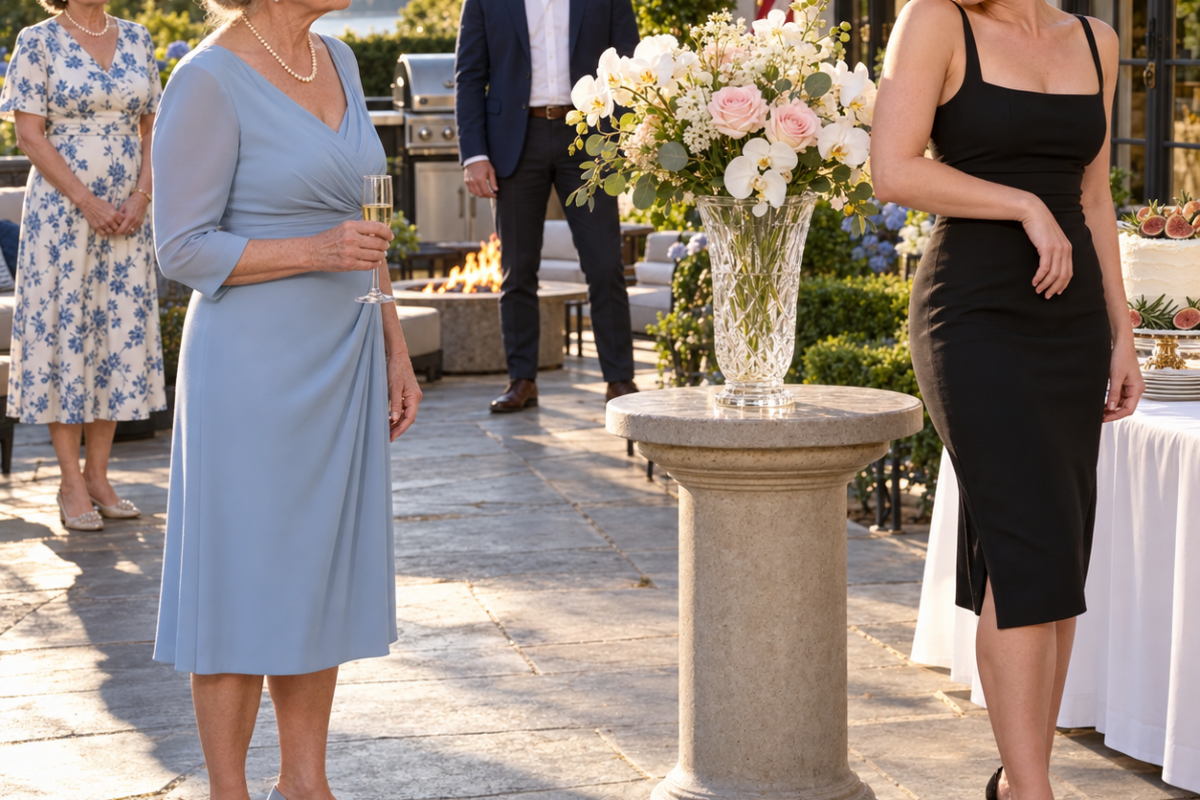
At my seventy-second birthday party, my daughter-in-law knocked a crystal vase off its pedestal with her elbow, watched it shatter, and smiled. “Oops.” Her own parents had given it to her and my son on their wedding day six years earlier. I looked at Frank, waiting for him to say something. All he managed was, “Mom…”
I watched my daughter-in-law break her own parents’ wedding gift with one elbow and a smile. For months afterward, people asked me whether I was…
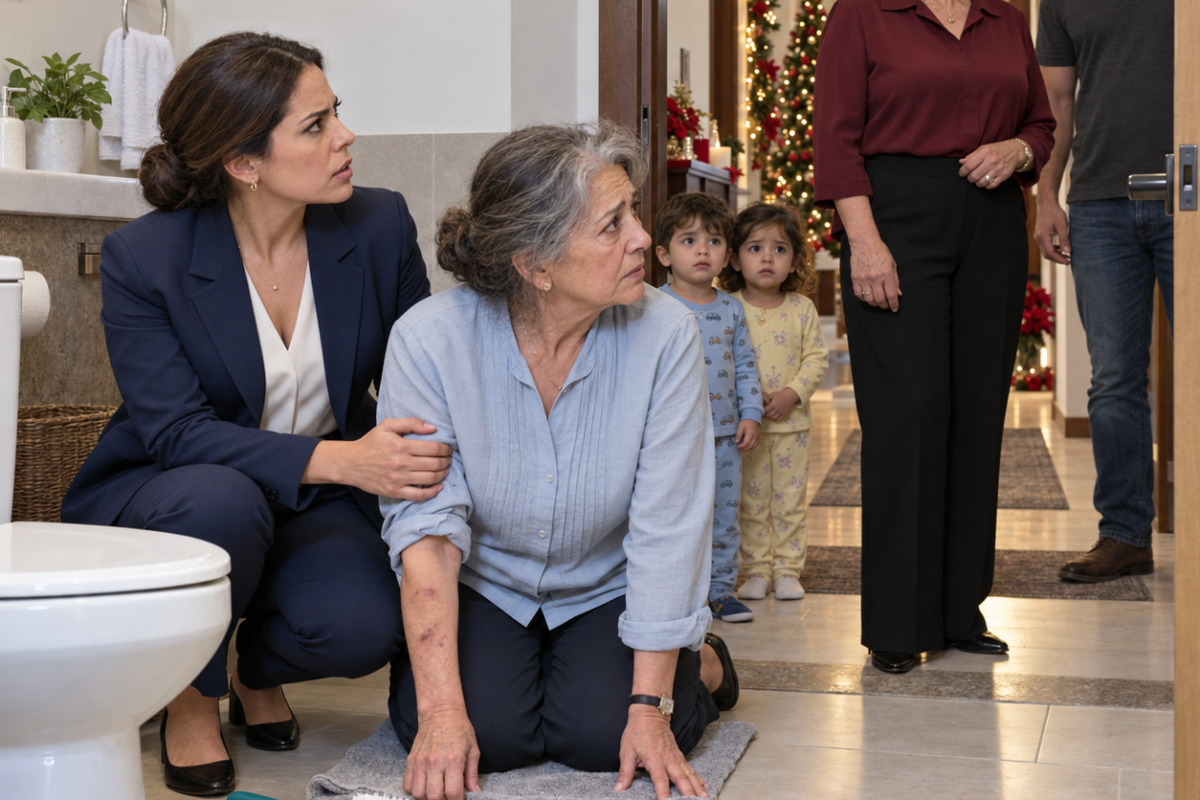
I came home three hours early and found my sixty-eight-year-old mother on her knees scrubbing my mother-in-law’s bathroom. When I helped her stand, her sleeve slipped back, revealing dark marks around her wrist. My husband stepped into the doorway. “Daniela, don’t make a scene.” That was when I remembered my father’s last warning: “If you ever see your mother hurt, don’t argue with anyone. Open the hidden compartment in her sewing machine.”
I came home three hours early and found my sixty-eight-year-old mother on her knees beside a toilet. Her hands were stiff with arthritis. One gripped…

“I already promised your house to your sister,” my father told me four days after I bought it. “They’re moving in Monday. Rent-free for three years.” I was thirty-one, had saved for nine years, and had bought the five-bedroom home entirely in my own name. When I said no, he threatened to tell the family I had abandoned my sister’s children. Days later, he took the microphone at my grandmother’s seventy-fifth birthday dinner and did exactly that.
My father called twelve times in forty minutes after discovering I had bought a house without consulting him. When I answered, he didn’t ask whether…
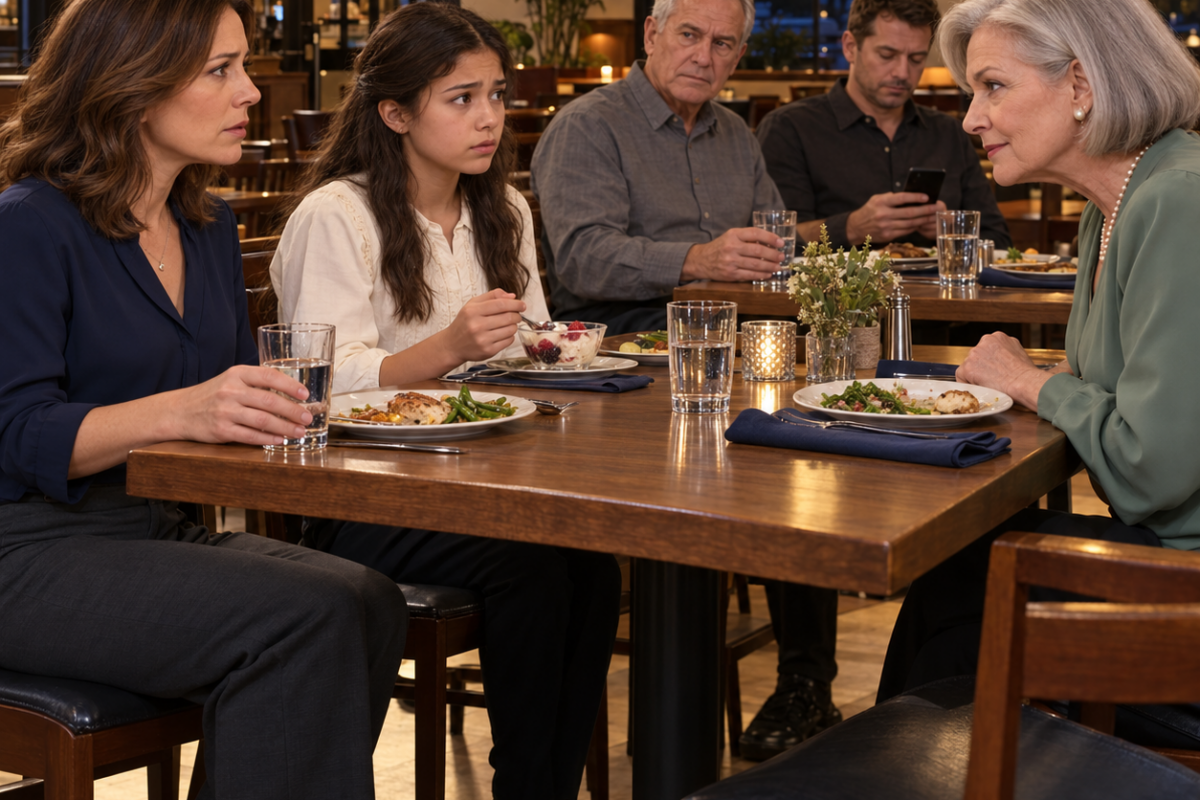
My mother leaned across the restaurant table, looked at my thirteen-year-old adopted daughter, and whispered, “We don’t sit with mistakes.” I took Sole’s hand and walked her out. That night, my father texted, “You’re still making the car payment tomorrow, right?” By midnight, I had canceled the payments I’d been making for my family. Then I remembered something Sole had told me about her grandmother.
My mother looked at my thirteen-year-old daughter and whispered, “We don’t sit with mistakes.” She said it softly enough to avoid attracting attention from the…
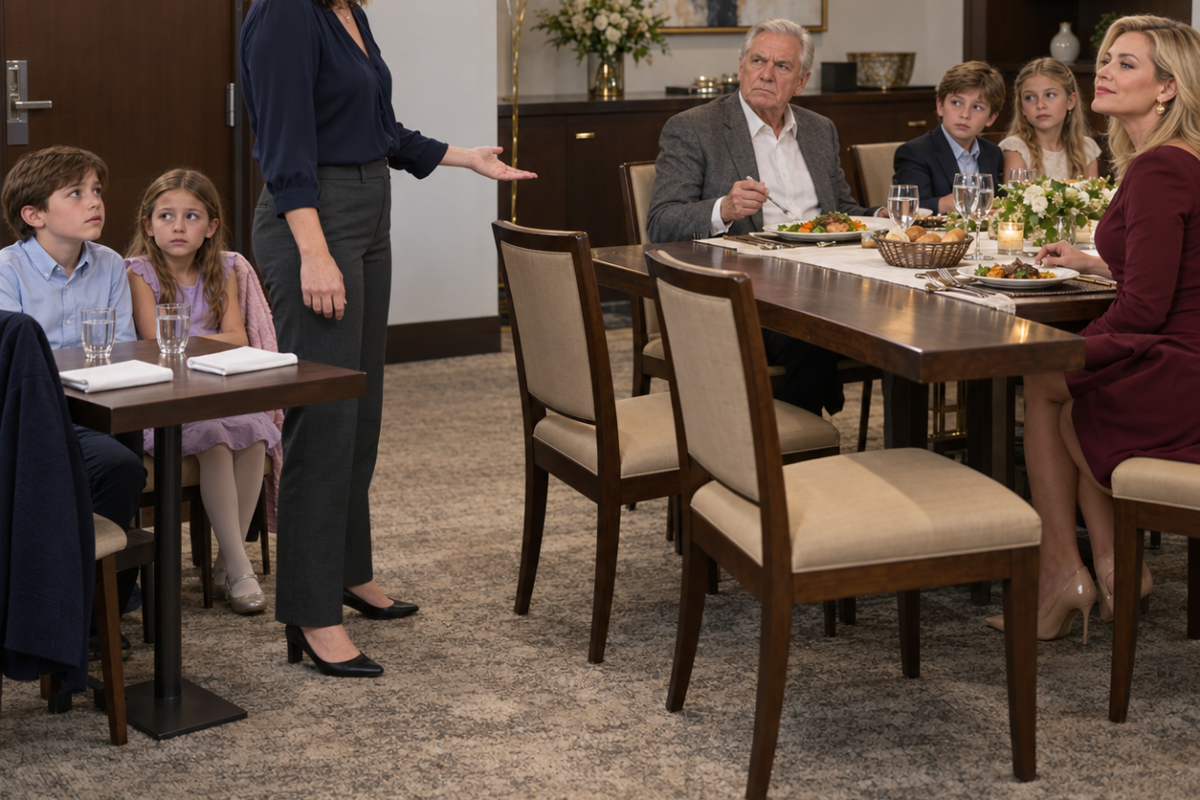
At my father’s seventieth birthday dinner, my eleven-year-old son and eight-year-old daughter were seated beside the service door with water glasses—but no dinner plates. Their cousins sat beside Grandpa with warm bread and full place settings. “They’ll eat after everyone else,” my sister said. I turned to my father, expecting him to object. “They can wait another hour,” he replied. There were two empty chairs at his table.
At my father’s seventieth birthday dinner, the first thing that stopped me wasn’t the cake or the gold balloons. It was my children. Ethan and…
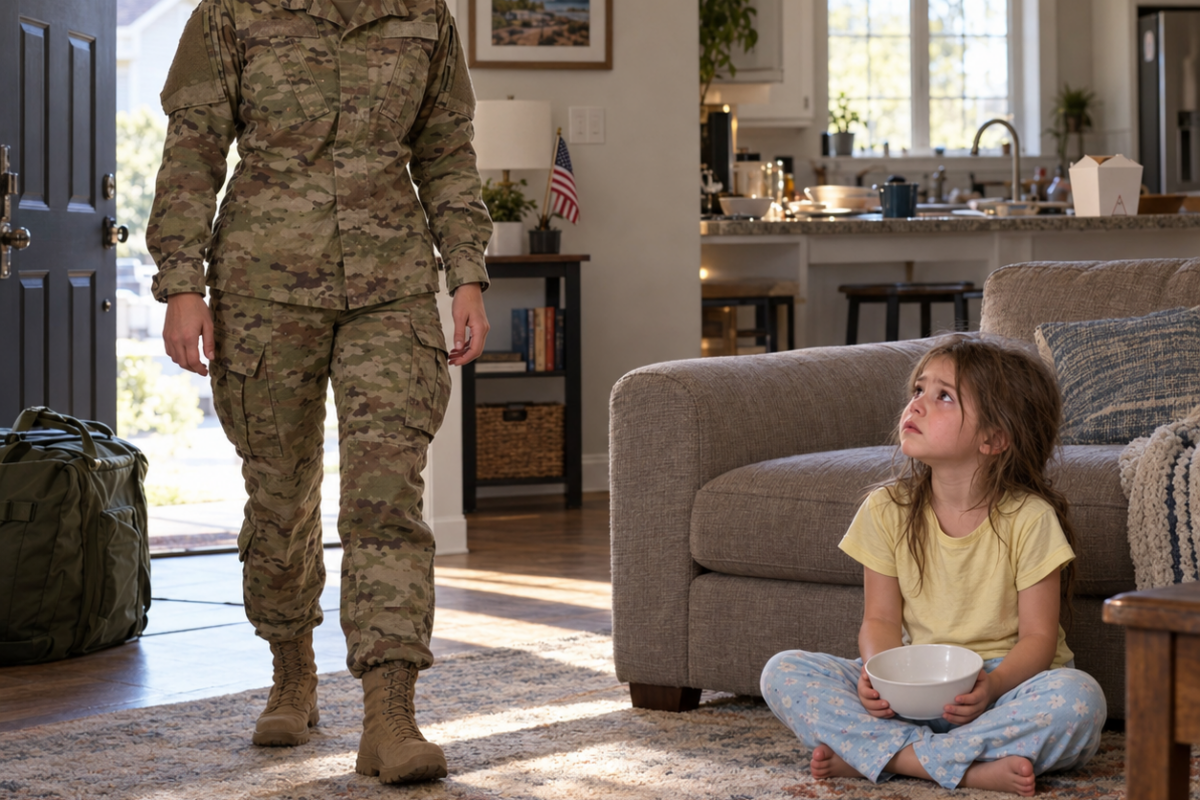
“Mommy, are you real?” my four-year-old daughter whispered when I came home from deployment three weeks early. She was sitting alone on our living room floor with an empty cereal bowl. My husband was on a Caribbean cruise with his mother and sister. Twenty-two minutes earlier, they had posted a photo captioned “Family time.” I was still in uniform when Sophie asked if she could have something to eat.
The first thing my daughter said when I found her was, “Mommy, are you real?” She was sitting cross-legged on our living room floor with…
End of content
No more pages to load