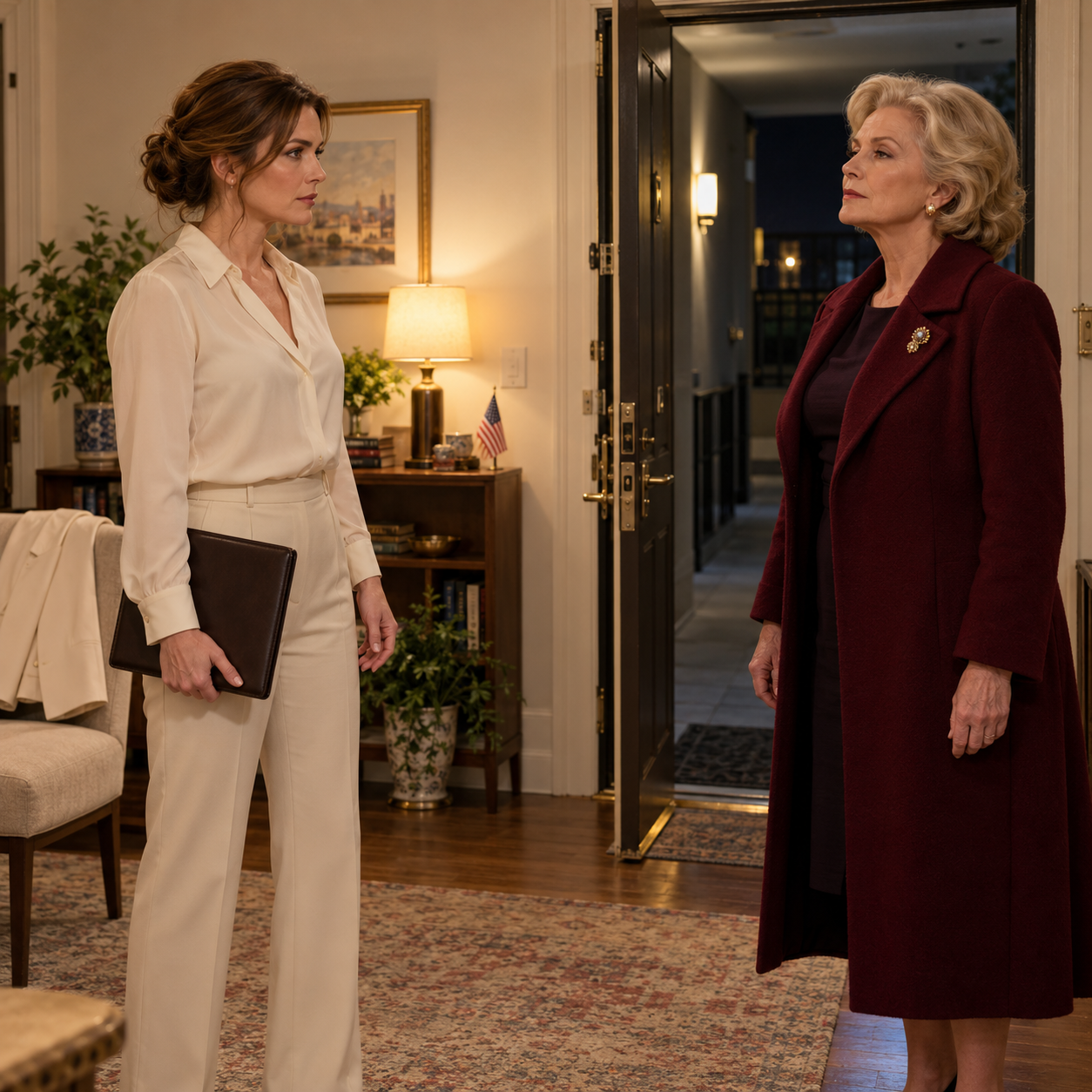
One month after my divorce became final, my former mother-in-law called at 5 a.m. “Be here by five-thirty. You’re cooking for Charles’s seventieth birthday.” She began listing dishes as though I were still the woman who spent every family celebration cooking and cleaning while everyone else ate. I let her finish, then asked, “Sorry… who is this?”
At five in the morning, exactly one month after my divorce became final, my phone began ringing on the nightstand.
For a few disorienting seconds, I was not in my apartment.
I was back at the Miller house, anticipating the shock of bare feet against the cold kitchen floor. I could almost hear Beatrice at the top of the stairs, holding her Earl Grey and listing everything that needed to be finished before the rest of the family woke.
Then I opened my eyes.
Beige curtains.
A small bedroom.
The low hum of traffic beyond the window.
No Brian beside me.
No clipboard waiting downstairs.
I was divorced.
I was home.
The screen showed Beatrice’s name.
I answered without speaking.
“Samantha, finally,” she snapped. “I need you at the house by five-thirty. We’re already behind.”
I stared at the ceiling.
For ten years, that voice had been enough to get me moving before I knew what I was agreeing to.
This morning, I pulled the blanket higher around my shoulders.
“Sorry,” I said. “Who is this?”
The silence that followed was almost beautiful.
“What do you mean, who is this? It’s Beatrice. Stop playing games.”
“I thought you had the wrong number. I’m not your daughter-in-law anymore.”
She gave a short laugh.
“Don’t be ridiculous. Almost thirty people are coming for Charles’s seventieth birthday tonight. You’re making the herb-crusted crown roast, the wild rice pilaf, the braised beef parcels, the garden salad, and that walnut cake he likes.”
I sat up.
“And I want the silver polished properly. Last Thanksgiving, it was dull.”
She continued as though the lawyers, signed papers, and my departure had been an interruption rather than an ending.
For ten years, this had been my role.
Thanksgiving.
Birthdays.
Anniversaries.
Corporate dinners.
Whenever the Millers wanted their friends to admire their hospitality, I was the person who made sure the admiration arrived warm, beautifully plated, and on time.
“No,” I said.
Her instructions stopped.
“What?”
“I’m not coming.”
“Samantha.”
“Not today. Not next week. Not ever again because you ordered me to.”
“You have nothing else to do.”
I looked toward the chair beside my dresser.
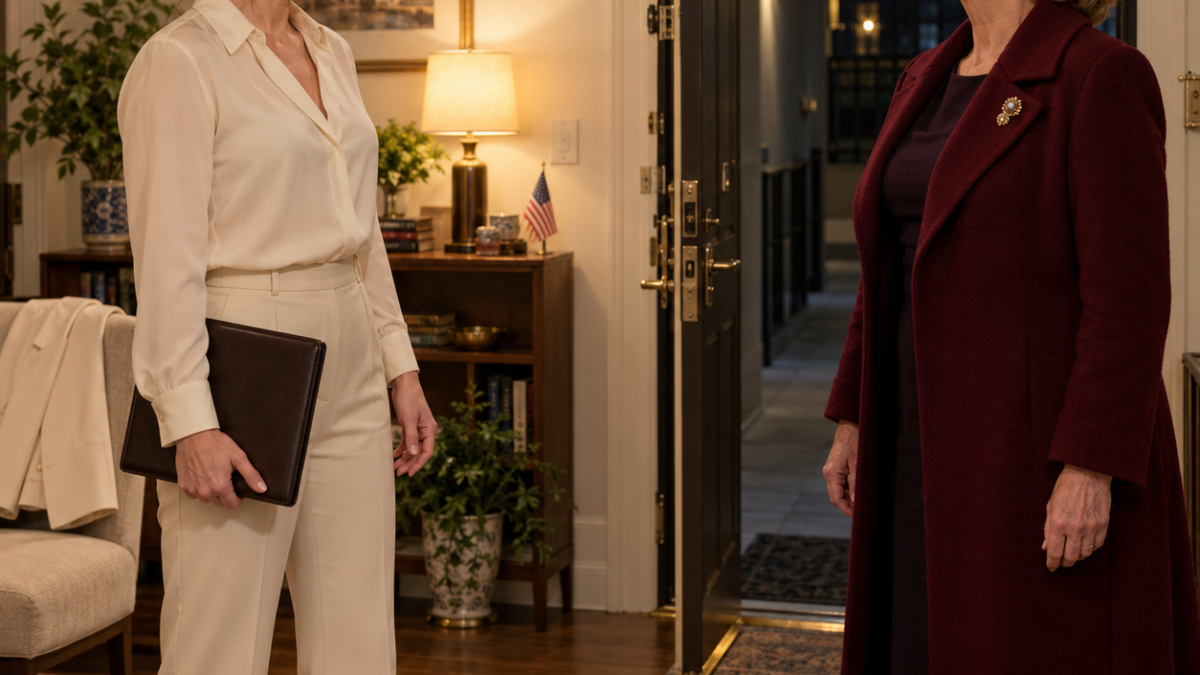
An ivory suit hung over its back. On the seat rested a leather presentation folder embossed with the crest of the Grand Plaza Hotel Group.
Beatrice kept talking.
“You’re living in that little apartment. If you behave sensibly today, perhaps I can convince Brian to reconsider.”
“Reconsider what?”
“Taking you back.”
I almost laughed.
Not because it was funny.
Because the offer was so far from anything I wanted that, for a moment, I did not know how to answer.
There was a rustle on the line.
Then Brian’s voice replaced hers.
“Sam, stop embarrassing yourself. Get over here.”
“I’m working today.”
He laughed.
“Working where? A diner?”
“There’s nothing wrong with working at a diner.”
“That isn’t the point.”
It never was when somebody else’s dignity inconvenienced him.
“I have a board meeting this morning,” I said.
“Sure you do. And I’m the King of England.”
I looked at the folder again.
“I need to go.”
“Mom is waiting.”
“She’ll have to make other arrangements.”
I ended the call.
My hand shook.
I did not mistake the shaking for uncertainty.
I had meant every word.
At 5:20, the car arranged by the hotel group arrived outside my building.
It was not taking me to the Miller house.
It was taking me to the Grand Plaza Hotel in downtown Baltimore, where I would attend a final board briefing and then be introduced as culinary director and an equity partner in a hospitality project valued at three hundred million dollars.
Not three hundred million dollars in my bank account.
Not a magical reward for surviving a bad marriage.
A large project, years in development, involving people who had spent months examining my work before deciding I was the person they wanted.
I had a job to do.
A real one.
As the car joined the highway, my phone buzzed on the seat beside me.
Beatrice had sent a message.
If you are not at this house in twenty minutes, Brian is going to your father’s workshop. We’ll see how your attitude holds up when he explains what your debts can cost him.
I read it twice.
My blood went cold.
There were people I could disappoint now.
People I could refuse.
My father was not one of them.
They knew that.
My father, Thomas Reyes, owned a custom knife forge in an industrial part of Annapolis.
Reyes Forge occupied an old brick building with a corrugated roof, a heavy wooden door, and a courtyard where weeds found their way through cracks no matter how often Dad pulled them.
Beatrice called it a blacksmith shop.
Brian called it that dusty little place.
Neither had ever bothered to understand the work.
Dad made culinary knives by hand.
He knew how steel moved under heat, how balance changed a cook’s wrist, how a handle could feel comfortable for five minutes and wrong after five hours.
He had spent decades becoming good enough that people who understood the craft waited years for his work.
Chefs called from other countries.
Collectors sent careful letters.
People arrived expecting something quaint and left speaking more quietly.
Dad had a five-year waiting list.
He also wore faded work shirts, packed his lunch in an old tin, and drove a truck with a cracked dashboard.
The Millers had mistaken his lack of interest in looking successful for failure.
I called his apprentice.
His name was Sam too, which had caused confusion from the day Dad hired him.
At the forge, I was Samantha.
He was Sammy, though he was twenty-three and had begun objecting to it.
He answered immediately.
“Samantha?”
“Is my dad there?”
“Yes.”
“Is Brian there?”
A pause.
“Not yet.”
“Beatrice threatened to send him. Please make sure Dad stays inside. If Brian shows up and causes trouble, call the police.”
Sam’s voice became serious.
“All right.”
I called Dad next.
He did not answer.
That frightened me more than it should have.
He often left his phone near the office when he worked. The forge was loud, and he disliked being interrupted while a piece was under heat.
I sent a message.
Brian may be coming to the workshop. Please don’t deal with him alone. I’m on my way to Baltimore. Call me.
His reply came a minute later.
Don’t worry about me, sweetheart. Sam is here. I’m expecting guests early anyway.
Guests.
I knew who they were.
Chef George Harrison was scheduled to collect a set of knives before attending the hotel event.
Arthur Pendelton, who knew him through the industry, was accompanying him.
They had arranged an early visit because the rest of their day was full.
I had almost forgotten.
My father had not.
That steadied me a little.
Then Sam called again.
This time, it was a video call.
I accepted.
The image showed the courtyard, tilted slightly, with the corner of a workbench in the foreground.
“Your ex-husband just pulled in,” Sam said.
“Don’t stand near him.”
“I’m by the side door.”
“Call the police if he won’t leave.”
“He brought someone.”
The camera moved.
Brian stepped out of his SUV.
Beside him stood Vance Sterling, a corporate lawyer he used when he wanted a vendor or former employee to believe an argument was too expensive to continue.
Vance carried a thick document folder.
Even from the little screen, I recognized his practiced expression.
Regretful.
Reasonable.
Prepared to explain why someone else had no choice.
My driver glanced in the mirror.
“Everything all right, Ms. Reyes?”
“No.”
“Would you like me to pull over?”
“Not yet.”
I pressed the phone closer.
Brian crossed the courtyard.
He struck the wooden door with the flat of his hand.
“Thomas!”
Then he kicked it.
“Open up. We have business.”
I heard Sam breathe sharply.
“Sam, stay back.”
The door opened.
Dad stepped outside, wiping his hands with a rag.
He looked tired, annoyed, and completely unimpressed.
“You need to leave.”
Brian spread his hands.
“Come on. We can talk.”
“You can talk from your car while you’re leaving.”
Vance stepped forward.
“Mr. Reyes, there are unresolved liabilities connected to your daughter’s work at The Hearth.”
Dad looked at the folder.
“Then speak to her attorney.”
“We’ve prepared preliminary documents concerning the property as potential security.”
“My property?”
“Yes.”
Dad folded the rag.
“No.”
Vance smiled as though Dad had failed to understand a courtesy.
“Cooperation would be the simplest option.”
“Not for me.”
Brian’s face reddened.
“Your daughter helped create this situation.”
“My daughter divorced you.”
“That doesn’t erase what she owes.”
I closed my eyes.
The divorce agreement addressed the restaurant.
Our attorneys had gone through the accounts, compensation claims, ownership interests, and debts.
There were procedures for anything genuinely unresolved.
A lawyer standing in a courtyard with a folder could not simply take my father’s building.
Vance knew that.
He also knew how frightening legal language could sound to someone who had never needed to distinguish a threat from an enforceable order.
Dad had made that distinction without help.
“I have not guaranteed anything,” he said. “There is no order allowing you to take this property. Leave.”
Brian stepped closer.
“Without my restaurant, no one would even know this place existed.”
Dad looked at him.
For a moment, I thought he would answer angrily.
Instead, he said, “That tells me how little you ever listened.”
Brian turned toward a covered worktable beside the doorway.
A wooden presentation box sat near the edge.
It had been placed there for the morning collection, closed and protected beneath a cloth.
Brian swept the cloth aside as he gestured.
“This is what you think makes you important?”
“Don’t touch that,” Dad said.
Brian caught the corner of the box with his arm.
It fell.
The lid opened when it struck the stone.
Three knives slid into the courtyard.
The sound was small.
Wood.
Metal.
Stone.
I heard my father inhale.
He did not shout.
That frightened me more.
Sam moved the phone.
I could see one knife lying near the bench leg.
Its handle caught the morning light.
Then a black Maybach entered the courtyard.
The driver stopped clear of the scattered knives.
Arthur Pendelton stepped out first.
George Harrison followed.
Both looked toward the door.
Neither needed an introduction to understand the scene.
George crossed the courtyard.
He crouched beside the knives.
His suit brushed the dust.
He picked up the first carefully by its handle, then the second.
There was a visible chip along the edge of one blade.
Dad moved beside him.
“I’m sorry, George.”
George looked up.
“You didn’t do this.”
Arthur stopped a few feet from Brian.
Brian straightened his jacket.
“Mr. Pendelton.”
Arthur looked from him to Vance.
Then to Dad.
“What happened?”
Brian answered too quickly.
“A misunderstanding. My former father-in-law is being difficult.”
George stood.
He held the damaged knife against the morning light.
“Do you know what this is?”
Brian gave a dismissive laugh.
“A kitchen knife. I’ll pay for it.”
“It is a knife,” George said. “And it is work you had no right to touch.”
“I said I’d write a check.”
Dad looked at him.
“That does not give you permission.”
Brian’s voice rose.
“I’m here to resolve liabilities. Samantha can’t just walk away from my business and leave me holding everything.”
Arthur’s expression hardened.
“Your disagreement with Samantha does not authorize this.”
Vance opened his folder.
“If we could simply discuss—”
“No,” Dad said. “You’ve been asked to leave.”
Sam had already called the police.
He told me that in a whisper.
I was grateful he had done it without waiting for another instruction.
Arthur took out his phone and called his office.
He did not announce that every contract in the world was canceled.
He asked that the upcoming renewal review for The Hearth be paused and that the existing performance concerns be sent to the appropriate team.
His company arranged corporate dining services.
The Hearth held valuable contracts through it.
Brian knew that.
The change in his face was immediate.
“Arthur, this has nothing to do with the restaurant.”
Arthur looked at the damaged box.
“It has to do with your conduct while representing yourself as its owner. That is enough for me to request a review.”
George handed the knives to Dad.
“We’ll discuss repair later.”
He looked at Brian.
“You should leave before this gets worse.”
For the first time since arriving, Brian seemed uncertain.
Not sorry.
Uncertain.
There was a difference.
The police arrived several minutes later.
By then, Dad had carried the knives inside.
Arthur and George remained in the courtyard.
Vance began explaining that they had intended a civil discussion.
The officer listened.
Then he asked whether they had been told to leave.
They had.
Whether anything had been damaged.
It had.
Whether there was a court order authorizing any action concerning the property.
There was not.
I watched only part of that exchange.
My driver had pulled into a safe place, and I was speaking with my attorney, Daniel Ruiz.
I forwarded Beatrice’s message.
I explained what I had seen.
Daniel’s voice remained level.
“Your father’s property is not available to satisfy debts he did not undertake. Nobody is locking that building because Brian brought papers.”
“I know.”
“You know it intellectually. I want you to hear it clearly.”
I exhaled.
He told me to preserve everything and let Dad provide his own statement.
Vance’s conduct would need to be addressed through the appropriate process.
The damage would be documented.
No one should sign anything.
“No one has,” I said.
“Good.”
He paused.
“How are you?”
I looked down at the ivory sleeve of my suit.
“I have a presentation today.”
“I know. Are you able to do it?”
That question brought me back to myself.
Not could I prove I was stronger than Brian.
Not could I perform courage for a room.
Could I do the work I had prepared?
“Yes,” I said.
“Then do that. Let us handle the parts that need handling.”
After we ended the call, Dad phoned.
His voice was calm.
“Everything is all right here.”
“The knives aren’t.”
“No.”
“I’m sorry.”
“Samantha.”
I closed my eyes.
“You did not knock the box down.”
“He came because of me.”
“He came because he chose to.”
I had spent so long explaining other people’s choices as the consequence of something I failed to prevent.
Dad was not going to let me do it again.
“George says one can be repaired,” he continued. “The others need careful inspection. We’ll work it out.”
“And Brian?”
“He’s leaving.”
“Are you sure?”
“Yes.”
I could hear someone talking in the background.
Then Dad said, “Arthur would like to speak to you.”
There was a rustle.
“Samantha?”
“Yes.”
“I’m sorry this happened.”
“Thank you.”
“We’re coming to the hotel as planned. Please don’t let this keep you from the morning.”
“I’ll try.”
His voice softened.
“You’ve prepared something worth hearing. We’re still expecting to hear it.”
I thanked him.
When Dad returned to the phone, he said, “You don’t need to be unafraid. Just don’t let him choose where you go.”
I looked through the car window.
The sky had begun to lighten.
“All right.”
The driver glanced back.
“Baltimore?”
I nodded.
“Baltimore.”
Before Brian, I had liked mornings.
Not every morning.
Restaurant mornings could be brutal.
But I liked the quiet before service, the smell of stock beginning to warm, the little decisions that made an evening run well.
I trained in kitchens where nobody cared whether I looked polished as long as I showed up, worked cleanly, and learned.
Later, I became a culinary consultant.
I helped small hospitality groups develop menus that fit the way their kitchens actually worked.
A beautiful menu meant little if the staff could not execute it without collapsing.
I studied delivery schedules.
Storage.
Waste.
Labor.
The difference between a dish that photographed well and one a guest would order again.
I loved that work.
Dad taught me to respect tools.
My first executive chef taught me to respect systems.
A pastry chef named Elena taught me that precision and generosity were not opposites.
By thirty, I had begun building a reputation.
Not a famous one.
A useful one.
People called when something needed fixing.
That was how I met Brian.
The Hearth was his family’s restaurant project.
He had money, a good location, an attractive dining room, and a menu that tried to be six restaurants at once.
A contact asked whether I would take a look.
Brian met me wearing an expensive watch and the expression of someone accustomed to being liked.
He listened closely at first.
He asked questions.
He praised my ideas.
When I suggested simplifying the menu and building a better supplier schedule, he said, “You see the whole picture.”
I believed he saw me seeing it.
There is a difference.
At the beginning, he made me feel clever, necessary, and wanted.
He took me to dinner in places where I usually studied the room instead of enjoying it.
He asked about Dad.
He said the forge was fascinating.
He spoke about building something together.
I did not fall in love with a man who told me I would spend ten years being dismissed.
I fell in love with a man who seemed delighted that I had a mind.
That matters.
People sometimes imagine an unhappy marriage begins with an obvious warning and a woman deciding to ignore it.
Mine began with attention.
The warnings arrived later, when the attention had already become love.
After we married, Brian said my outside consulting made our schedule difficult.
“You’re always fixing someone else’s business.”
“That’s my work.”
“The Hearth needs you.”
It did.
There were staffing gaps, ordering problems, and dishes that failed when the dining room filled.
He asked me to help temporarily.
I did.
Then temporarily became routinely.
Routinely became exclusively.
He told me a wife working for other people made the partnership look uncertain.
“Our restaurant should come first.”
I gave up clients.
At first, I kept records and expected my role to become formal.
Then there were reasons to wait.
The accountant needed another quarter.
A contract was being revised.
Ownership would be discussed after the expansion.
I had shares through the marriage and later documented interests, but the work itself remained blurred.
Brian stood in front of the dining room as the owner and creative force.
I stood behind the service line checking plates.
He called it teamwork when he needed me.
He called it helping when someone asked what I did.
The first time a critic praised a dish I developed and Brian accepted the credit, I told myself there was no point correcting him in public.
We would talk later.
Later, he said, “We’re married. Why are you keeping score?”
I stopped bringing it up.
That was one of the ways I disappeared.
Not all at once.
Through explanations that made wanting recognition sound ungenerous.
Beatrice understood the usefulness of that arrangement immediately.
She liked my food.
She liked my ability to plan.
She liked that I could make a dinner for thirty appear effortless to the people eating it.
She did not like being reminded that effortless hospitality generally meant someone else was working very hard.
At the first Christmas after our wedding, she asked whether I could help with lunch.
I arrived expecting to prepare one dish.
She handed me a list.
By noon, I had made four.
By three, I was clearing.
By five, Brian asked why I looked tired when everyone was having such a lovely day.
I remember standing beside the sink, holding a roasting pan.
I remember deciding not to answer.
That silence became another habit.
The Miller house had a main kitchen people saw and a lower preparation kitchen where most of the work happened during large events.
Beatrice called it convenient.
It was.
For the people upstairs.
I learned its shelves, its ovens, and the cabinet with the door that pinched your finger if you forgot to close it slowly.
I could plan a holiday meal in my head while folding laundry.
I could estimate portions while sitting at church.
I carried a running inventory of other people’s needs until I had trouble remembering what I liked to eat.
Charles, my former father-in-law, thanked me sometimes.
Quietly.
Usually after the room emptied.
“The cake was excellent, Samantha.”
“Thank you.”
“Beatrice worries about these things.”
“I know.”
He would smile, as though that settled it.
It did not.
But I accepted those small acknowledgments because I was hungry for them.
I had mistaken gratitude offered privately for respect offered fully.
They were not the same.
The restaurant became more dependent on me as Brian became less present.
He liked openings, interviews, photographs, and private dining events where somebody else had already checked the details.
I handled a supplier who needed payment.
A cook who wanted a schedule that allowed her to see her son.
A refrigeration problem.
A menu change that looked simple until the kitchen tried to execute it.
When the accounts became strained, I worked with the bookkeeper to identify what could be reduced without making the staff absorb every mistake.
Brian described it as his turnaround strategy.
I watched him say that in an interview.
Then I went into the kitchen and corrected a delivery order.
My father noticed before I admitted it.
He asked whether I was still consulting.
“Not right now.”
“For how long?”
“We’re busy.”
“That wasn’t the question.”
I looked away.
He did not lecture.
He knew I would defend Brian if pushed.
Instead, he kept asking about my work as though it remained mine.
“What are you developing?”
“What have you learned?”
“What would you do differently?”
Those questions preserved a part of me I had nearly stopped addressing.
The marriage ended slowly, then abruptly.
I knew Brian had begun spending time with another woman.
There were excuses.
Late meetings.
A smell of perfume on a jacket.
Messages he turned the screen away to answer.
I did not leave the first time I suspected.
I wanted an honest conversation.
I wanted him to be the man who had once listened.
He denied, then minimized, then blamed the distance between us.
“You’re always tired.”
I was.
“You don’t make an effort anymore.”
I made efforts before dawn.
They simply did not count because they kept his world comfortable rather than his attention entertained.
The final argument happened after a corporate dinner at the Miller house.
I had cooked for twenty-two people.
Brian spent most of the evening sitting beside the woman he called a marketing associate.
Afterward, Beatrice told me the sauce had been a little heavy.
I looked at the empty serving dishes.
At my swollen feet.
At Brian laughing in the doorway.
And something in me became quiet.
Not resigned.
Clear.
I went home.
The next morning, I called a woman I had known through consulting.
Her name was Renee Walsh.
She worked with the Grand Plaza Hotel Group.
I had not spoken to her properly in years.
When she answered, I said, “Do you still need people who can build a menu and an operation around it?”
She paused.
“Samantha Reyes?”
“Yes.”
“I wondered when you’d call.”
I cried after that conversation.
Not because she offered me a job immediately.
She did not.
Because she remembered the person I had been before my name became Mrs. Miller.
Renee asked for current work samples, a résumé, and references.
I had less material than I expected.
Ten years of solving problems had left remarkably little with my name on it.
I had emails.
Drafts.
Old contracts.
Training documents.
Personal notes.
Records of decisions.
Some belonged to The Hearth and could not simply be taken into a new project.
Daniel helped me understand those distinctions once I retained him.
I did not want freedom built on the same disregard for ownership Brian showed everyone else.
I assembled what was mine.
I described what I had done without claiming documents I did not have the right to use.
I contacted former clients.
A few had retired.
A few remembered me immediately.
One said, “We kept wondering where you went.”
I answered, “I got busy.”
It was true.
It was not enough.
The Grand Plaza project needed more than a chef with recipes.
It needed someone who could design culinary operations across several properties while preserving local identity, controlling waste, and training teams well enough that standards did not depend on one exhausted person.
I understood that problem intimately.
At The Hearth, I had become the exhausted person.
I knew what a system looked like when it was built to consume the woman keeping it alive.
The hotel group asked me to propose a different one.
I spent nights at Dad’s house working on it.
I studied budgets.
Equipment.
Staffing.
Menus that shared components without tasting interchangeable.
Supplier relationships.
Training that could survive turnover.
I developed new dishes, tested them in rented kitchen space, and documented every version.
There were interviews.
A tasting.
A presentation that lasted two hours because the operations team kept asking good questions.
I liked the questions.
No one asked whether I had finished polishing silver.
They asked how many people a station needed, what a change would cost, and what happened when a shipment failed.
For the first time in years, my fatigue came from work I chose.
Meanwhile, the divorce proceeded.
It was not effortless.
Brian resisted the value assigned to my contributions.
He said I had helped because I was his wife.
Daniel answered with records.
He disputed certain claims.
We supplied documentation.
He threatened to make the process expensive.
It already was.
I had to decide how much of my future I wanted to spend arguing over the past.
That did not mean accepting whatever he offered.
It meant letting someone qualified represent me while I began building a life beyond the dispute.
The settlement provided for my interests, addressed the restaurant obligations, and left The Hearth with Brian.
I did not take the restaurant.
I did not want another decade inside it.
The agreement also made clear which materials and future work belonged to whom.
There were no children.
That simplified practical arrangements and made some parts of the ending lonelier.
I had imagined a family once.
Then I spent years caring for people who called themselves mine while treating my time as a household asset.
When the papers were signed, I moved into a small apartment.
Two rooms and a kitchen.
I bought a decent mattress, an inexpensive table, and one knife from Dad’s workbench that he insisted I take.
For several weeks, I kept waking before dawn.
Not because anyone called.
Because my body expected instructions.
At five, I would listen.
No footsteps.
No voice.
No list.
The quiet felt unfamiliar before it felt safe.
The hotel group’s offer came while the divorce was still being completed.
I would be culinary director for the project.
My compensation included a salary and a defined equity interest in the venture, subject to the terms we negotiated.
I read those terms carefully.
Daniel reviewed them.
An independent financial adviser explained what the equity meant and what it did not.
I was not suddenly immune to risk.
I had responsibility.
Targets.
A team.
A future that required work.
I wanted all of it.
The ivory suit was the first expensive thing I bought for myself in years.
Not because I needed a label to prove I belonged.
Because I liked it.
I liked the cut.
I liked the way I stood in it.
When Dad saw it, he said, “You look like you’re going somewhere.”
“I am.”
He smiled.
“That’s all I wanted.”
The morning of the launch, I arrived at the Grand Plaza later than planned.
Not late enough to disrupt the schedule.
Late enough that Renee was waiting near the entrance.
She took one look at my face.
“What happened?”
I told her briefly.
She led me into a quiet office.
There was water.
A chair.
A door that closed.
She did not tell me to be strong.
She asked what needed to happen before I could focus.
“I need to know Dad is all right.”
“Call him.”
I did.
He answered cheerfully enough to annoy me.
“I’m still here, Samantha.”
“I know.”
“George is insisting on paying for the repairs.”
“He shouldn’t.”
“I told him.”
“What did he say?”
“That he would discuss it with me after the event and I should stop arguing before breakfast.”
I smiled despite myself.
Dad continued.
“Sam’s making coffee. The officer has taken the information. The courtyard camera caught what happened.”
I exhaled.
“Good.”
“We’ll come up later. I’m not letting Brian decide whether I attend.”
That sounded so much like my father that the fear finally loosened.
After we ended the call, Renee handed me a folder.
“The board briefing starts in thirty minutes.”
“I’m ready.”
She studied me.
“Ready enough?”
“Yes.”
“Good. You can be angry afterward.”
I laughed.
She smiled.
“And during, if it helps the budget discussion.”
The board meeting took place in a room with no chandeliers.
Just a long table, a screen, coffee, and people who had read the materials.
Franklin Cooper sat near the head.
He was the chief executive behind the larger hotel group and one of the principal sponsors of the project.
People liked describing him as a billionaire because numbers made stories simpler.
In the room, he was a man asking whether our staffing assumptions would survive the first year.
I appreciated that.
We reviewed the operating model.
The phased openings.
The risks.
The training plan.
I answered questions.
One director asked what would happen if food costs rose sharply.
I explained which parts of the menu could flex without disappointing guests or overburdening staff.
Another asked whether local sourcing made procurement too complicated.
“It can,” I said. “That’s why it needs contracts and backup plans rather than slogans.”
Franklin smiled.
By the end, I had forgotten to be afraid for twelve uninterrupted minutes.
That felt like progress.
Afterward, he asked whether I wanted to proceed with the public presentation.
Renee had told him enough to explain the morning.
“I do.”
“All right.”
He did not offer his arm as though escorting me into a new life.
He handed me the final schedule.
“We’ve given you thirty minutes, then questions.”
“That should be enough.”
“Take the full thirty.”
I nodded.
He added, “Your father has arrived.”
My eyes filled.
I looked away quickly.
Franklin pretended not to notice.
Good leaders sometimes know when an ordinary kindness should remain ordinary.
The ballroom held more than two hundred people.
Investors.
Hotel operators.
Hospitality executives.
Food writers.
Suppliers.
People who had come to hear about a project, not to rescue a woman from her marriage.
That mattered to me.
I wanted my work to be the reason I stood there.
The screen displayed my name.
Samantha Reyes.
Culinary Director and Equity Partner.
For ten years, I had watched my work appear beneath someone else’s name.
Now my own was large enough to see from the back of the room.
I stood beside the stage for a moment.
Renee touched my shoulder.
“You know this material.”
“Yes.”
“Then tell them.”
I walked to the lectern.
The applause rose, then settled.
I looked out.
Dad sat near the front.
George Harrison sat beside him.
Arthur Pendelton was a few seats away.
I recognized former clients, suppliers, and two writers who had praised food at The Hearth without knowing whose notebook it began in.
I did not resent them.
They had reported what the restaurant told them.
Now I could tell a different story through the work.
“Good morning,” I said.
My voice sounded clear.
“For years, we’ve talked about hospitality as though it were mainly a guest experience. It is. But that experience is built by people whose day has to function long before the guest arrives.”
A few heads nodded.
I continued.
“A beautiful plate cannot compensate for a kitchen that burns through its staff. A local ingredient means very little if the supplier is paid late. A promise of consistency cannot depend on one person remembering every detail.”
I paused.
“Our job is to build something people can sustain.”
I talked about the kitchens.
Storage planned around the menus rather than added after the design.
Shared purchasing where it made sense.
Local variation where it mattered.
Training that taught judgment, not just repetition.
Staff meals.
Scheduling.
Waste measured honestly.
The room listened.
I could feel it.
Not the polite attention people gave a spouse saying a few words at dinner.
The attention of people deciding whether an idea would work.
I showed them numbers.
Then food.
Then the relationship between the two.
I spoke about the difference between reducing costs and pushing costs onto someone who lacked the power to refuse.
That sentence meant more to me than the audience knew.
But the model supported it.
It was not a personal grievance wearing a business suit.
It was a practical plan.
Near the end, I saw movement at the back of the room.
At first, I assumed someone had arrived late.
Then I recognized Brian.
He had a conference badge.
The industry preview included people from regional restaurants, and he had been on a general registration list before anyone knew there would be a problem.
Beatrice was beside him.
They had entered through the foyer during a transition while staff were helping other attendees.
It was not a secret passage or a bribed guard.
It was an ordinary gap made dangerous by two people who assumed access meant permission.
Brian saw me onstage.
His face changed.
Then he began walking down the aisle.
“Stop this.”
The room turned.
Renee moved immediately.
Two hotel security staff followed her.
Brian raised his voice.
“Stop this right now.”
I stood still.
For a moment, the old instinct returned.
Get him quiet.
Get him outside.
Keep the room comfortable.
Explain later.
Then I looked at Dad.
He did not move toward Brian.
He looked at me.
Waiting.
Not to see whether I would be brave.
To see what I chose.
“Brian,” I said into the microphone. “You need to leave.”
He kept walking.
“You think you can do this to me?”
Security intercepted him several yards from the stage.
He tried to speak past them.
“This woman is a fraud. She was my wife. She worked in my restaurant. She washed my dishes. Now she’s taking my recipes and pretending they’re hers.”
Beatrice stood behind him.
“She belongs in a kitchen, not a boardroom.”
The room went quiet.
Every eye turned toward me.
I looked at the presentation remote.
Then at Franklin.
“Could we bring up the project development slide?”
He signaled to the technician.
The screen changed.
It showed the working team.
The testing schedule.
The consulting contracts.
The timeline beginning months before that morning.
My name appeared where it belonged.
So did everyone else’s.
I did not need a slide calling Brian a liar.
I needed the room to remain anchored in the work.
“This project was developed under contracts reviewed by counsel,” I said. “The menus were created and tested for these properties. The records identify the authors, dates, and responsibilities.”
Brian tried to interrupt.
I continued.
“My divorce agreement addressed my former involvement with The Hearth. Any genuine legal question can be directed to the attorneys. It will not be resolved by shouting during this meeting.”
One security officer asked him to leave.
He refused.
Franklin stood.
“Mr. Miller, this is a business presentation. You are disrupting it.”
Brian looked at him.
For the first time, he seemed to realize whose room he was in.
“I’m trying to protect my business.”
“Then use the proper channels.”
Beatrice stepped forward.
“Surely we can discuss this privately.”
Renee looked at her.
“You were asked to leave before you began speaking.”
“I’m her family.”
I felt the words reach across the room.
For ten years, that claim had required me to explain why I was tired, hurt, busy, or unwilling.
This time, I answered simply.
“No,” I said. “You were my mother-in-law. Our relationship does not give you control over my work.”
Her mouth opened.
I kept my voice calm.
“I declined your request to cook a birthday dinner this morning. That was not permission to threaten my father.”
A murmur moved through the room.
I did not display the text.
I did not turn the screen into evidence from my private life.
The records had already gone where they belonged.
“I have work to finish,” I said. “Please leave.”
Security guided Brian toward the doors.
He pulled his arm away, then seemed to think better of making the resistance physical.
Beatrice followed, still speaking.
The doors closed.
The whole interruption had lasted only a few minutes.
Inside my body, it felt like ten years.
I set the remote down.
My hands were shaking.
I took a sip of water.
No one applauded immediately.
I was grateful.
I did not want the room to reward my pain.
Franklin remained standing.
“Would you like a short break?”
I considered it.
Then I looked at the slide.
“No. I’d like to finish.”
He nodded and sat.
I took a breath.
“Where we were,” I said, “was accountability.”
A little laughter moved through the room.
Gentle.
Relieved.
I smiled.
“Not usually demonstrated quite so directly.”
Then I continued.
The questions afterward were good.
A hotel operator asked about training timelines.
A supplier asked whether smaller producers could participate without committing volumes they could not sustain.
A finance director asked how we would measure the relationship between waste reduction and labor.
I answered.
I did not become suddenly brilliant because Brian interrupted.
I had prepared.
That was why I could return to the material.
When the session ended, people applauded the work.
I knew the difference.
I could feel it.
Dad met me near the side of the stage.
For a moment, neither of us spoke.
Then he opened his arms.
I stepped into them.
He smelled faintly of smoke, soap, and coffee.
The familiar smell nearly undid me.
“You did well,” he said.
“Thank you.”
“You always did.”
I closed my eyes.
After a while, I stepped back.
“Are you really all right?”
“Yes.”
“The knives?”
He smiled sadly.
“We’ll repair what can be repaired.”
I knew he meant the knives.
I also knew the sentence would remain with me.
George joined us.
He shook my hand.
“Excellent presentation.”
“Thank you.”
“I especially liked the training model.”
I smiled.
Not the confrontation.
Not the speech about Brian.
The training model.
It was such a normal compliment.
I could have cried.
Instead, I asked him what he would change.
He laughed.
“Now that is a dangerous question.”
We talked for fifteen minutes.
About work.
Real work.
The best part of the day happened in that ordinary conversation.
The consequences for Brian did not unfold like a row of doors slamming at once.
They unfolded through reviews, calls, and people deciding what they were willing to continue.
Arthur’s company paused renewal discussions for The Hearth.
It examined existing performance issues.
Late responses.
Inconsistent service.
Staff turnover.
Billing questions.
The incident at the forge gave those concerns urgency.
It did not invent them.
Some current obligations remained because contracts mattered even when the person managing them behaved badly.
Other future work was redirected.
George made a brief statement about respecting craftspeople and confirming that damage had occurred during a visit.
He did not ask strangers to harass Brian.
He did not turn my father into a symbol without permission.
The people who needed the facts received them.
That was enough.
Dad documented the knives, the box, and the damage.
The workshop camera recorded the visit.
The police report reflected the threat, refusal to leave, and property damage.
Vance’s statements were reviewed separately after Daniel helped Dad submit the relevant materials.
A legal folder did not become authority because the man carrying it wore a suit.
That distinction mattered.
Brian paid for the damage through the arrangements that followed.
The value was established by the work, condition, and necessary repair.
Not by his suggestion that he could write a small check and end the conversation.
The chipped blade could be reworked.
It would not be precisely the knife Dad originally made.
George chose to keep it.
He said the repair was part of its history.
Dad did not romanticize the damage.
He simply did the work well.
The Hearth struggled over the following months.
Not because I held a grudge.
Because the systems I maintained had depended too heavily on me, and Brian had not understood what needed replacing.
A restaurant cannot run on the owner’s belief that he is exceptional.
Someone has to place the orders.
Train the staff.
Respond when the refrigerator fails.
Pay people.
Check the food.
Decide what happens when a beautiful idea cannot survive a busy Saturday.
Brian hired replacements.
Some were capable.
They wanted authority, compensation, and respect.
He was less comfortable providing those than accepting help from a wife.
The restaurant reduced hours.
Then it brought in an outside operator.
Eventually, Brian sold part of his interest.
The name remained for a while.
The menu changed.
I did not visit.
I had no need to stand in the dining room and measure what my absence had cost.
I already knew what my presence had cost me.
Charles’s seventieth birthday dinner went ahead.
Not the way Beatrice planned.
They hired a caterer late.
The menu was simpler.
The walnut cake came from a bakery.
No one died because the silver was not polished by a woman they no longer had any claim on.
I heard that from Charles himself several weeks later.
He called in the afternoon.
I almost did not answer.
Then I did.
“Samantha.”
“Hello, Charles.”
There was a pause.
“I owe you an apology.”
I sat down.
“For the morning?”
“For much more than the morning.”
I waited.
“I knew you worked very hard at our gatherings.”
“Yes.”
“I let Beatrice treat that as something you enjoyed doing.”
“I did enjoy parts of it.”
“I know. That made it easier to pretend the rest was all right.”
The honesty surprised me.
He continued.
“I thanked you privately because it was comfortable. I didn’t object publicly because it wasn’t.”
I looked toward my little kitchen.
“That is true.”
“I’m sorry.”
I did not rush to make him feel better.
He let the silence remain.
After a while, he said the dinner had been fine.
People ate.
Someone complained about the beef.
Beatrice was upset.
But the world continued.
“I think,” he said, “we had become used to a level of care we didn’t understand.”
“Yes.”
“I won’t ask you to come back.”
“Thank you.”
“I would like to wish you well.”
“You may.”
He laughed softly.
Then his voice became serious again.
“I do, Samantha.”
When we ended the call, I cried.
Not because I wanted the family back.
Because sometimes the acknowledgment arrives after it can no longer repair the relationship.
It still matters.
It simply matters differently.
Beatrice sent messages for a while.
First angry ones.
Then wounded ones.
Then messages suggesting that the family had been misunderstood.
She said I had humiliated Brian.
She said the birthday was not the place to make a point.
I had not attended the birthday.
Facts became flexible whenever they threatened her preferred story.
Daniel sent clear notice concerning contact and the threats against Dad.
I stopped answering.
Eventually, I blocked her.
Not so she could witness my silence.
So I could have silence without being watched.
That was another distinction I learned.
Freedom did not need an audience.
My new job was difficult.
I want that understood.
The hotel stage was not the end of the story.
It was the first visible day of work that became complicated almost immediately.
A construction delay affected one kitchen.
A supplier could not meet the promised volume.
An early menu cost more than expected.
A chef I admired resisted the training plan because he thought standardization would flatten his creativity.
He had a point in places.
I listened.
We changed what needed changing.
I did not treat disagreement as disrespect.
I had lived too long with someone who did.
There were days when I missed the certainty of knowing every corner of The Hearth.
Not Brian.
Not Beatrice.
The work.
A person can leave an unhealthy place and still mourn familiar tasks.
I allowed myself that.
I also learned to delegate.
Badly, at first.
I checked too much.
Stayed too late.
Answered messages that could have waited.
Renee called me into her office one evening.
“You’re building the same problem in a larger building.”
I stared at her.
“What?”
“You keep making yourself the answer to everything.”
I began to explain.
She waited.
Then she said, “If the system only works because you never stop, it isn’t the system you presented.”
I sat back.
She was right.
That was uncomfortable.
It was also a kind of respect.
She believed I could hear a correction without needing to be protected from it.
I began assigning responsibilities clearly.
I let capable people finish tasks without rewriting them.
I asked for reports rather than constant reassurance.
I went home.
Sometimes I sat in my apartment unsure what to do with an evening.
For years, free time had felt like something I was stealing from somebody else.
I learned to read again.
Not menus.
Novels.
I bought a plant.
I killed it.
I bought another.
That one survived because I finally read the little card.
I cooked for myself.
At first, only simple things.
Eggs.
Soup.
A piece of fish.
Then I began making dishes I had loved before every meal became a performance.
I ate at my table.
No one commented that the sauce was too heavy.
No one handed me another list.
One evening, I made walnut cake.
For a long time, I avoided it because Charles liked it and Beatrice had used it as shorthand for my obligation.
But the recipe had come from my mother’s old notebook.
My mother died before I met Brian.
It belonged to a part of my life they had never known.
I made a small cake.
I took half to Dad.
He cut two pieces.
We ate standing in the forge office because he had papers spread across the chairs.
“This is good,” he said.
“I know.”
He laughed.
I laughed too.
The cake became mine again.
Six months after the launch, Brian asked to meet.
His message was short.
No insults.
No orders.
He said he wanted to discuss unresolved professional matters.
I sent it to Daniel.
There were no issues requiring a private meeting.
I replied that any genuine matter could go through counsel.
Brian answered that he was trying to be civil.
I did not respond.
For years, civility had meant I should enter a room where he could redefine what I knew.
I had no reason to provide him another one.
Later, through a mutual contact, I heard he said I had changed.
He was right.
He said I thought I was better than everyone now.
That part was familiar.
When a person is accustomed to your compliance, your equality can look like arrogance.
I did not need to argue.
At the forge, Sam grew more confident.
Dad gave him greater responsibility.
The damaged order had become a difficult lesson in handling clients, documentation, and the difference between a mistake and entitlement.
Sam asked me once whether he should have stopped Brian sooner.
“You called the police. You stayed safe. You recorded what happened.”
“I let the box fall.”
“No. Brian knocked it down.”
He looked at the floor.
I recognized the instinct.
The urge to assume enough responsibility that maybe the world would become controllable.
Dad recognized it too.
He said, “Your job is to learn the craft. Not to predict every foolish man who comes through the gate.”
Sam smiled.
For a while, none of us spoke.
Then Dad handed him a blade to inspect.
Ordinary work resumed.
That was healing too.
The first hotel property opened later than scheduled.
We had expected that possibility.
We had not enjoyed it.
The kitchen was beautiful but had a drain placed badly enough to create trouble during testing.
We fixed it before opening.
A cook told me the prep list was unrealistic for the staffing level.
I checked.
She was right.
We adjusted it.
The opening night was busy.
There were errors.
A table waited too long.
A sauce broke.
A server entered an allergy note incorrectly, and the team caught it before the food left the kitchen.
I watched the process work.
Not perfectly.
Responsibly.
At the end of service, nobody applauded me.
The team was too tired.
We ate staff meal.
Someone made a joke.
The chef asked whether we could review two items in the morning.
I said yes.
Then I looked around.
People were doing work.
People were being credited.
Nobody had to become invisible so one person could appear brilliant.
I knew we still had plenty to improve.
But the room felt like the beginning of the project I wanted.
Dad visited the next week.
He arrived in a clean work shirt.
Not a suit.
I introduced him properly.
Thomas Reyes.
Knifemaker.
The person who taught me that skill was something you practiced, not something you claimed.
He shook hands with the cooks.
They asked questions.
Real ones.
About sharpening.
Balance.
Handles.
He answered with the pleasure of someone speaking to people who cared.
I stood nearby and listened.
For years, I had watched Brian tolerate my father as though affection required overlooking an embarrassment.
Now a kitchen full of professionals gathered around him.
Not because I announced he was important.
Because they understood the work.
That was better.
A year after the five-a.m. call, I woke early on Charles’s next birthday.
My body still remembered dates.
I lay quietly for a while.
The apartment was dark.
The plant stood near the window.
A book rested facedown on the nightstand.
My phone did not ring.
I got up.
I made coffee.
I opened the curtains.
There was no list waiting.
I did have work that day.
A supplier meeting.
A menu review.
A conversation with the team about the next property.
I also had dinner plans with Renee and Elena, the pastry chef who taught me years earlier.
Three women at a restaurant where someone else would cook.
I smiled at that.
Then I sat at my table and ate breakfast.
It was such a small thing.
An egg.
Toast.
Coffee.
Time enough to finish them.
For ten years, mornings belonged to whoever needed me first.
Now I could decide what the day required.
Not every day.
Work still had demands.
Life still had problems.
But obligation no longer came dressed as ownership.
I went to the forge that weekend.
Dad was outside repairing a hinge on the gate.
He looked up.
“You’re early.”
“I brought lunch.”
“What kind?”
“The kind you eat sitting down.”
He laughed.
Inside, Sam had cleared the office table.
Three chairs.
Paper plates.
A pitcher of water.
We ate sandwiches and talked about an order going to a chef overseas.
Dad showed me a knife he had nearly finished.
The steel caught the light.
He placed it in my hand.
I tested the balance.
He watched.
“What do you think?”
I turned it slightly.
“The handle might need another pass near the end.”
He nodded.
“I thought so too.”
A question.
An answer.
Respect moving in both directions.
Nothing about the moment was grand.
No stage.
No screen.
No room full of people proving that I had value.
Just my father trusting my judgment about something he understood deeply.
I thought of the morning Beatrice called.
The threat.
The car.
The box striking stone.
The ballroom.
For a long time, I had treated that day as the moment I became free.
But freedom had begun earlier.
When I called Renee.
When I gathered my records.
When I let Daniel ask questions I had avoided.
When I signed the papers.
When I bought a table for one and sat at it without apologizing.
The five-a.m. call was not the door out.
It was the first time the people inside realized I had already left.
Dad took the knife back.
He marked the place I had mentioned.
Then he looked at me.
“You seem rested.”
“More than before.”
“Good.”
He did not ask whether I was happy every minute.
He knew better.
A person does not recover ten years by having one impressive day.
She recovers through ordinary decisions made repeatedly.
What to answer.
What to decline.
Who to trust.
When to stop working.
How to accept praise without handing it to someone else.
How to cook a meal because she wants to feed people, not because refusing would make her less worthy.
I was still learning.
That afternoon, I helped Dad wash the lunch dishes.
He dried.
Sam went back to the workbench.
The forge hummed beyond the office door.
Dad handed me a clean plate.
For a moment, I remembered Beatrice’s voice telling me to polish silver.
Then I looked at my father.
There was no rank hidden in the work.
No expectation that my usefulness required my disappearance.
We were simply cleaning up after a meal we had enjoyed.
I put the plate away.
Outside, the gate closed smoothly.
The damaged knives had long since been repaired as far as they could be.
The old restaurant belonged to a chapter I no longer had to inhabit.
And my phone, resting quietly beside my bag, did not contain a single instruction I was obliged to obey.
When I left, Dad walked me to the car.
“Busy week?”
“Probably.”
“Come for lunch if you have time.”
I smiled.
“If I have time.”
He nodded.
He understood the answer.
I got into the car.
I drove toward home.
Not the Miller house.
Not a room where someone waited with a list.
Home.
A small place with beige curtains, a plant that had finally learned to survive my schedule, and a kitchen where my name belonged to me before anyone asked what I could make.
News
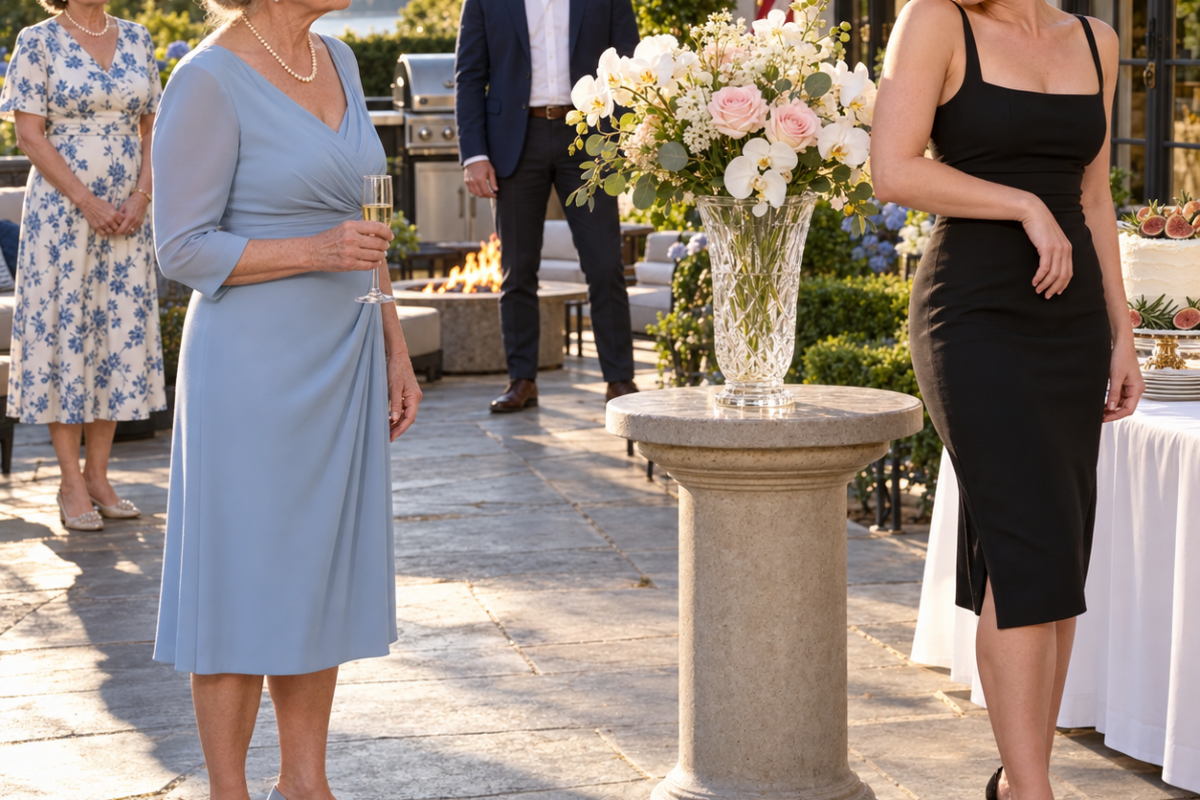
At my seventy-second birthday party, my daughter-in-law knocked a crystal vase off its pedestal with her elbow, watched it shatter, and smiled. “Oops.” Her own parents had given it to her and my son on their wedding day six years earlier. I looked at Frank, waiting for him to say something. All he managed was, “Mom…”
I watched my daughter-in-law break her own parents’ wedding gift with one elbow and a smile. For months afterward, people asked me whether I was…
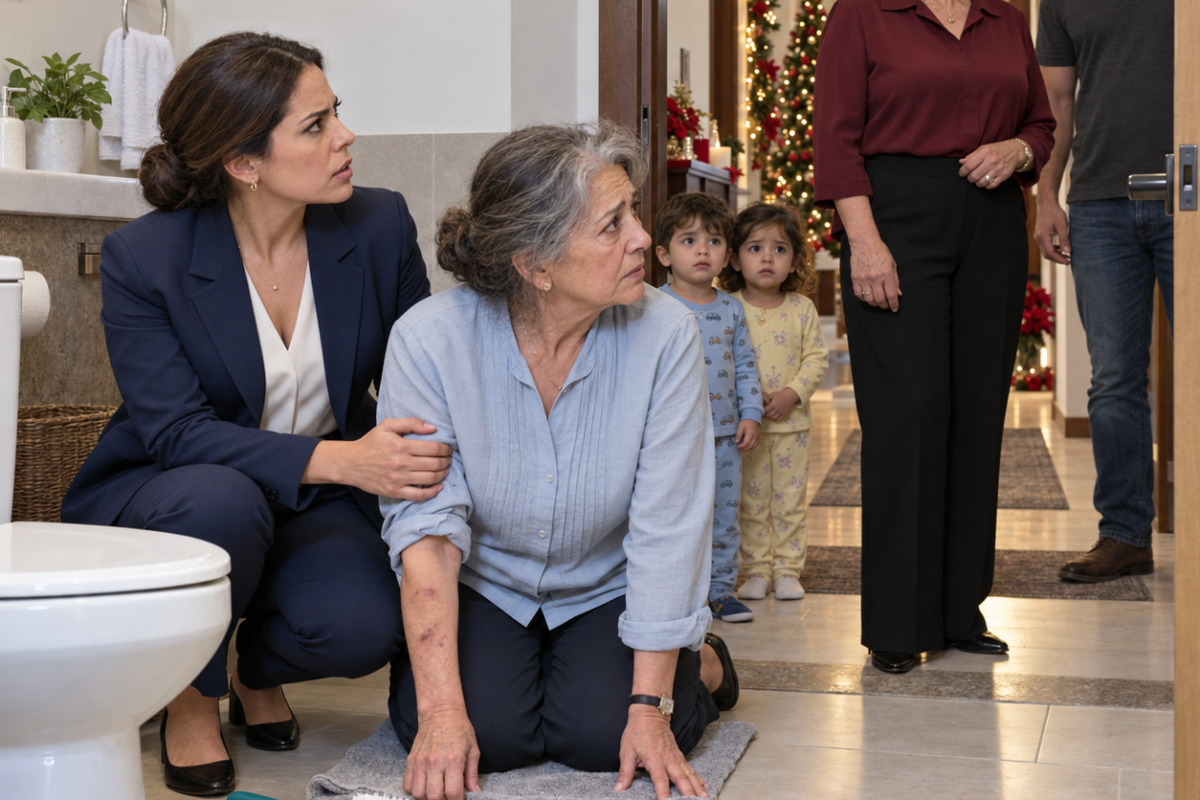
I came home three hours early and found my sixty-eight-year-old mother on her knees scrubbing my mother-in-law’s bathroom. When I helped her stand, her sleeve slipped back, revealing dark marks around her wrist. My husband stepped into the doorway. “Daniela, don’t make a scene.” That was when I remembered my father’s last warning: “If you ever see your mother hurt, don’t argue with anyone. Open the hidden compartment in her sewing machine.”
I came home three hours early and found my sixty-eight-year-old mother on her knees beside a toilet. Her hands were stiff with arthritis. One gripped…
“I already promised your house to your sister,” my father told me four days after I bought it. “They’re moving in Monday. Rent-free for three years.” I was thirty-one, had saved for nine years, and had bought the five-bedroom home entirely in my own name. When I said no, he threatened to tell the family I had abandoned my sister’s children. Days later, he took the microphone at my grandmother’s seventy-fifth birthday dinner and did exactly that.
My father called twelve times in forty minutes after discovering I had bought a house without consulting him. When I answered, he didn’t ask whether…
My mother leaned across the restaurant table, looked at my thirteen-year-old adopted daughter, and whispered, “We don’t sit with mistakes.” I took Sole’s hand and walked her out. That night, my father texted, “You’re still making the car payment tomorrow, right?” By midnight, I had canceled the payments I’d been making for my family. Then I remembered something Sole had told me about her grandmother.
My mother looked at my thirteen-year-old daughter and whispered, “We don’t sit with mistakes.” She said it softly enough to avoid attracting attention from the…
At my father’s seventieth birthday dinner, my eleven-year-old son and eight-year-old daughter were seated beside the service door with water glasses—but no dinner plates. Their cousins sat beside Grandpa with warm bread and full place settings. “They’ll eat after everyone else,” my sister said. I turned to my father, expecting him to object. “They can wait another hour,” he replied. There were two empty chairs at his table.
At my father’s seventieth birthday dinner, the first thing that stopped me wasn’t the cake or the gold balloons. It was my children. Ethan and…
“Mommy, are you real?” my four-year-old daughter whispered when I came home from deployment three weeks early. She was sitting alone on our living room floor with an empty cereal bowl. My husband was on a Caribbean cruise with his mother and sister. Twenty-two minutes earlier, they had posted a photo captioned “Family time.” I was still in uniform when Sophie asked if she could have something to eat.
The first thing my daughter said when I found her was, “Mommy, are you real?” She was sitting cross-legged on our living room floor with…
End of content
No more pages to load