My twelve-year-old daughter was on a ventilator in the ICU while her father drank champagne with his mistress on my yacht. He had left Lily alone, and our housekeeper found her struggling to breathe on the kitchen floor. I cut off his cards and revoked his spending access at the marina. After ninety-nine missed calls, he finally sent a message: “Quit acting like an insane, jealous shrew and switch the money back on!” He still hadn’t asked whether his daughter was alive.


The first thing I saw in the pediatric intensive care unit was Lily’s hand.
It rested beside a length of clear tubing, small and motionless against the hospital sheet. Her fingernails still carried traces of the pale blue polish she had begged me to buy the previous weekend.
I had told her it was too expensive for nail polish.
Then I bought it anyway.
Now I could not stop looking at the blue.
A machine breathed for my twelve-year-old daughter. A nurse checked something on a monitor. Somewhere beyond the curtain, a telephone rang.
Beside Lily’s bed stood an empty chair.
The chair where her father should have been.
I put a hand on the rail because I did not trust my legs.
“Mrs. Mercer,” the attending physician said, “your daughter experienced a severe anaphylactic reaction. The swelling compromised her airway. The team had to act quickly.”
I looked at him.
“Is she going to live?”
“We have stabilized her for now. She is receiving close monitoring and support. The first two hours were very difficult.”
He paused.
“She came dangerously close to not surviving today.”
I gripped the rail harder.
“Who brought her in? Where is my husband?”
“Rosa was with her when emergency services arrived. She provided the history we needed. We have tried contacting Mr. Mercer repeatedly.”
I took out my phone.
Rosa answered before the second ring.
“Mrs. Mercer?”
She was crying.
“Tell me what happened.”
“Mr. Grant said he was taking Miss Lily to lunch. But he left before eleven. She called me while I was picking up the groceries. She was on the kitchen floor. She couldn’t breathe properly.”
“Did he know?”
Rosa began crying harder.
“Please come back downstairs when you can. I need to tell you everything. But she needs you first.”
I looked at my daughter.
Her face was swollen. There were machines and lines and people who understood what each sound meant.
I did not.
I leaned over the bed and touched my lips gently to her forehead.
Then my phone vibrated.
Nina, my executive assistant.
Please open this. I’m so sorry, Evelyn.
The attachment was a screenshot.
Grant stood barefoot on the teak deck of The Sovereign, the yacht I purchased with my own money three years earlier.
He held a champagne glass.
His other arm circled a blonde woman in a crimson bikini.
The Miami skyline shimmered behind them.
Her caption read:
Best surprise getaway ever. Thank you for spoiling me, G.
My daughter was unconscious in an intensive care unit.
Her father was celebrating on my boat.
I looked from the photograph to the empty chair.
Then I sat down.
My name is Evelyn Mercer.
Until that afternoon, I thought I understood the worst things a marriage could contain.
I had lived through lies, distance, the exhaustion of trying to start conversations my husband considered inconvenient. I had learned to recognize the moment Grant stopped listening and began waiting for his turn to speak.
I had suspected an affair.
I had not yet proved one.
There were hotel charges explained as business. A new cologne. Weekends that involved vague appointments. A phone turned facedown more often than necessary.
I had been preparing to confront those things after a work trip.
Then my child nearly died.
Everything I thought required patience became irrelevant.
I called Arthur Bell, the attorney who handled my separate assets and the entities through which some of my business interests were managed.
“Evelyn?”
“I need Grant’s access restricted immediately where I have authority to restrict it. My personal charge account. The discretionary benefits. Anything he can use because I authorized it.”
Arthur’s voice changed.
“What happened?”
“Lily is in the ICU.”
He went quiet.
“Is she stable?”
“They’re working with her.”
“And Grant?”
I looked at the screenshot.
“He’s on The Sovereign.”
Arthur did not ask whether I was sure.
“Send me what you have. We’ll confirm the account arrangements and act within them.”
I signed into the financial portal connected to my own accounts and withdrew Grant’s authorized access where the settings allowed it. I did not assume I could freeze every account containing his name.
The distinction mattered.
I wanted protection, not a financial mistake made in anger.
Arthur and the account teams handled what required their involvement. Large discretionary spending authority was suspended. Company benefits granted through my authorization were restricted pending review.
Then I called the marina.
“This is Evelyn Mercer, owner of The Sovereign. No additional recreational fueling or provisions without my written approval. Grant is no longer authorized to order them.”
The marina representative confirmed the vessel and the instructions.
I continued.
“I do not mean emergency assistance or anything needed to keep the vessel and crew safe. If she’s underway, contact Captain Morris and have him call me.”
“Understood, Mrs. Mercer.”
I needed the boat secured.
I did not need an ocean emergency added to a pediatric one.
By then, the nurse was looking at me.
“Would you like a glass of water?”
I nodded.
She brought it.
I held the cup with both hands and realized I was shaking.
The cold, deliberate feeling had not removed fear.
It had merely given fear something useful to do.
At exactly 8:06 that evening, my phone began erupting.
Grant called.
Then again.
Then again.
By the time I looked at the call log later, it showed ninety-nine missed calls.
One message followed another.
Every card has been declined.
What have you done?
Call me immediately.
Then:
Quit acting like an insane, jealous shrew and switch the money back on.
And finally:
The yacht is out of fuel. There’s no food left. We’re drifting somewhere in open water.
I sat beside Lily and moved a strand of hair away from her forehead.
For one ugly second, I whispered, “Let him drown.”
The words frightened me as soon as I heard them.
They belonged to rage.
They could not become an instruction.
I looked at my daughter’s hand, took a breath, and called Captain Morris.
He answered immediately.
“Mrs. Mercer?”
“Where is the yacht?”
“At the marina, ma’am. Securely moored.”
“Are you out of fuel?”
“No. We have adequate reserves. I canceled the planned departure once your instructions were confirmed.”
“Food?”
“Available.”
“Is anyone in danger?”
“No.”
I closed my eyes.
Grant had turned inconvenience into an emergency because he wanted my attention.
Even that night.
Even with his daughter in the hospital.
“Thank you,” I said. “Keep the boat safe. No recreational departure with Grant. Any essential assistance is authorized. Send the relevant records to Arthur through the company channel.”
“Yes, ma’am.”
I ended the call.
Then I looked at Grant’s message again.
Drifting in open water.
I saved it.
I did not answer.
He had chosen the ocean as a stage for a lie.
I stayed beside the person who actually needed help breathing.
Earlier that morning, I had been in Chicago for a meeting.
The trip was short. I was supposed to fly home that afternoon. Grant knew the schedule, and he had volunteered to take Lily to lunch because she had been looking forward to a rare day with him.
I had been pleased.
That was difficult to admit afterward.
I was pleased because he offered to do something ordinary fathers should not need applause for doing.
Lily had a serious tree-nut allergy.
We all knew.
Her emergency medication traveled with her. The school knew. Rosa knew. Grant had attended appointments with us when Lily was younger and had been shown what to do if symptoms appeared.
There was a written plan.
There were reminders.
There had been enough previous scares that nobody in the house could honestly claim the risk was new.
That morning, I texted Lily before my meeting.
Have fun with Dad. Call me later.
She replied with a heart and a photograph of the shoes she planned to wear.
I smiled at the picture.
Then I entered a conference room and put my phone on silent.
Less than an hour later, Rosa called.
I saw the repeated calls when I came out for a break.
The first message contained only my name and the words hospital now.
I called immediately.
Rosa spoke quickly enough that I had trouble following.
Lily.
Reaction.
Ambulance.
Breathing.
I left the meeting without explanation beyond an emergency and called Nina from the car.
She changed my flight.
She arranged transport.
She did not tell me to stay calm.
She gave me the next step.
That helped.
At the airport, I tried Grant.
Voicemail.
Again.
Voicemail.
I sent:
Lily is in the hospital. Call me now.
No reply.
I told myself he might be with her.
I told myself he might have silenced his phone because a doctor was speaking.
I told myself he might be driving.
People can build a shelter out of possibilities when the truth is too frightening to face.
I lived inside that shelter through most of the flight.
When I reached the hospital and saw the empty chair, it collapsed.
Dr. Chen was the attending physician that evening.
She explained the condition carefully without pretending certainty she did not have.
There had been treatment before and during transport, then further emergency care. Lily needed respiratory support and close observation.
She was sedated.
The team was monitoring for complications.
I asked whether she had suffered permanent injury.
Dr. Chen said they were assessing her as her condition evolved.
She did not offer an answer simply because I desperately needed one.
I respected that.
I hated needing to respect it.
A nurse named Tessa showed me where I could sit without interfering with the team.
“You can talk to her,” she said.
“Can she hear me?”
“We can’t know exactly what she’s taking in right now. You can still speak gently.”
So I did.
I told Lily I was there.
I told her the blue polish looked beautiful.
I told her I had brought the book we were reading, though it was still downstairs in my bag.
I talked about ordinary things because I could not bear to put my terror into her bed.
Then I held her hand carefully.
It was warm.
I had described it as cold in my panic.
Warmth mattered.
I tried to stay with what was real rather than the worst picture my mind kept drawing.
Rosa waited downstairs until I could speak to her.
She looked exhausted.
She had been with Lily through the emergency response and at the hospital, answering questions and calling everyone she knew to call.
When she saw me, she stood so quickly that her bag fell.
“Mrs. Mercer, forgive me.”
I took her hands.
“For what?”
“I should have been there.”
“You went to buy groceries.”
“I left her.”
“Grant was supposed to be with her.”
Rosa shook her head, crying.
“I keep thinking if I had stayed—”
I knew that thought.
I had been thinking it about the meeting, the flight, the phone on silent.
We sat together.
I asked her to tell me only what she knew directly.
She did.
Rosa left shortly after ten to collect groceries and pick up an order for the house. Grant was home. Lily was excited about lunch.
When Rosa returned, an ambulance was already on the way because she had called while driving after Lily reached her.
Lily had managed to call from the kitchen floor.
She said she could not breathe.
Rosa contacted emergency services immediately and followed the dispatcher’s instructions. She had also been trained in Lily’s allergy plan and helped provide the information responders needed.
She did not merely put a struggling child in a car and hope.
She called for help.
That distinction mattered, and I wanted it preserved whenever someone later described her as the maid who happened to find Lily.
Rosa had acted.
Grant had disappeared.
“Did Lily say where he was?” I asked.
Rosa looked down.
“She said he left.”
“Before the reaction?”
“I don’t know everything yet.”
I nodded.
“Then don’t guess.”
She began crying again.
“She asked me whether she had made him angry.”
I closed my eyes.
That sentence stayed with me longer than the yacht photograph.
A child on the floor, unable to breathe properly, wondering whether her father’s absence was her fault.
I asked Rosa to rest.
She refused until someone assured her Lily was receiving care.
Then Nina arranged for her to go home with a trusted person.
I did not send Grant to collect her.
I did not ask her to return to an empty house and continue working.
She had earned rest before any of us had the words to call it that.
The food became part of the questions investigators and clinicians would later address.
A bakery box sat on the kitchen counter.
Grant had brought it that morning.
The contents included pastries with nuts.
The packaging had information that should have prompted caution. Messages and records would later clarify what he knew and when.
I did not announce a final conclusion based on seeing the box.
I asked that it be left undisturbed until the appropriate people advised what to do.
I had a child in intensive care.
I did not need to become an amateur investigator in my kitchen.
Nina helped coordinate practical tasks with Arthur and the house manager arrangements already in place.
Relevant records were preserved through lawful access.
Private devices were not searched because I was angry.
Shared household information and records within my authority were handled carefully.
I wanted evidence that could survive questions.
My anger did not need evidence to exist.
The process did.
Grant finally came to the hospital after ten.
I did not know he was coming until a member of the hospital staff approached.
“Your husband is asking for you.”
I looked at Lily.
“Does he know she’s here?”
“He said he’s aware.”
“What is he asking?”
The staff member hesitated.
“He wants to speak with you.”
I asked that he not be brought into the room until I had spoken with the team about the situation and Lily’s care.
The hospital addressed access according to its own rules and the circumstances. I did not assume my wealth allowed me to write hospital policy.
I did tell them that he had been unreachable during a serious emergency and had sent threatening, abusive messages about money.
They took that information seriously.
A patient advocate, Ms. Warren, spoke with me.
We arranged a conversation away from Lily.
Security remained nearby.
I went into a small family consultation room.
Grant stood beside the table wearing the linen shirt from the screenshot.
His hair was still damp.
He smelled faintly of cologne and the sea.
“What did you do to my cards?”
I stared at him.
Those were his first words.
Not Where is Lily?
Not Is she alive?
Not What happened?
The cards.
I felt something in me settle permanently.
“Our daughter is on a ventilator.”
“I know. Rosa called. She said you were handling it.”
“You didn’t answer the hospital.”
“I couldn’t hear my phone.”
“It recorded ninety-nine calls when you wanted money.”
He looked toward the door.
“You’re making this into something it isn’t.”
I put my phone on the table and displayed the screenshot.
He glanced at it.
Then at me.
“Who sent you that?”
“Does it matter?”
“She’s a friend.”
I did not answer.
He spread his hands.
“Evelyn, I’m not doing this here.”
“Then leave.”
He stared.
“What?”
“If you came to demand money, leave.”
“I came because every card is locked and the marina is treating me like a criminal.”
“Captain Morris says the boat is safe and moored.”
Grant’s expression changed.
“I didn’t know you called him.”
“You told me you were drifting without fuel.”
“I was upset.”
“You chose a lie.”
He leaned forward.
“I need the access restored.”
I looked at the door behind him.
Beyond it was a corridor leading to a room where people were helping our daughter survive.
I could not reconcile the two realities.
So I stopped trying.
“No.”
He struck the edge of the table with his palm.
“Don’t act like you can just cut me off. We’re married.”
“I can withdraw access I authorized.”
“It’s our money.”
“Some accounts are joint. Those will be addressed properly. The yacht and the benefits you used today are controlled through my separate assets and documented agreements.”
“You don’t understand the paperwork.”
I almost laughed.
Arthur had warned me that Grant might say something like that.
I had spent years avoiding discussions that made him feel less important.
Now he assumed the avoidance meant ignorance.
“I understand it.”
He shook his head.
“You’re emotional.”
“Yes,” I said. “I’m emotional. My child nearly died.”
“Then wait until you’re thinking clearly.”
“I’m clear enough to know you came here asking for a charge card.”
For the first time, he had no immediate answer.
Then he asked whether Lily was all right.
I felt no relief.
The question came too late to erase the others.
I told him the medical team would provide appropriate information.
I did not stand there translating every machine while he shifted back toward money.
The conversation ended when he began raising his voice.
Security and staff handled the situation.
I returned to Lily.
Grant remained outside the unit while the hospital addressed what access was appropriate.
I sat in the empty chair and cried quietly.
Tessa brought tissues.
She did not ask me to explain.
I was grateful.
That night, I called a family-law attorney.
Her name was Rebecca Holt.
Arthur knew her professionally but did not represent me in the marriage matter. His role concerning assets and business interests was separate.
I needed independent advice.
Rebecca answered the emergency message through her office arrangements and spoke with me early the following morning.
I told her what happened.
She asked what I needed immediately.
“Protection for Lily. Information. A way to keep Grant from turning this into an argument about money.”
“We can work on those,” she said. “We’ll also need to understand what happened before the medical emergency.”
I nodded.
She could not see me.
“I know.”
She advised me about communication, documentation, temporary arrangements, and options that would require court involvement.
She did not promise I could erase Grant’s parental rights because he was unfaithful.
She did not promise the yacht photograph proved neglect.
She distinguished the conduct.
The affair.
The emergency.
The failure to respond.
The messages.
Each mattered differently.
That was useful.
I wanted the whole day condemned in one sentence.
The law needed more careful questions.
My daughter needed those questions asked well.
Lily remained sedated through the next morning.
I read to her.
A chapter.
Then another.
I lost my place repeatedly.
At one point, Tessa gently told me I had read the same paragraph three times.
“It’s a good paragraph,” I said.
She smiled.
“Then she’s getting the best part.”
I laughed once, unexpectedly.
Then I cried.
The nurse waited until I recovered.
There were moments like that throughout the week.
A small kindness.
A practical instruction.
A cup of coffee.
Someone explaining a term without making me feel foolish for asking.
My money could buy many things.
It could not make a ventilator disappear.
It could not force a doctor to promise recovery.
Inside that room, I was Lily’s mother.
That was the most important role I had.
Dr. Chen explained when the team would consider reducing support and what they would watch.
I listened.
I wrote things down.
I asked whether she could repeat something.
She did.
I resisted searching every phrase online and terrifying myself with information not specific to Lily’s condition.
The team caring for her had the facts.
I needed to stay able to hear them.
Rosa returned after sleeping.
She brought Lily’s favorite blanket, following the hospital’s guidance about what could be kept near the bed.
She stood beside me.
“She’ll complain that you brought the wrong socks,” I said.
Rosa smiled through tears.
“Probably.”
We both wanted that complaint.
A child irritated about socks meant a child awake enough to care.
Nina came too.
She did not bring corporate problems into the room.
She asked which practical things needed handling.
Appointments postponed.
Staff informed.
Clothes brought.
My sister Maya called from out of state and arranged to fly in.
I told her she did not have to.
She said she knew.
Then she came anyway.
There was a difference between help freely offered and help used as a claim on someone.
I had forgotten how peaceful the first kind could feel.
The facts of the morning began emerging through appropriate interviews and records.
Lily had eaten part of a pastry.
She noticed symptoms and told Grant.
What he understood at that point became central.
He later claimed she only said her stomach hurt.
But a message she sent him shortly after he left mentioned difficulty breathing.
There was also a call.
A missed call.
A response that told her Rosa would be back soon and that she should not ruin his plans.
The words were not a substitute for all the evidence.
They were part of it.
The timing mattered.
The food information mattered.
What he saw before leaving mattered.
Investigators spoke to Lily only when medical staff and the appropriate support arrangements made it suitable.
I did not question her repeatedly.
I did not rehearse an account beside her bed.
I wanted answers so badly that restraint felt physical.
But my need to know could not become another burden placed on a recovering child.
When Lily woke enough to recognize me, she looked frightened.
The breathing tube was still in place.
She could not speak.
I stood where she could see my face.
“You’re in the hospital. You had a serious allergic reaction. The doctors are helping you.”
Her eyes filled.
I touched her hand.
“I’m here.”
She tried to move.
The nurse helped explain what was happening and guided me in keeping the moment calm.
I did not tell Lily she should be brave.
She had already endured enough.
I told her she did not have to understand everything immediately.
We would explain.
She would not be alone.
Later, as support was reduced and the tube was removed when the team determined she was ready, the room changed.
The first sound she made was small and rough.
I had never loved a sound more.
She looked at me.
“Mom?”
“I’m here.”
“Did I do something wrong?”
I felt my chest tighten.
“No.”
Her eyes closed.
I waited.
Then she whispered, “Dad was mad.”
I kept my voice steady.
“We can talk when you’re ready. You did not do anything wrong by needing help.”
She nodded faintly.
I did not ask another question.
That sentence was what she needed then.
We could wait for the rest.
Grant sought access to Lily.
The medical team, hospital procedures, legal advice, and emerging protective arrangements all mattered.
I did not make a private declaration in the corridor and call it law.
I provided the relevant information.
Rebecca handled the legal requests.
The hospital handled the immediate environment.
Lily’s condition and needs remained central.
There were restrictions and supervised arrangements while the situation was assessed.
Grant resented them.
He said I was turning Lily against him.
I asked Rebecca not to forward every accusation unless I needed to respond.
I had limited emotional energy.
I would not spend all of it defending myself to a man who had called me jealous while our daughter was unconscious.
The yacht was returned to its ordinary secure arrangements.
Captain Morris documented the events involving the planned trip, Grant’s requests, and the communications that followed.
The crew was paid.
Necessary services continued.
Nobody lost ordinary wages because I was furious with the person using the vessel.
Vanessa, the woman in the screenshot, left after the planned outing was canceled.
She was twenty-nine.
She sent me a message later.
She said Grant told her he and I were effectively separated.
She said she did not know Lily was in the hospital.
I read the message.
Then I looked at the time the screenshot was posted.
I did not respond with assumptions.
Her knowledge could be assessed where it mattered.
The affair did not need to become the center of Lily’s case.
Whatever Vanessa knew, Grant knew he had a daughter with a serious allergy.
Grant received calls.
Grant sent messages.
Grant made choices.
I kept the focus there.
My separate assets were reviewed with Arthur.
The Sovereign was mine according to the purchase and ownership records.
The account Grant used was an authorized benefit attached to my charge account.
Other discretionary arrangements had similar documentation.
Joint marital matters required a different process.
I did not transfer every shared dollar to myself.
I did not conceal assets.
I provided information through counsel.
Grant’s independent funds remained his.
His lawyers had the disclosures required to assess the situation.
The fact that he did not like the outcome did not mean it was a secret seizure.
He had mistaken access for ownership because the arrangement had been comfortable.
Comfort did not rewrite documents.
The company-related consulting privileges he enjoyed also required review.
Grant had a role connected to brand relationships and hospitality, but he was not the owner of my business interests. Some benefits had been authorized for legitimate purposes.
Others had drifted into personal convenience.
That drift ended.
The review distinguished legitimate work from misuse.
I did not order people to find wrongdoing merely because I wanted the marriage over.
I wanted records.
I wanted clear arrangements.
I wanted my daughter’s future protected from more casual promises.
Grant’s response showed me how little he understood the structure he had been using.
He called the yacht ours.
He called the charge account his.
He called my separate property a family resource whenever he wanted access.
During the marriage, I had allowed much of that language to pass.
Correcting every phrase seemed exhausting.
Now I understood the cost of letting the phrases become assumptions.
When someone repeatedly calls access ownership, eventually he may believe the difference is merely a technical inconvenience.
It is not.
It determines who can say no.
I began saying no.
Lily moved from intensive care to a less acute unit after the team decided she was ready.
That was a good step.
It did not mean the experience was over.
She was weak.
Her throat hurt.
She tired quickly.
There were assessments, medications, and follow-up plans.
I wanted to carry her home and pretend the hospital existed only in a nightmare.
The doctors helped me understand what recovery required.
Slowly.
Carefully.
With attention to both her physical condition and the fear left behind.
One afternoon, Lily asked where her father was.
I sat beside her.
“He’s not here right now.”
“Because of work?”
I took a breath.
“Adults are dealing with some serious things that happened. You don’t have to solve them.”
She looked down.
“He said I was making a big deal.”
I kept my face as calm as I could.
“Having trouble breathing is a big deal.”
She nodded.
“He said Rosa would come.”
“She did.”
“Was she mad?”
“No.”
“Are you?”
I considered the question.
“I’m upset about what happened. I’m not upset with you.”
She studied me.
I repeated it.
“Not with you.”
Then she leaned against my arm.
I stayed until she fell asleep.
That conversation mattered more than every financial restriction I had put in place.
Money could close a spending account.
It could not automatically close the question inside a child who believed needing help made her difficult.
We would answer that question many times.
By the time Lily was discharged, a plan existed for where we would stay and who could visit.
We went home because she wanted her room.
The house had been prepared according to the practical and legal arrangements Rebecca helped establish.
Grant had agreed to stay elsewhere under a documented temporary separation arrangement while the protective and family-law matters proceeded.
His rights and obligations were addressed through the proper process.
I did not simply throw his clothes outside and pretend my contribution to the house erased every marital question.
I also did not agree that keeping him comfortable mattered more than Lily’s recovery.
Rosa remained with us because Lily wanted her there and because Rosa chose to stay under revised working arrangements that included time to recover from her own experience.
She was not expected to resume full duties immediately after saving my child.
We brought in additional help.
She slept.
She attended appointments when appropriate.
She talked to someone about the guilt she kept carrying.
I told her many times that she had acted.
Eventually, she began to believe it.
At home, Lily’s room looked almost unchanged.
Books.
A school bag.
A sweatshirt thrown over the chair.
Those ordinary objects made me cry in the hallway.
She noticed.
“Mom?”
I wiped my face.
“I’m glad you’re home.”
She smiled faintly.
“Me too.”
I did not tell her how often I had imagined never seeing her return.
That fear belonged with another adult.
Not with the child recovering in the doorway.
Maya stayed for two weeks.
She cooked badly but enthusiastically.
Lily called one soup experimental.
Maya said that was the correct scientific term.
We laughed.
Lily became tired before the meal ended.
We helped her back to bed.
Good moments did not have to become evidence that she was fully recovered.
They could simply be good moments.
School required a plan too.
Her teachers were kind.
One sent a card signed by classmates.
Another recorded a short message about the book they were reading.
We coordinated a gradual return according to medical advice and her needs.
I refused to turn missed assignments into a test of resilience.
Lily had survived.
She did not need to prove survival by catching up immediately.
Some days she wanted schoolwork because it made her feel normal.
Other days she wanted to sleep.
We followed the plan and adjusted with the professionals helping her.
The household allergy procedures were reviewed.
Not because Lily had caused the incident.
Not because every meal should become frightening.
Because practical safety needed to be clear.
Her specialist helped us revisit the plan, medication access, and communication.
I listened.
Rosa listened.
Lily participated in age-appropriate ways.
Nobody asked her to become solely responsible for preventing adults from ignoring a known risk.
That was important.
She could learn skills.
Adults still had duties.
Grant’s family began calling.
His mother said I should not make a permanent decision while frightened.
His sister asked whether I was sure the affair had anything to do with the emergency.
I told her they were separate concerns.
She seemed surprised.
Perhaps she expected me to argue only about Vanessa.
I had no interest in letting the affair obscure neglect.
Grant’s brother said the yacht restrictions embarrassed him in front of friends.
I ended that call.
The family wanted the loudest consequence to become the central issue.
Cards declined.
Boat privileges restricted.
A marriage in trouble.
Those were easier to discuss than a twelve-year-old dragging herself across a kitchen floor to call someone who would help.
I kept returning to Lily.
Some relatives eventually did too.
Others remained focused on Grant.
I did not invite them to our house.
Protective decisions concerning Lily did not require me to host every person who wished to explain her father.
Rebecca helped with temporary parenting arrangements.
The proceedings involved evidence, assessments, and the child’s needs.
They did not proceed according to my anger alone.
I was grateful for that even when the pace frustrated me.
There were structured communications and restrictions while the case developed.
Grant wanted immediate ordinary visits.
Lily was frightened.
Professionals helped assess how contact should occur, if and when appropriate, without forcing her to perform forgiveness.
I followed their guidance.
I did not tell her she would never see him again.
I did not promise she had to.
I told her adults were making a plan and that she could talk about how she felt.
One evening, she asked whether loving him meant she had to be less angry.
“No.”
“What if I miss him?”
“You can miss him.”
“What if I don’t?”
“That’s allowed too.”
She looked relieved.
Then she asked whether we could watch a movie.
We did.
She fell asleep halfway through.
I left the television on low because the room felt peaceful.
Grant’s explanations changed over time.
At first, he claimed Lily had shown no serious symptoms before he left.
Then he acknowledged she complained.
He said he thought Rosa would return quickly.
He said he believed Lily was exaggerating because she wanted him to stay.
That statement was difficult to hear.
It was also important.
A known severe allergy.
A complaint about breathing.
An adult deciding a child’s distress was a strategy.
The messages and timing were reviewed alongside witness accounts and medical information.
Investigators did not need my interpretation of his character.
They needed the events.
I provided what I knew.
Rosa provided what she knew.
Captain Morris provided records concerning Grant’s activity after leaving.
The screenshot became one piece among many.
It was not the whole case.
The legal consequences developed separately from the divorce.
There were questions about the level of risk, his knowledge, and his failure to act.
There were charges arising from the conduct supported by the investigation.
His attorneys challenged them.
The process took months.
Some days I feared nothing would happen.
Some days I feared too much attention would harm Lily further.
We worked with people experienced in protecting children through difficult proceedings.
Lily did not sit at our kitchen table being questioned by every relative who wanted a personal verdict.
She had a support team.
She had privacy.
She had a life beyond the case.
I began seeing a counselor too.
My first session consisted mostly of describing the empty chair.
I could not stop returning to it.
The absence seemed to contain the entire day.
The counselor asked what I did when I saw it.
“I called.”
“And then?”
“I stayed.”
She nodded.
For a long time, I had evaluated myself by where I had not been.
Chicago.
The meeting.
The plane.
She helped me also see where I had been after I learned.
Beside Lily.
Listening.
Acting.
Remaining.
I could examine my own decisions without inventing responsibility for Grant’s.
I had arranged care with her father.
I had not abandoned her.
That distinction took time to feel.
The yacht remained at the marina.
I did not visit it for weeks.
The Sovereign had once represented pleasure.
Sea air.
Quiet mornings.
Lily reading on the shaded part of the deck.
Rosa laughing when a gull stole something from a plate.
Now I saw the champagne photograph whenever I thought of it.
I considered selling.
Arthur told me there was no urgency beyond the practical costs we already understood.
I could wait.
So I waited.
I did not want Grant’s misuse to dictate every future relationship I had with something I loved.
Eventually, I visited with Captain Morris.
No party.
No guests.
Just a walk through the vessel and a conversation.
He looked uncomfortable.
“I’m sorry this happened aboard her.”
“You didn’t know.”
“I wish I’d called sooner.”
“What did you know then?”
He explained.
Grant had described the outing as approved personal use under existing arrangements. The captain did not know Lily was in the hospital until my instructions and later information arrived.
Once he knew, he acted.
I accepted that.
I did not require everyone to have predicted what Grant hid.
Then we discussed access procedures.
Written authorization.
Clear contacts.
No assumptions based on family relationships.
Those changes were useful.
They did not require anger.
Before leaving, I stood on the deck.
The skyline looked exactly like the screenshot.
That hurt.
Then a breeze moved across the water.
The boat did not belong to the photograph.
I could decide later whether I wanted it in my life.
Grant asked for money repeatedly during the separation.
Legal costs.
Housing.
Outstanding expenses.
The joint financial questions were handled through counsel and the court process as necessary.
He had access to resources that belonged to him and arrangements determined according to the applicable obligations.
I did not deny his right to representation.
I did not restore discretionary privileges merely because he called them necessary.
A hotel upgrade was not housing security.
A yacht outing was not transportation.
An authorized card was not a permanent entitlement.
Rebecca helped distinguish needs, claims, and preferences.
That clarity protected everyone from another argument disguised as urgency.
The divorce took longer than I wanted.
Records.
Valuations.
Agreements.
The parenting questions.
I provided full disclosures.
I did not hide behind the phrase my money where a marital interest required review.
The separate assets were treated according to the documents and facts.
Joint matters were addressed separately.
Grant disliked the result.
His dislike did not establish ownership.
When he finally understood how much of his lifestyle depended on access rather than title, he looked at me differently.
I noticed.
I did not enjoy it.
I had wanted a husband who respected me before needing to read an ownership schedule.
The schedule clarified the finances.
It could not repair that absence.
Lily returned to school gradually.
The first morning, she asked whether I would keep my phone on.
“Yes.”
“Even in meetings?”
“I’ll make sure the people responsible for reaching me can do so.”
She looked uncertain.
I did not promise I would stare at the phone every second for the rest of my life.
I made a practical plan.
Contacts.
Backup adults.
Clear communication.
She saw it working.
That helped more than impossible vows.
When I picked her up that afternoon, she complained about the cafeteria.
I nearly cried.
She noticed.
“Mom, it was just bad pasta.”
“I know.”
“You don’t have to get emotional about pasta.”
I laughed.
She smiled.
Ordinary irritation was returning.
I welcomed it.
She also had difficult days.
A smell from the bakery section at a store frightened her.
A classmate asked an insensitive question.
She worried that a mild throat sensation meant another emergency.
Her clinicians and therapist helped her distinguish what required action and how to manage fear without ignoring symptoms.
We followed their guidance.
I did not tell her to stop thinking about it.
I did not make every concern into an emergency either.
We learned together.
Slowly.
Rosa’s relationship with Lily deepened in ways that required care.
Lily wanted her nearby constantly at first.
Rosa felt guilty whenever she left the room.
That could not become the permanent arrangement.
They both needed rest.
A therapist helped us understand the pattern and support gradual confidence.
Other trusted adults participated.
Rosa took days off.
Lily learned that Rosa could leave and return.
I learned not to praise self-sacrifice so much that Rosa felt she had to remain available forever to be considered loyal.
She saved my child.
She was still a person with her own life.
I wanted our household to honor both truths.
The criminal matter concluded after a process that included the evidence and Grant’s own admissions.
There were consequences for the neglectful conduct established.
The family-law decisions also reflected the seriousness of what happened and the assessments concerning Lily.
Contact remained structured and subject to the arrangements in place.
It was not the ordinary parenting relationship Grant had expected to resume by saying he made a mistake.
I did not tell Lily every legal detail.
I gave her explanations suited to her age and the guidance we received.
“Adults decided Dad needs to follow rules before things can change,” I said.
She nodded.
“Do I have to decide today?”
“No.”
She looked relieved.
Then she returned to her homework.
That was the life I wanted protected.
Not a child permanently standing in a witness role.
A girl who could argue with an algebra problem.
Grant sent Lily a letter through the approved channel.
I did not read it over her shoulder.
It was reviewed in the appropriate way before she chose whether to receive it.
She wanted it.
Then she did not want to discuss it immediately.
I respected that.
Later, she said he apologized.
“What did he say?”
She thought.
“That he should have stayed.”
I nodded.
“Do you believe him?”
“That’s something you can think about. You don’t have to answer quickly.”
She looked at the window.
“I want him to mean it.”
“I know.”
“Does wanting that make me stupid?”
“No.”
She leaned against me.
I held her.
Wanting a parent to become safer is not foolish.
It is painful.
I would not shame her for the hope even while maintaining the arrangements that protected her.
Vanessa disappeared from my life.
I learned that her relationship with Grant ended.
I did not ask why.
The details had no useful place at our table.
Her existence explained part of his destination that morning.
It did not explain away his choice to leave.
I stopped using the affair as the story’s center even in my own thoughts.
What mattered was that a father placed his plans above a child’s known medical risk.
The yacht made the contrast visible.
The duty existed without it.
A year after the emergency, Lily turned thirteen.
We celebrated at home.
A few friends.
A cake prepared with the precautions her medical team helped us understand.
Music she chose.
Rosa wore a bright dress.
Nina came with a gift and left her work phone in her bag.
Maya flew in.
Lily laughed so loudly that I looked up from the kitchen.
Then I went back to cutting fruit.
I was learning not to make every happy sound into a ceremony of survival.
She deserved happiness that did not have to explain itself.
Later, when her friends left, she sat beside me on the porch.
“Good birthday?” I asked.
“Very.”
She looked toward the pool.
Then at me.
“Can we go on the boat again sometime?”
The question surprised me.
“The Sovereign?”
She nodded.
“With Captain Morris. And Rosa. And you.”
I considered it.
“Would you like that?”
“I think so.”
“We can talk about it and plan carefully.”
She smiled.
“Not a huge trip.”
“Agreed.”
She leaned back.
“I don’t want Dad to own the boat in my head.”
I looked at her.
“What do you mean?”
“The picture. The whole thing. I liked it before.”
I swallowed.
“So did I.”
She nodded.
“Then maybe we can like it again.”
I did not promise a perfect outing.
We planned a short one with the people she wanted and the medical preparations appropriate for her.
No celebration of revenge.
No dramatic departure.
A quiet afternoon.
Captain Morris greeted Lily warmly.
Rosa brought food.
Lily chose a shaded seat and opened her book.
I stood nearby for a while, watching the water.
The boat moved through the bay.
The skyline remained.
So did the memory.
Another memory began beside it.
Lily looked up.
“Mom, you’re blocking the light.”
I moved.
She returned to reading.
That was the moment I knew the yacht no longer belonged entirely to Grant’s photograph.
It belonged to an afternoon in which my child was annoyed with me for standing in the wrong place.
I was grateful.
I did not tell her.
I simply sat down.
Grant and I eventually had one conversation in which he seemed to understand the central harm.
It took place in a professional setting related to the ongoing parenting arrangements.
He looked at me and said, “I thought she wanted me to stay because she didn’t want me going out.”
I waited.
“I decided what her symptoms meant before I listened.”
I felt my hands tighten.
He continued.
“I knew about the allergy. I knew I should take it seriously. I kept thinking somebody else would handle it.”
I did not rescue him from the silence afterward.
He looked down.
“That was my job.”
“Yes,” I said.
“It was.”
He began crying.
I did not comfort him.
His grief could be real without becoming another duty assigned to me.
We finished the necessary conversation.
Then I left.
I did not know whether he would continue changing.
The relevant professionals would assess behavior over time.
I did know I no longer needed his recognition to make my decision valid.
It mattered that he said it.
It did not become the foundation of Lily’s safety.
Records, arrangements, reliable adults, medical care, and sustained behavior were better foundations than one painful confession.
I returned to work more fully when we were ready.
Nina continued helping me protect time without turning my daughter’s life into an executive schedule.
Sometimes Lily needed an appointment.
Sometimes she needed a ride to a friend’s house.
Sometimes I had a meeting that mattered.
We built a network rather than an impossible expectation that I would personally prevent every future problem.
Rosa was part of it.
Maya.
Trusted friends.
School staff.
Clinicians.
People who understood that asking for help was not making a scene.
That mattered.
Our household changed too.
We talked more directly.
Lily could say she was frightened.
Rosa could say she was tired.
I could say I did not know.
None of those statements required punishment.
We solved practical problems.
We made mistakes.
We apologized when needed.
We did not use the word family to end a conversation someone deserved to have.
Some evenings, I still remembered the ICU chair.
I could be reading on the porch and see it suddenly.
Empty.
Waiting.
I would feel anger.
Then grief.
Then relief that Lily was upstairs arguing with a friend about homework.
I did not try to force the memory away.
I let it pass through the present without replacing the present.
That was a skill I learned with help.
It remained a skill rather than a permanent victory.
The ninety-nine calls stayed in the records.
I did not delete them.
I did not look at them often either.
They had once seemed like the dramatic part of the evening.
A man panicking when money stopped.
Now they looked smaller.
Evidence of what summoned him.
Money reached him when his daughter’s emergency did not.
That fact did not require decoration.
I never again described the financial restrictions as making him drown.
The whispered words belonged to my worst moment.
I had felt them.
I did not act on them.
I secured the boat, paid the crew, permitted essential services, and confirmed everyone was safe.
Then I returned to my daughter.
That was the choice I wanted to remember.
Anger could tell me something was wrong.
It could not be permitted to decide that another emergency was acceptable.
Lily needed me clear enough to protect life even while furious at the person who failed her.
I owed her that.
The divorce became final.
The legal documents addressed assets, responsibilities, and parenting arrangements.
No document could describe everything the marriage had cost.
It did not need to.
It gave the ending a structure.
The rest happened in ordinary life.
I stopped anticipating Grant’s reaction before making plans.
I stopped translating his moods into duties.
I stopped treating a quiet day as something borrowed before the next argument.
I bought a chair for the porch because it was comfortable.
I changed the bedroom curtains.
I let Lily choose a color for the upstairs hallway that I privately disliked.
Then I learned to like it because she was so pleased.
Those choices did not compare in importance with the hospital.
They mattered because they belonged to a life continuing after it.
On the second anniversary of the emergency, Lily did not want a special observance.
She wanted to go to school, have dinner, and watch a film.
We did that.
At dinner, she told Rosa a story that made her laugh.
Nina had sent a message asking whether I wanted the evening free from nonurgent work.
I said yes.
The phone remained on the counter, available to the people who needed to reach me, without demanding my attention every minute.
After the film, Lily asked whether I remembered the blue nail polish.
I smiled.
“Yes.”
“I don’t like blue anymore.”
“What color now?”
“Depends.”
“That sounds expensive.”
She laughed.
“You bought it anyway.”
“I did.”
She leaned against me.
For a while, neither of us spoke.
Then she said, “I’m glad you came.”
My throat tightened.
“So am I.”
She did not need to know every fear I still carried.
She needed the simple truth.
I came.
Rosa came.
The ambulance came.
The hospital team acted.
People listened.
She lived.
That was not a story one person could claim as a heroic achievement.
It was a chain of care, made stronger because people did the next necessary thing.
Grant broke his part of that chain.
Others held.
I would remain grateful for them all my life.
Before bed, I checked the kitchen.
The food was put away.
The counters were clean.
Lily’s school bag waited near the door.
Nothing about the room announced what happened there two years earlier.
I could still remember.
I no longer needed the room to serve as evidence every day.
Upstairs, Lily stood in her doorway brushing her hair.
“Good night, Mom.”
“Good night.”
“Can you knock before coming in tomorrow? I want to sleep late.”
“It’s a school day.”
“Oh. Right.”
I smiled.
She rolled her eyes at herself and closed the door.
I stood in the hallway for a moment.
A closed door.
A child making a small request.
A morning she expected to reach.
Those things looked ordinary.
They were everything I had been afraid of losing.
I went downstairs, turned out the lights, and left my phone where I could hear it if needed.
Then I went to bed.
The yacht was safely moored.
The accounts were properly managed.
The legal files were closed where they could be closed.
My daughter was breathing on her own upstairs.
That was the fact around which the rest of my life belonged.
News
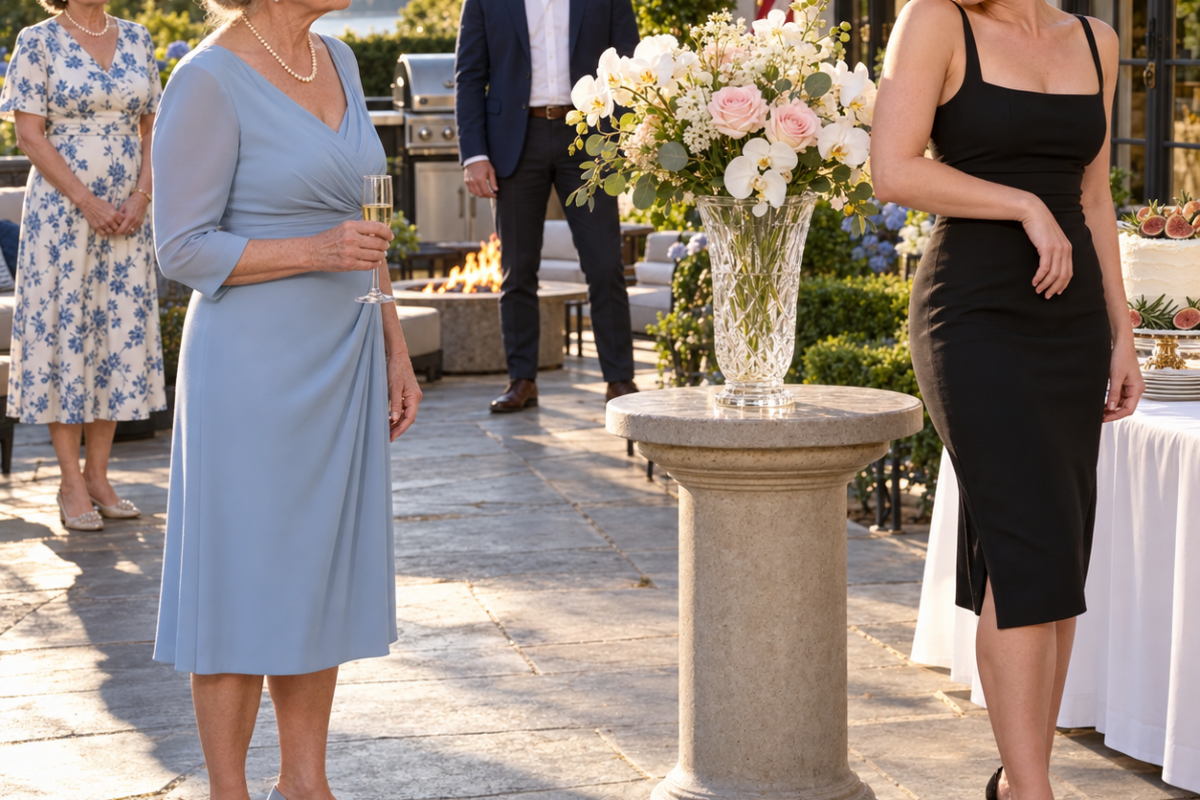
At my seventy-second birthday party, my daughter-in-law knocked a crystal vase off its pedestal with her elbow, watched it shatter, and smiled. “Oops.” Her own parents had given it to her and my son on their wedding day six years earlier. I looked at Frank, waiting for him to say something. All he managed was, “Mom…”
I watched my daughter-in-law break her own parents’ wedding gift with one elbow and a smile. For months afterward, people asked me whether I was…
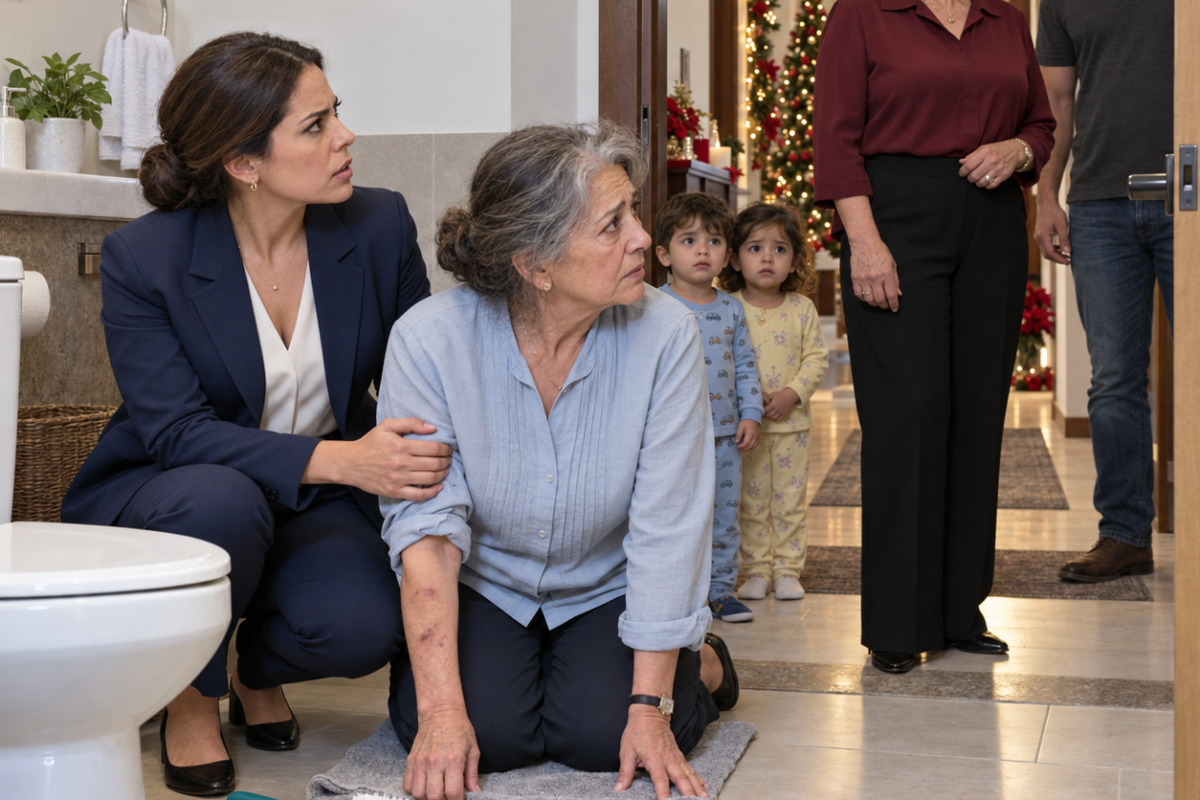
I came home three hours early and found my sixty-eight-year-old mother on her knees scrubbing my mother-in-law’s bathroom. When I helped her stand, her sleeve slipped back, revealing dark marks around her wrist. My husband stepped into the doorway. “Daniela, don’t make a scene.” That was when I remembered my father’s last warning: “If you ever see your mother hurt, don’t argue with anyone. Open the hidden compartment in her sewing machine.”
I came home three hours early and found my sixty-eight-year-old mother on her knees beside a toilet. Her hands were stiff with arthritis. One gripped…
“I already promised your house to your sister,” my father told me four days after I bought it. “They’re moving in Monday. Rent-free for three years.” I was thirty-one, had saved for nine years, and had bought the five-bedroom home entirely in my own name. When I said no, he threatened to tell the family I had abandoned my sister’s children. Days later, he took the microphone at my grandmother’s seventy-fifth birthday dinner and did exactly that.
My father called twelve times in forty minutes after discovering I had bought a house without consulting him. When I answered, he didn’t ask whether…
My mother leaned across the restaurant table, looked at my thirteen-year-old adopted daughter, and whispered, “We don’t sit with mistakes.” I took Sole’s hand and walked her out. That night, my father texted, “You’re still making the car payment tomorrow, right?” By midnight, I had canceled the payments I’d been making for my family. Then I remembered something Sole had told me about her grandmother.
My mother looked at my thirteen-year-old daughter and whispered, “We don’t sit with mistakes.” She said it softly enough to avoid attracting attention from the…
At my father’s seventieth birthday dinner, my eleven-year-old son and eight-year-old daughter were seated beside the service door with water glasses—but no dinner plates. Their cousins sat beside Grandpa with warm bread and full place settings. “They’ll eat after everyone else,” my sister said. I turned to my father, expecting him to object. “They can wait another hour,” he replied. There were two empty chairs at his table.
At my father’s seventieth birthday dinner, the first thing that stopped me wasn’t the cake or the gold balloons. It was my children. Ethan and…
“Mommy, are you real?” my four-year-old daughter whispered when I came home from deployment three weeks early. She was sitting alone on our living room floor with an empty cereal bowl. My husband was on a Caribbean cruise with his mother and sister. Twenty-two minutes earlier, they had posted a photo captioned “Family time.” I was still in uniform when Sophie asked if she could have something to eat.
The first thing my daughter said when I found her was, “Mommy, are you real?” She was sitting cross-legged on our living room floor with…
End of content
No more pages to load