My son’s bride ordered me out of the wedding I had paid $48,000 for. “This isn’t where you belong,” she said in front of two hundred guests, while my son stood beside her and looked at the floor. I folded my napkin and left. Minutes later, the venue manager opened a letter from my husband, dead for six years, and Amanda suddenly demanded that he stop reading.
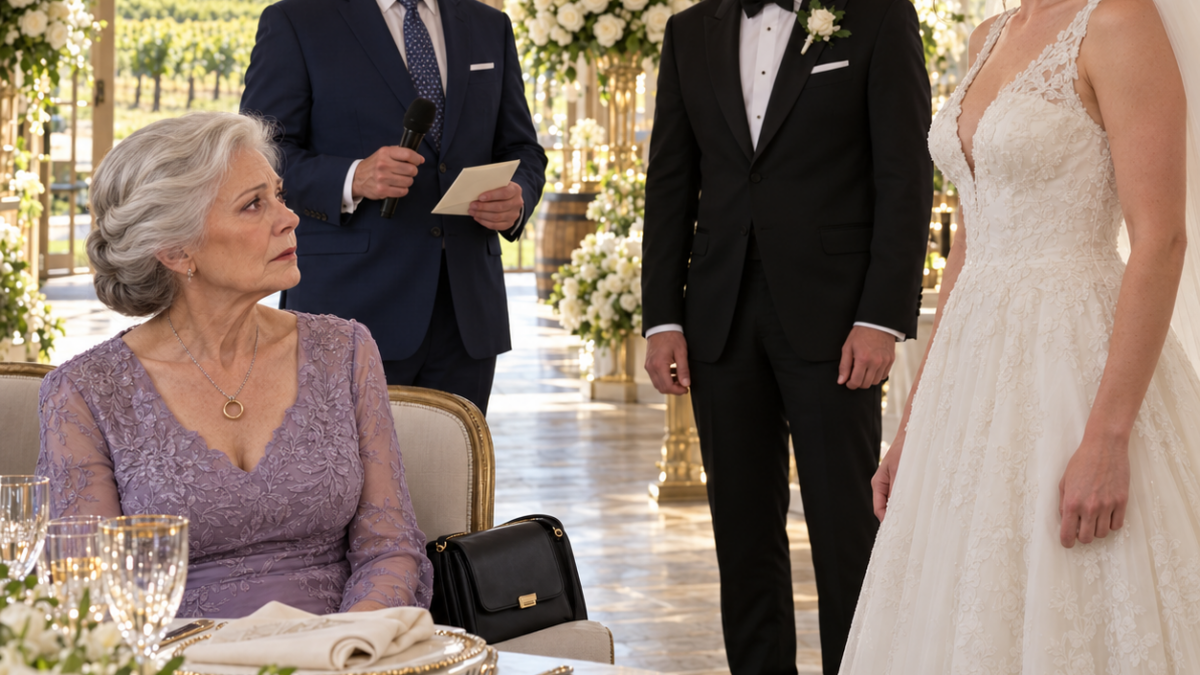
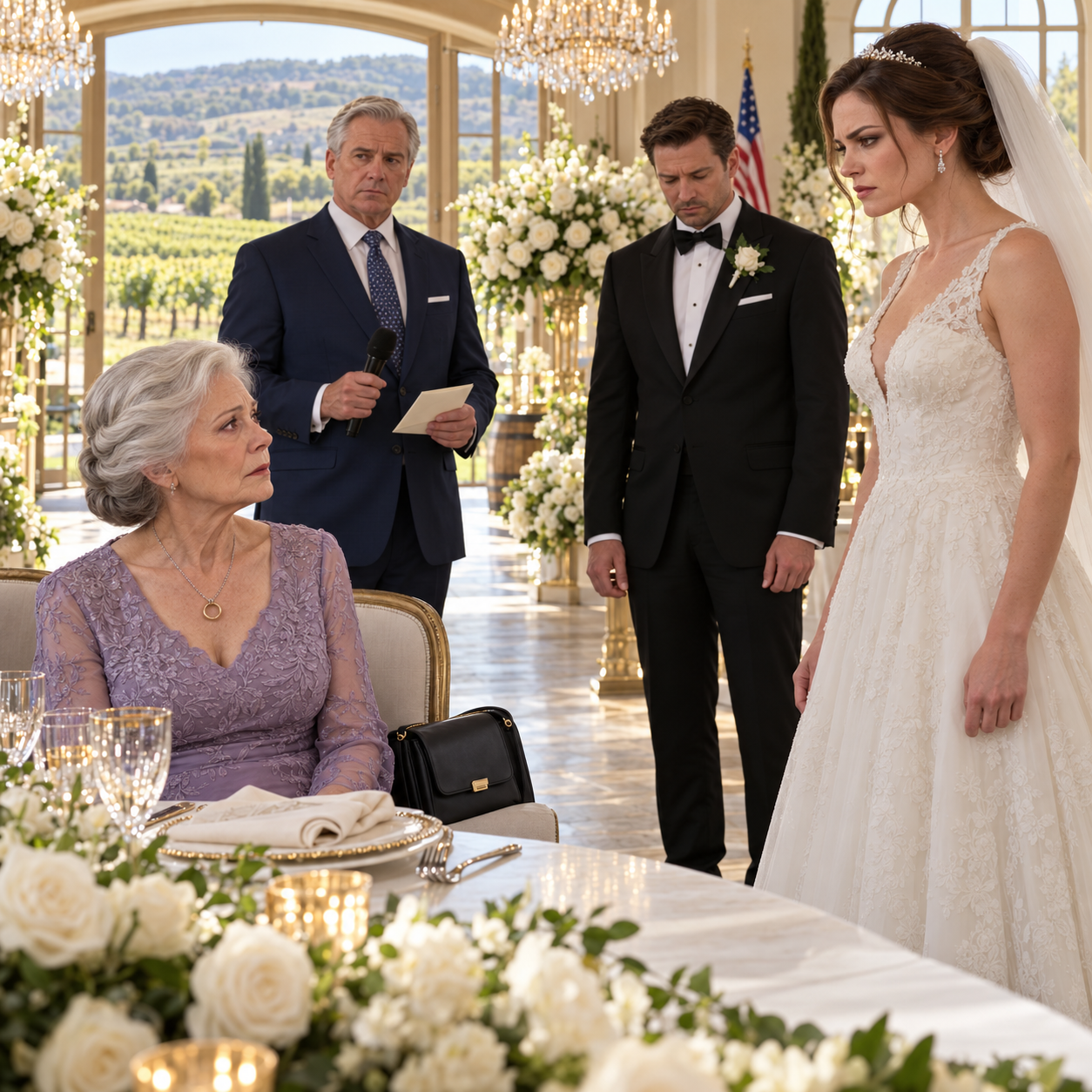
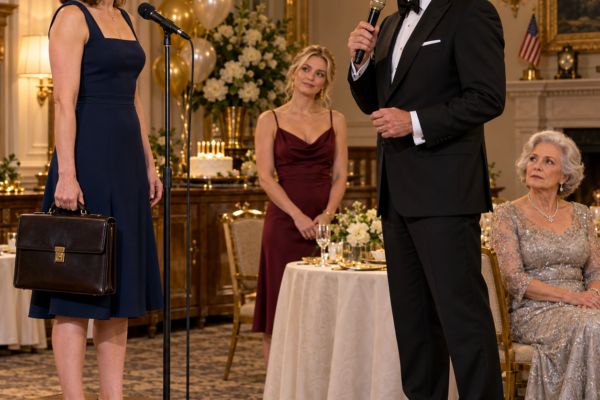
The room became quiet as two hundred wedding guests turned toward the bride.
Amanda pointed at me.
“You need to leave. This isn’t where you belong.”
My son stood beside her in his rented tuxedo, looking at the floor.
For a moment, I waited.
Not for an apology. Not even for an explanation.
I waited for Jacob to lift his head and say my name.
He did not.
I laid my fork beside the meal I had paid for and folded my napkin along the crease. My hands were steady, which surprised me. The rest of me felt as though something had opened beneath my chair.
“Then enjoy the remainder of your evening,” I said.
I picked up my purse and walked out.
Nobody stopped me.
Near the ballroom doors, I could hear chairs shifting, a glass touching a plate, and someone whispering a question that no one answered.
In the corridor, I found Thomas Bell, the manager of Hollow Creek Vineyard.
He looked at my face, then toward the ballroom.
“Mrs. Emerson?”
I opened my purse.
Inside were Harold’s old ledger and a sealed envelope I had carried for reasons I still could not entirely explain.
“I’m activating the provision we discussed,” I said.
Thomas took a breath.
“All right.”
I placed the envelope in his hand.
“And this?”
“Read the page I marked. If you’re still willing.”
He looked at the handwriting on the front.
My husband had been dead for six years.
“I’ll read it,” Thomas said.
I thanked him.
Then I went to collect my coat.
A few minutes later, his voice came through the ballroom speakers.
“My name is Thomas Bell. Before Mrs. Emerson left, she asked me to read a letter.”
The conversations stopped again.
This time, Amanda was not the person controlling the silence.
My name is Judith Emerson. I was seventy-three that evening, a widow and a retired grief counselor.
For thirty-eight years, I had sat beside people who were trying to understand how life could continue after something important ended.
A marriage.
A parent.
A child.
The future they thought they had.
I knew grief did not always arrive dressed like sadness. Sometimes it looked like anger. Sometimes it looked like a woman folding a napkin carefully because any less ordinary movement might cause her to fall apart.
Nothing in my professional life prepared me for watching my only son remain silent while his bride told me I did not belong at his wedding.
Jacob had not always been like that.
When he was seven, he woke from a nightmare so frightened that he could not explain it. Harold was away on business. I tried water, a story, and the lamp beside his bed.
Finally, Jacob said he was hungry.
So I made spaghetti at eleven at night.
We sat on the kitchen floor, eating from bowls, until the shaking left his hands.
The next morning, he drew a picture of me wearing a crooked cape and holding a wooden spoon like a sword.
I kept that drawing for thirty-eight years.
I had never expected the little boy who drew it to become a man who relied on my willingness to forgive him before deciding whether to protect me.
That was one of the truths the wedding made impossible to avoid.
There were others.
Some concerned Amanda.
Some concerned Harold.
Some concerned money.
And one concerned my habit of offering help before asking whether help was really what the people I loved wanted from me.
Jacob was forty-five when he announced his engagement.
He had relationships before Amanda, including one that lasted several years and ended with more disappointment than either person wanted to admit.
Afterward, he became cautious.
Then Amanda appeared, and caution vanished.
She was direct, ambitious, and capable of making an ordinary plan sound like the beginning of a much larger life.
“She knows what she wants,” he told me.
“That can be useful.”
“You sound uncertain.”
“I sound like someone who hasn’t met her.”
He laughed.
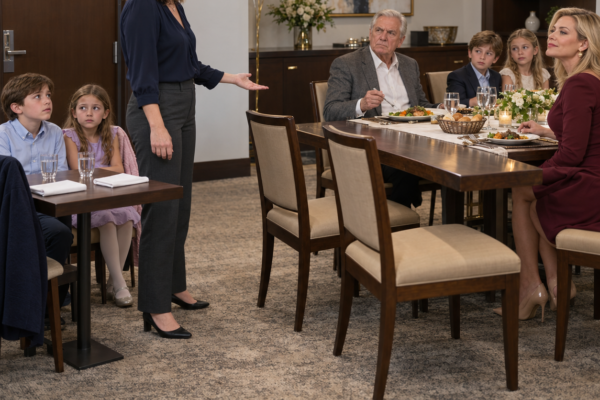
Their first dinner at my house went well enough.
Amanda brought flowers. She asked about my work. She complimented the dining room and said Harold looked kind in the photograph beside the window.
I appreciated that.
She was not constantly unpleasant. If she had been, perhaps the story would have been simpler.
She could be funny. She could listen. She remembered details and sent thoughtful messages when she wanted to.
I saw why Jacob loved her.
I also noticed how often her questions circled around arrangements, contacts, and opportunities.
Who owned a particular building.
Whether Jacob’s company offered partnership positions.
How long I intended to remain in the house Harold and I had shared.
Those were not inherently offensive questions.
But they sometimes arrived before the easier ones.
How was my day?
Was I sleeping well?
Did I miss my husband more at certain times of year?
Amanda was interested in the structure of my life before she seemed interested in the person living it.
I told myself we were different.
That was true.
It was not the whole truth.
When Jacob asked for help with the wedding, he did not begin with an amount.
He began with a place.
Hollow Creek Vineyard.
“It’s perfect, Mom.”
I knew the property. Or thought I did.
A vineyard in Connecticut, with an old farmhouse, a stone courtyard, and a reception pavilion overlooking rows of vines.
Harold and I had visited years earlier.
There had been picnics. A summer afternoon when Jacob rode on his father’s shoulders. A photograph I remembered without remembering why it had been taken.
Jacob said Amanda loved the venue.
They could not afford it alone.
I asked what they could afford.
He answered vaguely.
Then, two days later, a folder arrived containing contracts, catering choices, flowers, upgraded wine, and a deposit invoice for forty-eight thousand dollars.
I sat at the kitchen table with the folder open.
Forty-eight thousand dollars was not a casual amount for me.
I had savings. Harold’s life insurance and our retirement planning had left me secure, provided I remained sensible.
I was not destitute.
I was also not a person who could spend without thinking.
I called Jacob.
“Is this the wedding, or the beginning of the wedding?”
He hesitated.
“The main package.”
“And the extras?”
“We’re still deciding.”
“How much of your own money is going toward it?”
He named an amount that covered far less than I hoped.
For a moment, I considered offering a smaller gift.
Something useful, clear, and limited.
Instead, I looked at the photograph of him as a boy beside Harold.
I thought about how our conversations had shortened after his father died. How often he called only when something needed arranging. How much I missed being included without having to be useful first.
Then I signed.
I called it generosity.
Part of it was.
Part of it was longing with a checkbook.
I would need months before I could admit that honestly.
Amanda thanked me when the payment went through.
Her words were warm.
The exchange still felt like confirmation of a transaction.
Then the exclusions began.
The dress came first.
“I’ve found something that will suit the palette,” she said.
She sent a photograph of a lavender dress with sleeves and a neckline she described as appropriate.
I had already chosen a blue one.
“The lavender is softer,” she said.
“For whom?”
She laughed as though I had made a joke.
“For the photographs.”
I bought the lavender dress.
Then the family photograph schedule changed without anyone telling me.
Then the rehearsal dinner invitation reached me late.
Then I learned my reception seat would be near the back, beside the kitchen doors.
Jacob said the seating chart was complicated.
I accepted that explanation too quickly.
There are perfectly reasonable causes for imperfect seating. Large families. Accessibility needs. People who should not sit together after divorces.
What hurt was the pattern.
Each decision placed my contribution closer to the center and my presence farther away.
I knew what that meant.
I did not want to know.
At seventy-three, experience does not prevent self-deception. Sometimes it merely gives you more elegant words for it.
I told myself I was being flexible.
I told myself brides became anxious.
I told myself the wedding was not about me.
All true.
None of those truths required me to accept being treated as an inconvenience.
Around the same time, Harold’s ledger fell from a box in the attic.
I had been looking for a serving platter.
The box contained old business papers, photographs, and the kind of things couples promise to organize someday.
The ledger was brown leather with cracked corners.
H.E. was embossed on the cover.
I knew it immediately.
Harold had worked as an accountant. He liked records that could be held, marked, and revisited. Even after computers became ordinary, he kept some notes in his own hand.
A photograph slipped from between the pages.
Harold and Samuel Holloway stood outside Hollow Creek in September 1984.
On the back, Harold had written:
Someday we’ll get it back.
I stared.
Get what back?
The first pages contained ordinary entries.
Then there were property descriptions, loan figures, partnership percentages, and references to Hollow Creek Agricultural Holdings.
I knew Harold and Samuel had invested together when the vineyard was struggling in the early 1980s.
I also believed Harold had sold his interest when Jacob was little and money became tight.
That was what he told me.
The ledger suggested otherwise.
I called the lawyer who handled Harold’s estate.
Then, when the question became more complicated than finding an old statement, I hired Rebecca Sloan, who specialized in property and business matters.
She did not announce a fortune over the telephone.
She asked for documents.
She searched records.
She contacted the company’s counsel.
Weeks passed.
Eventually, she confirmed that Harold originally held forty percent, had sold half of that interest, and retained the remaining twenty percent under arrangements that had not been properly explained to me.
The vineyard and an adjoining northern parcel sat within the holding structure. The old agreements included restrictions, purchase rights, and provisions affecting a possible outside sale.
Nearly nineteen acres were involved.
The rights were not a promise that Jacob would someday own everything.
They were assets and opportunities governed by actual documents.
Harold’s remaining interest passed through his estate to me.
I should have known earlier.
There were reasons it had been difficult to identify. Old company records. Quiet distributions. A period when the interest had little practical value.
There was also a reason that was less technical.
Harold had kept something important from his wife.
I loved him.
I was angry with him.
Both feelings were allowed.
Rebecca suggested we speak with Samuel.
He was eighty-one and living in assisted care.
When I showed him the ledger, his eyes filled.
“Harold kept it.”
“Yes.”
He touched the cover.
“I wondered.”
“Why didn’t he tell me?”
Samuel looked toward the window.
“Some of it was my shame. Some of it was his habit of deciding he could spare people worry.”
“That habit was not one of his better qualities.”
“No.”
Samuel and Harold had known each other as boys. Years later, accounting work brought them back into contact, and the vineyard became their shared project.
Samuel managed operations.
Harold managed figures.
In the early 1990s, the business nearly failed.
Banks refused further support. Samuel’s decisions had made matters worse. Harold used property inherited from his father to secure funds that helped keep the place operating.
I remembered a difficult period in our marriage.
I did not remember being told why it was difficult.
Samuel said Harold wanted the vineyard preserved.
“For Jacob?”
“For all of you.”
I looked at him.
Samuel took a breath.
“He liked having something that wasn’t simply a balance on a statement.”
He showed me a photograph of Jacob at four, sitting on Harold’s shoulders between the vines.
I remembered the picnic.
I remembered packing sandwiches.
I had not known the landscape held part of our financial future.
When I left Samuel that afternoon, I did not feel newly wealthy.
I felt newly uncertain about a marriage I thought I understood.
People sometimes expect secrets discovered after death to be easier because the person responsible can no longer argue.
They are not easier.
You cannot ask the question and watch the answer arrive.
You have records.
Memories.
Other people’s explanations.
And someone’s empty chair.
Amanda visited me alone four months before the wedding.
She brought pastries and flowers.
“I thought we could have a girls’ afternoon.”
We had never had one before.
I invited her in.
For twenty minutes, she was charming.
Then she asked whether Harold invested in real estate.
“He handled investments for clients.”
“Did he own anything?”
“Some things.”
“In Connecticut?”
I set down my cup.
“Why?”
She smiled.
“Jacob mentioned his work.”
“That does not answer the question.”
Her smile remained.
“I’m just curious.”
“Near Hollow Creek?”
She blinked.
I had said the words before she could.
The silence afterward told me enough to become careful.
She asked one more question, then changed the subject.
After she left, I called Samuel.
Had anyone asked about Harold’s interest?
He hesitated.
Then said a young woman had visited, describing herself as connected with potential investors.
The description matched Amanda.
I told Rebecca.
She began with public records and direct inquiries.
Amanda Pierce had formed a property acquisition LLC fourteen months earlier.
That alone proved nothing.
People form companies for legitimate reasons.
One of the people connected with her work, however, had ties to Vale Residential Development, which had approached Hollow Creek about the northern land.
Rebecca contacted the appropriate parties, making clear that I had not authorized Amanda or Jacob to act for me.
The responses became cautious.
Then revealing.
Amanda had represented that her relationship with Jacob could facilitate access to the Emerson interest.
Not ownership.
Access.
The difference mattered legally.
Emotionally, it mattered less.
She had placed my family inside a business discussion without telling us.
I wanted to call Jacob immediately.
Rebecca advised me to distinguish facts from suspicions before accusing anyone of using him.
That was sensible.
It was also an excuse I welcomed because I feared losing what closeness remained.
By the final week before the wedding, we had enough to require a conversation.
I called Jacob.
He said he was busy.
I told him the matter concerned Hollow Creek and family documents.
He asked whether I was trying to interfere with the wedding.
“No.”
“Then can it wait until after?”
I looked at the ledger.
“No, I don’t think it should.”
He sighed.
“Mom, Amanda is handling the business side. Let her handle it.”
Those words stayed with me.
He was giving authority to someone without knowing what authority she claimed.
I asked for a meeting.
He promised to call back.
He did not.
I sent a written message saying that neither he nor Amanda had permission to negotiate my interest.
He replied with a question mark.
Amanda called ten minutes later.
She said I had misunderstood.
I asked what I misunderstood.
She said the timing was unfortunate.
That was not an answer either.
Before paying the wedding deposit, I had spoken privately with Thomas Bell.
By then, I had already felt enough exclusion to know I needed a limit written somewhere more dependable than my own courage.
I asked for an addendum.
If the bride, groom, or their representatives directed me to leave an event I was financing, I could withdraw authorization for discretionary services not yet performed.
Thomas looked uncomfortable.
“Is that likely?”
“I hope not.”
The base ceremony and meal were prepaid.
Staff and essential services would be paid.
Any unavoidable cancellation charges would remain my responsibility under the agreement.
But I would not authorize open-ended spending on premium wine, additional entertainment, a midnight seafood station, fireworks, and luxury transportation if I was expelled.
The addendum did not give me authority over their marriage.
It gave me authority over my account.
Rebecca reviewed the wording.
Thomas explained the practical consequences.
I signed.
I also gave him a letter Harold had written years earlier.
Not because Harold foresaw Amanda.
He had not known her.
The letter came from a difficult period when Jacob repeatedly asked us for help and Harold worried I was becoming the easiest person for our son to disappoint.
Harold wrote it for Jacob.
Then he put it away instead of giving it to him.
That failure to speak directly belonged to him too.
The letter began:
Dear Jacob,
If you are hearing these words, something has gone wrong between you and your mother.
It asked him not to confuse my willingness to help with an absence of needs.
It reminded him of particular moments from childhood.
It also referred to family assets he should not make assumptions about.
I had found it inside the ledger.
When Thomas asked why I wanted it available, I said, “Because I’m afraid I’ll spend the whole evening helping everyone avoid the truth.”
He agreed to keep the arrangement discreet.
There was no magical clause compelling a manager to expose private family matters.
There was a client, a written funding limit, and a short letter I asked him to read if I could not say the words myself.
On the wedding morning, I wore the lavender dress.
I fastened Harold’s ring to the chain I often wore beneath my clothes.
It had rested near my heart through six years of widowhood.
Sometimes the ring stayed hidden.
Sometimes it moved into view.
I did not put it on to make a statement.
I put it on because I missed my husband.
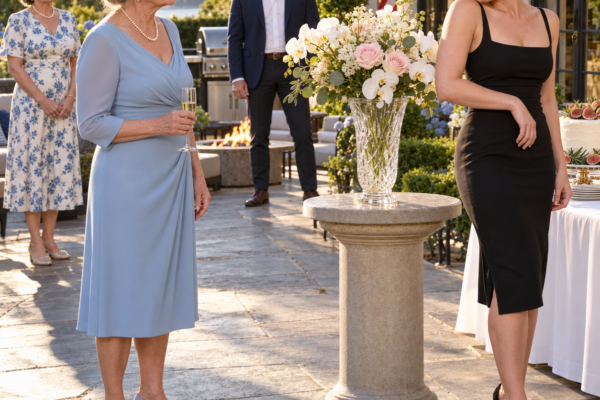
At Hollow Creek, the roses looked beautiful.
The tables were arranged.
The staff moved efficiently.
Thomas greeted me and asked whether I needed anything.
“Nothing that can be delivered on a tray,” I said.
He smiled gently.
Jacob hugged me before the ceremony.
For a few seconds, I allowed myself to believe the day might become what I hoped.
Then Amanda saw the ring.
Her eyes moved to the chain.
She asked whether I intended to wear it in photographs.
“Yes.”
“It doesn’t really match.”
“It matches me.”
She laughed without warmth.
“Judith, we’ve tried to keep everything consistent.”
“It’s a wedding ring.”
“I can see that.”
Jacob called her name.
She moved away.
At the time, I thought the objection concerned appearances.
Later, she admitted the ring frightened her because it reminded her of Harold and the documents she knew my lawyer was examining.
Martin Vale had told her that morning that my inquiry could not be ignored.
She believed I might speak.
She wanted me gone before I did.
The ceremony happened.
They exchanged vows.
I cried, as mothers do.
I did not cry because I doubted their love.
I cried because I remembered holding Jacob when he was small and because Harold should have been there to make an awkward joke about my tissues.
At the reception, my seat was near the kitchen.
I sat.
I spoke with guests.
I thanked a server who noticed I preferred water.
Amanda watched me several times.
When the chain slipped into view again, she crossed the room.
What happened next was abrupt enough that people later disagreed about which words came first.
She accused me of making the day about Harold.
She said I had been difficult about the family paperwork.
I told her quietly that this was not the place.
Then she raised her voice.
“You need to leave. This isn’t where you belong.”
Jacob stood beside her.
I looked at him.
He looked down.
There are humiliations that become worse because they are public.
There are others that would hurt just as much in an empty room.
My son’s silence belonged to the second kind.
I folded my napkin.
I said they should enjoy the evening.
Then I left.
In the corridor, Thomas accepted the envelope.
From beside the coatroom, I heard him begin.
“This letter was written by Harold Emerson.”
Jacob’s voice reached me.
“Dad?”
Thomas continued.
“Your mother may tell you she is fine. Judith has spent her life helping other people carry pain. That does not mean she has none of her own.”
I closed my eyes.
The letter mentioned pneumonia at nine.
Working weekends when Harold lost a major client.
Selling jewelry to help with Jacob’s first semester of college.
Those memories were not invoices.
Harold was not saying love purchased obedience.
He was asking Jacob to remember that the person he took for granted had a life inside her generosity.
Amanda interrupted.
“That is enough.”
Thomas paused.
“The letter is being read at Mrs. Emerson’s request.”
“This is our wedding.”
“Yes.”
“Then we decide.”
“Your marriage is yours. The event account remains in Mrs. Emerson’s name.”
I heard movement.
Then Jacob.
“You told me it had been transferred.”
Amanda answered too quickly.
“It was supposed to be.”
Thomas explained that no transfer had been completed and no replacement funding authorization received.
Then he finished the marked page.
The final lines said:
Money is not proof of love, and gratitude is not a lifetime obligation.
But if somebody persuades you that the safest person to hurt is the person most likely to forgive you, stop.
You are becoming someone you would not want your children to learn from.
I gripped my coat.
Harold had known our son’s weakness.
He had also delayed confronting it.
Perhaps that was why the words hurt so much.
They came late.
They still came.
I did not remain in the corridor to hear every consequence.
I walked through the courtyard to my car.
I sat behind the wheel.
I did not start the engine until I could see clearly.
Harold’s ledger rested in my purse.
The ring pressed lightly against my chest.
I said aloud, “You should have been here.”
There was no answer.
I drove home.
I know the rest of the reception from Thomas, Jacob, and several guests who later spoke to me.
Their accounts varied in small details.
They agreed on the important ones.
Thomas announced that my authorization for the discretionary services had ended.
The prepaid meal continued.
The staff continued working.
The band completed its basic set.
The premium wine service stopped. The extra hours were not approved. The seafood station would not be added. Fireworks and luxury transportation were canceled where cancellation remained possible.
Some deposits were lost.
I accepted that.
I was not trying to recover every dollar.
I was refusing further spending.
Amanda wanted the services restored.
Thomas said another responsible payer could arrange that under the vendor terms.
She turned toward Jacob.
“Put it on your card.”
He stared.
“That’s almost thirty thousand dollars.”
“It’s our wedding.”
“We don’t have thirty thousand dollars.”
“We will.”
The words escaped before she could make them safer.
Jacob asked what she meant.
Amanda said they should discuss it later.
He said later had already become a serious problem.
Martin Vale was at the reception.
Amanda had invited him as a business acquaintance.
He did not know I intended to withdraw funding.
He did know, after Rebecca contacted his company, that Amanda’s description of the Emerson interest was unreliable.
When Jacob asked about future money, Martin requested a private conversation.
They went to the tasting room.
Amanda followed.
Her father came too.
Thomas remained long enough to make certain the wedding operations were handled, then joined them briefly as someone who could clarify the event account.
The conversation lasted eleven minutes.
Jacob remembered the number because he looked at the clock when he entered and again when he realized he could not return to the ballroom pretending nothing had happened.
Martin showed him the preliminary acquisition papers.
The proposal concerned the northern nineteen acres.
A potential purchase price of $6.8 million depended on rezoning, due diligence, and clearing the contractual rights attached to the land.
Amanda’s LLC had been discussing a facilitation payment estimated at $410,000 if the acquisition succeeded.
Nothing guaranteed the sale.
Nothing guaranteed the fee.
But the discussions were real.
So were the representations Amanda made.
Martin said she had led them to believe Jacob could bring the Emerson rights into the transaction.
Jacob told him he did not even know those rights existed.
Martin said they now understood that.
Amanda accused him of protecting himself.
He admitted he was.
It was not a confession of innocence.
It was a businessperson realizing the room no longer favored ambiguity.
Jacob asked why she knew about Harold’s interest before he did.
She said she intended to tell him after the wedding.
He asked why after.
She said he would become emotional.
According to Jacob, that was when he stopped hearing the conversation as a misunderstanding.
His wife had planned around his ignorance.
He asked about me.
Amanda said I would interfere.
The word clarified everything.
Not advise.
Not disagree.
Interfere.
As though my rights were an obstacle in a plan made elsewhere.
Jacob left Hollow Creek before the cake was cut.
At 12:46, he knocked on my front door.
He still wore his tuxedo.
His tie was gone.
His face looked like a man who had spent hours trying to locate one thought solid enough to stand on.
“Mom.”
I waited.
“Can I come in?”
I stepped aside.
He entered the house where he grew up.
He stopped beside the photographs.
School.
Baseball.
College.
Harold.
The three of us on a vacation we could barely afford.
Then he said, “I let her throw you out.”
“Yes.”
His shoulders began to shake.
“I don’t know why.”
“I think you do.”
He looked at me.
I continued.
“You believed upsetting her would cost you more immediately than upsetting me.”
His face crumpled.
“I thought you’d forgive me.”
There it was.
Not confusion.
A calculation he had never admitted to making.
“You knew I loved you,” I said. “So you treated that as protection from consequences.”
He covered his face.
I let him cry.
That was difficult.
I wanted to put my arms around him.
I also wanted him to remain with the truth long enough to understand it.
Comfort would come.
It did not need to arrive before acknowledgment.
We sat at the kitchen table.
The same table where spaghetti had once helped after a nightmare.
He asked about Harold’s property.
I brought out the ledger.
He touched the cover.
“Dad’s handwriting.”
“Yes.”
He read quietly.
Then he stopped at a series of entries.
E.P.
Trust.
Payments recorded annually over many years.
“What is this?”
“I don’t know.”
He turned back through the pages.
The entries began thirty-four years earlier.
Some increased over time.
The record stopped around the year Harold died.
Jacob looked up.
“Who was E.P.?”
I did not know.
Amanda did.
We learned that the following morning.
At 8:15, Rebecca called.
“I found an older connection.”
“Older than the development proposal?”
“Yes.”
She had permission to review the ledger pages Jacob sent from my house.
E.P. appeared to refer to Eleanor Pierce.
Amanda’s grandmother.
Eleanor worked as a bookkeeper at Hollow Creek from 1984 until 1992.
Rebecca emphasized that the entries did not establish what the payments were for.
We needed records.
I appreciated the caution.
My imagination was already supplying too many possibilities.
Then she sent a photograph from the old company files.
Harold.
Samuel.
Eleanor holding a baby.
On the back:
Amanda — six months.
I stared at the image.
Harold had known her as an infant.
I had not.
Jacob stood abruptly.
“What is going on?”
I called Samuel.
When I said Eleanor’s name, he became quiet.
“Samuel.”
“I made promises.”
“Then perhaps it is time to explain what they protected.”
He exhaled.
“I’ll see you today.”
We drove to his assisted-living residence.
Samuel looked exhausted.
Jacob placed the photograph on the table.
“Who was Eleanor?”
“My younger half sister.”
I stared at him.
That answered one question.
It created several more.
“Why was Harold recording payments to her trust?” I asked.
Samuel looked down.
“Because I owed money.”
He described gambling that began as something he believed he controlled.
Then debts.
Then borrowing from money that should not have been available to him.
Eleanor discovered it.
Harold helped keep the business from collapsing.
Eleanor used part of an inheritance to cover obligations she did not want destroying employees’ livelihoods and family property.
But she demanded safeguards.
There were repayment arrangements, restricted distributions, and records.
Harold administered part of the accounting.
The entries were not payments for an affair.
Not hush money.
Not gifts to another woman.
They documented obligations Samuel was repaying through a trust arrangement for Eleanor and her descendants.
Some payments continued after her death because the obligation had not died with her.
The entries in Harold’s book ended when his recordkeeping ended.
That did not mean every financial process stopped at the same moment.
I listened.
Relief did not erase anger.
“Why keep all of it from me?”
Samuel rubbed his forehead.
“Because I was ashamed, and Harold believed handling it quietly was kindness.”
“It was also secrecy.”
“Yes.”
Jacob stared at the photograph.
“What does this have to do with Amanda?”
Samuel closed his eyes.
“Christine was my daughter.”
Amanda’s mother.
Raised by Eleanor.
The room became still.
He explained slowly.
When he was young, he had a daughter with a woman named Rebecca. The relationship ended. There were family pressures, years of difficulty, and eventually a private adoption within the extended family.
Eleanor raised Christine.
People described her as Eleanor’s daughter because legally and practically she was.
Samuel remained the biological father.
I looked at him.
“So Amanda is your granddaughter.”
He nodded.
“Does she know?”
“Yes.”
Jacob’s jaw tightened.
“When?”
“She contacted me eighteen months ago.”
Before the engagement.
Before the venue.
Before my check.
Samuel said she had found family papers after her mother died.
She asked about the family connection.
Then inheritance.
Then the vineyard.
He mentioned Harold’s interest.
He should have told me afterward.
He admitted that too.
Jacob stood.
“I need air.”
He went into the garden outside the residence.
I remained.
“Did she begin dating him because of the land?”
Samuel looked miserable.
“I don’t know.”
Neither did I.
For once, I did not fill that uncertainty with the worst possible answer.
I needed truth, not a satisfying accusation.
Amanda came to my house the following evening.
She asked first.
That was the only reason I opened the door.
Jacob was staying elsewhere.
I told her she had half an hour.
She wore jeans and no jewelry except her wedding ring.
“I love him.”
I said nothing.
“I know what you think.”
“No, you don’t.”
She looked down.
“Did you begin dating him because of Hollow Creek?” I asked.
“No.”
“When did you learn who Harold was?”
“Three months after we started seeing each other.”
She found photographs and letters while sorting her mother’s belongings.
The dates supported that sequence.
Rebecca later verified what could be verified.
Amanda had met Jacob before learning the family connection.
That did not excuse what followed.
It did prevent me from rewriting their entire relationship into a scheme.
“Why didn’t you tell him?”
“I thought he’d believe I wanted something.”
“Then you created a company and negotiated for something.”
She winced.
“Yes.”
“That is the part I cannot reconcile with your explanation.”
She sat very still.
“I thought I could make an opportunity.”
“For whom?”
“For us.”
“Without telling him.”
“Yes.”
“Without telling me.”
“Yes.”
I waited.
Finally, she said, “I wanted to be the person who solved the future.”
I looked at her.
“By keeping everyone else out of it?”
She nodded.
“The more I hid, the harder it became to tell.”
That was recognizable.
It was also a description of choices, not an excuse.
“Why did you tell me to leave?”
Her answer came quietly.
“Because I was frightened.”
“Of what?”
“You knew things. Martin told me your lawyer contacted the company. When I saw Harold’s ring, I thought you might bring everything into the room.”
“So you removed me.”
“Yes.”
“Did you expect Jacob to stop you?”
She took a long time.
Then said, “No.”
That hurt more than I expected.
She had understood my son’s weakness and used it.
“Thank you for answering,” I said.
She looked hopeful.
I stood.
“Your time is finished.”
“Judith.”
“Not because I didn’t hear you. Because I did.”
She rose slowly.
At the door, she said again that she loved him.
I believed she might.
Love did not make her honest.
It did not make her conduct safe.
Those were qualities she would have to build separately.
Jacob consulted a lawyer about ending the marriage.
At first, he wanted an annulment.
Then he learned that feeling deceived did not automatically settle which legal process applied.
He discussed separation and divorce.
He changed his mind repeatedly.
I did not decide for him.
One afternoon, he said, “You’re a counselor. Tell me what to do.”
“I’m your mother.”
“That makes you more qualified.”
“It makes me less neutral.”
He sat at the table.
“Do you think she loves me?”
“I think she may.”
“Then how could she—”
“People can love someone and still behave selfishly.”
He looked down.
“Can I trust her?”
“Not because she asks you to. Perhaps someday because her behavior becomes trustworthy.”
“How long?”
“I don’t know.”
He cried.
I sat beside him.
This time, I held his hand.
Not to erase the consequence.
To remain his mother while allowing him to live inside it.
He asked what Harold would do.
I thought about the ledger.
“Probably make a spreadsheet.”
Jacob laughed.
Then he cried harder.
We stayed there until the first wave passed.
Later, I told him forgiveness and restoring access were different decisions.
He could stop wanting revenge without resuming the marriage.
He could consider reconciliation without pretending nothing happened.
The choice required time, advice, and attention to what Amanda did when her preferred outcome was not guaranteed.
They separated.
They began counseling.
They did not announce a fresh start.
They did not post photographs about overcoming obstacles.
For once, their private life remained private.
Meanwhile, Vale increased its proposed offer to $7.4 million.
Rebecca told me the offer deserved consideration.
She did not tell me I was foolish for refusing.
I asked questions.
Financial implications.
Taxes.
Restrictions.
What the sale would do to the land.
What it would leave us afterward.
Then I declined.
Not because development was inherently wrong.
Not because a late husband’s handwritten wish could replace every practical consideration.
I declined because I did not yet understand enough to make an irreversible choice, and because the proposal did not fit what I wanted for the property.
Rebecca nodded.
“Then we keep the records clear.”
I appreciated that.
A good adviser did not require me to choose the answer she would choose.
Four months after the wedding, Samuel died.
He had turned eighty-two.
His death was quiet.
The consequences were not.
Amanda attended the funeral.
Jacob stood several rows away.
They were speaking again.
That was not the same as reconciliation.
Afterward, Samuel’s attorney arranged a meeting with the relevant beneficiaries and advisers.
There was no theatrical public reading.
There were documents.
Questions.
A conference table.
Samuel held fifty-two percent of the company.
An outside investor group held twenty-eight.
My twenty percent remained.
His controlling interest went into a trust for Amanda’s benefit.
The trust imposed a ten-year restriction on sale except under defined circumstances and required joint oversight by two designated trustees.
Amanda.
And me.
I stared at the attorney.
“You’re serious.”
“Yes.”
Amanda looked equally horrified.
Jacob put a hand over his mouth.
The attorney gave us a letter.
Samuel wrote that Amanda had ambition and I had judgment, and that neither quality was sufficient alone.
I muttered that this was an unfairly convenient philosophy from a man who no longer had to attend meetings.
Jacob laughed.
Amanda did not.
The attorney explained that we were not obligated to accept.
If we declined, an independent trustee would administer the interest and could pursue a sale consistent with the documents, subject to the other owners’ rights and the actual terms available.
Vale was a likely interested buyer.
Not a guaranteed purchaser.
Not a punishment activated by refusing to cooperate.
But the practical possibility was clear.
The property could be sold in a direction neither of us wanted.
I asked for time.
So did Amanda.
We spoke separately with advisers.
Then we met again.
“I don’t want to work with you,” she said.
“I know.”
“I understand why you don’t want to work with me.”
“Good.”
She took a breath.
“I’m willing to do the work correctly.”
“That will include hearing no.”
“I know.”
“Disclosing interests.”
“Yes.”
“Following financial controls.”
“Yes.”
“And not making my involvement responsible for whether Jacob stays married.”
Her eyes filled.
“I understand.”
I studied her.
Promises had become less valuable to me.
Still, structures could make honesty easier to verify.
We agreed to a limited transition period.
Professional management remained.
The outside investors retained their rights.
Rebecca reviewed conflicts.
Accounts would be transparent.
Major decisions required proper approval.
We were not two women becoming owners of a vineyard by sentiment alone.
We were two women accepting responsibilities we did not entirely want because the alternative deserved careful thought too.
The first year was difficult.
Amanda wanted luxury cabins.
I wanted to understand maintenance costs.
She wanted more evening events.
I wanted to know whether staff would be paid for the additional hours.
She wanted dramatic marketing.
I wanted promises we could actually keep.
Sometimes her ideas were excellent.
Sometimes mine were cautious to the point of becoming obstruction.
We learned that too.
I was older.
That did not make every preference wise.
She was younger.
That did not make every change reckless.
Thomas remained manager.
He had the unenviable task of reminding both of us when an argument had become less useful than the people having it believed.
Once, after an hour discussing furniture, he said, “The chairs are not aware they have become a moral issue.”
Amanda laughed first.
Then I did.
We chose comfortable chairs.
It was a productive afternoon.
The property became more stable.
Not overnight.
Not because conflict secretly guaranteed success.
Because people kept records, revised budgets, repaired equipment, and did work the guests would never see.
Amanda was good at events.
Very good.
I had never denied that.
Now she began using that ability without pretending it gave her authority over everyone affected.
One November morning, she brought me an idea.
“Grief retreats.”
I looked up.
“What?”
“The weekday calendar is quiet in winter. We have meeting rooms. Accommodation partners nearby. You know people who could help design a proper program.”
I studied her.
“For grieving families?”
“And individuals.”
“Not a luxury package promising to fix sorrow.”
“No.”
“Qualified facilitators.”
“Yes.”
“Clear boundaries about what we offer.”
“Yes.”
I leaned back.
“That is good.”
She smiled.
“Could you say it again?”
“No. You’ll become difficult.”
She laughed.
We consulted professionals.
We planned carefully.
The first retreat was small.
It did not change everyone’s life.
It offered a few days of quiet, support, practical conversation, and the experience of not being hurried through pain.
At seventy-four, I returned to some of my work.
Not full-time.
Not as the only person responsible.
Enough.
I found myself standing in a room at Hollow Creek while people described missing husbands, parents, children, and ordinary routines that no longer had anyone inside them.
I knew that room.
I had spent my life helping make versions of it.
Then, unexpectedly, it helped me too.
Jacob and Amanda took longer.
There was information she had not told us.
Three days before the wedding, she declined the proposed $410,000 facilitation arrangement.
Martin confirmed it in writing.
That did not erase the negotiations.
It did not make her attempt to remove me less deliberate.
It did explain why the business discussions had become unsettled in the final week.
Jacob asked why she rejected the fee.
She said she finally understood that a future built around his ignorance would not remain a future she could share with him.
Then she failed to tell him.
Then, frightened of exposure, she hurt me.
He asked why.
“Cowardice,” she said.
Not pressure.
Not love.
Not an opportunity misunderstood.
Cowardice.
According to Jacob, that was the first explanation he believed completely.
They began dating again while living apart.
They kept counseling.
They discussed money.
Amanda showed him records.
Jacob learned that silence was not kindness when it allowed somebody else to be hurt.
He practiced saying things before resentment made them explosive.
They argued.
They stopped.
They returned.
There were no guarantees.
After eighteen months, they renewed their vows in a small ceremony at Hollow Creek.
Twenty people.
No fireworks.
No luxury car.
I wore a blue dress I chose myself.
I sat in the front row.
Before the ceremony, Amanda approached.
“I need to say something.”
I raised an eyebrow.
“Should I collect my coat?”
She winced.
“I deserved that.”
“I wasn’t entirely joking.”
“I know.”
She took a breath.
“I can’t undo the first wedding.”
“No.”
“I’m not asking today to erase it.”
“Good.”
She looked at the ring beneath my neckline.
Then she brought out a chain of her own.
Eleanor’s wedding ring hung from it.
“I understand more now.”
“About the ring?”
“About carrying someone with you when they can’t come.”
My throat tightened.
She did not reach for my necklace.
She simply showed me hers.
That restraint mattered.
I hugged her.
Not because eighteen months made everything harmless.
Because eighteen months had given me behavior to consider alongside words.
Later, Jacob thanked me for attending.
He did not ask whether I approved of every decision.
He did not ask me to reassure him that the past was finished.
He said, “I’m glad you’re here.”
I answered, “So am I.”
It was enough for that day.
Three years after the first wedding, a contractor found a metal document box beneath the floor of the original farmhouse.
They were repairing old boards in a storage room.
The box was dusty, sealed, and wrapped in a cloth that had nearly disintegrated.
Thomas called me.
I expected receipts.
Old deeds.
Something that would require Rebecca to sigh before explaining it.
There were those things.
There was also an envelope addressed to me.
Harold’s handwriting.
The box contained papers placed there over different years, not all from the same period. Company records, Eleanor’s copies of family documents, and later correspondence Samuel apparently stored without telling anyone.
I opened Harold’s envelope alone.
Halfway through, I called Jacob.
Then Amanda.
We sat in the farmhouse kitchen.
The letter did not make Harold perfect.
It did the opposite.
He described keeping an early medical concern from me while I was caring for my dying sister.
He postponed appointments.
He convinced himself he could handle it.
By the time treatment became unavoidable, the situation was more serious.
He did not claim secrecy caused every medical outcome.
He admitted it cost us information, choices, and time together.
I cried.
I was angry.
Jacob held my hand.
For years, people told me Harold had been a good man.
He was.
Good people can still make choices that wound the people they mean to protect.
I needed that truth in the room too.
Then the letter changed direction.
He wrote that Jacob was not the only reason he wanted Hollow Creek preserved.
I was part of the reason.
When I was twenty-six, I worked briefly at a women’s shelter.
Six months.
One winter.
A woman named Marian came there while trying to decide whether she could remain with a husband whose gambling had made their life unsafe.
Marian Holloway.
Samuel’s wife.
I remembered her first name.
Not the whole history.
She later reconciled with Samuel after treatment, safeguards, and a process that belonged to them.
Harold and Samuel reconnected as adults through accounting work.
Samuel recognized my name.
He knew I had helped Marian.
That became part of the trust between the men.
I had not known.
Harold wrote that some of the things he built began with help I offered without expecting to see where it went.
He wanted the retained interest to provide security for me.
Perhaps a place where I could continue counseling if I wanted.
He did not know whether that would happen.
It was a hope.
Not a command hidden inside property.
The letter said:
You spent your life making rooms where people did not have to apologize for hurting.
I wanted you to have a room of your own.
I put the page down.
Amanda cried quietly.
Jacob stared at the table.
We had thought the retreats were a new use for an old property.
In one sense, they were.
In another, they were close to something Harold had imagined without ever giving me the chance to discuss it.
I smiled through tears.
“You could have asked.”
Nobody disagreed.
Behind the letter was a copy of guardianship paperwork.
My name appeared as a witness.
The document concerned Christine.
Amanda’s mother.
I recognized the date.
The shelter winter.
But not the connection.
Christine had been a child then, not an infant. Her mother, Rebecca, was overwhelmed and trying to make a safe plan. I remembered speaking with her during several visits.
I had mixed parts of her story with other families over the years.
The document helped separate memory from assumption.
Rebecca had become a mother at nineteen. By the time I met her, she was older, Christine was school-aged, and the temporary arrangements were part of a longer family crisis.
Marian remained in contact after I left the shelter.
Eleanor eventually became Christine’s adoptive mother.
Samuel was the biological father whose history the family kept private.
The records did not contain an instant, tidy account of everybody’s motives.
They contained decisions made over time.
Some kind.
Some frightened.
Some secretive.
All consequential.
Amanda looked at my name.
“You knew my biological grandmother.”
“For a short time.”
“Do you know what happened to her?”
“No.”
We did not search impulsively and arrive at a stranger’s door.
Rebecca Sloan helped us find an appropriate route, using the family-held records and consent where needed.
Amanda considered whether she wanted contact.
She wrote carefully.
No demand.
No accusation.
Just an explanation of who she was and an invitation to answer.
Rebecca Lawson was seventy-eight and living in Maine.
She answered.
Months later, Amanda met her.
Jacob went.
Their daughter, Harriet Eleanor Emerson, went too.
Harriet for Harold.
Eleanor for the woman who raised Amanda’s mother.
I stayed home.
Some reunions did not require the person who happened to connect one small piece of the history.
When Amanda returned, she found me beside the vines.
She hugged me.
“She remembered you.”
I stepped back.
“Rebecca?”
Amanda nodded.
“What did she say?”
“That you didn’t tell her what choice to make.”
I looked toward the farmhouse.
Amanda continued.
“She said everyone had an opinion. Some were useful. Some were loud. But you told her whatever happened next, she still deserved a life.”
My eyes filled.
I did not remember the exact sentence.
Rebecca did.
That was one of the humbling parts of counseling.
The words you worried were insufficient might remain with someone for decades.
The speech you prepared carefully might not be what mattered at all.
Amanda stood beside me.
For a while, we said nothing.
The vineyard kept growing.
Guests came.
Staff worked.
Bills arrived.
The property did not become peaceful because our story became moving.
It became useful because people kept doing necessary things.
I am eighty-one now.
Hollow Creek still hosts weddings.
It also hosts support groups, small retreats, charity events, and family gatherings.
Jacob handles financial work under the company’s formal arrangements.
Amanda runs events.
Thomas has trained a younger manager and works a reduced schedule, although he claims retirement remains a rumor.
I counsel occasionally with other professionals.
Harriet is seven.
She likes grapes more than rules about waiting for permission to pick them.
I am an enthusiastic grandmother.
Possibly excessive.
Jacob says this with the expression of a man who remembers how much patience he once required.
There is a photograph in my office from the first wedding.
Not displayed for clients.
On a shelf near the desk.
Claire, my oldest friend, sent it to me because she thought I should destroy it.
Amanda stands in her original gown.
Jacob is beside her.
I am leaving in the background.
I did not frame it to punish them.
I kept it because I know how easily a family can begin remembering only the version that makes everyone comfortable.
The photograph reminds me that repair followed harm.
It did not mean harm never occurred.
Sometimes Amanda looks at it.
She does not ask me to remove it.
That matters.
One afternoon, we stood beneath the pavilion while another bride waited to walk down the aisle.
Amanda asked whether I still thought about that night.
“Occasionally.”
“I was horrible.”
“Yes.”
“You could pause before agreeing.”
“I’m old. Efficiency matters.”
She laughed.
Then she grew quiet.
“Why did you eventually forgive me?”
I considered it.
“Because you stopped asking forgiveness to do the work for you.”
She looked at me.
“You changed what I had to expect from you.”
She nodded slowly.
That was the answer I trusted.
Not destiny.
Not the property.
Not finding out I once met her grandmother.
Those connections deepened our understanding.
They did not purchase reconciliation.
Her behavior did that.
Jacob’s did too.
Harriet came running across the grass.
“Grandma!”
She wore a nice dress with dirt on one knee.
Perfectly ordinary.
Perfectly lovely.
“Daddy says there’s cake.”
I looked at Amanda.
“An excellent management decision.”
Harriet took my hand.
We walked toward the farmhouse.
Amanda’s chain moved into view.
Eleanor’s ring.
Mine remained beneath my blouse.
Two women carrying people they missed.
There was a time when I would have mistaken that similarity for proof we were meant to forgive each other.
Now I knew better.
Similarity helped us understand.
Choices determined whether understanding became something safe.
The northern parcel remained a subject of discussion.
Years passed.
Vale’s proposal rose to $11.2 million.
We did not reject it merely to make a point.
We obtained valuations.
We reviewed costs.
We spoke with the outside investors.
We considered the implications of placing land into charitable use.
There were negotiations, approvals, and questions I had not known to ask when I first held Harold’s ledger.
Eventually, the necessary interests were resolved through agreements everyone could examine.
The nineteen-acre parcel could support a charitable trust and a permanent counseling center.
We did not build it by announcing that kindness would pay the contractors.
We raised funds.
We planned.
We adjusted the design.
We made provision for operations after the opening photographs were taken.
That part mattered most to me.
A beautiful building without a sustainable way to serve people was another kind of empty promise.
The center had twelve rooms, spaces for children, a garden, and limited temporary accommodation operated through appropriate partnerships for families facing loss or crisis.
Amanda worked on the interior with people who understood accessibility and practical use.
Jacob worked on the finances.
I helped develop the programs.
We named it the Harold Emerson Center for Belonging.
Not because Harold never made mistakes.
Because we wanted his better intentions translated into something people could actually use.
At the dedication, nearly three hundred people gathered.
Jacob spoke first.
He did not tell a flattering version of the wedding.
He told enough.
He admitted that he had remained silent while I was told to leave.
He said he once believed my love meant the consequences of hurting me would always be less serious than the consequences of disappointing someone else.
His voice shook.
“I was wrong.”
I looked at him.
He did not ask me to rescue him from the sentence.
He continued.
“My mother’s love was not permission.”
That mattered.
Amanda spoke next.
She acknowledged that ambition without honesty had damaged the people she claimed to be building a future with.
She did not disclose every private financial detail.
She did not need to.
Accountability was not the same as turning a marriage into a public exhibit.
Then Harriet approached the microphone.
Amanda tried gently to intercept her.
Too late.
“My grandma owns this place,” Harriet announced.
People laughed.
I smiled.
Then I went to stand beside her.
“Not quite, sweetheart.”
She frowned.
“Then whose is it?”
I looked at the people gathered.
The staff.
The trustees.
The donors.
The families who would come later when the flowers were gone and the rooms had begun doing their work.
“The trust owns the center,” I said. “And all of us have a job making sure it helps people.”
Harriet considered that.
“People who are sad?”
“Sometimes.”
“Then this is where they belong until they’re ready.”
I looked at Amanda.
Her eyes filled.
“Yes,” I said. “That’s a good way to say it.”
We put those words near the entrance later.
Below them, in smaller letters:
No one has to earn the right to be treated with dignity.
I wanted that sentence there before anyone misunderstood belonging as something granted only to the grateful, agreeable, or easy.
That night, Jacob found me beneath the pavilion.
He carried a folder.
“Mom.”
“What have you done?”
He smiled nervously.
“Something I hope you’ll like.”
Inside was the drawing.
The crooked cape.
The wooden spoon.
My seven-year-old son’s idea of a hero.
I touched the paper.
“I thought this was in my attic.”
“It was. Claire helped me find it.”
“Conspiracy.”
“Possibly.”
He turned it over.
On the back were four words.
My mom saves people.
I had forgotten.
My throat closed.
“You kept it all those years,” Jacob said.
“Yes.”
“Why?”
“Because you made it.”
He looked at me.
I continued.
“And because I liked knowing there was a time you thought I could do anything.”
His eyes filled.
“I still think you’re remarkable.”
I smiled.
“I’m also tired.”
He laughed through tears.
I looked toward the center.
“For years, I confused helping people with making sure they never had to face a difficult choice.”
Jacob nodded.
“That included me.”
“Yes.”
“I’m sorry.”
He did not add a request.
No reassurance.
No question about whether he had done enough.
Just the apology.
I touched his cheek.
“I know.”
Then he hugged me.
I hugged him back.
Not because the drawing returned us to a kitchen floor thirty-eight years earlier.
We could not go back.
We could stand here.
Older.
Less certain.
More honest.
Amanda approached carrying three glasses.
She handed one to Jacob and one to me.
“To Harold,” she said.
“To Eleanor,” Jacob added.
“To Samuel,” I said.
We stood quietly for a moment.
Then Amanda said, “To second chances.”
I looked at her.
“To doing something worthy with them.”
She nodded.
We drank.
The pavilion was quiet after everyone left.
Years earlier, I walked away from it believing my place in my son’s life had ended.
The night had been terrible.
I would not call it a gift.
Pain does not become generous because something useful follows.
But it forced us to see things we had avoided.
Jacob’s silence.
Amanda’s secrecy.
My fear that refusing money meant refusing closeness.
Harold’s habit of protecting people from information they had a right to know.
Samuel’s shame.
The harm those habits caused.
We could have learned those lessons another way.
I wish we had.
Since we did not, the responsibility was to use what we learned.
That was the work afterward.
Not the letter.
Not the closed bar.
Not the development offer.
The months of records, uncomfortable conversations, ordinary decisions, and apologies that did not come with invoices for forgiveness.
I still wear Harold’s ring.
Amanda still wears Eleanor’s.
Jacob keeps the childhood drawing in his office.
Sometimes I miss the man who made spaghetti seem like an adequate solution to a nightmare.
Sometimes I recognize him in the man who now asks whether I would like company instead of assuming I need a task.
That is enough to make me hopeful.
It is not enough to make me forget.
Hope and memory can live in the same house.
At the center, people come with losses we cannot repair.
We do not promise them the right letter will arrive or the right secret will explain everything.
Often, no such thing exists.
We offer rooms.
Qualified help.
Practical information.
A garden.
Somewhere to sit without being told to hurry.
Sometimes that is where a life begins moving again.
Every morning I pass the entrance, I remember the lavender dress.
The two hundred guests.
Amanda’s pointing hand.
Jacob’s lowered eyes.
The careful folding of my napkin.
If I could speak to the woman I was that night, I would not promise revenge.
I would not tell her the marriage would survive or the vineyard would become a center.
I would not tell her everything happened for a reason.
I would tell her to keep walking.
To get her coat.
To go home.
To let the people who hurt her remain responsible for what happened next.
Because leaving a room does not surrender your dignity to the people inside it.
Sometimes it is the first ordinary act of keeping that dignity for yourself.
Amanda told me the wedding was not where I belonged.
She did not have the authority to decide my worth.
Neither did the contract.
Neither did Harold’s ownership.
Those documents protected money and clarified rights.
They could not create the consideration my son should have offered before any letter was read.
He knows that now.
So does she.
And, perhaps most importantly, so do I.
News
At my seventy-second birthday party, my daughter-in-law knocked a crystal vase off its pedestal with her elbow, watched it shatter, and smiled. “Oops.” Her own parents had given it to her and my son on their wedding day six years earlier. I looked at Frank, waiting for him to say something. All he managed was, “Mom…”
I watched my daughter-in-law break her own parents’ wedding gift with one elbow and a smile. For months afterward, people asked me whether I was…
I came home three hours early and found my sixty-eight-year-old mother on her knees scrubbing my mother-in-law’s bathroom. When I helped her stand, her sleeve slipped back, revealing dark marks around her wrist. My husband stepped into the doorway. “Daniela, don’t make a scene.” That was when I remembered my father’s last warning: “If you ever see your mother hurt, don’t argue with anyone. Open the hidden compartment in her sewing machine.”
I came home three hours early and found my sixty-eight-year-old mother on her knees beside a toilet. Her hands were stiff with arthritis. One gripped…
“I already promised your house to your sister,” my father told me four days after I bought it. “They’re moving in Monday. Rent-free for three years.” I was thirty-one, had saved for nine years, and had bought the five-bedroom home entirely in my own name. When I said no, he threatened to tell the family I had abandoned my sister’s children. Days later, he took the microphone at my grandmother’s seventy-fifth birthday dinner and did exactly that.
My father called twelve times in forty minutes after discovering I had bought a house without consulting him. When I answered, he didn’t ask whether…
My mother leaned across the restaurant table, looked at my thirteen-year-old adopted daughter, and whispered, “We don’t sit with mistakes.” I took Sole’s hand and walked her out. That night, my father texted, “You’re still making the car payment tomorrow, right?” By midnight, I had canceled the payments I’d been making for my family. Then I remembered something Sole had told me about her grandmother.
My mother looked at my thirteen-year-old daughter and whispered, “We don’t sit with mistakes.” She said it softly enough to avoid attracting attention from the…
At my father’s seventieth birthday dinner, my eleven-year-old son and eight-year-old daughter were seated beside the service door with water glasses—but no dinner plates. Their cousins sat beside Grandpa with warm bread and full place settings. “They’ll eat after everyone else,” my sister said. I turned to my father, expecting him to object. “They can wait another hour,” he replied. There were two empty chairs at his table.
At my father’s seventieth birthday dinner, the first thing that stopped me wasn’t the cake or the gold balloons. It was my children. Ethan and…
“Mommy, are you real?” my four-year-old daughter whispered when I came home from deployment three weeks early. She was sitting alone on our living room floor with an empty cereal bowl. My husband was on a Caribbean cruise with his mother and sister. Twenty-two minutes earlier, they had posted a photo captioned “Family time.” I was still in uniform when Sophie asked if she could have something to eat.
The first thing my daughter said when I found her was, “Mommy, are you real?” She was sitting cross-legged on our living room floor with…
End of content
No more pages to load