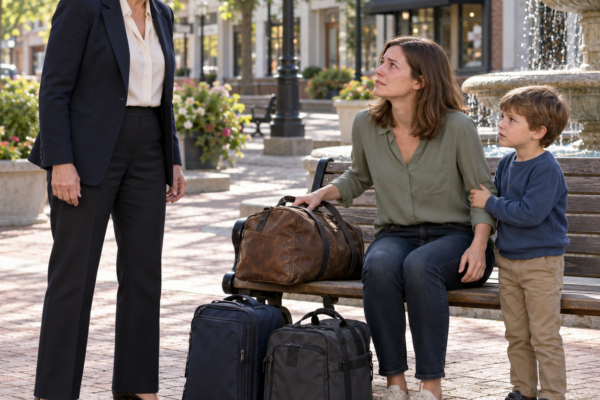
My daughter-in-law put my suitcases outside the day after I buried my son. Three weeks later, at the will reading, she whispered, “Hope you enjoy being homeless, because I made sure you get nothing.” The lawyer stopped reading and reached for a sealed envelope. Stephanie was still smiling when he said, “Your husband left one final section.”
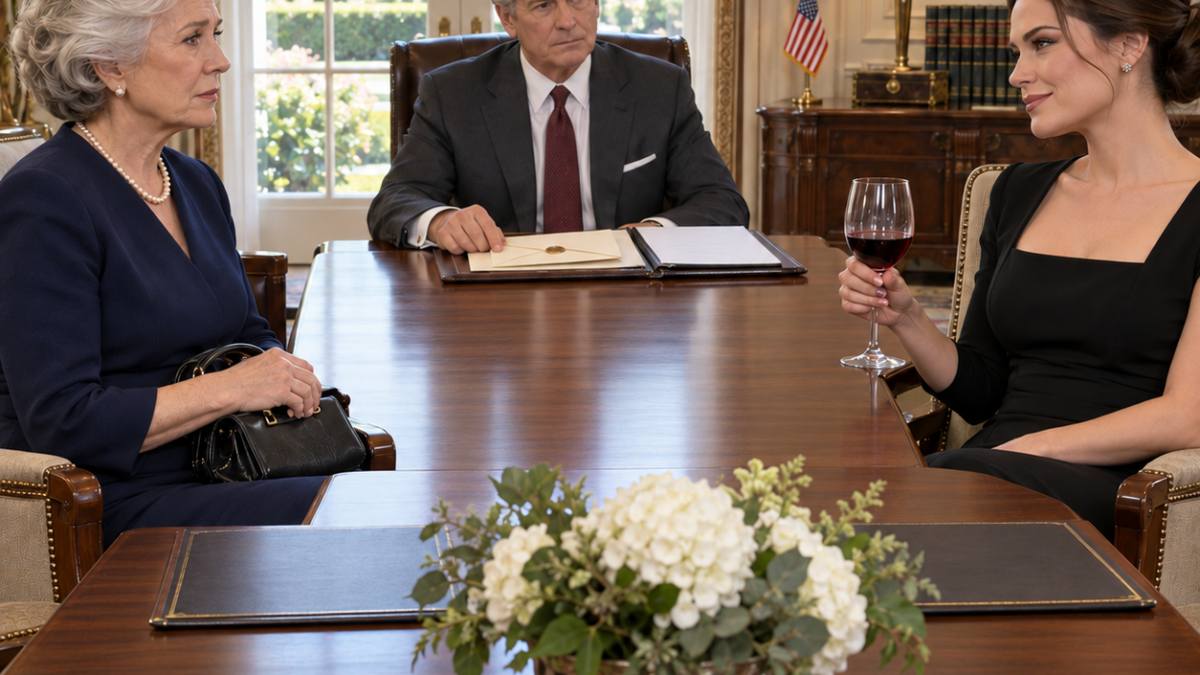
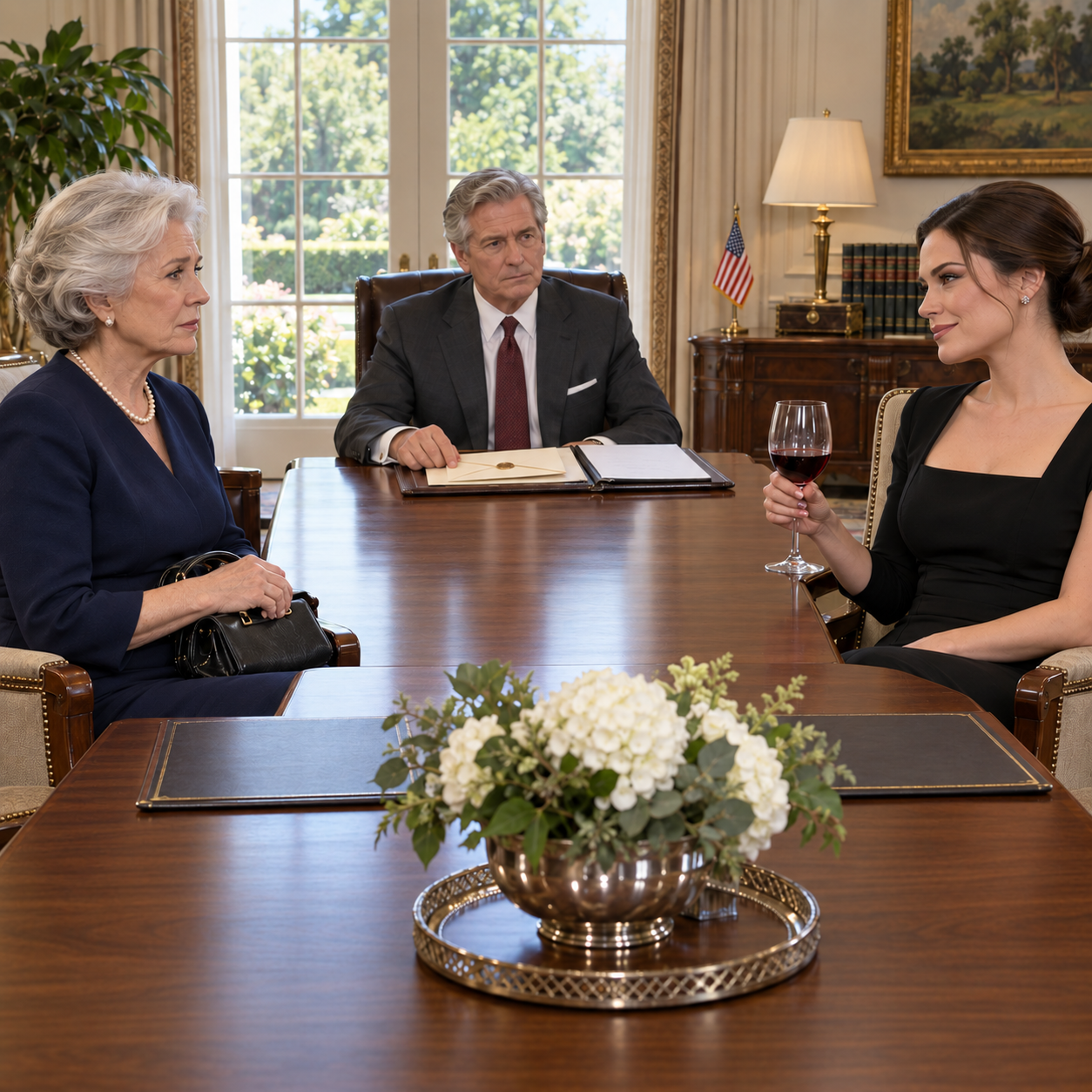
“Get ready to be homeless,” Stephanie whispered. “I made sure you walk away with nothing.”
She said it in a room that smelled of coffee and fresh paper, three weeks after I buried my son.
Across the table, the attorney was reviewing documents. A printer hummed somewhere beyond the closed door. Outside the window, people were crossing the parking lot with umbrellas, going about ordinary Tuesday lives.
Stephanie leaned back in her chair and smiled.
I kept my hands folded over my handbag.
At sixty-seven, I had thought there were very few ways left for life to surprise me. Then my son died, my daughter-in-law ordered me out of the house I had called home for thirty-six years, and I spent the weeks afterward sleeping in temporary rooms near Route 9.
I had become so tired that even humiliation felt heavy.
The attorney turned a page.
“Before we conclude,” he said, “there is one final section.”
Stephanie’s smile tightened.
He reached for an envelope that had been set apart from the other papers.
What happened next did not bring my son back.
Nothing could.
But it showed me that David had understood far more than I knew—and that the woman sitting across from me had mistaken my grief for the end of my ability to survive.
My name is Margaret Chen.
My son, David, was forty-two when he died. He had spent almost a year living with an illness that slowly reduced the life around him to appointments, treatments, waiting rooms, and careful conversations about what might come next.
He faced it with more patience than I did.
I wanted answers.
He wanted a decent cup of coffee and one afternoon when nobody asked how he felt.
Sometimes I gave him both.
Other days, I sat beside his bed and asked questions he could not answer, then felt guilty for making him comfort me.
He was my only child.
There is no elegant way to explain what that means after the child is gone.
I still reached for my phone when something happened in the garden. I still noticed shirts he would have liked. I still heard a car door outside and imagined, for one foolish second, that he was coming up the walk.
Then the world corrected me.
Again.
And again.
The house at 428 Maple Street had been ours since David was six. Back then, the kitchen cupboards were an unpleasant brown, the upstairs bathroom had a slow leak, and the back steps needed replacing.
I bought it because the payment was something I could manage if I kept working both jobs.
During the day, I handled accounts at a supply company. Three evenings a week and most Saturdays, I worked at a grocery store. Sometimes I came home smelling of cardboard and oranges, with an ache between my shoulders that made taking off my coat feel like work.
David used to meet me at the door.
“Did you bring the damaged cookies?”
The store occasionally let employees take home packages that could not be sold. In David’s opinion, a broken cookie was a remarkable bargain.
He would set out two plates before I answered.
I never thought of those years as a heroic sacrifice. I had a child. He needed food, stability, and a place where somebody knew when he was supposed to be home.
So I worked.
We did without things.
We also had things money could not measure: library books, Sunday pancakes, a radio that needed a sharp tap to change stations, and a garden where David once attempted to grow a watermelon in a climate that had no interest in cooperating.
When he was eight, he crashed his bicycle into the mailbox.
He came inside with scraped knees and an expression suggesting the mailbox had attacked him.
For years, we planned to straighten it properly.
We never quite did.
Every time David visited as an adult, he gave it a slight adjustment and announced that he had improved the property.
I planted the roses thirty years before he died, when the house was finally paid down enough that buying something unnecessary did not feel reckless.
He helped dig the holes.
He complained.
Then he spent the whole summer checking whether they had bloomed.
That was David.
He pretended tenderness was practicality until the person who knew him best caught the difference.
Stephanie came into his life when he was thirty-two.
She was confident, attractive, and good at making a room feel organized around her. She brought a bottle of wine the first time she came to dinner and complimented the house, the food, and my roses.
I liked her.
I was relieved that David seemed happy.
A mother can spend years hoping her child will find love and still be unprepared for the adjustment when someone else becomes the person he calls first.
I tried to manage that adjustment honestly.
I did not expect to be consulted about everything. I did not want to compete with his wife. When they married, I stepped back from the ordinary parts of his daily life that had once belonged to me.
I had friends.
I had work.
I had a house that needed attention and a neighborhood book club that spent considerably more time discussing food than books.
I did not need to live inside their marriage.
But Stephanie seemed to believe there was only room for one important woman in David’s life.
She rarely said anything openly cruel while he was present.
Instead, there were little arrangements.
A dinner invitation I received after the date had changed.
A holiday plan described as too complicated to explain.
A remark about how independent I was, delivered just before someone needed a reason not to include me.
“You’re lucky, Margaret,” she once said. “You don’t need much.”
It sounded like praise.
Over time, I understood it as a convenient description of a person whose needs she preferred not to consider.
David noticed some of it.
Not all.
He had a demanding business, and I was careful not to turn every disappointment into a complaint. Sometimes that was restraint. Sometimes it was fear that speaking would create a conflict he would resent me for starting.
I wish I had been more direct.
That wish does not mean I caused what happened.
It means I can see now how often I helped preserve the appearance of peace.
David’s company provided building systems and maintenance services for commercial clients. He had begun small, with a van, two employees, and a habit of answering emergency calls himself.
By his late thirties, the company had grown into something he could no longer run from the front seat of his van.
His business partner was Michael Torres.
That name would eventually become part of more than one painful discovery.
Michael was also David’s biological father.
I need to explain that plainly, because the family connections were complicated long before Stephanie entered them.
Michael and I had been young when David was born. He was not ready to remain with us, and for many years he stayed away. I raised David alone, using my own surname.
I did not tell my son that his father was dead or invent a different man.
When he was old enough to ask, I answered honestly in language he could understand.
His father had left.
That decision belonged to his father.
It did not reflect David’s worth.
When David was nineteen, Michael contacted him. I had mixed feelings, but my son was an adult beginning to make his own choices.
They developed a relationship slowly.
It was never a simple father-and-son reunion.
Michael had missed too much for that.
Years later, when David’s business needed experience and capital, they became partners under carefully written terms. David knew Michael had weaknesses. He also believed people could improve.
I did not forbid the arrangement.
I did encourage him to get independent advice.
He did.
For a while, the partnership worked.
Michael had connections. David had technical knowledge, discipline, and the willingness to show up when promises needed to become actual work.
But professional competence is not the same as personal integrity.
I had learned that once.
David would learn it in a way I would never have chosen for him.
Several years before his illness, he persuaded me to make changes concerning the Maple Street house.
The maintenance was becoming harder for me, and his company sometimes kept him away late. He wanted the family property protected, my right to remain clear, and the estate arrangements coordinated rather than left to assumptions.
We met with an attorney.
I retained a documented right to live in the house. David received the future ownership interest through the structure we established. The details mattered, and I reviewed them before signing.
Stephanie had no right to simply put me out.
At the time, I understood that.
Later, in grief, I let her certainty make me doubt something I had known.
That is one of the things people who have never been overwhelmed struggle to understand.
A person can possess rights and still be frightened into leaving.
A person can have documents and still be too exhausted to reach for them.
After David became ill, I spent more time at the house because he and Stephanie had moved there during a renovation and then remained by agreement.
It was still my home.
My room was upstairs, overlooking the garden.
Their room was at the front.
We tried to make the arrangement manageable while David received treatment. Some days it was. Other days, tension sat at the kitchen table with us.
Stephanie disliked having routines she had not chosen.
She complained about my old furniture, the narrow driveway, and the fact that I kept receipts in a drawer instead of scanning them.
“I don’t know how you live like this,” she said once.
I looked around the kitchen.
Clean counters. A bowl of apples. Three cups drying beside the sink.
“Quite comfortably, usually.”
She did not laugh.
As David grew weaker, Stephanie became more involved in handling his mail, scheduling appointments, and speaking to people who called the house.
Some of that was necessary.
Some of it was not.
I began noticing that messages did not always reach me. A call from his accountant became “nothing important.” An envelope from his attorney disappeared into Stephanie’s office.
When I asked, she said she was managing things so David would not have to.
I wanted to believe that.
He was tired.
I was tired.
Nobody wanted the remaining months to become a struggle over access to a printer.
David sometimes asked me to sit outside with him.
We would walk slowly to the porch, and I would pretend not to notice how much effort it took.
He liked looking at the roses, even when they were out of season.
“Did you ever regret buying this place?” he asked one afternoon.
“No.”
“Even when the furnace went?”
“Especially then. I got to complain about something that belonged to me.”
He smiled.
Then he became serious.
“Do you have copies of the house documents?”
“I believe so.”
“I want you to keep them somewhere you can reach.”
I looked at him.
“David?”
“Just do it for me.”
I thought he was worrying about ordinary estate matters.
I did not know he was worrying about what his wife might do.
His illness had made him practical in ways that were painful to witness. He updated records. He met privately with advisers. He asked specific questions about accounts, beneficiaries, and the company.
Stephanie said he was becoming morbid.
I said he was being responsible.
Neither of us knew the full extent of what he was arranging.
The last weeks were difficult.
I will not turn them into a scene more detailed than they need to be.
He was cared for.
People who loved him came.
Some days he could speak for a while. Other days he slept through most of the afternoon.
The final evening, I sat beside him and told him about the first time he tried to make pancakes by himself.
He had used salt instead of sugar.
He listened with his eyes closed.
“I remember,” he whispered.
“You insisted they were good.”
“They weren’t.”
“No.”
He smiled faintly.
Then he said, “You stayed.”
I thought he meant that morning, when I had eaten half a pancake to protect an eight-year-old’s pride.
Later, I wondered whether he meant his whole life.
“I always would,” I said.
His hand moved slightly in mine.
I held it until I had to let go.
The funeral passed in fragments.
Flowers.
A dark coat.
Someone pressing food into my hands.
Stephanie accepting condolences with an expression that looked composed to other people and distant to me.
Michael stood near the back.
He did not approach me for long.
I thought grief had made him awkward.
I was still willing to give people generous explanations.
The day after the funeral, I came downstairs and found two suitcases beside the front door.
My suitcases.
Stephanie stood behind them.
“We need to talk.”
I looked at the bags.
“What is this?”
“You’ll need somewhere else to stay.”
For a moment, the words made no sense.
“This is my home.”
“It was David’s house.”
“I have a right to live here.”
She crossed her arms.
“Things have changed.”
I was wearing the cardigan I had worn at the hospital. There was a tissue in one pocket, folded and unfolded so many times it had become soft as cloth.
“Stephanie, I’m not doing this today.”
“You don’t get to decide everything anymore.”
She spoke with the certainty of a person who had prepared while I was grieving.
She said the house belonged to her.
She said David’s arrangements had been updated.
She said the attorney would confirm it.
Then she told me I could either leave quietly or make the situation unpleasant.
I should have called the attorney then.
I know that.
Instead, I stood in the hallway feeling as though the floor had moved.
My son was gone.
The person who would have challenged her was gone.
I had slept badly for weeks, eaten poorly, and spent the previous day watching earth fall over a coffin.
I could not imagine another confrontation.
“I need my things,” I said.
“I packed what you need.”
She had not.
There were clothes, toiletries, and a pair of shoes.
No documents.
No medication refill information.
No photographs.
No box containing my mother’s quilt.
I went upstairs to retrieve a few more items. Stephanie followed me, speaking all the while about how difficult things had been for her and how she needed space.
By the time I reached the front door, I was shaking.
She stood there while I carried the suitcases down the steps.
The door closed before I reached my car.
I sat behind the wheel for a long time.
Then I drove.
The first night, I stayed with a woman from my old book club.
Her name was Joan.
She opened the door, saw my face, and moved aside before asking a question.
Later, over tea, I told her enough to explain the suitcases.
She stared at me.
“She can’t just do that.”
“I don’t know anymore.”
Joan reached across the table.
“Margaret. You do know.”
But knowing something in a friend’s kitchen and acting on it the next morning were different tasks.
I did not want to burden her.
That was another old habit working against me.
She offered her spare room for as long as I needed.
I stayed three nights, then moved to a motel near Route 9, telling myself I would sort everything out quickly.
The room smelled faintly of cleaning solution and the fried food from the restaurant next door.
The window faced a parking lot.
I kept my suitcases closed because unpacking felt like admitting I lived there.
Every evening, headlights moved across the curtains.
I sat on the bed and counted money.
I had a small checking account, regular retirement income, and savings I had always tried not to touch. I was not penniless.
But I did not know what bills were coming, what property I could access, or what Stephanie had done with the records.
Fear made my finances look smaller than they were.
Grief made every task look larger.
On the fourth morning, Joan called.
“Have you spoken to the attorney?”
“Not yet.”
“Why?”
“I don’t know what to say.”
“Say your daughter-in-law put you out of your house.”
I cried after the call.
Then I found the number.
The attorney handling David’s arrangements was Arthur Bell.
I had met him twice before, once regarding the house and once during David’s illness. His office was in a low building with large front windows and a reception area containing an extraordinarily persistent fern.
His assistant, Claire, answered.
When I explained who I was, her voice changed.
“Mrs. Chen. We’ve been trying to reach you.”
I closed my eyes.
The messages had gone to the house number.
Some had gone to an email account Stephanie had been helping David manage.
I gave Claire my current contact information.
She asked whether I was safe.
“Yes.”
“Where are you staying?”
I told her.
She was silent for a moment.
Then she said Mr. Bell would call.
He did, less than an hour later.
I explained the eviction as best I could.
He did not call it an eviction in the legal sense. He asked exactly what had happened, whether I had voluntarily gone to avoid conflict, whether the locks had changed, and what rights had been documented.
“I left because she told me I had to,” I said.
“I understand.”
“Did David change everything?”
“No, Mrs. Chen. Not in the way she has represented.”
I gripped the phone.
“Can I go home?”
“We’re going to address that properly and promptly. First, I want the relevant documents in front of us and a clear plan for access.”
He did not tell me to break in.
He did not promise that a set of keys would erase every conflict.
He told me there was a path.
That was enough to help me breathe.
He also said a meeting concerning the estate and trust arrangements had been scheduled for the following Tuesday.
Stephanie had requested that the important provisions be reviewed together.
“Is that a will reading?” I asked.
“People call it that. It’s really a meeting to explain the documents and the administration.”
I agreed to attend.
He offered to arrange a separate meeting first.
I said yes.
Then Stephanie contacted me.
Her message said, “Don’t try to interfere with the estate. You’ll be told what you need to know.”
I forwarded it to Mr. Bell.
For the first time, I did something other than absorb it.
Before Tuesday, he arranged for me to receive copies of the house records and access to personal items I urgently needed.
Joan drove me.
Stephanie refused to be home during the appointment, though her attorney had been informed.
A neutral representative attended so there would be a record of what I collected.
I retrieved medication records, identification, several family photographs, and the quilt.
I also noticed my bedroom had already been changed.
My dresser drawers were empty.
The photograph of David at his college graduation was facedown on a shelf.
I picked it up.
He was laughing in the picture.
I had said something he found ridiculous just before the photograph was taken.
I could not remember what.
That hurt unexpectedly.
Afterward, Joan insisted I return to her spare room.
“This motel nonsense is finished,” she said.
I almost protested.
Then I stopped.
“All right.”
It was the first time in weeks I accepted help without beginning with an apology.
On Tuesday, I wore a gray suit I had owned for years.
Joan drove me to the attorney’s office.
She offered to come inside.
“I’ll be all right.”
“I know. That wasn’t my question.”
I looked at her.
“Wait in reception?”
“Of course.”
Inside, the coffee smelled strong. A small American flag stood on the reception desk beside a bowl of peppermints.
Claire greeted me warmly and showed me into the conference room.
Stephanie was already there.
She wore black, with neat gold earrings and an expression of impatience.
Her attorney sat beside her.
Mr. Bell explained the purpose of the meeting.
He made clear that nobody’s entire legal position would be settled by reading a paragraph aloud. Some assets passed through a trust. Some were governed by beneficiary designations. Some required estate administration. Stephanie’s rights would be reviewed under the relevant documents and law.
She looked bored.
She wanted a simple performance in which everything was announced as hers.
The first part concerned personal property and ordinary administrative matters.
Stephanie nodded whenever something appeared to benefit her.
I watched her pen move.
Then, during a pause while Mr. Bell checked a schedule, she leaned toward me.
“Get ready to be homeless,” she whispered. “I made sure you walk away with nothing.”
I looked at her.
She smiled.
It was not a sentence spoken in grief.
It was a sentence spoken for pleasure.
Her attorney did not hear it.
Mr. Bell looked up just as she sat back.
He studied my face for a moment.
Then he turned another page.
“Before we conclude, there is one final section.”
Stephanie laughed softly.
“What now?”
He reached for a sealed envelope that had been kept with the trust records.
It contained David’s personal instructions to accompany the formal documents and a schedule prepared by his advisers.
The envelope was not itself a magic legal instrument.
Its importance came from the arrangements already completed and the words my son had chosen to leave.
Mr. Bell opened it carefully.
Then he looked at me.
“Mrs. Chen, your son left very specific instructions concerning your security.”
I could hear the ventilation.
I could hear Stephanie shifting in her chair.
I could hear my own breath.
Mr. Bell explained that David had executed a new estate plan during his illness, with appropriate independent advice and the required formalities.
He had also updated certain beneficiary designations directly with the institutions involved.
He had not attempted to revoke every account by writing a sentence in a will.
He had done the separate work.
Stephanie sat forward.
“That can’t be right.”
Her attorney touched her sleeve.
Mr. Bell continued.
The ownership arrangements concerning 428 Maple Street confirmed my right to remain.
David’s interest would pass in the manner established by the updated documents.
A portion of his investments and insurance benefits had been designated for my support.
His company interest had been addressed through the business agreements and trust plan, subject to valuation, obligations, and the administration that remained necessary.
I did not understand every number immediately.
I understood one sentence.
“You are not without a home, Mrs. Chen.”
My shoulders dropped.
I had been holding them rigid for so long that the movement almost hurt.
Stephanie’s face had changed.
“You’re saying she gets the house?”
“I am saying your husband did not leave you the unrestricted ownership you have represented.”
“I lived there.”
“Yes. Occupancy and ownership are different issues, and your counsel can advise you on the arrangements that must now be made.”
Mr. Bell did not say Stephanie had no rights whatsoever.
He did not say infidelity automatically erased marital protections.
The documents included a marital agreement signed years earlier, separate-property records, and provisions that had been reviewed carefully. Stephanie retained her own property and whatever amounts or rights were properly due to her.
What she did not receive was the ability to declare everything mine to be hers.
Then Mr. Bell read part of David’s letter.
“Mom should never be placed in the position of asking permission to live in the home she built for us. I have made these arrangements because I know what she contributed, and because I want her future to be stable.”
I looked down.
My hands were trembling.
He continued.
“I have also discovered facts concerning my marriage and the business that required me to make decisions independently. The supporting records have been entrusted to the appropriate advisers.”
Stephanie’s chair scraped.
“What facts?”
Her attorney leaned closer.
Mr. Bell put down the letter.
He explained that David had documented an affair between Stephanie and Michael Torres.
The information had informed his personal decisions.
It was not being presented as a substitute for the legal requirements of his estate plan.
There were records.
There were dates.
There had been private meetings during which David received advice without Stephanie present.
Her mouth opened.
“He couldn’t have—”
She stopped.
I watched her.
The sentence she did not finish told me more than a denial would have.
Mr. Bell also explained that David had identified discrepancies involving company payments.
Those matters were already under separate review.
They would not be hidden or disclosed depending on whether Stephanie behaved favorably in the estate proceedings.
There would be no bargain trading silence for compliance.
Stephanie could challenge documents through her attorney.
The business concerns would follow their own course.
For the first time that afternoon, her attorney asked to review a particular page.
Stephanie ignored him.
“How much?” she demanded.
Mr. Bell looked at her.
“How much is she getting?”
“That question requires qualifications.”
“Just answer it.”
He glanced toward me.
I nodded slightly because I wanted to understand, too.
He explained that the current preliminary schedule, including the house interest, designated investments, insurance benefits, and the estimated value of the business interest intended for my benefit, placed the assets at approximately $6.4 million before final adjustments.
It was not cash sitting in an envelope.
It was not a guaranteed liquid amount.
It was an estimate requiring proper valuation and administration.
Still, the number seemed to enter the room with a force of its own.
Stephanie stared at him.
Then at me.
Her hand reached toward the table.
“I need—”
She stopped.
Her face had become very pale.
Her attorney stood.
“Stephanie?”
She tried to rise and swayed.
Then her knees gave way.
Her attorney caught her shoulder before she struck the edge of the table, and Mr. Bell moved immediately to help lower her safely.
Claire called emergency services.
I stood because sitting felt impossible.
For a few seconds, I could not decide what to do.
Then I moved a chair out of the way and asked whether they needed water.
Mr. Bell said to give her room.
There was no laughter.
No satisfaction.
No clever sentence about getting what she deserved.
A woman had fainted.
Whatever she had done to me, she needed help.
She regained consciousness quickly, frightened and disoriented.
The meeting stopped.
Her attorney remained beside her.
When medical personnel arrived, they evaluated her privately. She agreed to go for further assessment.
I watched the doorway after they left.
The room felt enormous.
Mr. Bell sat opposite me.
“I’m sorry this became so distressing.”
I shook my head.
“I don’t know what I feel.”
“You don’t need to decide.”
I looked at the letter.
“He knew.”
Mr. Bell nodded.
“More than he told you.”
“Why didn’t he tell me?”
“That is partly addressed in his private letters. But I think he wanted some of the time you had together to remain separate from what he was handling.”
I pressed a tissue against my mouth.
I was grateful.
I was angry.
I was heartbroken that my son had carried betrayal while I sat beside him discussing roses.
Those feelings did not cancel one another.
Mr. Bell gave me copies of the relevant materials and explained what would happen next.
I would receive independent advice concerning my position, because his responsibilities to the estate did not mean he should advise everyone on every possible conflict.
Housing access would be resolved through the documents and a clear arrangement.
Stephanie would have a reasonable, documented process to retrieve property and relocate or assert any specific rights through counsel.
Nobody would throw her belongings onto the curb.
I thought of my suitcases beside the door.
I did not want to become her.
As I stood, Mr. Bell opened a small drawer.
“David asked me to give you this personally.”
He placed a key ring on the table.
A bronze compass hung from it.
I had given that compass to David when he turned sixteen.
He had carried it through college, first jobs, marriage, and all the places I could no longer follow.
I picked it up.
The metal was worn smooth.
There were keys attached, but the most important thing in my hand was not a way to open a door.
It was something my son had touched every day.
I held it until I could stand without shaking quite so much.
Joan was waiting in reception.
She took one look at me.
“Oh, Margaret.”
I showed her the compass.
She put her arm around me.
We sat for a while.
Then she drove me back to her house, where she made soup and did not ask for the entire story before letting me rest.
The next morning, I woke before dawn.
For several seconds, I forgot the meeting.
Then the number returned.
Six-point-four million.
It sounded like someone else’s life.
I had spent years clipping coupons, comparing repair estimates, and saving small amounts because security had never felt automatic.
Now my son’s work, insurance arrangements, investments, and planning had placed resources within reach that I had never imagined managing.
I was not suddenly less bereaved.
I was not suddenly young.
I was not even immediately confident that I could understand all of it.
But I no longer had to fear a motel bill would determine where I slept.
That mattered.
I made tea and sat at Joan’s kitchen table.
She came in wearing slippers.
“Good morning.”
“Good morning.”
She glanced at the envelope beside me.
“Don’t try to solve your entire life before breakfast.”
I smiled faintly.
“I was considering it.”
“Toast first.”
Over the following days, I met with an independent attorney and a financial adviser.
They explained what was available now, what would take time, and what remained uncertain.
We separated the value of assets from money I could spend.
We discussed taxes, ongoing costs, and the company’s obligations.
I asked questions that embarrassed me.
Then I discovered nobody competent was offended by a question.
The people who had made me feel foolish were usually the people who benefited from my silence.
My independent attorney, Rebecca Lin, reviewed the housing documents and corresponded with Stephanie’s counsel.
The arrangements were not as simple as changing a lock because I had heard a number in a conference room.
But they were clear enough to produce a practical result.
Stephanie agreed to leave the house by a specified date while retaining the ability to address any legitimate claims through the estate process.
I could return with my right to occupy recognized.
Her personal property would be inventoried and collected.
Access would be arranged.
Neither of us would need to stand in a hallway arguing over a lamp.
The process took longer than I wanted.
It took far less time than the frightened weeks before I called for help.
On the day I returned, Joan came with me.
The house looked the same.
White shutters.
Roses waiting for warmer weather.
Crooked mailbox.
I stood on the porch with the bronze compass in my hand.
Then I unlocked the door.
The smell was wrong.
Stephanie’s perfume lingered.
The furniture had been shifted.
A large decorative vase stood where I used to leave the mail.
I did not throw it away.
I walked through the rooms and opened windows.
Joan followed quietly.
In the kitchen, I stopped beside the table.
David had sat there during one of his last comfortable mornings, eating half a piece of toast and insisting he was not hungry.
I touched the chair.
Then I sat down.
Joan made tea.
We did not begin rearranging everything immediately.
Home was not restored by frantic cleaning.
I needed to be in it.
Stephanie’s remaining belongings were collected a few days later through the agreed process.
Boxes were labeled.
Items were checked.
A representative attended.
I stayed with Joan during the pickup because I did not want the encounter.
When I came back, the house felt emptier.
That was painful.
It was also mine to live in again.
I brought back my armchair from storage.
I placed my mother’s quilt over its back.
I moved the coffee table David had made in high school into the living room.
One leg had always been slightly uneven.
He had insisted the floor was responsible.
I kept a small pad under it.
The kitchen was painted soft yellow.
Not immediately.
A month later, when I could choose a color without feeling that every change erased something.
I hired a painter.
He asked whether I was sure about the shade.
“Yes.”
That simple answer pleased me more than it should have.
For weeks, I had been unsure whether I was entitled to a bedroom.
Now I could decide what color my kitchen would be.
Michael called two weeks after the estate meeting.
His voice was restrained.
“Mrs. Chen.”
He had not called me Margaret.
That told me how uncertain he was about what remained between us.
“I wanted to apologize.”
I sat by the living-room window.
“For what?”
There was silence.
I was tired of apologies broad enough to avoid naming anything.
“For Stephanie,” he said.
“For your involvement with Stephanie,” I corrected.
“Yes.”
“And for what David discovered in the business?”
“My attorneys are handling—”
“Then don’t call me to make yourself feel better while avoiding the subject.”
He exhaled.
“You’re right.”
I looked at the roses.
They had begun showing new growth.
“He was your son,” I said.
“I know.”
“He gave you a chance to be part of his life.”
“I know.”
There was nothing useful I could add to those facts.
Michael said he had stepped away from management and would cooperate with the review through counsel.
I did not treat that as sufficient proof of remorse.
I told him business matters should proceed through the appropriate people.
Then he said, “He was a good man.”
“Yes.”
“Better than I deserved.”
I closed my eyes.
“You don’t need me to agree with that.”
After we ended the call, I cried.
Not because I regretted being firm.
Because David had believed people could repair what they had broken, and two people he trusted had used that belief against him.
I wondered whether I had taught him too much generosity and not enough caution.
Rebecca answered that fear when I voiced it.
“His kindness did not cause their choices.”
I knew she was right.
I still needed to hear it.
The business review was led by independent advisers working with the company’s remaining leadership.
David had documented concerns before his death.
There were unusual payments, incomplete approvals, and transfers whose descriptions did not match the services supposedly provided.
The evidence came from records he could lawfully access, professional review, and information supplied by relevant institutions.
His private investigation concerning the affair was separate.
The company did not need proof of infidelity to question a payment.
That distinction mattered.
Some people wanted the entire case reduced to betrayal in a marriage.
The employees needed a functioning business.
Customers needed service.
Creditors needed accurate information.
I was a beneficiary of David’s arrangements, not an investigator and not suddenly qualified to run the company because I loved its founder.
I met the management team.
I listened.
A woman named Helen Ward, who had worked with David for years, stepped into the interim leadership role.
She was practical, direct, and more interested in keeping technicians paid than in giving reassuring speeches.
At our first meeting, I asked whether employees were frightened.
“Yes,” she said.
“Are they being paid?”
“Yes.”
“Can that continue?”
“With careful management. We’re addressing the exposure.”
I appreciated the lack of theatrical certainty.
The advisers later confirmed that some disputed funds could be recovered.
Other matters required litigation.
Some payments had legitimate explanations.
Others did not.
Reports were made where appropriate.
Michael and Stephanie retained their own counsel.
I was not promised that every wrong would receive the consequence I imagined.
I was told the facts would be pursued.
That was enough.
The estate process had its own difficulties.
Stephanie contested parts of the plan.
That was her right.
Her attorney reviewed capacity, execution, the marital agreement, and the relevant ownership records.
The fact that she had behaved cruelly did not remove her ability to raise a legal argument.
I did not enjoy receiving those filings.
Every time an envelope arrived, my stomach tightened.
But the documents David had executed were supported by careful records, independent advice, and evidence of his intentions.
Nobody needed to threaten her with a secret letter to prevent a challenge.
The arrangements could stand on their own.
Some issues were resolved by agreement.
Others took longer.
Through it all, I tried not to confuse delay with defeat.
Joan helped with that.
When I called in a panic because another letter had arrived, she said, “Has anything actually changed?”
“Not yet.”
“Then eat lunch before you decide the world has ended.”
It was becoming her specialty.
The house remained quiet.
Sometimes too quiet.
I had spent so many months caring for David that I did not know what to do with hours that required nothing from me.
I folded laundry slowly.
I walked from room to room.
I opened a book and read the same paragraph five times.
People told me I was strong.
I wished they would sometimes tell me I could be tired.
A grief counselor named Dr. Elaine Porter gave me that permission.
At our first meeting, I explained the estate conflict in great detail.
She listened.
Then she asked, “When do you miss your son most?”
The answer came before I could make it presentable.
“When something good happens.”
I began crying.
Dr. Porter waited.
“I want to tell him,” I said. “Even being home again. I want to call him and say I’m back.”
We talked about that.
About grief not ending because danger had passed.
About the strange loneliness of being protected by someone who was no longer there to witness it.
About the anger I felt that David had kept so much from me.
I loved him.
I was grateful.
I also wished he had trusted me with the truth while he was alive.
Those feelings were not disloyal.
They were part of knowing him as a real person rather than turning him into a perfect memory.
One afternoon, a month after the estate meeting, I went into the attic to look for a lamp.
The space smelled of wood and old paper.
I moved a carton of Christmas decorations and found a small dark wooden box with David’s name carved into the lid.
He had made it years earlier.
I remembered teasing him that it was too grand for the coins he kept inside.
Now it was heavier.
I brought it downstairs.
Inside were letters.
Some had dates.
Some were labeled with subjects.
A few contained practical information, though Mr. Bell had already arranged the necessary authorized access to accounts. There were no instructions to impersonate David online or use passwords as though death changed nothing.
There were reminders about advisers.
House repairs.
The company.
People he thought I should call.
Then there were the personal letters.
The first began, “Mom, I’m sorry.”
I sat very still.
He wrote that he had known about Stephanie and Michael for months.
At first, he doubted what he saw.
Then he sought help and obtained confirmation.
He also began examining business records more closely.
The two discoveries had left him hurt and frightened, but he had not wanted our remaining time consumed entirely by them.
“I don’t know whether that was the right choice,” he wrote. “I thought I was protecting you. I may have made things harder by leaving you surprised.”
I pressed the page against my chest.
That sentence sounded like him.
Not perfect foresight.
Not a man claiming every decision had been correct.
My son, trying to do something difficult and admitting he might not have managed it well.
He wrote about the house.
About my years of work.
About remembering the sound of my car late at night.
“I used to pretend I was asleep when you checked on me,” he wrote. “Sometimes I wasn’t. I liked knowing you were home.”
I covered my mouth.
I had not known.
He remembered the broken cookies.
The pancakes.
The roses.
The library.
The first time I bought him a coat that was not secondhand and watched him wear it indoors because he was so pleased.
He said I had given him enough.
More than enough.
He said I did not have to spend the rest of my life proving that I loved him by refusing joy.
I read that sentence several times.
Then I cried in a way I had not allowed myself since the funeral.
Not because one letter repaired everything.
Because it brought his voice close enough that I could almost hear it.
I did not read all the letters that night.
I wanted to.
Then I realized I did not need to consume every remaining word immediately.
There would be days when I needed him.
I could leave something for those days.
I placed the box beside his photograph on the mantel.
The next morning, I made coffee and toast.
I sat at my kitchen table.
I ate slowly.
For the first time in weeks, I noticed the taste of the jam.
That was not happiness exactly.
It was an opening.
As winter gave way to spring, I began rebuilding ordinary routines.
I returned to the library.
At first, I went only to borrow a book.
Then I asked whether they needed volunteers.
The woman at the desk, a cheerful person named Denise, said they always did.
I started with two mornings a week.
Shelving books.
Helping prepare displays.
Sorting donations.
Nobody there knew the estimated value of my assets.
Nobody needed to.
They knew I could alphabetize, listen patiently, and remember where the large-print mysteries belonged.
That was enough.
I rejoined the book club.
The first meeting was awkward because everyone was trying not to say the wrong thing.
Finally, I said, “You can mention David. You won’t remind me he died. I remember.”
The room relaxed.
Someone told a story about him carrying a sofa into her apartment years earlier.
Another remembered how he had fixed a heating problem before a holiday gathering.
I listened.
The stories hurt.
They also gave him back to me in pieces I had not known.
I began walking with Joan in the mornings.
Some days we spoke.
Some days we didn’t.
I bought a new coat because the old one reminded me of motel corridors.
I donated it rather than pretending objects could become dangerous through memory alone.
Then I changed my mind about a lamp and kept it.
There was no perfect method.
I was learning what I could bear.
The financial adviser, Samuel Reed, met with me regularly.
He explained risk in plain language.
He asked what I needed, not what I wanted to impress people with.
I said I wanted stability.
Enough for the house.
Enough for care if I needed it.
The ability to help thoughtfully without turning money into a way to purchase companionship.
He nodded.
“That’s a good starting point.”
We created a plan.
Some assets remained tied to the business.
Some became available through insurance and investment distributions.
I did not suddenly begin spending as though every estimate were cash.
I also stopped treating every modest pleasure as irresponsible.
I hired help with the garden.
I replaced the upstairs mattress.
I bought good shoes.
Those choices were not a betrayal of the woman who had worked two jobs.
They were a kindness to her.
One afternoon in early spring, there was a knock at the door.
I was trimming stems in the kitchen when I heard it.
Through the window, I saw a young woman standing on the porch.
She had dark hair pulled back in a ponytail and a nervous expression.
I opened the door.
“Mrs. Chen?”
“Yes?”
“My name is Emily Torres.”
The surname tightened something inside me.
She saw it.
“I’m sorry to arrive without calling. I wrote first, but I wasn’t sure whether the letter reached you.”
There had been a letter.
I had placed it aside because the name made me afraid it concerned Michael.
Now I wished I had opened it.
Emily took a breath.
“Michael is my father.”
I held the door.
“I see.”
“There’s something else.”
She looked down at her hands.
“David was my half-brother.”
I stared at her.
For several seconds, the porch, the street, and the sound of a lawn mower nearby seemed to move far away.
Michael had another child.
A daughter.
A young woman standing in front of me with an expression I recognized before I could explain why.
David’s eyes.
Not exactly.
Not enough to make grief sensible.
But something about the shape of her gaze made my chest ache.
“I didn’t know about him until recently,” she said. “Not properly. I didn’t know who my father was for most of my life.”
I did not immediately invite her inside.
That was not unkindness.
It was the caution I had finally learned.
“How old are you?”
“Twenty-six.”
“Who told you about David?”
“Michael. And Mr. Bell confirmed that David had left a letter for me.”
She held an envelope.
I recognized my son’s handwriting.
I looked at it for a long moment.
Then I said, “Would you like some tea?”
Her eyes filled.
“Yes. Thank you.”
We sat in the living room.
I placed the tea on the coffee table David had made.
Emily looked around without the curiosity people sometimes have when they expect wealth.
Her attention went to his photograph.
“He looks kind,” she said.
“He was.”
She nodded.
Then she told me her story.
Her mother, Laura, had known Michael years earlier.
The relationship ended before Emily was born.
Laura raised her daughter largely alone and had not described Michael generously, but she had also not given Emily enough information to find him easily.
Only recently had records and a conversation with her mother clarified the connection.
Michael made contact afterward.
It was awkward.
Incomplete.
Then David, while reviewing information connected to Michael, learned that he had a sister.
He did not treat her existence as another offense she needed to answer for.
He wanted to contact her.
His health deteriorated before he managed to arrange a meeting.
So he left a letter and asked his attorney to ensure she received it once her identity and the circumstances were properly confirmed.
“I’m sorry I never met him,” Emily said.
“So am I.”
She looked at me.
“I’m also sorry for what my father did.”
I shook my head.
“That isn’t yours to apologize for.”
“I know, but—”
“Emily.”
She stopped.
I kept my voice gentle.
“You can be sorry that it happened. You don’t have to carry responsibility for it.”
She looked down at her cup.
For a moment, she seemed younger than twenty-six.
I wondered how often she had been expected to manage adults’ choices.
Then she handed me the letter.
David wrote about what he knew of her.
He said they had missed the opportunity to become acquainted, but he hoped she would not assume that the people connected to Michael were all unsafe.
He mentioned me.
“Mom is not obligated to become anything for anyone,” he wrote. “But if she wants to know you, I think you’ll both find something good there.”
I smiled through tears.
That was different from ordering me to care for a stranger because he loved us both.
He had left room.
For me.
For Emily.
For a relationship neither of us could predict.
There was a separate note for me.
“Please don’t see her as part of what happened. She didn’t cause it. She’s family I didn’t get to know.”
I read it twice.
Then I looked at her.
She was sitting very straight, waiting.
“Stay for dinner,” I said.
Her relief was visible.
“I’d like that.”
We made soup.
She chopped vegetables.
I told her about David at eight, David at sixteen, David trying to conceal that he had broken the mailbox.
She laughed.
Not because the stories were extraordinary.
Because she wanted to know the ordinary boy who had become a brother she never met.
She told me about painting.
About working in an office while taking art classes in the evenings.
About the small apartment she shared with a roommate who believed plants could survive on admiration alone.
I laughed, too.
When she left, we did not promise a new family all at once.
We exchanged numbers.
I told her she could write.
She said she would.
After closing the door, I stood in the hallway.
The house felt different.
Not repaired.
Opened.
Emily returned two weeks later.
This time she called first.
I appreciated that.
She brought a small loaf of bread and a sketch of the roses she had seen beside the porch.
I put the sketch on the refrigerator.
She looked pleased in a way that made me understand how much ordinary welcome could mean.
We talked again.
There were difficult questions.
What had Michael been like when he was young?
Had David forgiven him?
Did I believe people could change?
I answered what I could.
I did not turn Michael into a villain whose every moment had been false.
I also did not soften what he had done to make Emily feel better.
“He had opportunities,” I said. “Some he used well. Some he wasted.”
She nodded slowly.
“That sounds familiar.”
We discussed boundaries concerning her father.
I made clear that I did not want information about my finances or private conversations passed to him.
She agreed.
She also told me she was limiting contact with him for reasons of her own.
I did not ask her to do that as proof of loyalty.
Her relationship with Michael was hers.
Mine was mine.
We could know each other without forcing one story onto both lives.
Sometimes grief made the resemblance difficult.
Emily would tilt her head or laugh at something, and for one second I would see David.
Then I would feel ashamed.
She was not a substitute.
She was not a delivery system for memories.
One afternoon, after catching myself staring, I told her.
“Sometimes you remind me of him.”
She looked at me.
“I don’t mind.”
“I need to make sure I remember you’re yourself.”
She smiled gently.
“You can do both.”
I was grateful.
Still, I paid attention.
I asked about her work.
Her favorite colors.
Her friends.
The paintings she wanted to make.
Slowly, she became less the young woman with my son’s eyes and more Emily, who disliked olives, misplaced earrings, and made surprisingly good bread.
That was how affection became real.
The estate matters moved toward resolution during those months.
Stephanie’s challenges did not produce the result she wanted.
The documents were upheld or settled through the appropriate process, and the administration continued.
She received what was properly hers.
She did not receive my right to live in the house.
The business claims remained separate.
Some recoveries were made.
Some disputes continued.
Michael’s resignation did not erase responsibility for conduct under review.
Stephanie’s part in the financial arrangements was assessed from records, not merely from the affair.
I learned enough to understand outcomes affecting me.
I did not demand every humiliating detail.
There was a time when I thought knowing more would make me feel safe.
Eventually, I understood that endless information could become another way of remaining attached to people who had hurt me.
I wanted to spend my time elsewhere.
One day, Stephanie sent a message through her attorney asking whether I would agree to a personal conversation.
I considered it.
Then I declined.
I did not owe her a meeting because the estate conflict had ended.
Perhaps she wanted to apologize.
Perhaps she wanted something.
I did not need to find out.
I could wish her a less destructive life without placing myself back within reach.
That decision gave me more peace than I expected.
For so long, I had believed closure required the person who hurt you to admit exactly what they had done.
Sometimes it does help.
Sometimes the person never offers it.
You can still close the door.
Near the first anniversary of David’s death, I struggled again.
I had expected the year to make things easier.
Instead, dates returned with a precision that frightened me.
The final appointment.
The last meal he enjoyed.
The last afternoon on the porch.
My body remembered before my calendar reminded me.
Dr. Porter told me anniversaries could bring grief forward without meaning I had lost all the ground I had gained.
I listened.
Then I asked Joan not to leave me alone that day.
She said yes without making the request feel dramatic.
Emily asked whether she could come, too.
I agreed.
We went to the cemetery in the morning.
I brought roses.
Emily brought a small note.
She did not read it aloud.
She placed it beside the flowers and stood quietly.
I watched her.
She was grieving someone she had never met.
A lost possibility.
That grief did not resemble mine.
It was still real.
Afterward, we went home.
Joan made sandwiches.
Emily washed cups.
I took out the wooden box and read one of David’s letters.
Then I told a story neither of them had heard.
When he was twelve, he decided the house needed an alarm system.
He tied string across the hallway and attached it to a stack of pans.
I discovered it at six in the morning.
The noise woke half the neighborhood.
Joan laughed so hard she cried.
Emily asked whether I had punished him.
“I made him explain the system to the neighbor who came over wearing one shoe.”
We laughed together.
Then we cried a little.
Then we ate.
That was the day.
I had once feared surviving the anniversary would require some impressive display of strength.
It required company, food, memories, and permission to be sad.
As summer approached, Emily began coming more often.
Not because she needed money.
Because we enjoyed each other.
She helped paint the spare bedroom.
I taught her a recipe my mother had taught me.
She showed me how to use the camera on my phone without accidentally photographing my own hand.
We disagreed about whether the yellow kitchen curtains were cheerful or merely loud.
I kept them.
She accepted defeat graciously.
Sometimes she stayed for dinner.
Sometimes she stayed in the guest room after a late evening.
She asked first.
That small courtesy mattered enormously.
One afternoon, Samuel called while Emily was at the house.
I took the call in another room.
When I returned, she said, “You never have to tell me financial things.”
I looked at her.
“I appreciate that.”
“I want you to know I’m not here because of what happened at the attorney’s office.”
“I know.”
But saying it aloud mattered to both of us.
Money had become so entangled with my fear of being used that I sometimes worried about every generous impulse.
I did not want suspicion to become the price of safety.
I wanted discernment.
When Emily needed new tires, I did not automatically solve the problem.
She did not ask me to.
We talked about her budget, and she managed it.
When I wanted to buy her art supplies for her birthday, I did.
A gift could be a gift.
It did not have to become a contract for affection.
She thanked me.
Then she showed me what she made with them.
I was proud.
Not in the same way I had been proud of David.
In a new way.
That distinction became easier to live with.
Almost a year after her first visit, Emily sat across from me at the kitchen table.
There was paint on one wrist.
She had been working on a landscape in the garden.
“I want to ask something,” she said.
I put down my cup.
“All right.”
She looked nervous.
“You can say no.”
“I know.”
She smiled faintly.
Then she took a breath.
“Would it be strange if I called you Grandma?”
I stared at her.
She rushed to explain.
“I know the actual family connection makes you my brother’s mother, not my grandmother. I know that. But I don’t have grandparents anymore, and you’ve become—”
She stopped.
Her eyes filled.
“You’ve become that person to me.”
I reached across the table.
“Oh, Emily.”
“If you don’t like it, I won’t.”
“I would like it.”
My voice broke.
She smiled through tears.
“Really?”
“Yes.”
We held hands for a moment.
I did not tell myself David had returned.
He had not.
I did not tell myself I was whole in the way I had been before losing him.
That version of my life was gone.
But something loving had grown beside the loss.
It did not replace him.
It did not need to.
Emily called me Grandma from then on, sometimes with a teasing tone when I insisted she take leftovers, sometimes softly when she was tired or worried.
I loved hearing it.
I also loved hearing her say Margaret when we were discussing something serious.
Our relationship did not depend on one title.
It depended on showing up.
By the second spring after David died, the roses were blooming well.
The gardener had helped me restore several plants neglected during his illness.
I worked beside him when I could.
I did not insist on doing everything alone.
There was a time when independence meant refusing help because I feared being a burden.
Now it meant choosing help without surrendering authority over my life.
I had my own advisers.
My own keys.
My own plans.
The company had stabilized under experienced management, though some financial matters continued through their proper channels.
The estate administration no longer occupied every week.
I volunteered at the library.
I met friends for lunch.
I went with Emily to a small exhibition where one of her paintings hung on a wall.
She stood beside me, embarrassed by my obvious pride.
“You don’t have to tell everyone,” she whispered.
“I have spoken to three people.”
“You told the coat-check woman.”
“She asked why I looked happy.”
Emily laughed.
I looked at her.
This was a good moment.
David was not there.
That truth still hurt.
But I could let the moment be good anyway.
After the exhibition, we stopped for dinner.
She told me about a new project.
I told her about the library’s latest donation, a box containing seven copies of the same mystery novel.
We discussed ordinary things.
That was the miracle, if there was one.
Not wealth announced in a conference room.
Not Stephanie fainting.
Not a dramatic punishment that made grief disappear.
The ability to have an ordinary evening again.
On the way home, Emily asked whether I ever thought about the motel.
“Sometimes.”
“Does it still frighten you?”
“Less.”
She was quiet.
Then she said, “I’m glad you called the attorney.”
“So am I.”
I looked out at the road.
“I wish I had called sooner.”
“You called.”
I smiled.
That was enough.
The motel remained where it had always been, beside Route 9, with its faded sign and narrow parking spaces.
One afternoon, I drove past it on the way to visit a friend.
I slowed at the light.
For a moment, I saw the woman I had been there: tired, ashamed, carrying suitcases she had not packed herself.
I wanted to reach across the years and tell her something.
Not that she would become wealthy.
Money would matter, but it was not the first truth she needed.
I wanted to tell her she still had a right to ask questions.
A right to call someone.
A right to say that what had happened was wrong even before she could prove every detail.
I wanted to tell her grief had not made her foolish.
Fear had not made her weak.
Leaving the house to avoid conflict did not mean she had agreed to disappear.
Then the light changed.
I drove on.
At home, I placed the bronze compass on the console table while I carried groceries into the kitchen.
Its surface caught the afternoon light.
For years, David had used it as a joke about finding his way.
Now I understood why he wanted me to have it.
Not because a small piece of metal could guide me.
Because love could leave something steady to hold while I learned.
Emily arrived later carrying bread.
She knocked even though I had given her a key for emergencies and visits we arranged.
I opened the door.
“Hi, Grandma.”
“Hello, sweetheart.”
She stepped inside and kissed my cheek.
The house smelled of tea and something warm in the oven.
Outside, the roses moved gently in the breeze.
She looked toward the kitchen.
“Are we eating soon?”
“Are you hungry?”
“Always.”
I laughed.
She set the bread down and began telling me about her day.
I listened.
The room was no longer waiting for somebody to order me out.
The doorway was no longer the place where my life had ended.
It was the place where people I chose could arrive.
Later, after Emily went home, I sat on the porch with a cup of tea.
The mailbox still leaned.
I could have had it straightened properly.
I probably would someday.
For that evening, I let it remain.
I thought about David as a boy, a young man, a husband, a business owner, and a son trying to protect his mother while his own life was slipping beyond his control.
He had made mistakes.
He had trusted people who failed him.
He had kept truths I wished he had shared.
He had also loved me.
That love was not measured by the estimated $6.4 million.
It was in the care he took.
The questions he asked.
The documents he completed.
The letters in the wooden box.
The worn compass.
The sentence reminding me that I did not have to grieve him by refusing to live.
I still missed him every day.
I expected I always would.
But missing him no longer required me to remain in the worst weeks of my life.
Stephanie once promised I would walk away with nothing.
She was wrong before the attorney opened the envelope.
I had years of memories.
Friends willing to help.
A voice I had not lost, only stopped using.
And a son whose love had reached further than I knew.
The documents protected what could be protected.
The rest of my life required me to begin again.
So I did.
I finished my tea, carried the cup inside, and locked the front door.
Then I turned toward the kitchen, where the yellow walls glowed softly in the evening light.
My table was waiting.
My home was quiet.
Tomorrow, I had somewhere to be.
News
At my seventy-second birthday party, my daughter-in-law knocked a crystal vase off its pedestal with her elbow, watched it shatter, and smiled. “Oops.” Her own parents had given it to her and my son on their wedding day six years earlier. I looked at Frank, waiting for him to say something. All he managed was, “Mom…”
I watched my daughter-in-law break her own parents’ wedding gift with one elbow and a smile. For months afterward, people asked me whether I was…
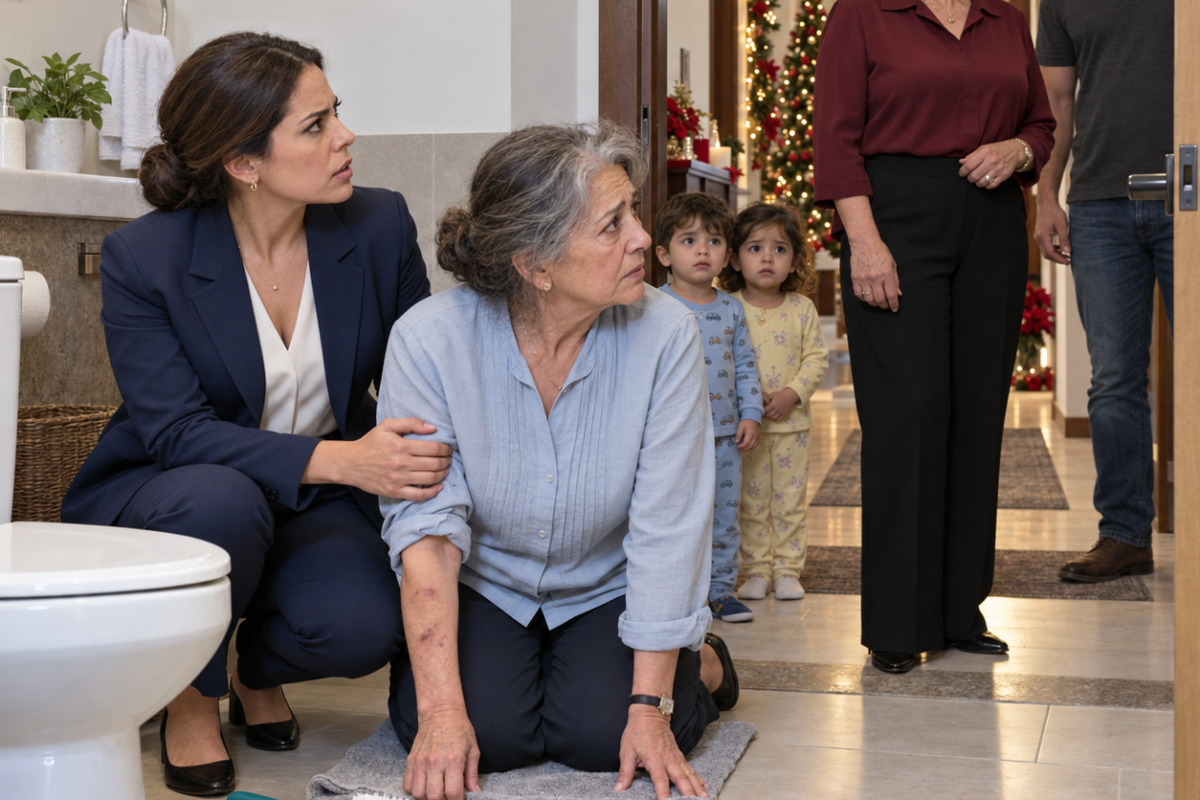
I came home three hours early and found my sixty-eight-year-old mother on her knees scrubbing my mother-in-law’s bathroom. When I helped her stand, her sleeve slipped back, revealing dark marks around her wrist. My husband stepped into the doorway. “Daniela, don’t make a scene.” That was when I remembered my father’s last warning: “If you ever see your mother hurt, don’t argue with anyone. Open the hidden compartment in her sewing machine.”
I came home three hours early and found my sixty-eight-year-old mother on her knees beside a toilet. Her hands were stiff with arthritis. One gripped…

“I already promised your house to your sister,” my father told me four days after I bought it. “They’re moving in Monday. Rent-free for three years.” I was thirty-one, had saved for nine years, and had bought the five-bedroom home entirely in my own name. When I said no, he threatened to tell the family I had abandoned my sister’s children. Days later, he took the microphone at my grandmother’s seventy-fifth birthday dinner and did exactly that.
My father called twelve times in forty minutes after discovering I had bought a house without consulting him. When I answered, he didn’t ask whether…
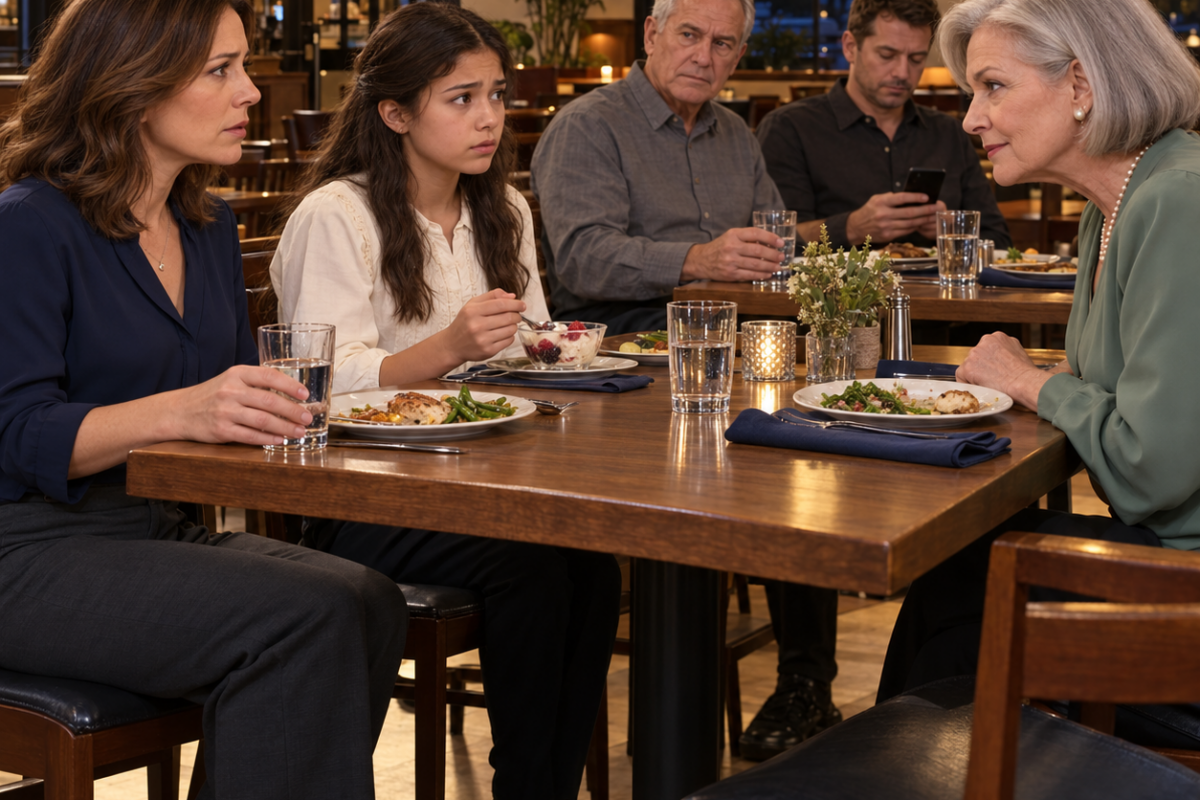
My mother leaned across the restaurant table, looked at my thirteen-year-old adopted daughter, and whispered, “We don’t sit with mistakes.” I took Sole’s hand and walked her out. That night, my father texted, “You’re still making the car payment tomorrow, right?” By midnight, I had canceled the payments I’d been making for my family. Then I remembered something Sole had told me about her grandmother.
My mother looked at my thirteen-year-old daughter and whispered, “We don’t sit with mistakes.” She said it softly enough to avoid attracting attention from the…
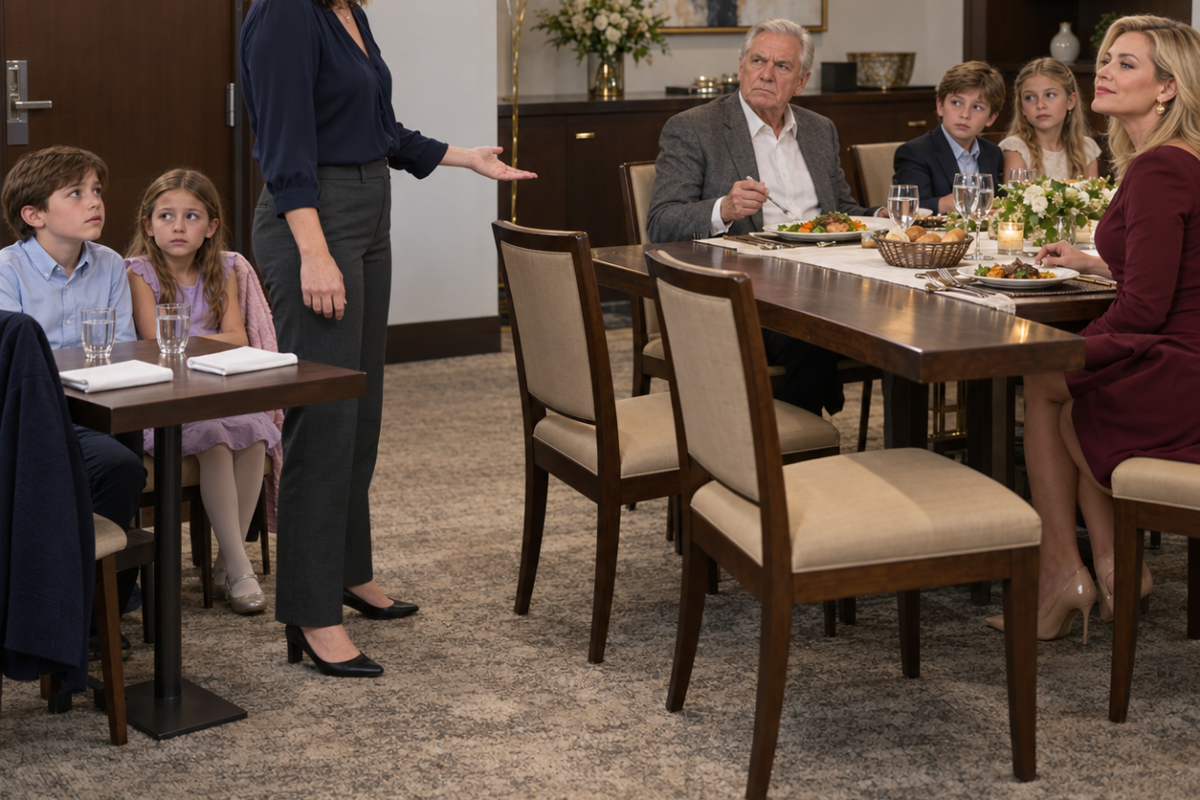
At my father’s seventieth birthday dinner, my eleven-year-old son and eight-year-old daughter were seated beside the service door with water glasses—but no dinner plates. Their cousins sat beside Grandpa with warm bread and full place settings. “They’ll eat after everyone else,” my sister said. I turned to my father, expecting him to object. “They can wait another hour,” he replied. There were two empty chairs at his table.
At my father’s seventieth birthday dinner, the first thing that stopped me wasn’t the cake or the gold balloons. It was my children. Ethan and…
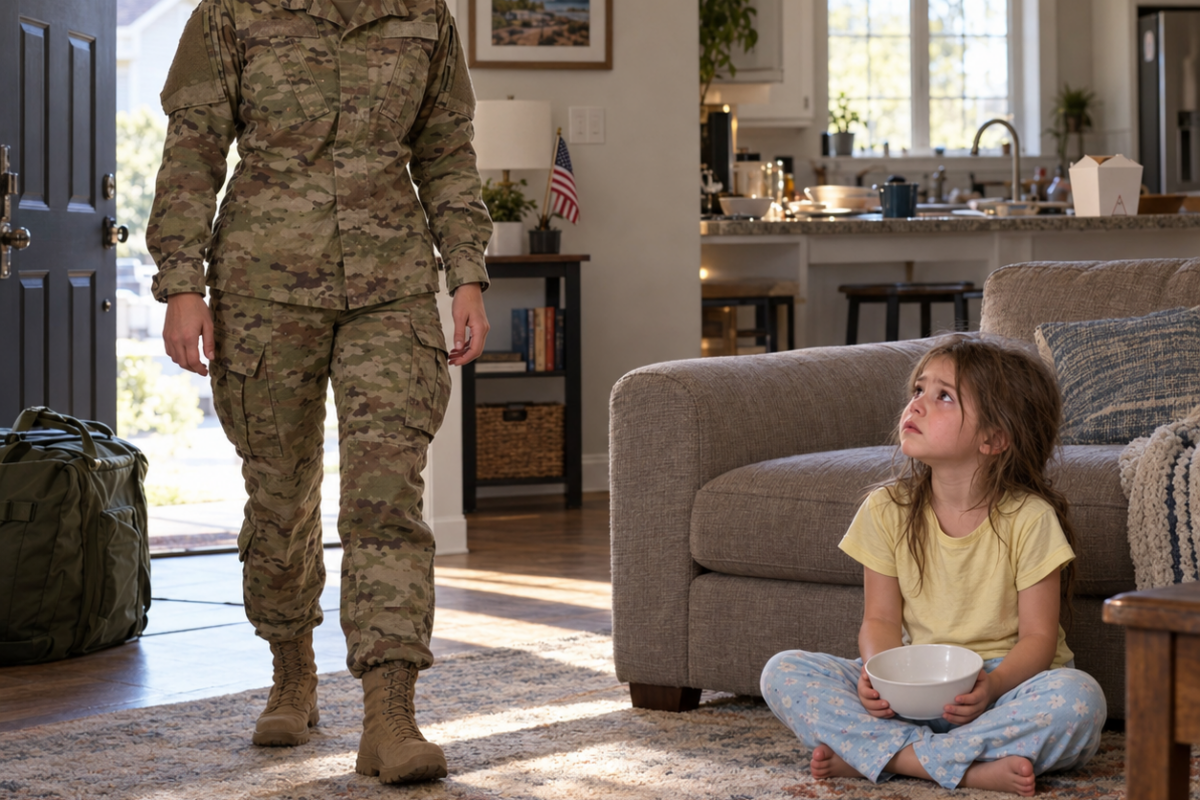
“Mommy, are you real?” my four-year-old daughter whispered when I came home from deployment three weeks early. She was sitting alone on our living room floor with an empty cereal bowl. My husband was on a Caribbean cruise with his mother and sister. Twenty-two minutes earlier, they had posted a photo captioned “Family time.” I was still in uniform when Sophie asked if she could have something to eat.
The first thing my daughter said when I found her was, “Mommy, are you real?” She was sitting cross-legged on our living room floor with…
End of content
No more pages to load