My daughter-in-law canceled my sixty-fifth birthday dinner because her mother disliked “the energy” in my house. Brooke had lived under my roof for three years without paying rent, utilities, or groceries, and my son stood beside the coffee maker letting her explain why I shouldn’t celebrate. I looked at the lemon cake on the counter and said, “You’re right. Let’s cancel it.” Brooke smiled, certain I had agreed to keep the peace again.
I was handed a cancellation notice for my own sixty-fifth birthday party in my own kitchen, twenty-four hours before the celebration.
The woman delivering it was my daughter-in-law, Brooke, who had lived under my roof for three years without paying rent, utilities, or groceries.
Her reason was not illness, an emergency, or a scheduling conflict.
Her mother felt uncomfortable with the energy in my house.
And my son stood beside the coffee maker saying absolutely nothing.
Brooke did not meet my eyes when she said it.
That was the first thing I noticed.
Normally, she looked directly at people when she wanted something. She had a composed way of holding eye contact that made an ordinary preference sound like a decision everyone else had somehow already agreed to.
That morning, however, she studied the refrigerator magnets, the fruit bowl, the pattern in the hardwood floor.
Anywhere but me.
I had spent two weeks planning the dinner.
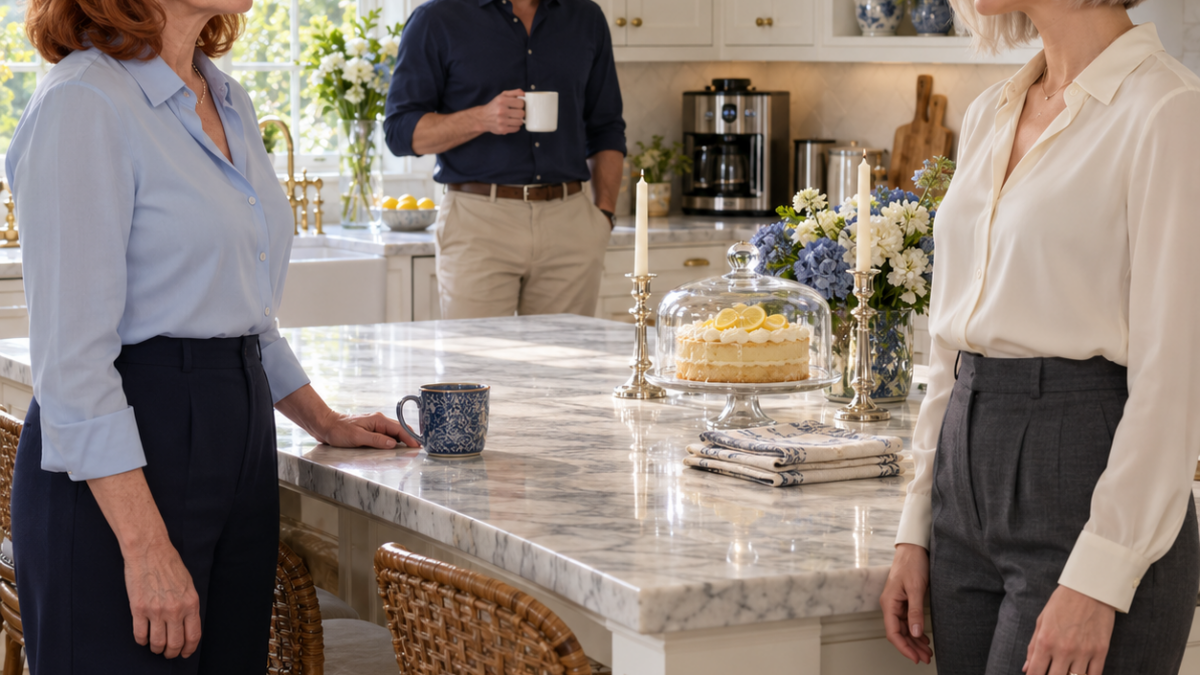
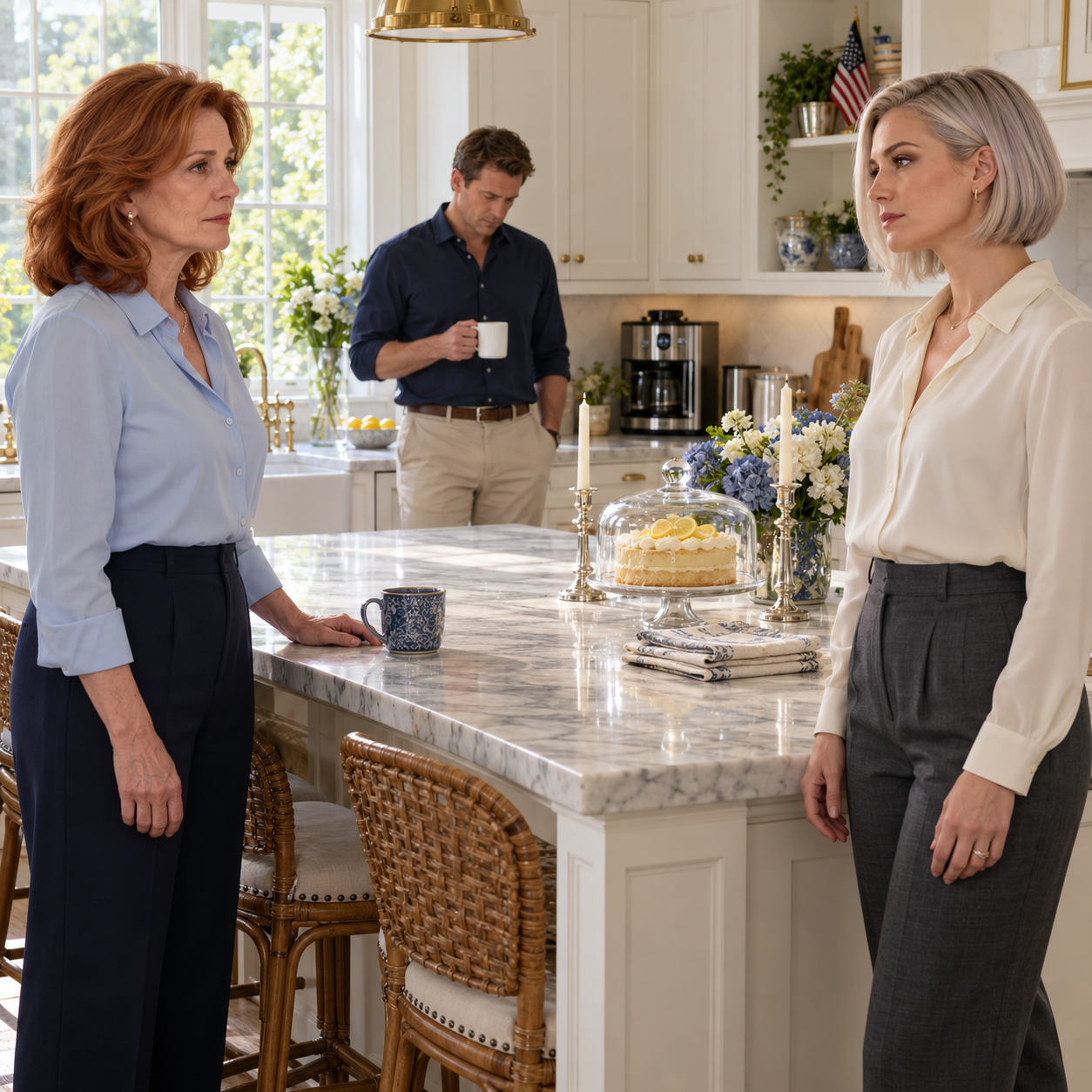
The flowers were ordered from the small shop near the library. My mother’s lemon cake was cooling beneath a glass dome on the counter. I had polished Malcolm’s mother’s silver candlesticks and washed the linen napkins I saved for Christmas, Thanksgiving, and anniversaries that still mattered enough to hurt.
Six friends were coming.
My younger sister, Ruth, was driving in from forty minutes away.
Julian and Brooke were supposed to be there.
And because she was visiting from Connecticut, I had invited Brooke’s mother, Pamela.
That invitation had been my idea.
I had even bought her preferred white wine.
Brooke folded her arms.
“Pamela is uncomfortable.”
“With what?”
“The atmosphere.”
I waited.
She sighed.
“The energy in the house.”
I looked at Julian.
He was running his thumb along the edge of his coffee mug.
My son had always done that when he did not want to answer a question.
At twelve, he did it with a glass of milk after breaking Malcolm’s fishing rod. At seventeen, he did it while explaining why the family car smelled like cigarette smoke.
At thirty-nine, apparently, he still believed silence would protect him from responsibility.
“Julian?”
His gaze flickered toward me.
“Brooke and Pamela had a rough day yesterday.”
That was his contribution.
A rough day.
I thought back through the previous twenty-four hours.
Pamela had come into the kitchen while I rolled pie dough and told me store-bought crusts were perfectly good these days.
“I know,” I said. “I just enjoy making my own.”
Later, she wandered into the garden with a glass of wine and announced that several of my rosebushes were unruly.
I handed her the pruning shears.
“Show me what you would cut.”
She laughed as if I had made a joke and returned to her phone.
At dinner, she explained that my dining room would feel larger if I removed Malcolm’s old cabinet from the west wall.
I told her I liked it where it was.
Perhaps that had been the unbearable energy.
A woman liking things in her own house.
Brooke continued.
“Mom felt like you were taking over all the preparations.”
I looked around the kitchen.
“My birthday preparations?”
“You know what I mean.”
“No, Brooke. I honestly don’t.”
“She felt like she was just in the way.”
Pamela had not carried a grocery bag, lifted a dish, set a table, or asked whether I needed help.
Still, I kept my voice level.
“What would she have preferred me to do?”
Brooke glanced at Julian.
He stared into his mug.
“Maybe let other people contribute.”
“I asked whether she wanted to arrange the flowers.”
“That’s not the point.”
“I asked if she wanted to choose the music.”
“You’re making this literal.”
“I’m asking what she wanted.”
Brooke exhaled.
“We think it would be healthier to let the whole thing pass.”
For a moment, I believed I had misunderstood.
“The dinner?”
“Yes.”
“My birthday dinner.”
“Just this year.”
I looked at the cake.
The lemon glaze had set into a pale shine.
I had baked that cake every year since I was twenty-four because my mother baked it for me before that.
Malcolm used to steal a thin piece from the side before dinner, then rearrange the glaze with a butter knife as though nobody could tell.
Julian had done the same as a child.
“The dinner is tomorrow,” I said.
“I know.”
“People are coming.”
“We can message everyone.”
“We?”
“I’ll handle it.”
Something unexpectedly calm settled in my chest.
Brooke mistook my silence for uncertainty and stepped closer.
“We can do something simple later. Maybe brunch. When everyone’s feelings aren’t running so high.”
“Whose feelings are running high?”
She gave me a patient look.
“There’s no reason to make this harder.”
I turned to Julian again.
“Do you want my birthday dinner canceled?”
His lips parted.
Then he glanced at his wife.
That little movement answered before he did.
“I think Brooke’s saying everyone needs some space.”
Space.
They had moved into my house three years earlier because they needed space from financial pressure.
They occupied the guest room, then the upstairs study, then half the garage.
Brooke reorganized my pantry.
She replaced the guest bathroom towels because mine were dated.
She moved my good roasting pan into the basement because she preferred cookware that matched.
Now they needed space from me.
The kettle began to hiss.
I crossed the kitchen and turned off the burner before it screamed.
“All right,” I said.
Brooke blinked.
“All right?”
“You’re right. Let’s cancel it.”
Relief softened her face.
“Thank you.”
She looked at Julian with a little smile.
He finally raised his eyes to mine.
There was something uncertain there.
Maybe guilt.
Maybe surprise.
I did not stay to find out.
I carried my cold tea into the garden.
Pamela stood beside the hydrangeas in cream trousers and one of Brooke’s oversized cardigans. She held a wineglass, though it was not yet ten.
“There she is,” she said brightly.
I wondered whether she knew.
Of course she knew.
Brooke would not have canceled my birthday over her mother’s discomfort without discussing it with her first.
Pamela pointed toward the roses.
“These really would bloom better with more aggressive trimming.”
“Perhaps.”
“You should let Brooke redo this section next spring. She has such a good eye.”
“I’m sure she does.”
I set my blue mug on the patio table.
For several seconds, I looked at the house.
The kitchen window.
The upstairs curtains Brooke chose.
The garage door Julian sometimes forgot to close.
The chimney Malcolm climbed once despite my threatening to divorce him if he fell.
My house.
I took out my phone.
Ruth answered on the third ring.
“Please don’t tell me you’re canceling tomorrow. I already bought you something, and I refuse to keep it until Christmas.”
“Actually, I am canceling.”
Silence.
Then she asked carefully, “Why?”
I told her.
Brooke.
Pamela.
The energy.
Julian staring into his coffee.
When I finished, Ruth did not swear.
She only swore when things were truly serious, and somehow her silence felt worse.
“What are you going to do?”
“I don’t know yet.”
“That’s not true.”
I smiled despite myself.
My sister knew the sound of my voice when I had already made a decision.
“Fine. I know the first thing.”
“What?”
“I’m not calling my friends.”
“Good.”
“Brooke can cancel whatever she thinks she’s canceling.”
“Even better.”
“Then I’m going to figure out why two adults who were supposed to stay six months are still living in my house after three years.”
This time, I could hear the smile in Ruth’s silence.
“Happy birthday, Eleanor.”
“My birthday is tomorrow.”
“I know.”
“Then why are you saying it today?”
“Because I think you just gave yourself something.”
After we hung up, I stayed in the garden until the tea was colder than the morning air.
For the first time in three years, I did not wonder what Julian wanted for dinner.
The house had been mine for thirty-one years.
Malcolm and I bought it when Julian was eight.
It was not grand. Four bedrooms, a small dining room, a kitchen that faced the garden, and a living room with a bay window Malcolm considered its finest feature.
The ceiling leaked during a November storm our first year there.
Malcolm spent three weekends repairing it while insisting the ladder was stable when it clearly was not.
He laid the ceramic kitchen tiles himself after watching instructional videos and announcing that he had mastered the science of grout.
One tile near the back door sat slightly higher than the others.
For years, I considered having it fixed.
After Malcolm died, I stopped thinking of it as a flaw.
It was evidence that someone I loved had stood there, measured badly, laughed, tried again, and left a mark.
The blue mug on the patio table had cracked the morning the hospital called.
I dropped it in the sink.
The handle stayed intact, but a line ran from the rim toward the side.
I could have thrown it away.
Instead, I kept it for cool tea and the evenings when holding something familiar helped.
Julian knew all of that.
Brooke knew enough.
This house was not an anonymous collection of rooms waiting for younger people to make it useful.
We had paid for it.
Raised a child in it.
Argued in it.
Made up in it.
I held Malcolm’s hand in our bedroom the night before his final hospital admission.
Three years later, I still sometimes reached across the bed before waking completely.
I did not expect everyone to treat the house as a memorial.
I changed things.
I bought a new mattress.
I repainted the downstairs bathroom.
I gave away clothes Malcolm would never wear again.
But there was a difference between choosing change and being treated as an obstacle to someone else’s choices.
I had lost sight of that difference.
Julian and Brooke arrived after he lost a contract with a marketing firm and she left a job she hated.
“Six months,” Julian said.
“Maybe eight,” Brooke added. “No longer than a year.”
I opened the door without hesitation.
“No rent. Save everything you can.”
At first, they were grateful.
Brooke cooked twice a week.
Julian mowed the lawn.
We ate together on Sundays.
They asked before moving things.
They brought groceries without needing a list.
Then six months became a year.
The word temporary began appearing whenever I asked a practical question.
How was the job search?
Temporary setback.
When would they start looking at apartments?
Temporary delay.
Why had the grocery bill become mine again?
It was just temporary, Mom.
After Malcolm died, silence frightened me.
We had spent forty-two years waking beside each other.
During the first winter alone, I turned on radios in rooms I was not using just to hear a human voice.
When Julian asked to come home, part of me was relieved.
I had never admitted that clearly.
Because I was grateful for company, I became reluctant to question its cost.
I told myself I was helping my son recover.
I told myself Brooke was adjusting.
I told myself families did not keep accounts of every favor.
All of that was partly true.
The larger truth was that I feared making the house empty again.
So I answered small requests.
Could you make the chicken tonight?
We’re low on oat milk.
Pamela likes sparkling water.
Would you wash the guest sheets?
Each request was ordinary enough that refusing seemed petty.
That was how the boundaries disappeared.
Not through one dramatic invasion.
Through hundreds of little permissions until asking no longer sounded necessary.
I went back inside shortly before eleven.
Brooke sat at the dining table with her phone.
Julian was upstairs.
Pamela had gone to the guest room.
Brooke looked up.
“I’m just getting the numbers together.”
“For my friends?”
“Yes. I have Ruth’s. I think you’ll need to give me the others.”
“I won’t.”
She frowned.
“You agreed.”
“I agreed not to host the dinner we planned.”
“That’s the same thing.”
“No. You said you would handle the cancellations. You can speak to people whose contact information you have. I’ll decide what to say to my friends.”
Her expression tightened.
“We’re trying to avoid drama.”
“Then don’t explain my feelings for me.”
“I wasn’t going to.”
I looked at her.
She lowered her eyes.
For once, I let the discomfort remain.
“I’m going out,” I said.
“Could you pick up—”
“No.”
The word landed harder than I intended because it was so unfamiliar between us.
Brooke blinked.
“I hadn’t even finished.”
“I know. I’m not making a grocery run.”
I took my purse from the hook.
At the door, I paused.
“What are your plans for dinner?”
She looked confused.
“I don’t know.”
“Then you and Julian should decide.”
I left before she could return the question to me.
Ruth met me at the flower shop.
I had called from the car.
She arrived in a yellow raincoat with the expression she wore when a mechanic had given her an estimate she intended to challenge.
“You look tired,” she said.
“I feel tired.”
“Good. Tired people should sit down. Angry people tend to start cleaning cupboards.”
“I’m not angry.”
“Give it time.”
The florist, Louise, had known me for years.
She came from the back carrying a bucket of pale roses and blue delphiniums.
“Birthday lady.”
My throat tightened.
I had not expected kindness to hurt.
Louise saw my face.
“What happened?”
“The dinner’s changed,” I said.
“All right. Do you still want the flowers?”
Ruth answered before I could.
“Yes. She does.”
I looked at her.
“We’re not throwing away flowers because Pamela has discovered a feeling.”
Louise pressed her lips together, wisely hiding a smile.
“Where should I deliver them?”
“To Ruth’s,” I said.
Ruth nodded.
“There we are.”
Outside, I stood beside my car.
“You don’t have to make a party for me.”
“I’m not making you do anything.”
“That isn’t what I meant.”
“I know.”
She softened.
“Do you still want to see your friends tomorrow?”
“Yes.”
“Then see them.”
“It feels like proving a point.”
“Only if you spend the evening talking about Brooke.”
I thought about that.
Ruth continued.
“You have a birthday. Your friends have plans to celebrate it. The location can change without your whole life becoming a demonstration.”
I leaned against the car.
“I already made the cake.”
“Bring it.”
“And enough food for twelve.”
“Bring that too.”
“You’re turning this into a potluck.”
“No. I’m turning it into dinner.”
I laughed.
It was the first laugh that morning that did not feel sharp.
Ruth called it a beginning.
I called my six friends from the parking lot.
I did not tell them the whole story.
I said the gathering at my house would not take place, but Ruth had invited us to hers.
Same time.
Same cake.
Less fuss.
Every one of them said yes.
One friend, Marlene, asked whether I was ill.
“No.”
“Then I’m coming.”
Another, Dennis, offered to bring chairs.
Ruth did not need chairs.
He said he would bring wine instead.
The arrangements took twenty minutes.
My birthday did not vanish.
Nobody needed to plead for permission.
On the drive home, I began feeling the anger Ruth predicted.
Not a bright, noisy anger.
A steady one.
For three years, I had treated the household as something we were building together.
Brooke treated it as an arrangement where my obligations remained fixed and her preferences kept expanding.
Julian treated it as something he did not need to examine as long as nobody raised their voice.
Tomorrow would be my birthday.
The day after that, I would begin asking questions.
When I returned, Julian stood in the kitchen.
Brooke had apparently told him about the grocery conversation.
“Mom, are you upset?”
“Yes.”
He looked surprised.
I wondered why.
“About the dinner?”
“About the dinner. About being told to cancel it. About three years of an arrangement that no longer resembles what we agreed to.”
He leaned against the counter.
“I thought you liked having us here.”
“I did.”
“Did?”
“I like having my son in my life. That is different from liking every part of this household.”
He rubbed the back of his neck.
“We can talk about it.”
“We will.”
He glanced toward the stairs.
“Brooke didn’t mean to hurt you.”
I set down my purse.
“She meant to cancel my birthday dinner because her mother preferred it canceled.”
“That sounds harsh.”
“It sounds accurate.”
He looked away.
I waited.
At last, he said, “Couldn’t everyone just be flexible?”
“I have been flexible for three years.”
He opened his mouth.
I raised a hand.
“I’m not discussing this while you look for a way to make my answer easier for Brooke. We can talk properly after tomorrow.”
“Why after tomorrow?”
“Because tomorrow is my birthday, and I’m allowed to spend one day without negotiating my place in my own house.”
He stood very still.
Then he nodded.
“All right.”
It was the first useful thing he said that day.
That evening, I did not cook.
Brooke ordered takeout.
She asked whether I wanted anything.
I thanked her and declined because I had eaten with Ruth.
That was true.
It also felt strange not to account for everyone before choosing my own meal.
Pamela came downstairs around seven.
“I hope there are no hard feelings,” she said.
I was sorting the linen napkins.
“About what?”
She gave a small laugh.
“Oh, Eleanor. The change of plans.”
“The cancellation?”
“Whatever you want to call it.”
I folded another napkin.
“There are hurt feelings.”
Her smile faded.
“I certainly didn’t intend that.”
“What did you intend?”
She looked toward the doorway.
“I told Brooke I felt a little unnecessary here.”
“You’re a guest.”
“I’m her mother.”
“Yes.”
“I thought perhaps we could have more influence over the plans.”
“My birthday plans.”
She sighed.
“You keep emphasizing that.”
“It seems important.”
Pamela sat without being invited.
“I’m sure this has been difficult, with Malcolm gone.”
I stopped folding.
Grief had become a convenient explanation whenever someone wanted to dismiss my judgment.
I was sentimental because Malcolm died.
Sensitive because Malcolm died.
Attached to the cabinet because Malcolm died.
As though widowhood had turned me into a collection of symptoms instead of a woman who could prefer her own furniture.
“My husband’s death is not why I objected.”
“I wasn’t saying—”
“I objected because I planned a dinner, invited you graciously, and was told your discomfort mattered more than the event.”
Pamela’s face flushed.
“I didn’t tell Brooke to cancel it.”
“Did you tell her not to?”
Silence.
She stood.
“I think you’re determined to misunderstand.”
“No. I think we’ve finally reached something clear.”
She left the room.
I finished folding the napkins.
My hands were steady.
That surprised me.
The next morning, I turned sixty-five.
I woke before the house stirred.
For a while, I lay listening.
A bird near the gutter.
A truck passing on the main road.
The quiet click of the heating system.
Malcolm always woke before me on my birthday.
He claimed he needed time to make coffee, though most years he used it to search for the card he had hidden somewhere too clever to remember.
Once, he put it in the freezer.
I found it beside peas.
The memory made me smile.
Then it made me cry.
I let both happen.
At eight, Julian knocked on my bedroom door.
He carried coffee and a small wrapped box.
“Happy birthday, Mom.”
“Thank you.”
He sat on the edge of the chair.
Inside the box was a silver bracelet.
It was pretty.
Brooke had probably chosen it.
I did not dislike that.
I also knew a gift could not settle what happened yesterday.
He watched me fasten it.
“Do you like it?”
“Yes.”
“Good.”
We sat quietly.
Then he said, “What are you doing tonight?”
“Dinner at Ruth’s.”
He looked up.
“With everyone?”
“With my friends.”
“Oh.”
I waited.
“Brooke thought you were canceling.”
“I canceled the dinner here.”
“You didn’t tell us.”
“I’m telling you now.”
He looked down at the cup.
“Are we invited?”
I thought carefully.
“No.”
His face changed.
I did not enjoy it.
I also did not retreat.
“Not tonight. I want an evening without this conversation waiting underneath everything.”
He nodded slowly.
“All right.”
I touched his arm.
“This is not me ending our relationship.”
“I know.”
“It is me choosing how to spend my birthday.”
He looked at me.
“I’m sorry.”
“For what?”
He swallowed.
“For not saying anything yesterday.”
I nodded.
“Thank you.”
He seemed to want more.
A smile.
An assurance.
A quick restoration.
I could not give it honestly.
So I accepted the apology and let it remain incomplete.
Ruth arrived in the afternoon to help carry food.
Brooke stood near the stairs watching us.
“You really are having the party.”
“I’m having dinner with friends.”
“That makes us look terrible.”
I held the cake carrier.
“I have not discussed you with them.”
“People will ask.”
“They may.”
“What are you going to say?”
“The gathering changed.”
She crossed her arms.
“You’re punishing us.”
Ruth looked at her.
“No, Brooke. She’s leaving for dinner.”
“Ruth, this is a family matter.”
“My sister is family.”
I placed a hand on Ruth’s sleeve.
She stopped.
I was grateful.
I did not want someone else to do my speaking now that I had finally begun.
“Brooke,” I said, “you asked to cancel the gathering because Pamela needed space. I am giving her space. You do not also get to decide that I spend my birthday alone.”
Her expression shifted.
For a moment, she seemed unable to answer without exposing the contradiction.
Then she stepped aside.
We carried the food to Ruth’s car.
I took the silver candlesticks too.
Not because dinner required them.
Because I had polished them to celebrate a life that remained worth celebrating.
Ruth’s house was smaller than mine.
Her dining room barely held the table and eight chairs.
Someone had to move a plant.
Dennis arrived with wine.
Marlene brought bread.
My friend Howard brought a grocery-store bouquet and apologized because he knew I ordered flowers.
“Flowers are not offended by other flowers,” Ruth told him.
We laughed.
That set the tone.
No one asked me to explain the canceled dinner before taking off a coat.
No one treated the evening as an intervention.
We ate.
We talked.
Someone told a story about a disastrous vacation.
Marlene described a grandchild learning to drive.
Howard argued that the local diner’s new owner had ruined the hash browns.
I sat between Ruth and a friend named Grace and realized my shoulders were no longer tight.
The room was full of people who liked me without needing anything from me that evening.
That should not have felt unusual.
It did.
After dinner, Ruth brought out the lemon cake.
Sixty-five candles would have set off the smoke alarm, so she used five and announced that I could do the arithmetic myself.
Dennis began singing too early.
Everyone joined him anyway.
I looked at the faces around the table.
Then at the cake.
For a second, I saw Malcolm reaching with a butter knife.
I closed my eyes.
I did not wish for everything to go back.
That surprised me most.
I wished to stop confusing being needed with being loved.
Then I blew out the candles.
Later, Grace helped carry plates into the kitchen.
She had been widowed longer than I had.
We had met through a library group.
“You seem different tonight,” she said.
“Older?”
She smiled.
“Less busy.”
I leaned against the counter.
“I’ve had a strange couple of days.”
“I gathered.”
I looked at her.
She raised a hand.
“Ruth didn’t tell me. I’ve known you long enough to hear when a change of plans is more than a change of plans.”
I smiled sadly.
“They canceled it.”
“Who?”
“Brooke. With Julian’s cooperation, or lack of objection. Pamela felt uncomfortable.”
Grace was quiet.
Then she said, “I’m sorry.”
I had expected advice.
Her simple answer made my eyes fill.
After a while, she added, “Do you know what you’re going to do?”
“Ask some questions.”
“Good.”
“Questions I should have asked earlier.”
“Perhaps. But earlier is no longer available.”
I laughed softly.
“No.”
She placed a plate in the drying rack.
“Don’t make the next part harder by punishing yourself for the last part.”
I carried that sentence home.
The kitchen was clean when I returned.
That was unusual.
Brooke had left a card on the counter.
Pamela had signed it too.
There were flowers in a vase.
I looked at them.
I wanted to appreciate the gesture.
I did appreciate it.
I also understood it did not answer the questions.
Julian waited in the living room.
“How was dinner?”
“Lovely.”
He nodded.
“I’m glad.”
I sat opposite him.
For a moment, I thought we would talk properly.
Then he said, “I hope this means everyone can move on.”
I looked at him.
“No.”
His shoulders dropped.
“Mom.”
“A pleasant birthday does not make yesterday reasonable.”
“I know.”
“And yesterday is not the whole problem.”
He rubbed his forehead.
“What do you want?”
“A clear conversation about this household. Tomorrow evening. You, Brooke, and me.”
“Pamela?”
“No. Pamela is a guest.”
He nodded reluctantly.
“All right.”
I stood.
“I’m going to bed.”
He looked up.
“Happy birthday.”
I smiled.
“Thank you.”
It was possible to love him and remain disappointed.
I had been treating those feelings as though one had to erase the other.
They did not.
Monday morning, I took out the notebook where I kept household expenses.
I had retired from an office-management position two years earlier.
For most of my working life, I handled scheduling, records, payroll information, and the small practical details that prevented a workplace from descending into confusion.
I knew how to make a list.
I had simply avoided making this one.
Property taxes.
Insurance.
Utilities.
Groceries.
Maintenance.
Internet.
The expenses were not all caused by Julian and Brooke.
I lived there too.
The house needed care regardless.
I was not going to present every dollar as something they owed me.
But three adults used more electricity than one.
Three adults ate more food.
A household arrangement that began as six months of support had become a permanent monthly commitment.
I compared bills from before they arrived.
Then I stopped.
I did not need forensic precision to justify wanting a different life.
The numbers were useful.
They were not permission.
I had savings.
A pension.
Malcolm’s arrangements.
I could afford the house.
What I could no longer afford was the habit of treating my own wishes as the least urgent expense.
I called a local attorney named Anne Sullivan.
She had helped update documents after Malcolm died.
I asked for an appointment.
“I need advice about ending a family living arrangement,” I said.
Her voice remained calm.
“How soon would you like to come in?”
“Today, if possible.”
She had an opening after lunch.
I took it.
I did not tell Julian before leaving.
Not as a secret.
As a decision that belonged to me.
Anne listened.
She asked who owned the house.
I did.
Whether they paid anything.
No regular rent, utilities, or grocery contribution.
Whether there was a written agreement.
No.
How long they had lived there.
Three years.
What I wanted.
That question took longer.
I looked at the framed print on her wall.
“I want my house back.”
She nodded.
“Do you want them to leave immediately?”
“No. I want it handled properly. I don’t want a fight over locks or belongings.”
“Good.”
She explained that long-term residence could create rights and required appropriate notice and process.
The absence of rent did not mean I should simply put their boxes outside.
I had no intention of doing that.
We discussed a reasonable written plan, a move-out date, and what would happen if they refused.
I asked whether I needed a reason acceptable to everyone.
“No,” she said. “You need to follow the applicable process. You do not need your son to agree that your reason is emotionally sufficient.”
I sat very still.
That was worth the appointment.
We settled on a written notice and a proposed agreement allowing them ninety days to move, with clear household expectations during that period.
Anne would ensure the documents were appropriate.
I would discuss the plan.
If they cooperated, we could finish without turning the family into a courtroom.
If they did not, I would still have a path.
I also updated some practical authorizations.
Emergency contacts.
Access to certain accounts.
Nothing dramatic.
No disinheritance speech.
No punishment hidden in a will.
I was not confusing a current boundary with every future decision.
Before I left, Anne asked whether I had support.
“My sister.”
“Good.”
“And friends.”
“Also good.”
She smiled.
“People often discover they have more than they thought once they start asking.”
I thought of Ruth’s crowded dining room.
“Yes,” I said. “I think I’m discovering that.”
At six, Julian and Brooke sat at the kitchen table.
Pamela had been told the conversation was private.
She was upstairs.
I put my notebook beside me.
Julian looked at it.
“Are we doing a budget?”
“We’re discussing the arrangement.”
Brooke smiled tightly.
“I’m glad. There’s clearly been miscommunication.”
“There has.”
Her shoulders eased.
Then I said, “I understood you were staying temporarily. You appear to understand that living here has become indefinite.”
They looked at each other.
Julian answered.
“We never said indefinite.”
“You also stopped discussing a move.”
“We’ve been trying.”
“Then tell me where things stand.”
He began describing work.
Freelance projects.
A new client.
A possible longer contract.
I listened.
Then I asked what his current monthly income was.
He hesitated.
Brooke shifted.
I raised a hand.
“You do not have to disclose every private financial detail to me. But if you want me to continue providing housing because you cannot afford to leave, I need an honest picture of that claim.”
Julian nodded.
He gave a range.
It was more than I expected.
Not enough to make them wealthy.
Enough to raise a question.
“How long has that been steady?”
“About ten months.”
I looked at Brooke.
“And you?”
“I’m working part-time.”
“Since when?”
“Last summer.”
I absorbed that.
They had recovered more than they told me.
Not completely.
But significantly.
“What have you been saving?” I asked.
Brooke’s face hardened.
“Are we being audited?”
“No.”
“It feels like it.”
“I am trying to understand whether my support is helping you prepare to leave or helping you avoid preparing.”
Julian looked down.
Brooke spoke first.
“We’ve had expenses.”
“So have I.”
“That’s not fair. You own this house.”
“Yes.”
“You don’t have rent.”
“I have taxes, insurance, maintenance, utilities, and groceries.”
“Those exist whether we’re here or not.”
“Some do. Some increase. None of that gives you an unlimited claim on the rooms.”
Silence.
I continued.
“Here is what I’ve decided. I want you to establish your own home. I’m proposing ninety days, with the arrangements set out properly in writing.”
Julian stared at me.
Brooke did not move.
“Ninety days?” she repeated.
“Yes.”
“Because of a birthday dinner?”
“No. Because three years have passed. Because the arrangement no longer works. Because I want to live in my home without being treated as someone whose plans require approval.”
Her eyes filled.
“You’re throwing us out.”
“I’m giving notice and time to plan.”
“That’s just a nicer way of saying it.”
“It is a more accurate way.”
Julian finally spoke.
“Mom, can we slow down?”
“I have slowed down for three years.”
“We thought you wanted us here.”
“I wanted company. I wanted to help. I did not agree to lose control over my home.”
He rubbed his face.
“I didn’t know you felt that way.”
“I am telling you now.”
Brooke stood.
“I can’t discuss this while you’re angry.”
I looked up at her.
“I’m speaking quietly. You do not have to like the decision for this to be a calm conversation.”
She stared at me.
For once, the word angry had not sent me into explaining myself.
She sat again.
I slid the proposed plan across the table.
They did not sign that evening.
I did not ask them to.
I told them to read it and get independent advice if they wanted.
The boundary did not depend on a signature produced under pressure.
It depended on my willingness to follow through.
I was beginning to understand that.
Pamela came downstairs after they left the kitchen.
Apparently, privacy had not prevented information from traveling upstairs.
“Ninety days is cruel,” she said.
I closed the notebook.
“Good evening, Pamela.”
“Brooke is devastated.”
“I’m sorry she’s upset.”
“Then reconsider.”
“No.”
She looked startled.
“She’s family.”
“Yes.”
“You don’t turn family out.”
“You do not cancel a family member’s birthday because her home has the wrong energy.”
Pamela flinched.
“That was never what I wanted.”
“Then this is an opportunity to stop speaking for each other.”
She drew herself up.
“You have so much space.”
“I know.”
“You could make this easier.”
“I have made it easier for three years.”
She looked toward the hallway.
“Where are they supposed to go?”
“Somewhere they can afford.”
“Everything is expensive.”
“Yes.”
The answer frustrated her because it provided no disagreement she could use.
She lowered her voice.
“They have been saving for a house.”
“That is good.”
“They won’t be able to save as much if they rent.”
“That is how living expenses work.”
Pamela stared at me.
Then she said something that explained more than she realized.
“But it makes no sense for them to pay a stranger when the family already has a house.”
I sat back.
“The family does not have a house. I have a house.”
She opened her mouth.
I continued.
“And I am a member of the family, not a housing resource.”
For several seconds, she said nothing.
Then she turned and went upstairs.
I did not follow.
The next morning, Julian asked to speak alone.
He looked exhausted.
I made coffee.
He sat at the table.
“Brooke barely slept.”
“I’m sorry.”
“I barely slept.”
“Neither did I.”
He looked surprised.
I wondered how often he forgot that my calm had a cost.
“I don’t want you to think I don’t appreciate what you’ve done.”
“I want appreciation to become behavior.”
He nodded slowly.
“What behavior?”
“Taking the deadline seriously. Paying the household contribution we agree on while you remain. Doing your share without waiting for me to manage it. Not asking me to absorb Brooke’s disappointment.”
He looked down.
“She thinks you dislike her.”
“I dislike being dismissed.”
“She says you never let the house feel like ours.”
“It was never meant to be yours.”
His expression changed.
I let the sentence stand.
“You were welcome to live here temporarily. You were welcome to make your rooms comfortable. That was not a transfer of ownership, authority, or responsibility for your future.”
He stared at the table.
Then he said, “I think I let it become that in my head.”
I waited.
“When work improved, I kept thinking we should save more before moving. Then we wanted a better place. Then Brooke said renting would waste what we’d saved.”
“What did you think?”
“That she had a point.”
“And did I have a point?”
He looked up.
“You weren’t saying much.”
There it was.
I could have accepted that as my entire fault.
I did not.
“I should have spoken more clearly. You should have asked before deciding my silence meant forever.”
He nodded.
“That’s fair.”
We sat quietly.
Then I asked, “What did you think when Brooke canceled the dinner?”
He rubbed his thumb along the mug.
The old gesture.
“I thought it would be easier.”
“For whom?”
He did not answer.
I waited.
“For me,” he said finally.
The honesty hurt.
It also gave us somewhere real to begin.
“I didn’t want Brooke upset with Pamela. I didn’t want Pamela upset with you. I thought one dinner could pass.”
“My dinner.”
“Yes.”
“And you assumed I would absorb it.”
His eyes filled.
“Yes.”
I looked at my son.
I loved him.
I had taught him to tie shoes, read, apologize, and try again.
Somewhere along the way, I had also taught him that my disappointment was safer to create because I would carry it quietly.
“I won’t keep doing that,” I said.
He nodded.
“I understand.”
“You’re beginning to.”
He did not argue.
That was progress.
Pamela returned to Connecticut two days later.
She had planned to stay another week.
I had not asked her to leave early.
She announced the change at breakfast as though it were a consequence I should feel.
“I don’t think my presence is helping.”
I looked at her.
“Travel safely.”
Brooke’s eyes flashed.
Julian remained quiet.
When Pamela left, she hugged Brooke for a long time.
She gave Julian advice about not rushing into decisions.
At the door, she turned toward me.
“I hope you find the peace you’re looking for.”
“I hope so too.”
She seemed disappointed that I did not hear it as an insult.
After the car pulled away, the house settled.
Not peacefully.
But without one additional voice.
I went into the garden.
The roses were still unruly.
I liked them.
The written notices were delivered properly.
Anne handled the details.
Julian and Brooke obtained advice of their own.
There were questions.
A few objections.
A proposed extension.
I considered the extension and declined because it was not tied to a specific need.
It was simply more time.
We eventually agreed on the ninety-day departure, a modest contribution toward increased household expenses during the remaining period, and a practical division of chores.
I did not charge them retroactively for three years.
I had offered that support freely.
I was not going to rewrite it as a debt because I regretted parts of the arrangement.
But generosity already given did not obligate generosity forever.
That distinction steadied me.
They began looking at apartments.
At first, every place was wrong.
Too small.
Too far.
Too expensive.
No second office.
No garage.
No garden.
Brooke described the limitations as though they proved leaving was impossible.
I listened once.
Then I said, “You are describing choices.”
“They’re terrible choices.”
“They’re still choices.”
Julian began looking more seriously.
He made a spreadsheet.
I smiled when I saw it.
He had always mocked my lists until life required him to make one.
They had savings.
Not as much as I expected after three rent-free years.
Some had gone to travel.
A newer car.
Subscriptions.
Furniture.
An expensive course Brooke hoped would help her change careers.
None of those things was automatically wrong.
What was wrong was making them possible through my support while telling me their need remained too urgent to question.
Julian acknowledged that first.
Brooke took longer.
One evening, she stood in the kitchen while I prepared soup.
“You act like we’ve been using you.”
I lowered the heat.
“I think the arrangement has been used beyond what I intended.”
“That’s not the same.”
“No.”
“So you don’t think we’re bad people?”
“I am not deciding your whole character.”
She looked at me.
“Then why does it feel like you are?”
“Because you’re being asked to change something comfortable.”
She went quiet.
I continued stirring.
After a while, she asked whether she could help.
I handed her carrots.
For twenty minutes, we worked without arguing.
It did not heal the household.
It reminded me that not every interaction had to become the final verdict.
I needed that too.
Meanwhile, I began rebuilding a life I had allowed to shrink.
Ruth asked me to join a Saturday walking group.
I nearly said I was busy.
Then I checked what busy meant.
Laundry for three adults.
A grocery list I did not need to own.
Waiting to see whether someone wanted the car.
I said yes.
The group met near the river.
We walked slowly enough to talk.
Some people were retired.
Some were not.
One woman had recently moved to town.
A man named Walter brought a dog that behaved better than he claimed.
I laughed more than expected.
Afterward, several of us went for coffee.
I did not check my phone every ten minutes.
Nobody at home was in danger because I had not planned lunch.
That became a useful discovery.
I signed up for a pottery class.
I was terrible.
My first bowl leaned as though it had received troubling news.
The instructor called it character.
Ruth called it a gravy hazard.
I kept it anyway.
Malcolm would have loved it.
He liked evidence that a person tried.
For the first time in years, trying did not have to be useful to someone else.
I could make a bad bowl because I wanted to learn.
The house changed before anyone moved out.
I stopped accepting grocery instructions as assignments.
If Brooke texted that we were low on something, I answered, “Please add it to your shopping.”
If Julian asked whether I could make dinner, I said yes when I wanted to and no when I did not.
I stopped washing their sheets.
I returned responsibility to the rooms where it belonged.
The first week was uncomfortable.
Brooke seemed offended by the practical consequences.
Julian apologized too often.
I told him apologies were not required for doing his laundry.
He laughed.
Then he did it.
There were small failures.
A forgotten chore.
Dishes left overnight.
An argument about the thermostat.
I did not turn each into proof that they would never change.
I also did not quietly fix everything.
I said what needed saying.
Then I went on with my day.
Boundaries, I discovered, were less dramatic than the decision to establish them.
They were repetitive.
Often boring.
Sometimes irritating.
They required me to resist the old satisfaction of being indispensable.
That was my hardest work.
I liked knowing how to make things run smoothly.
I liked being capable.
I had to learn that capability did not make every task mine.
One rainy afternoon, I found Julian in the upstairs study.
He was sorting papers.
The room had become their office so completely that I had not entered it properly in months.
Boxes lined the wall.
Two desks faced the window.
Malcolm’s old map, which had once hung above the bookcase, stood rolled in a corner.
Julian saw me notice it.
“I was going to put that back.”
“Were you?”
He looked down.
“I should have.”
I stepped inside.
When Malcolm was alive, he used the room for bills, fishing equipment catalogs, and the occasional attempt to write family history.
Most pages began with a place name and ended with a complaint about his handwriting.
I kept them.
Julian picked up the rolled map.
“It felt normal to move things.”
“I know.”
“I don’t think I thought about what it meant.”
“No.”
He looked at me.
“Do you want all this back?”
“The room?”
“Yes.”
“I want the choice.”
He nodded.
That answer seemed to reach him more than if I had demanded every object return to its original place.
I did not want the house frozen.
I wanted to stop being treated as though my preferences had expired.
The map went back on the wall that weekend.
Julian asked where I wanted it.
I showed him.
He measured carefully.
We both laughed because Malcolm never would have.
About six weeks into the notice period, Brooke asked whether we could talk.
Just us.
I agreed.
We sat on the patio.
The hydrangeas had begun fading.
She held a cup of coffee.
No defensive smile.
No speech about everyone’s feelings.
“I’ve been thinking about the birthday,” she said.
“All right.”
“I don’t think I understood how it sounded.”
I waited.
She frowned at her cup.
“No. That isn’t true.”
I looked at her.
“I understood enough to avoid looking at you.”
The admission surprised me.
She continued.
“Mom complained that you didn’t make her feel important.”
“Pamela was invited as a guest.”
“I know.”
“She was welcome.”
“I know.”
Brooke took a breath.
“She said you kept doing things your way. That every suggestion was rejected. I wanted her to stop being unhappy.”
“So you canceled my plans.”
“Yes.”
“Why was that easier than telling her she could attend graciously or not attend?”
Brooke looked at the garden.
“Because I thought you’d say yes.”
There it was.
Not because the energy was wrong.
Not because feelings were too high.
Because I was the person most likely to yield.
“I did say yes,” I said.
She nodded.
“I thought that meant you understood.”
“It meant I stopped negotiating.”
Her eyes filled.
“I’m beginning to realize that.”
We sat quietly.
Then she said, “When you handed Mom the pruning shears, she thought you were mocking her.”
“I was asking her to show me what she meant.”
“I know that now.”
“When I said I liked the cabinet, that wasn’t rejection of her as a person.”
“I know.”
“Not every preference becomes an insult because someone else disagrees.”
Brooke nodded.
“I’ve spent a long time managing her reactions.”
“That may explain what happened. It does not make me responsible for continuing it.”
“I know.”
She said it without impatience.
I believed she knew a little more.
After a while, she asked, “Do you still want us to leave?”
“Yes.”
Her face fell.
I let it.
An apology could improve the relationship.
It did not have to reverse the boundary.
“I’m glad we’re talking,” I said. “I want us to have a better relationship. I also want you and Julian to have your own home.”
She wiped her eyes.
“All right.”
For the first time, the words sounded like acceptance rather than a pause before another argument.
They found an apartment two weeks later.
Two bedrooms.
A small balcony.
A kitchen with less counter space than Brooke wanted.
A reasonable commute.
It was not perfect.
It was available and affordable.
Julian signed the lease.
Brooke sent me photographs.
I looked at them carefully.
“The light seems good.”
She replied with a small smile.
It does.
I did not offer to pay the deposit.
That was difficult.
The instinct rose immediately.
I could help.
I could make the transition easier.
They had the money.
I waited until the instinct passed.
Then I offered them the old dining table stored in the garage if they wanted it.
A gift I chose.
Not rescue they expected.
They accepted.
Julian said it had been the table in our first house.
It had.
He remembered eating cereal at it while Malcolm read the paper.
That pleased me.
He was beginning to see furniture as history again, not merely something to replace.
Moving day arrived on a bright Saturday.
I woke early.
For a few minutes, grief surprised me.
I had wanted this.
I still did.
But wanting an ending did not mean I would feel nothing when it came.
Three years of footsteps.
Voices.
Someone coming down for coffee.
The house would change.
I sat on the edge of the bed and let myself feel that without using it as a reason to stop the move.
Then I dressed.
Julian and a friend carried boxes.
Brooke packed the last kitchen items.
There were questions about what belonged to whom.
We answered them plainly.
No accusations.
No hidden ownership claims.
Their towels.
My roasting pan.
The curtains they bought.
The vase I inherited.
The office chair Julian purchased.
Malcolm’s bookcase.
For years, the household blurred until nobody named much of anything.
Naming made the departure easier.
Ruth came around noon.
She brought sandwiches.
Not because she thought I could not feed people.
Because she knew I should not spend the day doing it.
We ate on the patio.
Brooke was quiet.
Julian looked around the garden.
“I’m going to miss this.”
“You can visit,” I said.
He nodded.
“By calling first.”
I smiled.
“By calling first.”
He laughed softly.
After the final load, Brooke stood in the kitchen.
The counter looked strangely bare.
She touched the place where her coffee machine had been.
Then she looked at me.
“I’m sorry I made your birthday feel like something you needed permission to have.”
My throat tightened.
That was the apology I had wanted.
Not sorry things became difficult.
Not sorry I felt hurt.
A sentence that named the act.
“Thank you,” I said.
She nodded.
“I hope next year is better.”
“So do I.”
She did not ask whether she could plan it.
I appreciated that.
Julian returned the keys.
I took them.
No dramatic flourish.
Just metal in my palm.
At the door, he hugged me.
For a long time.
“I love you, Mom.”
“I love you too.”
He stepped back.
“I’m sorry I treated that like it meant you’d always make things easy.”
I looked at him.
“It means I want you to become someone who can handle things that aren’t easy.”
His eyes shone.
“I’m trying.”
“I know.”
They left.
The car turned the corner.
Ruth stood beside me.
For several seconds, neither of us spoke.
Then she asked, “Do you want company tonight?”
I thought carefully.
“Yes. For dinner.”
“And after?”
“I want to try the quiet.”
She nodded.
“All right.”
The first night alone was hard.
I had expected that.
Expecting it did not make the rooms less still.
I walked upstairs.
The guest room was empty except for furniture that belonged to me.
The study held the bookcase, the map, and a square of carpet where a desk had stood.
The guest bathroom smelled of cleaner.
Downstairs, I could hear the clock.
I almost turned on the radio.
Then I stopped.
Not because noise would mean failure.
Because I wanted to know whether I could remain in the quiet for five minutes.
I could.
Then ten.
Then I made tea and turned on music because I wanted music.
Choice changed the sound.
I sat in the living room with my book.
After a while, I looked toward Malcolm’s chair.
“I did it,” I said.
The words sounded foolish aloud.
Then they did not.
I had not thrown away my family.
I had stopped asking my home to prove I was still needed.
Those were different things.
In the following weeks, the house became familiar in new ways.
The grocery bill dropped.
The thermostat stayed where I put it.
The pantry held food I used.
I brought the roasting pan up from the basement.
I put Malcolm’s cabinet exactly where it had always stood.
Then I moved a different chair because I discovered I no longer liked it blocking the window.
That mattered too.
I was not restoring a museum.
I was living.
Ruth helped me paint the study a warm pale green.
We argued about the name on the paint card.
She said it sounded like a prescription.
I said every paint name sounded invented by someone avoiding honest adjectives.
We laughed.
I made the room into a place for reading, pottery supplies, and the records I actually needed.
There was a comfortable chair near the window.
Sometimes I sat there for an hour doing nothing useful.
At first, I felt guilty.
Then I became rather good at it.
Julian called more often after moving out.
Not every day.
Often enough.
The conversations changed.
He asked how I was.
He waited for an answer.
He told me about work without turning the update into a request.
Occasionally, he complained about apartment life.
A noisy neighbor.
A plumbing problem.
A bill.
I listened.
I did not offer solutions before he asked.
When he did ask, I sometimes answered, “What are you considering?”
He found that irritating.
I knew.
It was the same question Malcolm used when Julian was young and wanted an adult to fix something he could learn to handle.
One evening, Julian laughed.
“You’re doing Dad’s thing.”
“Yes.”
“It worked better when I was sixteen.”
“It may work better now.”
He laughed again.
Then he solved the problem.
Brooke’s relationship with Pamela changed too.
I did not witness all of it.
I heard enough.
Pamela visited the apartment and complained about the size.
She suggested they should have remained with me until they could buy.
Brooke told her the apartment suited their budget.
Pamela said she worried they were lowering their standards.
Brooke answered that their standards now included paying for what they used.
Julian told me that later.
He sounded proud of her.
I was glad.
I did not ask for a report on every disagreement.
Their household needed to become theirs.
Mine needed to remain mine.
Pamela sent me a card near Christmas.
It said she hoped we could put the difficult summer behind us.
I appreciated the gesture.
I also noticed she did not name what happened.
I sent a brief reply wishing her well.
I did not pretend we were close.
Perhaps someday we could speak honestly.
Perhaps not.
My peace could not depend on her learning every lesson I hoped she might learn.
That winter, I began meeting friends for dinner at home again.
Not elaborate gatherings.
Soup.
Bread.
A casserole.
Sometimes takeout.
I used the linen napkins because I liked them.
I used paper napkins because I was tired.
Nobody interpreted either as a measure of love.
I started inviting Grace over on Wednesday evenings.
We read the same book badly, skipping pages and complaining about characters who refused to say what they meant.
One evening, she looked around the dining room.
“It feels different.”
“The furniture?”
“No. You.”
I smiled.
“I’m still getting used to it.”
“To what?”
“Not waiting to see whether someone else needs something before deciding what I want.”
She nodded.
“That takes practice.”
“It seems ridiculous at sixty-five.”
“It isn’t.”
She leaned back.
“We spend years learning how to care for other people. Sometimes we need lessons in staying included.”
I liked that.
Staying included.
Not becoming selfish.
Not abandoning family.
Remaining one of the people whose needs counted.
Christmas came.
Julian and Brooke invited me to their apartment for lunch.
I almost offered to bring the whole meal.
Then I stopped.
I asked what they wanted me to bring.
“A dessert,” Brooke said. “Only a dessert.”
I brought lemon bars.
The apartment smelled of roast chicken.
Their little tree stood beside the balcony door.
The old dining table had been cleaned and polished.
There were four place settings.
Pamela was not visiting that year.
They had chosen a quiet day.
Brooke looked nervous when she opened the oven.
I recognized the feeling.
The desire to make people comfortable without knowing whether they would appreciate the work.
I stepped close.
“Do you need a hand?”
She looked at me.
“Actually, yes. Could you hold the platter?”
I did.
She lifted the chicken.
Julian carried the vegetables.
We ate.
There were no comments about my dependence.
No joke about a grandmother’s energy.
No suggestion that helping in a kitchen determined rank.
After lunch, Brooke thanked me for holding the platter.
It was such a small thing.
I noticed.
When I returned home, I did not feel emptied.
That was new.
I had spent time with my family and come back with myself intact.
As my next birthday approached, Ruth called.
“What are we doing?”
“I haven’t decided.”
“That sounds dangerous.”
I smiled.
“I might host dinner.”
“At your house?”
“Yes.”
“With the terrible energy?”
“The very same.”
She laughed.
I wanted the dinner.
Not to erase the previous year.
Not to prove I had won.
Because I liked my dining room, my friends, and my mother’s lemon cake.
I invited six friends again.
Ruth.
Julian.
Brooke.
I did not invite Pamela.
There was no need to make that a declaration.
She lived in Connecticut and had her own life.
I had mine.
Brooke called after receiving the invitation.
“We’d love to come.”
“Good.”
“What can we bring?”
I thought about it.
“Wine, if you’d like.”
“And can I come early to help?”
I paused.
The request could have felt complicated.
It did not.
She asked.
That was the difference.
“Yes. An hour early would be lovely.”
“All right.”
Then she added, “And Eleanor?”
“Yes?”
“I won’t change the plans.”
I laughed softly.
“Thank you.”
The morning I turned sixty-six, I woke without dread.
There was sadness.
Malcolm was still gone.
There would always be a space where he belonged.
But sadness did not fill every room anymore.
I made coffee.
I took out the cake ingredients.
I placed the blue mug near the window.
The roses were less unruly because I had finally learned which stems to cut.
Not because Pamela wanted them changed.
Because I wanted more flowers.
The distinction made me smile.
Brooke arrived in the afternoon carrying wine and an apron.
She looked at the kitchen.
“What would help?”
I handed her the vegetables.
“Those.”
She began washing them.
After a while, she looked at the cake beneath the glass dome.
“Did Julian tell you he used to steal a piece?”
“He didn’t need to tell me. I saw the evidence.”
She smiled.
“He said Malcolm did it first.”
“He did.”
For a moment, we shared the same gentle memory without either of us trying to own it.
Then Julian arrived with chairs he had borrowed from a neighbor because he thought we might need them.
We did not.
I thanked him anyway.
He set them in the garage.
Then he came into the kitchen.
“Happy birthday, Mom.”
I hugged him.
“Thank you.”
His eyes moved over the table, the flowers, the silver candlesticks.
“It looks like home.”
“It is home.”
He nodded.
“I know.”
I believed him more than I had the year before.
Dinner was not perfect.
One potato dish needed more salt.
Dennis began telling a story too long for the gap between courses.
Ruth knocked over her water glass.
Brooke caught the edge of the cloth before it soaked the bread.
We laughed.
People helped.
Nobody performed generosity as ownership.
Nobody treated my preferences as a problem requiring a family meeting.
At dessert, Julian stood.
I looked at him warily.
He smiled.
“Very short, Mom.”
“Good.”
He held up his glass.
“To my mother. Who has spent a great deal of her life making room for other people.”
The room grew quiet.
He looked at me.
“I’m glad she remembered to leave room for herself.”
My throat tightened.
Ruth raised her glass.
“So are we.”
Brooke looked at me.
There were tears in her eyes.
Not dramatic ones.
The sort a person can allow without asking everyone to stop and manage them.
I nodded.
“Thank you.”
Then I cut the cake.
There was no need for a speech.
The table already held the answer.
After everyone left, Julian and Brooke stayed to help.
Ruth took the flowers she had been admiring because I insisted.
Dennis forgot his wine opener.
The house settled around the ordinary aftermath of a good evening.
Brooke washed plates.
Julian dried.
I put things away.
After a while, Brooke said, “I think I finally understand something.”
I looked at her.
“What?”
“When we lived here, I thought being comfortable meant the house should keep changing around us.”
I waited.
“I didn’t think enough about whether you were comfortable.”
“No.”
She nodded.
“I’m sorry.”
“I know.”
She looked surprised by the answer.
This time, I did know.
Not because she had found perfect words.
Because a year of smaller choices supported them.
Calling first.
Asking.
Accepting no.
Paying for her own home.
Letting my birthday remain mine.
Trust returned through things that would have looked unimpressive to anyone watching from outside.
I was grateful there was no audience.
Some parts of a family repair better without one.
Julian checked the back door before leaving.
He paused near the raised tile.
“Dad really got that one wrong.”
I smiled.
“He did.”
“Want me to arrange someone to fix it?”
I considered the question.
Then I looked at the tile.
“No. I like it.”
He nodded.
“All right.”
No argument.
No explanation of why it was dated or inconvenient.
Just an answer accepted.
When their car pulled away, I stood in the doorway for a moment.
Then I closed it.
The house was quiet.
The silence did not frighten me that night.
It held the laughter that had just been there, the dishes put away, the cake left for breakfast, and the knowledge that people could leave without taking my place in their lives with them.
I walked into the garden.
The air was cool.
A light shone in the kitchen window.
For thirty-two years, that window had framed different versions of my life.
A young boy.
A husband at the sink.
Three adults sharing breakfast.
A woman being told her birthday should disappear.
And now a woman who had learned that affection did not require surrender.
I sat at the patio table.
The blue mug stood where I had left it.
I picked it up.
A year earlier, Ruth said I had given myself something before my birthday even arrived.
She was right.
Not revenge.
Not a dramatic victory.
Something quieter and more useful.
The right to remain present in the life I had spent so many years making possible.
Inside, the lemon cake waited beneath its glass dome.
I would have a piece in the morning.
A proper piece.
Not one stolen from the side and hidden beneath rearranged glaze.
I smiled at Malcolm’s memory.
Then I went back into my house, turned off the kitchen light, and left tomorrow unclaimed until I was ready to choose it.
News
At my seventy-second birthday party, my daughter-in-law knocked a crystal vase off its pedestal with her elbow, watched it shatter, and smiled. “Oops.” Her own parents had given it to her and my son on their wedding day six years earlier. I looked at Frank, waiting for him to say something. All he managed was, “Mom…”
I watched my daughter-in-law break her own parents’ wedding gift with one elbow and a smile. For months afterward, people asked me whether I was…
I came home three hours early and found my sixty-eight-year-old mother on her knees scrubbing my mother-in-law’s bathroom. When I helped her stand, her sleeve slipped back, revealing dark marks around her wrist. My husband stepped into the doorway. “Daniela, don’t make a scene.” That was when I remembered my father’s last warning: “If you ever see your mother hurt, don’t argue with anyone. Open the hidden compartment in her sewing machine.”
I came home three hours early and found my sixty-eight-year-old mother on her knees beside a toilet. Her hands were stiff with arthritis. One gripped…
“I already promised your house to your sister,” my father told me four days after I bought it. “They’re moving in Monday. Rent-free for three years.” I was thirty-one, had saved for nine years, and had bought the five-bedroom home entirely in my own name. When I said no, he threatened to tell the family I had abandoned my sister’s children. Days later, he took the microphone at my grandmother’s seventy-fifth birthday dinner and did exactly that.
My father called twelve times in forty minutes after discovering I had bought a house without consulting him. When I answered, he didn’t ask whether…
My mother leaned across the restaurant table, looked at my thirteen-year-old adopted daughter, and whispered, “We don’t sit with mistakes.” I took Sole’s hand and walked her out. That night, my father texted, “You’re still making the car payment tomorrow, right?” By midnight, I had canceled the payments I’d been making for my family. Then I remembered something Sole had told me about her grandmother.
My mother looked at my thirteen-year-old daughter and whispered, “We don’t sit with mistakes.” She said it softly enough to avoid attracting attention from the…
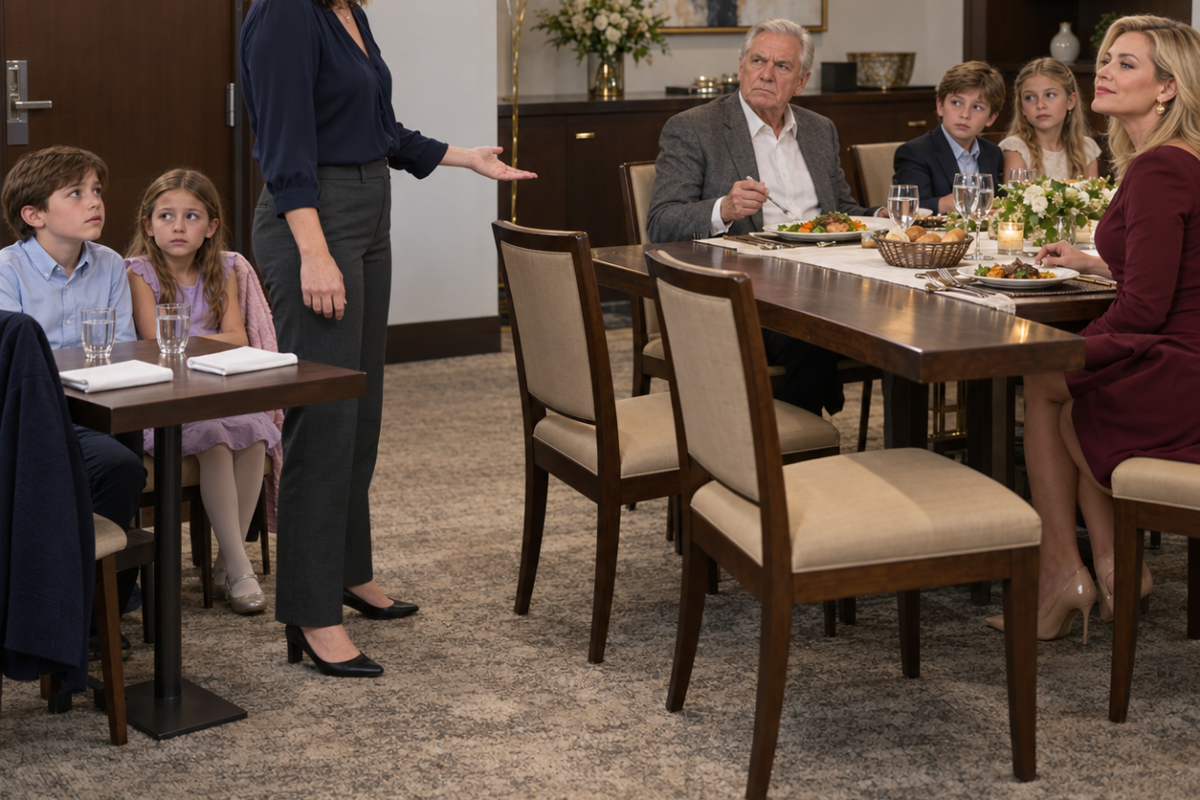
At my father’s seventieth birthday dinner, my eleven-year-old son and eight-year-old daughter were seated beside the service door with water glasses—but no dinner plates. Their cousins sat beside Grandpa with warm bread and full place settings. “They’ll eat after everyone else,” my sister said. I turned to my father, expecting him to object. “They can wait another hour,” he replied. There were two empty chairs at his table.
At my father’s seventieth birthday dinner, the first thing that stopped me wasn’t the cake or the gold balloons. It was my children. Ethan and…
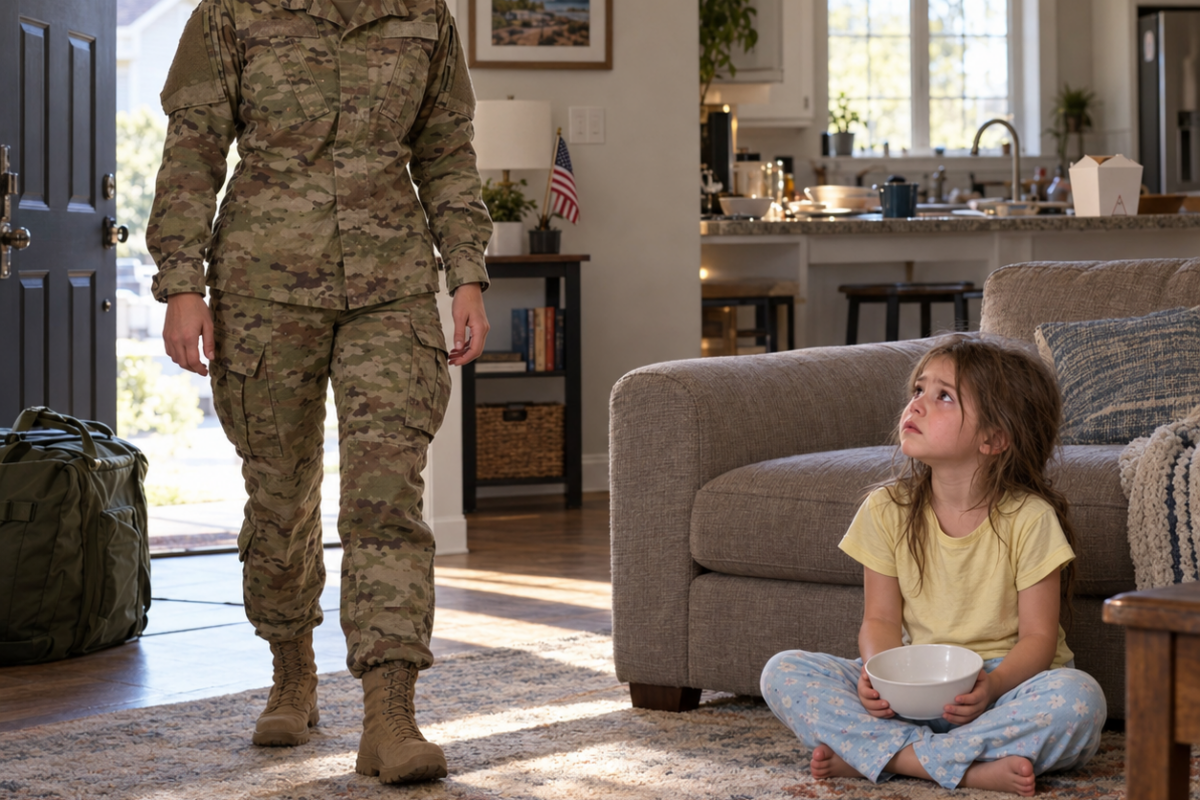
“Mommy, are you real?” my four-year-old daughter whispered when I came home from deployment three weeks early. She was sitting alone on our living room floor with an empty cereal bowl. My husband was on a Caribbean cruise with his mother and sister. Twenty-two minutes earlier, they had posted a photo captioned “Family time.” I was still in uniform when Sophie asked if she could have something to eat.
The first thing my daughter said when I found her was, “Mommy, are you real?” She was sitting cross-legged on our living room floor with…
End of content
No more pages to load