“Leaving you was the best decision I ever made,” my ex-husband said at a family wedding, smiling beside the woman he left me for. “Then I guess everything worked out,” I replied. Seconds later, a six-year-old girl ran into my arms shouting, “Mom!” When she turned and called, “Dad!” Gavin followed her eyes, and his smile disappeared before my husband reached us.
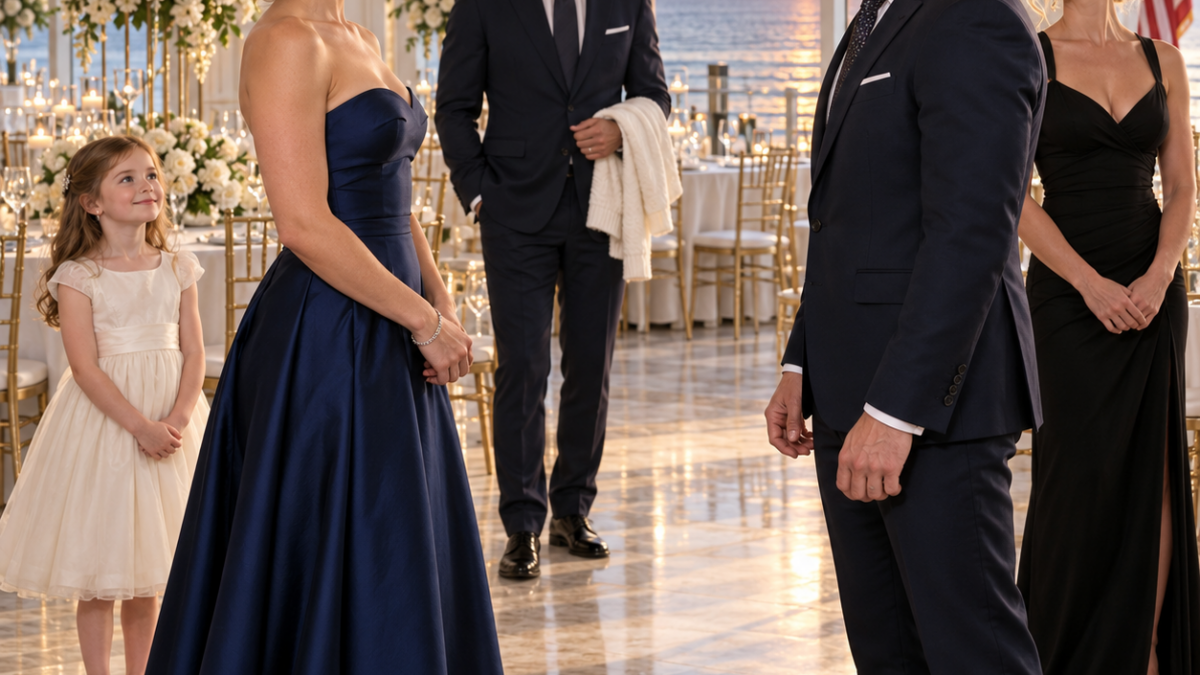

Five years after our divorce, my ex-husband found me standing alone at my cousin’s wedding and smiled as though the evening had finally given him something worth celebrating.
“Leaving you was the best decision I ever made,” Gavin said.
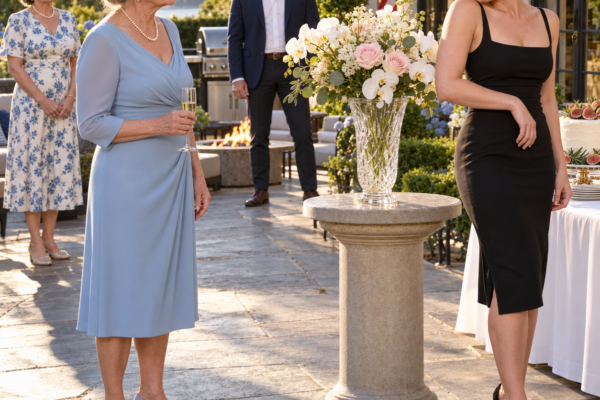
The woman he had left me for stood beside him, her hand resting lightly on his arm. Behind them, the ballroom shimmered with candlelight and white flowers. Someone was laughing near the bar. A waiter passed carrying champagne. Beyond the tall windows, the Gulf was turning the deep blue of early evening.
There had been a time when those words would have followed me home and kept me awake until morning.
That time had passed.
I smiled.
“Then I guess everything worked out.”
Gavin’s expression changed just slightly. He had prepared for an argument, perhaps tears, perhaps the quiet satisfaction of watching me pretend I wasn’t hurt.
He had not prepared for agreement.
Thirty seconds later, a six-year-old girl came running across the ballroom, wrapped both arms around my waist, and shouted, “Mom!”
Then she looked past me.
“Dad!”
Gavin followed her eyes.
The moment he recognized the man walking toward us, his smile disappeared.
But to understand what happened afterward, you have to understand what happened before that wedding—and why the life Gavin thought he had taken from me had never truly belonged to him.
My name is Nora Bennett. When my cousin Emily invited me to her wedding at a waterfront hotel in Biloxi, Mississippi, I almost declined.
I told myself the drive from Mobile was inconvenient. I told myself I had work to finish, that weddings were expensive even when you weren’t the person getting married, and that Emily would understand if I sent a thoughtful gift instead.
None of those explanations was entirely false.
None was the real reason, either.
My family loved me, but they loved information almost as much. There was always an aunt who wanted to know whether you were dating, a cousin who remembered what your ex had posted online, or someone who began an intrusive question with the reassuring words, “Now, I’m only asking because I care.”
After my divorce, I had endured enough sympathetic head tilts to last a lifetime.
People meant well. Mostly.
Still, there was something exhausting about being treated as a cautionary tale at a table where you were only trying to eat potato salad.
Emily had never done that to me.
When Gavin left, she called every Wednesday for three months. Sometimes we talked about the divorce. Sometimes we discussed television, recipes, or the exceptionally rude squirrel that kept stealing tomatoes from her garden.
She never insisted I should be grateful for a fresh start.
She never told me that everything happened for a reason.
She simply stayed.
So when her invitation arrived, cream-colored and tied with a pale blue ribbon, I put it on the refrigerator and told my husband we were going.
Daniel looked up from the kitchen table.
“Good,” he said. “Lily has been asking when she gets to wear her flower dress.”
“She’s been asking whether the wedding has cupcakes.”
“Also important.”
He returned to the drawing spread out in front of him. It showed a house with six windows, a crooked chimney, and three people holding hands beneath a sun that appeared to have eyelashes.
Lily had instructed him to color the roof purple.
He was doing it carefully.
That was my life now: a refrigerator full of artwork, a husband who could argue a complicated case in a conference room and still spend twenty minutes choosing the correct shade of purple, and a little girl who believed every formal occasion should include frosting.
There were ordinary problems, too.
Our dishwasher made a noise like a lawn mower. Daniel forgot to buy milk even when it was the only item on the list. Lily had developed strong objections to any socks with noticeable seams.
But those problems belonged to a home in which I could breathe.
I had once mistaken tension for importance. I had thought that if a marriage required constant effort to prevent someone’s displeasure, that must mean the relationship mattered deeply.
It took me longer than I like to admit to understand the difference between working together and managing somebody else’s moods.
Gavin and I had been married for eight years.
When we met, he was charming in a way that seemed almost effortless. He remembered the names of servers, opened doors, and could make an ordinary conversation feel like a private joke shared by two especially clever people.
I was twenty-six, working as an operations coordinator for a nonprofit literacy organization in Mobile. He was an attorney with an ambitious regional firm.
He admired my calmness.
That was what he called it then.
“You make everything feel less complicated,” he once told me.
Years later, the same quality became a complaint.
“You never want anything exciting.”
At the beginning, we were happy. I need to say that because people sometimes rewrite a failed marriage as though every good memory was fraudulent.
We cooked together in our first apartment. We took a weekend trip to New Orleans with barely enough money for the hotel. He once drove forty minutes in a thunderstorm because I had left my grandmother’s ring at a restaurant and was too embarrassed to call again.
I loved him.
The man I loved existed.
He just wasn’t the only man Gavin could be.
As his career advanced, he became increasingly concerned with how our life appeared from the outside. Dinner parties required the right wine. Vacations needed the right photographs. My work, which he had once called meaningful, became something he described vaguely when introducing me to people he wanted to impress.
“Nora works with a nonprofit.”
He rarely mentioned what we actually did.
We helped adults learn to read. We trained volunteers, worked with libraries, and assisted parents who wanted to understand the forms their children brought home from school.
I was proud of it.
Gavin seemed to regard it as a pleasant occupation for someone who didn’t understand ambition.
The first time he told me to wear something more impressive to a work dinner, I laughed.
The fifth time, I changed.
That was how many of the small losses happened. No announcement. No dramatic confrontation. Just a series of adjustments that seemed easier than explaining why I should not have to make them.
Eventually, I had a closet full of clothes that didn’t feel like mine and a habit of checking his expression before answering a question.
We talked about children during our engagement.
He said he wanted them.
Later, he said we should wait until he made partner.
Then until we bought a bigger house.
Then until the economy settled.
Then until life was less demanding.
I agreed at first because those reasons sounded practical. I had been raised to believe that responsible adults planned carefully, and I wanted to be responsible.
But life never became convenient enough.
One evening, while I was washing dinner plates, Gavin said he wasn’t certain he wanted children at all.
I turned off the water.
“Since when?”
He shrugged without looking up from his phone.
“I’ve been thinking about it.”
“For how long?”
“Nora, don’t make this an interrogation.”
I remember the kitchen light reflecting in the dark window. I remember a plate slipping in my wet hands and the effort it took to set it down gently.
“I’m not interrogating you. I’m asking about something we planned together.”
“People change.”
They do.
But a person can change and still acknowledge that someone else has been building a life around their promises.
Gavin wanted me to accept his uncertainty as a sophisticated development in his thinking. My grief over it became evidence that I was inflexible.
After that, we spoke about children less often.
Not because I stopped wanting them.
Because wanting something he no longer wanted had become uncomfortable for both of us, and I had developed the unfortunate habit of treating discomfort as a problem I should solve by becoming quieter.
The afternoon I found Brenda in our kitchen, I came home early because a training session had been canceled.
She was sitting on a stool at the island, drinking coffee from my blue mug.
That detail stayed with me for months.
Not her perfume. Not her carefully crossed legs. The mug.
My mother had bought it at a pottery fair. There was a small uneven patch near the handle where the glaze had pooled.
It was mine.
Brenda smiled when I walked in.
Gavin looked annoyed before he looked surprised.
“Meeting ended early?” he asked.
“Yes.”
“Brenda stopped by to discuss something.”
I glanced at the open bottle of wine on the counter.
“At three in the afternoon?”
He gave me the expression he used when I had allegedly missed something obvious.
“Nora.”
Nothing physical had happened, he insisted later. They were friends. I was allowing insecurity to make the situation ugly.
Two weeks afterward, he asked for a divorce.
Three months later, they were publicly together.
For a while, I tried to determine the exact date when our marriage had ended in his mind. I examined photographs, old messages, and evenings he had worked late.
I thought that if I could identify the moment, I could understand what had gone wrong.
Eventually, I realized I was conducting an investigation for which no finding would make me feel better.
Whatever the timeline, he had stopped being honest with me.
That was enough information to begin leaving.
Beginning was not the same as recovering.
During the first year, I compared myself to Brenda constantly. She seemed to move through the world without the hesitation I felt. She knew how to enter a room and make people notice her. She posted photographs from restaurants I had never visited and wore clothes I would have worried about spilling something on.
I imagined Gavin looking at her and feeling relieved.
Then I imagined him remembering me and feeling embarrassed.
It is astonishing what a wounded person can invent in the absence of facts.
My sister-in-law—Gavin’s older sister, Caroline—called me once during that period.
“I don’t know what he’s told you,” she said, “but you don’t have to turn yourself into somebody else to prove he made a mistake.”
I appreciated her kindness.
I did not yet believe her.
I kept my maiden name after the divorce because I had never changed it professionally. Nora Bennett was on my diplomas, my work records, and the nameplate outside my small office.
For months, that office was the only place where I felt certain of my usefulness.
People needed schedules made, grants managed, volunteers trained, and problems solved. Nobody cared whether my husband had chosen someone else.
Then one Monday, a woman named Mrs. Alvarez read a letter from her granddaughter without asking for help.
She was sixty-three.
We had been working with her for almost a year.
She folded the letter slowly, pressed it against her chest, and began to cry.
I cried with her.
That afternoon, walking back to my car, I realized I had spent an entire day without thinking about Brenda.
The realization felt small.
It also felt like a door opening.
I started doing things I had stopped doing because Gavin found them uninteresting.
I went to the Saturday market. I borrowed novels from the library instead of buying whatever book everyone at his office was discussing. I took a pottery class and produced a bowl so uneven that my instructor kindly suggested I use it for keys.
I invited friends over without worrying whether the table looked sufficiently impressive.
I ate breakfast on my little apartment balcony.
Some mornings, I was still lonely.
But loneliness in a place where nobody was diminishing me felt different from loneliness beside a person who was supposed to love me.
I met Daniel Mercer nineteen months after the divorce became final.
He was not introduced to me as an eligible man.
He was introduced as a volunteer who had arrived early and needed something useful to do.
Our organization was holding a family reading event at a public library. There were books, donated snacks, a puppet performance, and children moving in directions that made every adult regret assuming a seating chart would help.
I was carrying a box of name tags when I noticed a tall man attempting to repair a cardboard castle.
Beside him stood a little girl wearing yellow rain boots, although the sky was perfectly clear.
“The dragon lives here,” she informed him.
“I understand.”
“You’re putting the door in the wrong place.”
He paused, considered her criticism seriously, and moved the cardboard flap.
“Better?”
She nodded.
I set down the box.
“That castle has survived three events and a storage closet. I wouldn’t take its structural condition personally.”
He looked up.
“Daniel Mercer.”
“Nora Bennett.”
We shook hands.
His name registered immediately.
Gavin had mentioned him often.
Usually with irritation.
Daniel had been a senior partner at Gavin’s firm, the sort of attorney people consulted when a complicated matter needed a steady hand. He was respected, well connected, and notoriously uninterested in being flattered.
In Gavin’s version of events, Daniel had also been the reason his career stalled.
“He never liked me,” Gavin used to say.
“Why?”
“He has his favorites.”
When Gavin was passed over for a promotion he had expected, Daniel’s name became a recurring presence at our dinner table.
Daniel had interfered.
Daniel had undermined him.
Daniel preferred people who knew how to be obedient.
I had never met him then.
Standing in the library, watching him accept instructions from a little girl in yellow boots, I found him difficult to reconcile with the bitter portrait Gavin had painted.
“This is Lily,” Daniel said.
Lily looked at my name tag.
“Can you read that?”
“Yes.”
“Me too,” she said confidently.
She studied it for several seconds.
Then she leaned toward her father and whispered, “What does it say?”
Daniel whispered back, “Nora.”
“Nora,” she announced.
“Excellent work.”
She smiled.
At the time, she was three.
She had lost her mother, Rebecca, shortly after her second birthday.
I learned that later, not during our first conversation. Daniel did not introduce grief as a defining characteristic of his daughter, and he did not offer his widowerhood as an invitation for sympathy.
He came to help set up tables.
He stayed to clean afterward.
When the event ended, Lily fell asleep against his shoulder while he carried a trash bag in his other hand.
I held the library door for him.
“Thank you,” he said.
“Your dragon castle is still standing.”
“Lily will want a full report tomorrow.”
It was such an ordinary exchange that I didn’t recognize it as the beginning of anything.
A week later, he emailed the organization to ask whether volunteers were needed for the next event.
He also mentioned that Lily had drawn an improved design for the castle.
I printed it and taped it above my desk.
For several months, our conversations were friendly and brief. We talked about books, local schools, weather, and the logistical mysteries of persuading small children to put on shoes.
He knew I had been married.
I knew he had lost his wife.
Neither of us rushed to fill in the rest.
The first time he asked me to dinner, he made it very easy to decline.
“I’d like to see you when neither of us is folding chairs,” he said. “But if you’d rather keep this friendly, I’ll still come Saturday.”
I remember smiling at that.
“I’d like dinner.”
He chose a small restaurant near the water. No private dining room. No performance designed to impress me.
Halfway through the meal, he asked whether I enjoyed my work.
I began giving him the short answer I usually gave at social functions.
Then he interrupted gently.
“I don’t mean the description on the website. I mean what you like about it.”
Nobody had asked me that in a long time.
So I told him about Mrs. Alvarez. About the father who practiced reading children’s books during lunch breaks so he could read to his son at bedtime. About the volunteer who had been nervous at first and had become one of our best tutors.
Daniel listened.
He asked questions that showed he had heard the answers.
Later, when I told my friend Megan about the date, she said, “That sounds dangerously normal.”
I laughed.
“Is that a good thing?”
“For you? Very.”
Daniel and I took our time.
That was partly because we were adults who had learned that attraction and compatibility were separate questions.
It was also because of Lily.
She was not a charming accessory to a relationship. She was a child whose life had already been altered by a loss she could not fully understand.
Daniel was careful about whom he invited into her world.
I respected that.
For the first several months, I saw her only at public events where other familiar adults were present. Then there were occasional lunches, an afternoon at the aquarium, and a trip to a park where she insisted the ducks were following us because they liked my shoes.
She called me Nora.
Sometimes Miss Nora, when she wanted to sound especially polite before asking for something.
We learned each other slowly.
She disliked cooked carrots but enjoyed raw ones if they were cut into circles. She believed bandages worked better when decorated with stars. She wanted the same bedtime book three nights in a row and then declared it boring on the fourth.
She also had questions about her mother.
Daniel answered them plainly and gently.
Rebecca was in photographs around their house. Her birthday was remembered. Her parents, Susan and Peter, remained part of Lily’s life.
There was no empty place I was expected to fill by pretending somebody else had never existed.
That mattered more than I could explain at first.
I had feared that loving a child whose mother had died would require stepping into a comparison I could never survive.
Instead, Daniel showed me a different possibility.
“We don’t need less room for Rebecca,” he said once. “We need enough room for everyone Lily loves.”
I had gone to his house that evening for dinner. Lily was asleep, and we were washing dishes together.
I looked at the photograph near the kitchen doorway: Rebecca on a beach, Lily against her shoulder, both of them squinting into the sun.
“Does this feel strange to you?” I asked.
“Sometimes.”
“Being with someone else?”
“Yes.”
I appreciated his honesty.
He dried a plate before continuing.
“But strange doesn’t mean wrong. And loving you doesn’t mean I regret loving her.”
I stood quietly beside him, letting that settle.
Gavin had treated love as a contest in which one person’s value depended on someone else losing.
Daniel did not.
The first time Lily reached for my hand without being prompted, we were crossing a parking lot after buying school supplies.
Her fingers slipped between mine.
I nearly cried beside a row of shopping carts.
I didn’t tell her that.
I simply held her hand.
There were difficult days.
Once, when Daniel had a late meeting and I picked her up from preschool, she refused to get into my car.
“I want Daddy.”
“He’ll be home before bedtime.”
“I want my mommy.”
I crouched on the sidewalk.
There was nothing clever or comforting enough to say.
“I know.”
She began to cry.
For a moment, I felt the sting of being unwanted. Then I recognized that the moment was not about me.
I stayed beside her until she let me help with her backpack.
That evening, I told Daniel what had happened.
He looked pained.
“I’m sorry.”
“You don’t have to apologize for her missing her mother.”
He took my hand.
“I’m not. I’m sorry it was hard.”
It was a simple distinction, but it helped me understand the family we were building.
No one had to deny a feeling to protect someone else from it.
When Daniel and I became serious, he asked a question I had expected much earlier.
“Your ex-husband was Gavin Albright?”
We were sitting outside a coffee shop.
“Yes.”
He looked down at his cup.
“I thought so. I didn’t want to ask before you chose to talk about him.”
“You worked together.”
“For several years.”
“He wasn’t your biggest admirer.”
Daniel gave a small, unsurprised smile.
“I gathered that.”
I told him Gavin had blamed him for losing a promotion.
Daniel became more serious.
“There are things about his work history I can’t discuss casually.”
“I understand.”
“But I can tell you I wasn’t making personal decisions about him. There was a review process.”
I nodded.
It was the first time anyone had described Gavin’s professional setback in a way that didn’t require accepting Gavin’s explanation.
Daniel did not use that opening to tell me I had married a terrible man.
He did not ask for stories that might satisfy old workplace resentment.
He simply said, “Whatever happened between you, I’m interested in who you are now.”
I believed him.
Still, months later, when our relationship had become something neither of us wanted to lose, Daniel told me there was one thing he needed me to know.
We were in his living room. Lily was visiting her grandparents.
He sat beside me rather than across from me, as though he understood that this was a conversation, not a briefing.
“Before we move further,” he said, “I don’t want you discovering later that I knew something important about Gavin.”
My stomach tightened.
“About our marriage?”
“About something he said when he was trying to explain his performance at the firm.”
I waited.
“There was a disagreement over expenses and client reporting. He had been warned about several entries that didn’t meet firm standards. During the review, he suggested problems at home were affecting his judgment.”
I stared at him.
“What problems?”
“He described you as unstable.”
For a moment, I heard nothing except the air-conditioning.
That year came back to me in fragments: Gavin arriving home angry, claiming Daniel had blocked him, telling me we needed to reduce expenses because I didn’t appreciate what he was carrying.
He had called me sensitive whenever I asked questions.
Now I understood there had been another version of me circulating in rooms I had never entered.
“What did he say?”
Daniel’s expression was careful.
“Enough that I asked whether you knew he was sharing those details. He said you did.”
“I didn’t.”
“I know that now.”
I stood up and walked to the window.
Outside, a sprinkler was moving slowly across the neighboring lawn.
“He told me he was being punished because he wasn’t willing to play office politics.”
“He was passed over because the committee had concerns about his judgment and how he responded when those concerns were raised.”
“Did everyone think I was—”
“No.” Daniel’s voice remained steady. “The review was about his work. Whatever he claimed about his home life did not excuse inaccurate records.”
I pressed my palms against the windowsill.
I had spent years supporting a man who was using my supposed shortcomings to explain his own choices.
There was something especially humiliating about learning that.
It wasn’t only betrayal.
It was the knowledge that I had been defending him while he was making me convenient.
Daniel did not touch me immediately.
He asked whether I wanted him to leave me alone for a few minutes.
I shook my head.
When he put his arms around me, I cried with a kind of anger I had rarely allowed myself.
For years, I had thought recovering meant becoming so calm that nothing about Gavin could hurt me.
That evening taught me otherwise.
A healed wound can still ache when you discover how deep it once went.
The following week, I called my old divorce attorney.
Not because I wanted to reopen every settled issue.
Because I wanted to understand something I had dismissed during the marriage.
There had been a debt Gavin insisted we needed to handle quickly. He described it as the consequence of a delayed bonus and poor timing on a renovation expense.
I had used part of an inheritance from my grandmother to pay it.
During the divorce, my attorney documented that contribution, and it was reflected in our settlement. I had not simply handed him everything and walked away, although I remembered feeling too tired to appreciate the protections she put in place.
Now I wondered how much of his explanation had been true.
My attorney reviewed the old file with me.
There was no dramatic hidden fortune. No account full of millions waiting to be discovered. Just statements, dates, and a pattern of spending I had allowed Gavin to describe in whatever way served him best.
“What are you hoping to get from this?” she asked gently.
“The truth.”
“Then let’s separate what we can establish from what he may never admit.”
That advice stayed with me.
I could establish that he had made financial decisions without telling me.
I could establish that I had covered part of the consequences.
I could establish that he had blamed professional disappointment on other people.
I could not force him to agree with my understanding of our marriage.
I stopped trying.
When Daniel proposed, he did not do it in front of an audience.
He asked me on the porch after Lily had fallen asleep.
There was a small ring box in his hand and an expression on his face that made me realize confidence and vulnerability could exist in the same person.
“I love you,” he said. “I want to keep building this with you. But I need you to know that saying yes doesn’t mean you’re agreeing to hold everything together by yourself.”
I laughed through tears.
“That’s an unusually practical proposal.”
“I’m a lawyer.”
“I noticed.”
He smiled.
Then I said yes.
We told Lily the following morning.
She considered the news while eating toast.
“Will Nora live here all the time?”
“Yes,” Daniel said.
She looked at me.
“Even on Mondays?”
“Even on Mondays.”
“What about your plants?”
“They’ll come, too.”
This appeared to resolve the most urgent concern.
Then she asked whether she could wear sparkly shoes at the wedding.
Daniel glanced at me.
“I believe that can be arranged.”
We married the following year in a small garden behind a friend’s house. There were thirty-two guests, a borrowed sound system, and a cake Lily helped select by pointing at the one with strawberries.
Susan and Peter came.
Rebecca’s mother hugged me before the ceremony.
“Thank you for loving our girl,” she whispered.
I could barely answer.
Lily stood beside us holding a bouquet that was almost too big for her hands.
During the vows, a bee landed near the flowers.
She announced its presence loudly enough for everyone to hear.
Our wedding photographs include several people laughing, one slightly alarmed child, and Daniel trying very hard to remain solemn.
They are my favorite photographs.
Lily did not begin calling me Mom because we got married.
For several months afterward, I was still Nora.
We did not ask her to change that.
One evening, while I was helping her button pajamas, she said, “If I call you Mom, does Mommy get sad?”
I sat down beside her on the bed.
“What do you think?”
She looked at the photograph on her dresser.
“I don’t know.”
My throat tightened.
“I think your mommy loved you very much. And I think people who love us want us to have more love, not less.”
She traced a star on her pajama sleeve.
“Can I have a mommy in heaven and a mom here?”
“Yes.”
“Two?”
“Yes, sweetheart.”
She thought for a while.
Then she climbed into my lap.
“Okay, Mom.”
I held her so carefully, as though sudden movement might break the moment.
After she fell asleep, I walked into the kitchen and found Daniel standing at the counter.
I tried to tell him what had happened.
I got as far as “She called me—” before I started crying.
He understood.
He came across the kitchen and held me.
There were later conversations about becoming her parent legally, not only within our home.
Daniel wanted the protections of that commitment for all of us. So did I.
We worked with an independent family attorney, gathered the necessary records, and followed the process she explained. Nothing about it was improvised or rushed because a child had used a particular word.
Susan and Peter knew what we were doing.
Lily knew in the simple way appropriate for her age: Nora was already her mom in our everyday life, and the grown-ups were making sure the paperwork reflected that.
On the day everything was finalized, she wore her favorite shoes and asked whether the judge would have stickers.
Our attorney had brought some.
Lily later described the entire morning as “the day Mom officially got me.”
I told her I felt like the lucky one.
She said we could both be lucky.
By the time Emily’s wedding arrived, we had been married for a year.
Lily was six.
Our family was not secret.
My relatives knew about Daniel. They had seen photographs. Some had attended our wedding. Others had met him during visits.
But Gavin and I had no children together, no shared business, and no reason to maintain regular contact.
I had stopped explaining my life to him years before.
He had not asked.
Caroline knew I had remarried. She had congratulated me warmly, but she respected my privacy and had never considered it her responsibility to deliver updates to her brother.
Gavin had always assumed that if something mattered, it would eventually reach him.
He had never considered that my life might become important without remaining available to him.
Two weeks before Emily’s wedding, Daniel asked whether Gavin would be there.
We were sorting through clothes on the bedroom floor because Lily had decided her white sweater was missing.
It was hanging on the back of a dining chair.
“I think so,” I said. “Emily invited several people she stayed friendly with after the divorce.”
Daniel nodded.
“Will that be difficult?”
“Possibly awkward. I don’t think difficult.”
He folded a shirt.
“I want you to know I’m not interested in having an old professional conversation with him at your cousin’s wedding.”
“I wouldn’t ask you to.”
“I know.”
He looked at me more closely.
“But if he says something unkind, you don’t have to stay there and absorb it to keep the peace.”
I smiled.
“I’ve been practicing.”
“There’s one other thing.”
“What?”
“If he brings up work, I’ll be polite. I won’t discuss confidential matters or defend myself through a public argument.”
“That sounds reasonable.”
“And I’d rather Lily not become part of anything uncomfortable.”
I leaned against the bed.
“She won’t.”
I meant it.
Neither of us imagined Gavin would approach me the way he did.
On the morning of the wedding, we drove down from Mobile together.
Lily spent the first part of the drive asking whether the hotel was “right beside the whole ocean.”
“The Gulf,” Daniel corrected gently.
“Is that less ocean?”
I looked out the window so she wouldn’t see me laughing.
At the hotel, we checked into a room overlooking the water. Lily pressed both hands against the glass and declared that we should live there.
“You said that about the aquarium,” Daniel reminded her.
“They had better fish.”
We dressed slowly, helped Lily with her shoes, and went downstairs.
Emily looked beautiful.
More than that, she looked happy in a way that made the elaborate flowers and carefully chosen music seem secondary.
Her husband, James, kept turning toward her during the ceremony as though he still couldn’t quite believe she was there.
I cried.
Daniel handed me a tissue without looking surprised.
At the reception, we found our table near the windows. There were cousins, children, and a bowl of crayons someone sensible had provided for the younger guests.
Lily quickly made friends with Emily’s niece.
Daniel volunteered to take them to the small children’s activity room after dinner, where a hired sitter was supervising crafts while parents enjoyed the reception.
For the first two hours, I relaxed.
I talked with cousins I hadn’t seen in years. I danced once with my uncle, who still insisted he knew a formal step nobody else had heard of. I ate more cake than I intended.
Then I went onto the terrace for air.
That was why Gavin found me alone.
Not because I had arrived without a family.
Because a person can have a full, happy life and still step outside for two minutes.
The evening air was warm. The water reflected the hotel lights in long, trembling lines.
I stood there thinking how glad I was that I had come.
When I returned inside, Gavin’s voice stopped me near the entrance to the ballroom.
“Well. Look who finally decided to show up.”
He stood beside Brenda, holding a drink.
Five years had changed him less than I expected.
Same carefully styled hair. Same expensive suit. Same expression suggesting he was one amusing observation away from making the room belong to him.
Brenda wore a dark red dress.
“Nora,” she said. “It’s been a long time.”
“Five years.”
Gavin laughed.
“You always did remember everything.”
I knew that tone.
A criticism presented as affectionate familiarity.
There had been a time when I would have softened it for him, smiling as though I was participating in the joke.
I no longer felt that obligation.
“How are you?” Brenda asked.
“Very well, thank you.”
Gavin looked me up and down.
“You look good.”
“Thank you.”
He waited.
I did not return the compliment.
There was nothing wrong with acknowledging that he looked well. I simply didn’t feel like offering the reassurance he had positioned himself to receive.
Brenda shifted beside him.
Then Gavin began the speech he had apparently carried toward me.
“You know, I used to wonder whether I made the right decision.”
I said nothing.
“But seeing you tonight…”
He let the sentence hang.
I could see him studying my face, waiting for a flicker he could interpret as injury.
“Leaving you was the best decision I ever made.”
Brenda lowered her eyes.
I saw the small smile anyway.
For a second, I remembered sitting on the floor of my first apartment after the divorce, surrounded by boxes, unable to decide where to put a lamp.
I remembered the humiliation of being left and then being expected to discuss it gracefully.
I also remembered Lily asleep with one hand resting on my shoulder. Daniel making coffee before I was fully awake. The book we had abandoned halfway through because we kept interrupting each other to comment on it.
Those memories did not erase the old ones.
They simply occupied more room.
“Then I guess everything worked out exactly the way it was supposed to,” I said.
Gavin blinked.
“You’re not curious how we’re doing?”
“No.”
I said it without hostility.
That seemed to make it worse.
Brenda’s smile disappeared.
“Enjoy the wedding,” I added.
I had already started turning away when I heard Lily.
“Mom!”
She came toward me at the determined speed of a child who believed a missing parent required immediate correction.
I crouched as she reached me.
“There you are.”
“You disappeared.”
“I went outside for two minutes.”
“That counts as disappearing.”
“Apparently.”
She threw her arms around my neck.
Behind me, Gavin had stopped speaking.
I stood with Lily’s hand in mine.
His gaze moved from her face to mine.
“Mom?”
“Yes.”
He looked confused enough that, for an instant, I could almost see him trying to work backward through the calendar.
I had no children when we divorced.
Lily was six.
He had no explanation that fit the narrow assumptions he carried about motherhood.
Lily tugged my hand.
“Mom, Dad said I could have one more cupcake.”
“Dad said that?”
“Yes.”
“That sounds suspicious.”
She giggled.
Then her eyes moved beyond my shoulder.
“Dad!”
Daniel was walking toward us, Lily’s little white sweater over one arm.
His expression changed when he recognized who was standing beside me, but he did not hurry or become theatrical.
He came over, bent to kiss my cheek, and asked, “Everything okay?”
“Perfect.”
His eyes moved to Gavin.
Gavin looked as though someone had abruptly changed the temperature of the room.
“Daniel?”
Daniel nodded.
“Gavin.”
Brenda stared at him.
“Oh my God,” she whispered.
I knew immediately that she recognized him, too. She had worked with clients who used the firm and had attended enough industry events to know the senior partners.
Gavin looked back at me.
“You’re married to Daniel Mercer?”
Before I could answer, Lily announced, “Mom married Dad last year.”
Daniel slipped his hand into mine.
“Yes,” I said. “I did.”
There was a brief silence.
Around us, the wedding continued. Music rose near the dance floor. Glasses clinked. Someone called across the room to a cousin.
Gavin’s private performance had encountered a fact he could not absorb quickly enough to control.
“You never mentioned it,” he said.
I looked at him.
“We haven’t spoken.”
“You could have told me.”
“Why?”
The question seemed to offend him more than any insult could have.
Daniel looked down at Lily.
“I believe the cupcake agreement was conditional.”
She widened her eyes.
“I forgot the condition.”
“You agreed to let Mom help you with your sweater before we go outside later.”
“That’s a very small condition.”
“It seemed reasonable at the time.”
I laughed.
That ordinary exchange appeared to trouble Gavin almost as much as Daniel’s name.
He was looking at a family that had no need to consult him.
“So,” he said, recovering some of his usual tone, “this is how things turned out.”
“Yes,” Daniel replied.
Gavin glanced between us.
“Small world.”
“Sometimes.”
Brenda touched Gavin’s arm.
“We should find our table.”
But he wasn’t ready.
His pride had brought him into the conversation, and pride was making it difficult to leave.
“I didn’t know you two were acquainted,” he said.
“We met through Nora’s work,” Daniel answered.
“My work,” I repeated gently, because I noticed the look on Gavin’s face.
He had always treated it as a minor feature of my life.
It was the place where I had found purpose after the divorce.
It was also where I had met my husband.
Lily tugged my hand again.
“Can we do the cupcake now?”
“In a minute.”
She sighed with exaggerated patience.
Gavin looked at her more carefully.
“And she’s…”
“My daughter,” Daniel said.
Then he added, just as calmly, “Our daughter.”
I felt the familiar warmth of that word.
Gavin’s jaw tightened.
I knew what he wanted to ask. He wanted the sequence, the circumstances, the explanation that would permit him to arrange our happiness into something less unsettling.
He wanted to know whose child she was before he would accept whose child she was now.
I had no intention of making Lily stand there while adults discussed her origins as though she were a complication in a story.
“Lily,” I said, “would you show Dad where you found those cupcakes? I’ll meet you at the table.”
Daniel looked at me.
“You sure?”
“Yes.”
He understood.
He offered his hand to Lily.
She took it, then turned back and pointed at me.
“Don’t disappear again.”
“I’ll be right there.”
As they walked away, Gavin watched them.
Then he looked at me with a strange mixture of suspicion and disbelief.
“Daniel Mercer.”
“You’ve established that.”
“How did you—”
“I met him. We fell in love. We got married.”
“You make it sound simple.”
“Some parts were.”
He gave a short laugh.
“Did you know who he was?”
“Yes.”
“I mean really know.”
“I know the man I married.”
Brenda’s expression had become uncomfortable.
“Gavin.”
He ignored her.
“I suppose he told you his version of what happened at the firm.”
There it was.
The moment his old professional resentment found a way into the evening.
I glanced toward our table. Daniel was helping Lily put on her sweater while she talked with both hands.
“He told me what I needed to know,” I said.
Gavin’s face hardened.
“And you believed him.”
“I believed the things I could understand for myself.”
He stepped closer, lowering his voice.
“You have no idea what he did to my career.”
I held his gaze.
“I know what you told me he did.”
“That isn’t the same thing?”
“No.”
Brenda looked toward the dance floor as though hoping someone would interrupt us.
Nobody did.
Gavin’s voice sharpened.
“So this is revenge?”
I almost laughed, but there was nothing funny in the question.
“My marriage?”
“Don’t pretend you didn’t know how this would look.”
I stared at him for a moment.
Even now, he was trying to make himself the center of something that had been built without him.
“Gavin, I didn’t spend five years constructing a life to produce a reaction in you.”
“You married the one man—”
“I married a man who listens to me. Who respects my work. Who tells the truth even when the truth is uncomfortable. Your feelings about his career were not the reason.”
For the first time, he looked genuinely wounded.
I did not enjoy it.
That surprised me.
There had been nights, early after the divorce, when I had imagined him regretting everything. I had pictured myself looking beautiful in a doorway while he stood speechless.
Real life had finally offered something close to that scene.
All I wanted was to return to my table.
Brenda spoke quietly.
“You said she was still alone.”
Gavin turned toward her.
“I didn’t know.”
“That’s not what you said.”
I looked at Brenda.
Her polished expression had changed. She was no longer enjoying an old rivalry she apparently thought she had won.
She was considering something else.
I didn’t ask.
Whatever Gavin had told her was theirs to address.
“I’m going to sit down,” I said.
“Nora—”
“Enjoy Emily’s wedding.”
Then I left.
My hands were shaking slightly when I reached our table.
Daniel noticed before I sat.
He moved his chair closer but did not ask questions in front of Lily.
“Everything okay?” he said softly.
“Yes. I just need a minute.”
Lily pushed a napkin toward me.
She had drawn three cupcakes on it.
“This one is yours.”
“Thank you.”
“It has pretend sprinkles because they ran out of real ones.”
“Very thoughtful.”
Daniel poured me water.
We sat together while Lily explained why her cupcake had more frosting than ours.
I listened.
Little by little, my heartbeat slowed.
That was the part nobody in the ballroom could have seen from a distance. The meaningful moment was not Gavin recognizing an influential man.
It was sitting down with people who did not require me to prove anything.
Emily came by a few minutes later.
Her smile faltered when she saw my expression.
“Did something happen?”
I shook my head.
“Nothing you need to worry about tonight.”
She glanced toward Gavin.
Her face changed.
“Oh, Nora.”
“Really. I’m fine.”
She leaned down and hugged me.
“I’m glad you came.”
“So am I.”
And I meant it.
I would have liked to say that Gavin stayed away after that.
He didn’t.
An hour later, while Daniel was standing near the edge of the dance floor with Lily balanced on his shoes, Gavin approached him.
I saw it from our table.
At first, I assumed he wanted to say something polite and restore a little dignity.
Then I recognized the angle of his shoulders.
Gavin had decided the only way to recover from surprise was to turn the encounter into a confrontation.
I stood.
By the time I reached them, Daniel had set Lily down beside my aunt, who was watching the children dance.
His voice was quiet.
“This isn’t the place.”
Gavin laughed.
“Of course you’d say that.”
Daniel looked toward Lily.
“We’re at a family wedding.”
“You were always good at deciding when other people were allowed to speak.”
Several guests nearby stopped talking.
I stepped beside Daniel.
“Gavin, stop.”
He turned toward me.
“This has nothing to do with you.”
“It has everything to do with me if you’re approaching my husband at my cousin’s wedding.”
“You don’t know the history.”
“I know enough.”
His expression became dismissive in the familiar way I remembered.
“Nora, you always believed whoever sounded most reassuring.”
For a second, it was as though the five years between us collapsed.
There was the old invitation to doubt myself.
The suggestion that my judgment was a flaw he understood better than I did.
Then I looked at Daniel.
He was not preparing to deliver a devastating speech.
He was watching me, allowing me room to answer for myself.
“No,” I said. “I used to believe you because you were my husband.”
Gavin went still.
“And when you told me Daniel had cost you a promotion, I believed that, too. I sat beside you while you complained about how unfair everyone was. I worried about our bills. I made sacrifices based on explanations you chose to give me.”
“That’s an unfair description.”
“Perhaps you should consider how it felt to learn you were telling people your mistakes were connected to an unstable wife.”
His face changed.
There was no clever response ready for that.
Brenda had approached behind him.
“What?”
Gavin looked quickly around.
“Private matters aren’t something we should be discussing here.”
“I agree,” Daniel said.
He did not sound triumphant.
He sounded tired of a conversation that had no place among flowers and wedding music.
“I have no intention of discussing an internal review in public,” he continued. “But you approached us. You can stop.”
Gavin looked at him.
“You know exactly what you did.”
“Yes,” Daniel said. “I participated in a professional process. I won’t turn it into a personal argument tonight.”
That answer denied Gavin the spectacle he seemed to need.
Nobody was threatening his current job. Nobody was announcing a secret offense to the room. Nobody was using influence to punish him because he had insulted me.
There were simply adults refusing to participate in a version of the evening built around his resentment.
Emily’s older brother, Marcus, came over.
He didn’t raise his voice.
“Is everything all right?”
“We’re finished,” I said.
Gavin looked at him, then at Brenda.
For a moment, I thought he might continue.
Instead, he straightened his jacket.
“Fine.”
He walked away.
Brenda hesitated.
Then she followed.
My aunt brought Lily back a minute later.
Lily looked between us.
“Was that man mad?”
I crouched so we were eye level.
“He was having a difficult conversation.”
“Did I do something?”
The question cut through every adult feeling I had been carrying.
“No, sweetheart. Nothing you did caused that.”
“He looked at me funny.”
“I know.”
“Because I said Mom?”
“No.”
I touched her cheek.
“You can call me Mom whenever you want. Nobody gets to make that a problem.”
She studied my face.
“Okay.”
Then she asked whether we could dance.
I stood and held out my hand.
Daniel took her other hand.
We went back onto the dance floor.
Later, I would remember that more clearly than Gavin’s expression. Lily between us, trying to spin while holding both our hands, laughing when her shoes slid against the polished floor.
We did not leave early to prove we had risen above anything.
We stayed because we were enjoying the wedding.
When Emily and James departed beneath a line of sparklers, I hugged my cousin and wished her every good thing.
She whispered, “Call me next week.”
“I will.”
Back in our hotel room, Lily fell asleep before Daniel finished reading the second page of her book.
Her shoes lay beneath a chair. Her sweater was folded beside the suitcase. On the nightstand sat a paper cup containing a cupcake she had insisted was for tomorrow.
Daniel set down the book and joined me near the window.
The water was dark now.
“You don’t have to be fine immediately,” he said.
“I know.”
“Are you?”
I thought about it.
“I’m upset that he did that at Emily’s wedding. I’m upset that Lily noticed. And I’m a little embarrassed that part of me enjoyed seeing his face when you walked over.”
Daniel smiled faintly.
“You’re allowed to have an unflattering moment.”
“I don’t want your place in my life reduced to what it does to him.”
“It isn’t.”
I leaned against him.
For a while, neither of us spoke.
Then I said, “He really believed I was still waiting.”
Daniel’s arm tightened gently around me.
“Maybe that was easier for him than wondering who you became.”
I looked over at Lily.
She had kicked one foot out from under the blanket.
“I don’t think he wondered at all.”
“Then he missed a great deal.”
I rested my head against his shoulder.
In the morning, we ate breakfast downstairs.
Lily wore her wedding shoes because she had decided they improved waffles.
Daniel disagreed on practical grounds but lost the discussion.
My phone began buzzing halfway through the meal.
A message from Gavin.
Then another.
I turned the screen facedown.
Daniel noticed.
“You can deal with it later.”
“I intend to.”
We drove home with Lily asleep in the back seat and the windows cracked just enough to let in the warm air.
Our house looked the same as we had left it.
A package on the porch. A bicycle tipped beside the garage. A potted plant that needed watering.
I had never been happier to see an ordinary place.
That afternoon, while Daniel took Lily to buy groceries, I read Gavin’s messages.
The first accused me of embarrassing him.
The second asked why I had never told him I was married.
The third suggested Daniel had pursued me deliberately because of their history.
The fourth said he had only been joking when he told me leaving was his best decision.
I stared at that one for a long time.
There was a familiar pattern in the progression.
First, my reaction was the problem.
Then, my privacy was the problem.
Then, someone else’s motives were the problem.
Finally, the original cruelty became a joke I had misunderstood.
I did not feel the need to answer each accusation.
I wrote one message.
“You approached me and made an unnecessary remark. I did not owe you information about my marriage. Please don’t contact me again to discuss my family or your history with Daniel.”
I read it twice.
Then I sent it.
He replied almost immediately.
“I can’t believe how cold you’ve become.”
I put the phone down.
That sentence would once have made me explain myself for an hour.
Now it told me the boundary had been understood.
I blocked his number after forwarding the exchange to a folder I rarely used. Not because I expected a dramatic escalation. Because I wanted a record and a quiet phone.
For several days, relatives contacted me with versions of what they had heard.
Some had seen the encounter.
Some had heard about it from someone who had spoken to someone who had been near the bar.
One aunt said, “Well, I suppose he got what he deserved.”
I knew she meant to support me.
Still, the comment made me uncomfortable.
“Daniel isn’t something Gavin deserved,” I said. “He’s my husband.”
There was a pause.
Then she apologized.
I appreciated that.
Another cousin asked whether I had known Daniel was powerful when I met him.
“He was repairing a cardboard castle,” I said.
“What?”
“It’s a long story.”
A few people wanted the satisfying version: unfaithful husband humiliates former wife, former wife reveals a better man, former husband realizes he has lost.
I understood the appeal.
But living inside the story felt different from hearing it summarized.
My happiness was not a prize I had carried into a ballroom.
Daniel was not a more expensive replacement.
Lily was not proof that I had won the divorce.
They were people I loved, with histories and vulnerabilities that had nothing to do with teaching Gavin a lesson.
I found myself protective of that distinction.
Emily called after her honeymoon.
“I’m sorry,” she said immediately.
“You didn’t do anything.”
“I invited him.”
“You invited someone you thought could behave at a wedding.”
She sighed.
“He told James he didn’t know you’d married Daniel.”
“I imagine that was surprising.”
“Then he said you’d made a point of keeping it from him.”
I smiled without amusement.
“Keeping a life and hiding a life aren’t the same thing.”
“I told him he should have asked you how you were before announcing how happy he was without you.”
That made me laugh.
“What did he say?”
“Not much.”
We talked about her trip, the hotel, and a restaurant where James accidentally ordered something so spicy he spent ten minutes pretending he was fine.
By the end of the call, the wedding belonged to her again.
That was what I wanted.
Three weeks later, Brenda contacted me through email.
I nearly deleted it unopened.
Then I read the subject line.
“An apology.”
The message was short.
She said she had heard what Gavin said to me at the wedding and had failed to stop him. She acknowledged that her expression had probably made it worse.
She did not pretend she had been an innocent spectator.
“I thought I understood the history between you,” she wrote. “I’m beginning to realize I understood the version he wanted me to understand.”
I sat at my desk for a while.
There was a version of me from five years earlier who would have delighted in that sentence.
I could almost hear her asking whether Brenda finally knew what it felt like to be misrepresented.
But I was not that woman anymore.
I was also not so transformed that I felt nothing.
I remembered my blue mug in Brenda’s hand. I remembered the way Gavin spoke to me while she watched. I remembered being expected to behave with dignity while other people behaved without it.
An apology did not erase those memories.
It did, however, belong to the person who offered it.
I wrote back the following day.
“Thank you for acknowledging it. I appreciate the apology. I’m not interested in revisiting my marriage or discussing your relationship, but I wish you clarity about your own life.”
I sent it.
We did not become friends.
There was no need.
Months later, Caroline told me Brenda and Gavin had separated.
I did not ask why.
Caroline seemed relieved.
“I wasn’t sure whether you’d want to know.”
“I don’t need updates.”
“I understand.”
Then, because she was still a person I cared about, we talked about her garden and the surgery her husband had recently undergone.
The connection I had with her did not have to remain organized around her brother.
I had learned that families formed by marriage could change shape without every kind relationship becoming a casualty.
The more unexpected aftermath of the wedding happened inside our own home.
One night, while I was packing Lily’s lunch, she asked, “Was that man your other husband?”
I looked up.
“Gavin?”
She nodded.
Daniel was helping her find a library book at the table.
I sat beside her.
“He used to be my husband, yes.”
“Before Dad?”
“Yes.”
“Why isn’t he now?”
There are questions adults can answer honestly without handing a child the full weight of adult behavior.
“We weren’t able to have a happy, healthy marriage together.”
She thought about that.
“Did you stop being a family?”
“We stopped being married.”
“Can that happen to us?”
Daniel put down the book.
I felt a small ache in my chest.
Of course she would ask that.
She had lost one mother. She had gained another. Now she had heard evidence that adults could leave each other for reasons she couldn’t see.
Daniel moved his chair closer.
“Mom and I work very hard to take care of our marriage,” he said. “And you are our child. That doesn’t change because grown-ups have difficult days.”
Lily looked at me.
“You won’t stop being my mom?”
“No.”
“Even if you’re mad?”
“Even then.”
“What if I break something?”
“Still your mom.”
“What if it’s expensive?”
I smiled through the sudden tightness in my throat.
“Still.”
She leaned against me.
We stayed there for a few minutes.
Then she remembered the library book.
Children move between fear and ordinary life with a speed that can leave adults sitting in the wake of the conversation.
After she went to bed, I told Daniel I was angry again.
He understood what I meant.
“Because she had to ask?”
“Yes.”
He took my hand.
“We answered her.”
“I know.”
“And we’ll answer again if she needs us to.”
We did.
Not constantly.
Just whenever a question appeared.
Sometimes it came while she brushed her teeth. Sometimes in the car. Once, in the middle of a discussion about whether penguins had knees.
Love in a family was rarely one grand reassurance delivered at the perfect moment.
More often, it was the willingness to respond patiently when the same fear returned wearing a slightly different disguise.
I also found myself thinking about why Gavin’s comment had failed to wound me the way he expected.
It would have been easy to credit Daniel.
He had certainly helped me understand what a respectful partnership could feel like.
Lily had brought joy I could not have imagined.
But they had not done the first work.
I had done that alone.
I had opened bills at my apartment kitchen table when every envelope felt threatening.
I had gone to work after nights when I slept badly.
I had sat with friends and admitted that I was embarrassed, lonely, and frightened instead of pretending I was handling everything beautifully.
I had learned to make decisions without anticipating Gavin’s disapproval.
Those months were part of my recovery, too.
I did not want to forget them because the later story contained a husband and a child.
One Saturday, I drove past my old apartment building on the way to pick up a donation.
The balcony was occupied by somebody else’s plants.
A bicycle stood near the downstairs entrance.
I slowed at the light and looked up.
For years, I had thought of that apartment as evidence of what I lost.
That morning, I remembered it as the place where I started becoming myself again.
When I got home, Daniel was assembling a bookshelf.
Lily was supervising.
“You’re doing it upside down,” she told him.
“I’m not.”
She pointed at the instructions.
He paused.
Then he rotated the piece of wood.
I laughed so hard I had to lean against the doorway.
“What?” he asked.
“Nothing. It’s a familiar situation.”
Lily nodded gravely.
“Dad needs a lot of help with buildings.”
He looked at me.
“Apparently my reputation is suffering.”
I kissed his cheek and went to wash my hands.
The bookshelf was slightly uneven when finished.
We kept it.
That summer, our organization received funding for an expanded tutoring program.
I had been working toward it for eighteen months.
When the approval came through, I read the email twice, then went into the hallway and called Daniel.
He answered between meetings.
“Everything okay?”
“We got it.”
For a second, he was silent.
Then he said, “Nora.”
I could hear how proud he was.
Not proud that my work reflected well on him.
Proud that something I cared about was happening.
That evening, he and Lily made dinner.
The pasta was overcooked.
The sauce was excellent.
Lily had created a sign reading “GOOD JOB MOM” in letters large enough to occupy four sheets of paper.
They taped it across the kitchen cabinets.
I cried again.
I seemed to do that more often in a happy life than I had expected.
But the tears came easily and left easily.
There was no shame attached to them.
Several months after the wedding, Daniel had to attend a professional dinner where Gavin might be present.
He told me before accepting.
“I don’t think there will be a problem.”
“I don’t either.”
“You don’t have to come.”
“Do you want me there?”
“Yes.”
“Then I’ll come.”
I stood in front of the closet that evening and reached for a dress Gavin would have considered appropriate.
Then I stopped.
I chose a green one I liked.
At the dinner, I spoke with attorneys, spouses, and a woman who ran a small architectural practice. We talked about work, travel, children, and a restaurant that had recently changed owners.
Nobody examined my clothes.
Nobody needed me to be louder or more glamorous.
Gavin attended.
He stood across the room near a group of colleagues.
When our eyes met, he gave a brief nod.
I returned it.
That was all.
Later, Daniel asked whether the evening had been uncomfortable.
“No.”
“Good.”
“I think I spent a lot of years imagining rooms were judging me because one person kept telling me they were.”
He looked at me.
“That sounds exhausting.”
“It was.”
He offered me his arm as we walked toward the car.
I took it.
The night was ordinary.
That was the gift.
Around the first anniversary of Lily’s adoption, she asked whether we could celebrate.
“What did you have in mind?” Daniel asked.
“Cake.”
“A modest proposal.”
“And Grandma Susan.”
“Of course.”
“And Grandpa Peter.”
“Yes.”
“And maybe the aquarium.”
I raised an eyebrow.
“That’s a full schedule.”
She considered reducing her expectations.
Then she said, “We can do cake first.”
We invited Susan and Peter for dinner.
Lily made place cards that placed me between her and Daniel.
Susan brought an old photograph of Rebecca at six, holding a doll with an expression of fierce determination.
Lily looked at it for a long time.
“She had my eyebrows.”
“She did,” Susan said.
I leaned over her shoulder.
“And apparently your opinion about being photographed.”
Lily giggled.
The picture joined others on our shelf.
Nobody had to choose which mother deserved space.
During dinner, Peter asked about my work, Daniel described a home repair he had finally completed, and Susan told a story about Rebecca sneaking a kitten into the house as a child.
Lily listened with delight.
After they left, she stood in front of the photographs.
“Mom?”
“Yes?”
“Do you think Mommy knows about our cake?”
I touched her shoulder.
“I think you can tell her whenever you want.”
Lily nodded.
Then she spoke very quietly toward the photograph.
“We had strawberries.”
I left her that moment.
Later, Daniel found me in the kitchen, staring at nothing.
“Hard?”
“Beautiful,” I said. “And hard.”
He nodded.
We had stopped treating those feelings as opposites.
The next family gathering was smaller than Emily’s wedding.
A birthday lunch at my aunt’s house.
No waterfront windows, no formal clothes, no elaborate seating plan.
I brought a salad. Daniel carried the cooler. Lily arrived with a card she had decorated so heavily that it no longer closed.
Halfway through lunch, an older relative asked whether I was glad things had “worked out so well in the end.”
I knew what she meant.
She was looking at Daniel, at Lily, at the visible shape of a happy family.
“Yes,” I said.
Then I added, “But I was doing well before I got married again, too.”
She looked surprised.
“I didn’t mean—”
“I know.”
I smiled so she would understand I wasn’t correcting her harshly.
“I just don’t want to forget that part.”
She nodded.
“That’s fair.”
Across the yard, Lily was teaching Daniel a game with rules she appeared to be inventing as they went.
He looked over and smiled at me.
I smiled back.
I had no need to turn our marriage into evidence presented against my first one.
It could stand on its own.
Sometimes people still ask about the wedding.
They remember Gavin’s face. They remember Daniel approaching with a child’s sweater over his arm. They remember the surprise of discovering that the woman Gavin thought he had left behind was living a life he knew nothing about.
I understand why that moment stays with them.
It stayed with me, too.
But not for the reason they expect.
The most important thing was not that my husband had once been Gavin’s superior.
It was not that Brenda whispered in surprise.
It was not even that Gavin lost the clever answer he had probably practiced before walking toward me.
It was that when he said leaving me had been the best decision of his life, I no longer heard a verdict on mine.
He had made a decision.
I had survived it.
Then I had made decisions of my own.
Some were large: signing divorce papers, falling in love again, becoming a parent.
Others were so small nobody else would ever notice them: choosing a book because I wanted to read it, saying no without writing an explanation, letting an unanswered message remain unanswered.
Together, those choices built a life.
One evening, nearly a year after Emily’s wedding, Lily came home from school with an assignment about families.
She was supposed to draw the people who belonged in hers.
I expected three figures.
Instead, she filled the page.
Daniel and me. Susan and Peter. Rebecca beneath a cloud. My mother. A cousin she liked. Emily and James. Even our neighbor, who occasionally watched her when both of us were delayed.
At the bottom, she drew herself with enormously long arms.
“What are those?” I asked.
“My hugs.”
“Of course.”
She pointed to a figure with a navy dress.
“That’s you.”
“Why am I wearing my wedding-guest dress?”
“Because you looked pretty.”
I smiled.
Then she added, “That was the night I found you.”
I sat down beside her.
“You did.”
“You were gone too long.”
“Two minutes.”
She shook her head.
“Still.”
I kissed the top of her head.
Daniel came into the kitchen and looked at the drawing.
“That’s quite a family.”
Lily nodded.
“There are a lot of us.”
He leaned down to inspect his own figure.
“Why am I carrying a cupcake?”
She looked at him as though the answer should be obvious.
“Because you’re Dad.”
He accepted that.
We put the drawing on the refrigerator.
It stayed there for months.
I thought about it sometimes when I poured coffee in the morning.
All those people. All that room.
Years earlier, I had believed my future depended on one man continuing to choose me.
When he stopped, I thought the best part of my life might already be over.
I was wrong.
The future was not waiting behind him.
It was ahead of me, in work I loved, friendships I had neglected, choices I had not yet learned to make, and people I could not possibly have known were coming.
That does not make the betrayal a gift.
I would never thank Gavin for lying to me or ask another woman to feel grateful for being hurt.
Pain does not become necessary simply because happiness follows it.
But happiness can follow it.
That was what I wished the woman sitting on the apartment floor five years earlier could have known.
She did not need to become more impressive.
She did not need to compete.
She did not need to persuade the man who left her that he had made a terrible mistake.
She needed time, honest people, and the courage to believe her own life remained worth building.
If I could speak to her now, I would not tell her about Daniel’s position at a law firm.
I would tell her about the way he listens.
I would not tell her that her ex-husband will one day stand speechless in a ballroom.
I would tell her that she will stop needing him to say anything.
And I would tell her about a little girl in yellow boots who will grow into a little girl in a flowered dress, who will run across a crowded room without hesitation because she knows exactly where she belongs.
That night in Biloxi, Gavin thought he was delivering the final sentence of our story.
“Leaving you was the best decision I ever made.”
Perhaps, in his own way, he believed it.
I did not have to argue.
I had somewhere else to be.
A child was waiting for help with her sweater. My husband was holding a chair beside him. My cousin was celebrating the beginning of her marriage, and the music was still playing.
So I smiled, wished Gavin a pleasant evening, and went back to my family.
When Lily saw me approaching the table, she lifted both arms.
“Mom, sit here.”
And I did.
News
At my seventy-second birthday party, my daughter-in-law knocked a crystal vase off its pedestal with her elbow, watched it shatter, and smiled. “Oops.” Her own parents had given it to her and my son on their wedding day six years earlier. I looked at Frank, waiting for him to say something. All he managed was, “Mom…”
I watched my daughter-in-law break her own parents’ wedding gift with one elbow and a smile. For months afterward, people asked me whether I was…
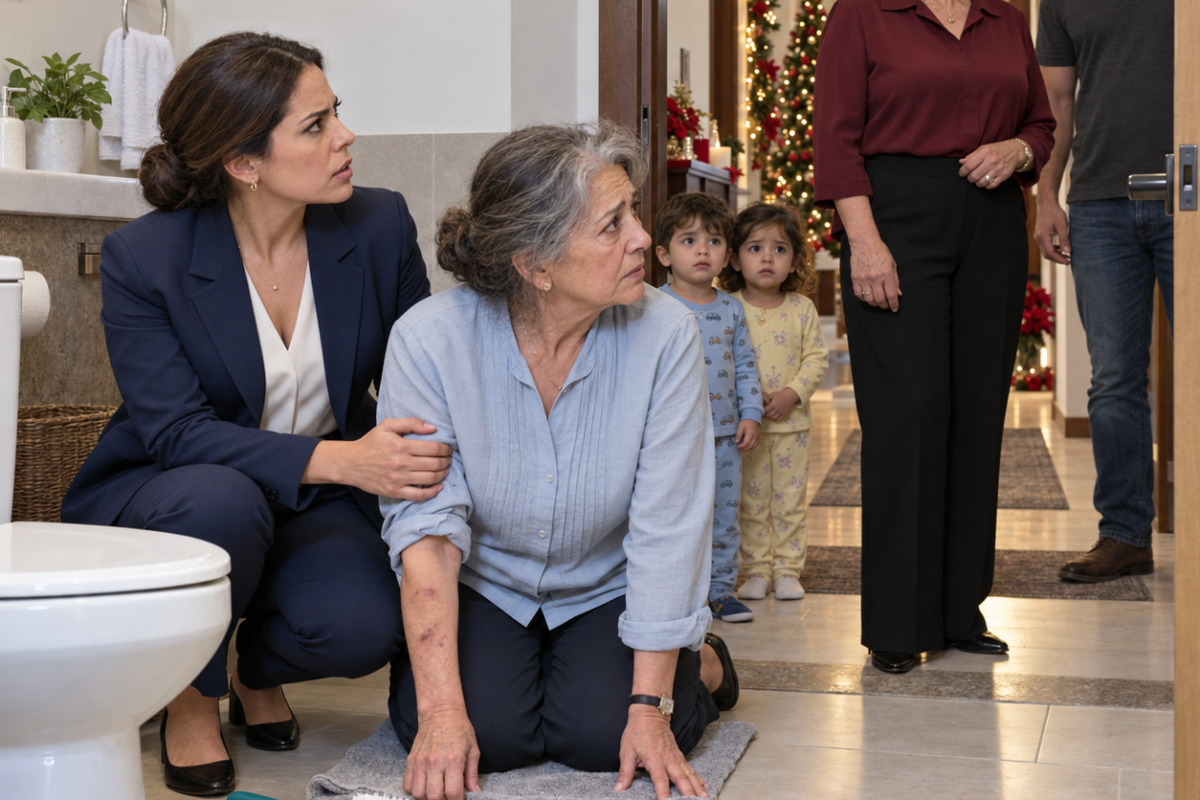
I came home three hours early and found my sixty-eight-year-old mother on her knees scrubbing my mother-in-law’s bathroom. When I helped her stand, her sleeve slipped back, revealing dark marks around her wrist. My husband stepped into the doorway. “Daniela, don’t make a scene.” That was when I remembered my father’s last warning: “If you ever see your mother hurt, don’t argue with anyone. Open the hidden compartment in her sewing machine.”
I came home three hours early and found my sixty-eight-year-old mother on her knees beside a toilet. Her hands were stiff with arthritis. One gripped…
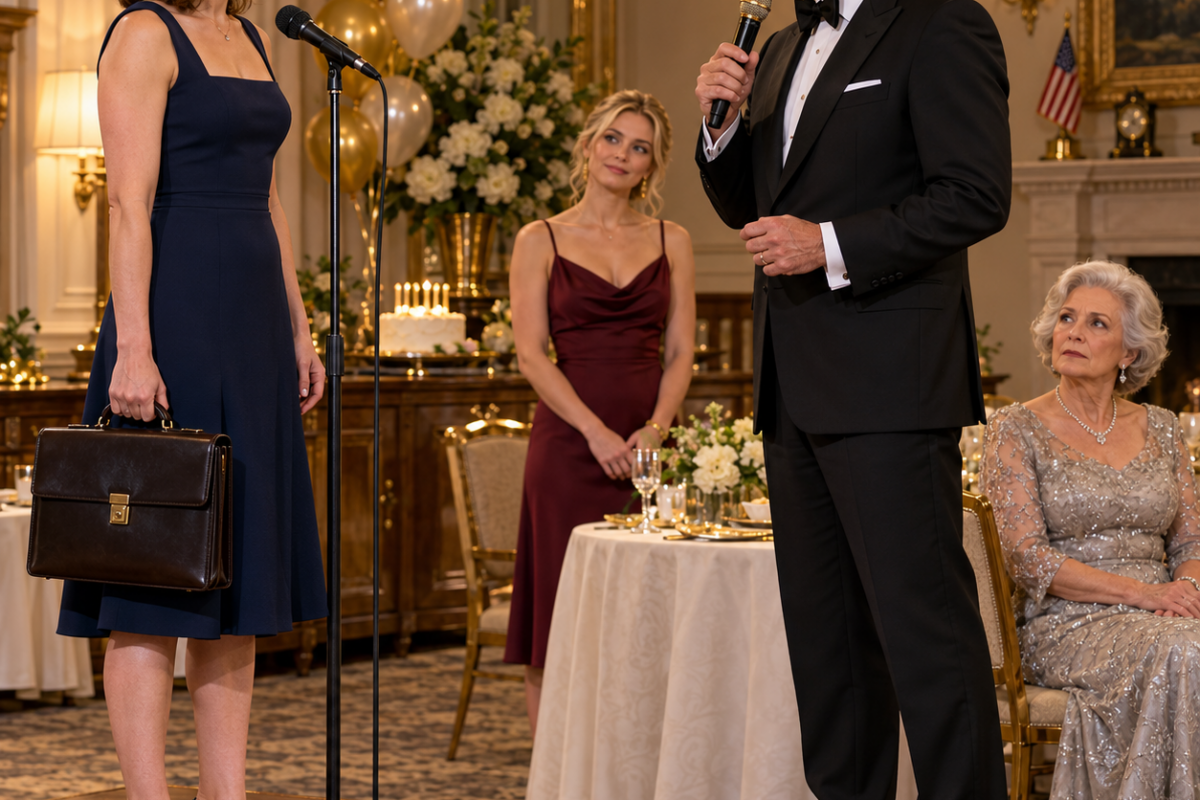
“I already promised your house to your sister,” my father told me four days after I bought it. “They’re moving in Monday. Rent-free for three years.” I was thirty-one, had saved for nine years, and had bought the five-bedroom home entirely in my own name. When I said no, he threatened to tell the family I had abandoned my sister’s children. Days later, he took the microphone at my grandmother’s seventy-fifth birthday dinner and did exactly that.
My father called twelve times in forty minutes after discovering I had bought a house without consulting him. When I answered, he didn’t ask whether…
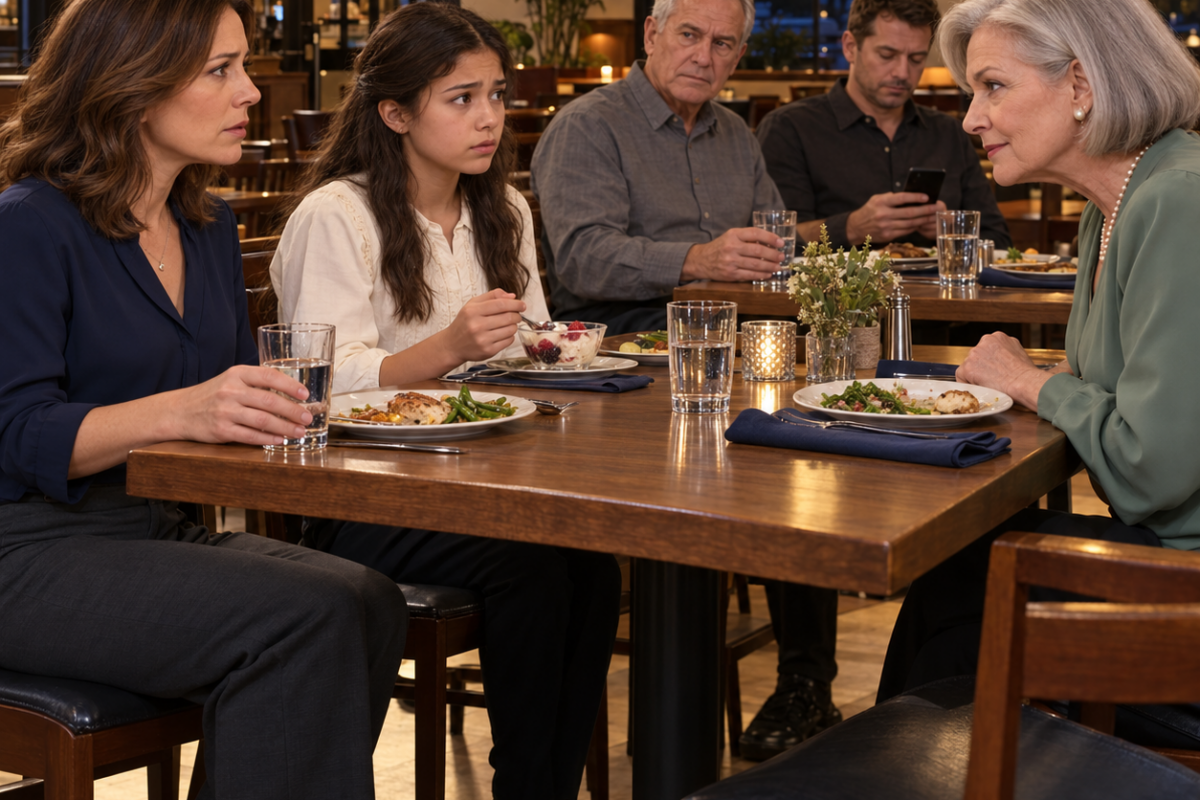
My mother leaned across the restaurant table, looked at my thirteen-year-old adopted daughter, and whispered, “We don’t sit with mistakes.” I took Sole’s hand and walked her out. That night, my father texted, “You’re still making the car payment tomorrow, right?” By midnight, I had canceled the payments I’d been making for my family. Then I remembered something Sole had told me about her grandmother.
My mother looked at my thirteen-year-old daughter and whispered, “We don’t sit with mistakes.” She said it softly enough to avoid attracting attention from the…
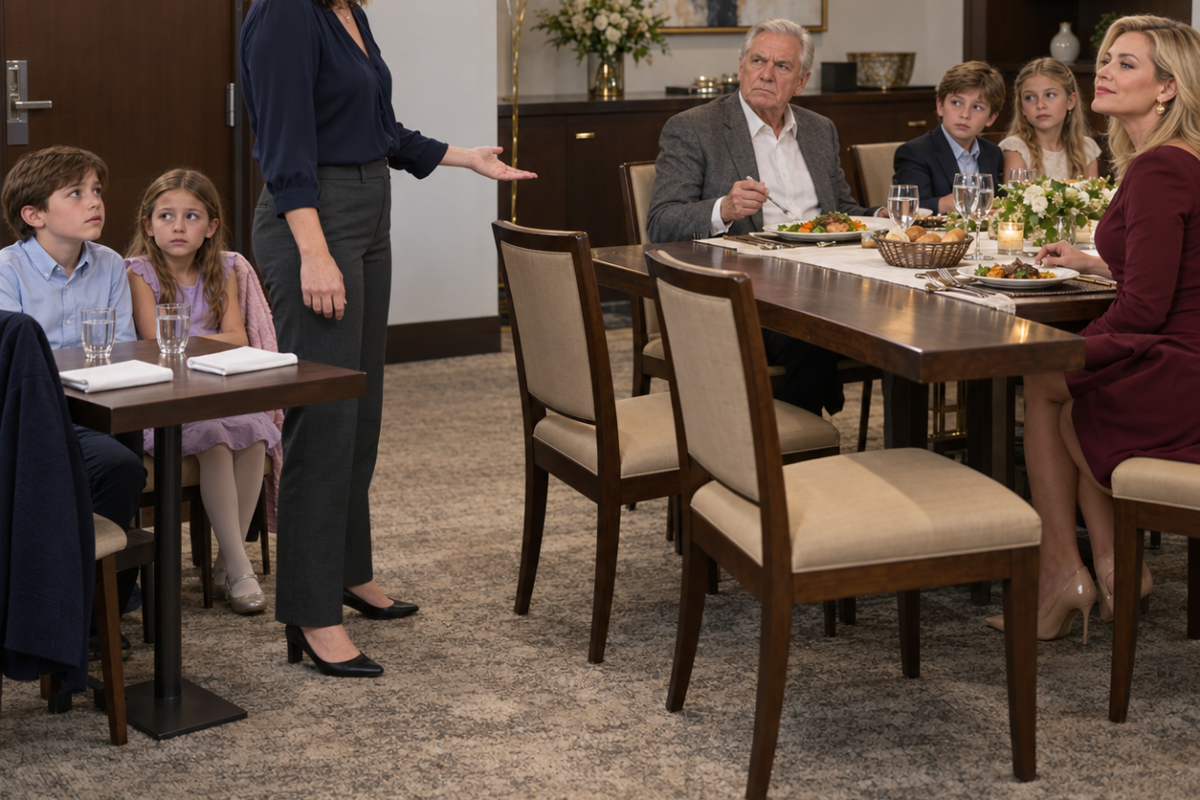
At my father’s seventieth birthday dinner, my eleven-year-old son and eight-year-old daughter were seated beside the service door with water glasses—but no dinner plates. Their cousins sat beside Grandpa with warm bread and full place settings. “They’ll eat after everyone else,” my sister said. I turned to my father, expecting him to object. “They can wait another hour,” he replied. There were two empty chairs at his table.
At my father’s seventieth birthday dinner, the first thing that stopped me wasn’t the cake or the gold balloons. It was my children. Ethan and…
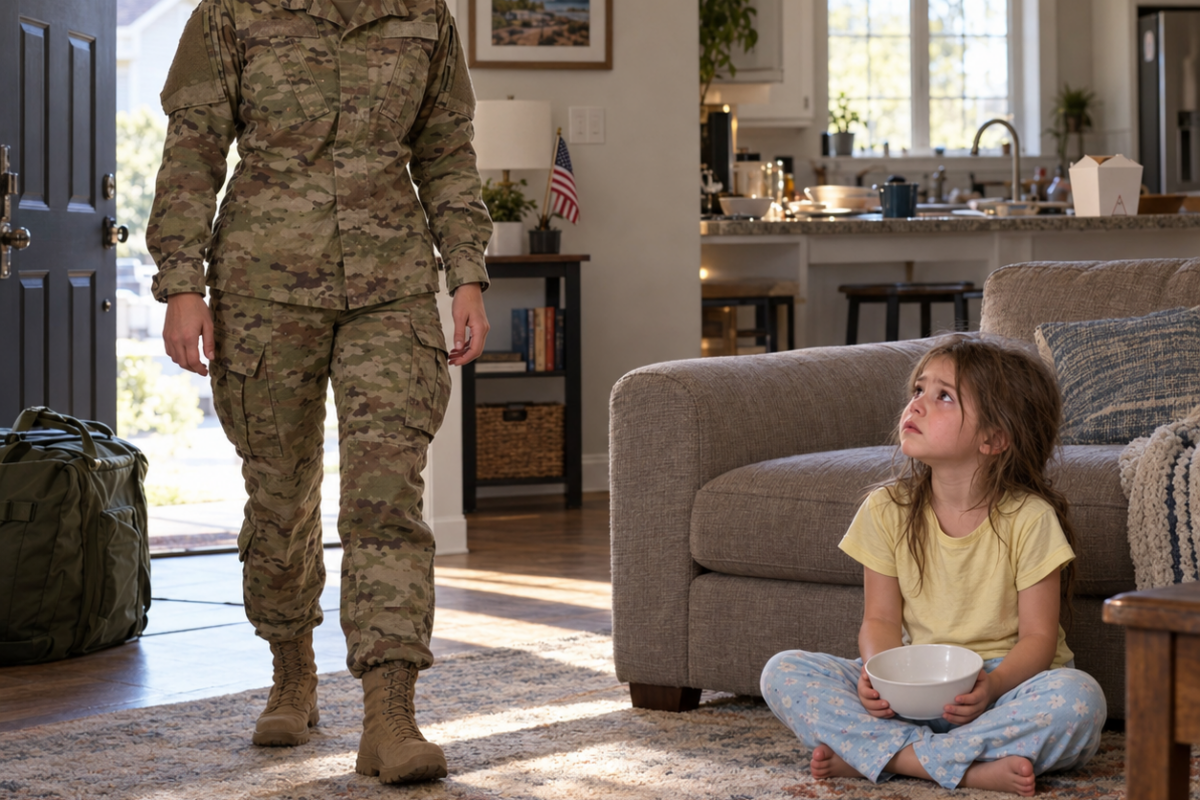
“Mommy, are you real?” my four-year-old daughter whispered when I came home from deployment three weeks early. She was sitting alone on our living room floor with an empty cereal bowl. My husband was on a Caribbean cruise with his mother and sister. Twenty-two minutes earlier, they had posted a photo captioned “Family time.” I was still in uniform when Sophie asked if she could have something to eat.
The first thing my daughter said when I found her was, “Mommy, are you real?” She was sitting cross-legged on our living room floor with…
End of content
No more pages to load