Five days after my wedding, my sister-in-law struck my hand with a metal fork. “Here, the daughter-in-law eats last,” my mother-in-law said. Minutes later, they announced that she should control my income, savings, and apartment. I turned to my husband, expecting him to stop them, but Alejandro lowered his eyes and whispered, “Mariana, don’t make a scene.”
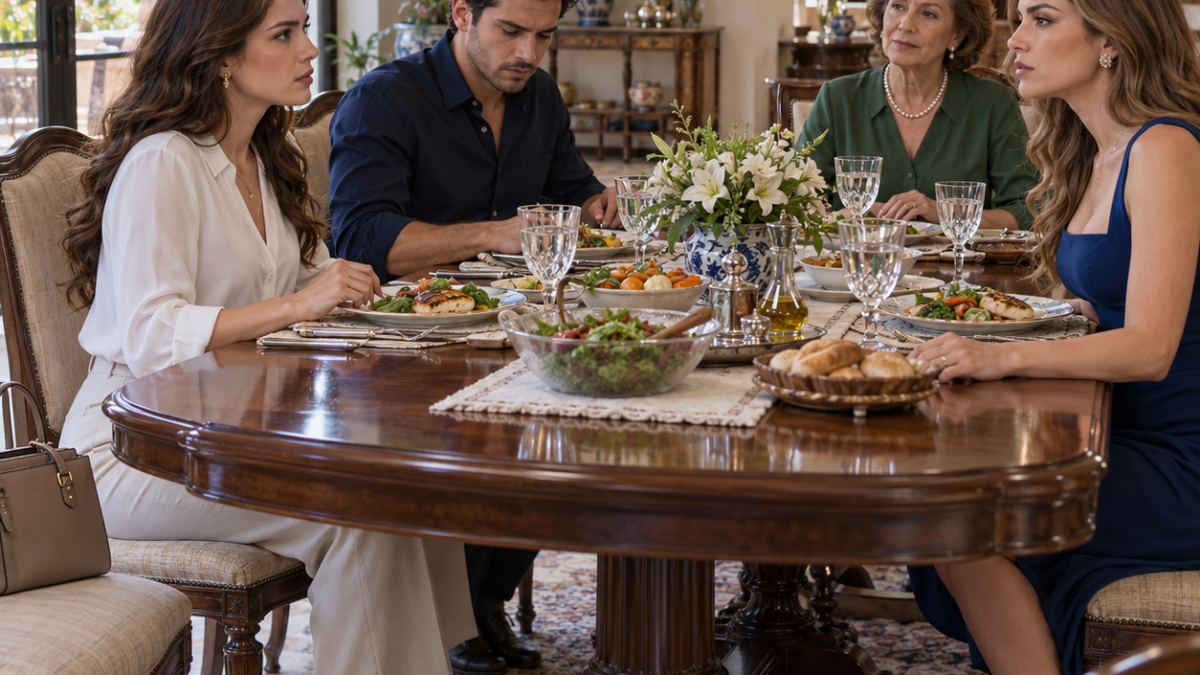
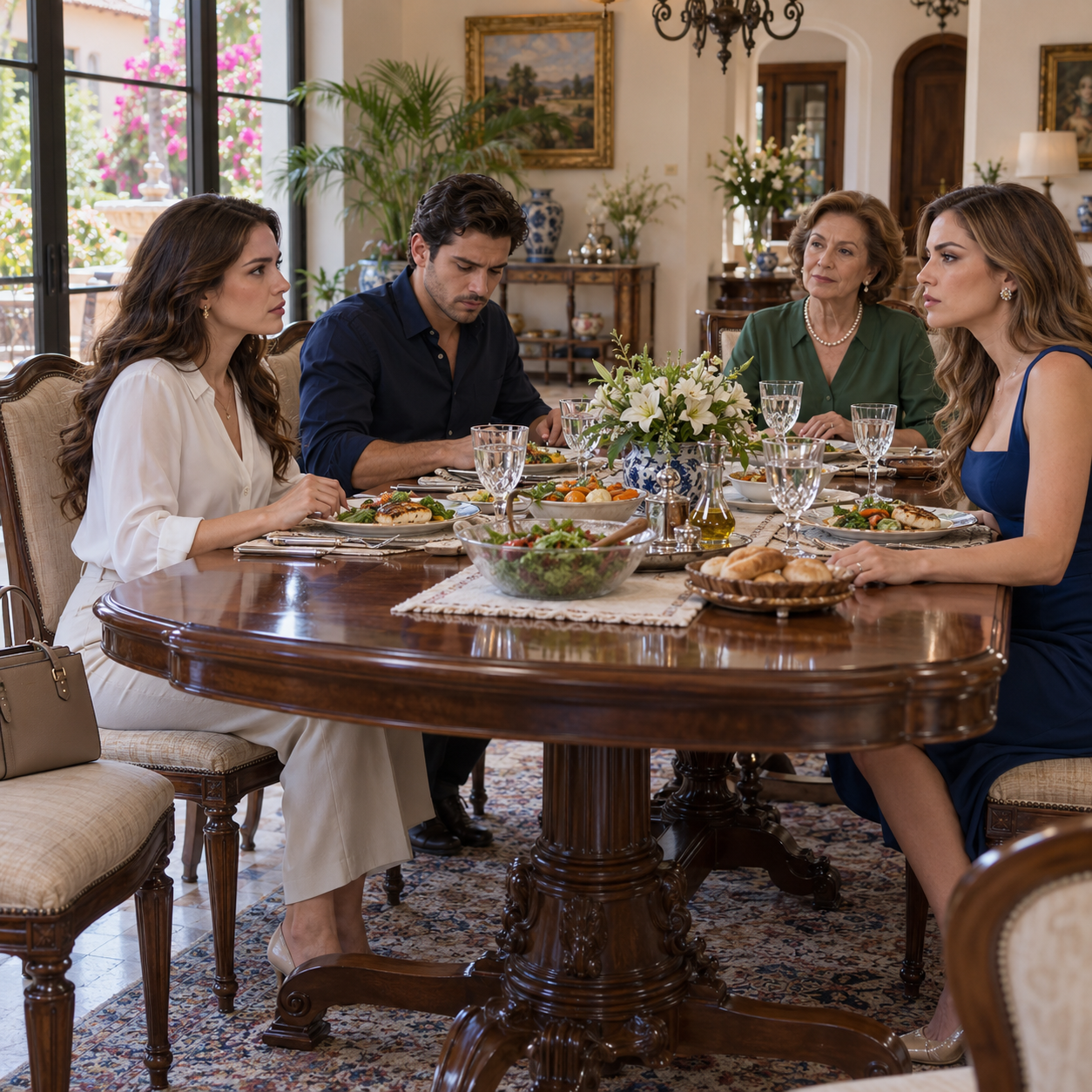
Five days after my wedding, my sister-in-law struck my hand with a metal fork because I reached for a prawn before she did.
The sound was small.
The silence afterward was not.
I looked at the red line forming across my knuckles, then at the woman who had caused it. Renata sat across from me at her mother’s dining table, holding the fork as though she had used it for its ordinary purpose.
“Wait your turn,” she said.
My husband looked at my hand. His eyes moved to the wedding ring beside the mark, then toward his mother.
“Mariana,” he whispered, “don’t make a scene.”
That was when I understood that the fork was not the real problem.
His mother, Teresa, reached for the platter and selected the two largest prawns. She placed one on her own plate and the other on Renata’s.
“Here,” she said, “the daughter-in-law eats last.”
We had been married for five days.
Not five years. Not five months.
Five days.
I sat in a dining room in Ciudad Satélite, surrounded by my husband’s relatives, wondering how a wedding could apparently transfer me from the category of adult woman into the category of person who needed permission to eat.
Alejandro’s fingers closed around my forearm beneath the table.
“Please.”
I turned toward him.
“Please what?”
He looked toward Teresa again.
That movement lasted less than a second. I noticed it anyway.
I had spent eight years in financial consulting, sitting across tables from business owners who tried to make a bad decision sound inevitable. I had learned to listen to the hesitation before an answer, the glance toward someone else, the subject a person tried to avoid.
Alejandro had already answered.
He wanted me to make the situation easier for his family.
Not safer for me.
Quieter for them.
I pulled my arm away.
Then, to my own surprise, I laughed.
Renata frowned.
“What’s funny?”
“I’m trying to understand the rule.”
“What rule?”
“The one you hit me for breaking.”
Teresa dabbed her mouth with a napkin.
“There are certain customs in this family.”
“Apparently.”
Alejandro said my name again.
I ignored him.
“Are there more customs I should know about?” I asked.
Teresa folded her hands. She had always described herself as traditional. Before the wedding, I thought that meant Sunday meals, holidays together, and the expectation that people looked after one another.
My own parents believed in those things too.
I had never understood tradition to mean that someone could strike me at the table and then expect me to feel embarrassed for noticing.
“Every family needs order,” Teresa said.
“Exactly,” Renata added.
She was twenty-seven years old. Apparently, she qualified as an elder when seafood was involved.
I looked at her.
“What does order mean?”
“Christmas and New Year’s are handled by the women.”
“Handled how?”
“Cooking. Cleaning. Preparing everything.”
“And the men?”
“They have other responsibilities.”
One of Alejandro’s uncles became intensely interested in his rice.
Across the table, his cousin Lucía looked down.
I had met her only a few times. She was quiet, observant, and careful around Teresa in a way I had previously mistaken for shyness.
Now I wondered whether caution was the more accurate word.
Renata continued describing appointments, errands, cleaning, and the help their parents would need as they grew older.
“All of us?” I asked.
“Mostly the women.”
“Does that include you?”
She looked offended.
“Of course.”
“Good. Then we should be able to discuss who agrees to do what.”
Teresa’s expression tightened.
“Family shouldn’t need schedules for love.”
I almost answered that love did not wash dishes by itself.
Instead, I looked at Alejandro.
He picked up his water glass but did not drink.
Renata leaned forward.
“And if I ever need to stay at your apartment, don’t act like I’m some guest.”
I stared at her.
“Excuse me?”
“It’s my brother’s home.”
“He lives there.”
“So?”
“That does not mean you can move in without asking.”
Her smile became sharper.
“You’re married now.”
“Yes.”
“So what’s yours is his.”
I placed my fork beside my plate.
“No. We discussed our property arrangements before the wedding. I bought the apartment before I met Alejandro. I paid the mortgage. The final payment cleared two years ago.”
Teresa reached for her wine.
“We aren’t talking about laws at the family table.”
“Then why are we discussing my apartment?”
Nobody answered.
Alejandro touched his forehead.
“Can we talk about this at home?”
“We can talk about our marriage at home. Your sister is announcing that she has rights over my property here.”
Renata rolled her eyes.
“You’re being defensive.”
“You hit me with a fork.”
“I tapped your hand.”
I held it up.
The mark was visible.
“Does that look like a tap?”
She looked away.
Alejandro finally spoke to her.
“Renata.”
For a second, hope rose in me.
Then he added, “Enough. Both of you.”
Both.
As though she had hurt me and I had hurt her by asking her to stop.
I looked at the man who stood beneath white flowers five days earlier and promised to stand beside me.
Apparently, that promise became less binding at his mother’s dining table.
Teresa suggested changing the subject.
Renata was not finished.
“Actually, there’s one more thing Mariana should understand.”
Alejandro’s jaw tightened.
“Renata.”
“What? She asked.”
Something passed between them.
Quick.
Silent.
Unmistakable.
I noticed.
“What should I understand?”
“Nothing,” Alejandro said. “This isn’t necessary.”
“Then it should be easy to explain.”
Teresa put down her glass.
“Your sister talks too much.”
“Let her finish.”
Renata looked pleased.
“The money.”
“What money?”
“Alejandro’s salary. Mom should manage it.”
I stared at her.
“He’s thirty-three.”
“And?” Teresa asked.
“And he can manage his own salary.”
“It prevents unnecessary spending.”
I turned toward him.
“Does your mother manage your money?”
“No.”
“Not yet,” Teresa said.
Two small words.
They changed the room.
Renata lifted her glass.
“Now that you’re married, combining everything makes sense.”
“What is everything?”
“Income. Savings. Property.”
“And who controls it?”
“Mom.”
I waited for someone to laugh.
Nobody did.
I looked at Alejandro.
“Are you hearing this?”
“Mariana, don’t.”
“Don’t what?”
“Turn it into something bigger.”
“I’m asking whether you agree.”
He did not answer.
I leaned back.
“How long have you discussed my finances with them?”
Teresa intervened too quickly.
“Nobody is after your money.”
“I didn’t say anyone was.”
She went still.
Renata did not notice.
“Why would we need your money?”
“I don’t know. You brought it up.”
“If you’re going to be part of this family, you need to learn to give in.”
“To what?”
“To us.”
The answer came so naturally that, for a moment, I almost admired its honesty.
I looked around the table.
Alejandro’s father, Raúl, stared at his plate.
His uncle kept eating.
Lucía’s face had gone pale.
Nobody said that Renata was wrong.
I looked at my hand.
Then at her.
“Don’t touch me again.”
She laughed.
“Or what?”
Alejandro said my name.
Renata reached across the table and closed her fingers around my wrist.
I stood.
The chair scraped backward.
My free hand moved before I had made a sensible decision, and I slapped her once.
The room erupted.
Teresa jumped up.
Alejandro grabbed my shoulders.
Renata shouted.
I pulled away from him and reached for my handbag.
I was angry, frightened, and immediately aware that I had made the situation worse.
I do not remember that moment as a victory.
I remember it as the point at which I should already have been outside the house.
“She hit me first,” I said.
“She touched your hand with a fork,” Alejandro replied.
“She struck it. Then she grabbed me after I told her not to.”
“You slapped my sister.”
“Yes,” I said. “And I’m leaving.”
Teresa pointed at me.
“You will apologize.”
I looked at her.
“I will speak about my own conduct when I’m away from this table. I’m not staying here.”
I turned toward Alejandro.
“Are you coming?”
“Not until you apologize.”
I nodded slowly.
“Okay.”
He seemed startled that I did not argue.
I walked toward the entrance.
He followed.
“Mariana. Stop.”
I reached for the door.
“Come back inside. Apologize first. I’ll make Renata apologize too.”
“Why me first?”
“Because you’re my wife.”
For a moment, I simply stared at him.
“Be more mature,” he added.
There it was.
The role he wanted me to accept.
The person who endured more because she was expected to know better.
“In your family,” I said, “wife appears to mean the woman who must absorb everything.”
“That’s not what I said.”
“It’s what you’re showing me.”
I opened the door.
He offered to drive me home.
I refused.
Then he said something that stopped me.
“We need to talk about the apartment anyway.”
My hand remained on the door.
“What about my apartment?”
His expression changed immediately.
“I didn’t mean—”
“You said the apartment.”
“We’ll discuss it tonight.”
“What were you planning to tell me?”
“Nothing.”
“That isn’t an answer.”
He lowered his voice.
“My family has been discussing some financial arrangements.”
“What arrangements?”
“It’s complicated.”
“It’s my property. Make it simple.”
Behind him, Teresa stood in the hallway.
When she saw me notice her, she stepped back.
I took out my phone and ordered a car.
Alejandro looked wounded.
“You’re really leaving over lunch?”
“No.”
I met his eyes.
“I’m leaving because your sister hurt me, your mother announced that she should control my money, and you treated my questions as the problem.”
He looked toward the dining room.
I already knew what that glance meant.
I waited outside.
My car arrived six minutes later.
Alejandro did not come with me.
During the drive to Polanco, my anger began changing into suspicion.
I opened my banking apps.
The balances looked normal.
Then I opened the secure folder where I kept copies of important documents.
The deed.
Tax records.
Insurance.
The mortgage discharge certificate.
Everything appeared to be there.
I should have relaxed.
I didn’t.
When I reached my building, Luis greeted me at the entrance.
“Señora Mariana.”
“Hello, Luis.”
He looked toward my hand, then away.
I held my bag against my side.
“Is everything all right?”
“Yes.”
Then he hesitated.
“Your husband came by yesterday afternoon.”
I frowned.
“Yesterday?”
“Around three.”
Alejandro had told me he spent the afternoon at work.
“Was he alone?”
Luis hesitated again.
“No.”
For a dreadful second, I imagined another woman.
Then he said, “His mother was with him.”
Teresa.
“How long were they upstairs?”
“About forty minutes.”
I thanked him.
Inside the elevator, I called Alejandro.
No answer.
I called again.
Nothing.
The apartment looked normal when I entered.
No damaged lock.
No overturned furniture.
The living room was exactly as I left it.
Then I went into the office.
The bottom drawer of my filing cabinet stood slightly open.
I never left it that way.
I knelt and pulled out the property folder.
The original deed was there.
One certified copy remained.
Three days before the wedding, I had made two for an insurance update.
The second was missing.
I sat back on my heels.
My phone buzzed.
An unknown number.
Don’t ask Alejandro about the missing copy yet.
I stared at the message.
Another appeared.
If you want to know why his mother was there yesterday, listen to what I send next. Alone.
Then came an audio file.
Eight minutes and forty-seven seconds.
Before I could press play, the front-door lock turned.
Only Alejandro had a key besides me.
I stood.
The door opened.
Then I heard Teresa’s voice.
“Mariana? We need to talk.”
I moved into the hallway.
Teresa stood just inside my apartment.
For a moment, both of us were silent.
She had entered without knocking because someone gave her the means to do so.
“Where did you get that key?”
“Alejandro.”
“Did he tell you to come?”
“We thought you should calm down.”
I looked at her.
“We?”
“He’s worried about you.”
“Then he can answer his phone.”
She set her handbag on the console.
I did not like the familiarity of the gesture.
“Let’s sit.”
“No.”
Her eyes narrowed.
“Mariana.”
“I’m not discussing anything with you here without knowing why you have a key and why you were in my office yesterday.”
She glanced toward the open office door.
It was a small movement.
Enough.
“You’ve been talking to the staff?”
“I asked a question.”
She straightened.
“I’m his mother.”
“Yes.”
“And you’re his wife.”
“Yes.”
“So why are you treating me like a stranger?”
“Because you entered my home without asking.”
She sighed as though I had disappointed her.
“We need to stop this obsession with yours and mine.”
“Then return the key.”
For the first time, she looked uncertain.
“Alejandro gave it to me.”
“It opens an apartment I own and live in. I’m asking you to give it back.”
She held it inside her fist.
“You’re making this worse.”
I took out my phone.
I did not call the police.
I called the building desk.
“Luis, Teresa is inside my apartment. I didn’t invite her. Would you ask the supervisor to come up while she leaves?”
Teresa stared.
“You wouldn’t.”
“I just did.”
She picked up her handbag.
For a moment, I thought she would shout.
Instead, she said, “This is how you repay us after the wedding.”
I looked at her.
“The wedding was not a purchase.”
She put the key on the console with a sharp click.
Then she walked out.
I waited until the supervisor arrived, explained what happened, and asked that the incident be noted.
I did not change every access arrangement immediately. Alejandro lived there, and I needed advice before treating a marital dispute as a simple question of locks.
But I could withdraw permission for Teresa to use a key I had never agreed she should have.
That evening, I photographed my hand.
Then I went to a clinic.
The injury was minor, but I wanted it examined and recorded. I described what happened, including my own response. I did not turn the slap into a story in which I had behaved perfectly.
A nurse looked at my wedding ring.
The small scratch inside the band caught the light.
I removed it while my hand was examined.
For the first time since the ceremony, I held the ring instead of wearing it.
When I returned to the apartment, Alejandro was waiting.
He stood in the kitchen.
“You sent my mother away.”
“Yes.”
“She was trying to help.”
“By entering without asking?”
He exhaled.
“Can we talk?”
“First, tell me why you took a certified copy of my deed.”
He became still.
“I didn’t take anything.”
“One is missing.”
“Maybe you misplaced it.”
The answer frightened me more than an admission would have.
He was asking me to distrust a record I understood.
I looked toward the office.
“I know what was there.”
“Mariana, you’ve had a difficult day.”
“Yes. That doesn’t make me incapable of counting to two.”
He rubbed his face.
“We needed information.”
“We?”
“Mom and I.”
“For what?”
“A financial option.”
“What option?”
He looked away.
I thought of the audio file on my phone.
I had not told him about it.
For once, I resisted the urge to ask the same question until someone decided to answer honestly.
“I’m leaving for tonight.”
His head lifted.
“What?”
“I’m packing a bag. I’m staying with Isabel.”
Isabel was my closest friend. We had known each other since university, and she had sent me a message that afternoon asking whether lunch with the new family had gone well.
I had not yet answered.
Alejandro stepped toward me.
“We’ve been married five days.”
“I know.”
“You’re going to leave after five days?”
“I’m leaving this apartment tonight because I don’t trust what you’re telling me.”
He looked hurt.
I felt the familiar pull to reassure him.
I did not.
“You slapped Renata,” he said.
“Yes. I regret that I let the confrontation become physical. I should have left earlier.”
His expression shifted.
Perhaps he expected that acknowledgment to reopen the path toward obedience.
I continued.
“That does not erase her striking me. It does not explain your mother’s key. It does not explain the missing document.”
He said nothing.
I packed clothes, medication, my passport, and the original property folder.
He watched from the bedroom doorway.
“Are you taking the deed?”
“Yes.”
“Why?”
“Because it belongs with me.”
I called Isabel.
She listened for less than a minute before saying, “Come.”
Alejandro offered to drive.
I declined.
Before leaving, I put the wedding ring in a small box.
He looked at it.
“Is that necessary?”
“I don’t know yet.”
That was the most honest answer I had.
I left before midnight.
At Isabel’s apartment, I ate soup while she sat across from me.
She did not demand the whole story immediately.
She waited until I could speak without shaking.
I told her about the fork.
The table.
The money.
The apartment.
Teresa’s key.
The file.
When I finished, Isabel looked at the phone beside my bowl.
“Have you listened?”
“No.”
“Why not?”
I thought.
“Because once I do, I may not be able to pretend this was a terrible lunch.”
She nodded.
“You don’t have to listen tonight.”
That permission mattered.
I slept badly.
Alejandro called six times.
Teresa sent two messages.
Renata sent one.
You owe me an apology before you speak to anyone else.
I put the phone on silent.
At seven the next morning, I sat at Isabel’s kitchen table.
She made coffee.
I downloaded the audio file to a secure location, kept the original message, and made a note of when it arrived.
I did not know whether the recording was authentic, complete, or obtained in a way that would matter legally.
But I knew it might contain information I needed.
I pressed play.
Teresa’s voice came first.
“Did you get the copy?”
Alejandro answered.
“Yes.”
My hand tightened around the mug.
Renata spoke.
“She’ll notice.”
“She has another one,” Alejandro said.
I looked at Isabel.
Neither of us moved.
The recording continued.
Teresa said, “The apartment is the only asset they’ll accept.”
A man asked, “And Mariana agreed?”
I recognized the voice.
Raúl.
Alejandro’s father.
“She will,” Alejandro said.
That sentence changed everything.
Not she has.
She will.
Teresa sounded impatient.
“You need to speak to her before the appointment.”
“I know.”
“Not like a question,” Renata said. “If you ask her, she’ll start with spreadsheets and lawyers.”
Alejandro gave a tired laugh.
“She’ll want to understand the terms.”
“Then don’t give her time to turn it into a debate,” Teresa replied.
I stopped the recording.
The kitchen became silent.
Isabel set her own cup down.
“Mariana.”
I looked at the folder beside me.
The original deed.
The mortgage discharge.
The documents that represented years of work, payments, and decisions.
“They were planning to use the apartment,” I said.
“Keep listening.”
I did.
There were pauses, chairs moving, and the sound of someone putting dishes away. The file was not a polished confession. It was an ordinary conversation in a room where people believed nobody outside the family would hear.
Raúl asked how much money they needed.
Teresa answered.
One million four hundred thousand pesos.
I wrote the figure down.
She described debts, a proposed consolidation, and the belief that a loan secured by a paid-off apartment would buy them time.
Alejandro said they needed Mariana’s signature.
Hearing my name in that conversation made me feel absent from my own life.
Renata replied, “You’re married. Make her understand that this is what marriage means.”
Raúl said, “Marriage doesn’t give you her property.”
There was a pause.
Then Teresa said, “Nobody is stealing anything. We’re asking her to help.”
“But you haven’t asked,” he replied.
Alejandro said he would handle it.
The phrase was familiar.
I had heard him use it with a caterer, a delivery company, a scheduling problem.
Now I was the problem he intended to handle.
The recording moved to another subject.
Renata mentioned staying in my apartment.
Teresa discussed managing monthly payments.
Alejandro said combining accounts would make everything easier.
“Easier for whom?” Raúl asked.
Nobody answered directly.
Near the end, Teresa said, “After Sunday lunch, she needs to stop acting like she’s outside this family. She has had everything her way.”
Sunday lunch.
The dinner table where Renata struck my hand had not been an isolated display of temper.
It had become an attempt to establish the rules before they asked for my signature.
I listened to the final minute.
Then I stopped.
Isabel remained quiet.
I stared at the notes I had made.
One million four hundred thousand pesos.
My apartment.
My signature.
My husband’s certainty that I would agree after enough pressure.
The anonymous sender messaged again.
Did you listen?
I replied:
Who are you?
A minute passed.
Then:
Lucía.
I closed my eyes.
Alejandro’s cousin.
The quiet woman at the table.
I asked whether I could call.
She answered immediately.
Her voice shook.
“I’m sorry.”
“What is this recording?”
“I was there when they talked. Yesterday, before lunch.”
“Did you record it?”
“Yes.”
“Why?”
She hesitated.
“Because they wanted me to help them explain the numbers.”
Lucía worked in accounting for a small business. Teresa had asked her to look at the proposed loan information and help make it sound manageable.
“Did you agree?”
“I said I needed to understand it. Then I heard them talk about getting you to sign.”
I looked at Isabel.
“Why didn’t you tell me before lunch?”
Lucía began crying.
“Because I was afraid. Because I kept telling myself they would ask you properly. Because I didn’t want to be the person who ruined your marriage.”
“The marriage was five days old.”
“I know.”
I said nothing.
She continued.
“When Renata hit you and everyone acted like you were the problem, I knew I’d waited too long.”
“How did you know a copy was missing?”
“Renata said Alejandro took one from the bottom drawer. She said there were two.”
I wrote that down.
“Who else knows you sent this?”
“Nobody.”
“Please don’t delete anything. And don’t send it around.”
“I won’t.”
“We need advice about what to do with it.”
She sounded relieved.
“I’ll tell whoever you need exactly what happened.”
“Thank you.”
I meant it.
I was also angry with her.
Gratitude did not erase the fact that she had waited until after I was hurt.
I told her that later.
She did not ask me to pretend the delay was harmless.
That helped.
My first professional call was to an attorney who had handled the apartment purchase.
Her name was Sofía Beltrán.
She knew the property, knew the original transaction, and had helped me review the marriage documents before the wedding.
She asked me to come in.
I took the deed, the certified copy, the insurance papers, the marriage paperwork, the clinic record, the messages, and my notes.
Isabel drove.
In Sofía’s office, I explained the sequence carefully.
I did not play the recording before identifying where it came from and what I knew about it.
Sofía listened.
Then she asked questions.
Who owned the apartment?
When was it purchased?
How was the mortgage paid?
What had we agreed before marrying?
Had I signed any authority involving property or financial transactions?
Had I given Alejandro access to accounts?
Had anything already been submitted?
Some answers were easy.
Others required checking.
We had married under a separation-of-property arrangement after discussing it with professional advice. Alejandro had said he respected what I built before meeting him.
I had not given him authority to mortgage my apartment.
I had not signed a guarantee for his family.
I had not agreed to combine all our savings.
The wedding did not transform Teresa into the manager of my finances.
But Sofía warned me not to treat a folder of reassuring documents as proof that nothing could happen.
“We need to know what has already been attempted.”
I nodded.
“What do I do now?”
“Preserve the evidence. Review access. Contact the appropriate institutions. Obtain current property information. And make decisions about the marriage separately from decisions about the loan.”
That last distinction steadied me.
I did not have to decide whether I still loved Alejandro before refusing to risk my home.
Sofía referred me to a family-law attorney named Verónica Salas. She also helped arrange a review of the property records and any inquiries that might have been initiated.
Nothing had been registered against the apartment that I had not authorized.
I breathed more easily.
Then she said, “That is good news. It does not make the conduct acceptable.”
I knew.
The proposed loan came through a broker.
No reputable institution had approved a mortgage merely because Alejandro possessed a certified copy of a deed.
The copy identified the property.
It did not provide my consent.
The broker’s office had requested owner identification, direct contact, and additional documents. An appointment had been scheduled for the following week.
My name appeared in the intake information.
My phone number did not.
Alejandro’s did.
That detail frightened me.
The structure depended on keeping the conversation away from me until the family was ready to bring me in.
Sofía contacted the broker through the proper channel, clarified that I had not authorized the inquiry, and requested preservation of the records.
The appointment was canceled.
The broker’s compliance staff reviewed what had been submitted.
I did not call and shout.
I did not demand that they prove the entire conspiracy over the phone.
I gave a factual statement and let my attorney ask for the information we were entitled to receive.
When Alejandro learned the appointment was canceled, he called.
This time, I answered with Isabel beside me.
“What did you do?”
I looked at the property folder.
“I clarified that I did not authorize a loan.”
“You spoke to the broker?”
“Yes.”
“You had no reason to involve them.”
“My apartment was in their file.”
“We were only exploring options.”
“Then you should have explored them with me.”
He was silent.
I continued.
“I heard the conversation.”
“What conversation?”
“The one about obtaining my signature and not giving me time to turn it into a debate.”
He stopped breathing audibly for a moment.
“Who sent you that?”
“That is not the first question you should be asking.”
“Mariana—”
“Is it your voice?”
He exhaled.
“Yes.”
“Did you take the certified copy?”
“Yes.”
“Did you tell me before taking it?”
“No.”
“Did you visit the apartment with your mother while telling me you were at work?”
“I didn’t think it mattered.”
I looked at Isabel.
She closed her eyes.
“It mattered.”
Alejandro’s voice changed.
“Someone recorded a private family conversation.”
“And someone discussed using my property while excluding me.”
“This could destroy us.”
I sat straighter.
“Then you should have thought about us before you treated my consent as something your mother could arrange.”
He said he wanted to meet.
I agreed to a meeting with Verónica present.
He disliked that condition.
I kept it.
For the next several days, I stayed with Isabel.
My apartment was still mine.
Leaving temporarily did not surrender it.
But Alejandro lived there, and I did not want to improvise a lockout or confront him alone while the financial and marital questions were unresolved.
Verónica helped establish practical arrangements.
What I needed from the apartment.
How belongings would be collected.
Who could enter.
What permissions I could revoke.
What required agreement or formal procedure.
I informed building management that Teresa was not authorized to enter using a key.
Luis looked embarrassed.
“I thought your husband could invite his mother.”
“He could invite a guest while he was there,” I said. “That is different from giving her independent access and allowing her into my private records.”
He nodded.
The manager reviewed the access history.
We obtained the information through appropriate channels.
The visit happened when Luis said it did.
There was no need to invent a more dramatic version.
The facts were enough.
I also reviewed my finances.
Alejandro had access to a shared account we created for ordinary household expenses. The balance was modest. My salary, savings, and investment accounts were separate.
I had intended to revisit the arrangement after the wedding.
Now I understood why Teresa was so interested in combining everything quickly.
My financial adviser helped confirm permissions, update security, and establish that no changes should be made without direct verification.
I did not empty money that was not solely mine.
I did not freeze Alejandro’s private accounts.
I protected what I controlled and documented the rest.
At work, I asked for two days off.
My manager did not ask for the family drama.
She asked what needed coverage.
I gave her a list.
A colleague handled one client meeting.
Another checked a report.
The world continued.
I was grateful.
It helped me remember that my life had not become only the marriage.
The meeting with Alejandro took place on the eleventh day after our wedding.
I remember the number because I wrote it at the top of my notes.
Eleven days.
We had spent more time discussing the end of the marriage than living inside the beginning.
He arrived looking tired.
He had shaved badly and wore a shirt I bought him for his birthday.
Seeing that shirt hurt.
I still knew the man who wore it.
I still remembered him laughing in my kitchen, bringing flowers when I was overwhelmed at work, and sitting beside my father during a medical appointment because my father liked him.
Those memories were real.
So was the recording.
Verónica explained the purpose of the meeting.
Immediate arrangements.
Property and account clarity.
No argument about whether I was allowed to obtain advice.
Alejandro nodded.
Then he looked at me.
“I’m sorry.”
I waited.
“For what?”
He rubbed his hands together.
“For lunch.”
“What happened at lunch?”
He looked uncomfortable.
“Renata shouldn’t have touched you.”
“Hit me.”
“Yes.”
“And?”
“I should have intervened.”
“Yes.”
He looked down.
“I was trying to keep everyone calm.”
“Everyone except me.”
He swallowed.
“I thought you could handle it.”
I stared at him.
The sentence contained so much of the marriage he had imagined.
I could handle the disrespect.
I could handle the money.
I could handle his mother’s disappointment.
I could handle being the person asked to move first.
“Being able to handle something doesn’t make it acceptable to give it to me,” I said.
He nodded.
Verónica asked about the apartment inquiry.
Alejandro said the family was under financial pressure.
Raúl’s business had lost a contract. Teresa had borrowed to cover expenses. Renata’s plans for a small retail venture had required money she could not repay on schedule.
There were several debts.
Some legitimate.
Some poorly understood.
All of them treated as problems I might solve.
“Why didn’t you tell me before the wedding?” I asked.
He looked at me.
“I didn’t want you to think I was marrying you for money.”
I gave a short, disbelieving laugh.
“So you hid the money issue until we were married.”
“That sounds worse than—”
“It is what happened.”
He stopped.
Verónica waited.
Finally, he said, “Yes.”
I looked at the notes.
“Did you agree that your mother should manage my income?”
“No.”
“Then why didn’t you say that at the table?”
“She gets anxious about money.”
“That isn’t an answer.”
He closed his eyes.
“Because I didn’t want to challenge her in front of everyone.”
“You challenged me.”
“Yes.”
The admission hurt.
It also removed some of the confusion.
I had not imagined the imbalance.
He had chosen it.
I asked whether he believed marriage gave him authority over my property.
He said no.
Then why did he take the copy?
To obtain information.
Why did he lie about the visit?
Because he thought I would become upset.
Why did he give Teresa a key?
Because she wanted to see the apartment and help prepare for the next stage.
“What next stage?” I asked.
He hesitated.
I waited.
“Combining our lives.”
“My life was already in the apartment. What were you combining?”
He could not answer without returning to the financial plan.
Verónica asked for the missing certified copy.
Alejandro took it from his folder.
I looked at it.
A piece of paper I had made for an insurance update.
A piece of paper they treated as an opening.
He slid it toward me.
“I was going to return it.”
“When?”
He looked away.
I placed it beside the original.
For the first time in days, the count was correct.
That did not make the trust correct.
After the practical matters were addressed, Alejandro asked whether we could speak alone.
I declined.
He looked wounded.
“I’m your husband.”
“Yes,” I said. “That is why this is worse.”
He began crying.
I did not feel satisfaction.
I felt grief arriving early.
We had not even learned how to be married before I had to decide whether remaining married would require me to betray myself.
The meeting ended with temporary arrangements.
Alejandro agreed to stay with his parents while we considered the next steps. His belongings would remain secured until collection.
The agreement was documented.
Only after those arrangements were clear did I return to the apartment and change access in the ways my attorneys advised.
I did not use ownership as a reason to ignore every other legal question.
I used it as a reason to ask them carefully.
The first night home alone, I moved through the rooms slowly.
Everything looked almost unchanged.
That was strange.
After so much fear, I expected the apartment to show the damage.
But the sofa remained.
The books remained.
The kitchen smelled faintly of the coffee I made that morning.
The harm was not in the walls.
It was in what I now knew happened inside them while I was at work.
I sat on the bedroom floor and opened the small box containing my wedding ring.
The scratch inside the band was visible.
Tiny.
Easy to miss.
Alejandro noticed it at the table before he noticed what the mark on my hand meant.
I turned the ring in my fingers.
Then I put it away.
My parents came over the next evening.
I had delayed telling them because I was embarrassed.
They loved Alejandro.
They contributed to the wedding.
They watched me say vows with tears in their eyes.
I felt that telling them would mean admitting I had made a decision badly enough to hurt everyone.
My mother listened at the kitchen table.
My father stood near the window.
When I finished, neither spoke for a moment.
Then my father asked, “What do you need?”
The question undid me.
Not why did you marry him.
Not we should have known.
Not perhaps you misunderstood.
What do you need?
“I don’t know,” I said.
“That’s all right,” my mother replied.
She reached for my hand carefully, avoiding the sore area.
We sat together.
Later, my father said, “The wedding is not a debt you repay by staying.”
I cried again.
I had not realized how much I needed to hear that.
They stayed for dinner.
We ate simple food.
Nobody waited for permission.
Nobody announced who deserved the first portion.
At some point, my mother offered me the largest piece of fish.
I laughed unexpectedly.
Then I cried because of the laugh.
She looked confused until I explained.
Afterward, she shook her head.
“Food is not supposed to be a test.”
“No,” I said. “It isn’t.”
Lucía came to see me that weekend.
We met at a café rather than my apartment.
I wanted space between the visit and my home.
She arrived with a notebook.
She had written down what happened, when she recorded the conversation, who was present, and how she learned about the missing copy.
She gave the material to my attorney through the channel we agreed on.
I thanked her.
Then I told her I was angry.
She looked down.
“I know.”
“You could have warned me before I went there.”
“Yes.”
“Why didn’t you?”
She took a breath.
“Because in that family, telling the truth to the person outside the room is treated as betrayal. I’ve spent years believing I should keep things inside.”
I looked at her.
“And then I became the person outside.”
“Yes.”
She cried quietly.
“I’m not asking you to forgive the delay. I just didn’t want to keep making the same decision.”
I nodded.
That answer mattered.
She was not asking me to call her brave so she would not have to feel ashamed.
She was taking responsibility for both the help and the delay.
We talked about family pressure.
About how people learned to describe fear as respect.
About how a room full of relatives could make a reasonable question feel like disloyalty.
Lucía said Teresa had been angry that she refused to help prepare a presentation for me about the loan.
“What presentation?”
“Monthly costs. How it would supposedly be safe. They wanted it to look like a joint family plan.”
“Without the family member providing the collateral.”
She nodded.
I stared at the coffee between us.
It was almost absurd.
They wanted my professional judgment to disappear precisely when it mattered most.
The recording became one part of the broader review.
My attorneys assessed how it could be used, if at all, in the relevant proceedings. Lucía’s testimony and the independent records mattered separately.
I did not post it online.
I did not send it to wedding guests.
I did not ask strangers to vote on whether my husband loved me.
I wanted a resolution.
Public humiliation would not return my privacy.
Teresa contacted my mother.
I learned about it because my mother told me immediately.
“She says families should handle problems together.”
“What did you say?”
“That my daughter is not an emergency credit line.”
I smiled despite myself.
“She wasn’t pleased.”
“I imagine not.”
Teresa also contacted my father.
He referred her to the attorneys.
She accused him of being cold.
He said he preferred accurate.
For years, I had admired my parents’ restraint.
Now I understood that restraint did not require surrender.
Renata sent a formal demand for an apology.
Her message described the slap.
It did not mention the fork.
I replied through counsel to avoid turning it into an argument.
I acknowledged my conduct and expressed regret for escalating physically. I also preserved the account of what happened before it, including the injury record and the available witnesses.
That was difficult.
Part of me wanted to refuse any acknowledgment because she would use it as proof that only I was wrong.
But taking responsibility for my action did not require accepting her false account.
I could regret the slap.
I could also refuse to apologize for saying no.
Those were different matters.
Alejandro tried to merge them.
“If everyone apologizes, we can start over.”
I looked at the message.
Start over.
As though the marriage were a board game and the documents could be returned to the drawer without consequence.
I wrote:
An apology does not answer the financial questions. It does not restore trust. We need to address each issue honestly.
He replied:
You sound like a lawyer.
I stared at that.
Then I put the phone down.
Being clear had become, in his mind, something artificial.
Being loving apparently meant leaving enough ambiguity for him to manage.
I began seeing a counselor.
Her name was Ana.
She asked what I feared most.
I expected to say losing Alejandro.
Instead, I said, “That I almost accepted it.”
Ana waited.
“The fork. The rule. The money. If it had happened more slowly, maybe I would have kept making it seem reasonable.”
“Why do you think that?”
“Because I already did with smaller things.”
I told her about the visits before the wedding.
Teresa deciding dates.
Alejandro asking me to let a comment go.
Renata borrowing something without returning it.
My own habit of making a joke instead of stating a limit.
Ana did not tell me that I caused the behavior.
She asked what I learned from accommodating it.
“That peace depended on me.”
“And did accommodation produce peace?”
I thought.
“Temporary quiet.”
She nodded.
We worked from there.
I also had to grieve the wedding.
That surprised me.
I thought the marriage was the only loss.
But I missed the day I believed I had.
The flowers.
My father’s face.
The way Alejandro held my hand.
The certainty I felt walking toward him.
Those memories did not disappear because of what followed.
They became harder to place.
I did not burn the photographs.
I did not display them.
I saved them in a folder and gave myself permission not to decide what they meant yet.
The honeymoon had been planned for later in the year.
I canceled my participation through the proper arrangements and absorbed the costs that could not be recovered.
Alejandro said canceling was premature.
I said pretending I intended to go would be dishonest.
He did not answer.
The marriage ended through the legal process appropriate to our situation.
It was not annulled by a phone call because it had lasted only days.
The short duration mattered to the practical arrangements, but it did not remove the need for proper advice and documentation.
Verónica explained the options.
I asked questions.
I chose the path that fit the facts rather than the one that sounded most satisfying in a story.
We had limited shared finances.
My premarital apartment and the records showing how it was purchased and paid were clear.
There were wedding expenses, household contributions, and personal belongings to resolve.
We resolved them.
Not instantly.
Not without difficult conversations.
But without allowing the family’s beliefs about marriage to replace the actual arrangements we had made.
Alejandro collected his belongings on an agreed afternoon.
Isabel stayed with me.
A neutral person helped document the collection.
He took clothes, books, a chair he brought when he moved in, and the kitchen equipment that belonged to him.
He left the wedding gifts that required separate discussion until we agreed what would happen.
I did not put his possessions outside.
I did not damage anything.
I wanted to become someone who could end a relationship without reproducing the contempt that ended it.
Before he left, he stood near the kitchen.
“Can we talk for five minutes?”
I agreed.
Isabel remained in the living room.
Alejandro looked around the apartment.
“I thought this was going to be our home.”
“So did I.”
He nodded.
“I keep thinking about the table.”
“What part?”
“When you asked whether I agreed.”
I waited.
“I should have answered.”
“Yes.”
“I thought if I said no to Mom, she would feel rejected.”
“And if you said nothing to me?”
He closed his eyes.
“I thought you would understand.”
I leaned against the counter.
“Understand that your mother’s feelings mattered more than my safety and my decisions?”
“No.”
“That is how it worked.”
He nodded slowly.
“I know.”
For a while, neither of us spoke.
Then he said, “I didn’t marry you only for the apartment.”
The word only hurt.
I think he realized it immediately.
He tried again.
“I loved you.”
“I believe there were things you loved about me.”
He looked at me.
“My competence. My stability. My generosity. The way I solved problems.”
Tears filled his eyes.
“I loved more than that.”
“Then you needed to protect more than what I could provide.”
He looked down.
I felt sadness.
I did not feel uncertainty.
That was new.
At the door, he said, “I’m sorry.”
“I hope you learn from this.”
He nodded.
Then he left.
The apartment was quiet afterward.
Isabel asked whether I wanted company.
“Yes.”
So she stayed.
We ordered dinner and watched a terrible film. Halfway through, I laughed at a line that was not especially funny.
She looked at me.
“There you are.”
I cried again.
She paused the film.
We waited.
Then I asked her to restart it.
Life returned in small pieces.
Work first.
I completed a client project that had been waiting while my personal life became unmanageable.
The owner thanked me for explaining difficult financial information without making him feel foolish.
I almost laughed at the contrast.
Professionally, clarity was useful.
In Alejandro’s family, clarity had been an insult.
I stopped treating that family’s interpretation as the standard.
My colleague Daniela invited me to lunch.
She knew only that the marriage had ended quickly.
She did not ask for the scandal.
She asked whether I wanted to talk about it or talk about anything else.
“Anything else.”
We discussed a restaurant, an impossible client, and the shoes she regretted buying.
It was wonderfully ordinary.
My hand healed.
The mark faded.
The ring remained in its box.
At first, I checked the property records more often than necessary.
Sofía gently told me when the review was complete and what practical monitoring could continue.
“You do not have to live as though a new problem will appear every morning.”
I knew she was right.
Knowing did not stop the anxiety immediately.
But I began reducing the checking.
I improved document security.
I updated access arrangements.
I made sensible plans.
Then I tried to live.
That last step was harder than changing a password.
Raúl contacted me several months later.
I had not spoken to him since the dinner.
We met in a public place.
He looked tired.
“I should have said something.”
“Yes.”
“I knew the money situation.”
“Yes.”
“I didn’t know they would pressure you that way.”
I considered the recording.
“You heard them discuss not asking me like a question.”
He looked down.
“I did.”
“You said one thing about property. Then you let the plan continue.”
He nodded.
“I thought Alejandro would handle it.”
I gave a small, sad smile.
“So did I.”
Raúl folded his hands.
“The debts are being addressed.”
“I’m glad.”
“Renata has had to close part of the business plan.”
“I’m sorry for the difficulty.”
He seemed surprised.
I did not want them ruined.
I wanted them to stop believing my home was the solution they could obtain without my agreement.
He told me he was separating the business accounts and seeking professional advice.
I listened.
Then I said, “I hope it helps. But I’m not participating.”
“I understand.”
The meeting ended politely.
That did not make us close.
It made the limit clear.
Teresa never provided the apology I once imagined.
She sent a message saying she regretted that I interpreted family support as an attack.
I read it.
Then I deleted the notification from my screen, preserving the message where counsel advised.
There was no useful reply.
I did not need to prove that an injury, a missing deed copy, and a loan appointment were interpretations.
Renata eventually wrote a different message.
It was shorter.
I should not have hit your hand or grabbed you. I’m sorry.
No demand followed.
I acknowledged receipt.
I did not reopen the relationship.
Accountability could be real without becoming access.
Lucía and I remained in contact.
Slowly.
We met for coffee occasionally.
She became more direct with her family.
Not because I made her my student.
Because she decided she did not want to keep living inside conversations everyone called loyalty while someone absent paid the price.
One afternoon, she said, “I used to think telling the truth made me responsible for what happened next.”
I looked at her.
“And now?”
“I think the person who did the thing is responsible too.”
“Usually first.”
She laughed.
Then she grew serious.
“I’m still sorry I waited.”
“I know.”
It was the first time I said that without feeling the need to make it sound forgiving.
We could acknowledge the history and still drink coffee.
That was enough.
Nearly a year after the wedding, I invited my parents and Isabel to dinner.
I cooked prawns.
The decision was partly deliberate and partly practical. They were fresh, I knew how to prepare them, and I refused to let a food I liked become something I avoided forever.
Isabel saw the platter.
Her eyes moved to mine.
I smiled.
“Everyone is allowed to eat.”
“Radical.”
My father laughed.
My mother reached for a serving spoon.
“Who wants the first one?”
Nobody answered quickly enough.
So she put one on my plate.
For a moment, I looked at it.
Then I picked up my fork.
The fork was ordinary.
My hand was steady.
I ate.
The conversation continued.
Work.
A neighbor.
A trip my parents were considering.
No announcement about who deserved more.
No hidden plan beneath the meal.
Later, Isabel helped with the dishes.
She held up a fork.
“May this always remain a utensil.”
I laughed.
“Please.”
The apartment felt warmer that evening than it had on the night Alejandro left.
Not because there were more people.
Because nobody inside needed me to become smaller to feel comfortable.
After my guests went home, I sat in the office.
The filing cabinet was closed.
The original deed was stored securely.
The certified copies were accounted for.
Those facts mattered.
They represented practical protection.
But I no longer wanted the cabinet to become the center of my life.
On the desk sat a photograph from before the wedding.
My parents and I stood beside a lake, wind moving our hair, none of us dressed for a formal occasion.
I looked happy.
I remembered that woman.
I had not lost her in five days.
I had nearly begun a process that might have made her harder to find.
That was different.
I put the photograph beside the lamp.
Then I opened a book.
Months later, a friend asked whether I regretted leaving so quickly.
The question was not cruel.
She had heard only that the marriage ended almost as soon as it began.
I considered my answer.
“I regret that I had reasons to leave.”
She nodded.
“But not leaving?”
“No.”
I did not tell her everything.
I no longer believed the validity of my decision depended on supplying enough painful detail to persuade every person who asked.
I had the facts.
I had made the decision.
I could live with it.
On the anniversary of what would have been our first year of marriage, I did not plan a ceremony of recovery.
I went to work.
I finished a report.
I had lunch with a colleague.
In the evening, I walked through Polanco and bought flowers from a small shop because I liked the color.
When I reached my building, Luis greeted me.
“Good evening, señora Mariana.”
“Good evening.”
He asked whether I needed help with the flowers.
“No, thank you.”
The elevator carried me upstairs.
I unlocked the apartment.
The rooms were exactly as I left them.
Not perfect.
A book lay open on the sofa.
A cup waited beside the sink.
A pair of shoes stood crookedly near the door.
Evidence that I lived there.
I put the flowers in water.
Then I made dinner.
While it cooked, I opened the terrace door and let the evening air move through the apartment.
I thought briefly of Teresa’s dining table.
The fork.
The red mark.
Alejandro’s hand on my arm.
Don’t make a scene.
For a long time, that sentence had seemed like the beginning of the end.
Now I understood it as the moment when the terms of the marriage became visible.
He wanted my steadiness without respecting my judgment.
His family wanted my resources without seeking my consent.
They wanted the appearance of closeness while deciding who would control the life I brought with me.
I did not leave because of a prawn.
I did not leave because I disliked tradition.
I left because the word family was being used to make refusal sound like betrayal.
And I stayed away because the evidence showed that my discomfort was not a misunderstanding.
My phone rang.
Isabel.
“Dinner tomorrow?”
“Yes.”
“Your place?”
“Yes.”
“What should I bring?”
“Whatever you’d like.”
She laughed.
“Dangerous amount of freedom.”
“Try to handle it.”
We ended the call.
I set the phone down and returned to the stove.
There were no papers waiting for my signature.
No deadline someone else had arranged.
No conversation about my home taking place in a room where I was absent.
Just dinner.
A vase of flowers.
An apartment I worked for.
And a woman who no longer believed love required her to hand over the keys to her own life.
News
At my seventy-second birthday party, my daughter-in-law knocked a crystal vase off its pedestal with her elbow, watched it shatter, and smiled. “Oops.” Her own parents had given it to her and my son on their wedding day six years earlier. I looked at Frank, waiting for him to say something. All he managed was, “Mom…”
I watched my daughter-in-law break her own parents’ wedding gift with one elbow and a smile. For months afterward, people asked me whether I was…
I came home three hours early and found my sixty-eight-year-old mother on her knees scrubbing my mother-in-law’s bathroom. When I helped her stand, her sleeve slipped back, revealing dark marks around her wrist. My husband stepped into the doorway. “Daniela, don’t make a scene.” That was when I remembered my father’s last warning: “If you ever see your mother hurt, don’t argue with anyone. Open the hidden compartment in her sewing machine.”
I came home three hours early and found my sixty-eight-year-old mother on her knees beside a toilet. Her hands were stiff with arthritis. One gripped…

“I already promised your house to your sister,” my father told me four days after I bought it. “They’re moving in Monday. Rent-free for three years.” I was thirty-one, had saved for nine years, and had bought the five-bedroom home entirely in my own name. When I said no, he threatened to tell the family I had abandoned my sister’s children. Days later, he took the microphone at my grandmother’s seventy-fifth birthday dinner and did exactly that.
My father called twelve times in forty minutes after discovering I had bought a house without consulting him. When I answered, he didn’t ask whether…
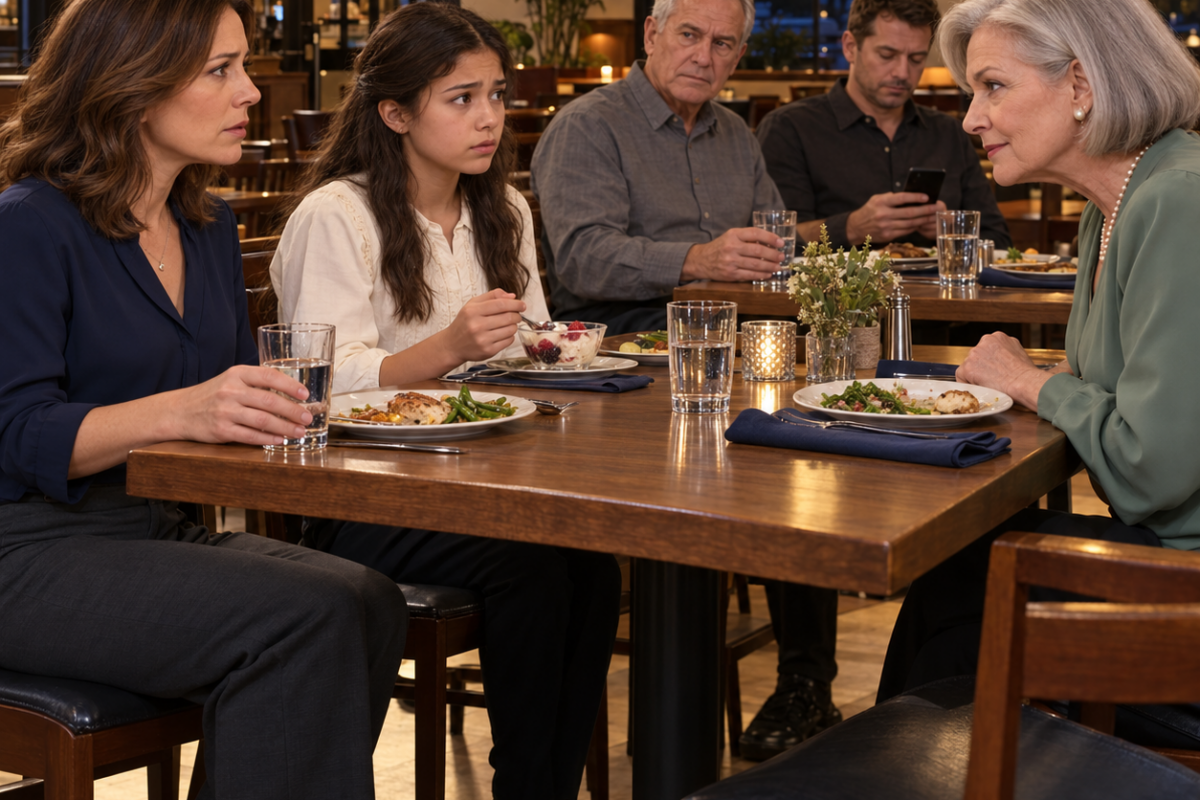
My mother leaned across the restaurant table, looked at my thirteen-year-old adopted daughter, and whispered, “We don’t sit with mistakes.” I took Sole’s hand and walked her out. That night, my father texted, “You’re still making the car payment tomorrow, right?” By midnight, I had canceled the payments I’d been making for my family. Then I remembered something Sole had told me about her grandmother.
My mother looked at my thirteen-year-old daughter and whispered, “We don’t sit with mistakes.” She said it softly enough to avoid attracting attention from the…
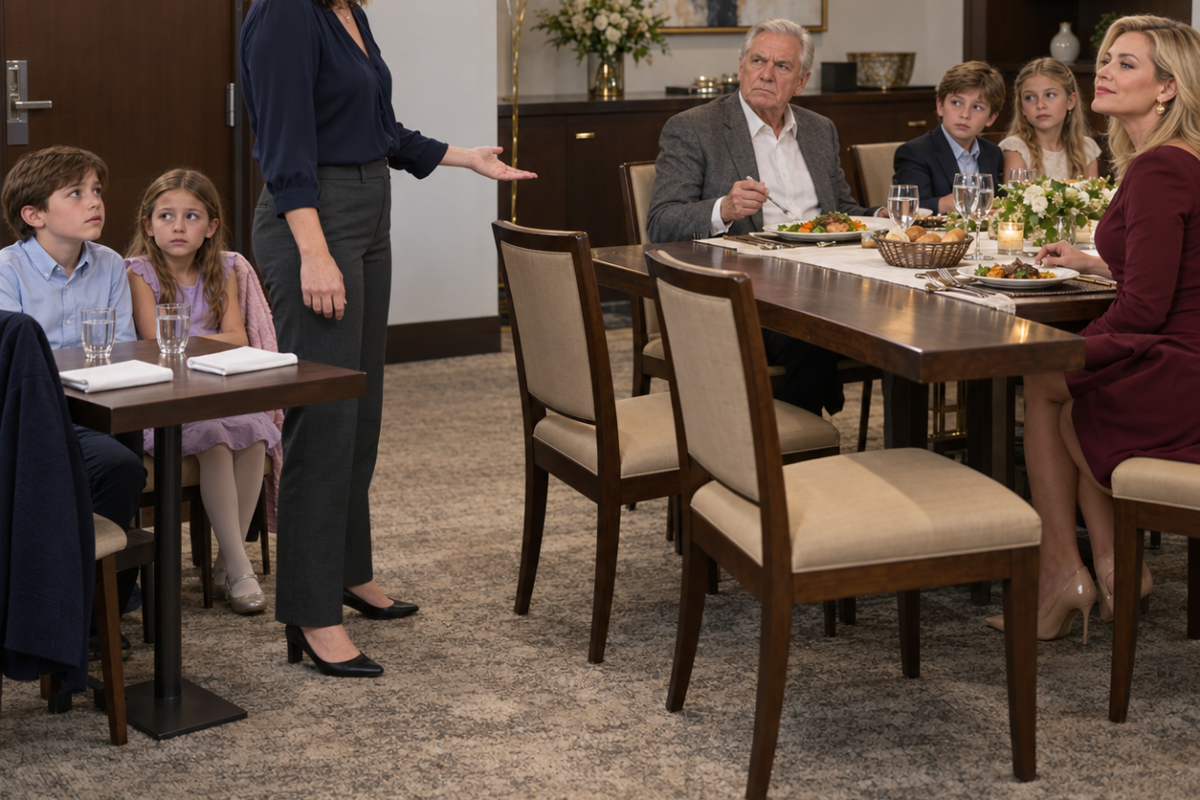
At my father’s seventieth birthday dinner, my eleven-year-old son and eight-year-old daughter were seated beside the service door with water glasses—but no dinner plates. Their cousins sat beside Grandpa with warm bread and full place settings. “They’ll eat after everyone else,” my sister said. I turned to my father, expecting him to object. “They can wait another hour,” he replied. There were two empty chairs at his table.
At my father’s seventieth birthday dinner, the first thing that stopped me wasn’t the cake or the gold balloons. It was my children. Ethan and…
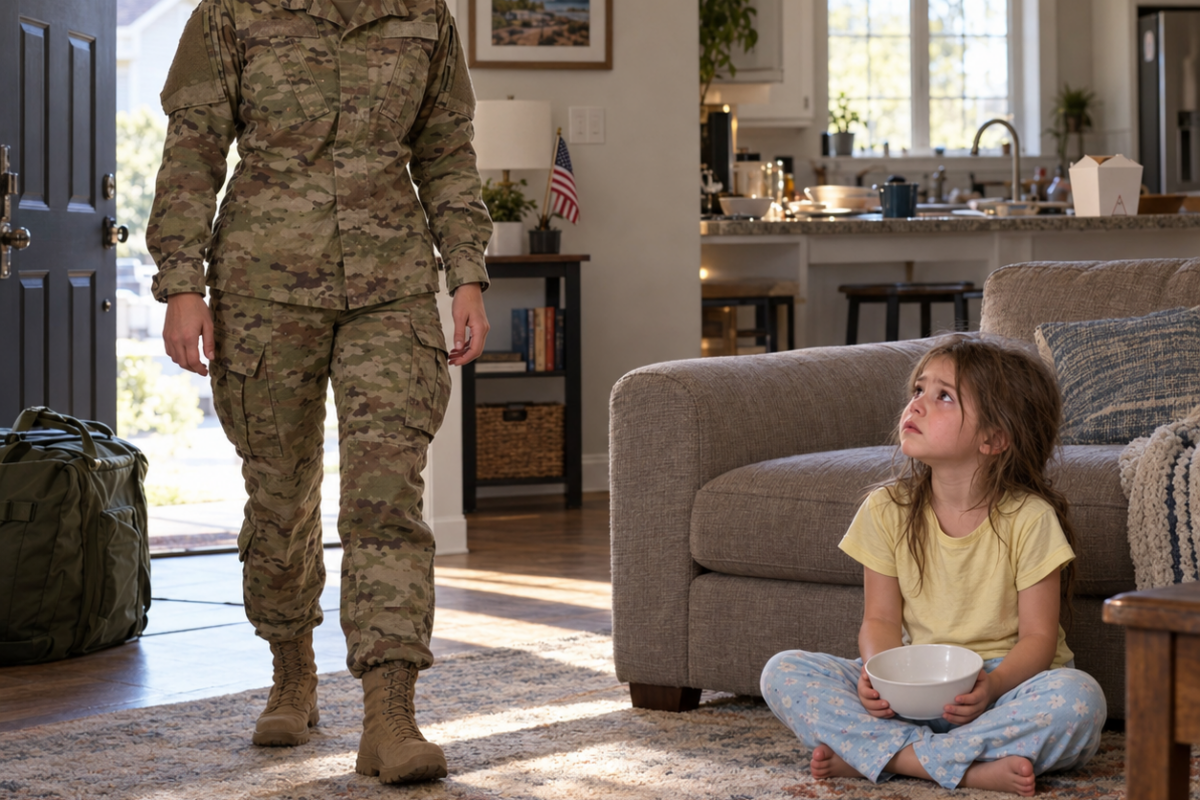
“Mommy, are you real?” my four-year-old daughter whispered when I came home from deployment three weeks early. She was sitting alone on our living room floor with an empty cereal bowl. My husband was on a Caribbean cruise with his mother and sister. Twenty-two minutes earlier, they had posted a photo captioned “Family time.” I was still in uniform when Sophie asked if she could have something to eat.
The first thing my daughter said when I found her was, “Mommy, are you real?” She was sitting cross-legged on our living room floor with…
End of content
No more pages to load