“Dad, I didn’t invite you. I don’t want you here,” my only daughter said at the entrance to the wedding I had spent almost a year helping her pay for. I stood there holding a wrapped gift that had belonged to her late mother. When I reminded her that I had paid for the venue, flowers, and dinner waiting inside, she answered, “That was your responsibility.”

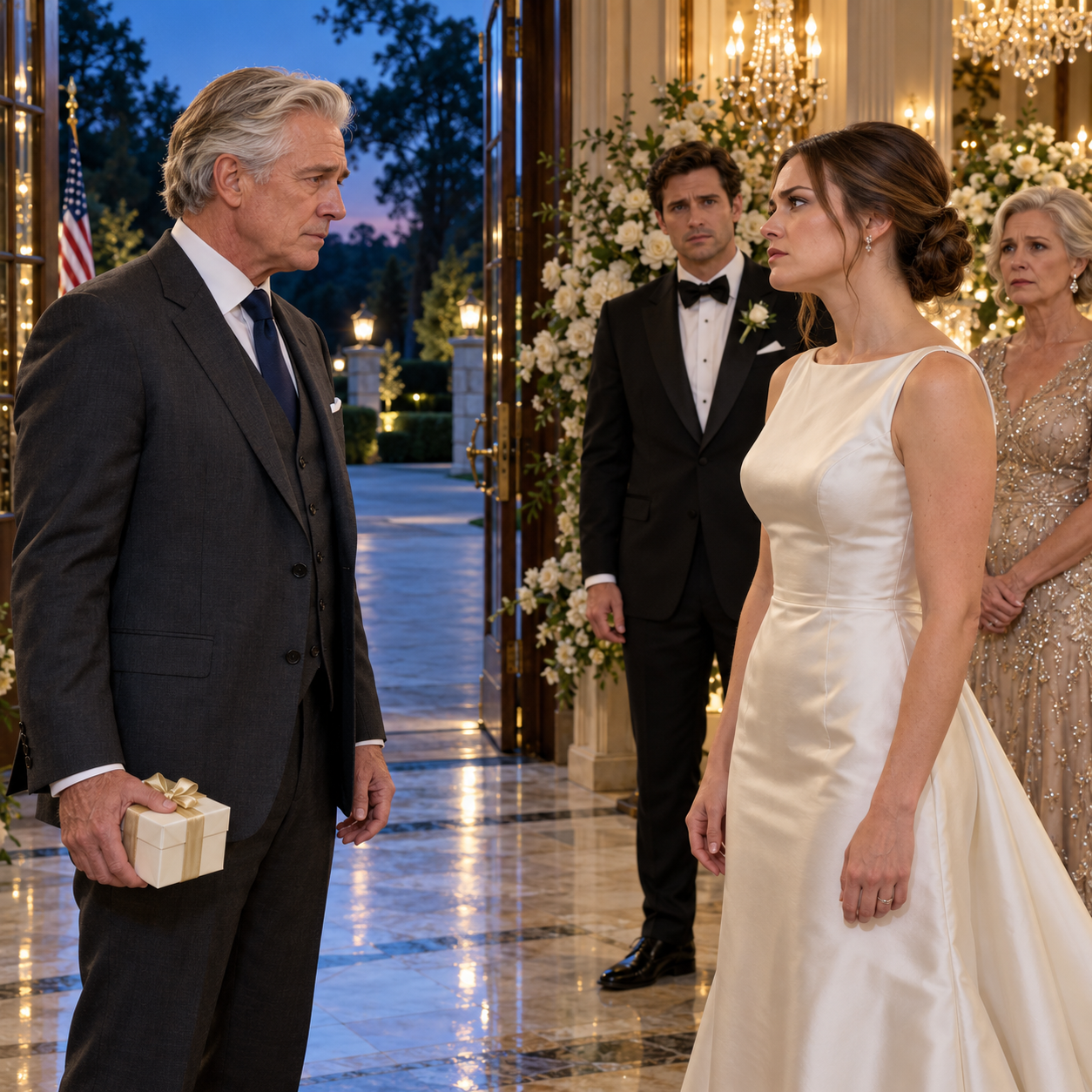
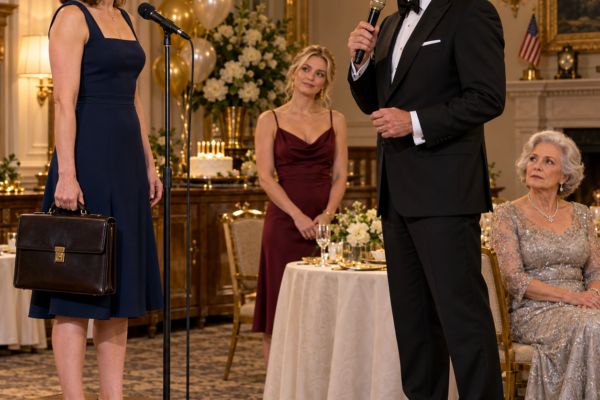
“Dad, I didn’t invite you. I don’t want you here.”
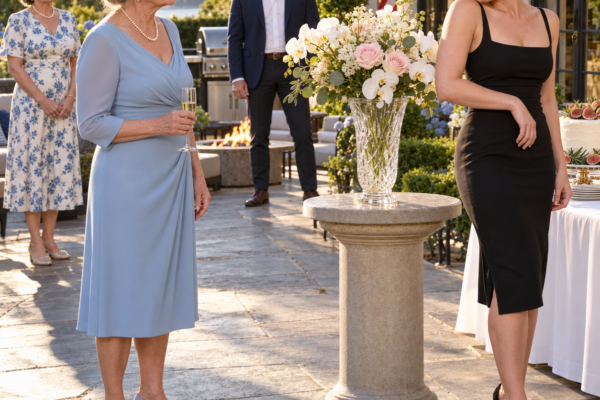
My daughter said it quietly, standing beneath the white flowers I had paid to have arranged around the entrance to her wedding venue.
For a moment, I thought she meant I had come through the wrong door.
A young woman with a clipboard had already told me the family photographs were taking place inside. Through the open entrance, I could see chandeliers, champagne glasses, and guests finding their seats. Somewhere beyond the lobby, a string quartet was playing.
Emily stood in front of me in the dress she had chosen six months earlier. Her mother would have loved the clean lines of it, the way the satin fell without needing anything added.
I held a small ivory box tied with a pale gold ribbon.
Inside was something Margaret had asked me to give our daughter on her wedding day.
“You don’t want me here?” I asked.
Emily looked over her shoulder.
Her new mother-in-law stood near the reception desk. Daniel was beside her, adjusting one of his cuffs. His father was speaking to a man I recognized from the local business association.
Nobody moved toward me.
“Please don’t make this difficult,” Emily said.
“I’m not trying to.”
“This is an important day.”
“I know.”
Her expression tightened.
“I need you to respect what I’m asking.”
I looked past her at the flowers, the photographer, the tables being checked by servers.
For eleven months, I had helped turn this day from an idea on my daughter’s phone into a place full of people.
The venue deposit.
The caterer.
The flowers she wanted even though they had to be brought in from out of state.
The photographer whose work she admired.
Transportation for guests.
Part of the honeymoon.
I had paid because I could, because she was my only child, and because her mother would not be here to see her marry.
“I helped pay for almost all of this,” I said.
The moment the words left my mouth, I wished I had chosen different ones.
Money was not why I expected to be welcome.
But it was the only part of my presence she had treated as certain.
Emily lifted her chin.
“That was your responsibility.”
I stared at her.
Behind her, Daniel’s mother glanced at her watch.
My daughter had once waited at the kitchen window for my truck to turn into our driveway. She used to run outside before I finished parking, carrying whatever she had drawn that afternoon.
Now she stood between me and a room I had helped fill.
I looked down at the box.
“All right,” I said.
She seemed relieved.
“Tomorrow, you’ll receive your wedding gift.”
Her eyes moved to the ribbon.
“Dad—”
I stepped back.
“Have a good evening, Emily.”
I walked to my car without turning around.
The box remained in my hand.
She had no idea the gift I had decided to withdraw was not inside it.
I am not a man who makes quick decisions when I am angry.
For thirty-nine years, I ran a small construction and cabinet business. If a customer changed a plan halfway through a job, I learned to put down the saw before answering.
There were mistakes you could repair with patience.
There were others you made permanent by continuing while upset.
So I drove home, put the box on the kitchen table, and sat down.
The house was quiet.
Margaret’s reading chair stood beside the window. Her old sewing basket remained beneath it, though neither Emily nor I had opened it in years.
I could have called my daughter.
I could have gone back.
I could have asked the wedding planner to find me a chair at the rear, where I would not interfere with whatever picture Emily wanted the evening to make.
For most of my life, I would have done something like that.
Not because I lacked pride.
Because I loved her more than I wanted to be right.
But there was a difference between swallowing pride and agreeing that the swallowing would never end.
I picked up my phone and called my attorney.
Samuel Reed answered on the fourth ring.
“Richard?”
“Are you home?”
“Yes. Is everything all right?”
I looked at the ivory box.
“No.”
He waited.
“The transfer tomorrow. Don’t proceed.”
There was a brief silence.
“Nothing has been signed,” he said.
“I know. I’m telling you not to prepare it for signature.”
“Do you want to explain?”
“Not tonight.”
“All right.”
Sam had known me long enough to recognize when a question would help and when it would only require a man to repeat something he could barely say once.
“Call me in the morning,” he said.
I ended the call.
Then I loosened my tie, made a sandwich, and ate half of it standing at the counter.
I had been looking forward to my daughter’s wedding for almost a year.
I had been looking forward to her gift much longer.
Seven years earlier, I had bought a two-story commercial building downtown.
It stood on a corner two blocks from the courthouse in the Ohio town where Margaret and I had raised Emily. The ground floor had broad windows, a separate entrance, and enough space for two small businesses. Upstairs were four rooms, high ceilings, and a front room with northern light.
The building needed work when I bought it.
The roof was sound, but the wiring was old. The upper floor had been empty for years. Water had damaged a section of plaster beside one window.
I knew how to repair those things.
What I could not repair was the absence that had settled over our home after Margaret died.
She had been a school art teacher.
She noticed color everywhere.
A rusted mailbox.
A yellow bowl at a diner.
The blue shadow beneath snow.
Emily inherited that way of looking at things.
Even as a child, she rearranged furniture in her dollhouse according to where the light fell.
By college, she wanted to become a designer.
Not the kind who selected expensive pillows for photographs, though there was honest work in that too.
She talked about making ordinary spaces easier to live in. Senior apartments with better lighting. Small shops where customers could move comfortably. Kitchens people did not need to be wealthy to enjoy.
Margaret used to say, “She sees how a room could make someone feel.”
When I found the building, Emily had just started working for a design firm in Columbus.
She was twenty-four, tired, hopeful, and convinced she would someday open a studio of her own.
I did not tell her why I bought it.
I said it was a sensible investment.
That was true.
It was also incomplete.
On Saturday mornings, I drove downtown and worked upstairs.
I repaired trim, refinished the floors, updated the electrical service through a licensed contractor, and had the old windows restored.
In the front room, I built a long worktable from maple.
Margaret had loved maple.
The wood seemed to hold light.
I imagined Emily spreading drawings across that table while a young employee asked her a question.
I imagined her walking downstairs to meet a client.
I imagined a sign on the door.
For a man who claimed to be practical, I spent a remarkable amount of time imagining.
The ground floor had tenants: a small alterations shop and a bookkeeper’s office.
Their rent covered expenses and provided a modest return.
I paid off the remaining loan two years before the wedding.
By then, the building was worth far more than I had paid for it.
I had no debt against it.
No partner.
No hidden investor.
It was mine to keep, sell, lease, or give away.
I chose to give it to my daughter.
Sam began preparing the transfer several months before the wedding.
He asked whether I wanted conditions.
“No.”
“Restrictions on sale?”
“No.”
“Some protection if the marriage ends?”
I thought about that longer.
Then I said, “Talk me through it.”
He explained the options without telling me what kind of father I should be.
I could place it in a trust.
I could retain an interest.
I could give her the use of it instead of the title.
I chose an outright gift because I wanted Emily to have something that belonged to her.
I did not want her to spend her life waiting for permission from me.
There is a bitter little irony in that, considering what happened.
Sam’s last question was whether I had told her.
“Not the details.”
“Does she know a property gift is possible?”
“She knows I’ve been thinking about helping her open a studio.”
“Then make sure she understands nothing has transferred yet.”
“I will.”
I thought I had.
Looking back, I understand that I had made a different mistake.
I told my daughter enough to let her dream.
I did not ask enough about who else was dreaming with her.
The wedding planning began the previous summer.
Emily came to my house with a binder, a tablet, and three photographs of venues.
She spread them across the kitchen table where Margaret used to grade papers.
“I know it’s expensive,” she said.
“Most weddings are.”
“I don’t expect you to pay for everything.”
“What does Daniel’s family plan to cover?”
“The rehearsal dinner. Some of the reception extras.”
I nodded.
“What matters most to you?”
She pointed to the photograph of a restored hotel outside town.
“The space. And the photographer.”
We discussed a budget.
At least, I thought we did.
I wrote the first deposit check that afternoon.
Emily hugged me before leaving.
For a moment, her head rested against my shoulder just as it had when she was small.
“Mom would have loved it.”
“Yes,” I said. “She would.”
That sentence made it difficult to say no to anything afterward.
A better father, or perhaps simply a wiser one, might have recognized that.
The flowers became more expensive.
The catering estimate increased.
A transportation company suggested a second vehicle.
The photographer required travel expenses.
Emily always called sounding apologetic.
“Dad, I hate asking.”
“You’re not asking. We’re working it out.”
I said that because I wanted her to enjoy the process.
I did not want every wedding choice to become a reminder that her mother was gone.
Once, when a revised invoice arrived, Sam happened to be at my house discussing the building.
He glanced at the number.
“That’s a substantial celebration.”
“She only gets married once.”
“You hope.”
I gave him a look.
He lifted his hands.
“I’m an attorney. We specialize in ruining pleasant assumptions.”
I laughed.
But he asked a serious question afterward.
“Are you comfortable with the total?”
“I can afford it.”
“That wasn’t the question.”
I looked at the invoice again.
“Yes,” I said.
And financially, I was.
What I had not considered was how quickly generosity could become part of someone else’s expectations.
Daniel was polite when we first met.
He brought wine to dinner and offered to help carry dishes.
He worked with his father in a company that developed and operated event spaces. They leased buildings, renovated interiors, and managed weddings, corporate gatherings, and private parties.
The business sounded respectable.
The photographs on their website looked impressive.
I knew enough about renovation costs to ask practical questions.
“What happens when bookings are slow?”
Daniel smiled.
“That’s why you diversify.”
It was a good answer.
It was also the kind of answer that meant everything until you asked what it specifically meant.
His father, Thomas, had a firmer handshake and a more practiced way of talking.
We met at a restaurant to discuss the rehearsal dinner.
He spoke about regional expansion, investor confidence, and the importance of relationships.
I spoke about the parking problem behind the building where his newest venue operated.
He laughed.
“You contractors always see the obstacles.”
“We’re the ones who have to get around them.”
He seemed to like that.
His wife, Lorraine, was pleasant in the manner of someone accustomed to being accommodated.
She asked whether I would be wearing a dark suit.
“Yes.”
“Good. The family photographs will have a very consistent look.”
I assumed she was being helpful.
There were many things I assumed.
As the wedding approached, my role changed without anyone announcing it.
At first, Emily asked my opinion.
Later, she sent invoices.
At first, Daniel joined us for dinner.
Later, he had business obligations whenever I suggested meeting.
Lorraine became involved in details I had thought belonged to Emily.
The seating arrangement.
The ceremony timing.
The photographs.
I was told the rehearsal dinner was becoming “very intimate.”
I offered to attend only the rehearsal if space was an issue.
Emily said they were still working it out.
Two weeks before the wedding, I asked what time I should arrive.
“Early enough for pictures,” she said.
“Send me the schedule.”
“I will.”
She did not.
I asked again three days later.
She said the photographer was revising it.
I did not press.
A man can spend a lifetime building things and still fail to recognize a structure collapsing around him if he wants badly enough to believe it is sound.
The Wednesday before the wedding, Emily stopped by my house.
She seemed distracted.
I had the ivory box ready but kept it in the sideboard.
We drank coffee.
She looked around the kitchen.
“You should let me update this room sometime.”
“Your mother liked it.”
“She liked it twenty years ago.”
I smiled.
“She also liked me twenty years ago. We all age.”
Emily laughed.
It was the last ordinary laugh we shared before the wedding.
I told her I had an appointment with Sam at nine Monday morning.
“The building?” she asked.
“Yes.”
Her expression changed.
Not dramatically.
Just a quick alertness.
“So it’s really happening.”
“If you want it.”
“Of course I want it.”
“I hope you’ll take time deciding how to use it.”
“I already have ideas.”
“Your studio?”
“Among other things.”
I looked at her.
“What other things?”
She picked up her cup.
“Daniel understands the business side better than I do.”
“That’s helpful.”
“He thinks we could do more with the whole property.”
“The downstairs is leased.”
“I know.”
“Those tenants have been good to me.”
“We’d work around them.”
I should have asked what work around meant.
Instead, I said, “Nothing happens before the transfer. And nothing should happen afterward without you getting your own advice.”
She nodded.
“I understand, Dad.”
I believed her because she was my daughter.
That was not the same as having reason to believe every person influencing her.
On the wedding morning, I went to the cemetery.
I had not planned to.
I was dressed, the box was in the car, and I suddenly could not leave for the venue without going somewhere Margaret still belonged.
The ground was damp.
I stood beside her stone with my hands in my coat pockets.
“Our girl’s getting married.”
I waited as though there might be an answer.
“She’s beautiful.”
That much I knew.
“I think she’s happy.”
That part I was less certain of.
I brushed a leaf away from the base of the stone.
Then I drove to the venue.
I was not late.
I was not dressed improperly.
I had not been drinking.
For months afterward, I found myself repeating those facts in my mind, as though somewhere there must have been a practical explanation for what happened.
There was not.
There was only my daughter at the entrance, looking past me toward the people whose approval had become more important than my presence.
When I got home that evening, I did not open the box.
Margaret’s gift belonged to Emily regardless of what had happened.
I knew that even then.
But I could not bear to separate the ribbon from the memory of her mother’s hands.
So I left it on the table.
I slept in the chair for a few hours.
At seven Monday morning, I showered, dressed, and drove to Sam’s office.
His assistant, Beth, looked up when I entered.
“Mr. Bennett. Coffee?”
“Please.”
Sam was already in the conference room.
The prepared deed lay in a folder beside the place where I would have sat to sign it.
He closed the folder before I reached the chair.
“You sounded certain last night.”
“I am.”
“Do you want to tell me what happened?”
I did.
Not every feeling.
Just the facts.
Emily’s words.
My response.
The departure.
He listened without interrupting.
When I finished, he asked, “Do you want to withdraw the gift permanently or postpone it?”
“Withdraw it.”
“All right.”
“Can anybody argue it already belongs to her?”
“Title remains with you. You have not signed or delivered the deed. I’ll review everything we’ve communicated, but an anticipated gift is not the same thing as a completed transfer.”
I nodded.
He leaned forward.
“Richard, I want you to hear something. You don’t need her to have behaved badly in order to decide not to give away a building.”
“I know.”
“Do you?”
I looked at the closed folder.
“I’m learning.”
At nine, the time reserved for signing came and went.
Sam sent Emily the brief notice we had agreed upon.
The proposed transfer would not proceed.
The property remained in my ownership.
Any questions should be directed to his office.
There was no account of the wedding.
No demand for an apology.
No threat.
I wanted a boundary, not a bargaining tool.
By ten, I had twenty-eight missed calls.
Most were from Emily.
Several were from Daniel.
One came from a number I did not recognize.
I silenced the phone and put it facedown.
Sam glanced at it.
“You don’t have to answer today.”
“I know.”
A few minutes later, Daniel called again.
I picked up.
“Richard.”
He did not say good morning.
He did not ask why I had left the wedding.
He did not say Emily was upset about what she had done.
“My family made plans around that building.”
I looked at Sam.
“What plans?”
“Business plans.”
“What kind of business plans?”
“Can we not do this over the phone?”
“You called me.”
He exhaled.
“The property was part of a larger arrangement.”
“An arrangement with whom?”
“My father can explain.”
“Then your father should call my attorney.”
“This is going to cause a serious problem.”
“For whom?”
Daniel did not answer immediately.
That silence told me more than his first sentence.
“Richard, Emily told us the transfer was set.”
“It was proposed.”
“You’re changing it the morning after the wedding.”
“Yes.”
“You can’t punish everybody because you were offended.”
I looked at the ivory box resting beside my chair.
I had brought it because I did not want it left alone in the house.
“What did you plan to do with my building?”
“Use it productively.”
“I’ve been using it productively for seven years.”
“You know what I mean.”
“No,” I said. “I don’t.”
His voice hardened.
“We have deadlines.”
“Then contact Sam.”
I ended the call.
Sam had already pulled his legal pad toward him.
“Start at the beginning,” he said.
So I told him about Wednesday.
Among other things.
Daniel understands the business side.
We could do more with the whole property.
Sam wrote down each phrase.
Then he began making calls.
He checked the recorded title and confirmed that no new deed or mortgage appeared.
That was a relief.
It was not the end.
He asked me to authorize him to contact the building’s insurer, the tenants, and the municipal planning office about any recent inquiries.
The first unexpected answer came from the city.
A company connected to Thomas had requested information about converting the building into an event and hospitality space.
The request described the property as an expected future asset of a new venture.
Attached was a preliminary site sketch.
It showed the ground floor opened into one large room.
The alterations shop was gone.
The bookkeeper’s office was gone.
Upstairs, Margaret’s maple worktable did not appear.
Sam looked up from the screen.
“Did you authorize this?”
“No.”
“Did anybody discuss it with you?”
“No.”
He called the contact listed on the inquiry.
The man confirmed he had spoken with Thomas’s company.
“He said the transfer was pending.”
“Pending from whom?”
“Her father.”
Sam looked at me.
I felt an unfamiliar coldness move through my chest.
They had not only imagined owning the building.
They had begun arranging its future.
A second inquiry had gone to a commercial lender. We learned that when the lender’s representative contacted me later that morning to request owner confirmation for a preliminary review.
The request was not a mortgage.
It did not create a lien.
But it identified my property as expected collateral once Emily received it.
I forwarded the email to Sam without replying.
He read it.
Then he said, “We need to know what she signed.”
Emily finally answered when I called.
Her voice was strained.
“Dad, please. Daniel says this is serious.”
“I agree.”
“You can’t take back something you promised.”
“I can decline to make a transfer that hasn’t happened.”
“That’s not what I meant.”
“What did you sign for Daniel?”
There was a pause.
“What?”
“Before the wedding. Did you sign business paperwork?”
“Just one paper.”
Sam stopped writing.
“Emily, what paper?”
“I don’t remember the exact name.”
“Did you read it?”
“He explained it.”
“That isn’t what I asked.”
Her breathing changed.
“Not all of it.”
Sam held out his hand for the phone.
I put it on speaker.
“Emily, this is Sam. Do you have a copy?”
“I think it’s in my email.”
“Send it to me now.”
“What’s happening?”
“I’ll explain after I read it.”
“It was just so Daniel could move forward. Nothing was supposed to happen until the building was mine.”
“Send the document.”
Ten minutes later, it arrived.
Sam opened it.
He read the first page.
Then the second.
His expression changed.
Not into surprise.
Into concentration.
The kind of concentration I had seen on a foreman’s face when he found a support beam cut where no one had approved a cut.
“What is it?” I asked.
He did not answer immediately.
He turned back to the first page, read a paragraph again, and wrote three words on his pad.
Contribution. Guarantee. Reliance.
Then he called Emily.
“Are you alone?”
“Daniel’s here.”
“I would like to speak with you privately.”
“He’s my husband.”
“Yes. And you need advice that is independent of him.”
I heard movement.
A door closed.
“I’m alone.”
Sam’s voice remained calm.
“This document is not merely permission for Daniel to discuss plans.”
“What is it?”
“It is an agreement for you to join a company and contribute property after you receive it. It also contains promises regarding financing cooperation and potential responsibility for certain expenses.”
Silence.
I looked at the copy on the screen.
Emily’s signature appeared at the bottom.
Two weeks before the wedding.
“What expenses?” she asked.
“Some are defined broadly. I’m not going to give you a final legal opinion over the phone. You need your own attorney immediately.”
“You’re an attorney.”
“I represent your father concerning this property. Our interests may differ. I can help you find someone, but I should not advise you as though I represent both of you.”
She began crying.
“Daniel said it was standard.”
“Many consequential documents are standard for the person who benefits from them.”
I sat back.
Sam continued.
“Did anyone explain that you might be asked to answer for costs if the property was not contributed?”
“No.”
“Did anyone advise you to have a separate attorney review it?”
“He said we didn’t need two lawyers in one family.”
I closed my eyes.
Outside the conference room, Beth answered the telephone.
An ordinary office sound.
I needed it.
“Emily,” I said, “do not sign anything else.”
She did not answer.
“Do you hear me?”
“Yes.”
“Not a correction. Not a cancellation. Not something he says will fix this. Have someone who works for you read it first.”
She whispered, “Okay.”
When the call ended, I stared at the document.
Two weeks earlier, my daughter had signed a paper promising to contribute a building she did not own.
On Saturday, she had told me I was not welcome at her wedding.
On Monday, her husband called about his family’s plans.
I had thought I was looking at a family wound.
Now I was looking at a business problem wrapped around it.
Sam asked whether I wanted lunch.
“No.”
“You should eat.”
“I’m not hungry.”
“Neither am I. Beth ordered sandwiches anyway.”
He had learned something about dealing with stubborn men.
We ate at the conference table.
I tasted almost nothing.
Then Thomas called.
Sam put him on speaker with my permission.
“Richard, I think there has been an unfortunate misunderstanding.”
I looked at the preliminary site sketch.
“I agree.”
“Daniel should not have spoken while emotions were high.”
“What emotions?”
Thomas paused.
“Everyone is exhausted after the wedding.”
“I wasn’t there long enough to get tired.”
Sam glanced at me.
Thomas cleared his throat.
“This doesn’t need to become personal.”
“It became personal at the entrance.”
“Emily was under pressure.”
“From whom?”
“I’m sure you can understand the stress of a large event.”
“I understand events. I paid for one.”
Thomas shifted to business.
He described the proposed venture.
A boutique event space downstairs.
Flexible meeting rooms upstairs.
Design services led by Emily.
Daniel handling operations.
His company supplying management and connections.
“It could be a real opportunity for her,” he said.
“Then why wasn’t I told?”
“Because the building was intended to be hers.”
“After I gave it to her.”
“Yes.”
“I haven’t.”
“That is what we need to resolve.”
Sam spoke for the first time.
“There is nothing to resolve regarding current ownership. Richard owns the property.”
“Samuel, I’m talking about reasonable reliance.”
“On a gift your company was not promised by my client?”
“His daughter represented that the transfer was certain.”
“Then you should have verified that representation before committing resources.”
Thomas’s voice cooled.
“Resources have been committed.”
“What resources?” Sam asked.
“Professional services. Preliminary planning. Investor conversations.”
“Send an itemized account and the documents supporting the claimed obligations.”
“This isn’t a lawsuit.”
“Then there should be no difficulty being precise.”
Thomas went quiet.
I listened to the silence.
For years, I had watched confident men talk past practical questions.
On a construction site, the cure was usually a tape measure.
In Sam’s office, it was a request for documents.
Thomas ended by saying he wanted a family meeting.
I declined.
“Not without Emily’s own attorney.”
“She doesn’t need to turn against her husband.”
“I didn’t say she did.”
“Then why lawyers?”
“Because your family put lawyers in the document before mine put questions in the conversation.”
After he hung up, Sam made a note.
Then he looked at me.
“You did well.”
“I feel like I did everything wrong.”
“Those aren’t mutually exclusive.”
I almost smiled.
That afternoon, I called the building’s tenants.
Mrs. Alvarez had operated her alterations shop there for six years. She knew where to park when snow blocked the alley and which radiator needed a little patience.
She answered on the second ring.
“Mr. Bennett. Everything all right?”
“I’m checking whether anyone has contacted you about the property.”
There was a pause.
“A man came by last week.”
“What man?”
“He said he was working with the new owners.”
I gripped the telephone.
“What did he want?”
“To look at the space. He asked when my lease ended.”
“Did you let him in?”
“He was already in the customer area.”
“What did he tell you?”
“That changes were coming.”
I looked at Sam.
He wrote the phrase down.
“What did you say?”
“I told him changes would have to wait until I spoke with you.”
“Good.”
“Are you selling?”
“No.”
“Is Emily taking over?”
“Not at this time.”
Mrs. Alvarez exhaled.
“I didn’t want to bother you during the wedding.”
“I wish you had.”
“I thought he might be someone you sent.”
“He wasn’t.”
The bookkeeper, Nora Ellis, had received a similar visit.
A young consultant had asked whether she would consider moving early if offered help with relocation.
She had declined.
Neither tenant had been given written notice.
Neither had agreed to anything.
That was good.
It did not erase the fact that someone had entered their workplaces using an ownership story that was not true.
I drove to the building before going home.
Mrs. Alvarez stood behind her counter with a pair of trousers pinned for alteration.
I apologized.
She waved a hand.
“You didn’t send him.”
“It’s still my building.”
She looked at me kindly.
“Then make sure it stays yours until you decide otherwise.”
Upstairs, I stood in the front room.
The maple table was covered with brown paper to protect it.
I peeled back one corner and rested my palm on the wood.
Margaret had once said a gift should make someone freer.
I had been about to give Emily something that others had already decided would make her useful.
That evening, she came to my house.
Daniel’s car pulled into the driveway.
I watched from the kitchen window.
She sat inside for almost a minute before opening the door.
He remained in the car.
When I let her in, her eyes went immediately to the ivory box on the table.
“You kept it.”
“Yes.”
She looked tired.
Not the pleasantly tired way people look after a celebration.
The unsettled kind.
“Can we talk?”
“Of course.”
She sat where she had sat with the wedding binder eleven months earlier.
I put water in front of her.
For a while, neither of us spoke.
Then she said, “I didn’t know the paper had all that in it.”
“I believe you.”
Relief crossed her face.
It disappeared when I added, “I don’t understand why you signed it without reading.”
“Daniel said it was part of planning our future.”
“It was.”
She lowered her eyes.
“Just not the future I thought.”
I waited.
“He said the building could help us get started without asking his parents for money.”
I looked toward the window.
His parents had apparently found another way to ask for mine.
“Did you know he was considering financing against it?”
“He said businesses use property.”
“They do.”
“He said keeping it empty upstairs was wasteful.”
I nodded slowly.
“And what did you think?”
“I thought he knew more than I did.”
“About business?”
“Yes.”
“Did he know more than you did about what you wanted?”
She looked at me.
The question reached her.
For the first time that day, I saw my daughter rather than someone trying to deliver another person’s explanation.
“I wanted a studio.”
“I know.”
“With a small team. Projects I cared about.”
“What happened to that?”
She rubbed her hands together.
“It started sounding too small.”
“According to whom?”
She did not answer.
I could have said his name.
I chose not to.
She needed to hear the answer in her own head.
Then we came to the wedding.
“Dad, I was awful.”
“Yes.”
She flinched.
I had never been a man who withheld comfort from his child.
But comfort could become a way of skipping the truth.
“I’m sorry.”
I nodded.
“Why?”
She stared at the water glass.
“Because I hurt you.”
“I mean why did you do it?”
She swallowed.
“Lorraine said there were already too many people involved. That we needed a clear family plan.”
“A plan without me.”
“She said you’d take over.”
“Had I?”
“No.”
“What did Daniel say?”
“That you understood the money was your contribution. That you didn’t need to be part of everything.”
I looked at her.
“And you believed that meant the wedding?”
Her eyes filled.
“I don’t know what I believed.”
“Emily.”
She pressed her fingers to her mouth.
“I was afraid of making them angry.”
I sat back.
There was the answer.
Not a flattering one.
A recognizable one.
“You weren’t afraid of making me angry.”
She shook her head.
“No.”
“Why?”
“Because you always forgive me.”
The house became very quiet.
I had thought being dependable made her safe.
I had not considered that she could begin treating my dependability as permission to be careless.
“I probably taught you that,” I said.
She cried harder.
I did not let my acknowledgment erase hers.
“But you’re thirty-one,” I continued. “You are responsible for what you said.”
“I know.”
“And whatever pressure you were under, the words came from you.”
“I know.”
She took a tissue.
Outside, Daniel’s engine started, then stopped.
He was waiting.
I could feel the waiting pressing against the room.
“What did your own attorney say?” I asked.
“I have an appointment tomorrow.”
“Good.”
“Will you come?”
“If your attorney thinks it’s helpful.”
She looked at the box again.
“What’s inside?”
“Your mother’s gift.”
She went still.
I slid it toward her.
“That part was always yours.”
Her hands trembled as she untied the ribbon.
Inside was Margaret’s gold pendant, the small oval one she had worn beneath her blouse for years.
There was also a folded note.
Margaret had written it after her diagnosis, when we still thought there might be more time.
Emily opened it carefully.
My beautiful girl,
I hope the person beside you makes it easier to be yourself. I hope you laugh in your own kitchen and find work that matters to you. Remember that love should leave you room to breathe.
Wear this when you want me close.
Mom.
Emily pressed the note against her chest.
I looked away.
Grief has a way of entering through a door you forgot was open.
For a moment, we were not discussing buildings or contracts or an ugly sentence at a wedding entrance.
We were two people missing the same woman.
When Emily could speak, she said, “I don’t deserve this.”
“It isn’t a prize.”
She looked up.
“It’s something your mother left you because she loved you.”
Then I added, “The building was a choice I was going to make. I’ve changed that choice.”
She held the pendant.
“Can that ever change again?”
“I don’t know.”
She nodded.
I appreciated that she did not ask again.
When she left, Daniel got out of the car.
He smiled at me from the driveway.
“Richard, can I have a word?”
“Through Sam.”
“We’re family now.”
“Then start by treating my daughter’s need for independent advice as something you support.”
His smile faded.
“I do support it.”
“Good.”
I closed the door.
Emily’s attorney was named Caroline Brooks.
She had a small office above a dental practice and a manner that reminded me of a competent inspector: polite, patient, and difficult to distract from the thing she was examining.
At Emily’s request, and with Caroline’s approval, I attended part of the first meeting.
Caroline began by asking Emily to explain what she believed she had signed.
“Permission to plan the business.”
“What did you believe you were contributing?”
“The building, after Dad transferred it.”
“To whom?”
Emily hesitated.
“To Daniel and me.”
Caroline turned a page.
“The company is not owned only by you and Daniel.”
Emily looked up.
“What?”
The proposed ownership schedule allocated interests among Emily, Daniel, and an entity controlled by Thomas.
Emily’s stake was smaller than she had assumed.
Her property contribution was larger than anyone else’s clearly documented contribution.
Management authority rested primarily with Daniel and his father’s company.
Caroline did not raise her voice.
She placed the ownership schedule beside Emily’s signature.
“Did someone show you this?”
“I didn’t understand it.”
“Did you ask?”
“He said we’d work together.”
“That is not the same as equal ownership or equal authority.”
I watched my daughter read.
Her face changed slowly.
The fear came first.
Then embarrassment.
Then anger.
I recognized each stage because I had experienced them in the opposite order.
Caroline explained that some provisions were contingent and others might be disputed. A signature did not mean every assertion made by the other side would necessarily prevail.
But it did mean the document had to be taken seriously.
There were notices to send.
Information to request.
Promises Emily should not repeat.
She would not solve it by signing another paper at the kitchen counter.
“Do not have this discussion without a record,” Caroline said.
“Can I still talk to my husband?”
“Of course. But distinguish your marriage conversation from decisions about the agreement.”
Emily looked at her hands.
“They feel like the same conversation.”
“I understand.”
Caroline waited.
“That is part of why you need someone who isn’t in the marriage to review the business.”
The meeting continued after I left.
I waited in the parking lot.
When Emily came downstairs, she had a folder clutched to her chest.
“I need to tell Daniel I’m not contributing the property.”
“It isn’t yours to contribute.”
“I know.”
She looked at me.
“I need to tell him I’m not pursuing it.”
“That’s different.”
“Yes.”
We stood beside my truck.
For the first time since the wedding, I saw her begin to separate what she wanted from what others had arranged around her.
It was a small change.
It would have to become many small changes.
Over the next week, Sam and Caroline exchanged correspondence with the attorney representing Thomas’s company.
The claimed expenses arrived.
Architectural sketches.
Consulting fees.
Travel.
A lender application fee.
A management charge.
Some amounts were supported by invoices.
Some were estimates.
One item described “foundational relationship development.”
Sam read that aloud in his office.
I looked at him.
“Is that a real thing?”
“It’s a phrase.”
“I’ve been paid for labor, material, and time.”
“Those remain useful categories.”
He set the invoice aside.
The larger picture became clearer.
Thomas’s company had been struggling.
One venue had not recovered after a long period of low bookings.
Another project had gone over budget.
A loan was approaching a deadline.
The new building would have provided more than a place for Emily to work.
It would have provided a debt-free asset against which the company hoped to obtain financing.
Some financing would support the new venture.
Some proposed uses appeared connected to older obligations.
The documents did not make that distinction obvious to a person skimming while planning a wedding.
They did make it important.
I asked Sam whether Thomas had planned this from the beginning.
“I can’t tell you what was in his mind.”
“What can you tell me?”
“That the business proposal was more developed than your daughter understood. And that your property was central to it.”
That was enough.
Thomas requested another meeting.
This time, I agreed on conditions.
Sam would attend.
Caroline would attend for Emily.
Daniel and Thomas could bring their attorney.
No one would ask my daughter to make a decision in the room.
We met at Sam’s office on a Thursday afternoon.
Thomas arrived in a dark suit.
Daniel carried a leather portfolio.
Emily wore a navy sweater and no jewelry except her mother’s pendant.
I noticed.
She noticed me noticing.
Neither of us said anything.
The meeting began politely.
Thomas spoke about opportunity.
His attorney spoke about expectations.
Daniel spoke about the future.
Sam asked for the documents supporting each assertion.
Caroline asked why Emily’s contribution and control were so uneven.
Nobody seemed eager to answer that question directly.
Thomas said his company brought experience.
Caroline acknowledged experience could have value.
Then she asked where that value had been independently assessed.
Thomas referred to relationships.
Sam asked whether relationships had a documented cash contribution.
Daniel became irritated.
“This is exactly why family businesses don’t work when everybody starts counting every favor.”
I looked at him.
“Everybody was counting on my building.”
He turned toward me.
“You told Emily she was getting it.”
“Yes.”
“Then you pulled it because you didn’t get the respect you wanted.”
“I decided not to transfer it.”
“That’s the same thing.”
“No,” I said. “Respect isn’t a payment I demanded for the building. The wedding showed me I didn’t understand the situation. The paperwork showed me why I should wait.”
“You weren’t going to wait. You canceled it.”
“Yes.”
He opened his hands.
“You see?”
Sam leaned forward.
“Richard is entitled to decide whether to make a gift. The relevant question here is whether Emily has enforceable obligations arising from a document she signed and, if so, their scope.”
Thomas turned toward his attorney.
I watched him.
He did not look worried about my feelings.
He looked worried about losing the asset.
That distinction mattered.
Caroline asked Daniel whether he had encouraged Emily to seek independent advice before signing.
“We discussed it.”
“What did you say?”
“That it wasn’t necessary to overcomplicate everything.”
“Did you explain the indemnity language?”
“I’m not a lawyer.”
“Did you explain that she would not control the company despite contributing its largest identified asset?”
Daniel’s face reddened.
“We were going to make decisions together.”
Emily spoke.
“Then why didn’t the paper say that?”
The room went quiet.
Daniel looked at her.
“It’s a starting document.”
“You told me it was standard.”
“It is.”
“You told me it protected us.”
“It does.”
“Which us?”
I did not move.
I wanted to answer for her.
I wanted to point at the ownership schedule and say what I thought of every person who had put it in front of her.
But she had asked the question.
She needed the space for it.
Daniel looked toward his father.
Thomas said, “Emily, businesses require structure.”
“So do marriages.”
His expression changed.
Caroline rested her pen on the table.
Then Emily continued.
“I’m not transferring anything into the company. I’m not asking my father to reconsider. And I’m not signing another document until Caroline reviews it.”
Daniel leaned back.
“Then you’re walking away from everything we planned.”
“I’m walking away from something I didn’t understand.”
Thomas’s attorney suggested a break.
We took one.
Emily stood beside the window in the hallway.
I approached slowly.
“All right?”
“No.”
I nodded.
“Do you want me to leave you alone?”
“No.”
So I stood beside her.
We did not talk.
Sometimes that was the part of fatherhood I understood best.
When the meeting resumed, the discussion became less grand.
The company wanted to avoid a formal dispute.
Emily wanted a release from the agreement.
I wanted written confirmation that no one would represent the property as available, pledged, promised, or under their control.
The lawyers would continue.
Nothing was settled that afternoon.
But the direction changed.
A dream could be vague.
A release could not.
While the attorneys worked, I returned to the ordinary business of owning the building.
I met the insurance agent.
I updated the contact list.
I sent the tenants written confirmation that their leases remained in effect.
I installed a better lock on the upstairs entrance, not because I believed anyone would break in, but because too many people had begun treating access as assumed.
I also met an appraiser.
Not because I wanted to sell immediately.
Because I wanted to understand the value I had nearly handed over without understanding its proposed use.
The building’s worth was substantial.
It represented years of work and, eventually, part of my retirement security.
Giving it away would have been generous.
Giving it away to support a venture my daughter did not control might have been ruinous for her.
That thought kept me awake.
My humiliation at the wedding had stopped the transfer.
I did not enjoy the possibility that an ugly act had prevented a worse outcome.
Life did not arrange consequences neatly.
A week later, Lorraine called me.
“Richard, I think the men have let this become unnecessarily adversarial.”
I stood at the kitchen window.
“What would you like?”
“A private conversation.”
“We’re having one.”
“You know what I mean.”
I waited.
She told me Emily was overwhelmed.
She told me Daniel had worked hard.
She told me every family had moments that were best forgotten.
Then she mentioned the wedding.
“Emily was trying to keep the evening calm.”
“From what?”
“There were tensions.”
“Which tensions?”
“She worried you might feel uncomfortable.”
“So she told me to leave.”
Lorraine paused.
“I’m sure that was not how she intended it.”
“It was how she said it.”
“You’re a practical man. Surely you can separate a regrettable moment from a valuable future.”
I looked at Margaret’s chair.
“Whose future?”
“All of theirs.”
“Then they should build it without assuming ownership of something I haven’t given them.”
Her voice cooled.
“Punishing your daughter financially will damage your relationship.”
“I’m not charging her a penalty. I’m retaining my property.”
“She believed she could rely on you.”
“She can rely on me to love her. That doesn’t mean she can promise my building to somebody else.”
Lorraine ended the call soon afterward.
I stood there for several minutes.
Then I made tea.
I had begun doing that whenever a conversation left me shaking.
Margaret used to say the kettle gave people time to become reasonable.
It did not always work.
It helped.
Emily moved back into her apartment before the honeymoon.
The trip had been postponed.
She asked whether I wanted the money I had contributed returned.
I thought about it.
Then I said, “If you receive refunds, use them to settle the costs honestly. We’ll discuss what remains later.”
She nodded.
She did not accuse me of being ungenerous.
That was new.
Daniel believed her moving out was unnecessary.
He told her the business conflict had been exaggerated by attorneys.
He said her father had frightened her.
He said she was choosing me over her marriage.
She told me those things one evening when we met at a diner.
I listened.
Then I said, “You don’t have to choose me.”
She looked surprised.
“You do need to choose what you can live with.”
“What if I don’t know yet?”
“Then don’t let someone hurry you past the question.”
She stirred her coffee.
“I thought marrying him meant I’d finally be taken seriously.”
“At work?”
“Everywhere.”
I looked at my daughter.
She had been accomplished before Daniel.
Talented before his father’s business.
Worth listening to before Lorraine decided whether she fit their family.
I wanted to say all of that at once.
Instead, I asked, “Did he take you seriously when you said you wanted your own studio?”
Her eyes filled.
“He said he was making it possible.”
“What happened when you asked for control?”
She looked down.
“He said I was being emotional.”
I nodded slowly.
That answer would matter more than anything I could tell her.
At the diner, she asked about the wedding payments.
“Were you angry every time I called?”
“No.”
“Did I ask for too much?”
“Sometimes.”
She flinched.
I continued.
“And sometimes I said yes because I missed your mother and didn’t know what else to do with that.”
Emily looked at me.
I had not planned to say it.
Once I did, I knew it was true.
“I wanted the day to give you something I couldn’t give you.”
“Mom.”
“Yes.”
She reached across the table.
I let her take my hand.
“But that doesn’t excuse what I said,” she told me.
“No.”
She nodded.
We sat with that.
No one asked the other to make it smaller.
The attorneys reached an agreement several weeks later.
Emily would withdraw from the proposed venture.
The company would release its claims under the pre-wedding document.
There were certain verified planning costs to resolve, but the extravagant management charges and broad assertions of loss did not survive the negotiations.
Thomas’s company would confirm that it had no ownership interest, authority, or claim against my building.
Its representatives would correct any statements made to lenders, planners, or other third parties.
No one would approach my tenants as though a transfer had occurred.
The final language took longer than the broad agreement.
Sam said that was normal.
People often agreed easily that they wanted peace.
They became more careful when peace required them to say precisely what they would stop doing.
I paid my own legal fees.
Emily paid hers through a combination of savings and a reasonable payment arrangement.
She asked me for help once.
I gave her a loan, documented plainly.
Not because I wanted to profit from her mistake.
Because both of us needed to stop disguising every financial decision as proof of love.
She made the first payment on time.
I noticed.
I did not praise her as though she were a child.
I thanked her.
The marriage did not recover.
It might have, under different circumstances.
People could make terrible mistakes and still repair them.
But Daniel did not seem willing to examine his.
He regretted the business disruption.
He regretted involving his father.
He regretted that the wedding had become associated with conflict.
He continued describing Emily’s signature as consent to a plan he had explained well enough.
He continued describing my withdrawal as punishment.
When she asked why he had not come to the entrance to speak with me, he said he had assumed she would handle it.
That answer stayed with her.
She had handled it.
She had done the cruel thing.
He had remained in the room where the benefit was expected.
She began the separation process with another attorney.
I did not ask for the details unless she wanted to discuss them.
I did not tell friends I had been right.
I had not been right about enough to enjoy that position.
For months, I wondered why I had failed to see the change in her.
The missed conversations.
The vague answers.
The way she began repeating phrases that did not sound like her.
But regret could become another form of vanity if I spent all my time imagining I should have controlled everything.
Emily was an adult.
I could love her, warn her, and remain available.
I could not live her life without becoming another person who believed he knew best.
That was a lesson I needed as much as she did.
In the spring, a local college contacted me about leasing the upstairs rooms.
Its continuing education program needed a place for evening classes.
Business basics.
Bookkeeping.
Practical design.
The classrooms on campus were overbooked.
I walked the director through the space.
She admired the maple table.
“This would be wonderful for project work.”
I rested my hand against the edge.
“Yes.”
We discussed accessibility, scheduling, insurance, and the work needed to make the arrangement function.
Nothing about it was glamorous.
It felt useful.
I agreed to a short lease while we evaluated a longer arrangement.
Two nights a week, people came upstairs carrying notebooks, samples, and coffee.
Some were young.
Some were changing careers.
One woman in her sixties wanted to learn enough design software to help at her daughter’s business.
The building filled with the kind of work Margaret would have liked.
I did not turn it into a monument.
I kept it a building.
But sometimes, when the upstairs windows were lit after dark, I sat in my truck across the street and watched for a minute before going home.
Emily heard about the classes through a former coworker.
She called me.
“I didn’t know you’d leased it.”
“I wanted to be sure it was settled before discussing it.”
“Is it permanent?”
“Not yet.”
A pause.
“Are you still thinking of selling?”
“Possibly.”
She went quiet.
I could hear the old expectation trying to find a place in the conversation.
Then she said, “It’s yours.”
“Yes.”
“I’m glad you found something good for it.”
“Thank you.”
We hung up.
It was a short conversation.
It mattered.
She was beginning to understand that loving me included letting me have a future that did not exist entirely for hers.
A month later, she asked whether I would help repair a desk.
“It’s secondhand,” she said. “One drawer sticks.”
I went to her apartment on Saturday.
The desk stood beneath a window.
There were samples pinned to a board, drawings rolled in a basket, and three small projects listed on a pad beside her laptop.
She had left the design firm where she worked only after arranging contract work and reducing her expenses.
Not a grand launch.
Not a building with her name on it.
A desk.
A budget.
Three clients.
I looked around.
“This is a good start.”
She smiled nervously.
“It’s small.”
“It’s yours.”
She nodded.
I took the drawer out and showed her where the wood had swollen.
We sanded it together.
While I worked, she made sandwiches.
The apartment smelled of coffee and fresh paint.
For the first time in months, I felt something other than grief when I looked at her.
Not because everything had been repaired.
Because she was doing ordinary work without pretending it should already look impressive.
When the drawer moved smoothly, she clapped once.
I laughed.
“You’re easily entertained.”
“I’ve been fighting it for two weeks.”
“Wood rewards patience.”
“People less so.”
“Sometimes.”
We ate at the little table.
She wore Margaret’s pendant.
I did not ask about Daniel.
She did not mention the building.
Before I left, she said, “Dad.”
I turned.
“I keep remembering your face.”
“At the wedding?”
She nodded.
“I wish I could change it.”
“So do I.”
Her eyes filled.
I put my hand on her shoulder.
“You can’t change what happened.”
“I know.”
“You can decide what happens when I’m standing in front of you next time.”
She cried then.
I held her.
It was not forgiveness arriving all at once.
It was permission for the relationship to continue without pretending the wound had disappeared.
Over the next several months, she began calling for reasons that did not require a check.
A project went well.
A client changed her mind.
A recipe failed.
She saw a chair Margaret would have liked.
Sometimes she asked for advice.
Sometimes she said, “I just wanted to tell you.”
I had missed that sentence more than I understood.
She invited me to a small open house for the shared workspace she eventually rented with two other designers.
The invitation came by email.
Then she called.
“I want you there.”
I sat at my kitchen table.
For a moment, I could not answer.
“Dad?”
“I’m here.”
“The invitation has the time.”
“I saw.”
“There’ll be food. Not wedding food.”
“Probably safer.”
She laughed.
I laughed too.
On the evening of the open house, I dressed in the same suit I had worn to her wedding.
I almost chose another.
Then I decided a suit had done nothing wrong.
I brought flowers.
Not an ivory box.
Not a deed.
A modest bouquet from the florist near the grocery store.
When I arrived, Emily stood just inside the entrance.
For a second, both of us remembered.
I could see it in her face.
Then she came toward me.
“Dad.”
She hugged me before taking the flowers.
“I’m so glad you’re here.”
I closed my eyes briefly.
Behind her, people moved through the small rooms looking at photographs, sample boards, and drawings.
Nobody was waiting for me to pay for something.
Nobody needed my property for a plan they had not explained.
My daughter took my hand and led me inside.
“This is my father,” she told a client. “He helped me learn how things are built.”
I looked at her.
She kept her hand around mine.
It was a simple introduction.
No mention of my checks.
No apology offered for my presence.
I stayed until the food was gone and the last visitor left.
Then I helped fold chairs.
Emily wiped the counter while her partners packed sample boards.
The room was warm and a little messy.
It looked like work had happened there.
At the door, she said, “Thank you for coming.”
“Thank you for inviting me.”
She nodded.
We both understood the weight of those ordinary words.
I still owned the downtown building.
The alterations shop renewed its lease.
Nora expanded her bookkeeping business and hired an assistant.
The evening classes continued upstairs.
Sam and I revised my estate plan after giving it more thought than we had given the original transfer.
Emily remained my daughter.
She remained someone I loved.
But the building would no longer sit inside an unspoken promise that anyone could borrow against emotionally or financially.
Its future would be decided deliberately.
That was not revenge.
It was what I should have done before a wedding binder, a grieving father, and other people’s ambitions blurred the distinction between a gift and an obligation.
Sometimes I thought about the twenty-eight missed calls.
For years, I would have answered the first one.
I would have soothed.
I would have explained.
I might even have signed the deed to make the difficulty disappear.
Instead, I let the telephone ring long enough to hear what people wanted when they finally reached me.
My family made plans around that building.
Not, Where did you go?
Not, Are you all right?
Not, My wife hurt you, and we need to talk.
The words had shown me where I stood.
What happened afterward showed me whether that could change.
For Thomas and Lorraine, it did not.
For Daniel, not enough.
For Emily, slowly, imperfectly, it began to.
I did not need her to become a different person overnight.
I needed her to stop assuming that the people who loved her most could be treated with the least care.
On the first anniversary of the wedding, she came to dinner at my house.
She brought groceries.
She asked before moving anything in the kitchen.
We cooked Margaret’s chicken recipe, though neither of us got the sauce quite right.
Afterward, Emily washed the dishes while I dried.
The pendant rested against her sweater.
“Do you still regret the building?” she asked.
I thought about it.
“The gift?”
“Yes.”
“No.”
She nodded, accepting the answer.
“Do you regret helping with the wedding?”
I put a plate into the cabinet.
“I regret that you didn’t want me there.”
She looked down.
“I did,” she said. “I just cared more about what would happen if I admitted it.”
I considered that.
Then I said, “That’s something you have to remember.”
“I will.”
She handed me another plate.
We finished the dishes.
Later, she sat in Margaret’s chair and looked through an old album.
There she was at six, holding a drawing.
At eleven, standing beside a crooked birdhouse we had built.
At seventeen, laughing in the kitchen with flour on her face.
She touched one photograph.
“I always thought you’d be there.”
“I wanted to be.”
“I know.”
I sat across from her.
Outside, a car passed slowly along the street. Somewhere in the neighborhood, a dog barked. The house settled with the little creaks I had known for decades.
Emily closed the album.
“Next time,” she said, “I’ll make sure you know.”
I looked at my daughter.
There was no contract on the table.
No property waiting to transfer.
No one listening for a promise they could use.
“Good,” I said.
Then she reached for my hand.
And this time, I stayed.
News
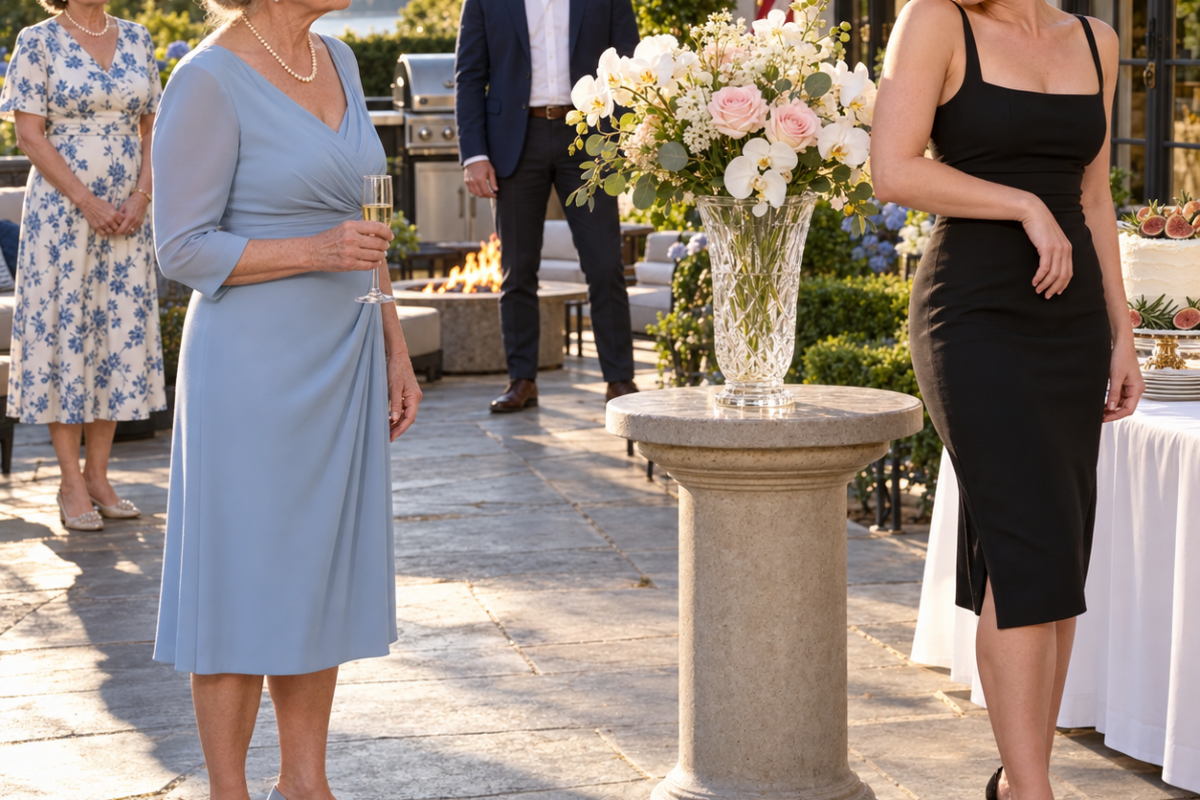
At my seventy-second birthday party, my daughter-in-law knocked a crystal vase off its pedestal with her elbow, watched it shatter, and smiled. “Oops.” Her own parents had given it to her and my son on their wedding day six years earlier. I looked at Frank, waiting for him to say something. All he managed was, “Mom…”
I watched my daughter-in-law break her own parents’ wedding gift with one elbow and a smile. For months afterward, people asked me whether I was…

I came home three hours early and found my sixty-eight-year-old mother on her knees scrubbing my mother-in-law’s bathroom. When I helped her stand, her sleeve slipped back, revealing dark marks around her wrist. My husband stepped into the doorway. “Daniela, don’t make a scene.” That was when I remembered my father’s last warning: “If you ever see your mother hurt, don’t argue with anyone. Open the hidden compartment in her sewing machine.”
I came home three hours early and found my sixty-eight-year-old mother on her knees beside a toilet. Her hands were stiff with arthritis. One gripped…
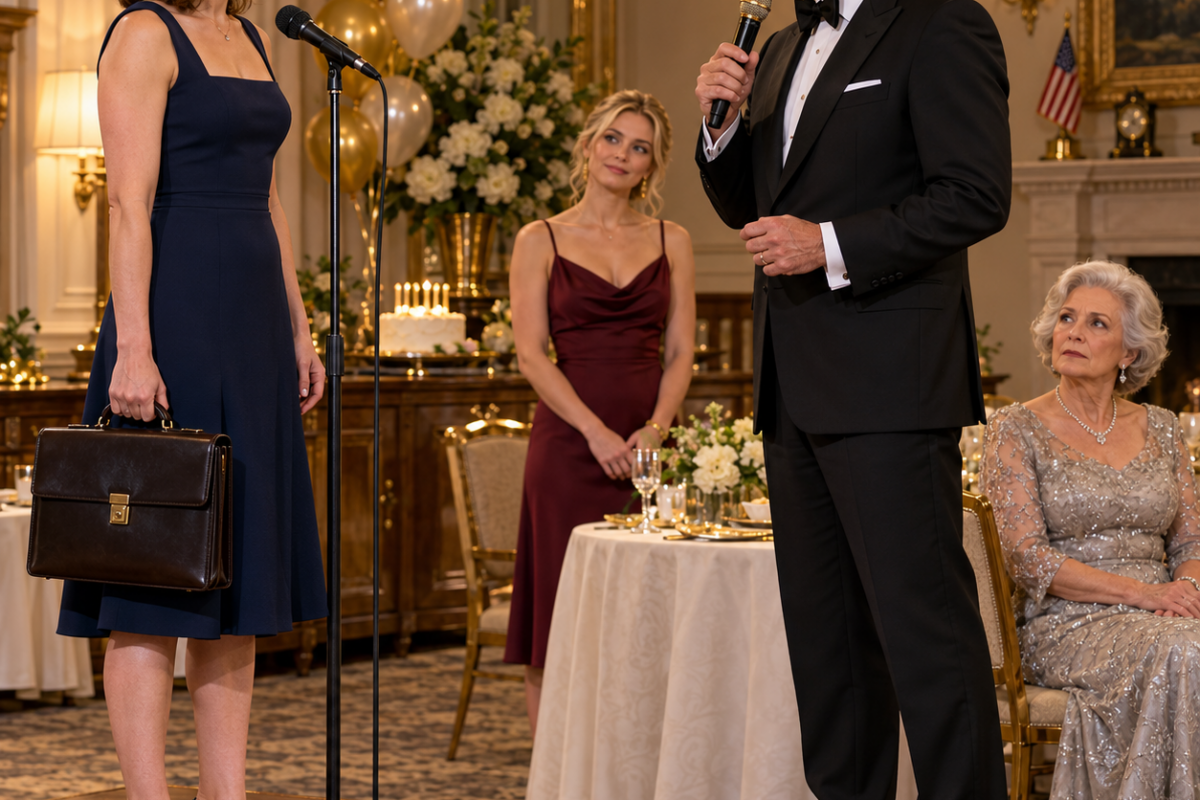
“I already promised your house to your sister,” my father told me four days after I bought it. “They’re moving in Monday. Rent-free for three years.” I was thirty-one, had saved for nine years, and had bought the five-bedroom home entirely in my own name. When I said no, he threatened to tell the family I had abandoned my sister’s children. Days later, he took the microphone at my grandmother’s seventy-fifth birthday dinner and did exactly that.
My father called twelve times in forty minutes after discovering I had bought a house without consulting him. When I answered, he didn’t ask whether…
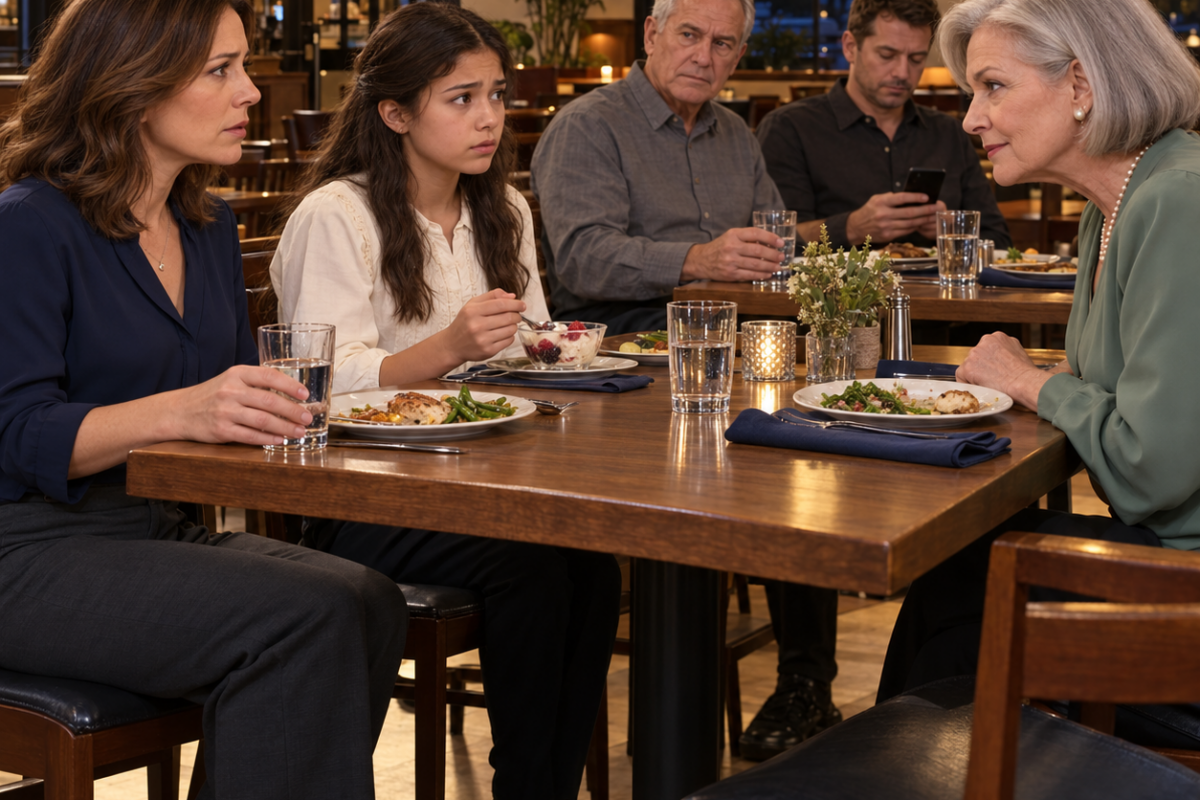
My mother leaned across the restaurant table, looked at my thirteen-year-old adopted daughter, and whispered, “We don’t sit with mistakes.” I took Sole’s hand and walked her out. That night, my father texted, “You’re still making the car payment tomorrow, right?” By midnight, I had canceled the payments I’d been making for my family. Then I remembered something Sole had told me about her grandmother.
My mother looked at my thirteen-year-old daughter and whispered, “We don’t sit with mistakes.” She said it softly enough to avoid attracting attention from the…
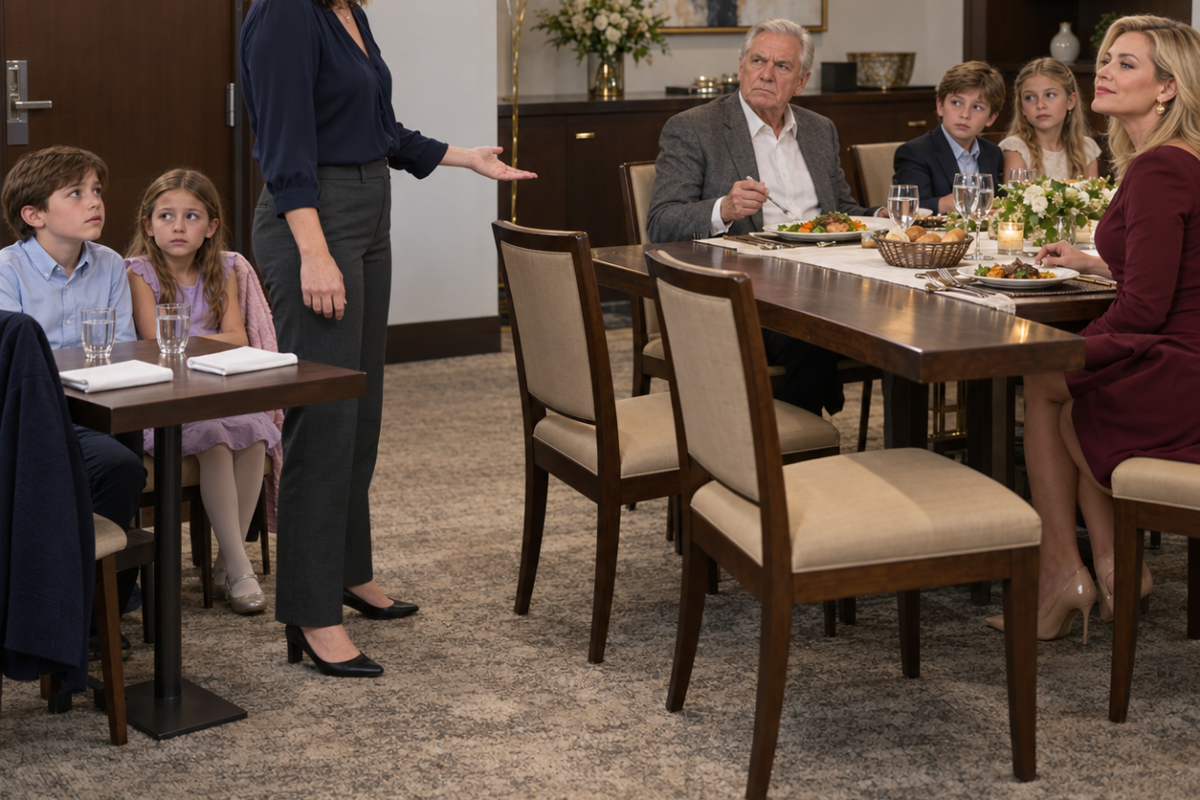
At my father’s seventieth birthday dinner, my eleven-year-old son and eight-year-old daughter were seated beside the service door with water glasses—but no dinner plates. Their cousins sat beside Grandpa with warm bread and full place settings. “They’ll eat after everyone else,” my sister said. I turned to my father, expecting him to object. “They can wait another hour,” he replied. There were two empty chairs at his table.
At my father’s seventieth birthday dinner, the first thing that stopped me wasn’t the cake or the gold balloons. It was my children. Ethan and…
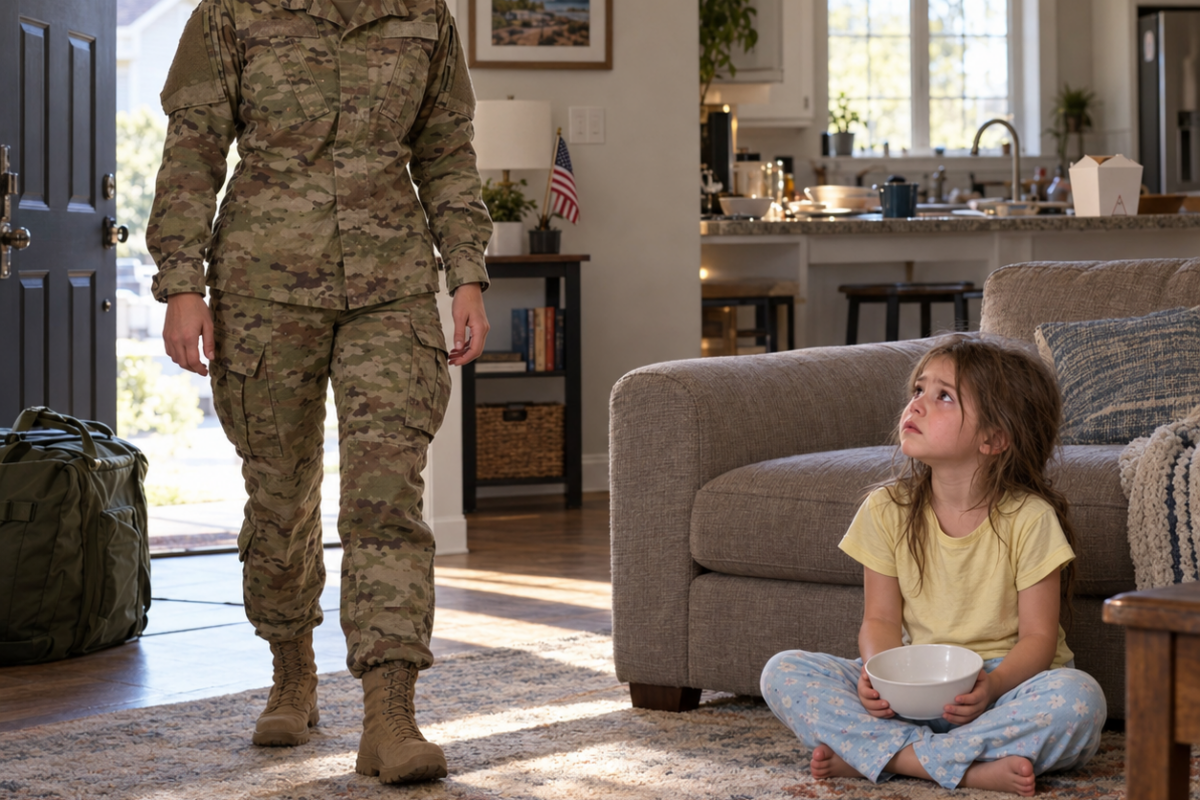
“Mommy, are you real?” my four-year-old daughter whispered when I came home from deployment three weeks early. She was sitting alone on our living room floor with an empty cereal bowl. My husband was on a Caribbean cruise with his mother and sister. Twenty-two minutes earlier, they had posted a photo captioned “Family time.” I was still in uniform when Sophie asked if she could have something to eat.
The first thing my daughter said when I found her was, “Mommy, are you real?” She was sitting cross-legged on our living room floor with…
End of content
No more pages to load