A year after our divorce, I ran into my ex-husband at the hospital. “Leaving you was the smartest decision I ever made,” he said. “You could never give me a child. Now I have a one-year-old son with your former best friend.” I smiled. “Is that so?” Two minutes later, a doctor stepped out of the elevator carrying a sealed medical file. My former best friend saw him before my ex-husband did. The baby bottle slipped from her hands.

“Leaving you was the smartest decision I ever made.”
Julian said it with the same easy smile he used to wear when a waiter brought the wrong wine.
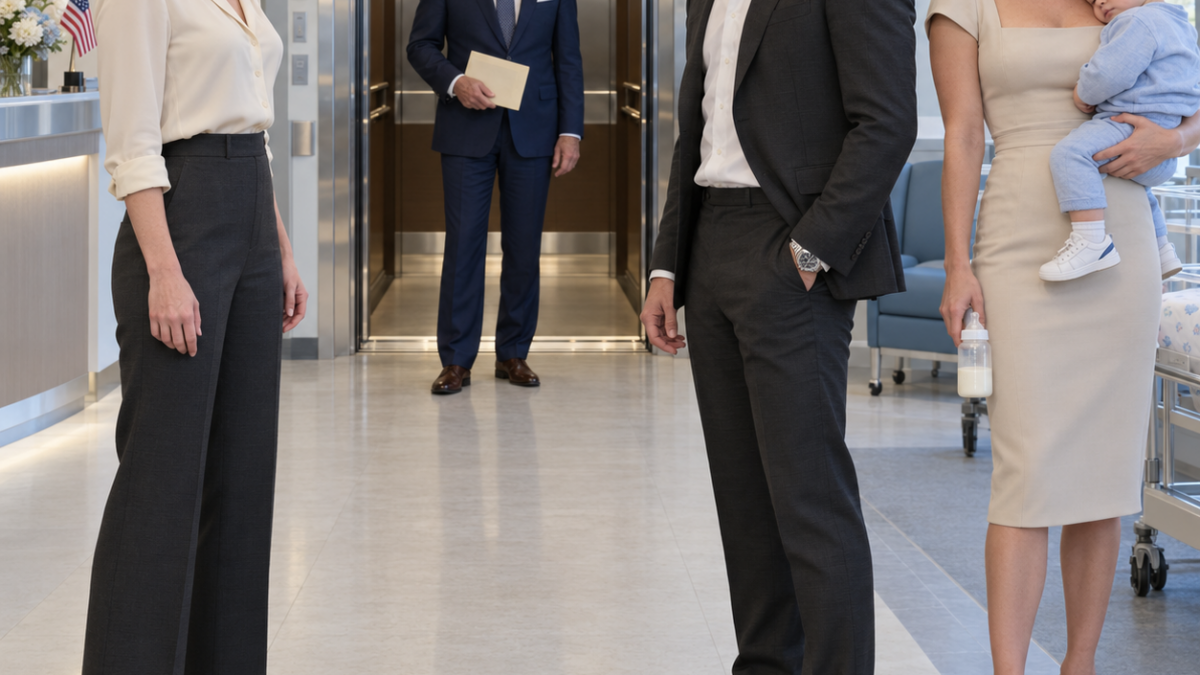
We were standing in the maternity and family health wing of St. Jude’s Hospital, a year after our divorce. He leaned against the wall beneath a framed photograph of a sleeping newborn, his expensive watch exposed at his cuff.
Beside him stood Sienna.
My former best friend.
She held a little boy against her shoulder and carried a bottle in her free hand. He had a soft head of brown hair, one shoe missing, and the exhausted expression of a child who had spent too long waiting for grown-ups to finish their business.
Sienna was wearing pearl earrings.
Not mine.
But a pair almost identical to the ones she had once borrowed for a charity dinner and kept for three weeks.
“A woman like you could never give me a child,” Julian continued. “Now I have a one-year-old son.”
He glanced toward Sienna.
She looked down at the baby, though the corner of her mouth lifted.
I had imagined meeting them again.
During the first months after the divorce, those imaginary meetings kept me awake. Sometimes I defended myself brilliantly. Sometimes I cried. Sometimes I walked away without saying anything and spent the rest of the night wishing I had.
I had never imagined that, when the real moment came, I would feel tired.
Not defeated.
Just tired of hearing a story I no longer believed.
“Is that so?” I said.
Julian laughed.
“You’re still doing that.”
“Doing what?”
“Acting as though there’s something everybody else doesn’t understand.”
A woman seated near the reception desk stopped turning the pages of her magazine.
I looked toward the elevator.
“I have an appointment.”
“In maternity?”
Sienna raised her eyes.
There was a quick, sharp concern in them.
I noticed.
Julian did not.
He was enjoying himself too much.
“I hope you’re not putting yourself through all that again,” he said. “Some things are better accepted.”
A year earlier, I might have apologized for making him uncomfortable.
I might have explained why I was there.
I might have let him finish speaking and gone home carrying another sentence that would follow me into the shower, the grocery store, the middle of the night.
Instead, I stood quietly.
The elevator doors opened less than two minutes later.
Dr. Audrey Vance stepped out carrying a sealed hospital envelope.
Sienna saw him first.
The bottle slipped from her hand.
It struck the floor, rolled beneath a chair, and left a small white trail of milk across the tile.
The baby startled and began to cry.
Julian straightened.
“What is it?”
Sienna’s face had gone pale.
“Why is he here?”
Dr. Vance came toward me.
He was a tall man in his early sixties, with silver hair, a narrow face, and the unhurried manner of someone who had spent years telling frightened people the truth without making promises he could not keep.
“Clara,” he said. “I’m sorry you had to wait.”
“I haven’t been here long.”
His gaze moved briefly to Julian, then to Sienna.
He recognized both.
That mattered.
“Your records review is complete,” he said.
Julian looked at the envelope.
“What records review?”
Dr. Vance did not answer him.
He looked at me.
“Would you like to come into the consultation room?”
“Yes.”
Sienna adjusted the baby against her shoulder.
“Clara, maybe we could talk first.”
I looked at her.
For years, she had known exactly when to put concern into her voice.
She could make an interruption sound like protection.
“We’ve had plenty of time to talk,” I said.
Julian’s smile disappeared.
“What’s going on?”
I met his eyes.
“I asked for the original records.”
Something moved across his face.
It was brief.
But I had spent fourteen years learning the smallest changes in that face.
I knew when he was irritated, when he was calculating, and when he had discovered that someone else possessed information he had not intended to share.
Dr. Vance held the envelope against his side.
“Clara has authorized me to discuss her findings with you if she wishes,” he said. “But we will not do that in a public hallway.”
A hospital aide approached with paper towels and asked Sienna whether she needed help.
She shook her head too quickly.
The baby continued crying.
I looked at him.
Whatever had happened between the adults, he had done nothing.
“Sienna,” I said, “take care of him.”
She stared at me.
Then she sat down, murmuring to the child while the aide retrieved the bottle.
I followed Dr. Vance into the consultation room.
Julian came behind us.
I allowed it.
That was my decision too.
The room was small, with a round table, four chairs, and a box of tissues positioned within reach of every seat.
I had sat in rooms like it so often that, for years, the sight of one had made my stomach tighten.
This time, I chose the chair beside the window.
Dr. Vance waited until the door closed.
Then he placed the envelope on the table.
“Before we begin,” he said, “I want to be precise. Failed treatment does not establish that a woman can never have a child. And a records review cannot promise that a future pregnancy will occur.”
Julian folded his arms.
“I know how this works.”
Dr. Vance looked at him.
“Then you’ll understand why precision matters.”
He opened the envelope.
Inside were copies of original reports, a written review, and a short chronology.
I recognized my name at the top of the first page.
For months after the divorce, seeing that name on medical paper had felt like looking at an accusation.
Now it felt like evidence.
“The original records do not support the diagnosis Clara was told she had,” Dr. Vance said.
Julian stared at him.
“What diagnosis?”
“Permanent inability to conceive because of irreversible ovarian failure.”
“That’s what her reports said.”
“No,” Dr. Vance replied. “That is what the summaries she received said.”
He placed two pages side by side.
One was an authenticated report from the clinic.
The other was a document I had found in an old email.
The headings looked similar.
The words beneath them did not.
My hands rested flat on the table.
For the first time since my divorce, I did not need to explain how badly I had been hurt before asking someone to believe something had happened.
The proof was there.
Julian looked at the pages.
Then he looked at me.
And I understood, with a clarity that almost made me dizzy, that he had expected my shame to do the work of keeping me silent forever.
I had met Julian when I was twenty-six.
He was handsome, attentive, and apparently interested in everything I said.
At the time, I worked for a regional nonprofit that helped families find short-term housing after hospital stays. He worked in commercial insurance and had an impressive ability to remember names.
At our first dinner, he asked more questions about my work than anyone outside the field ever had.
He listened while I described a mother sleeping in her car because she could not afford a hotel near her daughter’s treatment center.
“That shouldn’t happen,” he said.
I agreed.
Two years later, when we married, I believed I had chosen a man who understood what mattered to me.
For a while, he did.
Or he understood how to appear as though he did.
I did not know the difference then.
We bought a house outside the city with a narrow front porch and enough backyard for a swing set.
I did not put one in.
But every spring, when the grass needed reseeding, I left the flattest patch untouched because I thought that was where it might go.
Julian wanted children.
So did I.
At first, trying to have a baby was something hopeful and private.
We laughed about names.
We disagreed about whether a boy should inherit his grandfather’s middle name.
We stood in department stores pretending we had wandered into the baby section by accident.
Then the months passed.
Our hope became a schedule.
Then a set of appointments.
Then something measured in reports, injections, waiting rooms, and calls that came while I was trying to behave normally at work.
There were doctors.
There were explanations that sounded clear until another appointment complicated them.
There were days when I felt fine and evenings when disappointment settled over me so heavily I could not decide what to make for dinner.
Julian began saying we needed to be realistic.
Sometimes that was sensible.
Sometimes it meant he did not want to listen.
During the early appointments, we both participated in the evaluation. Some results required further discussion. Our doctors recommended treatment options and explained that outcomes were uncertain.
I understood uncertainty.
I did not enjoy it, but I understood.
What I did not understand was how uncertainty gradually became my failure in the story Julian told.
At home, he stopped using we.
My treatment.
My problem.
My disappointing result.
If I corrected him, he said I was focusing on language instead of solutions.
Eventually, I became so exhausted that I stopped correcting him.
Sienna entered our lives before any of that.
We met at a volunteer orientation when I was twenty-three. She arrived late, carrying coffee for the coordinator and apologizing so charmingly that nobody remembered she had kept twelve people waiting.
She was warm, funny, and good at making other people feel chosen.
When my mother died, she sat beside me on the kitchen floor while I sorted photographs.
When I married Julian, she stood next to me.
When treatment became difficult, she brought soup, offered to drive me, and sent messages that began with sweetheart.
I trusted her with the parts of my life I could barely say aloud.
The fear.
The jealousy I felt when another friend announced a pregnancy.
The shame of admitting that jealousy.
The afternoons when I sat in my car outside the pharmacy and cried before collecting another prescription.
Sienna always said she understood.
“You’re allowed to feel things,” she told me.
I thought that was kindness.
Sometimes it was.
But kindness can become information in the hands of someone who wants access to the places where you are weakest.
I did not know she was collecting mine.
The foundation began in our fifth year of marriage.
A hospital social worker told me about a family that had missed important appointments because they could not afford transportation.
I raised money among friends.
Then I organized a larger campaign.
Within three years, the work had grown into a small charitable foundation supporting practical costs for families navigating fertility care, pregnancy loss, and complicated medical journeys.
We did not promise miracles.
We paid for ordinary things.
A ride.
A hotel room.
Childcare for an older child.
Time with a licensed counselor when a family could not afford it.
I called it the Lantern Foundation because I liked the idea of light that did not pretend to remove the dark.
Julian served as treasurer.
He knew donors and understood financial presentations.
Sienna helped with events and communications.
I did the unglamorous work: answering messages, meeting hospital staff, reviewing requests, checking invoices, and sitting with people whose lives had been reduced to things they were waiting to hear.
I loved that work.
It gave me a place where being useful did not depend on becoming a mother.
That should have protected me.
Instead, the foundation became another part of my life Julian learned to manage.
By the final year of our marriage, I was tired in a way that sleep did not entirely repair.
My treatment team had changed.
The private clinic we used had expanded and taken on new administrators. Appointments were harder to schedule. Reports often arrived through a portal Julian said he would help me navigate.
He was good with forms.
He told me I needed less stress.
When a message came, he often read it first.
“I’ll explain it tonight.”
I let him.
That was one of the things I found hardest to forgive myself for afterward.
But I was not careless in every part of my life.
I was a woman undergoing difficult treatment, working full-time, running a foundation, and trusting the man who had promised to be beside me.
Trust is not the same as permission to deceive.
I needed someone to say that to me later.
I needed to hear it more than once.
The final treatment ended unsuccessfully on a Thursday.
I remember because I had a foundation meeting that evening.
I canceled it.
I sat on the bedroom floor with my back against the bed and held my phone while a nurse explained the result.
She was gentle.
She did not tell me I would never have a child.
That statement came later.
Julian arrived home carrying takeout I did not want.
He said we needed to talk.
I thought he meant about the treatment.
He meant about our marriage.
“I can’t keep doing this,” he said.
I looked up.
“Doing what?”
“Living around disappointment.”
I had no answer.
Not because there was nothing to say.
Because I had never imagined disappointment was a place he believed I had chosen to keep him.
Three days later, he filed for divorce.
Within a week, Sienna stopped returning my calls promptly.
Then she stopped returning them at all.
By the time I learned they were together, she was visibly pregnant.
I tried to count backward.
Then I stopped because every possible answer hurt.
Julian told our friends I had become emotionally unstable.
Sienna said I had been under enormous strain and refused to accept help.
Those words were harder to challenge than obvious insults.
They contained enough truth to sound reasonable.
I had been distressed.
I had cried.
I had needed help.
What they omitted was what had made the distress worse and what they had been doing while I was asking for support.
The divorce became a blur of meetings, emails, and documents I read while feeling as though the world had moved a foot away from me.
I had an attorney.
She was competent.
I was not fully present.
When Julian offered to buy out my interest in the house using an appraisal he had arranged, I wanted the process over.
When he said my withdrawal from the foundation would help avoid public conflict, I thought perhaps he was right.
I signed a resignation from my operational role.
I did not dissolve the board.
I did not give him personal ownership of a charity.
But at the time, the distinction meant very little to me.
He and Sienna became the faces of something I had built.
I became the woman people spoke about gently, as though being absent made me fragile.
I rented a small apartment above a neighborhood bakery.
The stairs were steep.
The kitchen window looked over an alley.
At five every morning, the ovens began warming below me, and the smell of bread entered the rooms before daylight.
The bakery owner, Rosa, was in her sixties and did not confuse privacy with indifference.
She asked whether I needed help carrying boxes.
I said no.
She sent her nephew anyway.
The first month, she left a paper bag outside my door every Sunday.
Two rolls.
A little butter.
No note.
I would have found a note harder.
Notes required answers.
Bread did not.
I worked part-time for another nonprofit and spent the rest of my time trying to become a person whose day did not begin with dread.
Some days I succeeded.
Others, I left unopened mail on the counter and ate toast for dinner because deciding anything else felt impossible.
I started counseling.
At first, I spent most sessions defending Julian.
“He was under pressure.”
“He wanted a family.”
“He didn’t know how to handle what happened.”
My counselor, Elise, listened.
Then she asked, “What pressure were you under?”
I could not answer without crying.
That was how we began.
For months, I searched my old reports at night.
I thought if I understood the exact reason my body had failed, I could stop feeling surprised by the loss of everything else.
The summaries used phrases that sounded final.
Irreversible.
Poor prognosis.
No reasonable expectation.
I read them until the words felt engraved in me.
Then, one afternoon in March, I found two versions of the same laboratory report.
I was looking for a receipt.
A box of papers from the house had remained unopened beneath my bed. Julian had packed it and labeled it medical and tax.
Inside was a folder from an earlier appointment.
I almost set it aside.
Then I saw a date I recognized.
The same date appeared on a report in my email.
The values were different.
Not slightly different.
Different enough that even I noticed.
I placed the pages beside each other on the kitchen table.
The bakery mixer started below me.
For several seconds, the vibration seemed to pass through my feet.
I checked the names.
My name.
My date of birth.
The same appointment.
I looked for a corrected-report notice.
There was none.
I called the clinic.
The first person told me older records could take time.
The second asked me to submit a formal request.
I did.
When the records arrived, parts were missing.
I asked again.
This time, a manager said the clinic had changed systems.
Perhaps some documents had not transferred.
It was plausible.
It was also the kind of explanation I had accepted too quickly before.
I wrote down her name.
I wrote down the date.
I asked how I could obtain the complete original record, including the source documents.
That question changed the conversation.
I did not receive an answer immediately.
I received a call from Julian that evening.
“Why are you bothering the clinic?”
I stood beside my kitchen table.
“How do you know I called?”
“They contacted me.”
“Why?”
“I’m still listed somewhere.”
“I asked for my records.”
“You have your records.”
“I have two different versions.”
He paused.
Then he said, “You’re going to make yourself ill doing this.”
A year earlier, I might have stopped.
Now I looked at the two pages.
“Then I’ll ask a doctor to explain them.”
“Clara.”
“What?”
“Some things don’t change because you keep looking.”
I ended the call.
My hands shook afterward.
But I did not put the papers away.
The social worker who had helped me begin the Lantern Foundation referred me to Dr. Vance.
I had met him twice at fundraising events.
He was director of St. Jude’s Center for Reproductive Medicine and had a reputation for being exact without being cold.
At our first appointment, I brought a canvas bag full of folders.
“I’m sorry,” I said, placing them on his desk.
He looked at the bag.
“For the paperwork?”
“For being difficult.”
He sat back.
“What have you done that is difficult?”
“I keep asking.”
“That is not a diagnosis.”
I almost laughed.
Then I cried.
He waited.
When I could speak, I showed him the two reports.
He did not react dramatically.
He examined them.
He asked where each came from.
He asked what I had been told and by whom.
Then he said, “We need the original source records.”
“I requested them.”
“I’ll ask with your authorization.”
“Do you think something is wrong?”
“I think these documents require explanation.”
That was not the certainty I wanted.
It was better.
It was an honest beginning.
Over the following weeks, his office obtained records directly from laboratories and the clinic.
I signed authorizations.
I attended appointments.
I answered questions.
Dr. Vance explained the limits of what could be concluded and referred the discrepancies through the hospital’s appropriate review channels.
The original findings did not resemble the hopeless picture I had been given.
There had been genuine treatment difficulties.
There had been uncertainty.
There had been factors involving both partners.
But there was no authenticated basis for the permanent diagnosis Julian repeatedly described to me.
Some of the summaries in my possession were not clinic-issued documents.
Their wording had been changed.
A physician’s name appeared on a statement that physician had not written.
That was when I stopped thinking of the situation as a misunderstanding.
Dr. Vance did not tell me I would certainly become pregnant.
He did not replace one cruel certainty with a comforting one.
He said, “Your medical future should be discussed from accurate information.”
I went home and sat on the floor beside my couch.
For a long time, I felt nothing.
Then I became angry.
Not the hot anger of an argument.
A deep, steady anger that made the room look clearer.
I had grieved a future someone had told me was impossible.
I had apologized for a body that had not been evaluated honestly in the story I received.
I had let my husband describe leaving me as a practical response to facts.
The facts were not what he said they were.
I called a new attorney.
Her name was Naomi Hart.
She handled civil disputes and was recommended by the attorney who had represented me in the divorce.
At our first meeting, she asked what I wanted.
I said, “I don’t know yet.”
“Then we can begin by preserving information.”
I liked her immediately.
She did not ask me to turn my pain into a plan before I understood it.
We collected documents.
Emails.
Portal notices.
My divorce file.
Foundation records I still lawfully possessed.
Naomi arranged for technical review of the altered documents and sent formal requests where appropriate.
She told me not to contact Sienna.
I had not intended to.
She told me not to publish accusations online.
I had imagined doing that once or twice.
Then she asked about the foundation.
I told her everything.
The resignation.
Julian’s role as treasurer.
Sienna’s work.
The sudden change in public leadership.
Naomi looked at the old bylaws.
“You stepped back from operations,” she said. “That did not eliminate the board’s responsibilities.”
“I know.”
“Who on the board would listen?”
I thought of Ruth Morrow.
Ruth was a retired judge who had joined the foundation after her niece struggled to find practical support during a difficult medical year.
She was not sentimental.
She was not easily impressed.
She had called me twice after the divorce.
I had not answered either call.
Shame had made even kind attention feel like something I could not bear.
I called her that afternoon.
“Clara,” she said.
Just my name.
Nothing added.
I began crying before explaining why I had called.
“Take your time,” she said.
So I did.
A week later, I sat in Ruth’s dining room with Naomi and two board members.
I showed them only the material relevant to the concerns I could support.
I did not ask them to punish Julian because he had left me.
I asked whether the foundation was operating as its donors understood.
Ruth read the expense reports.
She asked questions.
Then she said, “We need an independent review.”
I felt relieved and frightened at the same time.
The foundation had been the one part of my life I still wanted to protect from the divorce.
Now protecting it required looking at things I might not want to know.
The board commissioned an audit.
Julian objected.
He said the expense would be wasteful.
Ruth asked why he was concerned about a standard exercise of oversight.
He stopped objecting in the same terms.
Then he began calling me.
“You need to stop doing this.”
“I’m not directing the audit.”
“You started it.”
“I raised concerns.”
“Because you’re bitter.”
I looked at the bread Rosa had left outside my door.
It was cooling on the counter.
“Accurate accounts should answer that,” I said.
He hung up.
The medical review and the foundation audit moved on separate tracks.
That was important.
I did not want one unanswered question used as proof of another.
But the tracks eventually crossed.
Payments described as family support had gone toward Sienna’s private care.
Some expenses had been approved without the process other applicants were required to follow.
Invoices had been coded under broad administrative descriptions.
A communications contractor had been paid to reshape the foundation’s public image during my departure.
The messages attached to that work referred to me as a reputational risk.
I read that phrase several times.
Reputational risk.
Not founder.
Not colleague.
Not woman in pain.
A risk.
Naomi asked whether I wanted to take a break.
I said yes.
That was new too.
I was learning I could pause without abandoning the work.
The hospital appointment where I met Julian and Sienna was scheduled to discuss the final review of my records.
I had not arranged an ambush.
I did not know they would be there.
St. Jude’s housed reproductive care, maternity services, and several family clinics in connected wings. Their son had an appointment in the same section of the building.
The coincidence was ordinary.
What they chose to say was not.
When I saw them outside the elevator, I almost turned around.
Then I remembered how far I had traveled to become someone who could stand there without apologizing.
I kept walking.
Julian spoke.
Sienna smiled.
The bottle fell.
And suddenly the private work of the past months entered the same room as the people who believed it would never happen.
Inside the consultation room, Julian stared at the authenticated records.
Dr. Vance placed the review summary in front of him.
“I will not discuss another patient’s private information,” he said. “I will discuss Clara’s record within the permission she has given.”
Julian tapped one page.
“Tests can change.”
“Yes.”
“Then maybe that explains it.”
“No,” Dr. Vance said. “These are different representations of the same source document.”
I watched Julian’s finger stop moving.
“The report on the right was not issued by the laboratory in that form.”
“Are you accusing me?”
“I’m explaining the review.”
Julian looked at me.
“You really think I would do something like this?”
A familiar question.
One that required me to defend my trust before he defended his conduct.
I looked back.
“I think someone changed documents that reached me through you.”
He shook his head.
“You’re making connections that aren’t there.”
Naomi had warned me not to argue every denial.
I did not.
I asked, “Why did you call me the evening I requested my original records?”
“Because the clinic contacted me.”
“They say they didn’t.”
His expression tightened.
Dr. Vance folded his hands.
“The record requests were made through our office. We are documenting how information was communicated. The relevant findings have been referred for appropriate review.”
Julian looked toward the door.
For the first time, he seemed to want the conversation over.
I understood the feeling.
I had spent years wanting conversations over because I could not bear what they made me feel.
He wanted this one over because he could not control what it established.
“You’ve misunderstood all of this,” he said.
I nodded once.
“Then respond to the documents.”
He stood.
“This is ridiculous.”
Dr. Vance remained seated.
“Clara’s care will proceed from verified information.”
Julian looked at me.
“Care?”
“Yes,” I said.
“You’re trying again.”
“That’s my decision.”
“With whom?”
I did not answer.
He had forfeited the right to ask that question as though my future remained his concern.
He left the room.
The door closed more loudly than it needed to.
For several seconds, I sat still.
Then Dr. Vance said, “Would you like some water?”
“Yes.”
He poured it from a small pitcher.
The glass shook in my hand.
I had been calm while Julian was there.
Now my body seemed to understand what had happened.
“I thought this would feel different,” I said.
“How?”
“Like winning.”
Dr. Vance looked at the papers.
“Learning you were misled is often another loss before it becomes relief.”
I nodded.
That was exactly it.
I had not recovered the years.
I had recovered the right to stop misunderstanding them.
Before I left, he explained the medical next steps available to me.
None were urgent.
None required a decision that day.
He encouraged me to continue with counseling and to separate what I wanted medically from what I might feel tempted to prove.
I appreciated that.
I did not want a child to become evidence in an argument with my ex-husband.
I wanted my life back.
Whatever shape it took.
In the hallway, Sienna was waiting.
Julian had gone to move the car.
The little boy slept against her chest.
His name was Noah.
I knew that from the photographs people had once sent me without thinking.
He had one hand curled beneath his cheek.
Sienna stood when she saw me.
“Can we talk?”
“Not here.”
“Please.”
I looked at the child.
“Noah needs to get home.”
She lowered her voice.
“You don’t understand what will happen.”
“To whom?”
Her eyes filled.
I had seen those tears before.
At my mother’s funeral.
After a bad treatment call.
During the divorce, when she told a mutual friend how worried she was about me.
This time, I did not assume tears made the person crying truthful.
“Did you know about the altered reports?” I asked.
She looked away.
That was not an answer.
It was enough for me not to stay.
“Speak to your own attorney,” I said.
“Clara, we were friends.”
“Yes.”
She flinched.
I walked to the elevator.
The doors opened.
For the first time in a year, leaving them did not feel like being left.
Julian called that night.
I did not answer.
Then he sent a message.
You are jeopardizing a family because you cannot move on.
I forwarded it to Naomi.
She replied with one sentence.
Do not engage tonight.
I put the phone in a drawer.
Rosa knocked an hour later.
She carried a bowl of soup.
“You look like someone who forgot dinner.”
“How can you tell?”
“You walked past the shop without smelling the bread.”
I smiled despite myself.
She put the bowl on the table.
“Do you want company?”
“Yes.”
She sat.
I told her about the hospital.
Not every technical detail.
The hallway.
The bottle.
The room.
She listened without interrupting.
When I finished, she said, “You know the little boy didn’t hurt you.”
“I know.”
“Good.”
I looked at her.
“Did you think I’d forget?”
“No. I think people in pain sometimes need to hear that they’re allowed to hold more than one truth.”
I ate the soup.
It tasted of onions and thyme.
For a few minutes, I was simply a woman eating dinner with someone kind.
That mattered more than the confrontation.
Two days later, Sienna requested a meeting through Naomi.
She had retained her own attorney.
Julian did not know what she wanted to discuss.
I was not eager to see her.
Naomi said I was not obliged.
Then she added that Sienna might have information.
I agreed to a meeting in her attorney’s office.
Noah was not there.
I was glad.
Sienna looked smaller without him in her arms.
Not innocent.
Just less able to use the image of her new life as protection.
Her attorney introduced himself and explained the limits of the meeting.
Naomi sat beside me.
Sienna twisted a tissue between her fingers.
“I knew the summaries weren’t right.”
I looked at her.
“Which summaries?”
“The ones Julian gave you.”
“When?”
She swallowed.
“Before the divorce.”
The room seemed to narrow.
I heard the office printer somewhere beyond the wall.
I focused on that sound until I could speak.
“How long before?”
“Months.”
I had imagined a mistake near the end.
A desperate effort to make leaving easier.
Months meant there had been evenings when she sat beside me while I blamed myself and knew the blame rested on information she knew was false.
“Did you change them?”
“No.”
Naomi asked, “What do you know firsthand?”
Sienna looked toward her attorney.
He nodded.
“Julian showed me the drafts. He said Clara needed to accept that the marriage was over.”
I stared at her.
“That was your explanation?”
She began crying.
“I knew it was wrong.”
“But you let me read them.”
“I didn’t know how to stop it.”
“You knew how to call me every day.”
She covered her mouth.
I waited.
I did not want an apology that floated above the facts.
I wanted her to remain inside what she had done.
Naomi asked about communications.
Sienna had messages.
Some were on an old phone.
Some in an email account she had stopped using.
Her attorney had arranged to preserve them.
There were conversations about the reports.
About my distress.
About presenting the divorce as the unavoidable conclusion of a medical situation.
There were also messages about the foundation.
About who should speak to the board.
About how to keep me from “making a scene.”
I had never made one.
That was the part I found almost darkly funny.
They had built a defense against a woman so busy apologizing for her existence she barely answered the telephone.
Then Sienna said something I had not expected.
“Noah isn’t Julian’s biological child.”
I sat back.
Naomi did not react.
She asked, “What is the basis for that statement?”
Sienna looked at her hands.
“He’s Marcus’s.”
I knew Marcus Hale.
He had dated Sienna years earlier and occasionally helped at foundation events. He worked as a paramedic and had moved back to the city during the period when Julian and I were still married.
“Does Marcus know?” Naomi asked.
Sienna nodded.
“Does Julian?”
“No.”
I looked at her.
For a moment, I could not decide whether the information belonged in the room.
My ex-husband had humiliated me using a child’s existence as proof of my inadequacy.
Now the child’s parentage had become another lie.
But Noah was not a weapon.
I would not let him become one in my hands.
“That needs to be handled privately,” I said.
Sienna stared at me.
“Julian will blame you.”
“He already blames me.”
“He’ll say you told him.”
“I won’t.”
Her attorney shifted in his chair.
Naomi spoke carefully.
“Parentage and family obligations require appropriate legal advice. Clara is not going to use a child’s private information in a public dispute.”
Sienna cried again.
I felt no satisfaction.
Only a tired recognition that the people who had accused me of being unstable had built their lives on things they did not want examined.
“Why tell me?” I asked.
“Because everything is coming apart.”
“No,” I said. “Why didn’t you tell me when only my life was coming apart?”
She had no answer.
I left before she found one.
Outside, the sky was low and gray.
Naomi asked whether I wanted her to call someone.
“Rosa,” I said.
She did.
I sat in the car until I could drive.
The evidence Sienna supplied changed the pace of the legal work.
It did not make every question simple.
Naomi had the communications authenticated.
The clinic completed its internal review of the document discrepancies.
The hospital made the appropriate reports.
No one announced a criminal verdict in a hallway.
No one promised me a settlement because I had been hurt.
There were interviews.
Requests.
Statements.
People consulting lawyers before answering questions they had once expected never to face.
The foundation audit also reached the board.
Ruth called a special meeting.
I attended as a witness to matters within my knowledge.
I was not invited to stand at the head of the table and take revenge.
That was not what I wanted.
The auditor described unsupported expenses, conflicts that had not been disclosed properly, and payments that did not match approved charitable purposes.
Sienna’s private care appeared in the review.
So did the communications work concerning my departure.
Julian tried to explain the spending as reasonable administration.
The auditor asked for approval records.
He did not have them.
Ruth asked whether recipients related to officers had been considered under the same process as other applicants.
He said the situation was unusual.
Ruth replied, “Unusual is not a substitute for oversight.”
I looked at her.
For months, I had believed everyone had accepted Julian’s version of me.
Here was someone who had called, waited, and now refused to be distracted.
I wished I had answered her sooner.
I also knew that wishing did not change the reason I had been unable to.
The board placed Julian on leave from his foundation responsibilities while further review continued.
Sienna’s communications contract ended.
Independent financial controls were put in place.
Donors would receive an accurate account of the governance changes without unnecessary exposure of private patient information.
The foundation’s beneficiaries would not be asked to pay for the adults’ failures.
That last point mattered most to me.
After the meeting, Julian approached in the parking lot.
His face was tight.
“Are you satisfied?”
“No.”
He stopped.
“You got what you wanted.”
“What do you think I wanted?”
“My humiliation.”
I looked at him.
“I wanted the truth about my medical records. I wanted the foundation to do the work it promised. Neither required you to lie.”
“You’re going to destroy everything.”
I thought of the apartment above the bakery.
The box beneath my bed.
The evenings when I had believed there was no reason for anyone to choose me.
“You were comfortable with destruction when you thought it would stay in my life,” I said.
His jaw moved.
I did not wait for an answer.
The foundation was not the only part of my divorce Naomi reviewed.
The house appraisal required another look.
So did certain account statements.
I had known Julian was financially organized.
I had not understood how selectively he organized the information he gave me.
There were discrepancies worth examining.
Not every unfair feeling could be repaired legally.
Some claims had deadlines.
Some decisions I had signed would be difficult to revisit.
Naomi told me that clearly.
I appreciated her refusing to sell me a fantasy.
We pursued what the evidence and available process supported.
We did not build a case around the hope that a court could restore my fourteen years.
That could not happen.
But a corrected financial outcome could help me rebuild the years ahead.
Julian’s attorney proposed a meeting.
Naomi attended.
I did not have to.
For once, I let a professional carry the part of the problem she had been hired to carry.
I went to work.
I answered emails.
I ate lunch.
The ordinary act of not spending the entire day thinking about him felt like a kind of freedom.
Julian learned about Noah’s parentage from Sienna.
She told him after consulting her attorney.
Later, with appropriate consent and independent testing, the biological question was confirmed.
I did not see the results.
I did not need to.
I was not entitled to the child’s private file merely because Julian had used the child to hurt me.
What I learned came through the adults when it affected the broader dispute.
Marcus accepted responsibility.
There were difficult conversations and arrangements made with professional help.
Julian was furious.
At first, he called it another thing I had caused.
Then he called me directly.
I answered because Naomi had said I could speak if I wished, provided I did not discuss negotiations.
His voice sounded different.
Not kind.
Uncertain.
“Did you know?”
“When?”
“About Noah.”
“Sienna told me in the meeting.”
“And you didn’t tell me.”
“No.”
“Why?”
“Because it was hers to disclose, and he is a child.”
Julian was quiet.
Then he said, “You must think this is funny.”
“No.”
“I said things at the hospital.”
“Yes.”
He exhaled.
“I didn’t know.”
I looked out the kitchen window.
Rosa’s nephew was carrying flour sacks through the back door.
“You knew what you said to me.”
“That’s not what I mean.”
“I know.”
He seemed to want the betrayal he had discovered to cancel the betrayal he had committed.
I would not do that for him.
“Julian, Noah’s parentage does not explain my medical reports.”
Silence.
“It does not explain what you told people.”
“I was angry.”
“For months?”
He did not answer.
“I have to go.”
“Clara.”
I waited.
“I’m sorry.”
The words surprised me.
Not because they were sufficient.
Because he had finally said them without immediately attaching a defense.
I considered what to say.
Then I answered, “I heard you.”
I ended the call.
For a long time, I sat at the table.
I had thought an apology would matter more.
It mattered.
It just did not open the door.
Sienna and I met one more time.
She requested it.
I agreed to a brief conversation at a café with the understanding that legal matters would remain with our attorneys.
She arrived without makeup.
Years earlier, I would have taken that as evidence of sincerity.
Now I knew sincerity required more than appearing unprotected.
She placed a small box on the table.
Inside were several things she had borrowed and never returned.
A scarf.
A silver bracelet.
A little serving spoon my mother had given me.
“I found them when I packed,” she said.
I looked at the spoon.
I had forgotten she had it.
That was the strange thing about betrayal.
It could be enormous, and then a small object would reveal another corner of it.
“Thank you for returning them.”
She nodded.
“Noah’s doing well.”
“I’m glad.”
She looked relieved.
I did not ask for photographs.
He deserved a life beyond being proof in anyone else’s story.
Sienna folded her hands.
“I don’t know why I became that person.”
I waited.
“I wanted what you had.”
“The marriage?”
“The way people looked at you. The foundation. The house. Everyone trusting you.”
I thought about the woman I had been while she envied me.
Tired.
Frightened.
Trying to keep an appointment calendar from consuming my marriage.
“You knew how unhappy I was.”
“I thought I could have the good parts.”
I looked at her.
That answer was honest.
It was also devastating.
She had mistaken my life for a set of things that could be removed from me and worn more comfortably by someone else.
“Julian told me you were finished,” she said.
“You still knew I wasn’t.”
Her eyes filled.
“Yes.”
I picked up the box.
“What you did wasn’t friendship that went wrong in one afternoon. You had time to stop.”
“I know.”
“I don’t want you in my life.”
She bowed her head.
I did not soften the sentence.
There were boundaries that did not become clearer by being made kinder.
“I hope you become someone Noah can trust,” I said.
Then I left.
It was the last time I saw her.
The legal process took longer than the emotional confrontations.
That was probably good.
My anger changed shape over time.
What felt urgent in May felt different in August.
The documents remained the same.
The clinic’s review established that certain summaries provided to me were not authentic clinic communications. Relevant staff and systems were examined, and the matter was referred through the appropriate channels.
Some people had been careless with access.
Some had accepted explanations they should have questioned.
The evidence involving Julian was serious enough that his lawyers stopped treating my concerns as a personal grievance.
We reached a civil resolution addressing the altered communications and supported financial discrepancies.
The terms did not make me wealthy.
They made it possible for me to stop rebuilding from a position that had been made worse by inaccurate information.
I received a corrected accounting and compensation consistent with the claims we could establish.
Julian did not write a public confession containing every detail.
He did agree to correct specific false statements he had made to people relevant to my work.
That part mattered.
For a year, I had wondered whether I could ever stand in a professional room without someone silently remembering I was unstable.
I could not control every rumor.
I could require the record to stop helping it.
The foundation continued under independent leadership.
Ruth asked whether I wanted to return.
I thought about it for several weeks.
The answer was not simple.
I loved the work.
I also loved the idea of proving I could take back what they had tried to make theirs.
Those were different motives.
Elise helped me separate them.
“If you never see Julian again,” she asked, “what work do you still want to do?”
I answered without hesitation.
“Help people through the practical part.”
“Then start there.”
I returned as director of family support, with clear responsibilities and stronger controls than we had before.
I did not become treasurer.
I did not take sole authority because I had been wronged.
The foundation needed a system that did not depend on any one person being good.
I understood that more deeply now.
Our first event after the changes was small.
No ballroom.
No expensive floral arrangements.
We held it in a community center with coffee, folding chairs, and a panel of social workers and counselors.
A woman approached afterward.
“I thought I was the only person who felt ashamed after treatment didn’t work.”
I looked at her.
“You’re not.”
She began crying.
I offered a tissue.
For the first time in a long time, I did not feel that helping someone required hiding what had happened to me.
I could be useful and unfinished.
Both were allowed.
I stayed above the bakery longer than I originally planned.
The apartment was small, but it had become the first home where nobody monitored my mood to decide whether I was making life inconvenient.
I bought a comfortable chair.
I hung curtains.
I planted basil in a pot on the kitchen window.
Rosa complained that it needed more light.
I moved it.
Some advice did not take anything from me.
That was another thing I learned.
I had become suspicious of kindness after Sienna.
For a while, any offer of help made me look for the hidden cost.
Rosa had no hidden cost.
Natasha, a colleague at my new workplace, had no hidden cost when she saved me a seat at lunch.
Ruth had no hidden cost when she asked whether I needed a ride.
I learned to accept ordinary care without treating it as a contract I would regret signing.
In the autumn, I met Daniel Mercer.
He worked as an occupational therapist and volunteered at a program that helped families adapt homes after serious illness.
We first spoke while carrying donated chairs into a storage room.
He asked which ones needed to stay near the door.
I told him.
He put them there.
It was not a romantic beginning.
That was part of why I liked it.
For several months, we talked at events.
He knew about my divorce in broad terms.
He did not ask for the dramatic version.
When he invited me to dinner, he said, “You can say no without explaining.”
I looked at him.
Then I said yes.
At dinner, we talked about work, books, and his habit of buying vegetables optimistically and forgetting them in the refrigerator.
I laughed.
The sound surprised me.
It felt like something I had not used freely in years.
I did not tell him everything immediately.
He did not treat patience as a performance for which he expected a reward.
When I finally told him about the medical records, he listened.
Then he asked, “What do you want now?”
Not, Can you have children?
Not, What did Julian do?
What did I want?
I did not know.
He accepted that.
We continued seeing each other slowly.
He never became the answer to the story.
I was grateful.
I had been treated as someone whose value could be confirmed or denied by a man’s plans.
I did not want to recover by finding a better man to confirm it.
I wanted a life in which another person could stand beside me without becoming the judge of what that life was worth.
A year after the hospital encounter, I returned to St. Jude’s for a routine consultation.
I still had medical decisions to consider.
I had not turned them into an emergency.
Dr. Vance asked how I was.
“Better.”
“Better is useful.”
“I’ve stopped reading reports at two in the morning.”
“That may be the most encouraging finding today.”
I smiled.
We discussed my questions.
He answered them carefully.
There were options.
There were limitations.
There were uncertainties.
This time, uncertainty did not feel like a sentence someone else could use against me.
It felt like information.
Before leaving, I thanked him.
“For the review?” he asked.
“For being exact.”
He nodded.
“People deserve exactness when the consequences are personal.”
I walked out through the same family health wing.
A mother sat near the elevator trying to keep a toddler from removing his socks.
A man carried a car seat awkwardly.
Two women laughed quietly beside the reception desk.
Life was happening in all its ordinary forms.
I did not search the hallway for Julian.
I did not imagine meeting him.
That was how I knew something had changed.
Later that week, an old friend invited me to dinner.
She had been one of the people who accepted Julian’s account without asking me.
Her message was careful.
I know I should have called. I’d like to apologize if you’re willing.
I considered it.
Then I agreed.
At the restaurant, she began explaining that she had not wanted to intrude.
I let her finish.
Then I said, “You could have asked me whether the story was true.”
She nodded.
“Yes.”
“I was hurting. That didn’t mean I was incapable of speaking.”
“I know.”
I did not immediately make her feel forgiven.
But I did not assume the relationship had to end forever.
Some people had actively deceived me.
Others had been weak, incurious, or uncomfortable.
Those were not identical failures.
I could decide what to do with each one.
That choice belonged to me now.
Julian left the foundation permanently.
His professional reputation suffered among people who examined what had happened.
Others continued to believe whichever version required less of them.
I stopped keeping count.
He and Sienna did not remain together.
I heard that through an attorney because certain matters still required formal contact.
I did not ask for details.
Their separation was not a prize I had earned.
It was another consequence in lives that were no longer mine to manage.
Noah continued to be cared for.
Marcus became part of his life.
Whatever failures had surrounded his beginning, I hoped the adults learned to give him something more honest.
I meant that.
Wishing a child well did not require forgiving the people who had used him to hurt me.
The last message Julian sent me arrived on a Sunday.
I was at Rosa’s kitchen table helping her work through an online renewal form.
My phone lit up.
I’ve been thinking about everything. I wish we could talk without lawyers.
I read it once.
Then I put the phone facedown.
Rosa looked at me.
“Bad news?”
“Old news.”
She nodded.
“What does this box mean?”
I looked at the form.
We continued.
I did not answer Julian that day.
Or the next.
There were things I could say.
There were also things I no longer needed him to hear.
For years, I believed the truth would free me only if he admitted it.
Now I had learned that the truth could be documented, understood, and lived without his permission.
That evening, I opened the small box Sienna had returned.
The bracelet went into a drawer.
The scarf went on a hook.
I washed my mother’s serving spoon and placed it in the kitchen.
It was a plain spoon with a worn wooden handle.
I had used it at dozens of dinners before lending it to Sienna.
For a long time, I looked at it.
Then I used it to stir soup.
Objects could return to ordinary life.
So could people.
Not unchanged.
Not pretending.
But returned.
Months later, the Lantern Foundation opened a small support office near the hospital.
On the first morning, I arrived early with coffee and a bag of rolls from the bakery.
The office had two consultation rooms, a desk for the coordinator, and shelves where we kept practical supplies for families.
I placed a lamp on the windowsill.
Ruth came in behind me.
“Ready?”
“As much as I can be.”
She smiled.
“That’s usually enough to begin.”
The first family arrived at nine.
A woman came with her husband and a folder she held so tightly the edges bent.
I recognized the posture.
I recognized the effort required to look normal while carrying something that had begun to feel like an accusation.
She apologized for bringing so much paperwork.
“You don’t need to apologize,” I said.
She looked at me.
I pointed toward a chair.
“Let’s start with what you were told.”
She sat down.
Her husband sat beside her, not in front of her.
I noticed that too.
Outside, traffic moved along the street. The hospital windows caught the morning light. Somewhere down the hallway, the coordinator answered a telephone.
I opened a fresh page in my notebook.
For a moment, I remembered Julian at the hospital, smiling as he told me leaving had been the smartest decision of his life.
Once, I would have spent the rest of the day trying to decide what that said about me.
Now I knew it said something about him.
I had lost a marriage.
I had lost a friendship.
I had lost time to grief made heavier by lies.
But I had not lost the right to understand my own life.
I looked at the woman across from me.
“Take your time,” I said.
And waited for her to speak.
News
At my seventy-second birthday party, my daughter-in-law knocked a crystal vase off its pedestal with her elbow, watched it shatter, and smiled. “Oops.” Her own parents had given it to her and my son on their wedding day six years earlier. I looked at Frank, waiting for him to say something. All he managed was, “Mom…”
I watched my daughter-in-law break her own parents’ wedding gift with one elbow and a smile. For months afterward, people asked me whether I was…
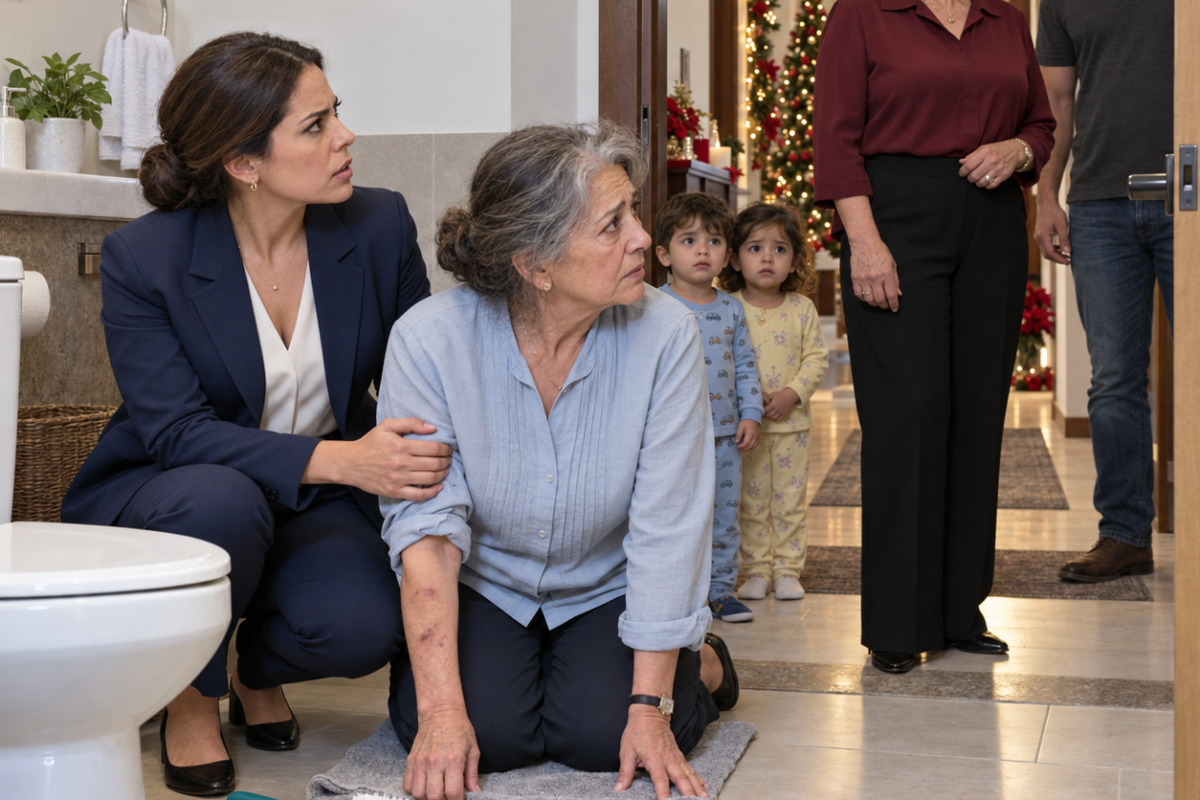
I came home three hours early and found my sixty-eight-year-old mother on her knees scrubbing my mother-in-law’s bathroom. When I helped her stand, her sleeve slipped back, revealing dark marks around her wrist. My husband stepped into the doorway. “Daniela, don’t make a scene.” That was when I remembered my father’s last warning: “If you ever see your mother hurt, don’t argue with anyone. Open the hidden compartment in her sewing machine.”
I came home three hours early and found my sixty-eight-year-old mother on her knees beside a toilet. Her hands were stiff with arthritis. One gripped…
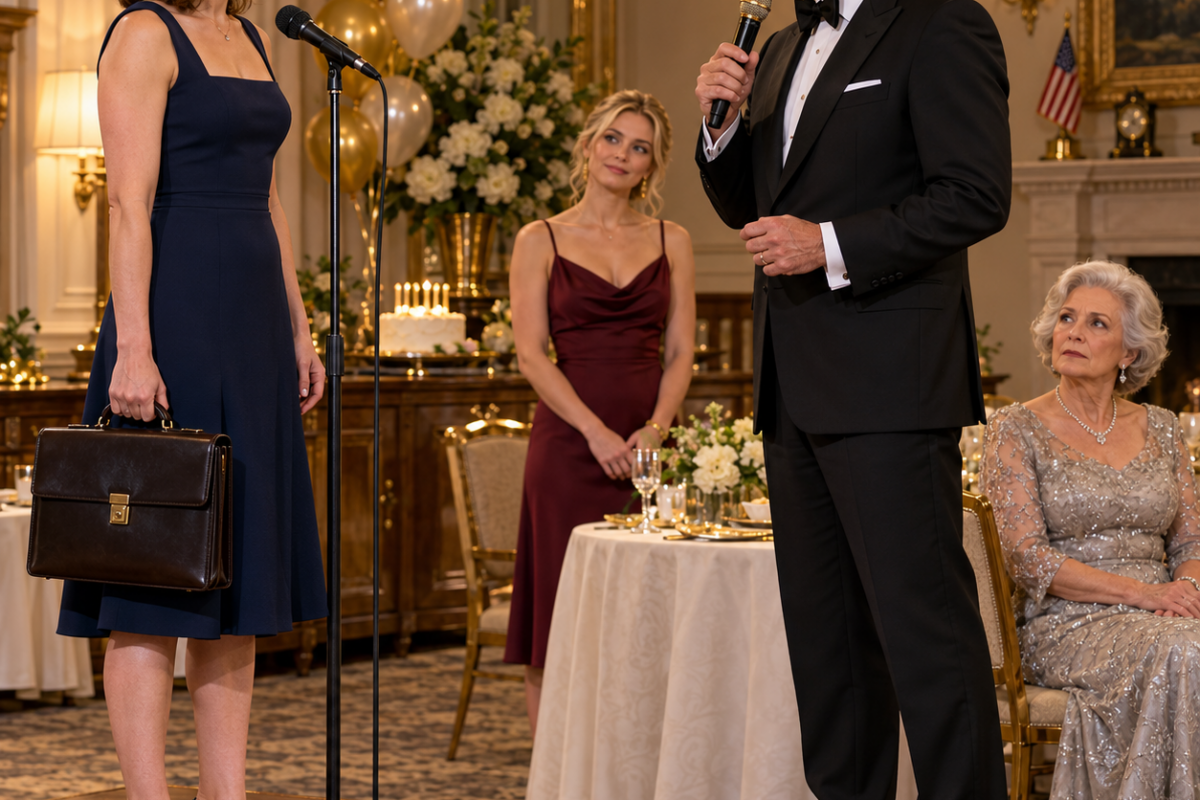
“I already promised your house to your sister,” my father told me four days after I bought it. “They’re moving in Monday. Rent-free for three years.” I was thirty-one, had saved for nine years, and had bought the five-bedroom home entirely in my own name. When I said no, he threatened to tell the family I had abandoned my sister’s children. Days later, he took the microphone at my grandmother’s seventy-fifth birthday dinner and did exactly that.
My father called twelve times in forty minutes after discovering I had bought a house without consulting him. When I answered, he didn’t ask whether…
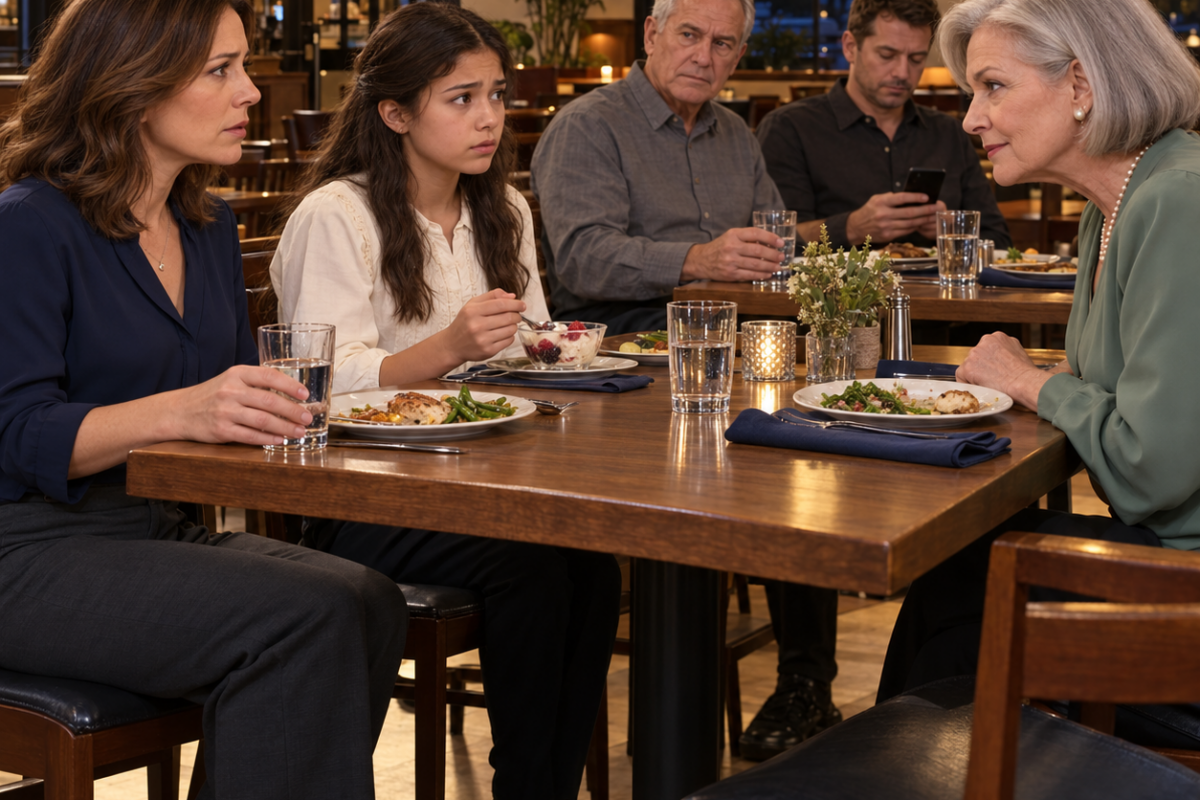
My mother leaned across the restaurant table, looked at my thirteen-year-old adopted daughter, and whispered, “We don’t sit with mistakes.” I took Sole’s hand and walked her out. That night, my father texted, “You’re still making the car payment tomorrow, right?” By midnight, I had canceled the payments I’d been making for my family. Then I remembered something Sole had told me about her grandmother.
My mother looked at my thirteen-year-old daughter and whispered, “We don’t sit with mistakes.” She said it softly enough to avoid attracting attention from the…
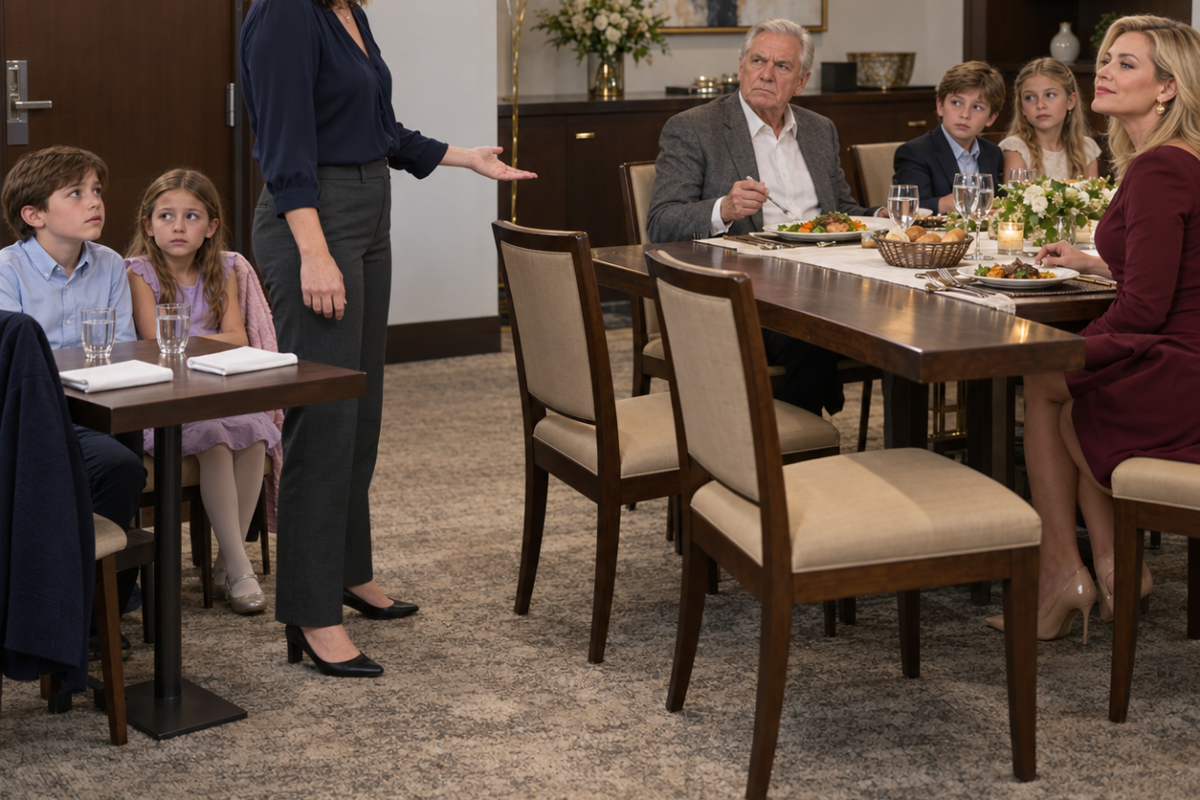
At my father’s seventieth birthday dinner, my eleven-year-old son and eight-year-old daughter were seated beside the service door with water glasses—but no dinner plates. Their cousins sat beside Grandpa with warm bread and full place settings. “They’ll eat after everyone else,” my sister said. I turned to my father, expecting him to object. “They can wait another hour,” he replied. There were two empty chairs at his table.
At my father’s seventieth birthday dinner, the first thing that stopped me wasn’t the cake or the gold balloons. It was my children. Ethan and…
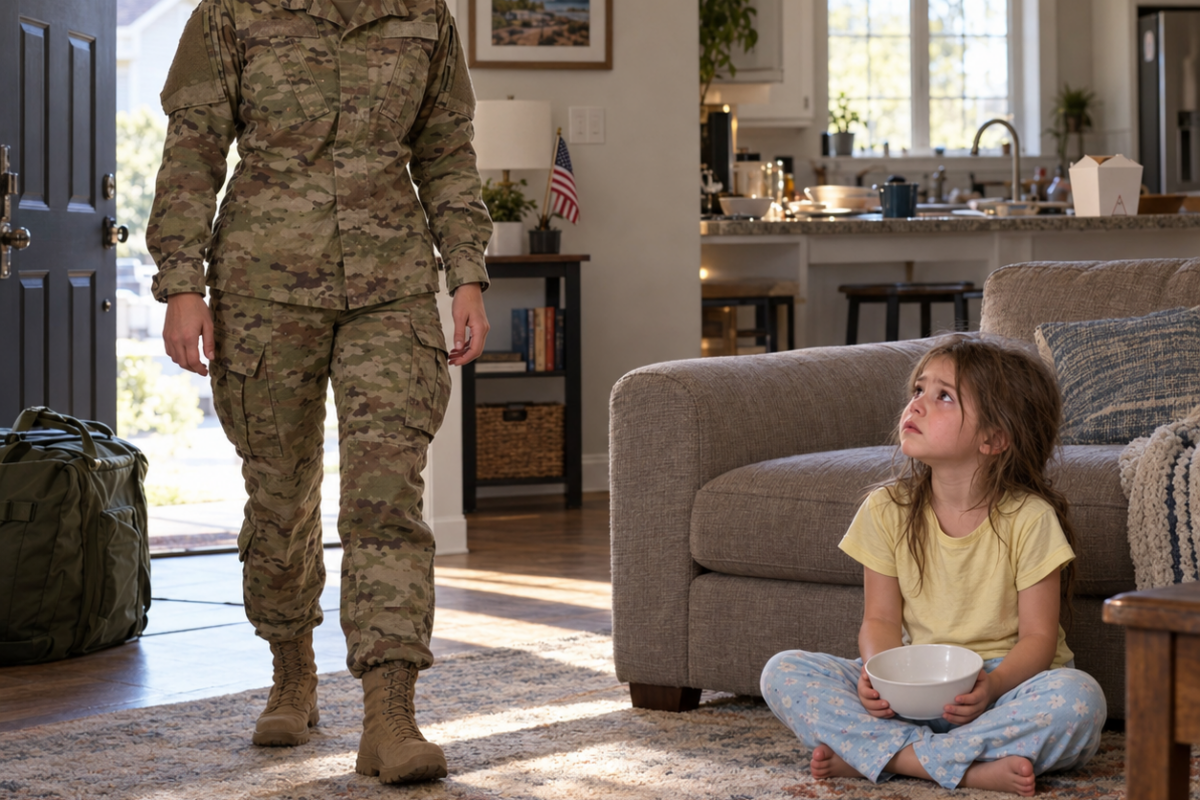
“Mommy, are you real?” my four-year-old daughter whispered when I came home from deployment three weeks early. She was sitting alone on our living room floor with an empty cereal bowl. My husband was on a Caribbean cruise with his mother and sister. Twenty-two minutes earlier, they had posted a photo captioned “Family time.” I was still in uniform when Sophie asked if she could have something to eat.
The first thing my daughter said when I found her was, “Mommy, are you real?” She was sitting cross-legged on our living room floor with…
End of content
No more pages to load